
Skateboarding Clothing Materials Guide: How to Choose
This post contains affiliate links. As an Amazon Associate, we earn from qualifying purchases.
Skateboarding clothing materials come down to a balance between abrasion resistance, freedom of movement, and breathability. The best choices are thick, durable natural fabrics like cotton canvas or denim for pants, and breathable cotton or cotton-polyester blends for shirts, often reinforced at high-wear areas like knees and elbows with tougher materials or removable padding.
That balance isn’t theoretical. Slide across pavement in the wrong pair of jeans and you’ll feel it, a hot, gritty burn followed by a cold draft where your knee used to be. The right fabric choice is your first layer of crash protection, a principle detailed in any good skateboarding clothing materials guide.
What follows is a breakdown of why certain materials work, where they fail, and how to match them to your skating, as detailed in this skateboarding clothing materials guide. The guide details the thick cottons that survive slides, the high-tech synthetics pushing durability limits, and the simple rules for staying comfortable from the first push to the last trick.
Key Takeaways
- Prioritize thick, heavyweight cotton fabrics like canvas or denim for pants, they offer the best balance of abrasion resistance and breathability for repeated ground contact.
- For shirts and hoodies, look for cotton or cotton-polyester blends; heavyweight fabrics like the 220gsm cotton Decathlon uses for t-shirts or the 370gsm cotton for hoodies provide durability without sacrificing mobility.
- Strategic reinforcement beats all-over bulk. Seek out pants with double-layered or externally applied thicker denin at the knees, as SGLSports recommends, rather than expecting every inch of fabric to be armor-plated.
- Stretch is a supplement, not a solution. A small percentage of elastane in cotton blends can aid mobility, but the core durability must come from the primary fabric’s weight and weave.
- Match the material to the mission. Casual street skating rewards durable, breathable cottons, while sanctioned downhill competition, per World Skate rules, mandates specialized materials like leather or Kevlar for race suits.
The Non-Negotiables: Durability, Breathability, and Mobility
You can’t have a conversation about skate apparel without these three. They tangle together, and improving one often weakens another. Durability means the fabric can withstand the abrasive kiss of concrete, asphalt, or grip tape. Breathability describes how well a fabric lets sweat vapor escape to prevent overheating. Mobility is simply whether you can crouch, kickturn, and bail without the clothes fighting you.
The magic, and the frustration, is that these properties are dictated by the material’s very structure. A thick, tightly woven cotton canvas is fantastically durable and reasonably breathable, but it can be stiff. A thin, lightweight polyester is incredibly breathable and mobile but will shred in a slide. Your job, as explained in any thorough skateboarding clothing materials guide, is to find the mix that suits how and where you skate.
Common mistake: Choosing pants based on style alone. A slim-fit jean made of thin, stretchy denim might look right, but it will disintegrate at the knee on your first serious fall. Durability isn’t an optional extra; it’s the price of admission.
Cotton: The Reliable Workhorse
When you picture classic skate gear, you’re likely picturing cotton. It’s the default for a reason. Cotton fibers are natural, breathable, and absorbent, which makes them comfortable against the skin. More importantly, when woven into a heavy fabric like canvas or denim, cotton develops a tough, dense surface that resists abrasion.
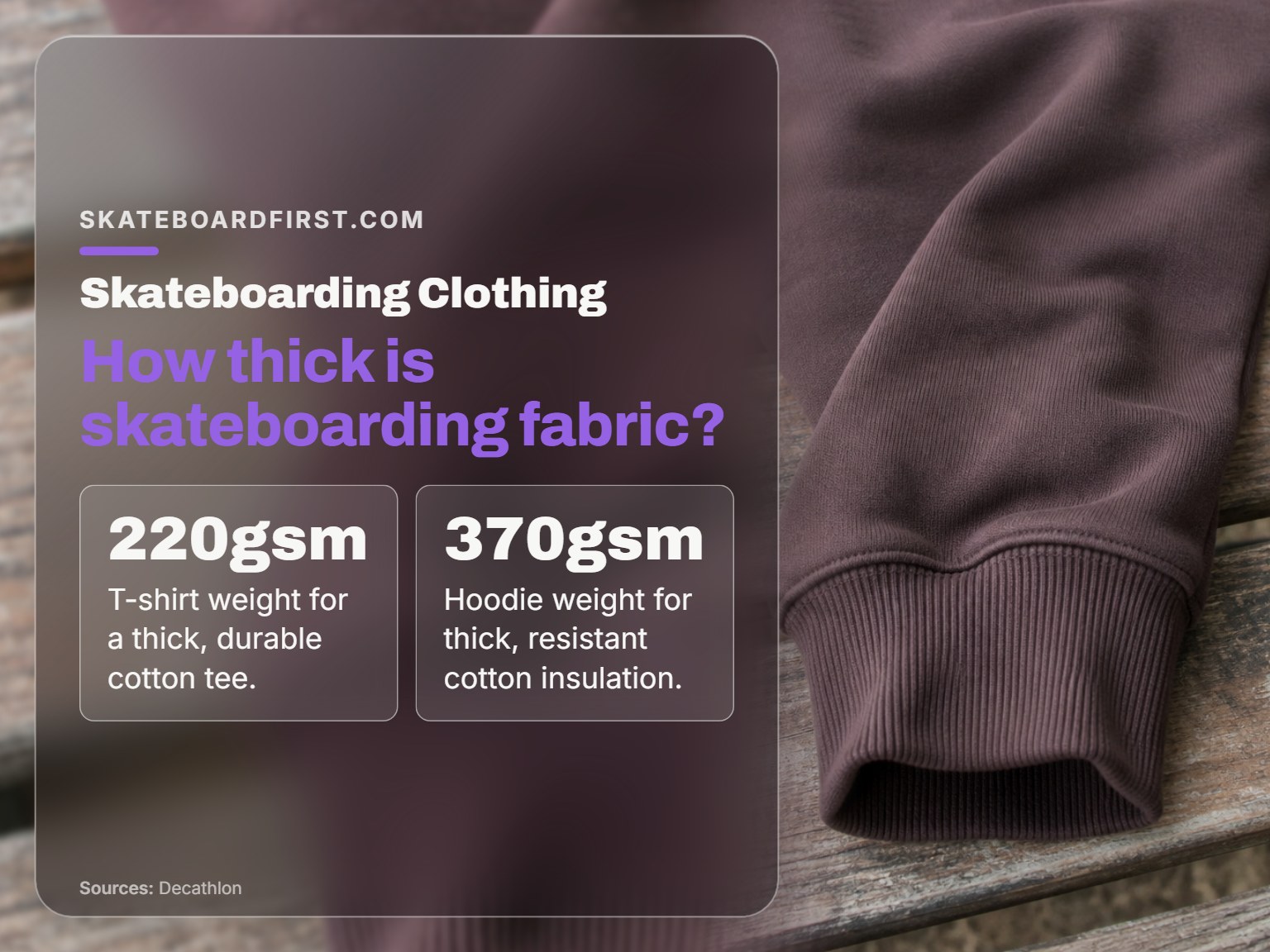
The key term here is fabric weight, measured in grams per square meter (gsm). A standard t-shirt is often much lighter than skate-specific versions. Decathlon’s skate-specific t-shirts use a thick 220gsm cotton, and their hoodies jump to a resistant 370gsm cotton. That extra weight translates directly to durability, more fibers per square inch to absorb the friction of a slide.
My first “skate” pants were a pair of thin, fashion-stretch jeans. One powerslide attempt later, I had a perfectly denim-colored patch of road rash and a new understanding of gsm. I switched to a pair of heavyweight cotton canvas work pants and suddenly, the same fall resulted in a scuff, not a hole.
The Cotton vs. Synthetic Trade-off (Breathability vs. Durability)
Pure cotton has a ceiling. While breathable, it holds moisture (sweat) which can make it heavy and slow to dry. It can also lose shape over time. This is where blends come in.
Polyester-cotton blends, like the polyester-cotton blend fabric SGLSports recommends for upper garments, try to get the best of both worlds. The polyester adds wrinkle resistance, helps the fabric dry faster, and can improve tensile strength. The cotton maintains breathability and a comfortable hand-feel.
The trade-off is in the feel and abrasion performance. Some skaters find polyester blends less comfortable or more “plastic” against the skin. And while the blend might be stronger in a pull-test, a high-polyester fabric can melt or fuse under the extreme friction heat of a slide, whereas cotton will char and wear through more gradually.
| Fabric Type | Best For | Key Strength | Trade-off |
|---|---|---|---|
| Heavyweight Cotton (Canvas/Denim) | Pants, durable outerwear | Superior abrasion resistance, breathable | Can be stiff, slow to dry when wet |
| Cotton-Polyester Blend | Shirts, hoodies, lighter pants | Wrinkle-resistant, dries faster, strong | May feel less natural, abrasion heat-response varies |
| High-Tech Synthetic (e.g., Dyneema®) | Reinforced panels, protective denim | Extreme cut/abrasion resistance, lightweight | Expensive, often less breathable |
Pants: The Battlefield of Fabric

Your pants take the most punishment. Knees, thighs, and the seat are all prime impact zones. This is where the debate over fabric strategy gets real.
One school of thought, echoed by the Tactics guide, says to go all-in on thick cottons, such as canvas or herringbone for full durability and breathability. Another, from SGLSports, recommends a soft and comfortable twill cotton as the main fabric, using thicker denim only externally in adjustable areas like the knees. The other, from the SGLSports design guide, recommends a soft and comfortable twill cotton fabric with good friction performance as the main pants fabric, using thicker denim fabric externally in adjustable areas like the knees.
I lean toward the strategic approach. An all-over heavyweight canvas pant is bombproof but can feel restrictive. A pant with a softer, flexible main body and reinforced knee panels (internally or externally) gives you mobility where you need it and armor where you hit. This is why many durable skate pants from quality brands use this hybrid construction.
The disagreement in the sources is useful, it shows there’s no single right answer. If you skate mellow, technical street and rarely fall, the softer twill might be perfect. If you’re learning grinds and slides, the all-over thick canvas or a reinforced model is the smarter comparing skate pants and jeans.
Where this goes sideways: Assuming all denim is equal. Skateboarding annihilates thin, stretch-denim jeans. The difference between thin, fast-fashion denim and heavyweight rigid denim is the difference between a session-ender and a season-long companion.
Shirts & Hoodies: Managing Moisture and Motion

Up top, the priorities shift slightly. Abrasion resistance is still important, elbows and shoulders hit the ground, but breathability and moisture management move up the list. You’re generating heat, and a sweat-soaked cotton shirt becomes a cold, clammy blanket.
This is why blends shine. The polyester-cotton blend fabric SGLSports uses is designed for moisture absorption, breathability, and wrinkle resistance. The polyester helps wick sweat away from the skin to the outer surface of the fabric where it can evaporate, while the cotton keeps it comfortable.
Hoodies add another layer, literally. Decathlon lines theirs with a microfiber fabric to absorb sweat, a smart touch for a garment that’s inherently warm. When choosing a hoodie, the same weight rules apply. A heavyweight hoodie like Decathlon’s 370gsm cotton model will last through seasons of pulling it on and off over your head.
For a simple tee, you can’t go wrong with a heavyweight cotton like Decathlon’s 220gsm. It’s a skate clothing style staple for a reason: durable, breathable, and it looks broken-in from day one.
High-Tech & Protective Materials
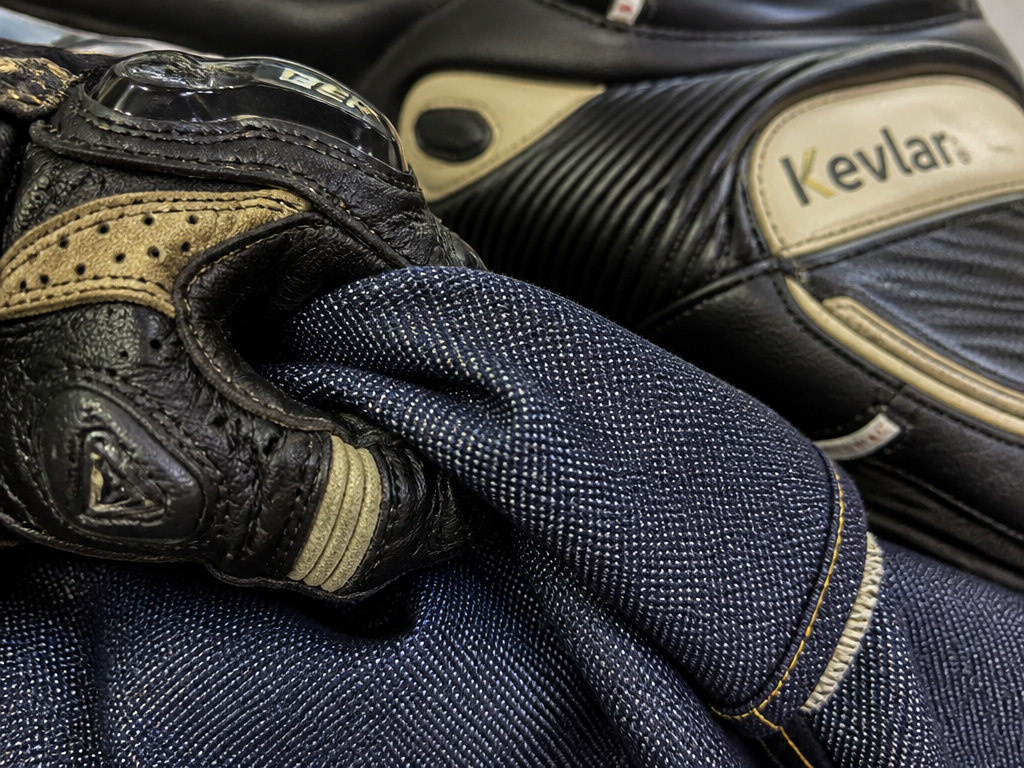
Beyond traditional cottons and blends, a world of advanced materials exists, often borrowed from motorcycling or extreme sports.
Dyneema® is a standout. Marketed as an ultra-strong fiber for protective fabrics, it’s woven into denim to create gear that meets and exceeds modern motorcycle safety standards. Dyneema® denim is stretchable enough for improved comfort and slim-fit designs while offering cut and abrasion resistance far beyond ordinary cotton. It’s also resistant to moisture, UV rays, and most chemicals. The catch? Cost and breathability. This is premium, specialized gear.
For the highest levels of competition, material choice is dictated by rulebooks. In World Skate downhill skateboarding, race suit exteriors must be made of leather and/or kevlar. This isn’t a recommendation; it’s a safety mandate for a discipline where crashes happen at high speed. The rules exist because, at a certain point, cotton and polyester simply won’t protect you.
Material Care and Making Gear Last
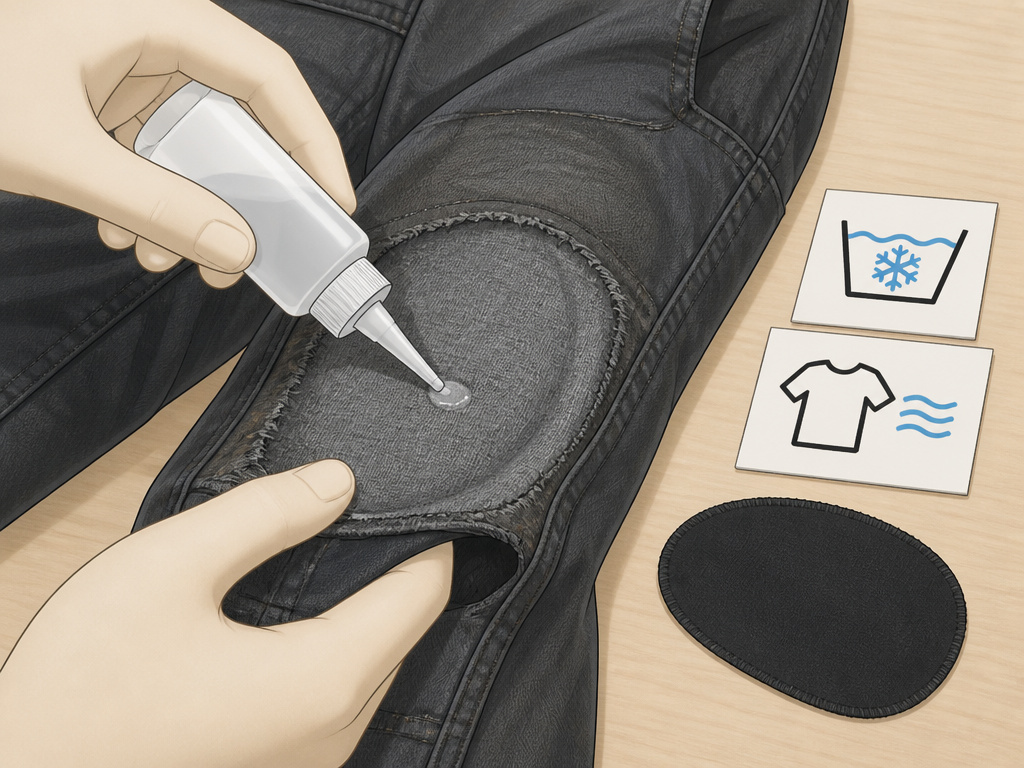
Choosing tough materials is step one. Treating them right is step two. Skate clothes live a hard life, but a little care prevents a quick death.
- Wash Cold, Air Dry: Heat is the enemy of elastic fibers (spandex/elastane) and can set stains into cotton. Wash in cold water to preserve fabric integrity and stretch. Tumble drying creates massive wear and tear; air drying is gentler and prevents shrinkage.
- Pre-Treat Abrasion Zones: Before a hole appears, you’ll see fabric thinning and fading at the knees and seat. Applying a iron-on patch or a liquid fabric reinforce inside the pant leg at these spots can add months of life.
- Repair, Don’t Discard: A blown-out knee isn’t the end. A skilled tailor can darn the area or replace the entire knee panel with a matching or contrasting durable fabric. It’s often cheaper than a new pair of pants and adds character.
- Rotate Your Gear: Just like shoes, pants and shirts benefit from a day off between sessions to let moisture fully evaporate and fibers relax. Having two go-to pairs of pants literally doubles their lifespan.
These habits turn a good durable skate pant into a great one, and they apply whether you’re in budget workwear or premium reinforced jeans.
Seasonal Material Considerations
Your local climate should influence your fabric choices. The core principles don’t change, but the execution does.
Summer & Warm Weather:
- Focus: Maximum breathability, moisture-wicking, sun protection.
- Materials: Lightweight, loose-weave cotton or linen blends for shirts. For pants, consider lightweight canvas or durable skate shorts and pants made from breathable mesh panels.
- Avoid: Heavy denim, dark colors that absorb heat, non-breathable synthetics.
Winter & Cold Weather:
- Focus: Insulation, wind resistance, layer-ability.
- Materials: Mid-weight cotton hoodies (like the 370gsm), fleece-lined softshell pants. The key is layering: a moisture-wicking synthetic base layer, an insulating mid-layer (fleece), and a durable, wind-resistant outer layer (your skate pants and hoodie).
- Special Note: For wet conditions, consult a skateboarding rain gear guide. Waterproof fabrics often sacrifice breathability, so look for pit zips and venting options.
What Brands Should I Look For?
Focus on brands that prioritize the functional needs of skating over pure style. Look for those using thick, resistant cotton fabrics in their hoodies and t-shirts for durability. Some incorporate technical fabrics like a polyester-cotton blend in shirts for better moisture absorption and breathability. For pants, some brands recommend a soft, comfortable twill cotton for the main fabric, while others use thicker denim externally in high-wear areas like the knees. Check if protective gear uses high-rebound sponge for comfort and breathability. The right brand makes clothes that are comfortable, breathable, and built to handle time on the ground.
Frequently Asked Questions
What is the most durable material for skateboarding pants?
The most durable common materials are heavyweight cotton canvas and rigid denim (12oz and higher). For extreme abrasion resistance, high-tech synthetics like Dyneema®-reinforced denim offer unparalleled protection but at a higher cost and often with less breathability.
Is cotton or polyester better for skateboarding?
It’s not a simple better/worse. Heavyweight cotton is generally better for abrasion resistance in pants. Polyester-cotton blends are often better for shirts and hoodies, offering a balance of durability, wrinkle resistance, and faster drying time. Pure polyester athletic jerseys are great for breathability but poor for sliding durability.
Why do skateboarders wear baggy clothes?
Baggy clothes, historically, provide greater freedom of movement for complex tricks and can help pad falls by creating a loose layer between the body and the ground. While styles have trended slimmer, the functional need for unrestricted motion remains, which is why gusseted crotches and articulated knees in well-designed clothing for mobility are more important than pure bagginess.
How can I make my skate clothes last longer?
Wash them less frequently in cold water, air dry instead of using a tumble dryer, and pre-emptively reinforce high-wear areas like knees with iron-on patches before holes develop. Rotating between multiple pairs of pants also significantly extends the life of each.
Are skateboarding shoes made from different materials than regular shoes?
Absolutely. Skate shoes prioritize durability in high-wear zones like the ollie area (toe and side) and the heel. This is why skate shoe materials like suede and rubber are favored over less durable canvases or thin leathers. The anatomy of skate shoes is built around impact absorption and board feel, not just style.
Before You Go
Forget chasing the latest branded collection. Your material checklist is short: thick fabric, smart reinforcement, and room to move. Start with a pair of robust canvas pants and a heavyweight cotton tee. See how they hold up to your local curb or park bench.
If you blow through the knees in a month, you know you need either a heavier weight or a pair with dedicated knee panels. If your shirt is a sweaty mess after 15 minutes, look for a polyester-cotton blend. Let your own crashes, big and small, be the guide. The concrete doesn’t lie about your fabric choices.
