
Skatepark Etiquette Rules: The Unspoken Code Explained
This post contains affiliate links. As an Amazon Associate, we earn from qualifying purchases.
Skatepark etiquette rules are a mix of unwritten social courtesy and official, legally binding municipal regulations. The core is waiting your turn, staying aware, and respecting the park’s flow, but the legal requirements, like helmet mandates, signed waivers, and equipment bans, vary drastically from city to city and carry real penalties for violations.
Most guides treat skatepark etiquette rules as a universal set of manners. They miss the fact that your local government’s published rules are the real framework. A courtesy mistake might earn a dirty look, but breaking a city ordinance can get you banned or fined.
What follows: the unwritten social code every skater learns on the ground, followed by the concrete municipal rules you can look up for your park. We’ll cover where cities disagree on helmets, supervision ages, and what gear is allowed, so you know what to check before you roll in.
Key Takeaways
- Observe the park’s flow before joining a session to understand the unspoken line order and avoid cutting someone off.
- Yell “Board!” immediately if your skateboard gets away and is heading toward other people, this is a formal procedure in some municipal rules.
- Check your local city’s official park website for helmet laws and equipment bans; a rule in Tampa isn’t the same as a rule in Orlando or Chicago.
- Beginners should stick to the sides of the park during off-peak hours (mornings, not afternoons or weekends) to stay out of advanced skaters’ main lines.
- A signed waiver is often mandatory for entry, especially for minors, and forgetting it means you don’t skate that day.
The Unwritten Rules You Actually Need
I sit on the edge and observe before I roll in anywhere. You can see the unspoken line pretty fast: who goes after who, which direction the flow runs, where the little kids hang out. Skipped this once at a busy bowl session and cut in front of a regular mid-run. Nobody yelled, just a very long look. Cost me some time feeling like a ghost.
That observation period is your first move. The City of Revelstoke’s official etiquette guide calls this watching the “flow” of the park. It’s park-specific and unwritten. The main line might run clockwise around the perimeter, or everyone might be taking turns on a specific quarter pipe. Your job is to figure it out before you drop in.
Common mistake: Standing in the middle of a popular line while looking at your phone. Moving three steps to the side of a flat bar or a bench fixes it instantly and keeps you from being a collision hazard.
After you’ve watched, it’s about taking turns. “Snaking”, going when it’s not your turn, is the quickest way to annoy everyone. If you’re unsure, a nod or a quick “you go?” works. Eye contact beats everything else. If I can’t catch someone’s eye, I assume they haven’t seen me and I wait, even if it’s technically my turn.
A simple verbal call like “dropping in!” before you roll into a bowl or down a ramp cuts near-misses way down. I started doing it religiously after a few close calls, and my collisions decreased significantly. The City of Mill Valley actually codifies this: if you lose control of your board and it is heading towards other skaters, yell “Board!”
This is the social layer of skatepark etiquette rules. It’s about not being a dick, being predictable, and keeping yourself and others safe. It’s also how you start to feel like part of the scene at a new skatepark instead of an outsider.
Safety Rules: Helmets, Waivers, and Wet Concrete
The social code is one thing. The printed rules from your city’s parks department are another, and they carry the weight of law. Ignoring etiquette might get you side-eyed. Ignoring these can get you kicked out, fined, or even permanently banned.
The most critical rule is also the most variable: helmet requirements. Cities do not agree on this.
| City / Authority | Helmet Rule | Who It Applies To |
|---|---|---|
| City of Tampa | Required at all times on the skating surface. | All participants. |
| City of Orlando | Required for all minors. Adults may opt-out. | Minors must wear an ANSI-approved helmet. |
| City of Chicago | Highly recommended. | All park users. |
| City of Sandy (OR) | Required by Oregon law for those under 16. Strongly encouraged for others. | Riders under 16. |
This isn’t a suggestion you can ignore in some places. The City of Orlando regulations are explicit: all minor riders must wear an ANSI-approved helmet with a securely fastened chinstrap. Check your local rules. Assume nothing.
The second major legal hurdle is the waiver. The City of Tampa states: “ALL persons entering the skate park MUST HAVE A SIGNED WAIVER, no exceptions.” Children under 18 need a parent or guardian’s signature. Orlando requires waivers for all users, and for participants under 18, it must be signed in the presence of park staff or notarized. No waiver, no skate. It’s that simple.
Finally, never skate on wet concrete. Every municipal source mentions this. Wet surfaces are dangerously slick and can damage the park. The City of Frederick, Forks Township, Chicago, and Orlando all explicitly close their parks when surfaces are wet, icy, or snow-covered. It’s not just bad form; it’s a violation of posted rules.
Where Official Rules and Community Practice Clash
Sometimes what skaters do and what the city says are two different things. Knowing these gaps keeps you out of trouble.
Skate Wax is the classic example. The community guide from Red Bull advises “ask permission to wax something” as a courtesy. However, the City of Tampa park rules state “The use of skate wax is prohibited.” Orlando has the same ban: “No wax is allowed in the park.” The community sees it as a tool; the city sees it as vandalism that alters the surface. If you wax a ledge without permission in a municipal park, you’re not just being rude, you’re breaking a rule.
This is why understanding how to share a skatepark respectfully starts with knowing if you’re even allowed in.
Where this goes sideways: Listening to music with headphones. The City of Frederick allows personal music devices with headphones. The City of Chicago prohibits any person from wearing a headset or earplugs while skating. One city permits it; another city bans it for safety reasons.
These conflicts mean you must do a tiny bit of homework. A five-minute search for “[Your City] skate park rules” will show you the official stance. Following the printed rules protects your access. Following the unwritten ones earns you respect.
A Beginner’s Guide to Not Being “That Person”
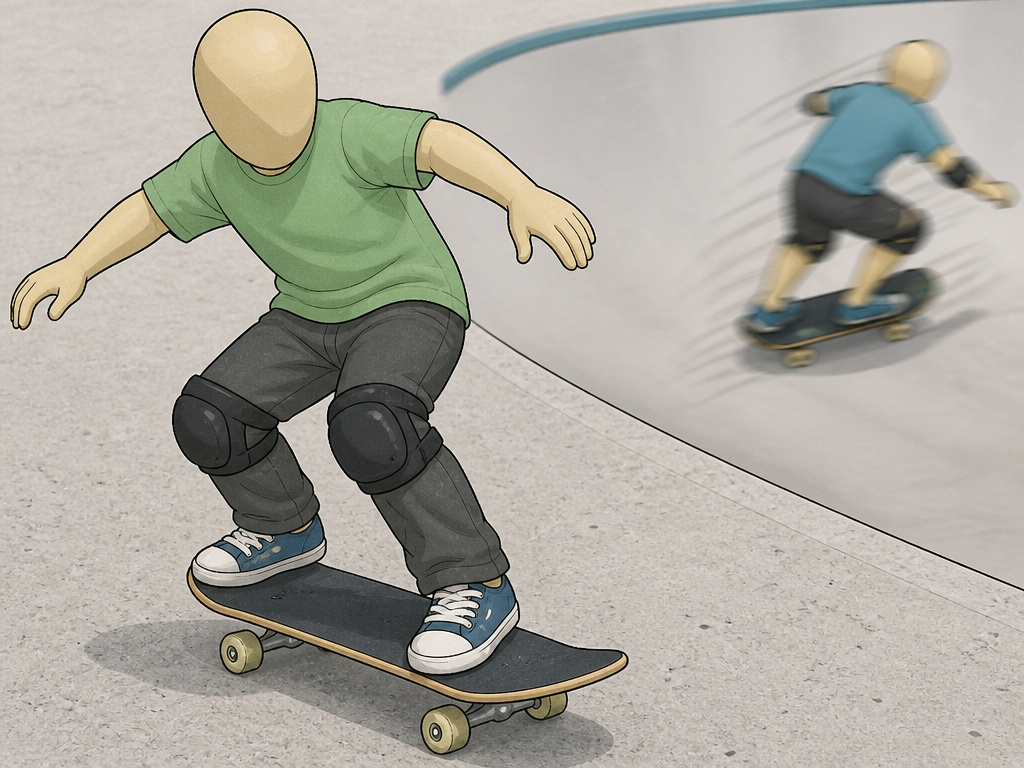
You’re new. You’re nervous. Everyone was there. Here’s how to navigate your first sessions without becoming the person everyone avoids.
First, timing is everything. The City of Revelstoke’s guide advises beginners to go at non-peak hours, early mornings, avoiding afternoons and weekends. A crowded park is fast, intimidating, and harder to read. An empty park gives you room to learn.
Second, claim your space wisely. Don’t plant yourself in the center of the main bowl or on the most popular ledge. Revelstoke suggests beginners “stay closer to the sides of the park.” The center may look open, but it’s often right in the middle of the line advanced skaters are using. Find a flat, out-of-the-way spot to practice pushes and kick-turns.
Third, actively supervise young skaters. This isn’t optional. If you’re a parent, you are the eyes and ears. The rules are clear but vary:
- City of Tampa: Children 10 and under must be accompanied by a parent at all times.
- City of Sandy: Riders aged 10 years and under must be accompanied by an adult.
- City of Orlando: Adult supervision is required for those ages 9 and under, and strongly recommended for ages 13 and under.
This goes beyond just being present. It means teaching them the rules, helping them learn to supervise kids at the skatepark by pointing out the flow, and making sure they aren’t wandering into danger. A park is not a playground or free daycare.
Finally, clean up after yourself. This is universal. Put trash in the bins. Don’t graffiti. Respect the neighborhood by keeping noise down. It’s your park. Taking care of it is the easiest way to show respect for the community and the skateboarding culture you’re joining.
Enforcement and Consequences: More Than a Dirty Look
Break an unwritten rule, and you might get a verbal correction or cold shoulder. Break a city ordinance, and the consequences are formal and documented.
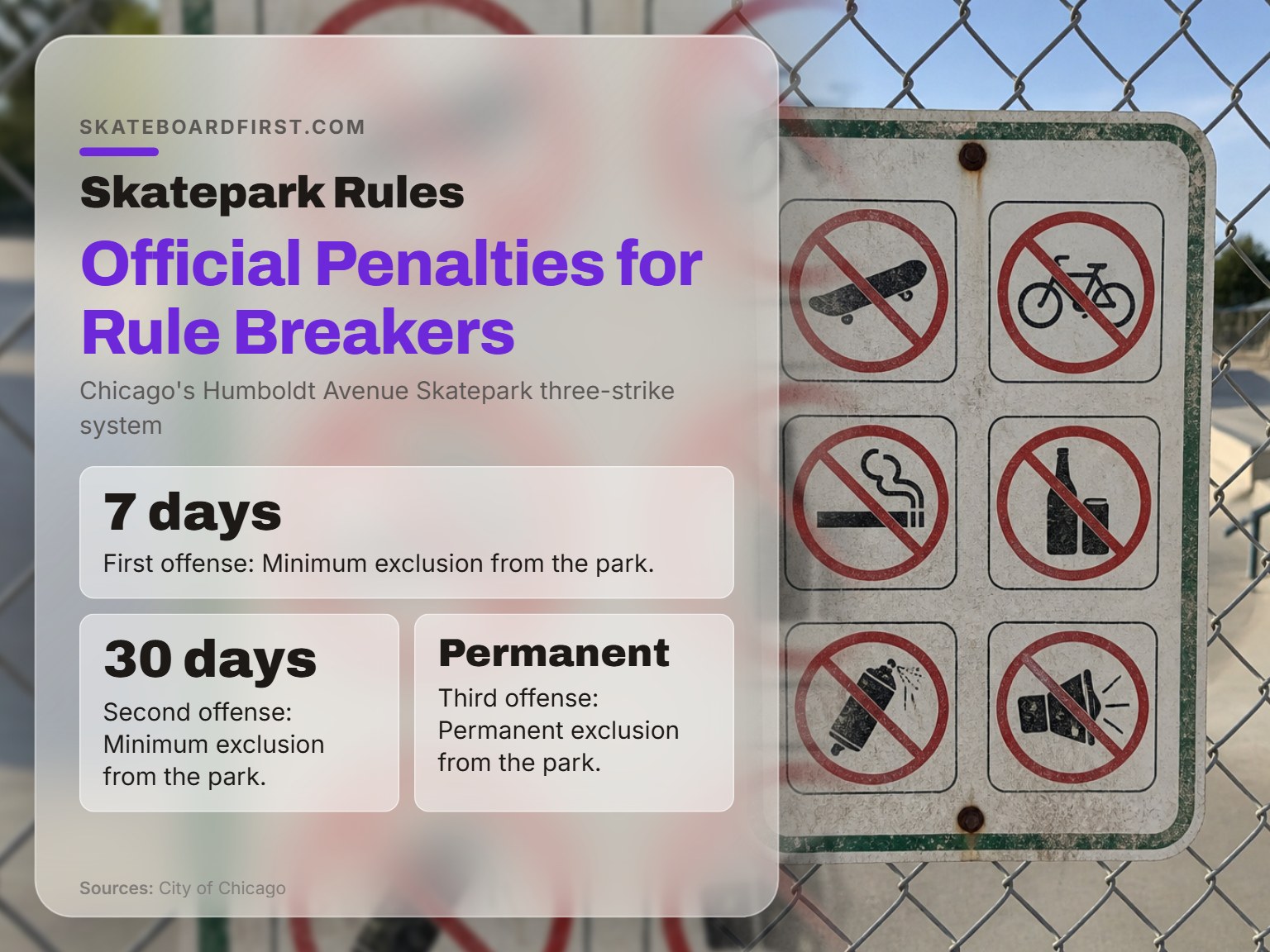
The City of Chicago’s Humboldt Avenue Skatepark has a published three-strike system:
- First offense: Minimum seven-day exclusion from the park.
- Second offense: Minimum thirty-day exclusion.
- Third offense: Permanent exclusion.
Other cities reserve the right to “restrict entry to the facility and ask individuals to leave” (Orlando, Tampa) or even prosecute for trespassing (Orlando). Vandalism or graffiti often results in long-term or permanent bans.
The point is this: the rules posted on the fence or the city website aren’t suggestions. They are the terms of use for a public facility. Following them is the price of admission. Learning the unwritten social rules is how you go from being allowed in to being accepted. It’s how you start to make friends instead of just sharing concrete.
Frequently Asked Questions
What is the most important skatepark etiquette rule?
The absolute most important rule is waiting your turn and not “snaking.” Every other rule about awareness and flow stems from this. It prevents collisions and shows respect for other skaters. Municipal rules like helmet laws are critical for legal access, but the social foundation is taking turns.
Do I have to wear a helmet at a skatepark?
It depends entirely on your local park’s rules. Some cities, like Tampa and Fresno, require helmets for everyone. Others, like Orlando, require them only for minors. Cities like Chicago and Frederick only recommend them. Always check the official regulations for your specific skatepark online. When in doubt, wear one, it’s never a bad idea.
Can I bring my scooter or BMX bike to the skatepark?
Maybe. You must check your park’s specific rules. Cities like Chicago allow scooters and BMX bikes. Cities like Tampa and Frederick explicitly prohibit them. There is no universal answer. Bringing a bike to a park that bans them will get you turned away.
What should I do if my skateboard gets away from me?
Yell “Board!” immediately if it is heading toward other people. This is a specific, recognized warning procedure mentioned in the City of Mill Valley’s official rules. It alerts others to protect themselves and shows you’re aware of the hazard.
Is it okay to listen to music with headphones at the skatepark?
Check the local rules. Some parks, like Frederick, allow personal music devices with headphones. Others, like Chicago, prohibit wearing any headset or earplugs while skating for safety reasons. It’s another example of a rule that varies by municipality.
The Bottom Line
Skatepark etiquette isn’t just about being polite. It’s a two-layer system: the unwritten social code that keeps sessions flowing, and the written municipal code that determines if you can even be there. Your first visit to any park should involve a quick online search for that city’s official rules, know the helmet law, the waiver policy, the equipment bans. Then, spend ten minutes watching. See the flow, learn the lines, understand the turns. That combination, respecting the law of the land and the law of the park, is what keeps parks open, sessions fun, and helps you become part of the scene instead of just a visitor. Now go roll in.
