
How to Choose a Longboard: The 3 Things That Decide
This post contains affiliate links. As an Amazon Associate, we earn from qualifying purchases.
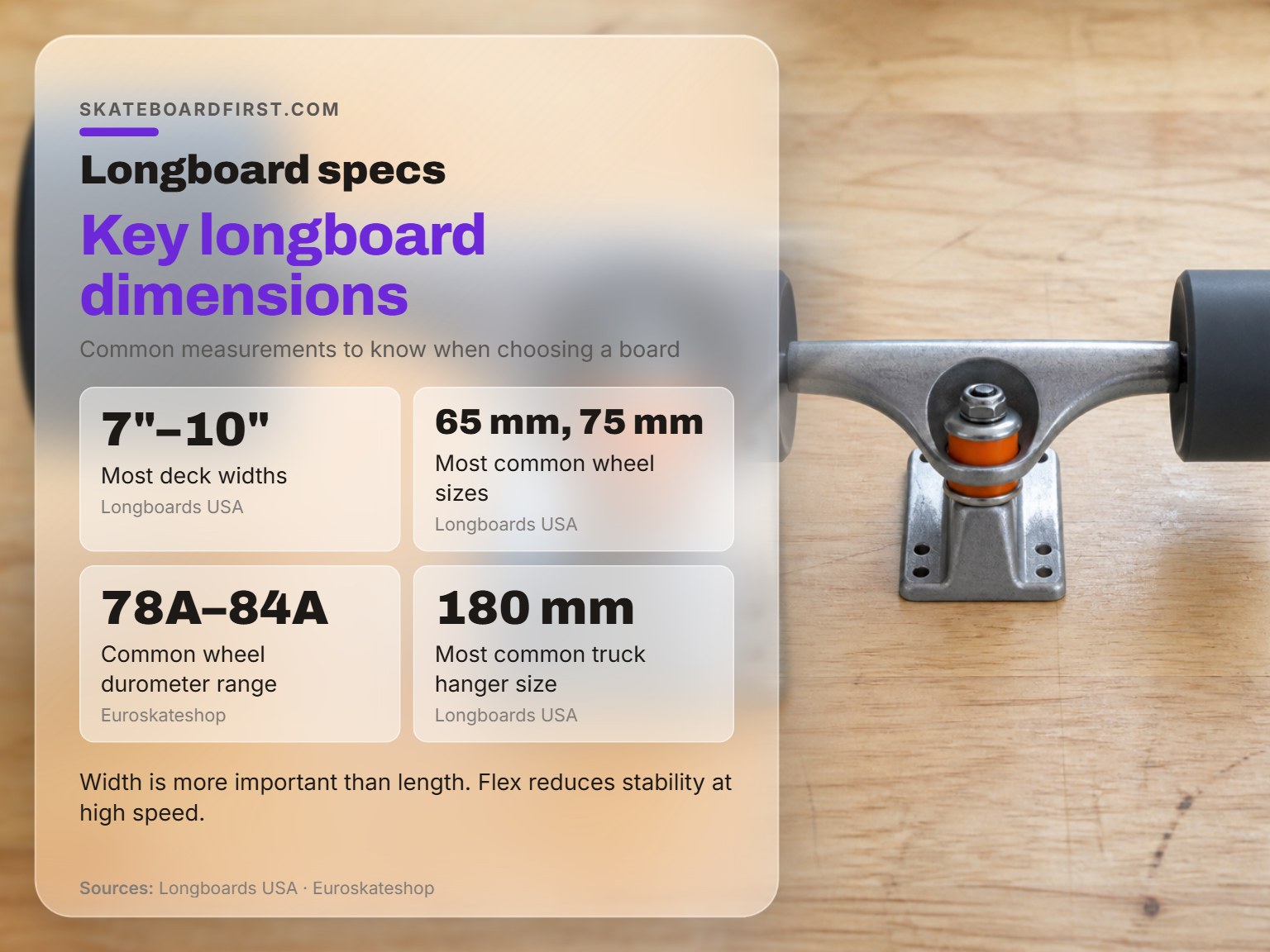
To choose a longboard, match three specific things: your main riding style (cruising, carving, downhill), a deck shape built for that style (like a pintail for cruising or a drop-through for stability), and components (trucks, wheels) with specs that support it, most commonly 180mm reverse kingpin trucks and wheels in a durometer range suitable for your style.
That match-up is the whole game. A board built for relaxed cruising will fight you on a steep hill, and a stiff downhill deck will feel dead on a smooth bike path. Knowing how to choose a longboard is key because the specs in the answer aren’t random; each one pushes the board’s behavior in a specific direction.
What follows is a breakdown of how each part, deck, trucks, wheels, actually changes the ride under your feet as part of how to choose a longboard. We will look at the numbers that matter (like why 180mm trucks are the default), the common mistakes (like pairing flex with speed), and how to test a board before you commit.
Key Takeaways
- Match your first riding style to a dedicated deck shape, a pintail for cruising, a drop-through for stability, a symmetrical top-mount for freeride.
- Truck width (150mm or 180mm) should roughly match your deck width; Longboards USA states 180mm is most common, while Ghost Boards says 180mm provides the best all-around performance.
- Wheel durometer (hardness) decides grip, 78A wheels smooth out rough pavement for cruising, while harder wheels (e.g., 86A according to Longboards USA) slide more predictably for freestyle and freeride.
- Deck flex feels great at low speeds but reduces stability at high speeds and can cause speed wobbles; match flex to your intended pace.
- Always wear a skateboarding-specific helmet and wrist guards; the CPSC notes wrist guards are especially important for reducing fracture risk.
The 3 Things That Actually Decide Your Ride
Sector 9’s buyer guide makes the point bluntly: two boards can have the same deck length and feel completely different. The shape, wheelbase, deck height, flex, and truck setup all influence how the board behaves. Chasing a single measurement, like deck length, misses the point. Your goal in how to choose a longboard is to align three connected choices.
The ride of a longboard is determined by the interplay of deck shape (which dictates foot placement and center of gravity), truck geometry and width (which control turn response and stability), and wheel size and hardness (which govern grip, roll speed, and vibration damping). Changing one changes the others.
First, what do you want to do most? Be honest. If you picture yourself rolling smoothly to class or along a beach path, that’s cruising. If you imagine leaning into big, flowing turns down a gentle hill, that’s carving. If speed and controlled slides get your heart racing, that’s freeride or downhill. Your answer here points to a family of deck shapes.
Second, the deck shape enables that style. This isn’t just about looks. A pintail’s narrow, pointed tail is inspired by surfboards and is fantastic for a relaxed, stable cruise. A drop-through deck, where the truck baseplate mounts through a hole in the board, lowers your center of gravity for better stability at speed, a must for downhill. A symmetrical top-mount with a kicktail is the playground for freeride and sliding tricks.
Third, the components must support the mission. Putting soft, grippy cruising wheels on a stiff downhill deck is a mismatch. The board will feel sluggish and unresponsive. The specs exist to tune the board for the job.
Deck Choice: It’s About Shape and Feel, Not Just Length
The deck is your platform. Length gets the most attention, but width and shape dictate how you’ll use it.
Longboards USA states width is more important than length, as it determines your foot space. Most decks run between 7″ and 10″ wide. Your feet stand almost perpendicular to the board, so a starting point is a width between 7″ and 10″ close to your shoe size. A deck that’s too narrow feels tippy; too wide feels cumbersome to push.
The “right” length depends on riding style. Ghost Boards notes most adult riders choose a 40″ deck. Euroskateshop provides a different, style-based guideline: under 70 cm for transport, 70–95 cm for carving/freestyle, 95–107 cm for freeride/downhill, and over 107 cm for cruising/downhill. The CPSC adds that longer boards increase stability. The takeaway? Length supports stability, but wheelbase (the distance between your trucks) affects turning more. A shorter wheelbase on a long deck makes the board turn quicker.
Flex is the deck’s springiness. It absorbs vibration and feels forgiving. Sources highlight a trade-off: Longboards USA states flex and speed don’t go together, while Euroskateshop specifies that flex feels great at low speeds, but at high speeds, too much flex reduces stability and can cause speed wobbles. Euroskateshop specifies that flex feels great at low speeds, but at high speeds, too much flex reduces stability and can cause speed wobbles. A flexible pintail is a dream on a bike path but a hazard on a steep hill.
I got this wrong with my first “real” longboard, a flexible pintail. It was heaven on flat ground. The first time I pointed it down a real hill, the deck started bouncing under my feet before I even hit a moderate speed. The experience turned me from a speed enthusiast into a dedicated carver that day.
| Deck Shape | Best For | Key Feature | Avoid If You Want |
|---|---|---|---|
| Pintail | Cruising, Carving | Narrow, pointed tail; stable, surfy feel | High-speed stability, technical sliding |
| Drop-Through | Downhill, Commuting | Lowered platform for stability and push efficiency | Pop for tricks, highly responsive turning |
| Symmetrical Top-Mount | Freeride, Sliding | Same shape nose and tail; ideal for slides and switch riding | Simple, straightforward cruising |
Trucks: Your Steering and Stability Hub
Trucks are the metal T-shaped assemblies that connect your wheels to the deck. They are your steering and are arguably the most important part for how the board feels. The industry standard for longboards is reverse kingpin (RKP) trucks. As Ghost Boards states, you should almost always use RKP trucks on longboards; they provide better carving and stability at speed compared to the traditional kingpin skateboard trucks.
The hanger is the axle part of the truck. Longboards USA specifies two common hanger sizes: 150 mm and 180 mm, with 180 mm being most common for longboards. The axle size should be about the same as the width of your board. A 180mm hanger on a wide deck provides a stable, predictable turn. A 150mm hanger on a narrower deck offers quicker, more nimble steering.
Truck tightness is your personal tuning knob. The Decathlon guide warns of the limits: overtightening the kingpin can damage the surrounding bushings, while excessive loosening can cause wheel bite (the wheel touches the deck), making it instantly lock up. A quarter-turn of the kingpin nut can change the board’s personality from lazy to lively.
Common mistake: Ignoring truck tightness as a setup step. A board that feels “dead” or “too twitchy” out of the box often just needs a quarter-turn adjustment on the kingpin nut. Ride for ten minutes, adjust, repeat.
Wheels: The Grip vs. Slide Trade-Off
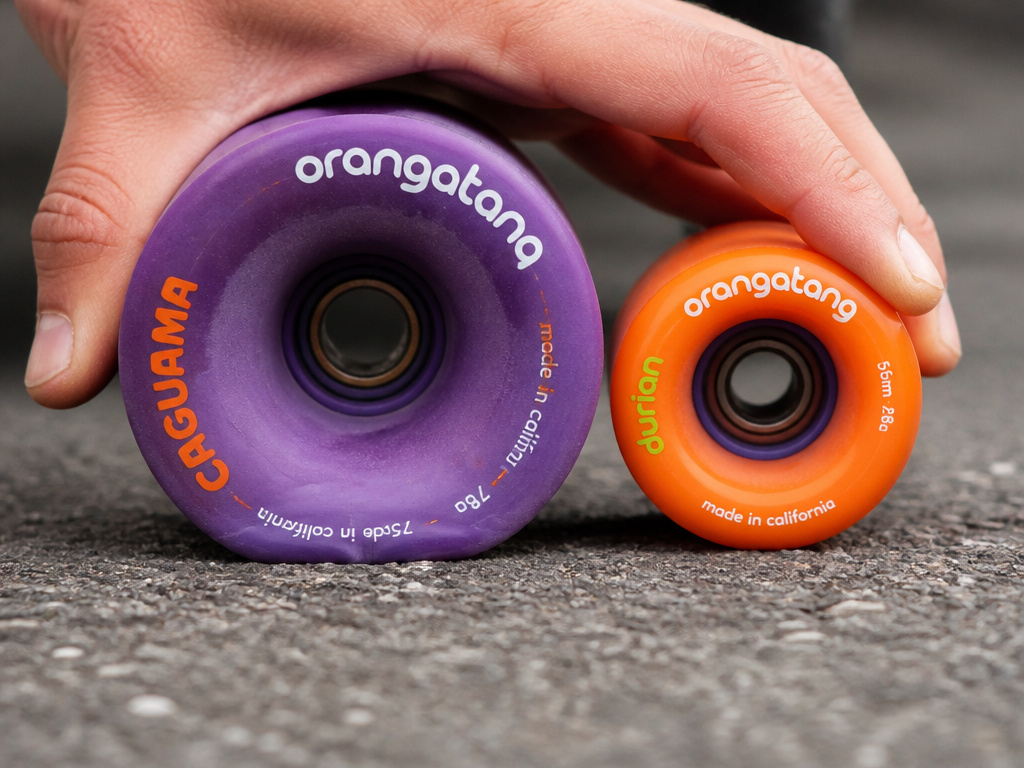
Wheels connect you to the ground. Their size and hardness determine your ride quality, speed, and how the board breaks traction.
Larger wheels (e.g., 75mm) roll faster and smoother over cracks and pebbles but can cause wheel bite on tighter setups. Smaller wheels (e.g., 65mm) accelerate quicker but vibrate more on rough surfaces.
Durometer is the hardness rating, measured on the ‘A’ scale. Here’s a sourced disagreement to note: Longboards USA cites 78A as common for cruising and 86A for freestyle/freeride. Euroskateshop states most longboard wheels fall between 78A and 84A. Softer wheels (lower number) grip more and absorb vibration, while harder wheels (higher number) slide more easily.
A 78A wheel on rough asphalt sounds like a soft brush. An 86A wheel on the same ground chatters and transmits every bump. The physical difference is in the urethane’s ability to deform and rebound.
For a visual guide on how these specs come together on top models, see our roundup of the best longboards.
Safety Gear Is Non-Negotiable
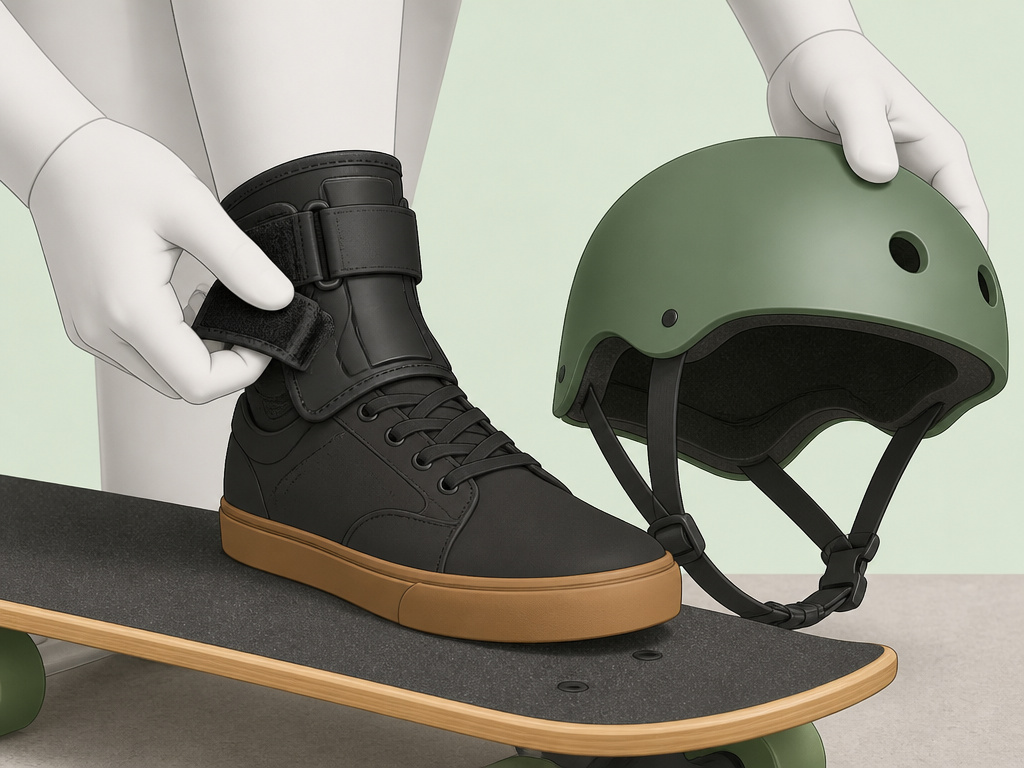
This isn’t scare talk. It’s the baseline. The U.S. Consumer Product Safety Commission (CPSC) is explicit: wear protective gear when riding, especially a helmet. Wrist guards are especially important for reducing the risk of fractures.
A skateboarding-specific helmet has a hard shell with a foam interior and fits snugly with the chin strap fastened. Knee and elbow pads protect the joints you will fall on. Flat-soled shoes give you proper board feel. This CPSC skateboarding safety fact sheet outlines the specific hazards and mitigations.
I’ll be the first to admit I skated for a year without wrist guards. One routine fall onto an outstretched palm sidelined me for six weeks. The cost of the guards is less than a single urgent care visit.
Complete Board vs. Custom Build: The Beginner’s Choice
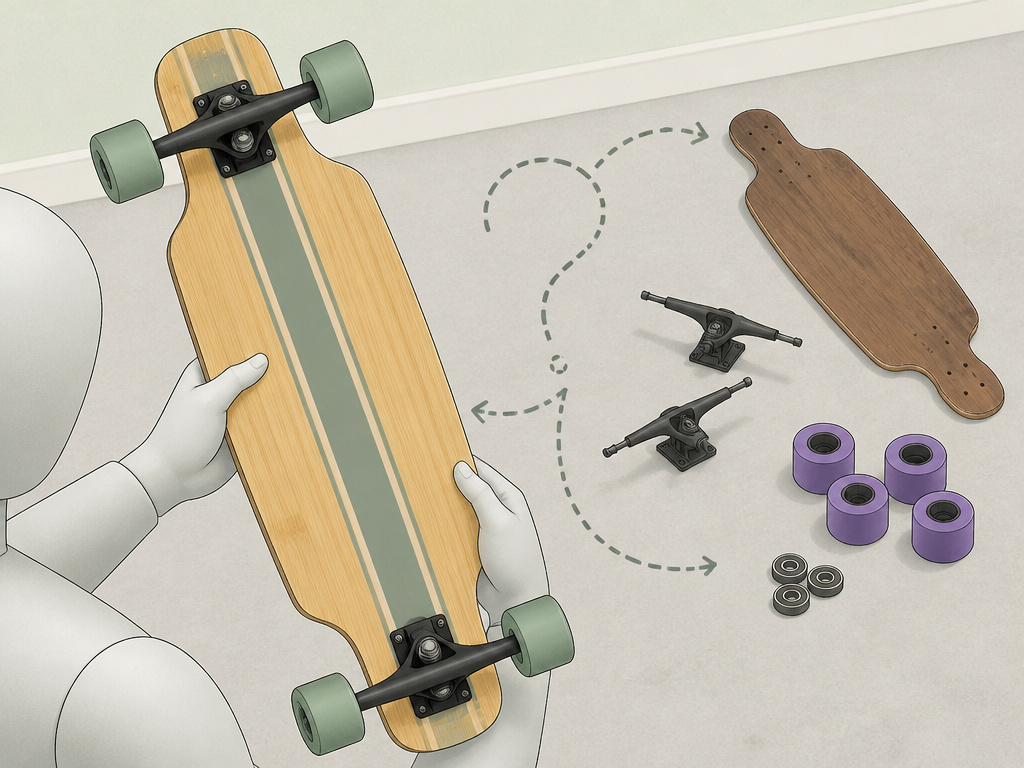
As a new rider, you face a choice: buy a complete board or pick individual parts. A complete from a brand like Sector 9 or Arbor ensures the components (deck, trucks, wheels, bearings) are matched and balanced for a specific riding style. It’s the recommended path. You get a coherent, ride-tested setup out of the box.
Building a custom board is fantastic for dialing in a very specific feel once you know what you like. As a beginner, you don’t have those preferences yet. You’ll spend more time researching and second-guessing than skating. Start with a complete. If you’re unsure which style to pick, our guide on the best longboards for beginners filters for proven, beginner-friendly setups.
The most common pitfall is buying a cheap, toy-store complete. The trucks feel like plastic, the bearings don’t roll, and the wheels are dead. It convinces new skaters they have no talent. Spend the extra forty dollars at a local skate shop or a dedicated online retailer. It buys years of not hating the sport.
How to Test a Board Before You Buy
You can read every longboard size chart and guide, but feel is personal. Your height and weight influence how a deck’s flex behaves and your comfort on it.
- Visit a Local Skate Shop. This is the best method. Explain your intended use, and ask to stand on a few boards. Feel the width, the concave, the flex under your weight.
- Ask a Friend. Know someone who longboards? Ask if you can push theirs around a parking lot for five minutes. The feel of a real board under your feet is more educational than any article.
- Check Return Policies. Many reputable online skate shops have generous return policies for unused boards. If you order one and it just doesn’t feel right when you stand on it on carpet, send it back.
Understanding the differences between boards is also crucial if you’re weighing a longboard against a standard skateboard or cruiser.
What brand of longboard should I buy?
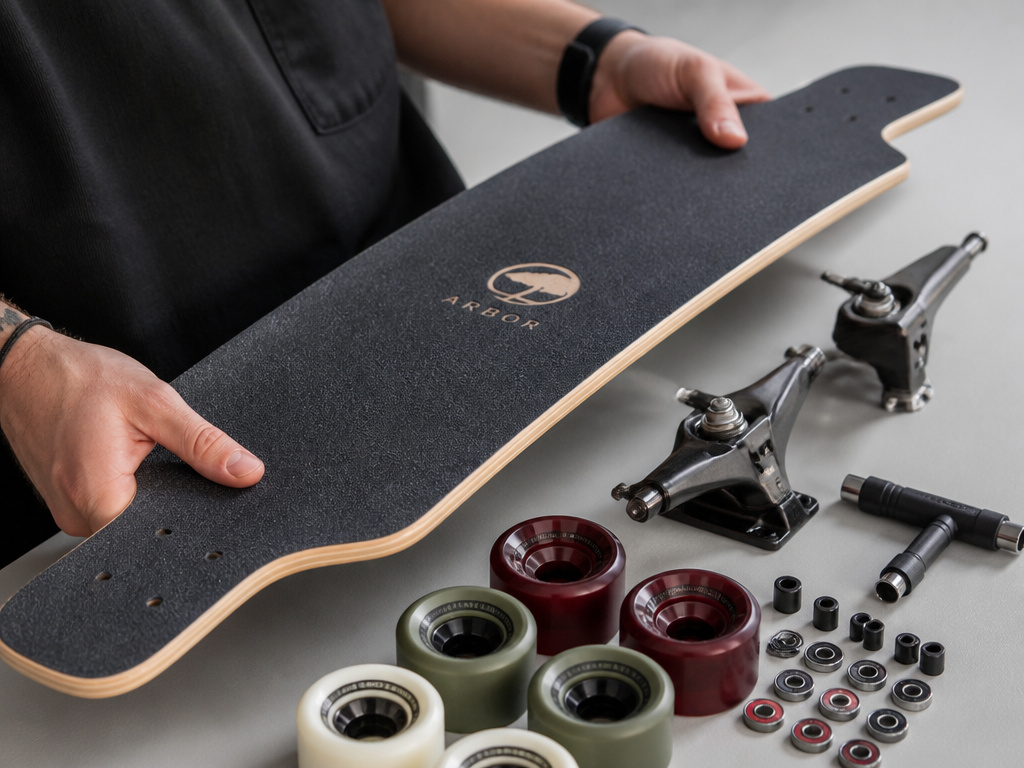
Choosing a brand often comes down to how the board’s specific features match your riding style, not the logo on the bottom. A brand’s reputation is built on the quality of its components and construction, so focus on the specs that matter for your needs. Since two boards with the same deck length can feel completely different, look for brands that clearly communicate the shape, wheelbase, flex, and truck setup of each model. Your best bet is to find a brand whose complete board setups are designed for the type of riding you plan to do most, whether that’s cruising, carving, or downhill. The right brand is the one that builds a board where all the parts work together for your intended use.
Frequently Asked Questions
What type of longboard is best for a beginner?
Complete, mid-length pintail or drop-through cruiser is best. It’s stable, forgiving, and designed for the relaxed riding most beginners start with. Brands like Arbor and Sector 9 make excellent beginner completes. Avoid stiff, specialized downhill boards as a first purchase.
What size longboard should I get if I’m 5’7″?
Your height is less critical than your shoe size and intended style. A deck width close to your shoe size will likely feel comfortable. A length in the range suggested for your intended riding style offers a stable yet manageable platform for cruising and learning to carve.
Is a 9-foot longboard good for beginners?
No. A 9-foot board is a surf-skate hybrid, not a typical longboard. It’s extremely large, heavy, and difficult to maneuver or transport. It is not recommended for a beginner learning basic pushing, turning, and stopping.
Can I use my regular skateboard trucks on a longboard?
You can, but you shouldn’t. Traditional skateboard trucks (standard kingpin) are designed for quick, sharp turns on a smaller deck. On a longboard, they make the ride twitchy and unstable, especially at speed. Reverse kingpin trucks are the longboard standard for a reason.
How often should I replace longboard wheels?
There’s no set timeline. Replace them when they become visibly uneven (coned) from hard braking or sliding, or when they develop flat spots that cause a bumpy ride. For a casual cruiser, that could be years. For an active freerider, it might be every few months.
The Bottom Line
Choosing a longboard is about matching, not maxing out specs. Pick the style you’ll actually do most days, find a deck shape built for it, and let the standard component specs (180mm RKP trucks, 78A-84A wheels) do their job. Your first board should feel inviting, not intimidating.
One rule most guides skip: if you buy a complete and something feels “off”, too stiff, too loose, too slow, the fix is usually a single component swap, not a whole new board. Swapping to softer or harder longboard wheels is the cheapest way to dramatically change your ride. Start there.
Trust the process, one session at a time. The right board is the one that makes you want to keep rolling.
