
Longboard Size Chart: Matching Board to Rider and Style
This post contains affiliate links. As an Amazon Associate, we earn from qualifying purchases.
A longboard size chart matches deck length, width, and flex to your weight, riding style, and the surfaces you’ll ride. Your weight is the most important factor; exceeding the manufacturer’s weight limit risks deck damage.
The longboard size chart gives you a range, but the final choice lives in the specs. A board’s flex rating and ply count are direct translations of your weight into deck strength, and ignoring those numbers is how decks crack. Wheel hardness and size decide whether you glide over rough pavement or stick to smooth concrete.
What follows is the translation layer between generic advice and the numbers printed in the manuals. This section explains the official weight limits, the ply-count debate, wheel specs for your local terrain, and where the standard advice actually breaks down.
Key Takeaways
- Your weight is the first filter, exceeding the manufacturer’s max user weight voids any warranty and risks deck failure.
- Match wheel hardness to your pavement: soft wheels (78A–80A) absorb vibration on rough streets, while harder wheels (85A+) slide easier on smooth park concrete.
- Ply count isn’t just about strength; for example, the Pylongbaord X-41 spec sheet recommends its 8-ply version for better control and responsiveness, while other manufacturers market higher ply counts (like 9-ply) as stronger and premium.
The Longboard Size Chart (Length, Width & Weight)
Forget height-based charts for a moment. The most critical number on any board’s spec sheet is the maximum user weight. It’s a load rating, not a suggestion. The FunTomia Twin Tip Bamboo, for example, comes in three flex ratings tied directly to weight: Flex 3 for riders up to 68 kg, Flex 2 for up to 84 kg, and Flex 1 for up to 122 kg. Ignore this, and you’re riding a deck that’s already stressed before you push off.
Length and width work together. A longer board (over 40 inches) feels more stable at speed and gives you more platform for foot movements. A shorter board (under 36 inches) is quicker to turn and easier to carry. Width is about your foot placement. If your feet hang over the edges on a narrow deck, you’ll feel less control.
Technical Snippet: Longboard construction in the European market adheres to the DIN EN 13613 standard for skateboards, which governs safety and performance requirements. Manufacturer specifications, including maximum user weight, are derived from testing to this standard. Deck flex is engineered through layered construction (ply) and material choices (e.g., bamboo, maple, fiberglass reinforcement) to meet these load ratings.
Here is how the primary dimensions translate for different goals:
| Riding Style | Ideal Deck Length | Ideal Deck Width | Why It Works |
|---|---|---|---|
| Cruising & Commuting | 38″ – 42″ | 9″ – 10″ | Longer wheelbase smooths out cracks and bumps; wider deck offers stable footing for pushing. |
| Carving & Pumping | 36″ – 40″ | 8.5″ – 9.5″ | Moderate length allows for deep, surf-like turns without being unwieldy. |
| Downhill & Speed | 38″ – 42″ (stiff flex) | 9.5″ – 10.5″ | Stiff, longer deck provides a stable, predictable platform at high speeds. |
| Dancing & Freestyle | 44″ and above | 9″ – 10″ | Extra length is necessary for cross-stepping and footwork tricks. |
The common mistake: choosing a board based solely on a rider’s height. A tall, lightweight rider needs a different board than a shorter, heavier rider. The chart above is a style guide, but you must cross-reference it with the hard weight limits from the manufacturer.
Weight Limits and Deck Flex: Reading the Spec Sheet
This is where the commodity advice stops and the manual’s fine print starts. Every reputable manufacturer publishes a maximum user weight. For the NILS longboard, it’s 100 kg. For the FunTomia Freerider, it’s 130 kg. For the Evolve Hadean Carbon electric board, it’s 120 kg. These aren’t arbitrary, they’re the result of stress tests.
Deck flex is how you fine-tune the feel within your weight range. More flex gives a springy, surfy feel that can absorb vibration. Less flex (stiffer) offers precise, instant response. Your weight determines which flex rating you should be shopping for. The FunTomia Camber Bambusholz+ model explicitly lists different ply counts for different weight brackets: 4-ply for up to 68 kg, 5-ply for up to 84 kg, and 6-ply for up to 122 kg.
Where this goes sideways: Assuming a higher ply count is always better. The Pylongbaord X-41 spec sheet recommends its 8-layer version over a 9-layer version, stating the greater flexibility provides “much better control and responsiveness.” For freestyle or carving, a livelier deck can be a performance advantage, not a weakness.
So, how do you find your flex? First, locate your weight on the manufacturer’s chart. If you’re between weights, sizing down in flex (softer) will give a more forgiving ride; sizing up (stiffer) will feel more precise but transmit more road vibration. This decision is a core part of choosing a longboard that fits you, not just the category.
Wheels and Bearings: Sizing for Surface and Speed
Your deck carries you, but your wheels decide how the ground feels. The two specs that matter are diameter (mm) and hardness (durometer).
Wheel hardness follows a simple rule: lower numbers are softer. The NILS manual spells it out: 78A–80A wheels are soft, offer great grip and vibration damping, and are ideal for uneven surfaces. 85A–92A wheels are harder, faster, more durable, but less comfortable, better for smooth surfaces like park concrete or fresh asphalt. That 78A feel is a dull roar over chip-seal; a 92A wheel is a sharp buzz.
Diameter affects roll speed and stability. Again, from the NILS guide: 60–65 mm wheels are small, slower, and stable, good for cruising and learning. 70–75 mm wheels are the versatile medium, ideal for recreational riding. 76–85 mm wheels are large, fast, and for advanced or downhill riding.
Some manufacturers, like Pylongbaord and Yocaher, use ABEC9 Chrome and ABEC 7 Chrome bearings respectively in their specific models. One universal rule from the NILS manual: Do not lubricate bearings – they are factory lubricated. Adding oil attracts grit and creates a grinding paste.
Easy to miss: Wheel contact patch.
Selecting the right longboard trucks is the final piece, as they need to match your deck width and wheel size to avoid bite. A complete guide to types of longboards can show how these components come together differently for dancing versus downhill.
How Riding Style Changes Your Size Choice
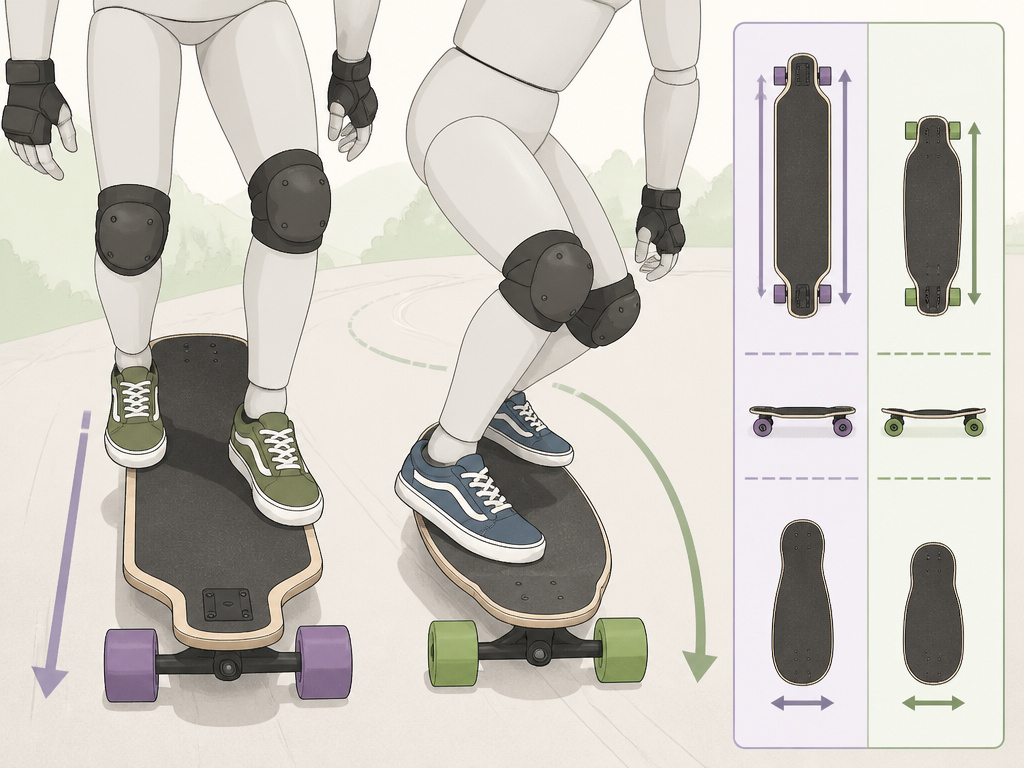
Your discipline dictates your dimensions. A size chart for a downhill racer looks nothing like one for a boardwalk cruiser.
Downhill/Speed: Priority is stability and stiffness. Look for longer decks (40″+) with a stiff flex rating, like the 9-ply FunTomia Camber rated for 130 kg. This is a specialized tool.
Cruising/Carving: This is the most common use and the most flexible range. A deck like the 41″ Yocaher Drop Through (9-ply maple, low flex) is typical. A moderate wheelbase (the Yocaher’s is 31.5″) offers a blend of stability and turnability. Wheels in the 70-75mm, 78A-80A range provide a smooth roll over varied pavement.
Dancing/Freestyle: Length is paramount for footwork. Boards start at 44 inches and go longer. They often have symmetrical shapes and twin kicks for tricks in both directions. The conversation around a longboard vs skateboard is relevant here, as freestyle longboards borrow tech from street decks.
Pumping/Slalom: This is about agility. Shorter decks (36″-40″) with a responsive flex and a tight wheelbase let you whip back and forth to generate speed without pushing.
Special Cases and Edge Cases
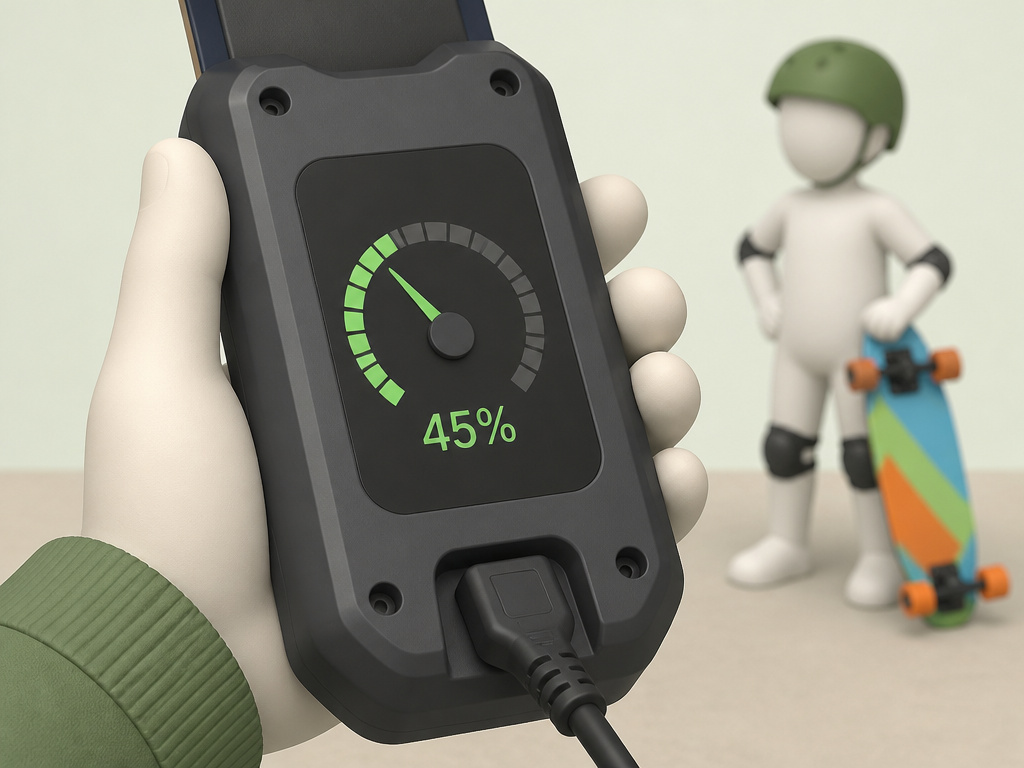
The standard chart assumes a traditional, rider-powered longboard. Two scenarios break the rules: electric longboards and young riders.
Electric longboards like the Evolve Hadean have their own strict weight limits (120 kg for the Carbon, 100 kg for the Bamboo) due to the stress on the drivetrain and battery enclosure. More critically, their battery has specific storage needs. The manual states for storage of one month or more, the battery must be kept at 40–50% charge. Storing it fully charged or near depleted causes permanent damage. This isn’t maintenance; it’s mandatory preservation.
For children, age is as important as weight. The generic manual states the longboard is suitable for ages 6 and up, with those under 6 requiring adult supervision. The NILS manual raises that to age 8 for unsupervised use. This isn’t about ability, it’s about the judgment needed to navigate spaces safely. A child’s board will have a lower weight limit and often a shorter, more manageable length.
Another edge case is the very heavy or very light rider. If you’re near the top limit of a standard board (say, 120 kg), you must choose a model explicitly rated for that weight, like the Freerider. Don’t push a “100 kg max” board. Conversely, a very light rider might find even a “soft” flex board too stiff, losing the desired lively feel. They might seek out specialty brands or custom builders.
How to choose longboard width for your shoe size
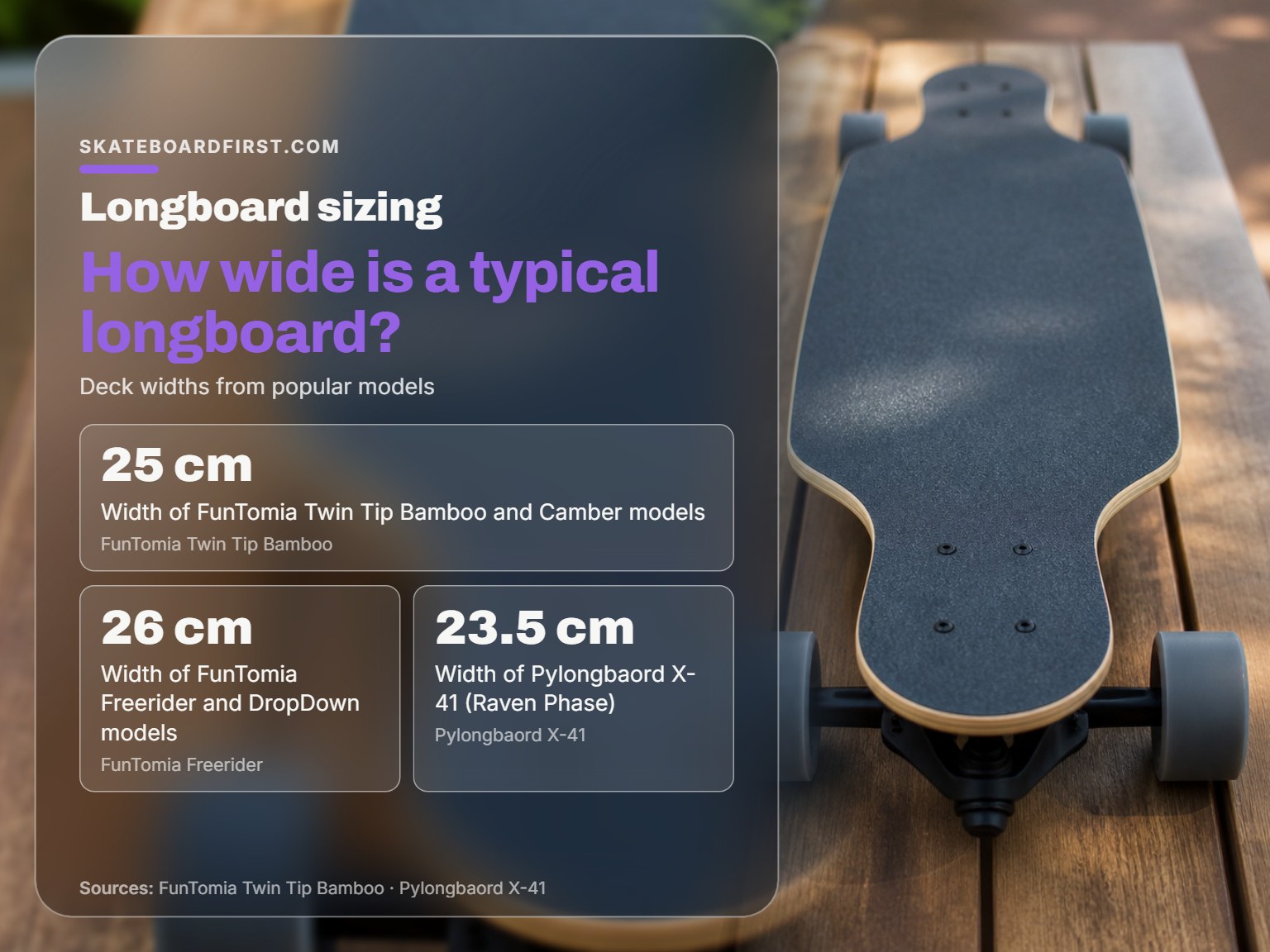
Your feet need a stable platform. A board that’s too narrow will feel tippy and insecure, while one that’s too wide can be cumbersome to push and carve. The goal is to have the balls of your feet and your heels close to the edges without hanging off excessively. It’s a balance between precise foot placement and overall comfort during long rides.
Frequently Asked Questions
How do I know what size longboard to get?
Start with your weight and find boards whose maximum user weight you fall within. Then, filter by your primary riding style (cruising, carving, etc.) to narrow the length and width range. Finally, read the spec sheet for flex and ply count to dial in the feel. Your local pavement quality will decide your wheel hardness.
What is the standard size of a longboard?
The Yocaher Drop Through Complete at 41″ x 9.5″ with a 31.5″ wheelbase is a typical example of this category.
How long should my longboard be if I’m 5’4″?
Your height is less critical than your weight and style. A rider who is 5’4″ and wants to cruise could comfortably ride a board from 36″ to 40″ long. If you want to dance, you’d look at 44″ or longer.
Is a 9’6″ longboard too big?
For skateboarding, yes, that’s a surfboard dimension. In skateboarding, longboards typically range from about 33 inches to 50+ inches. A 9-foot board (108 inches) does not exist in the skateboard market. This confusion highlights the importance of clarifying you’re looking for a skateboard longboard, not a surfboard.
Can I use a longboard if I’m over the weight limit?
You can, but you shouldn’t. The weight limit is an engineering specification for safe performance. Exceeding it stresses the deck, trucks, and hardware, increasing the risk of sudden failure (like a deck snapping) which can cause a serious crash. The warranty is also void.
Before You Go
The chart gives you a corridor, but the manufacturer’s manual gives you the guardrails. Your weight locks in the flex and ply count. Your local pavement chooses your wheels. Everything else is preference refined by riding.
If you take away one thing, let it be this: find the maximum user weight for any board you’re considering before you look at the graphic on the deck. That number is the foundation. A board that can’t hold you is just artwork.
Everything else, the carve, the speed, the smooth push home, starts from there. Get that right, and the rest is tuning.
