
How to Tell If You Are Goofy or Regular: The Slide Test
This post contains affiliate links. As an Amazon Associate, we earn from qualifying purchases.
Regular means your left foot is forward on the board; goofy means your right foot is forward. The fastest way to find yours is the slide test: run and slide on a smooth floor in socks, the foot that goes forward is your front foot. Most riders find one way feels stable and the other feels wobbly within the first few minutes on a board.
The slide test works because it triggers your instinct for balance, not your overthinking brain. It’s a simple method for how to tell if you are goofy or regular. Online quizzes and complicated theories about handedness add noise. Your body already knows which foot it wants to lead.
What follows: three physical tests you can do right now, what to do if the results conflict, and how to set up your board once you know. By the end, you’ll be rolling comfortably in your natural stance.
Key Takeaways
- Use the slide test for a quick, instinctive answer, the foot you lead with on a smooth floor is your front foot.
- Confirm your stance with the gentle push test; the foot you step forward with to catch yourself is your front foot.
- If tests disagree, stand on the board and push off a few times each way, the stance that feels stable and controlled is correct.
- Your dominant foot has no fixed rule for stance, right-footed riders can be regular or goofy.
The Slide Test (Socks on a Smooth Floor)
This is the one I trust. Find a stretch of smooth, unobstructed floor, laminate, tile, or hardwood works, and put on socks. Take a few steps back, run forward, and slide sideways on both feet. Which foot naturally goes in front? Do it five or six times. The same foot will lead almost every time.
Common mistake: Trying to decide which foot should go forward. The test works when you don’t think. Just run and slide. Your body’s reflex for staying upright picks the lead foot.
I did this in my hallway about ten times. My left foot led every slide. An online quiz had told me I was probably goofy. The floor disagreed. It took two minutes and was more reliable than any questionnaire. This reflex is why the slide test is the most cited method in skate and snowboard communities, it bypasses your conscious choice and shows your natural balance point.
The Gentle Push Test
Have a friend stand behind you while you stand straight, feet together, looking ahead. Ask them to give you a firm, unexpected shove between the shoulder blades, just enough to make you take a step forward to catch yourself. Don’t overthink it. The foot you step forward with is almost always your front foot.
It’s a test of your protective instinct. When you feel yourself falling forward, your dominant stabilizing foot shoots out. For many people, this matches the slide test result. If you don’t have a helper, you can mimic it by standing on the edge of a step and letting yourself fall forward onto the lower step, your leading foot will be the same.
The key is the surprise. If you know the push is coming, you’ll start calculating, and the result gets muddy. My wife shoved me (patiently) a few times, and I stepped left every single time. That confirmed my slide test and sealed it: regular.
Stand on the Board and Feel It
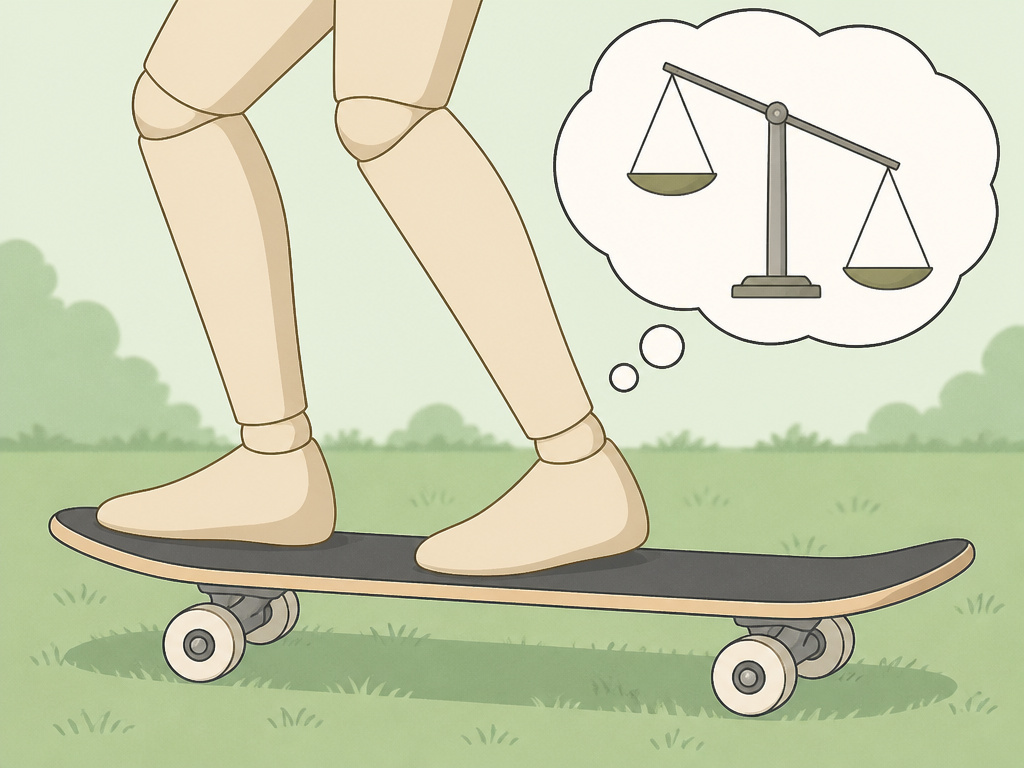
Tests are clues, but the board is the final judge for how to tell if you are goofy or regular. Put your skateboard on grass or carpet so it won’t roll away. Step on with what you think is your front foot forward. Bend your knees slightly. Does it feel solid, or are you fighting for balance? Now switch your feet and try the other stance. One will feel more planted.
Next, find a flat, smooth, safe patch of pavement. Push off a few times riding regular. Then stop and try pushing off goofy. One direction will feel smoother, like the board is an extension of your push. The other will feel stiff and uncoordinated. That awkwardness is your answer to how to tell if you are goofy or regular.
I spent my first three weeks skating goofy because my friend did. I assumed my wobbliness was just me being a beginner. On a whim, I switched to regular on a flat driveway. The board suddenly felt calm under my feet. That immediate shift from fighting to flowing is the clearest signal you can get.
| Test | How to Do It | What a Positive Result Looks Like | Risk If Skipped |
|---|---|---|---|
| Slide Test | Run & slide sideways in socks on smooth floor. | One foot consistently leads without thought. | Choosing a stance that feels unnatural on the board. |
| Push Test | Get a surprise shove from behind while standing. | You step forward with the same foot each time. | Relying on overthought analysis instead of reflex. |
| Board Test | Push off & ride a few feet in each stance on pavement. | One stance feels stable; the other feels wobbly. | Sticking with a stance that hinders your early progress. |
What to Do If Tests Give Conflicting Results
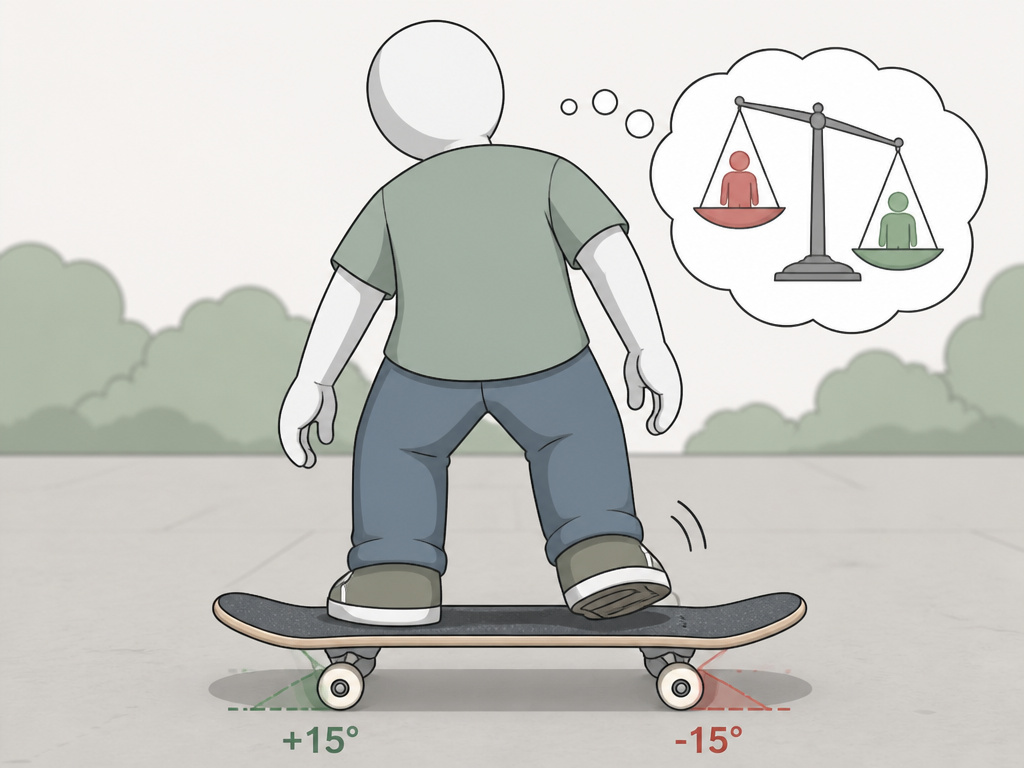
Sometimes the slide test says left, but the push test says right. Or your brain wants goofy, but the board feels better regular. This is a common situation, not a crisis. Your body might have different reflexes for different scenarios.
First, lean on the board test. Your comfort while moving outweighs a static floor test. If you can roll more steadily one way, that’s your stance. Period.
Second, consider a symmetrical duck stance setup. Set both your trucks to the same angle but opposite directions (like +15° front, -15° back). This makes the board ride identically whether you’re regular or goofy, so you can spend a session trying each without the board fighting you. After an hour, one foot will feel more at home in front.
Where this goes sideways: Agonizing over a “perfect” answer. Your stance isn’t a permanent tattoo. Many skaters change their preference after a few years as their skills evolve. Pick the one that works today and start riding.
Why Your Stance Matters More Than You Think
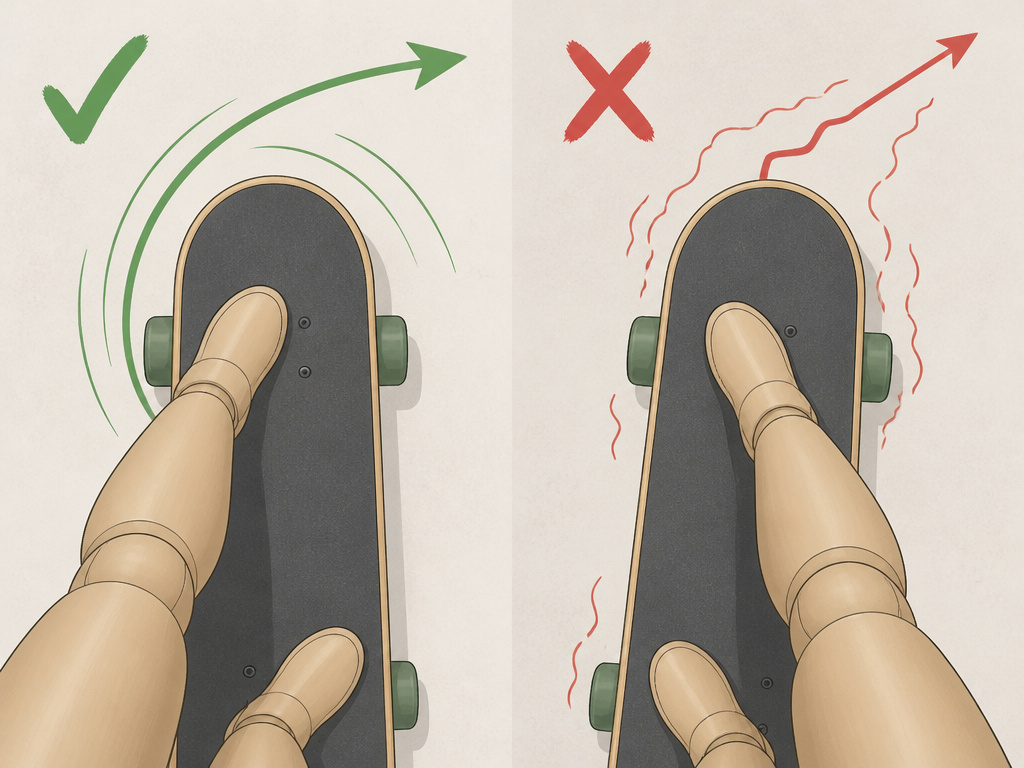
Learning in your natural stance is about efficiency, not tradition. When your front foot is the one your body trusts for balance, you absorb bumps and adjust your weight without conscious effort. Your turns initiate cleaner. Your pushes come from a stable platform.
Get it wrong, and everything is harder. You’ll feel perpetually off-balance. Your back foot will over-correct every small wobble. Turning toeside will feel forced. This extra mental load slows progress and can make skating feel like a chore instead of a flow. I’ve seen new riders quit after a month, blaming their coordination, when they were just riding switch the whole time.
That said, riding switch (your non-natural stance) is a fantastic skill to build later. But for your first hundred hours on the board, you want every advantage. Starting in your natural stance builds confidence and board control faster, which is the foundation for every trick you’ll ever learn.
Setting Up Your Board Once You Know
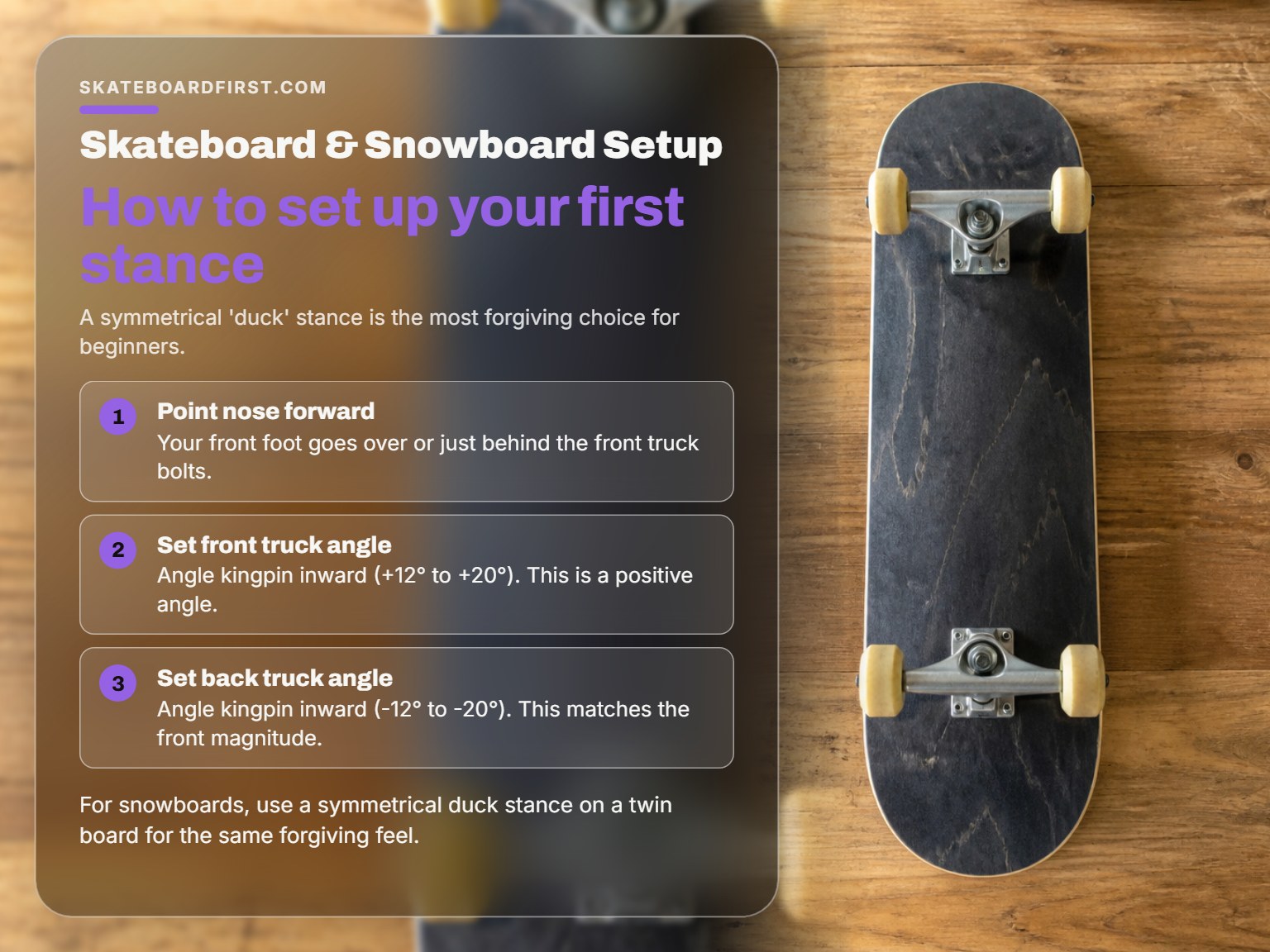
You’ve picked regular or goofy. Now, point the nose of your board forward. Your front foot goes on the nose-end of the deck, over or just behind the front truck bolts. Your back foot goes on the tail.
For your first setup, I recommend a duck stance. Angle your front truck so the kingpin faces inward, toward the center of the board, this is a positive angle, often between +12° and +20°. Angle your back truck so the kingpin also faces inward (a negative angle, like -12° to -20°, matching the front angle magnitude). This symmetrical setup gives you a balanced, forgiving platform that rotates easily for kickturns and feels the same whether you’re riding regular or practicing switch.
If you’re using a snowboard, the principle is similar but the hardware is different. You’ll set your bindings on the board with your chosen foot forward. For a first-timer, a symmetrical “duck” stance on a twin board is again the most forgiving choice, allowing easy experimentation.
Regular vs. Goofy in Other Board Sports
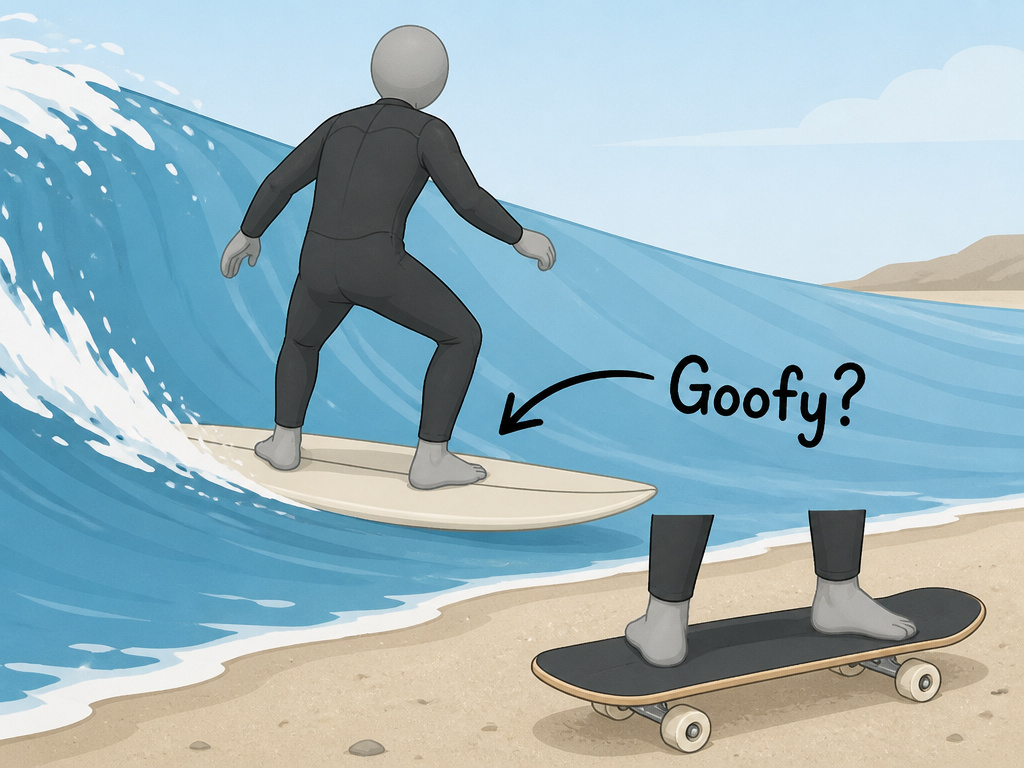
If you surf or snowboard, your skate stance usually transfers directly. The mechanics of balancing over a moving edge are similar. A regular skateboarder will typically feel more natural with their left foot forward on a snowboard.
However, there’s a catch in surfing. Wave direction and pop-up technique can influence foot placement. Some surfers find their skate stance feels backward on a wave. The best cross-check is the slide test, it’s sport-agnostic. If you’re a surfer unsure about transfer, trust the physical test over assuming your skate stance applies.
The Pants or Lean Test
This is a quick and instinctive check you can do anywhere. Stand relaxed with your feet together. Have a friend give you a gentle, unexpected push from behind, just enough to make you need to catch your balance. The foot you automatically step forward with is likely your front foot for riding. Alternatively, think about putting on a pair of pants while standing up. The leg you naturally step into first, lifting it off the ground to get your foot in the pant leg, is usually your dominant, stable leg, which belongs in the back. Trust that first instinctive move.
Frequently Asked Questions
What if I’m equally comfortable both ways?
That’s a gift, not a problem. You’re what’s called a “switch” or “ambidextrous” rider from day one. Set your board up with a symmetrical duck stance and enjoy the flexibility. You might still develop a slight preference for one side as you learn tricks, but having no strong natural stance is rare and advantageous.
Does being right-handed mean I’m regular?
No. Foot dominance and hand dominance are not directly linked. Plenty of right-handed people are goofy, and left-handed people can be regular. Your handedness might influence which foot you prefer for kicking a ball, but that’s your “action” foot, which often ends up as your back foot for stability. The tests above are more reliable than any handedness rule.
I started learning the wrong stance. Should I switch?
If you’re in your first few weeks and struggling profoundly with balance and turning, yes, try switching. The adjustment period will be shorter than the frustration of continuing on the wrong stance. If you’ve been riding for months and have basic control, switching might set you back temporarily, but it could be worth it for long-term comfort. Try the other stance for a full session on a duck-stance setup and see if it clicks.
Can my stance change over time?
It can evolve. As you get stronger and more skilled, you might find your preferred foot placement shifts slightly. Some riders who start with a very angled stance mellow it out over the years. Others discover they like riding switch so much it feels as natural as their regular stance. Your initial “regular or goofy” choice isn’t a life sentence, but it’s the right starting point.
Is riding goofy less common?
Statistically, yes, about 70-80% of riders are regular. But “less common” doesn’t mean “weird” or “wrong.” Some of the most influential skaters in history are goofy. Your stance is a functional preference, not a personality trait. Never let frequency dictate your choice.
The Bottom Line
Stop reading articles and take the slide test. Run and slide in your socks right now. Then, set your board up with a symmetrical duck stance and go roll around a parking lot for twenty minutes in each orientation. Your body will tell you.
The goal is to find the starting point that lets you forget about your feet and focus on the ride. Everything else, push technique, turning, ollies, gets easier from there. So pull on some socks, find a smooth floor, and let your reflexes make the call. Then go skate.
