
Electric Skateboard Battery Care Guide
This post contains affiliate links. As an Amazon Associate, we earn from qualifying purchases.
To maximize your electric skateboard battery’s lifespan and safety, focus on three core practices: correct charging (follow your manual’s specific instruction on whether to unplug at green or continue charging), proper long-term storage (40-60% charge at room temperature), and avoiding extreme temperature exposure (never below freezing for charging, never in a hot car). A battery cared for this way typically lasts 700-1000 charge cycles, but mismanagement can significantly shorten lifespan or pose a fire risk.
That 700-1000 cycle figure from Evolve is a real ceiling your battery can reach if you follow the rules printed in the manufacturer’s manual, not generic forum advice. A proper electric skateboard battery care guide clarifies the contradictions. The problem is, those manuals don’t always agree with each other, and some of their instructions sound counterintuitive.
What follows is a breakdown of the actual manufacturer specs, where they conflict, and the physical reasons behind each rule. This article explains daily charging habits, long-term storage protocols, and the one temperature mistake that bricks a battery faster than anything else.
Key Takeaways
- Store your board’s battery at 40-60% charge for long-term storage, following your manual’s specific timeframe (e.g., 1 month or more for ONSRA, 3 months or more for Evolve).
- Follow your manual’s specific instruction when the charger light turns green: Evolve and CycleBoard say to unplug immediately, while the RazorX Cruiser says to continue charging up to 6 hours even after the green light.
- Never charge a battery at or below 32°F (0°C); cold charging can cause permanent internal damage that no BMS can fix.
- Allow a 15-minute cooldown after riding before charging, as recommended by CycleBoard and E-Glide Powerboards.
- Use only the manufacturer’s specified charger for your board; using the wrong charger can be dangerous.
The Charging Routine That Adds Years
Your charging habit is the single biggest factor in battery health. It’s not about frequency; it’s about the details most riders gloss over.
The first time I plugged in my Meepo board after a long, hot summer ride, I didn’t think twice. The battery felt warm, but I plugged it in anyway. A month later, my usual 10-mile range had dropped to seven. The heat from riding, combined with the heat from charging, had accelerated the chemical wear inside the cells. Now I always wait.
That 15-minute rest from brands like CycleBoard and E-Glide is a physical necessity. Lithium-ion batteries generate heat during use and during charging. Pushing more energy into an already warm battery stresses the electrolyte and anode, reducing their ability to hold a charge over time. The fix is simple: after your ride, set a timer. Let the board sit in a cool, dry place. Then plug it in.
The Green Light Dilemma: To Unplug or Keep Charging?
Here’s where the manuals disagree, and blindly following generic advice can hurt your specific board.
Evolve Skateboards: “We recommend removing it from charge once the charger shows green.” RazorX Cruiser: “Recharge time is up to 6 hours, continue charging even if the light turns green prior to 6 hours.” CycleBoard: “Unplug your battery charger after the light turns green indicating your battery is fully charged.”
This conflict exists because of different battery management system (BMS) designs, a key topic in any electric skateboard battery care guide. A modern BMS, like those in Evolve or CycleBoard boards, performs cell balancing during the main charge cycle. When the light turns green, balancing is complete, and continuing to charge serves no purpose except to keep the battery at 100% stress. The RazorX, an older design, may require the extra time to finish balancing after the main charge hits full voltage. Your manual is the final answer.
| Brand / Model | Action When Charger Light Turns Green | Likely Reason |
|---|---|---|
| Evolve Skateboards | Unplug immediately | Modern BMS balances during charge |
| RazorX Cruiser | Continue charging up to 6 hours total | Older BMS may need extended balancing time |
| CycleBoard | Unplug immediately | LG cell BMS balances during charge |
| ONSRA | Unplug after full charge; don’t leave on charger >48 hrs | Prevents over-stressing cells at 100% |
For most riders with boards from the last five years, the rule is simple: green means stop. Leaving it plugged in overnight “just to be sure” is how you lose 10% of your capacity within a year.
The 48v vs. 60v Charger Rule
This isn’t a compatibility suggestion; it’s a safety imperative. Overcharging a lithium-ion battery doesn’t just reduce life, it generates gas, causes swelling, and can lead to thermal runaway (fire). The official safety recall documentation for the Boosted Dual+ lists “overheating and smoking” battery packs as the reason for the recall.
Long-Term Storage: The 40-60% Sweet Spot
If you’re not riding for an extended period, your storage routine decides whether your battery wakes up healthy or dead; consult your manual for the specific timeframe (e.g., 1 month for ONSRA, 3 months for Evolve).
Manufacturers specify a storage charge level because a lithium-ion cell is chemically unstable at both full and empty charge. Storing at 100% charge accelerates the permanent loss of capacity. Storing at 0% risk allows the voltage to drop below a recoverable level, which permanently damages the battery.
The recommended storage level isn’t universal. Your manual has the exact number.
| Brand | Recommended Storage Charge | Timeframe | Source |
|---|---|---|---|
| Evolve Skateboards | 40-50% | 3 months or more | GTR Manual |
| ONSRA | 40-60% | 1 month or more | Velar Manual |
| CycleBoard | Charge once a month | During non-use | Helpdesk Article |
Common mistake: Storing the board in a garage or shed over winter. Temperatures drop below freezing, the battery’s chemical reactions slow to a crawl, and the voltage slowly drifts down. By spring, it’s unrecoverable.
The process is straightforward:
- For a final ride before storage, don’t drain it to 0%. Stop when you have about half the battery indicator left.
- When you get home, plug in the charger just long enough to bring the level to your manual’s specified range (40-60%).
- Store the board in a dry place at room temperature, a closet indoors beats a garage.
- If it’s dropped noticeably, give it a brief top-up back to the 40-60% range.
This storage charge is also your best bet for long-term storage guide between seasons.
Temperature: The Silent Battery Killer
Extreme heat and cold don’t just reduce performance temporarily; they cause permanent chemical and physical damage.
Your battery’s optimal operating window is narrow. CycleBoard specifies their batteries are designed for optimal operation below 130°F (54°C) and above 30°F (-1°C). Riding outside these limits affects both range and longevity.
Cold Weather (< 32°F / 0°C):
- Riding: Expect reduced power and range. The chemical reactions inside the cells slow down. It’s normal.
- Charging: This is the critical one. The RazorX manual explicitly states: “Do not charge at or below 32°F (0°C).” Charging a cold battery can cause lithium metal to “plate” on the anode, creating microscopic shorts that permanently reduce capacity and increase the risk of failure. Always bring the board to room temperature before plugging it in.
Hot Weather (> 95°F / 35°C):
- Riding & Storage: This is the “hot car” scenario. High heat accelerates the breakdown of the electrolyte and increases internal pressure.
- Sensory cue: After a ride on a hot day, feel the battery enclosure. If it’s too hot to keep your hand on comfortably, that’s a sign it needs a longer cooldown before charging.
The takeaway? Your board is more sensitive to its environment than you are. Treat it like a smartphone, not a hammer.
Diagnosing Trouble: Swelling, Range Drop, and Recall Checks
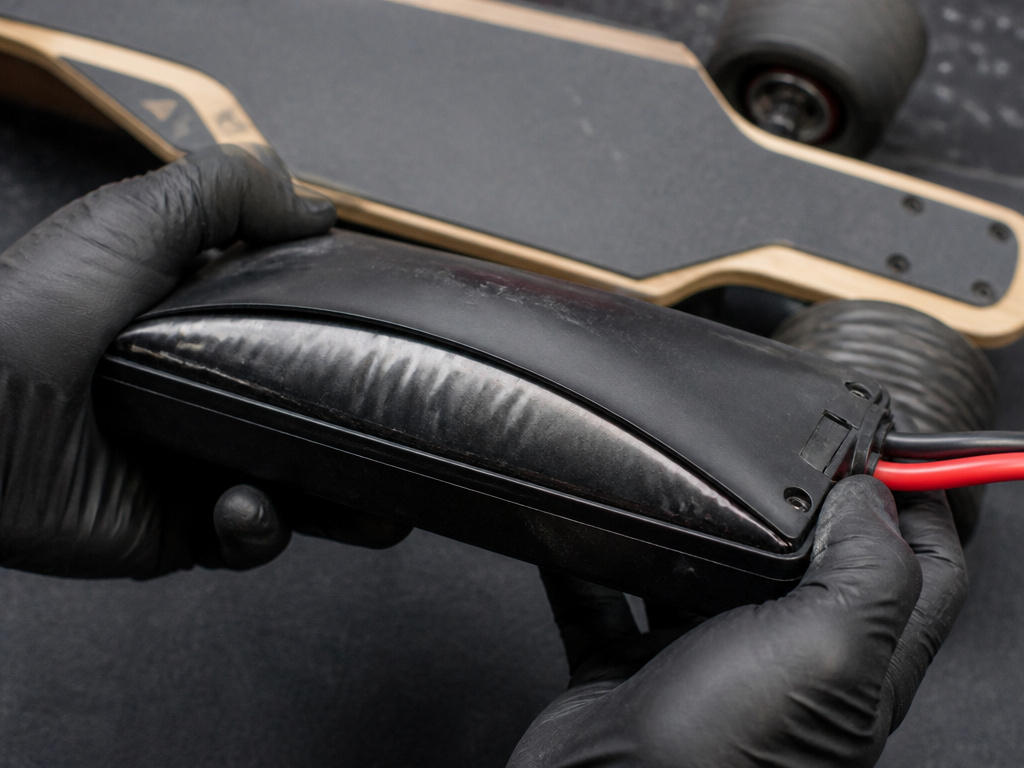
A healthy battery doesn’t swell, hiss, or smell. When things go wrong, the signs are physical.
Swelling: This is a red-alert, stop-using-it-now sign. A swollen battery pack indicates gas buildup from internal decomposition, often due to overcharging, physical damage, or a defective cell. The pressure can crack the enclosure. Do not charge it. Do not ride it. Contact the manufacturer immediately.
Sudden Range Drop: If your 10-mile board now dies at 3 miles, don’t just blame the battery. First, check your electric skateboard maintenance checklist. Inflate tires to the correct PSI. Clean and lubricate bearings. Dragging brakes or under-inflated tires can significantly reduce range. If maintenance is perfect, then the battery itself is likely aging. As Evolve notes, around 500 cycles, a 30–40% range loss is common.
The Boosted Recall Check: Safety isn’t just about care; it’s about known defects. In 2017, the CPSC recalled Boosted 2nd Generation Dual+ boards with serial numbers S2634 through S2644 and battery model B2SR. Two reports of battery packs overheating and smoking prompted the recall. If you own an older Boosted, check the serial number on the bottom. This is why using official parts and heeding manufacturer alerts matters.
Lead-Acid vs. Lithium-Ion: A Different Rulebook
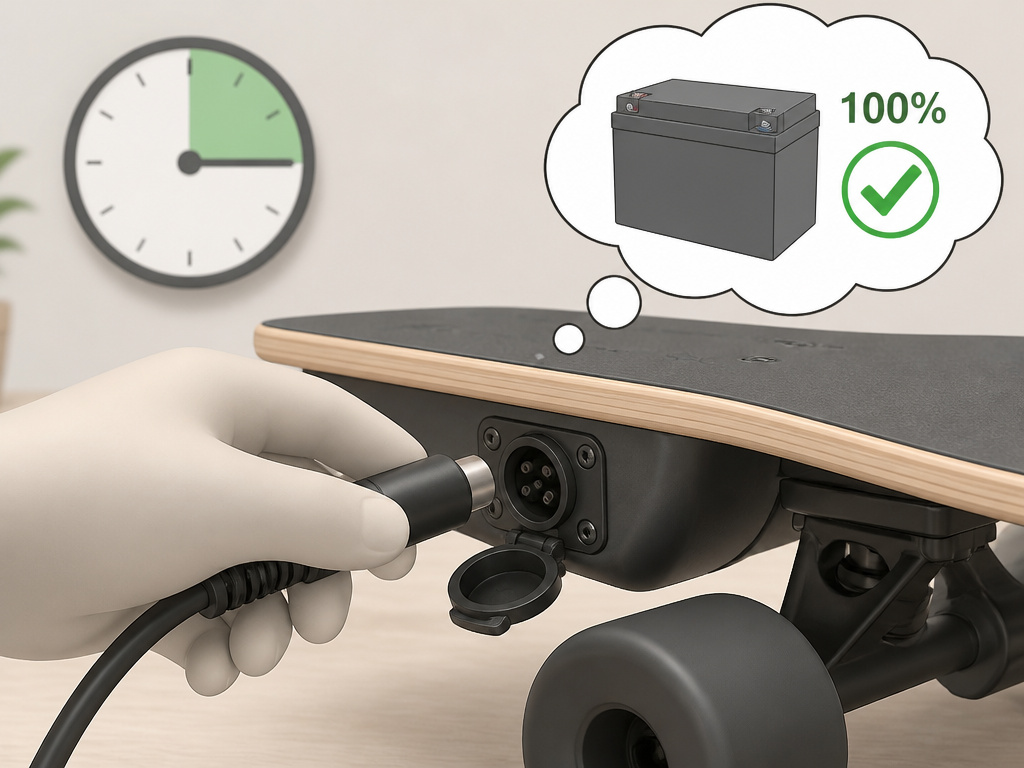
Most guides assume all e-skate batteries are lithium-ion. Some older or specialty boards, like certain E-Glide Powerboards, use sealed lead-acid (SLA) batteries. The care rules are opposite.
E-Glide Powerboards (Lead-Acid): “Do not intentionally run the batteries down to a completely dead state. Top off the batteries after every ride, even short ones.”
Lead-acid batteries hate being left in a partially discharged state. Sulfation, the formation of lead sulfate crystals, occurs and permanently reduces capacity. For these boards, you should plug them in after every single use, even a 5-minute ride. They also mandate a 15-minute rest after charging before riding. This isn’t a lithium-ion board. If you own one, follow its specific general maintenance guide, not the lithium rules.
Your Battery’s Lifespan, By the Numbers

How long should a battery last? Manufacturers give us hard numbers.
- Evolve USA: 700 to 1000 full charge cycles.
- E-Glide Powerboards (Lead-Acid): Approximately 300-350 charge cycles, or about two years.
A “cycle” means using 100% of the battery’s capacity, not necessarily one charge. Two 50% discharges equal one cycle. With regular riding, 700 cycles translates to several years. The drop is gradual. You might not notice the 10% loss after year one, but by year three, that 20-mile range might be 14. That’s normal wear, not a defect.
The goal of all this care, as outlined in a thorough electric skateboard battery care guide, is to reach the upper end of that cycle count. Letting a battery sit dead, storing it fully charged, or constantly charging it hot will push you to the lower end.
How does riding style affect battery life?
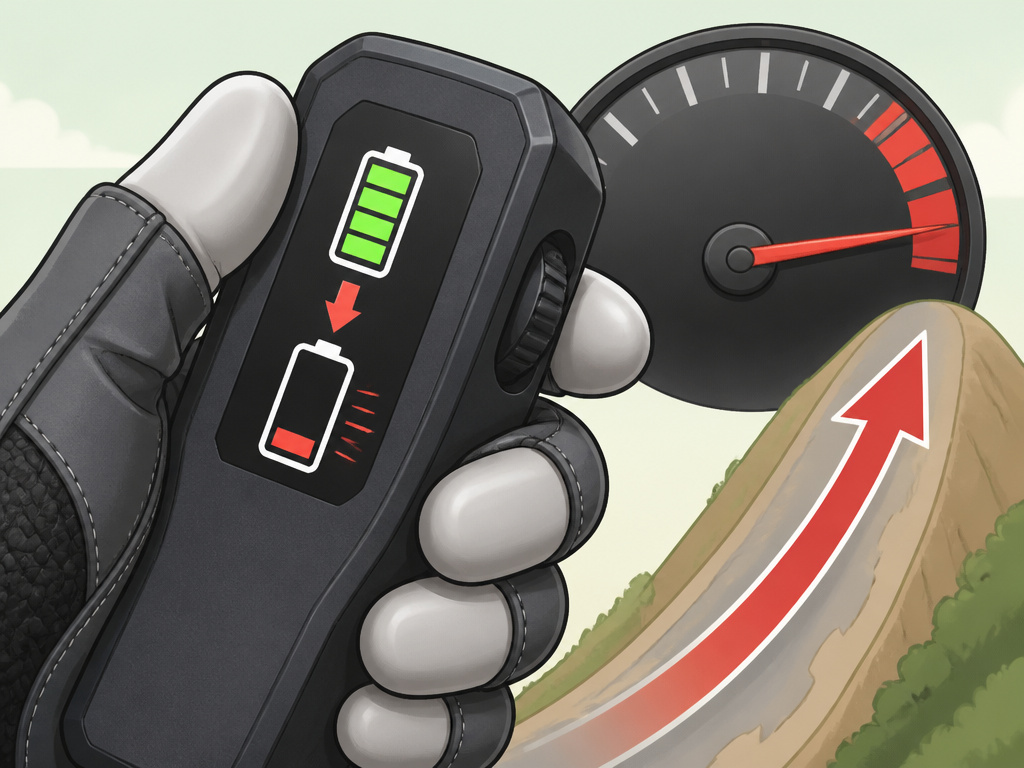
Your riding habits directly influence how long your battery lasts. Aggressive acceleration and braking, riding at top speed constantly, and tackling steep hills all demand high power from the battery, generating more internal heat and stress. This accelerates the natural wear that occurs with each charge cycle. Consistently draining the battery to a very low level before recharging also contributes to faster degradation. For the longest possible battery life, aim for smooth, moderate riding and avoid pushing the board to its absolute limits on every trip.
How to check a battery in storage
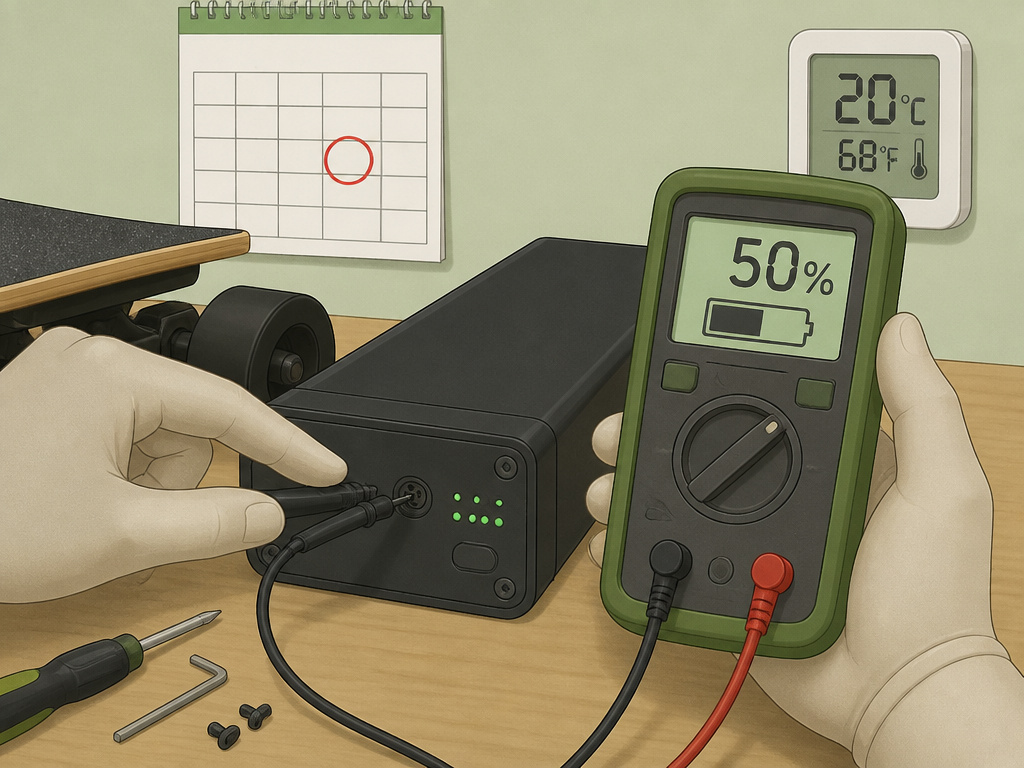
When storing your board for an extended period, you must maintain the battery’s charge level. A common guideline is to store it at a partial charge, typically between 40 and 60 percent, rather than leaving it fully charged or completely empty. Check on the battery periodically. If you are storing it for more than a month, plan to give it a maintenance charge to keep it within that ideal range. Always store the board and battery at room temperature, away from extreme heat or cold, and in a dry place.
Frequently Asked Questions
What is the 40-80 rule for lithium batteries?
The 40-80 rule is a general guideline for maximizing lithium-ion lifespan: avoid charging above 80% and discharging below 40% for daily use. It reduces stress on the electrodes. For skateboard batteries, which need full range, this is often impractical. A better compromise is to avoid storing the battery at 100% for long periods and to recharge before it hits 0%.
How long do electric skateboard batteries last?
Evolve USA states their lithium-ion batteries typically last 700 to 1000 full charge cycles with proper care. With regular riding, 700 cycles translates to several years of use. Evolve notes that around 500 cycles, a 30–40% range loss is common. Factors like extreme temperatures, using the wrong charger, and deep discharges can significantly shorten this lifespan.
Should I charge my board after every use?
For lithium-ion boards, it’s okay to charge after each use, but it’s better to avoid leaving it plugged in at 100% for days. Unplug it once charged. For lead-acid boards (like some E-Glide models), you should top off after every single use to prevent sulfation damage.
Can I use a fast charger every time?
Check your manual. ONSRA states their fast charger can be used “occasionally if you’re in a rush, but we don’t recommend it for every charge.” Fast charging generates more heat and stress, which can reduce overall battery life. Use the standard charger for daily top-ups.
How do I dispose of an old battery?
Do not throw lithium-ion batteries in the trash. They are a fire hazard. Check with your local municipality for hazardous waste or battery recycling programs. Many electronics retailers also have battery take-back programs.
Before You Go
One final, specific threshold: if your battery’s range ever drops by more than 50% suddenly, stop diagnosing online. That kind of plunge, especially if accompanied by a swelling pack or a burnt smell, indicates a serious internal fault. No online guide can fix a failing cell. Your next step is contacting the manufacturer or a qualified technician. Everything above assumes a battery that’s aging normally, a damaged one needs professional assessment.
For everything else, stick to the manual’s numbers, respect the temperature limits, and unplug at green. Your battery will thank you with miles of reliable rides.
