
How to Choose a Skateboard for a Child: The 5-Step Check
This post contains affiliate links. As an Amazon Associate, we earn from qualifying purchases.
To choose a skateboard for a child, match their age and height to a quality deck made of 7-ply Canadian maple, pair it with metal trucks and urethane wheels (softer wheels for rough streets), and never skip a certified helmet and wrist guards. The American Academy of Pediatrics says children under 5 should not ride, and those aged 6-10 need close adult supervision.
That age guidance is where most parents hit their first speed bump. Official sources don’t quite line up, and a wrong read means you’re either holding back a ready kid or putting a toddler on wheels. The rest of this isn’t about picking a cool graphic. It’s about matching three verifiable things: what the safety agencies actually say, what a real board is made of, and what your kid is physically ready to handle. Understanding how to choose a skateboard for a child starts with these factors.
What follows: a clear breakdown of the conflicting age rules, the five physical specs that separate a toy from a tool, and the one pre-ride check that catches most beginner injuries before they happen.
Key Takeaways
- Children under 5 years old should not ride skateboards, per the American Academy of Pediatrics, while the CPSC advises close supervision for kids under 8.
- A real deck is 7 plies of Canadian Maple and shouldn’t flex much when stood on; toy-store boards use weak materials and hinder learning.
- For stability, beginners often need softer urethane wheels for rough pavement and softer urethane bushings in the trucks for easier turning.
- A proper skateboard helmet must have a NOCSAE Standard label, fit snugly with the front rim aligned with the eyebrows, and not touch the neck.
- One-third of skateboard injuries happen in the first week; investing in a shop-quality setup and safety gear drastically reduces this risk.
The Age Rule Every Parent Misses (And Why Sources Disagree)
You’ll see two numbers in your research. The American Academy of Pediatrics states clearly: children younger than age 5 years should not ride skateboards. For kids aged 6 to 10, they mandate close adult supervision. The U.S. Consumer Product Safety Commission, however, says children under 8 years old should be supervised closely. That gap, between 5 and 8, is where the confusion lives.
The CPSC guideline implies riding is permissible for a 6-year-old with close supervision. The AAP’s prohibition for under-5s is absolute. So what’s a parent to do? The medical guidance is stricter for a reason: younger children have less developed balance, coordination, and risk assessment. Parents must decide between these differing guidelines. If your child is under 5, wait. For a 6- or 7-year-old, the CPSC’s “supervised closely” rule is your baseline, but “close” means within arm’s reach, not watching from a bench.
Where this goes sideways: Assuming a mature 4-year-old is ready because they’re coordinated. The AAP’s limit is about skeletal development and cognitive ability to follow safety rules, not just physical skill. Pushing it risks a bad first experience.
The right age is as much about interest as biology. A child who is genuinely curious, can listen to instructions, and shows patience is a better candidate than an older kid who just wants the board as a prop. Our article on starting ages and readiness signs dives deeper.
The 5-Step Safety & Sizing Check
Before you look at a single board, run through this list. It converts the official safety advice into a pre-purchase filter.
- Helmet Certification. This is essential. The CDC states a skateboard helmet should have a label stating it MEETS NOCSAE Standard®. Not a bike helmet, not a multi-sport helmet. A skateboard-specific hard shell with foam interior. Don’t buy a board until you have this.
- Wrist Guard Priority. The CPSC calls out wrist guards as especially important for skateboarders. Most beginner falls are forward, onto outstretched hands. Guards prevent the most common fractures.
- Deck Size Scout. Forget age charts for a moment. Have your child stand on a piece of paper. Mark where their feet naturally sit, shoulder-width apart. That space between marks is your minimum deck width. For most kids under 10, that’s a width that matches their natural shoulder-width stance. Length is secondary for beginners; sources disagree on optimal length, with some saying longer boards increase stability while others recommend shorter decks for easier handling. The CPSC notes longer boards increase stability, which can help with speed wobble.
- Surface Audit. Where will they skate? If it’s rough neighborhood asphalt, you need softer wheels. If it’s smooth skatepark concrete, harder wheels work. This decision impacts everything else.
- Supervision Plan. Who will be with them? Do you have a safe, traffic-free zone like an empty parking lot? The official CPSC skateboarding safety fact sheet reinforces that kids under 8 need a supervisor present and that you should never let them ride alone.
Decoding the Deck: Wood, Width, and What “Quality” Actually Means
A deck is a plank of wood. The quality of that wood decides whether the board is a vehicle or a decoration. According to Portland Parks & Recreation, a deck made of 7 plies, or layers, of Canadian Maple is quality. It should not flex too much when stood on.
Toy skateboards sold at one-stop shopping marts are made with materials of inferior quality and should not be used. You’ve seen them, thin, plasticky, with cartoon graphics. They flex like a diving board, the trucks are loose plastic, and the wheels don’t spin. They create a frustrating, unsafe experience that turns kids off skating. A real deck has a certain heft and rigidity.
Width matters more than length for a beginner. A deck that’s too narrow gives insecure footing; too wide is unwieldy for small feet. Use your foot-placement test from the sizing check. Most quality youth completes start at a width suitable for a child’s stance, which is a safe bet for many 6-10 year olds.
Graphics and professional endorsements on the underside of the deck are unimportant for performance, and blank decks tend to cost less. Portland Parks & Recreation equipment guide
That’s a direct quote from a municipal sports program. It cuts through the marketing. Your child might want a specific graphic, and that’s fine for motivation. But know you’re paying for the art, not the performance. A blank or shop-brand deck uses the same 7-ply maple and saves you money for better trucks or wheels.
Trucks, Wheels, and Bearings: The Parts That Actually Move
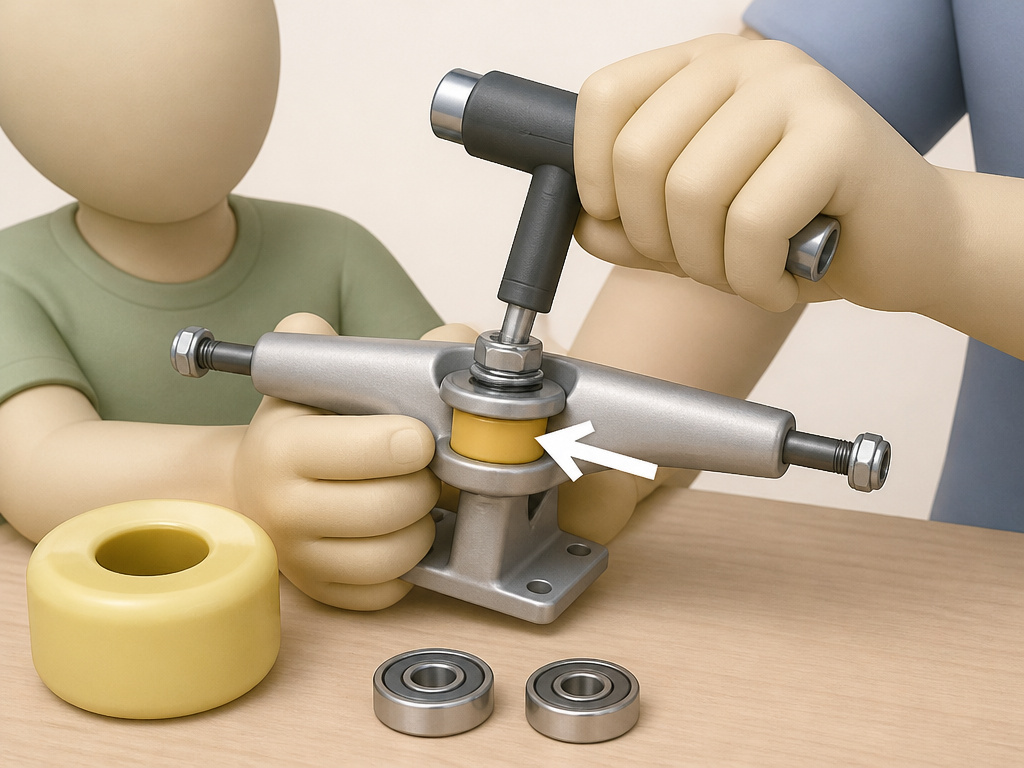
The deck is the stage. Trucks, wheels, and bearings are the actors. Get these wrong and the best deck feels terrible.
Trucks are the metal T-shaped axles. They should be made of metal, not plastic or cheap pot metal. Look for a name brand printed on the hanger. Inside each truck are two bushings, small urethane cushions that control how easily the board turns. Portland Parks & Recreation specifies bushings should be made of urethane, not hard plastic. Softer bushings are often recommended for lighter weight riders. A common beginner mistake is cranking the kingpin nut down hard, squashing the bushings and making the board impossible to turn. Start loose and tighten gradually until the board feels stable but still responsive.
Wheels should be made of urethane, not plastic. Urethane hardness is measured on the durometer “A” scale. The hardest urethane wheel is 101a; the softest is around 76a. For a child learning on typical rough sidewalks, you want a softer wheel. These absorb vibrations and grip better. As the American Academy of Pediatrics safety page notes, the environment is a major factor in safety, softer wheels make that environment more forgiving.
Bearings are the small metal rings inside the wheels that let them spin. There are two in each wheel, eight total. They need to be kept clean and out of the rain. Dirty or rusty bearings won’t roll properly, making your child push harder for less speed. For a beginner, standard bearings are fine. The money is better spent on good wheels.
| Component | What to Look For | Beginners’ Sweet Spot | If You Get It Wrong |
|---|---|---|---|
| Trucks | Metal construction, brand name visible. | Matched to deck width (e.g., 7.75″ deck = 7.75″ axle). | Plastic trucks snap. Loose trucks cause speed wobble; overtightened ones won’t turn. |
| Bushings | Urethane (feels like hard rubber), not plastic. | Softer duro (e.g., 85a) for lighter riders. | Hard plastic bushings make turning impossible, increasing fall risk. |
| Wheels | Urethane, durometer rating printed on side. | Softer (78a-85a) for rough ground. | Hard wheels (99a+) vibrate on cracks, causing foot fatigue and loss of control. |
| Bearings | Steel, shielded. Keep them dry. | Any reputable brand’s standard set. | Rusty or seized bearings force a hard, awkward push that kills momentum and fun. |
The Helmet Fit That Stays On (And Other Non-Negotiable Gear)

A helmet is the most important piece of gear. The CDC’s skateboard helmet fact sheet details a fit that works. Bring your child to try it on.
- Position: The front rim aligns with the eyebrows. The back does not touch the top of the neck.
- Straps: The side straps make a “V” shape under, and slightly in front of, the ears. The chin strap should be centered and snug, only one or two fingers should fit between strap and chin.
- Hairstyle: Fit the helmet with the hairstyle they’ll skate in. A big haircut means a re-fit.
- Snugness: It should feel snug all around with no gaps. A helmet that is too tight can cause headaches.
Wrist guards are next. They have a hard plastic splint on the palm and straps that secure them. Elbow and knee pads follow. Look for hard caps with soft foam backing. They should stay in place when your child bends their joints. Don’t buy a size up “to grow into.” Gear that slides around doesn’t protect.
For a full rundown, see our guide on essential safety gear for young skateboarders.
Before the First Push: The Pre-Ride Ritual
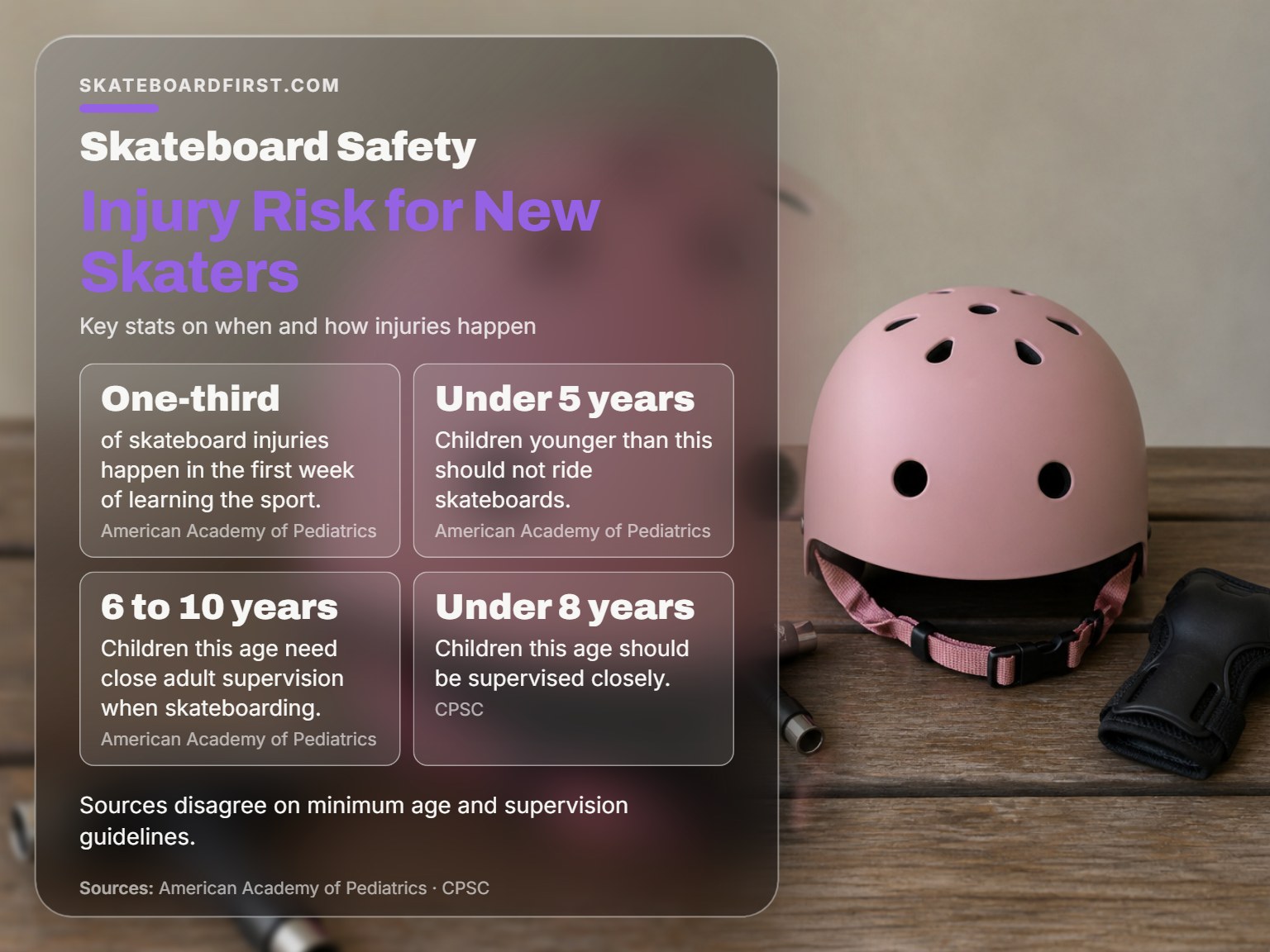
One-third of skateboard injuries happen in the first week of learning the sport. A simple pre-ride check cuts that risk dramatically. Make this a habit, like putting on a seatbelt.
- Inspect the board. Check for cracked wood, loose mounting screws, and excessive play in the trucks. The CPSC says serious defects should be fixed by a qualified repair shop.
- Tighten everything. Use a skate tool to ensure the axle nuts are finger-tight plus a quarter-turn, and the kingpin nut allows the trucks to pivot smoothly.
- Scan the terrain. Look for holes, bumps, rocks, and wet spots. The CPSC explicitly says to inspect your riding terrain.
- Gear up. Helmet, wrist guards, knee and elbow pads. Every time.
- Warm up. A few simple stretches for the ankles and wrists prevent sprains.
This takes two minutes. It teaches responsibility and prevents the most common mechanical failures. For a visual walkthrough, our article on setting up a skateboard for a kid has you covered.
Benefits of skateboarding for kids
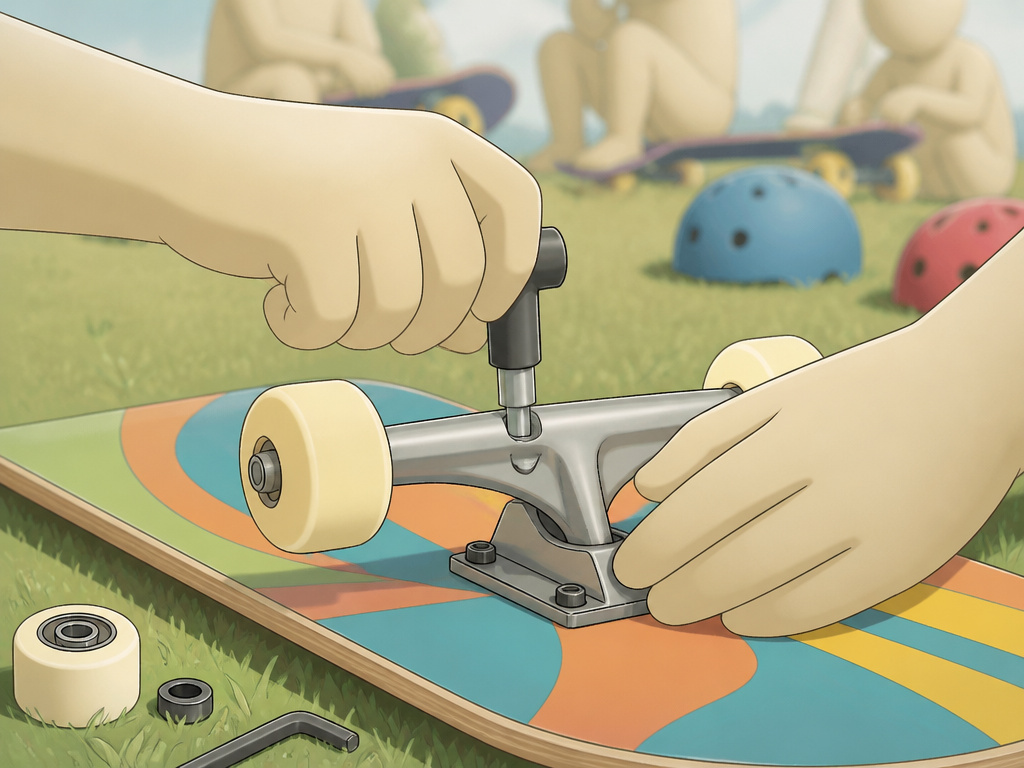
The physical and mental rewards of skateboarding are significant. Learning to balance, push, and steer develops coordination and core strength. Mastering new skills, from a simple roll to a first trick, builds confidence and perseverance. Because a significant portion of injuries happen in the first week, the process also teaches valuable lessons in risk assessment and safe practice. Skateboarding encourages outdoor activity and, when done with friends as recommended, fosters social connection. It’s a sport that rewards patience and incremental progress, offering a tangible sense of accomplishment with every new milestone reached.
Where to buy or seek advice (skate shops, forums)
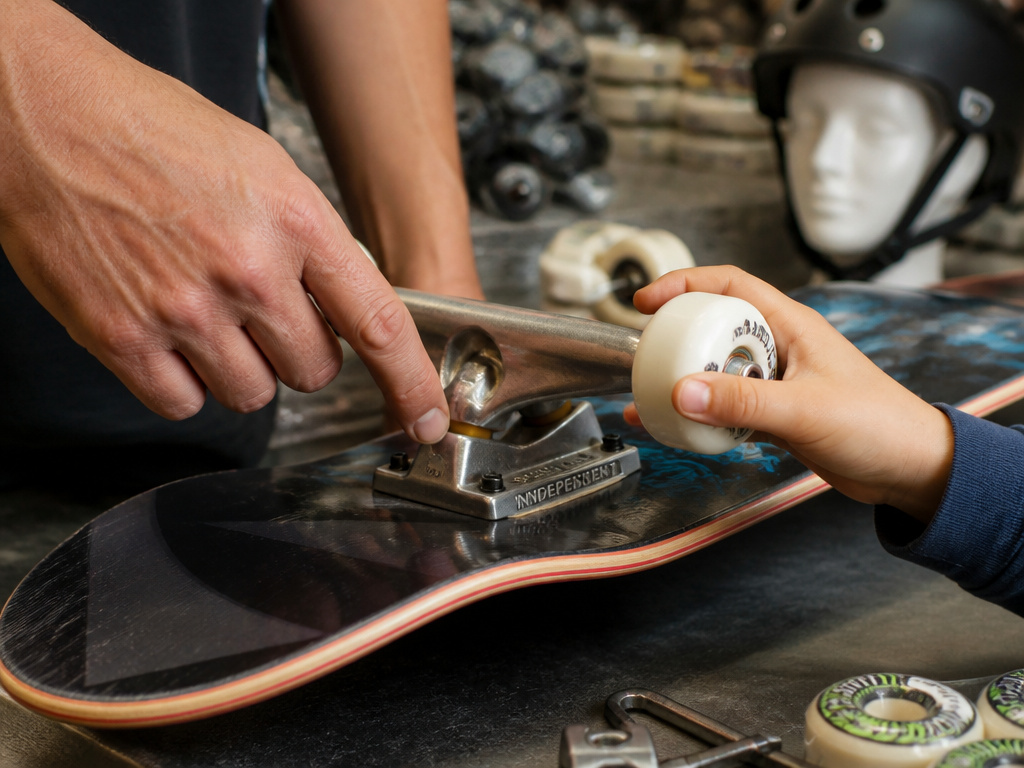
For reliable gear and expert guidance on how to choose a skateboard for a child, a dedicated skate shop is the best first stop. Staff there can help you avoid toy boards sold at general retailers, which are made with inferior materials and should not be used. They can explain how a deck should feel (it should not flex too much when stood on), show you metal trucks with a brand name printed on them, and point out urethane wheels and bushings. They can also ensure a skateboard helmet fits properly, with the front rim aligned with the eyebrows and the chin strap snug. For ongoing tips, online skateboarding forums are valuable resources where you can learn about maintenance, like keeping bearings clean and the board dry, and get recommendations for local spots to ride.
Frequently Asked Questions
What is the best skateboard size for a 7-year-old?
For a 7-year-old, choose a complete skateboard with a deck width between 7.5 and 8.0 inches. The exact size depends more on their shoe size and stance than their age. A quality skateboard size chart based on height is a more reliable guide than age alone.
Are electric skateboards like Onewheel safe for kids?
No. All models of Onewheel electric skateboards were recalled in September 2023 after reported deaths and injuries. The American Academy of Pediatrics states the original models cannot be updated and should not be used. The power and speed of electric skateboards are inappropriate for children.
How much should I spend on a first skateboard?
Expect to spend between $60 and $100 for a complete skateboard from a real skate brand (like those on our best kids skateboards list). This ensures proper maple decks, metal trucks, and urethane wheels. Spending too little may mean buying a toy board made with inferior materials.
My child wants a skateboard with their favorite character on it. Is that okay?
You can find licensed character boards, but scrutinize the specs. Many are toy-grade. If it’s a real 7-ply maple deck with metal trucks and urethane wheels, the graphic is fine. If the description is vague on materials, it’s likely a inferior board that prioritizes the graphic over function. Consider buying a blank deck and applying character stickers.
What if my child tries it and doesn’t like it?
That’s common. Start in a safe, positive environment with no pressure to perform tricks. Focus on the feeling of rolling and balancing. If they decide it’s not for them, a complete board holds its resale value much better than a toy board.
The Bottom Line
Choosing a skateboard for a child starts with a hard rule: if they’re under 5, wait. For kids 6 and up, pair a properly sized 7-ply maple deck with soft urethane wheels and metal trucks, and top it all with a certified helmet they’ve tried on. The agencies disagree on the specifics, but they agree on the outcome, supervision and proper gear prevent the majority of injuries.
Skip the big-box toy aisle. Go to a local skate shop or an online retailer that specializes in skateboarding. Tell them your child’s age, height, and shoe size. Let them guide you toward a real setup. Then, take that board, the helmet, and your kid to an empty parking lot on a calm afternoon. Let them stand on it, roll a few feet, and step off. That first successful push is what matters. Everything else, the ollies, the kickflips, the confidence, starts from there.
