
How to Clean Skateboard Bushings: The 10-Minute Method
This post contains affiliate links. As an Amazon Associate, we earn from qualifying purchases.
To clean skateboard bushings, you have two main paths: a deep clean using boiling water or solvents, or a quick ten-minute wipe-down with a stiff brush and damp cloth. The iFixit guide boils bushings for 10–15 minutes, while the Concrete Waves handbook prefers mineral spirits. For lubrication, iFixit uses bar soap; Concrete Waves recommends wax, petroleum jelly, or white lithium grease.
The core disagreement is about the cleaning method and lubricant choice: iFixit recommends boiling and soap, while Concrete Waves recommends solvents and grease/wax. A noisy, gritty pivot needs a teardown. Everyday grime just needs a brush. For a full guide, search how to clean skateboard bushings.
What follows is a breakdown of both approaches, the tools you’ll need, and how to decide which one your board actually requires. You’ll also get a simple routine that keeps the major cleaning sessions years apart.
Key Takeaways
- For a deep clean, follow either the iFixit boiling method (10–15 minutes) or use a solvent like mineral spirits per Concrete Waves.
- Lubricate cleaned bushings with either bar soap (iFixit) or wax/petroleum jelly (Concrete Waves), but keep grease off the truck hanger.
- The often-missed pivot cup must be cleaned and lubricated too; neglect here causes most steering squeaks.
- A regular wipe-down with a brush and rag can help prevent grime buildup.
- Check bushings routinely for cracks and hardening; they need replacement every couple of years at most.
The Tools You Actually Need
A skate tool is essential for disassembly. The Warehouse Skateboards maintenance guide confirms it handles every piece of hardware, and trying to use pliers or a wrench usually rounds off the kingpin nut. That’s a $30 mistake that ends with new trucks.
The technical snippet: Urethane bushings are cylindrical shock absorbers inside the truck assembly. Cleaning them restores rebound and eliminates steering squeaks caused by grit binding the pivot. The iFixit deep-clean method uses thermal shock (boiling) to soften and expand the urethane, releasing embedded debris.
The Boiling vs. Solvent Debate
Here’s where the manuals disagree, and you need to pick a side based on what you have and what you’re comfortable with. Neither is wrong, but they approach the problem from opposite directions.
The iFixit longboard guide is the source for the boiling-water method. You submerge the bushings in boiling water for 10 to 15 minutes. The heat makes the urethane temporarily softer and more pliable, which helps eject grit and grime stuck in the material. If they’re not soft enough after that, you boil them for another five minutes. After boiling, you clean them with rubbing alcohol on a cloth and rinse with hot water.
The Concrete Waves handbook takes a chemical approach. It recommends cleaning components like bearings with mineral spirits or a citrus-based cleaner. This logic extends to bushings: the solvent dissolves grease and oil without the thermal stress of boiling water. You apply it with a rag, scrub, and let it evaporate.
Which should you use? If your bushings are just dirty, the solvent method is faster and less messy. If they’ve hardened and lost their rebound, the boiling method can sometimes revive them by relaxing the urethane. I lean toward solvents for routine cleaning because it’s contained and there’s no risk of melting anything if you get distracted.
| Method | Best For | Primary Tool | Time |
|---|---|---|---|
| Boiling (iFixit) | Hardened, old bushings; longboard setups | Pot, stove, tongs | 15–20 min |
| Solvent (Concrete Waves) | Grease, oil, and surface grime; quick cleans | Mineral spirits, rag | 5–10 min |
| Wipe-Down (Routine) | Preventing buildup, weekly maintenance | Stiff brush, damp cloth | 2–3 min |
Step-by-Step Deep Clean
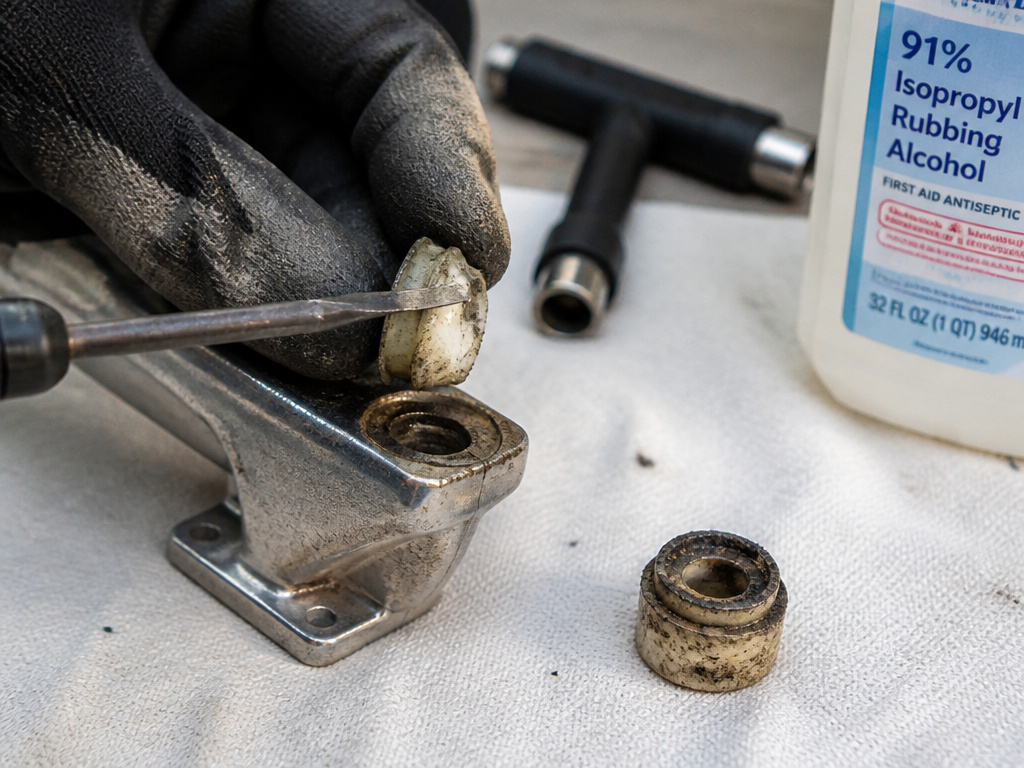
This is the full teardown. If your board is squeaking like a haunted house or the steering feels gritty, this is your process.
- Disassemble the truck. Use your skate tool to remove the kingpin nut and washer. Slide the hanger off the kingpin. The top cone-shaped bushing will come off with the hanger; the bottom bushing stays on the baseplate. Pay attention to how tight the kingpin nut was, you’ll want to match that tension later.
- Remove the pivot cup. This small plastic cup sits in the baseplate and is the source of most steering noise. Pry it out gently with a flathead screwdriver. Now you have four parts to clean: two bushings, the pivot cup, and the hanger (where the bushings seat).
- Clean the parts. Here you choose your path from the table above.
- Boiling Path: Place the bushings in boiling water for 10–15 minutes. Remove them with tongs, let them cool slightly, then wipe with a cloth dampened with rubbing alcohol. Rinse under hot water.
- Solvent Path: Apply mineral spirits or rubbing alcohol to a cloth. Scrub each bushing and the pivot cup thoroughly. Let them air-dry completely, no moisture left.
- Lubricate. Another fork in the road.
- Soap Path (iFixit): Rub a bar of soap on the top and bottom of each bushing until a visible film forms. Place a few small soap shavings inside the pivot cup.
- Grease Path (Concrete Waves): Apply a thin layer of wax, petroleum jelly, or white lithium grease to the bushings. Be wary of applying to the hanger, the handbook warns this can cause problems. A tiny dab in the pivot cup is enough.
- Reassemble. Slide the bottom bushing onto the kingpin on the baseplate. Insert the lubricated pivot cup. Place the hanger onto the kingpin, then add the top bushing with its larger side facing down. Add the washer and thread on the kingpin nut, tightening it back to your noted tension.
The pivot cup step is the one most people skip. It’s also the one that gives you that silent, fluid turn when you get it right. A dry pivot cup squeaks every time you lean.
The 10-Minute Wipe-Down Routine

You don’t need a full teardown every month. In fact, a full teardown too often can wear out the bushings faster and strip the kingpin threads. Regular maintenance can reduce the need for deep cleans.
Over time, grit can build up around the kingpin and baseplate. You can see it as a dark ring. If you catch it then, a stiff brush and a slightly damp cloth get it all. Wait until it’s caked into a concrete-like crust, and you’ll need a screwdriver, solvent, and a lot more patience.
Here’s the routine:
- Flip your board upside down.
- Use a stiff brush to scrub the grip tape clean. This isn’t just for grip, it stops dirt from falling into the truck assembly.
- Brush away loose dirt from around both truck assemblies, focusing on the kingpin nut and where the hanger meets the baseplate.
- Wipe the trucks, baseplate, and underside of the deck with a damp (not wet) microfiber cloth.
- Give the wheels a spin. If they sound gritty, that’s a bearing issue, but keeping the area clean helps.
This isn’t about making your board look new. It’s about preventing the conditions that force a deep clean.
Soap, Grease, or Something Else?
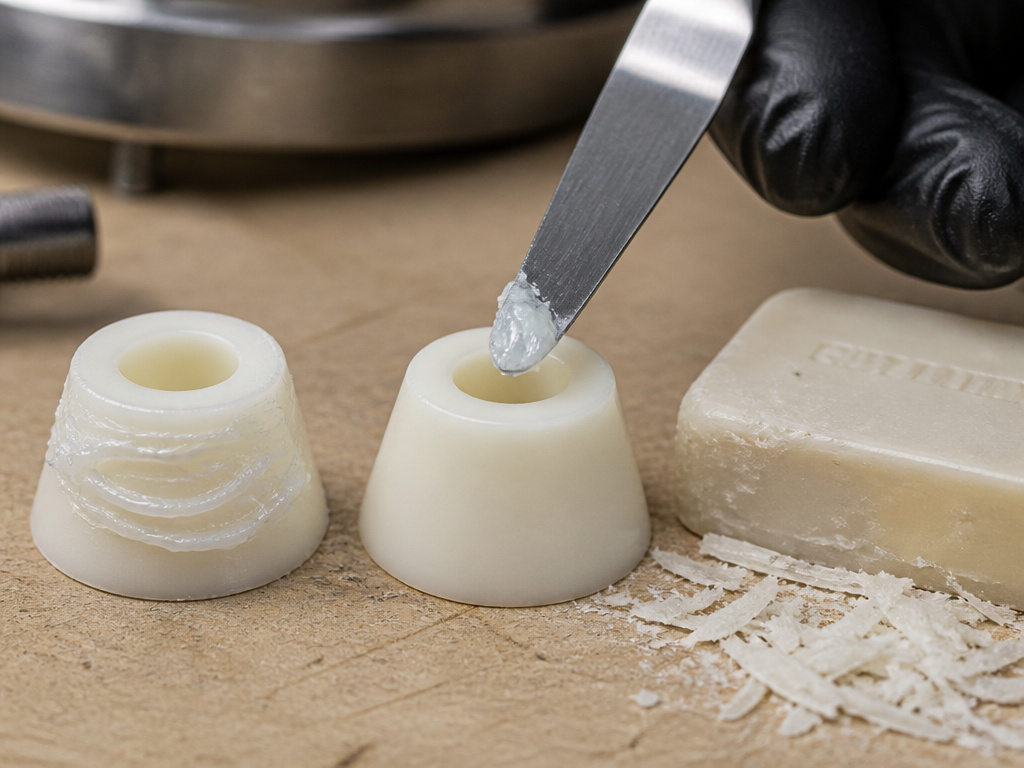
The lubrication debate is the most confusing part. IFixit says soap. Concrete Waves says wax, petroleum jelly, or white lithium grease. Who’s right? Both are, but for different goals.
Bar soap is a dry lubricant. It creates a slick film that reduces friction without attracting dirt. It’s a clean, low-mess solution.
Wax, petroleum jelly, and grease are petroleum-based. They provide a longer-lasting lubricating barrier but are sticky. They will attract dust and grime over time, which is why the Concrete Waves guide warns you to keep it off the hanger.
Never use WD-40, the Concrete Waves handbook is adamant it dries out components and attracts dirt.
Common mistake: Over-lubricating with grease. Apply a thin layer of lubricant to the bushings and a small amount in the pivot cup. More than that migrates onto the hanger and axle, gunking up your bearings.
When to Clean vs. When to Replace

Cleaning has its limits. Urethane degrades. The iFixit street skateboard bushing guide states bushings need to be replaced routinely every couple of years at most. You should check them often for signs of cracking, if you see cracks, they’re done.
Cleaning can’t fix permanent hardening or compression. If your bushings have permanently hardened or compressed, cleaning may not restore their rebound. That’s when you move from cleaning to replacing bushings.
How do you know? A quick test: after cleaning and lubricating, reassemble the truck to your usual tightness. If the board still doesn’t spring back to center when you lean it, the bushings have lost their elasticity. Time for new ones. Choosing the right hardness is its own science, covered in our bushing hardness guide.
Frequently Asked Questions
Can I use WD-40 to clean my skateboard bushings?
No. The Concrete Waves handbook is explicit: WD-40 is a solvent, not a lubricant. It will dry out the urethane and attract more dirt, making the problem worse faster. Use rubbing alcohol, mineral spirits, or the boiling water method instead.
How often should I clean my bushings?
Regular maintenance can help keep bushings clean. A full deep clean is only needed if the board gets very dirty, gets wet, or starts squeaking. The goal of regular truck maintenance is to make the deep clean a rare event.
What’s the best lubricant for squeaky bushings?
For a quick fix, a dab of bar soap or petroleum jelly in the pivot cup will silence squeaks immediately. For a longer-term solution during a full clean, follow either the iFixit (soap) or Concrete Waves (grease/wax) method. If squeaks persist, check our guide on how to fix a squeaky skateboard.
Do I need to clean my bushings if I ride in the rain?
Yes, and quickly. After a wet ride, do your ten-minute wipe-down and make sure everything is dry. If your board was submerged, a full disassembly and dry is necessary to prevent bearing rust.
Can I clean my bushings without taking the trucks off?
You can do the surface wipe-down, but you cannot clean the pivot cup or properly lubricate the bushings without disassembly. The kingpin nut must come off. It’s a five-minute job per truck with a skate tool, and it’s the only way to solve steering noise.
The Bottom Line
Cleaning skateboard bushings isn’t about making them shiny. It’s about preserving the feel of your turn. The deep-clean methods work, but the real win is avoiding the need for them altogether.
Stick with the ten-minute brush-and-rag routine. It turns a yearly, messy chore into a non-event. When you finally do a teardown after a year of riding, you’ll find the bushings are still in good shape, the pivot cup is quiet, and the only tool you needed was a little consistency. That’s how you keep a board rolling smooth for the long haul. Your next session? Start with a quick wipe-down.
