
How to Grind a Skateboard Rail: The 6-Step Beginner Path
This post contains affiliate links. As an Amazon Associate, we earn from qualifying purchases.
To grind a skateboard rail, you need a solid ollie, the right gear, and a commitment to lean forward over a low, waxed surface. The basic 50-50 grind follows six steps: approach with speed, pop an ollie, land with both trucks locked on the rail, balance in a low stance, exit with another ollie, and land with bent knees. Start on a curb or a low rail.
That forward lean is the whole game. Hesitate and lean back, and the board shoots out from under you every time. The gear specs matter too. The Red Bull guide recommends harder wheels (99a or above) for less friction, while a YouTube instructor advises softer wheels for beginners because they grip the ground more during the approach and ollie. A key part of learning how to grind a skateboard rail is committing to that forward momentum.
What follows: the exact gear that helps, a step-by-step breakdown of the 50-50, a clear path from curbs to handrails, and how to bail safely when it goes wrong. By the end, you’ll know the one drill to practice off the rail first.
Key Takeaways
- Start on a curb or low ledge before a rail; the variable height and wider surface are more forgiving for finding your balance.
- Your ollie must be automatic; if you’re still thinking about popping, you’re not ready to add the rail.
- Commit your weight forward over the front truck; leaning back is the number one cause of sudden, painful stops.
- For learning, a DIY rail with 12-inch legs or a waxed 6×6 wooden beam provides a perfect low-risk practice surface.
- Bring skate wax to reduce friction, but use it sparingly, a little goes a long way on metal or painted concrete.
The Gear That Actually Helps
You can try a grind on any setup. Making it stick and walking away from the attempt requires a few specific things. The right gear doesn’t just make the trick easier; it prevents the kind of sudden stop that throws you onto your back.
A helmet is essential. The Red Bull instructional guide states it should fit snug but not too tight, you shouldn’t feel a headache coming on. Wrist guards are a smart add for beginners; catching a fall with your palms on concrete is a quick way to end a session.
Your trucks and wheels make the biggest mechanical difference. Lighter hollow or light trucks are preferred for grinding, as they’re easier to pop and manipulate. Trucks with forged baseplates add strength without the weight. For wheels, conical shapes are recommended because they offer more surface area. The debate starts with hardness.
Where sources disagree: The Red Bull guide recommends harder wheels (99a or above) for less friction. A YouTube instructor advises softer wheels for beginners because they grip the ground more during the approach and ollie. For your first attempts, prioritize control over slide, softer wheels help you build the speed and pop you need.
Skate wax is your friend for reducing friction on a sticky rail or ledge. Rubbing a small piece of skate wax on the contact point helps you slide rather than stick. Finally, wear vulcanized shoes. Their thin, flexible soles give you a better feel for the board than bulky, cushioned sneakers.
Find Your First Surface
Jumping straight onto a handrail is a shortcut to the emergency room. The progression is logical: ground, curb, ledge, low rail, taller rail. Most guides say “start low,” but they don’t tell you where to find it.
A parking lot curb is the true starting point. It’s low, wide, and everywhere. Wax it lightly. The goal isn’t a long grind yet; it’s getting used to the feeling of your trucks scraping against something. Next, find a low, smooth ledge, often on a planter or a low wall. These are perfect because, as the YouTube tutorial points out, ledge height is variable and often lower than a fixed rail. You can start at the very end of a long ledge, where it’s only an inch off the ground, and work your way up.
When you’re ready for a rail, build or find a low one. You can also skip welding entirely; another Reddit user learned by using a waxed 6×6 wooden beam. The square edge is more forgiving for learning boardslides and 50-50s than a round rail.
The 6-Step 50-50 Grind Sequence
The 50-50 grind, where both trucks grind evenly, is the foundation. Break it into these six steps. Master each one before worrying about the next.
Step 1: Approach With Purpose
Roll toward the rail at a slight angle, not straight on. You need a decent amount of speed. A common tip from skaters is to go faster than feels comfortable, hesitation kills momentum. Your feet should be in your normal ollie stance.
Step 2: Pop a Committed Ollie
This isn’t a gentle lift. As a Reddit user bluntly put it: “Go fast and POP. Like, make sure you fucking pop.” You need enough height to clear the rail and land your trucks on top of it. The ollie motion also helps turn your shoulders and board to align with the rail.
Step 3: Land and Lock
Aim to land with both trucks contacting the rail at the same time. Your weight should be centered, but already leaning slightly forward. The Red Bull guide emphasizes to lock the surface underneath your trucks evenly so the board doesn’t slide to one side.
Step 4: Balance and Slide
Keep your knees bent in a low, athletic stance. Look ahead toward the end of the rail, not down at your trucks. A slight forward lean maintains momentum and control. The guide warns not to bend so much you’re crouching, as that risks losing balance.
Step 5: Exit with an Ollie
As you reach the end, prepare to pop off. Don’t just roll off; use your tail to snap a small ollie to unweight the trucks and clear the edge. This gives you control over your landing.
Step 6: Land and Roll Away
Aim to land with your wheels squarely on the ground, knees bent to absorb the impact. Ride away cleanly. The entire sequence for how to grind a skateboard rail should feel fluid, not a series of frantic jerks.
Start grinding the rail toward the middle. You don’t need as much speed or balance time, which builds confidence for your first few makes.
How to Bail Safely (Because You Will)
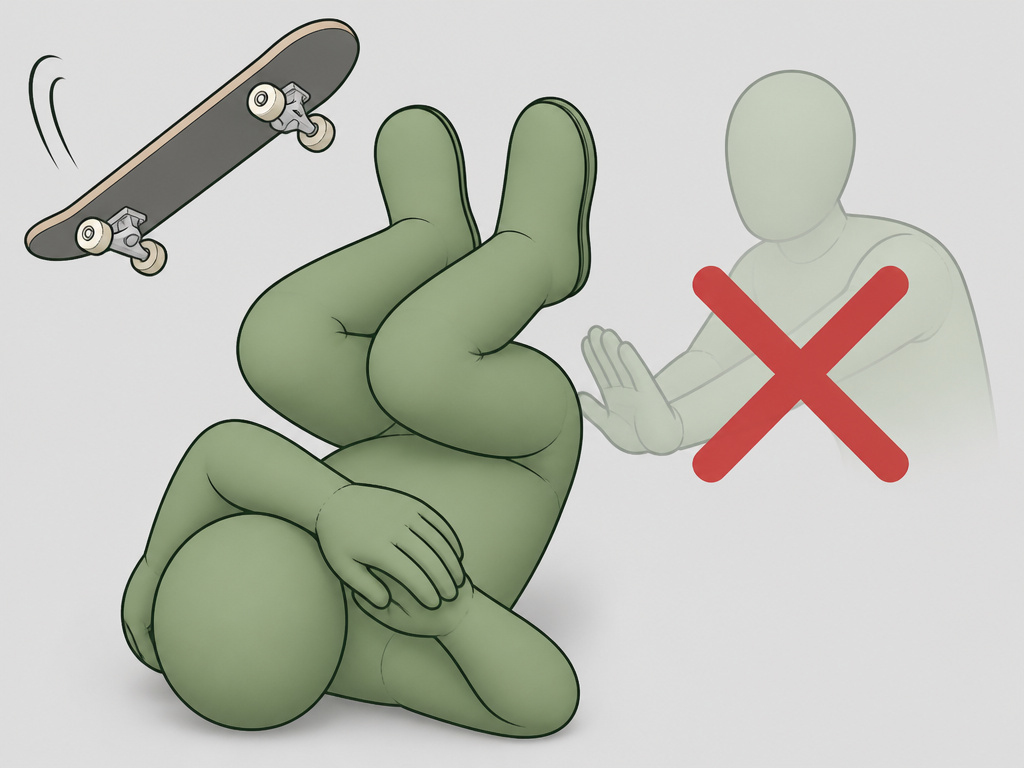
No tutorial is complete without this. The process of how to grind a skateboard rail is a balance challenge, and you will lose it. Knowing how to fall minimizes the damage.
The golden rule: never stick your arms out straight to catch yourself. You’ll sprain a wrist or break a collarbone. If you feel the board stalling or shooting out, try to step off the board with your feet, almost like you’re running out of the trick. Aim to land on your feet and roll onto your shoulder if you have momentum. It looks dramatic, but it spreads the impact.
If you’re coming off backwards, tuck your chin and try to take the impact on your back and shoulder, not your tailbone or head. This is where pads pay for themselves ten times over. Practice bailing on grass first. Get used to the motion of ditching the board and landing in a roll. It makes the concrete feel less intimidating.
Practice This Motion Off the Rail First

Your brain needs to wire the ollie-to-rail motion before you risk the hardware. This drill removes the consequence.
Find a flat patch of ground. Place a piece of tape or a slim stick (like a yardstick) on the ground. Practice rolling at an angle, popping an ollie, and trying to land with your trucks straddling that line. You’re not grinding, but you’re training your muscles to align the board with a target after the pop. Do this ten times a session. When you move to a real curb or rail, your body will already have the map.
The Body Position That Prevents the Worst Fall

We touched on the forward lean. Here’s why this is critical. When your weight is centered or, worse, leaning back toward your heels, the front truck can catch or stall. The board stops instantly, but your body keeps moving. The result is you falling directly onto your back or tailbone. It’s the most common and painful beginner fall.
Leaning forward over your front foot keeps the board sliding. If you do slip out, you fall forward onto your hands and knees (which are padded) or into a roll. It feels counterintuitive, you want to lean away from the danger. But in grinding, the danger is the sudden stop, not the slide.
| Body Position | Effect on Grind | Likely Fall Outcome |
|---|---|---|
| Lean Forward | Maintains momentum, smooth slide | Forward roll or run-out, lower impact |
| Weight Centered | Unstable, may stall | Board shoots out, fall onto side/hip |
| Lean Back | Front truck catches, instant stop | Fall directly onto back/tailbone |
From Curb to Handrail: Your Progression Plan

Putting it all together requires a plan. Don’t just hurl yourself at progressively taller objects. Build competence at each level.
- Curb 50-50s: Get comfortable with the sound and feel of your trucks grinding. Focus on locking in and staying balanced for just a foot or two.
- Ledge 50-50s: Find a low, waxed ledge. The wider surface is more forgiving. Practice approaching at different angles.
- Low Flatbar Rails: A rail with a square or flat top (flatbar) is easier than a round rail. A low height is ideal. This is where you perfect the six-step sequence.
- Boardslides on Low Rails: Once 50-50s feel solid, try boardslides on the same low rail. The balance point is different, but the confidence is there.
- Taller Rails: Only move up in height when the trick feels easy and consistent on the lower setup. Height amplifies every mistake.
The public rails you see in skateparks are built to a safety standard. Public skatepark rails are built to safety standards, which is why they can take a beating. Knowing that a rail is built to a verified standard, such as the ASTM skatepark facility standard, can provide a little extra mental confidence when you’re staring down a new obstacle.
Frequently Asked Questions
What is the easiest grind trick on a skateboard?
The 50-50 grind is universally the easiest and the foundation for all other grinds. Both trucks land on the rail, providing a stable, balanced platform. It’s the first grind every skater learns.
How do I make my own grind rail?
You can build a simple DIY grind rail. The Red Bull DIY guide uses a 6-foot length of steel pipe (3 inches in diameter), and a Reddit user suggested legs about 12 inches high for a low start. Weld the legs to the pipe at a slight angle for stability. For a no-weld option, a heavily waxed 6×6 wooden beam on the ground works for learning boardslides and basic lock-ins.
Is it better to start grinding on a ledge or a rail?
Start on a ledge. Ledges are often lower and have a wider grinding surface, which is more forgiving for learning balance. A YouTube instructor specifically recommends starting on a ledge before a rail for this reason. It’s a lower-risk way to understand the commitment needed.
Why do I keep leaning back when I grind?
Leaning back is a natural fear response, you’re pulling away from the obstacle. It’s also the leading cause of falls. Consciously focus on keeping your shoulders forward over your front knee. Practice on a low curb where the consequence is small to retrain the instinct.
How much skate wax should I use?
Use wax sparingly. Rub a small chunk directly on the rail or ledge’s contact point a few times. Too much wax creates a slippery, unpredictable surface. You can always add more if you’re still sticking.
The Bottom Line
Grinding a rail is a rite of passage. It takes the fundamental ollie and adds a layer of commitment and balance that feels entirely new. The process isn’t mysterious: get your ollie on lock, find a low curb or DIY rail, and drill the six-step 50-50 sequence. Remember, the gear choices matter, softer wheels for learning control, a helmet always, and wax to keep things moving.
The one thing you can’t skip is the forward lean. It feels wrong until the moment your board sticks and you hit the concrete. Then it makes perfect sense. Start low, commit forward, and the rail will meet you halfway. Your first real grind sounds like a long, satisfying scrape. It’s worth the wait.
