
How to Skate Vert: Step-by-Step
This post contains affiliate links. As an Amazon Associate, we earn from qualifying purchases.
To skate vert, you start on small transitions to build comfort with slopes and speed, master the drop-in by committing your weight forward, and use a pumping technique to generate momentum. A vert ramp is typically 3.6 meters (12 feet) tall and requires solid foundational skate skills before attempting.
That height changes everything. It turns a gentle roll into a high-speed launch, and the margin for error shrinks to inches. The process isn’t about jumping straight to the big ramp; it’s a ladder of skills, each one building the balance and nerve for the next. Learning how to skate vert requires mastering this progression.
What follows: the exact gear that meets competition safety standards, a roadmap from mini-ramp coping tricks to vert air, and the one mental shift that stops most beginners from leaning back on the drop-in.
Key Takeaways
- Start on a mini ramp or quarter pipe before even looking at a full vert ramp; the skills transfer directly but the consequences don’t.
- Your helmet must meet a certified safety standard like ASTM F1447 or EN 1078; the official rules put the final choice on you, but a medical authority says replace it every five years.
- Drop in by driving your front shoulder down the ramp, not by leaning your chest; if your weight stays over the back foot, you will fall straight onto your back.
- Pump by extending your legs down the ramp and compressing them back up the transition; this motion, not pushing, builds the speed for airs.
- Practice bailing safely before trying big tricks; learn to kick the board away and aim for a sliding impact on your pads, not a direct hit.
The Vert Ramp Itself
A vert ramp is a U-shaped structure with two steep, vertical walls. The standard build is 3.6 meters (12 feet) tall. That vertical section at the top is the “vert,” and it’s what separates this from a standard halfpipe or bowl. The transition from flat bottom to vertical wall is a smooth curve, but the physics up there are different. Speed carries you vertically, and for a moment you’re weightless.
The vertical section of a competition-grade vert ramp is 3.6m (12ft) tall. This standardized height creates the specific launch trajectory and air time that define vert skateboarding, as referenced in the sport’s official competitive guides.
The coping, the metal pipe running along the top edge, is your target, your obstacle, and your launch point. Hitting it wrong sounds like a hollow metal clang and can stop your board dead. Hitting it right is almost silent, a smooth transfer from ramp to vert and back.
Gear That Meets the Standard
The rules here are clear, but they put the responsibility on you. According to the international governing body, there are no limitations on the shape, materials, or size of your skateboard. A skateboard is defined as a deck with four wheels attached by trucks. That’s it. You can ride what you want.
The helmet rules are where specificity matters. For competition, helmets should be compliant with one of several standards: AS/NZS 2063; EN 1078; Snell B95 or B90; US CPSC 16 CFR Part 1203; or ASTM F1447. The official document states the final decision rests with the athlete or guardian. However,
| Gear Category | Official Rule (World Skate) | Medical Recommendation (AAOS) |
|---|---|---|
| Skateboard | No limitations on shape, materials, or size. Deck with four wheels and trucks. | N/A |
| Helmet | Should comply with listed standards (ASTM F1447, EN 1078, etc.). Final choice is rider’s responsibility. | Replace every 5 years, or if damaged/outgrown. |
| Other Protective Gear | Not specified in core competition rules. | Elbow pads, knee pads, and wrist guards are strongly recommended for all skateboarding. |
Beyond the helmet, you need skate shoes with proper grip, canvas sneakers will slip on the grip tape when you need to adjust your feet mid-air. Knee pads are essential for practicing slams, and elbow pads save a lot of skin.
The Skill Ladder: From Mini-Ramp to Vert
You don’t start on a 12-foot wall. The Reddit threads are full of skaters working on a mini-ramp, listing tricks like rock to fakies and 50-50 grinds. That’s the right path. Vert skating is an extension of transition skating; the fundamentals of how to skate vert are identical, just amplified by height and speed.
Here is the progression ladder, each step a prerequisite for the next:
- Pumping on a Bank or Small Quarter Pipe. Find a gentle slope. Learn to generate speed by extending your legs down the transition and compressing them back up. This is your engine.
- Coping Tricks on a Mini-Ramp. Master stalls and slides where the ramp meets the coping. A solid rock to fakie teaches you to shift your weight and handle the deck tipping. A good 50-50 grind builds balance on the metal.
- Dropping In on a Medium Transition. Before the vert, you must be utterly comfortable committing your weight forward off a coping. Start on a small quarter pipe.
- Airing Out on a Small Ramp. Once you can pump with speed, practice letting the momentum carry your front wheels just over the coping. This is the feeling of “airing out,” and you learn it first where the fall is short.
- Transferring to Vert. The final step is taking this toolkit to the big ramp. The vert section means you have more time in the air, but the takeoff and landing require more precision.
Skipping a rung on this ladder for how to skate vert is how people get hurt. A skater who can’t consistently pump for speed on a mini-ramp will have no momentum in a vert ramp and will stall vertically, a terrifying and dangerous position.
Step-by-Step: Your First Drop-In
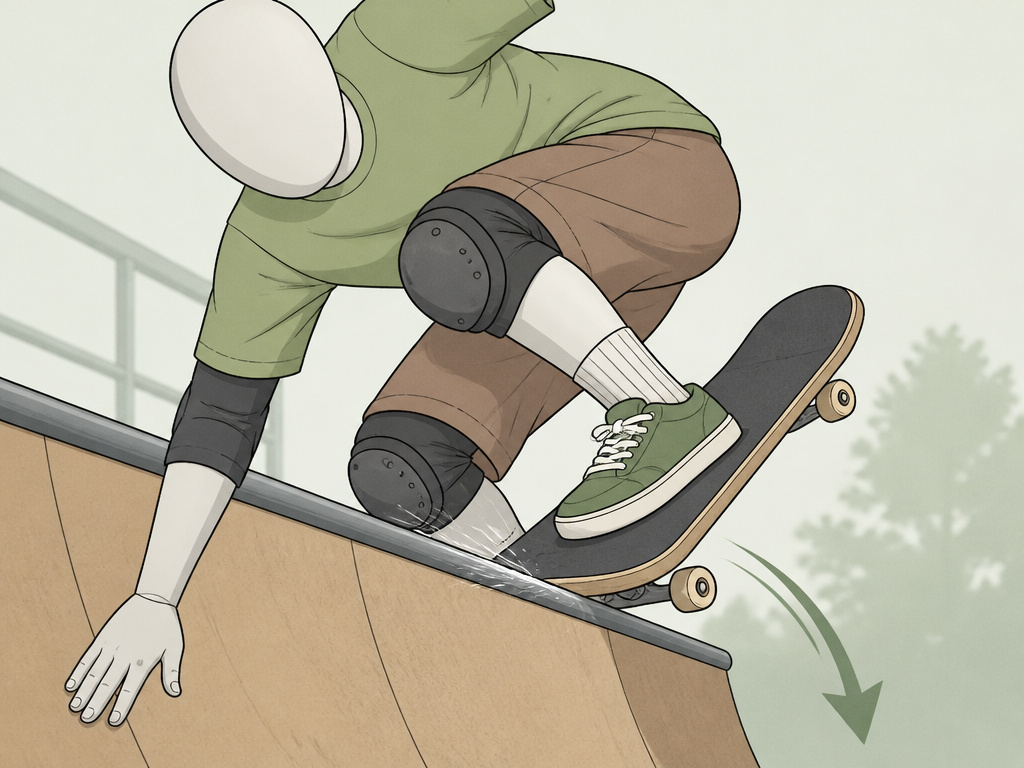
The drop-in is the gatekeeper. It looks simple: place your tail on the coping, your front wheels over the edge, and lean forward. This creates a mental fight against every instinct that says leaning over a 12-foot drop is wrong. Your body will want to lean back. You must win that fight.
Common mistake: Leaning your chest forward instead of driving your front shoulder down the ramp. This keeps your weight centered over the board, not ahead of it. The board shoots out, and you fall straight onto your back.
Here is the sequence that works, practiced first on a small ramp:
- Stance and Placement. Set up with your back foot firmly on the tail, pinning it to the coping. Your front foot should be just behind the front trucks, ready to stomp down.
- The Commitment Move. Do not look at your feet. Look at the point on the ramp where you want to go. Now, instead of leaning, drive your front shoulder aggressively down the transition. Imagine punching that shoulder toward the flat bottom.
- The Stomp. As your shoulder moves, immediately stomp your front foot down flat onto the deck. This simultaneous shoulder-drive and foot-stomp commits the board to the ramp.
- Absorb the Transition. Keep your knees bent. As you rocket down, absorb the curve by compressing your legs. This keeps you stable and ready to pump.
The sound tells you if you did it right. A clean drop-in is almost silent, a quick scrape of the tail followed by the rumble of wheels. A bad one has a loud pop as the tail slaps the coping, followed by the board shooting out from under you.
Generating Speed: The Pumping Technique
Pushing is for flat ground. In a vert ramp, speed comes from pumping. This is a rhythmic compression and extension of your legs timed with the ramp’s curve.
How it works: As you roll down the transition, you extend your legs, pushing your weight down through the board. This converts your potential energy into kinetic energy, speed. As you roll back up the opposite wall, you compress your legs, absorbing the upward force and preparing to extend again at the apex. Done right, each pump adds a little more speed than you lose to friction.
A concrete drill: On a small quarter pipe, start at the bottom. Push once, then try to go back and forth three times without putting your foot down. Focus on the feeling of pushing down into the ramp as you go down, and pulling up with your knees as you go up. When you can do three laps without slowing down, you’ve got the basic pump. This skill is the foundation for tricks like airing out of a bowl or a vert ramp.
Mental Prep and Safe Bailing
Vert is as much a mental game as a physical one. The fear is rational, you are high up, moving fast. The trick is to manage the fear, not eliminate it.
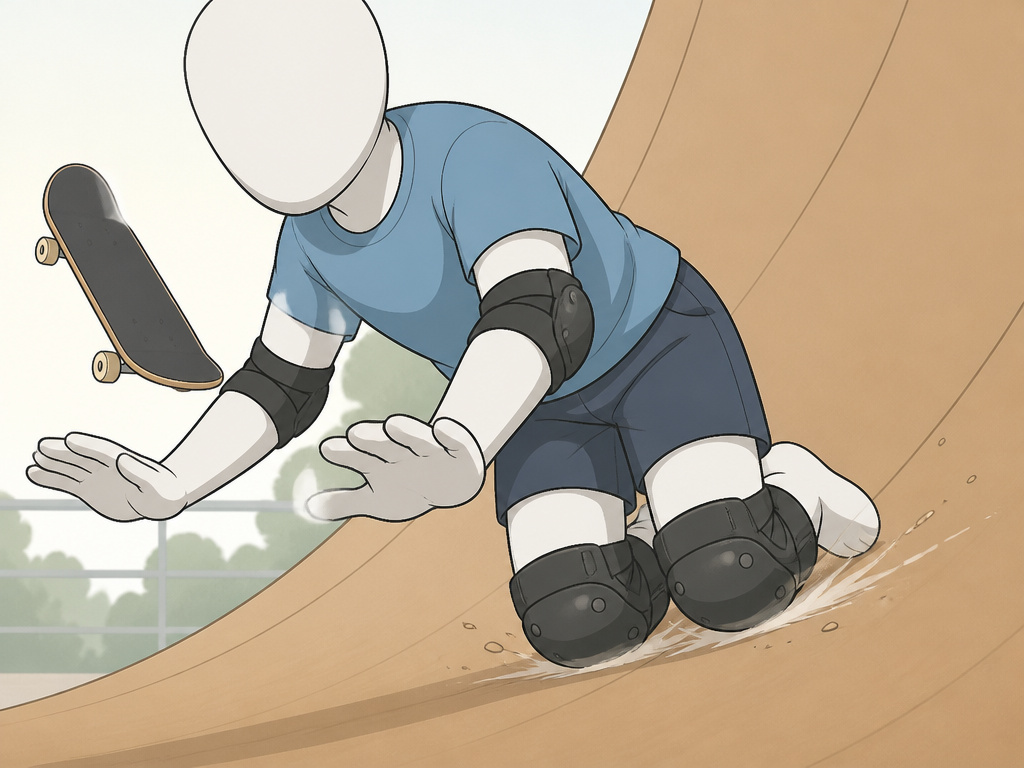
Practice the Bail First. Before you try a big air, practice what happens when it goes wrong. On a small ramp, deliberately kick your board away and aim to land on your knee pads, sliding down the transition. This teaches your body that a fall can be managed. The goal is to avoid a direct, rigid impact.
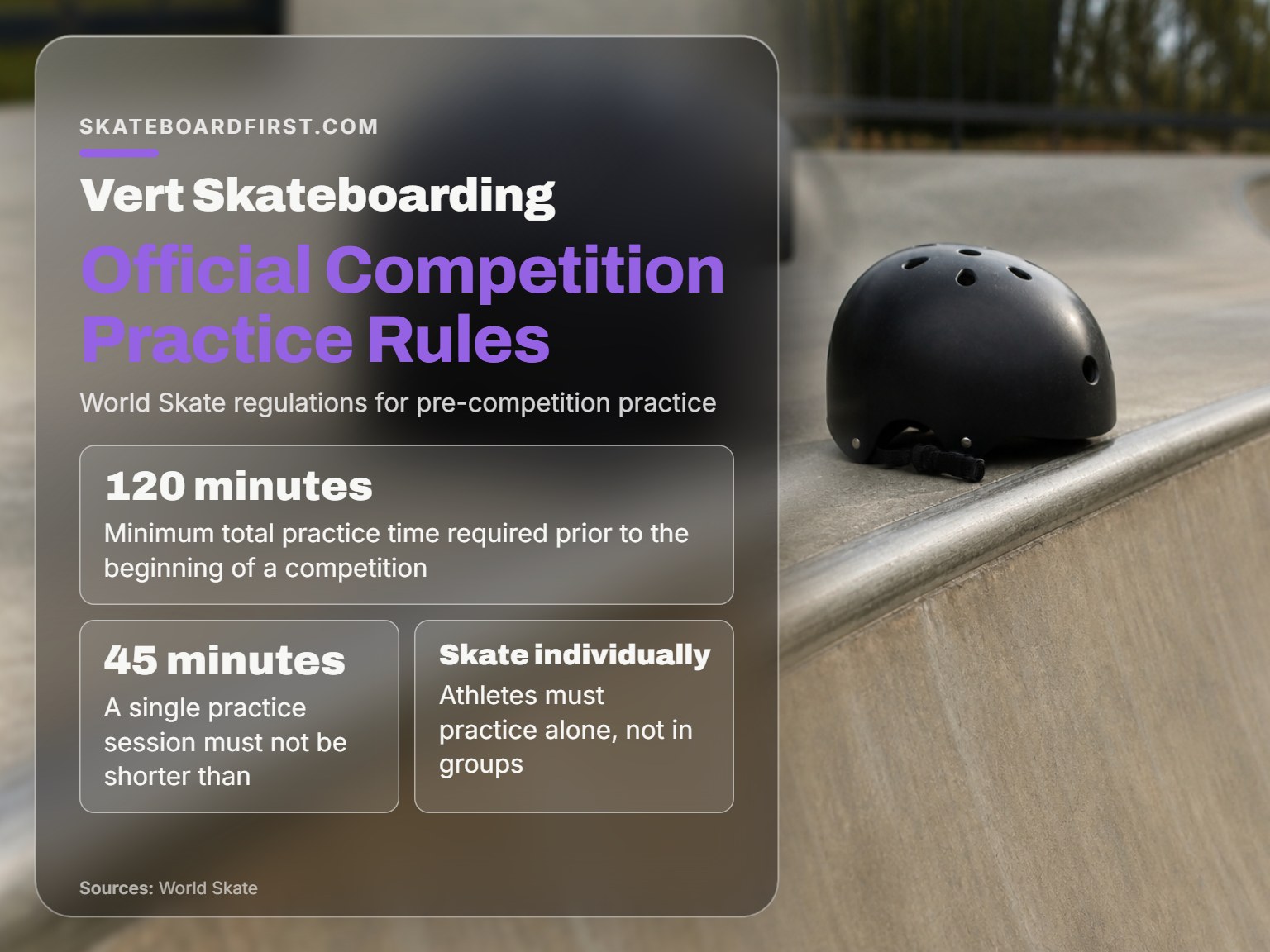
The Competition Mindset. Even the pros have a routine. The World Skate vert competition rules mandate a structured practice window, a minimum of 120 minutes before the contest, with no single session shorter than 45 minutes. Athletes must skate alone, not in a group, and no practice run can be longer than a competition run. This isolates focus and simulates the pressure of the event. Adopt a slice of this for your own sessions: dedicate time to specific skills, skate alone to eliminate distraction, and set a timer for your runs.
Your brain needs a plan more than it needs bravery. Knowing you can approach a session by scoping lines at a new skatepark applies here too. Visualize your line: drop in, pump twice, approach the coping for a small frontside air, land, pump, and roll out. See it in your head before you roll.
Frequently Asked Questions
Is vert skating harder than street skating?
It’s different. Street skating challenges technical precision on rails, stairs, and ledges. Vert challenges commitment, balance at high speed, and managing fear of height. Many find the initial learning curve for vert steeper because the drop-in and pumping are unique skills. However, progressing to advanced flip tricks in street has its own high difficulty plateau.
What skateboard setup is best for vert?
While rules allow anything, most vert skaters use a slightly wider deck for stability in the air, medium-to-high trucks for turning responsiveness on the wall, and larger, harder wheels to maintain speed through the transitions. It’s a setup built for control and momentum, not for flicking flip tricks.
How long does it take to learn to skate vert?
There is no universal timeline. It depends entirely on your existing transition skating foundation. A skater comfortable on a mini-ramp might learn to drop in on a vert ramp in a few dedicated sessions. Going from that first drop-in to consistently landing airs like a backside air can take months or years of practice. The key is progressive steps, not a sudden leap.
Can you learn vert without a vert ramp?
You can build 90% of the skills without one. Pumping, carving, and coping tricks like how to rock to fakie are perfected on mini-ramps and bowls. The final step, handling the true vertical section and the increased air time, requires the big ramp. But if you master the smaller transitions, your first day on vert will be about adapting existing skills, not starting from zero.
Do I need special pads for vert?
Knee pads are essential. The standard soft-cap street pads won’t cut it for the repeated slides and impacts of vert practice. You need hard-shell, sliding knee pads. Elbow pads follow the same logic. Wrist guards are highly recommended by medical bodies like the AAOS, whose skateboarding safety guidelines emphasize fracture prevention. Your gear should let you fall safely, so you can try harder things.
The Bottom Line
Vert skating asks for a trade: you give up the low-impact ease of flat ground for the high-speed thrill of air. The swap only works if you pay the entry fee, mastering the fundamentals on smaller ramps first. Don’t rush to the 12-foot wall. Build your pump on a three-foot quarter pipe until you can generate speed without thinking. Make your drop-in on a four-foot ramp automatic.
One rule most guides skip: if you haven’t learned to fall properly on a small ramp, you have no business on a big one. Practice the bail. Get used to the sound of your knee pads sliding on concrete. That confidence, more than any trick, is what lets you commit when you’re six feet in the air and the ground is a long way down. Start small, build the skill, and the vert will come.
