
How to Turn on a Skateboard: Step-by-Step Guide
This post contains affiliate links. As an Amazon Associate, we earn from qualifying purchases.
To turn on a skateboard, you use two primary methods: carving and kickturning. Carving involves leaning your weight onto your toes or heels to steer the board while all wheels stay on the ground. Kickturning requires you to lift the front wheels by pressing down on the tail, then pivoting the board sharply. Your ability to turn is directly tied to your truck tightness and your own body mechanics.
The “lean to turn” advice is incomplete. It misses the mechanical link between your shoulders, hips, and the trucks. Your upper body leads the turn; your feet follow by applying pressure, and the board’s trucks translate that pressure into a pivot. This guide walks through both methods, the hardware that enables them, and the common mistakes that stop a turn before it starts, including how to turn on a skateboard correctly.
What follows is a breakdown of the two turning techniques, a guide on how to turn on a skateboard, how to set up your board to match your skill level, and the progression path from wide, comfortable carves to sharp, controlled kickturns. By the end, you’ll know exactly why your board might not be responding and how to fix it.
Key Takeaways
- Carving is your default steering method for most riding; it uses body lean to guide the board without lifting wheels.
- Kickturns are for sharp direction changes and navigating tight spaces, requiring you to lift the front wheels off the ground.
- Truck tightness is the single biggest adjustment for turning feel; looser trucks turn easier but feel less stable.
- Always lead a turn with your head and shoulders; looking where you want to go shifts your center of gravity and initiates the turn.
- Practice turning while stationary first to build muscle memory without the added variable of speed.
The Two Core Turning Methods: Carving vs. Kickturns
You steer a skateboard through a combination of weight distribution and mechanical force. The two techniques, carving and kickturning, serve different purposes and feel fundamentally different under your feet.
Carving is flowing and continuous. You lean onto your toes (for a toeside or frontside turn) or onto your heels (for a heelside or backside turn). The Retrospec beginner guide confirms this, stating carve turns involve “leaning to one side or the other, allowing your trucks to turn your board.” All four wheels stay planted. It’s the turn you use when cruising, maintaining speed, and flowing around gentle curves.
Common mistake: Staring at your feet while trying to carve. Your head is heavy. If it’s locked over the board, your shoulders can’t rotate and your hips can’t follow. You’ll stall out or wobble. Look through the turn.
Kickturning is sharp and deliberate. It’s for quick direction changes, navigating around obstacles, or setting up for a trick. The Retrospec guide notes that a kick turn lets you “pivot the board sharply at slow speeds.” You get the front wheels off the ground by putting your back foot on the tail and leaning back slightly, then swing the nose in your desired direction before setting the front wheels down.
The physical sensation is distinct. A carve feels like banking a motorcycle, smooth and connected. A clean kickturn has a soft pop as the tail compresses and the front wheels lift, followed by a quiet scuff as the wheels touch back down.
| Turning Method | Best For | Wheel Status | Key Sensation |
|---|---|---|---|
| Carving | Cruising, flowing, maintaining speed | All wheels on ground | Smooth, banking lean |
| Kickturning | Sharp direction changes, obstacles, trick setups | Front wheels lifted | A soft pop, then a pivot |
How to Carve on a Skateboard: The Weight-Shift Method
Carving is less about brute force and more about precise weight placement. Your trucks are designed to pivot on their kingpins when you apply pressure to one edge of the deck.
Start on a smooth, flat surface while rolling at a slow, comfortable speed. Bend your knees. For a toeside turn (turning toward the direction your toes are pointing), shift your weight onto the balls of your feet. Imagine you’re trying to press down on the front two bolts on the side you’re turning toward. Your shoulders should already be rotated in that direction, you lead with your eyes and shoulders, not your feet.
For a heelside turn, shift your weight onto your heels. The board will respond by tilting onto its other edge, initiating the turn. The key is to keep your weight centered over the board. Leaning your upper body too far outside the board’s width is how beginners fall. A small, controlled weight shift goes a long way.
If your board doesn’t respond to these leans, your trucks are almost certainly too tight. A quarter-turn loosening of the kingpin nut on each truck will introduce the necessary play. Start there.
This is where a good carving technique becomes second nature. It’s the foundation for pumping in bowls, generating speed on flat ground, and simply enjoying a ride. Don’t rush it. Spend a session just linking gentle S-curves back and forth.
How to Kickturn on a Skateboard: The Pivot Move
When you need to change direction now, you kickturn. This move is essential for navigating sidewalks, avoiding cracks, and setting up for many basic tricks.
The Retrospec guide breaks it down: “To kick turn, put your back foot on the tail of the board and lean back slightly, applying pressure to lift the front wheels into the air. Then, rotate the nose of the board in the direction you wish to turn.” Here’s the nuance they don’t mention: your front foot does the guiding.
Place your back foot squarely on the tail, with the ball of your foot near the center. Your front foot should be just behind the front bolts, angled slightly. As you lean back and press down, the tail will compress and the nose will rise. The moment the front wheels leave the ground, use your front foot to guide the nose in the direction you want to go, left for a frontside turn, right for a backside turn. Your shoulders and head are, again, leading this rotation.
Where this goes sideways: Slamming the tail down after the pivot. This shocks the board and can bounce it out from under you. The move ends by easing the pressure off the tail, allowing the front wheels to settle back to the pavement gently.
Practice this stationary first. Get a feel for the tail’s give and the board’s pivot point. Then try it at a slow roll. Mastering the kickturn technique gives you the ability to tic tac for speed and maneuver in tight spaces.
Setting Up Your Board to Turn Properly
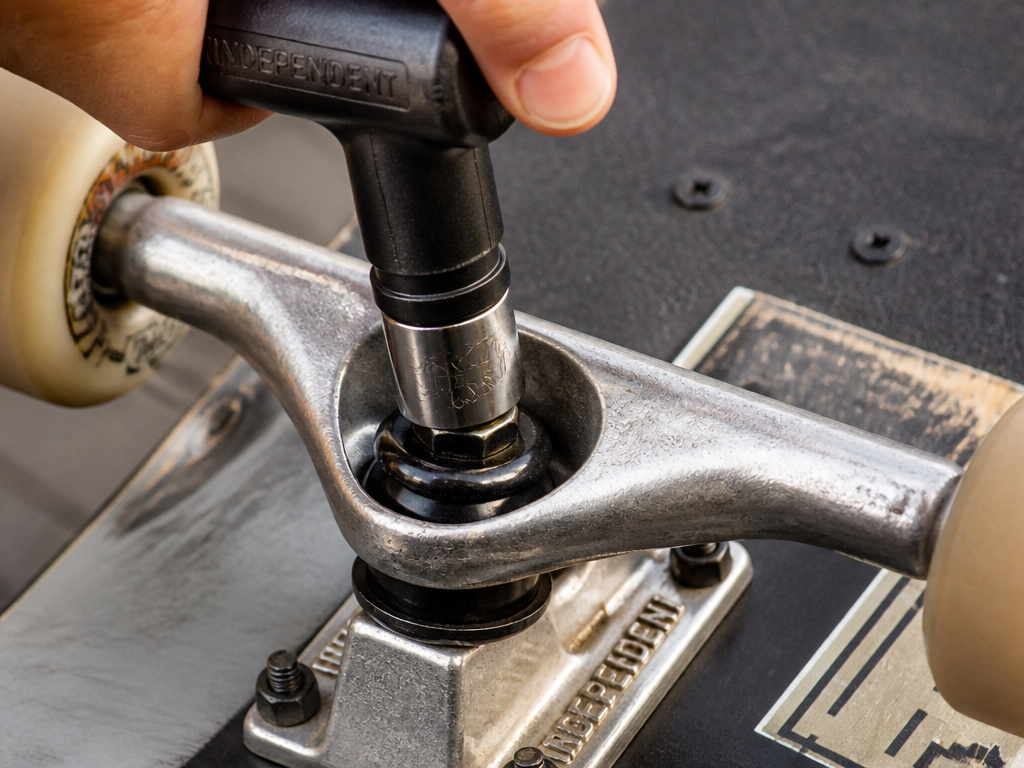
Your technique can be perfect, but if your hardware is fighting you, you’ll lose. Truck tightness is the most critical adjustment for turning. The kingpin nut under the baseplate controls how freely the hanger (the axle carrier) can pivot.
| Truck Tightness | Turning Feel | Stability | Best For |
|---|---|---|---|
| Loose | Very responsive, easy to carve | Low, feels “twitchy” | Technical flatground, quick turns |
| Medium | Balanced response and control | Good for most speeds | All-around cruising, beginners |
| Tight | Requires more force to turn | Very high, feels “dead” | High-speed stability, downhill |
New completes often come with trucks tightened down for shipping. Grab a skate tool or a wrench that fits the kingpin nut. Give each nut a quarter-turn counter-clockwise. Test ride. Repeat until the board turns with a comfortable lean without feeling uncontrollably wobbly.
Bearings matter less for turning, but seized or dirty bearings create drag that makes initiating a carve feel sluggish. If your board doesn’t roll freely in a straight line, it won’t turn freely either. Regular maintenance is part of the deal.
The goal is a board that feels like an extension of your body. If you want to make your board turn sharper, the path is clear: loosen the trucks incrementally and get comfortable with the increased responsiveness.
Troubleshooting a Board That Won’t Turn
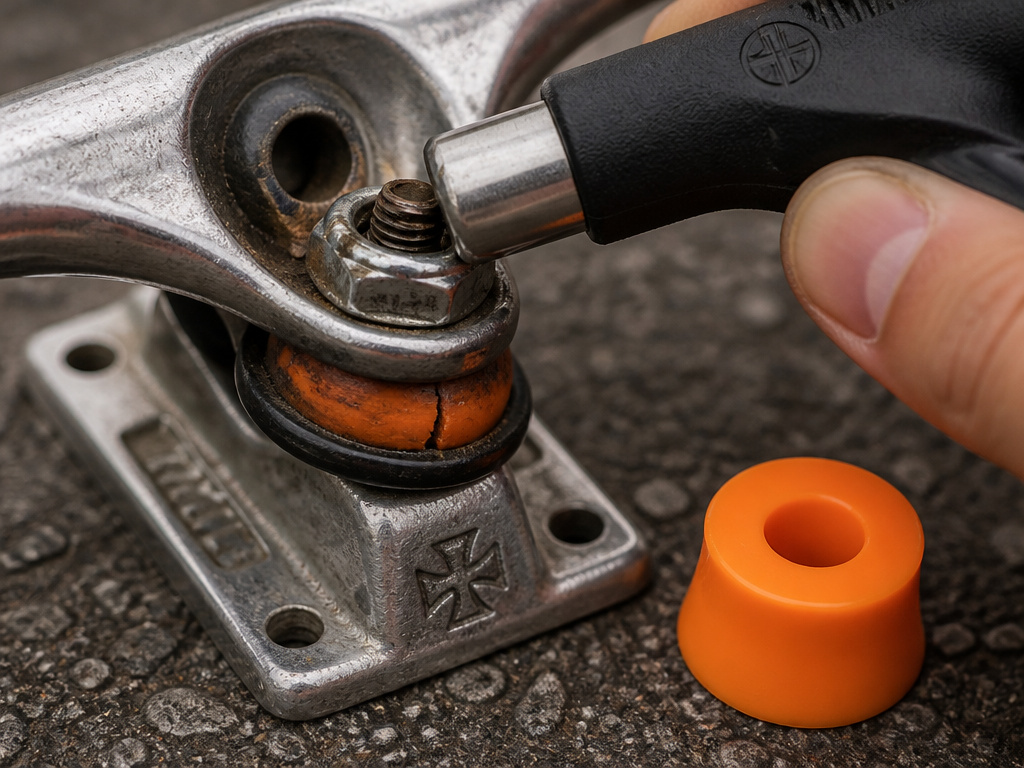
Sometimes the board just doesn’t respond. The problem is usually one of three things: technique, setup, or terrain.
First, check your form. Are you actually shifting your weight to the edge of the deck, or are you just leaning your upper body? Get low and really press into that pocket. Are you looking down? Fix your gaze ahead, through the turn. Your body follows your head.
Second, inspect your setup. Are the kingpin nuts cranked down completely? If you can’t see any threads on the kingpin above the nut, it’s too tight. Are the bushings (the urethane donuts around the kingpin) completely collapsed or cracked? Worn-out bushings lose their rebound and kill turning ability. A fresh set of medium-soft bushings can transform a dead-feeling board.
I learned this the hard way on a cheap complete. I fought the board for weeks, thinking I just couldn’t get it. The bushings were rock-hard from the factory. A ten-dollar swap made it feel like a different deck.
Third, consider the surface. Rough asphalt or bumpy concrete requires more force to initiate a turn because the wheels are constantly getting hung up on tiny imperfections. Soft, grippy wheels will deform and grip better on rough ground, making turning easier than hard, slick wheels.
If you’ve checked all this and the board still won’t turn, ensure the trucks aren’t damaged. A bent kingpin or cracked baseplate will lock up the pivot. That’s a hardware replacement.
Practicing Turns Safely and Building Skill
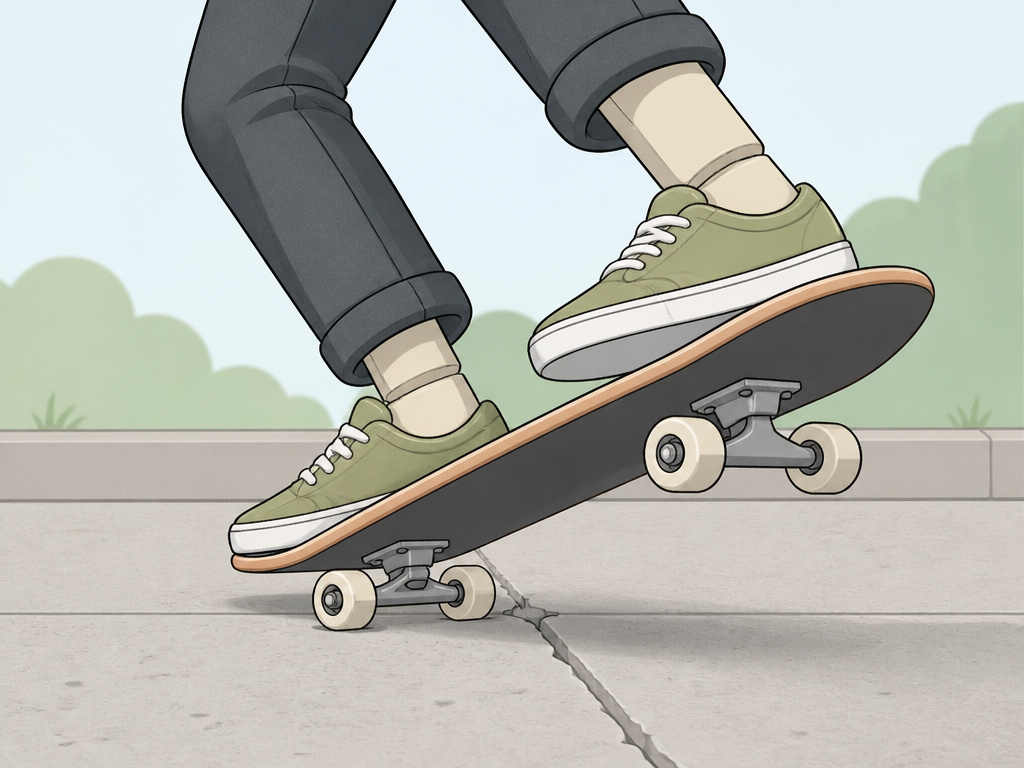
Turning introduces instability, especially when learning kickturns. Your safety priority is managing falls.
Always wear a helmet. Wrist guards are a close second for beginners, as the instinct to catch yourself with your hands is strong and leads to sprains. Find a smooth, open parking lot or a quiet stretch of pavement. Avoid hills until turning is automatic.
Start by practicing carves while rolling slowly. Focus on linking two turns: a heelside turn followed by a toeside turn, creating an S-shaped path. This builds control and balance. Then, practice kickturns while stationary. Use a crack in the pavement or a line as a marker to pivot over.
A great next-step drill is the tic tac, which uses small, repeated kickturns to build momentum without pushing. It directly applies the kickturn motion and teaches you how to pump for speed by using your turns.
The progression is clear: stationary kickturns, then kickturns at a slow roll, then linking carves and kickturns to navigate a simple slalom course of sidewalk cracks or drawn chalk lines. Each step builds the muscle memory and confidence for the next.
Turning on Different Surfaces and at Speed
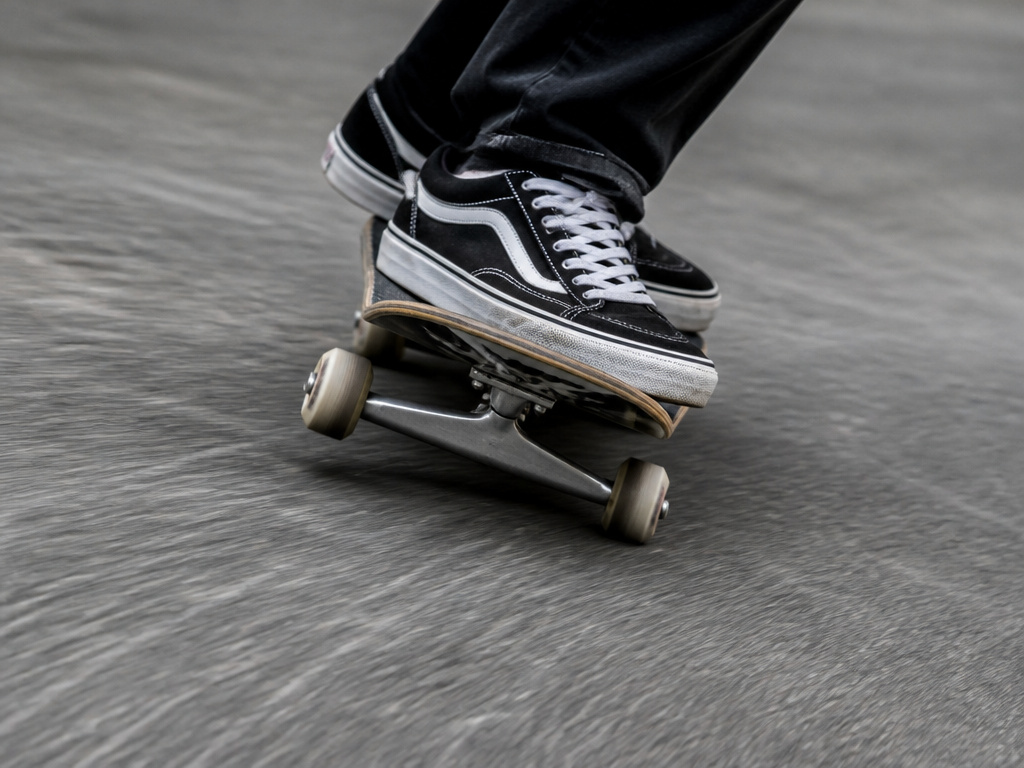
Asphalt, concrete, skatepark smoothness, and rough bike paths all demand slight adjustments. Smooth surfaces are forgiving; your turns can be subtle. Rough surfaces require a more committed, forceful lean to overcome the wheel chatter.
At higher speeds, turning mechanics change. Centrifugal force pushes you outward, so you must lean deeper into the turn to stay balanced. Your trucks will also feel more stable at speed, requiring more deliberate input to initiate a carve. This is why downhill riders often run tighter trucks, for stability, and use forceful, body-english carves to steer.
If you find yourself needing to turn sharply to avoid something while moving fast, a kickturn is risky. It can hook an edge and send you flying. At speed, a controlled, deep carve is almost always the safer option. This is why learning to stop safely is a fundamental skill that goes hand-in-hand with turning.
Frequently Asked Questions
How do you turn a skateboard?
You turn a skateboard primarily by carving (leaning) or kickturning (pivoting). Carving shifts your weight to your toes or heels while all wheels remain on the ground, steering the board gradually. Kickturning involves pressing down on the tail to lift the front wheels, allowing you to pivot the board sharply.
Why can’t I turn on my skateboard?
The most common reasons are trucks that are too tight, incorrect weight distribution (leaning your upper body but not your feet), or a poor riding surface. First, try loosening your kingpin nuts a quarter-turn. Then, practice shifting your weight to the very edges of the deck while rolling slowly on smooth pavement.
How do I switch on a skateboard?
For traditional skateboards, there’s no power switch, you turn by using the methods above. For electric skateboards, turning on the board involves a physical power button, usually on the baseplate or underside. For example, to turn on the Parsec Aero, you “press the Power Button on the front baseplate,” while for Evolve Skateboards you must press the power button in until a solid blue light appears. Always consult your specific board’s manual.
Is it easier to turn with loose or tight trucks?
Looser trucks make turning significantly easier and more responsive, as the hanger can pivot freely. However, they reduce stability, especially at higher speeds. Tighter trucks require more force to turn but provide a more stable, predictable ride. Beginners should start with a medium setting and adjust from there.
The Bottom Line
Turning isn’t a single skill; it’s a toolkit for how to turn on a skateboard. Carving is your everyday steering, kickturning is your emergency brake and tight-space navigation. Your board’s setup, especially truck tightness, is the dial that controls how these tools feel.
Spend your first few sessions ignoring tricks. Just roll, carve, and kickturn. Get so comfortable that you don’t think about your feet. The board should feel like it’s reading your mind. When it does, every other skill, from pumping to ollies, becomes easier to learn because you’re not fighting for basic control.
One rule most guides skip: if you can’t comfortably turn your board in both directions while moving, you’re not ready to go faster or try anything more advanced. Master the lean, master the pivot. Everything else builds from there.
