
Skate Video Parts Explained: From Filming to Final Cut
This post contains affiliate links. As an Amazon Associate, we earn from qualifying purchases.
A skate video part is typically a 3–5 minute (or sometimes 4–8 minute) segment dedicated to a single skater within a longer team video, showcasing their best tricks and personal style, often set to a specific song. Historically, it was the ultimate proof of skill, but today, the ‘GIFable moment’, a single, shareable clip, often holds more cultural and marketing weight.
The part’s structure, from the opening line to the final ‘ender’ trick, is a language all its own. You don’t just watch a part; you read it. The editing, the music choice, the spots they skate, they all tell you something about the skater that a raw clip never could. This is the essence of skate video parts explained.
What follows is a breakdown of what a part actually is, how it’s made, and why its role has shifted from a career-defining milestone to one piece of a much larger media puzzle, which is the core of the skate video parts explained. We’ll look at the classic elements, the modern realities, and what you should actually listen for when you press play.
Key Takeaways
- A traditional skate video part runs 3–5 minutes and is a skater’s curated segment within a longer team video.
- The ‘GIFable moment’, a single, highly shareable clip, now often drives more engagement than a full part, according to a 2018 Jenkem Mag critique.
- Iconic parts are built on key components: a strong opening line, consistent trick variety, a defining ‘ender’ trick, and often a ‘slam section’ showing falls.
- Filming a professional-level part can take months to years, a massive investment of time that the modern media cycle often doesn’t reward.
- While its importance has evolved, a well-made part is still a powerful resume for a skater, demonstrating consistency, style, and a full bag of tricks.
What Is a Skate Video Part?
Think of a skate video part like a solo in a concert. The band plays together, but for a few minutes, the guitarist steps into the spotlight. In a full-length skate video, which used to be a 30–60 minute VHS tape, skaters are often featured in individual segments. That segment is their “part.”
It’s typically 3 to 5 minutes long, set to one song, and edited to showcase that skater’s best footage filmed over a long period, a key point in any skate video parts explained. This is a deliberate presentation of their skill, their style, and their personality on a board. The music, the pacing, the editing, they all work together to tell a story about who that skater is.
A skate video part is a skater’s individual, curated segment within a longer team video, traditionally 3–5 minutes in length, set to a single song, and designed to showcase their skill, style, and consistency as a complete package.
The terminology stuck because it’s literally a part of a larger video. It’s also a part of that skater’s life, representing months or even years of filming. When you watch a legendary part, you’re not just seeing tricks; you’re seeing a chapter of someone’s career, polished and presented for the world.
The Anatomy of a Classic Part
A great part isn’t just a bunch of hard tricks thrown together. It follows a rhythm, a structure that veterans learn to recognize. It builds.
The Opener: The first trick sets the tone. It’s often a solid, stylish trick done on a recognizable spot. It says, “Here’s what I’m about.” It’s not always the hardest trick, but it’s almost always a confident statement.
The Meat: This is the body of the part. It’s a flow of varied tricks, street, ledge, rail, gaps, that shows range. The editing here keeps a pace. It’s not just about difficulty; it’s about style, creativity, and making spots look new. This is where a skater’s signature approach shines through, whether it’s powerful carving, technical flick, or effortless flow.
The Ender: The final trick. This is the exclamation point. It’s often the hardest, most dangerous, or most creative trick in the part, filmed on a iconic spot. The music usually swells, the editing slows down for impact, and everyone knows they’ve just watched the climax. A memorable ender defines a part for decades.
The Secret Sauce: The music is everything. The right song doesn’t just accompany the skating; it elevates it. The beat matches the pace of the tricks, the lyrics might reflect the skater’s attitude, and the mood of the music sets the emotional tone. You discover new music through parts. Then there’s the “slam section”, a quick montage of painful falls right before the ender. It’s a nod to the reality behind the glory, a reminder of the cost of those perfect makes.
How a Part Is Made: From Filming to Final Cut

Making a part is a marathon, not a sprint. It’s a collaborative grind between the skater and the filmer/editor, and it’s far more involved than just pointing a camera.
First, you need a filmer who knows skating. This isn’t about fancy camera work; it’s about positioning. They need to anticipate the trick, keep the skater in frame, and often skate alongside them to get the dynamic, low-angle shots that make tricks look their best. The classic fisheye lens isn’t just for style, it gives a wider field of view so the skater and the spot are both in focus, even when the filmer is close. For a deep dive on angles and gear, our guide how to film skateboarding breaks it down.
Filming for a full video project can take years. A pro films a large number of clips to select from for a five-minute part. They are chasing specific tricks on specific spots in perfect conditions. A spot might get “busted” (skated so much it gets worn down or banned), so timing is critical. It’s a process of constant travel, patience, and frustration.
Then comes the editing. This is where the raw footage becomes a story. The editor pieces together the clips to match the rhythm of the chosen song. They build the arc: a strong start, a flowing middle, a climactic end. Transitions, slow-motion on key landings, and the careful placement of the slam section are all deliberate choices. If you’re curious about the software and techniques behind this, our resource how to edit a skate video covers the next steps.
Finally, the part is placed into the full-length team video. This is the final product, a collection of parts from the entire team, often with an intro, outros, and bonus footage. The release of this video is an event. For a look at how these larger projects come together, from concept to premiere, you can explore the production process.
| Stage | What Happens | How Long It Takes |
|---|---|---|
| Filming | Skater & filmer collect clips at various spots. | Months to several years. |
| Song Selection | A track is chosen that fits the skater’s style & footage. | Can be immediate or a long search. |
| Editing & Assembly | Editor builds the narrative arc, syncing clips to music. | Weeks to months. |
| Final Integration | The finished part is added to the full-length team video. | Final weeks before release. |
Why Parts Mattered (And Still Do)

For decades, a video part was a skater’s business card. It was the definitive proof you could back up your name with a full catalog of skills. Landing a part in a major video from a company like Girl, Baker, or Zero was a direct ticket to legitimacy, better sponsorships, and a pro model shoe. It was the peak achievement.
A standout part did three big things:
- Proved Consistency: Anyone can get lucky and film one amazing clip. A part shows you can do it over and over, in different settings, under pressure.
- Defined Style: It showcased how you skate, not just what you skate. Your creativity, your flow, your approach to spots became your signature.
- Sold Product: It was the ultimate marketing. Fans wanted to skate like their heroes, so they bought the boards, wheels, and shoes those heroes used. A hot part moved inventory.
This era, especially the 1990s and early 2000s, built the legends we still talk about. To understand that foundational period, looking back at skateboarding in the 90s shows how video parts became the culture’s currency.
Where this goes sideways: Dedicating eight months of your life to a video part misunderstands today’s skate economy. – Jenkem Mag, 2018
That’s the old model. The internet changed the game. When video distribution moved from physical VHS/DVDs to instant YouTube uploads, the pace accelerated. Suddenly, you didn’t need to wait for a full-length video to see new footage. Skaters could drop a single banger clip on Instagram every week.
The Rise of the GIFable Moment
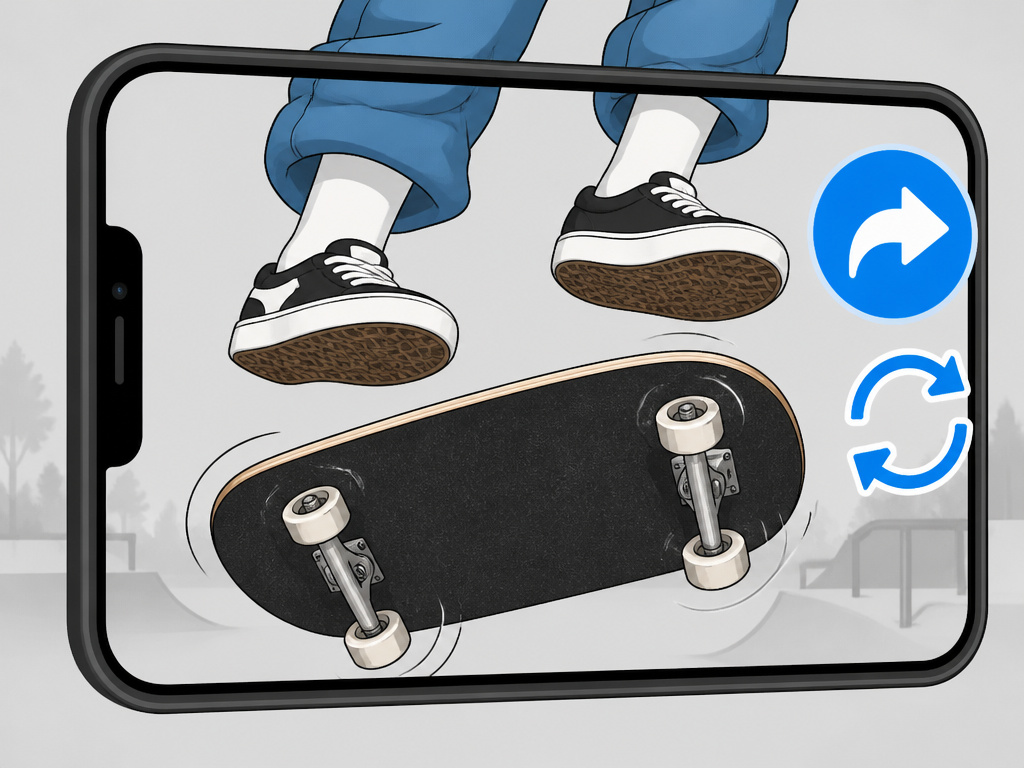
The most valuable currency in skateboarding today is what we like to call ‘The GIFable Moment’. – Jenkem Mag, 2018
Enter the “GIFable Moment.” This is the modern counterpoint to the classic part. It’s a single, shocking, creative, or perfectly executed trick that is designed to be clipped and shared across social media. It requires less investment and generates a way higher return than a full video part.
Think about your own feed. You’re far more likely to watch a 15-second clip of an insane trick that loops perfectly than you are to click on a 5-minute video. That clip gets shared, reposted, and memed. It travels. A full part might get substantial views on YouTube; a GIFable moment can achieve massive reach across social media platforms in a short time.
This has shifted a skater’s strategy. The pressure is now to constantly produce shareable micro-content. The full part hasn’t disappeared, but its function has changed. It’s become more of a deep-cut portfolio piece for the core audience, while the daily or weekly clip drives mainstream visibility and engagement.
| Classic Video Part | Modern GIFable Moment |
|---|---|
| Length: 3-5 minutes | Length: 5-15 seconds |
| Goal: Demonstrate full skill & style | Goal: Generate instant shock/shareability |
| Release: Every 1-2 years | Release: Weekly or daily |
| Audience: Core skaters | Audience: Broad, general social media |
| Impact: Builds legacy & sponsorship | Impact: Drives viral engagement & trends |
How to Watch a Part Like a Pro

You can just enjoy the tricks, but if you want to appreciate the craft, watch with a critical eye. Here’s what to look for:
- The Opening Line: Does the first trick pull you in? Does it feel intentional, or random?
- Trick Variety: Is it just the same flip trick down different sets? The best parts mix it up, ledge tech, big rails, creative flatground, and unique obstacle use.
- Music Synergy: Do the clips hit on the beat? Does the mood of the song match the skating (e.g., aggressive skating with a punk track, fluid skating with something melodic)?
- The Arc: Can you feel the part building? Is there a progression in difficulty or creativity leading to the ender?
- The Ender Payoff: Does the final trick feel earned? Does it live up to the build-up?
Also, pay attention to what’s not there. If there’s no slam section, it might mean the skater or editor wanted a purely heroic narrative. If the music is a generic stock track, the budget might have been low, or the focus was purely on the skating.
This analytical viewing is a skill. It’s what separates a fan from a student of the craft. For a broader look at skate culture beyond just tricks, diving into skate documentaries can provide this deeper context.
How have skate videos changed over time?

Skate videos evolved from full-length VHS releases, which were collective projects that could take months or years to film. These tapes, often 30 to 60 minutes long, were built from individual skaters’ parts, each a few minutes of spotlight. Today, the purpose of a part has shifted. While it remains a traditional milestone, its role in a skater’s career is now part of a larger media strategy, where a single standout clip for social media can sometimes carry more immediate weight than the full part itself.
Who makes and pays for skate videos?
Skate video parts are primarily produced and funded by skateboard brands. A company sponsors a team of riders and commissions a full-length video to showcase their talent, which is essentially a feature-length advertisement for the brand’s team and products. The brand handles the logistics, from filming and editing to distribution. For the skater, their part within that video serves as their professional portfolio and a key method of proving their value to the brand and the wider skateboarding community.
Frequently Asked Questions
How long is a typical skate video part?
What’s the difference between a ‘part’, a ‘section’, and a ‘montage’?
Part” is a dedicated segment for one skater in a team video. A “section” can be the same thing, but sometimes refers to a shorter segment or a themed portion (like a “crew section” with multiple skaters). A “montage” is usually a shorter, faster-paced collection of clips, often set to a song with a quicker beat, and might feature multiple skaters, it’s more about a vibe than a curated presentation of an individual.
Do skaters still need a video part to get sponsored?
It’s not the only way, but it’s still a powerful tool. A solid part proves you can film a full body of work, which shows dedication and skill. However, a strong social media presence with consistent “GIFable moments” can absolutely get you noticed and lead to sponsorships. Many companies now look for both. For a full roadmap, our guide on how to get sponsored in skateboarding details all the paths.
What are some of the most iconic skate video parts?
This list is endless and subjective, but parts that changed the game include Guy Mariano’s part in Girl “Yeah Right!” (for technical mastery), Heath Kirchart’s part in Toy Machine “Jump Off a Building” (for raw power and style), and Ryan Sheckler’s part in Plan B “The Revolution” (for introducing a new generation to video part impact). Each era has its landmarks.
Why do some parts have ‘slam sections’?
The slam section, a quick edit of painful falls, serves a few purposes. It’s a reality check, showing the hard work and pain behind the perfect makes. It builds empathy and respect for the skater. And, frankly, it’s often entertaining in a cringe-worthy way, it humanizes the hero.
The Bottom Line
A skate video part is a time capsule. It captures a skater at a specific moment in their career, polished for history. While its role as the sole career-maker has diminished in the face of social media’s demand for the “GIFable moment,” its value as a complete artistic statement hasn’t.
Watch the old parts to understand the history and the craft. Watch the new parts to see how skaters are adapting that craft to a faster world. And when you see a single, perfect clip blow up online, remember: that’s today’s most powerful currency in action. The part laid the foundation, but the moment owns the now.
The real shift is that parts now exist in a wider ecosystem. They’re the album in a world of singles, less immediately viral, but for those who listen all the way through, infinitely more rewarding.
