
Skateboard Safety Checklist for Parents: How to Choose
This post contains affiliate links. As an Amazon Associate, we earn from qualifying purchases.
A complete skateboard safety checklist for parents covers seven non-negotiables: a certified helmet that fits today’s hairstyle, wrist guards, closed-toe shoes, board inspection, daytime riding on smooth surfaces, age-appropriate supervision, and a strict ban on electric Onewheel boards. The American Academy of Pediatrics reports one-third of injuries happen in the first week, and almost half of all injuries involve children under 15.
That first-week stat marks the timeline when new skaters are figuring out balance and how to fall, often on terrain they misjudge. The gear and rules on this list exist to turn those early stumbles into learning moments instead of emergency room visits.
What follows is the actionable version of the official skateboard safety checklist for parents. You’ll get the specific helmet standards that matter, the shoe choice sources disagree on, how to spot a recalled Onewheel, and where to draw the line on supervision as your kid gains skill.
Key Takeaways
- One-third of skateboard injuries occur in the first week of learning, per the American Academy of Pediatrics, this is when close supervision and full protective gear matter most.
- A skateboard helmet must fit the hairstyle they’ll skate in; a drastic haircut requires a re-check, as fit changes and a loose helmet can come off on impact.
- Wrist guards are essential for reducing fracture risk, according to the CPSC, they absorb the instinctive, outstretched-hand fall that causes most beginner injuries.
- Avoid all Onewheel electric skateboard models, a full CPSC recall in September 2023 followed four deaths; original models cannot be updated and are unsafe.
- Shorter decks are easier for beginners to balance, but longer boards increase stability at speed, match the board to their current skill level, not their aspirational one.
The Pre-Ride Gear Check (Helmet, Wrist Guards, Shoes)
The right gear does more than protect. It builds confidence. A kid who knows a fall won’t scrape skin or twist a wrist is a kid who’ll push a little farther. We begin with the item that carries the most weight: the helmet.
The part nobody mentions: A helmet that fit perfectly with long hair becomes dangerously loose after a short haircut. The CDC explicitly notes helmet fit can change with hairstyle, requiring adjustment before the next session.
I learned this the hard way coaching a neighborhood kid. His helmet seemed fine until he took a spill and it slid sideways, exposing his temple. He’d gotten a buzz cut the weekend before. Now we do a quick fit check every time his hair looks different.
Helmet Certification and Fit
You need two things: the right certification and a fit that survives a shake. For certification, sources differ slightly. The New Jersey Division of Consumer Affairs says the sticker inside must meet the ASTM F1492 skateboard helmet standard. The CDC states that single-use skateboard helmets should meet the NOCSAE Standard®, while multi-use helmets must have an ASTM label certifying it for skateboarding. Your safest bet is a helmet that meets one of these and is specifically marketed for skateboarding, not just biking.
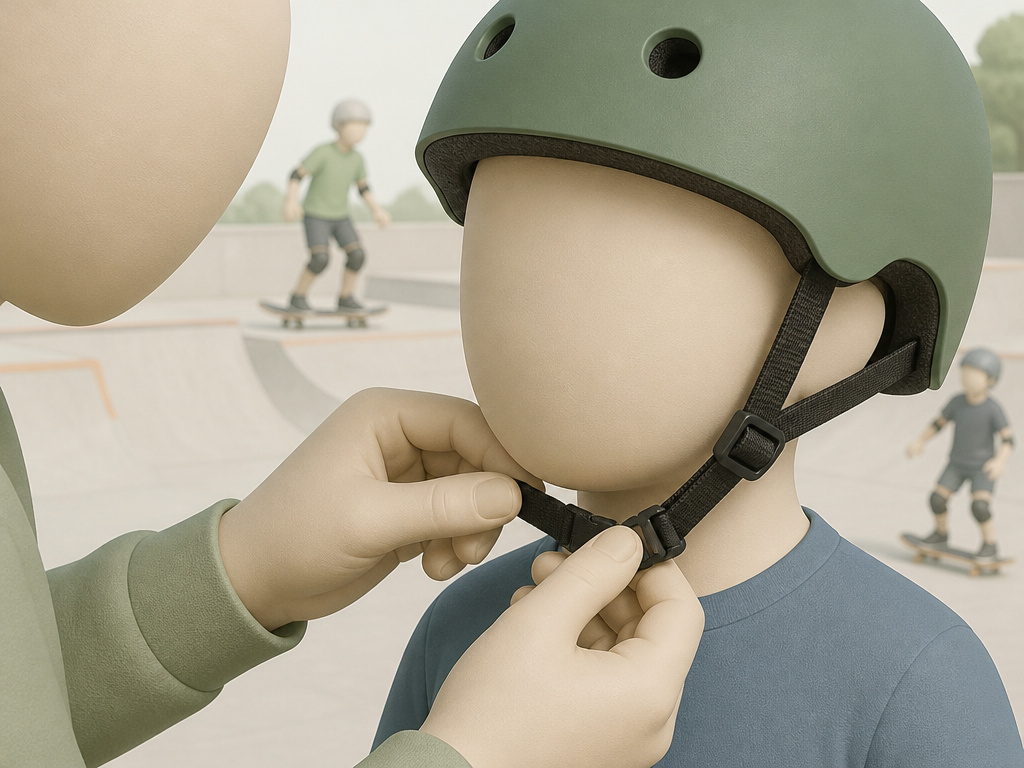
Fit is a four-point check you can do in thirty seconds:
- Eyebrow Alignment: The front rim should align with the eyebrows.
- The “V” Test:
- The Yawn Check: Buckle the chin strap. The strap should be snug enough that only one or two fingers fit between strap and chin.
- The Shake:
This is the single most important piece of your gear, covered in our complete safety gear guide for kids.
Wrist Guards: The Fracture-Stopper
The CPSC calls wrist guards “especially important for reducing the risk of fractures.” When beginners fall, they almost always throw their hands out. Wrist guards with a splint on the palm side absorb that impact and keep the wrist in a safe, neutral position. Pair them with knee and elbow pads to handle the rest of the landing.
The Shoe Debate: Flat vs. Grippy
I side with the orthopedists on this one. Flat soles are great for board feel, but a completely smooth bottom on dusty pavement is a slip hazard. Choose a vulcanized rubber sole (the classic skate shoe style) that’s mostly flat but has a subtle tread pattern. Skate shoes designed for the activity make kids’ sizes that work. The “closed-toe” and “no Crocs” rules are absolute, open shoes offer zero protection from a runaway board.
Choosing and Checking the Board
A bad one, wobbly trucks, cracked deck, dead bearings, betrays the rider at the worst moment. Your first job according to the skateboard safety checklist for parents is to avoid toy-store completes. They look fun but often have plastic trucks that can’t be adjusted and wheels that don’t roll. Start with a shop-quality skateboard, even for a small child.
Deck Size: Short for Control, Long for Stability
Sources offer two valid paths. The AAOS/OrthoInfo advises that shorter decks are best for beginners because they are easier to balance and handle, while the CPSC notes that longer boards increase stability. The CPSC notes that longer boards increase stability, especially at speed.
The beginner path is shorter. A shorter deck width is typical for younger kids. It’s lighter, easier to flip for turning, and less intimidating. As they graduate to cruising faster or hills, a longer board (often called a cruiser or longboard) becomes the safer choice. Our guide on how to choose a skateboard for a child walks through the measurements.
| Board Part | What to Check | Why It Matters |
|---|---|---|
| Deck | Look for cracks, sharp splinters, or water damage (warping). | A cracked deck can snap under pressure, especially near the trucks. |
| Trucks | Check for excessive side-to-side play. Ensure mounting bolts are tight. | Loose trucks cause unpredictable turns and speed wobble. |
| Wheels | Spin each wheel. Look for cracks, flat spots, or wheels that don’t spin freely. | Cracked wheels can shatter. Sticky bearings rob speed and control. |
| Grip Tape | Ensure it’s fully adhered, not peeling at the edges. | Peeling grip is a tripping hazard and reduces foot stability. |
The Onewheel Recall: A Hard Stop
This is a mandated avoidance, not a gear recommendation. In September 2023, the CPSC issued a recall for all models of Onewheel electric skateboards following four reported deaths. The boards can stop balancing the rider if their limits are exceeded. The American Academy of Pediatrics states that newer models can update firmware via an app for a new safety alert, but the original Onewheel and Onewheel+ cannot be updated and should not be used. If you own one, stop using it and follow the recall instructions. This overrides any cool factor or peer pressure.
The Riding Environment: Where and When
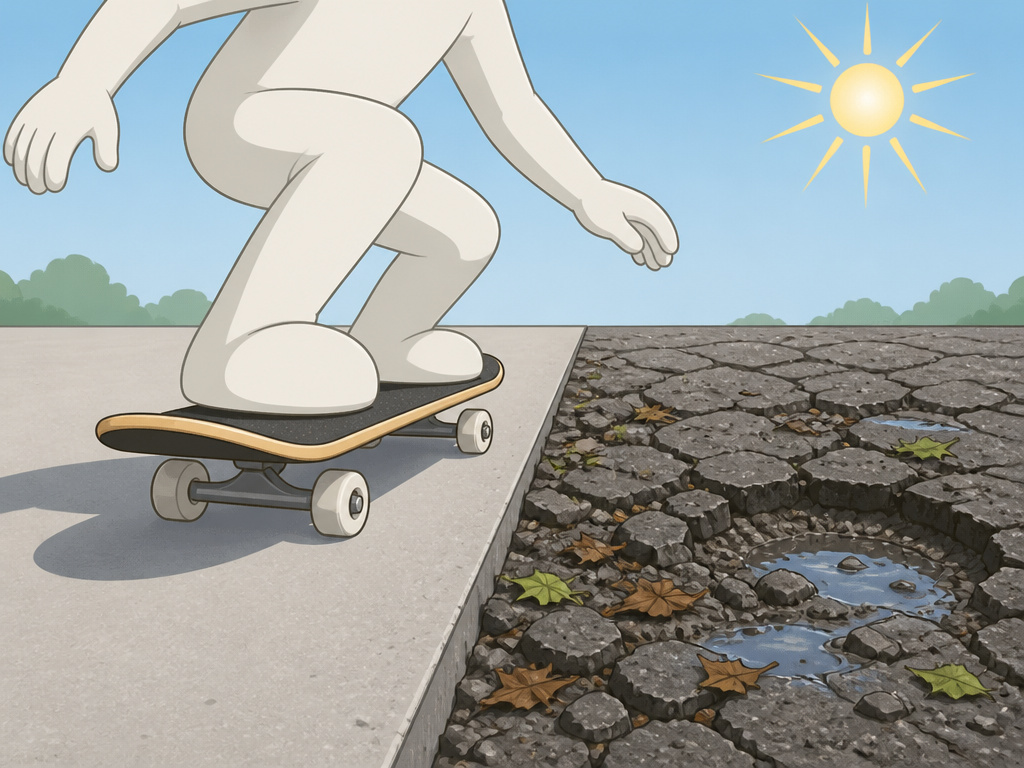
A smooth, empty parking lot is the skate equivalent of a training gym. It’s where skills are built safely. The moment you add cars, slopes, or debris, the risk multiplies.
Terrain Rules: Smooth, Dry, and Daylit
The CPSC and AAOS agree on a core list: * Ride during the day. (CPSC) / Avoid darkness (AAOS). * Inspect the terrain for holes, bumps, rocks, and debris before starting. * Avoid irregular surfaces like cracked sidewalks or gravel. * Never skate in wet weather or on ice. Water ruins board bearings and turns smooth pavement into a slip-and-slide. * Do not use homemade ramps. They lack proper engineering and transition angles.
The Skatepark Paradox
Supervised skate parks feel like the safe choice. But the AAOS/OrthoInfo points out they “often have more advanced terrain and are not advised for beginners.” The deep bowls and steep ramps are for skilled riders. If you go, stick to the beginner areas, often labeled as “street” sections with low rails and small ramps. Your role is active skatepark supervision, watching both your child and more advanced riders who might not see them.
Common mistake: Letting a child skateboard while listening to headphones. The AAOS explicitly says not to. They need to hear your warnings, other skaters yelling “dropping in!”, and the sound of approaching bicycles or cars.
Age, Supervision, and Skill Progression
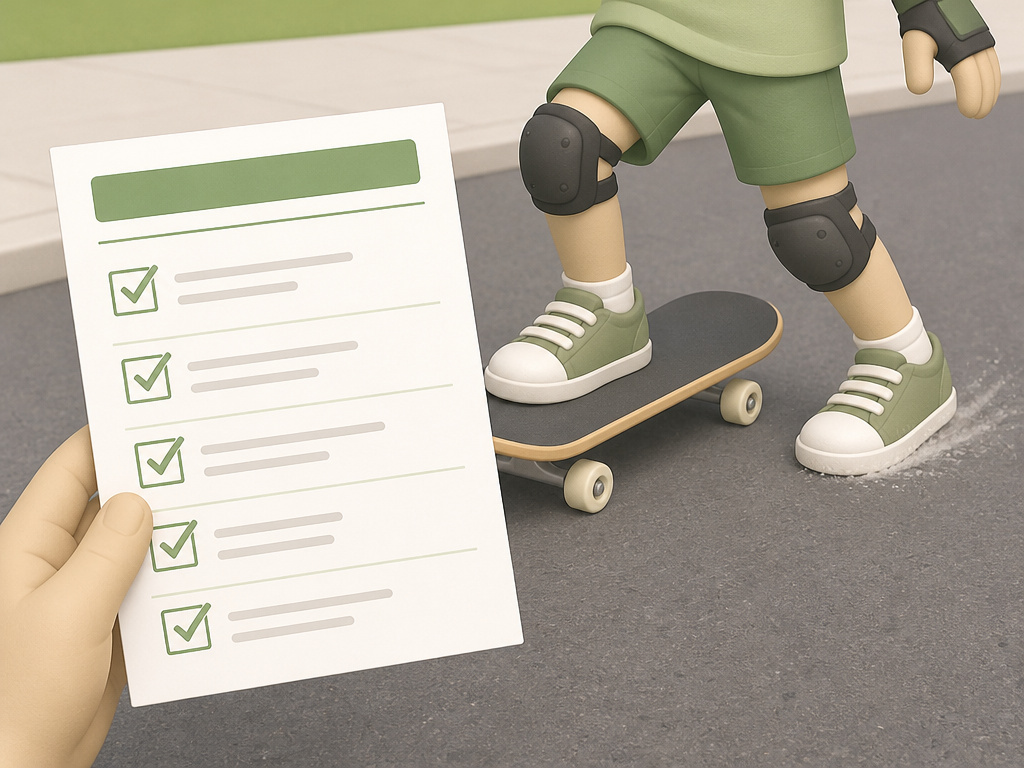
Supervision involves knowing when to step in, when to back off, and what milestones come next. The official age thresholds have a slight disagreement, giving you a range to work within.
Age Guidelines and the Supervision Window
This gives you a framework. A child under 8 needs close supervision. An older, responsible child might require less direct supervision as they gain skill, but supervision should always be focused. The key is that “close supervision” means you are focused, not scrolling on your phone.
Skill Milestones Before Tricks
The urge to ollie is strong. Resist it. The foundation is boring but critical:
- Stance and Balance: Can they stand comfortably on the stationary board, then while rolling slowly?
- Pushing and Foot Braking: Can they push, get both feet on the board, and slow down by dragging their back foot?
- Turning: Can they make gentle carves by leaning, then sharper kick-turns?
- Falling Safely: Have they practiced the tuck-and-roll on grass? Our guide on teaching kids to fall safely turns panic into muscle memory.
Only after these are automatic should trick training begin. This progression directly prevents the overconfidence that leads to common skateboarding injuries in children.
The 5-Minute Pre-Skate Safety Scan
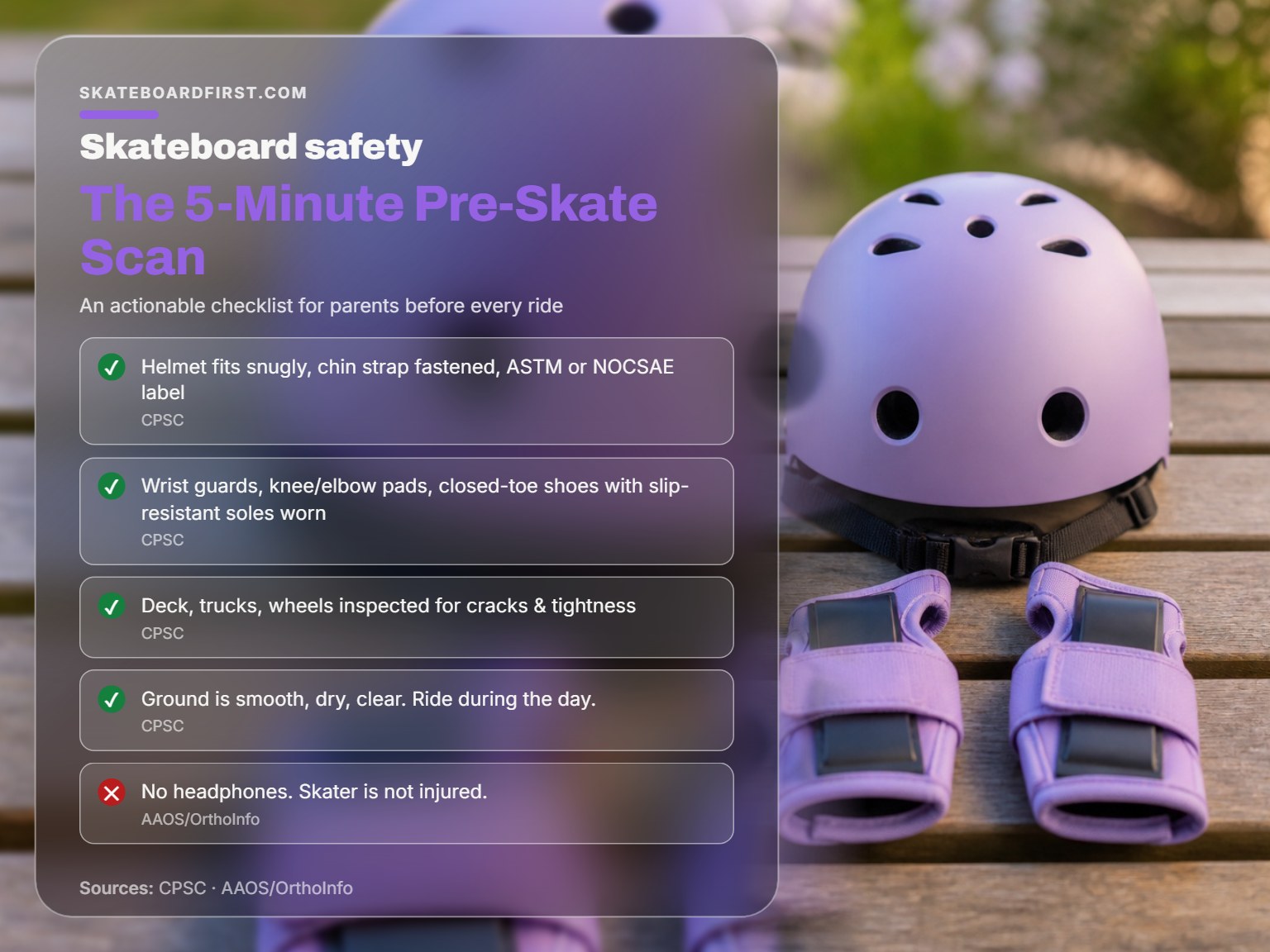
This is your actionable, pre-session checklist. Run through it every time.
- Gear Scan: Helmet (fit check), wrist guards, knee/elbow pads, closed-toe shoes. All straps fastened.
- Board Scan: Deck (no cracks), trucks (tight, no excessive wobble), wheels (spin freely, no cracks).
- Terrain Scan: Ground is smooth, dry, and clear of debris. No traffic or crowded pedestrian areas.
- Condition Scan: It’s daytime. The skater is not injured, dizzy, or tired. No headphones.
- Supervision Scan: You are present and focused. For young riders, you are within quick-intervention distance.
Post this list by the door. It turns abstract safety rules into a simple, repeatable habit.
Navigating Peer Pressure and Gear Reluctance
You can buy the best gear. Getting a pre-teen to wear it is another battle. Discussions among parents and skaters often debate this exact tension.
The “Helmets Aren’t Cool” Problem
The solution is normalization. If you’re at the skatepark, wear a helmet yourself. Point out the older, skilled riders who wear them, many do. Frame it as part of the sport’s equipment, like a football player’s pads. Share stories of helmets preventing injury to prove their worth.
Adjusting Gear as Skills Improve
Most lists miss. The rules evolve. A beginner needs full pads everywhere. An intermediate skater who only cruises on bike paths might downgrade to just helmet and wrist guards. A park skater hitting ramps needs full pads again. Make it a conversation: “Show me you can fall safely and control your speed every time, and we’ll talk about lighter gear for cruising.” It turns safety into a reward for competence, not a babyish restriction.
Statistics on skateboarding injuries
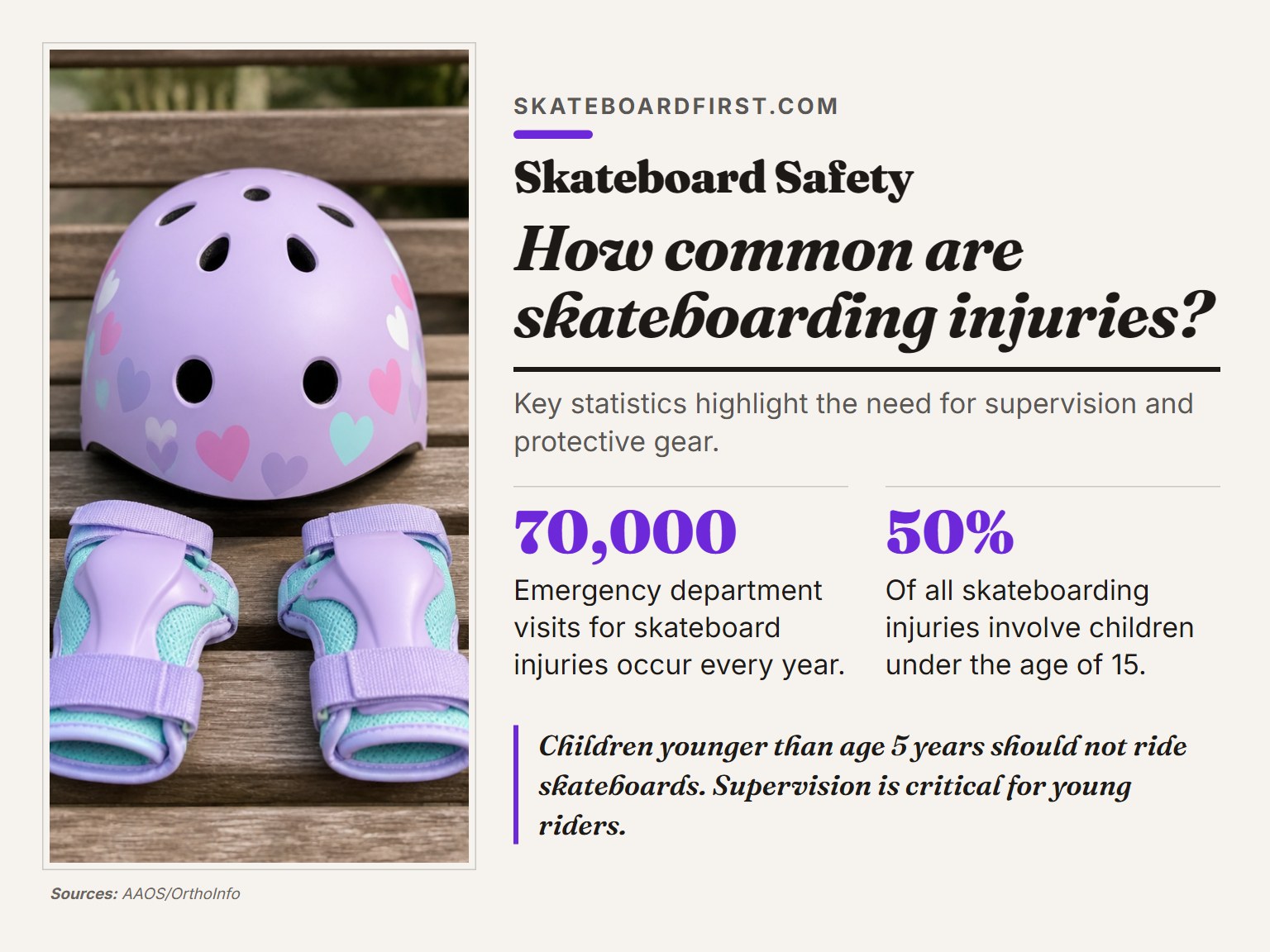
Understanding the risks helps frame why safety gear and supervision are absolutely necessary. Approximately 70,000 skateboard injuries requiring a visit to the emergency department occur every year. Nearly half of all these injuries involve children under the age of 15. The period of greatest risk is often at the very beginning; a significant portion of injuries occur in the first week of learning the sport. For young children, the guidance is clear: those under a certain age should not skateboard at all, and others require very close adult supervision. These numbers underscore that proper preparation is essential.
Frequently Asked Questions
What is the most common skateboard injury for kids?
Fractures and sprains to the wrists and ankles are the most common, according to the AAOS. This is why wrist guards are emphasized, they directly target the number one injury mechanism: the outstretched-arm fall.
At what age can a child start skateboarding?
The American Academy of Pediatrics states children younger than 5 years should not ride. For children aged 6 to 10, close adult supervision is required. A child’s coordination, balance, and risk judgment are the real factors, not a fixed birthday.
Are electric skateboards safe for kids?
No. The CPSC recall of all Onewheel models in September 2023, following four deaths, is a definitive answer. The mechanics of self-balancing electric boards introduce failure modes (like cutouts) that a child cannot anticipate or recover from. Stick to traditional skateboards.
How do I know if a helmet still fits after a growth spurt?
Use the fit checks listed earlier. A telltale sign is the eyebrow alignment. If the front rim sits well above the eyebrows, it may be too small.
Can my child skateboard in our driveway?
Yes, provided you inspect the surface for cracks or uplifted concrete and ensure it’s a dead-end with no car traffic. Driveways are excellent for learning to push and turn. However,
Do the rules change if my child is very coordinated?
The injury statistics don’t discriminate by coordination. The AAP’s note that one-third of injuries happen in the first week captures overconfident beginners of all skill levels. The rules about helmets, wrist guards, and safe terrain are for everyone. Coordination helps with skill progression, not with invincibility.
The Bottom Line
Your job is to manage the specific, documented hazards that cause the 70,000 emergency room visits each year, not to eliminate risk. That means a certified helmet on their head today, not the one that fit last month. It means wrist guards every single session, because that’s the fracture that sidelines them for six weeks. It means a firm “no” to electric Onewheels, regardless of what their friends have.
The single most effective thing you can do is the pre-skate scan. Five minutes of checking gear, board, and terrain builds a ritual that outlasts your supervision. It turns them into a skater who thinks about safety because you showed them how, not because you’re watching.
Go check the helmet fit. Right now.
