
Skateboarding in the Olympics: History, Rules, and Future
This post contains affiliate links. As an Amazon Associate, we earn from qualifying purchases.
That debut wasn’t just a new event on the schedule. It was a formalization of a culture. The Olympic framework imposed specific rules, a global qualification ladder, and a medical spotlight on a sport known for its raw, unpredictable energy. The transition from street corners and DIY parks to a standardized global stage changed what it means to be a competitive skater, a shift accelerated by skateboarding in the Olympics.
What follows is a look inside that machine: the two distinct disciplines, the point system that decides medals, the path athletes take to get there, and the real physical stakes that come with landing, or missing, a trick at the highest level. We’ll also trace where it’s headed, from Paris 2024 to LA 2028.
Key Takeaways
- Skateboarding’s Olympic program splits into Park and Street disciplines, each with unique courses and timed 45-second runs.
- Qualification for the Games hinges on the Olympic World Skateboarding Ranking (OWSR), with National Olympic Committees having the final say on team selection.
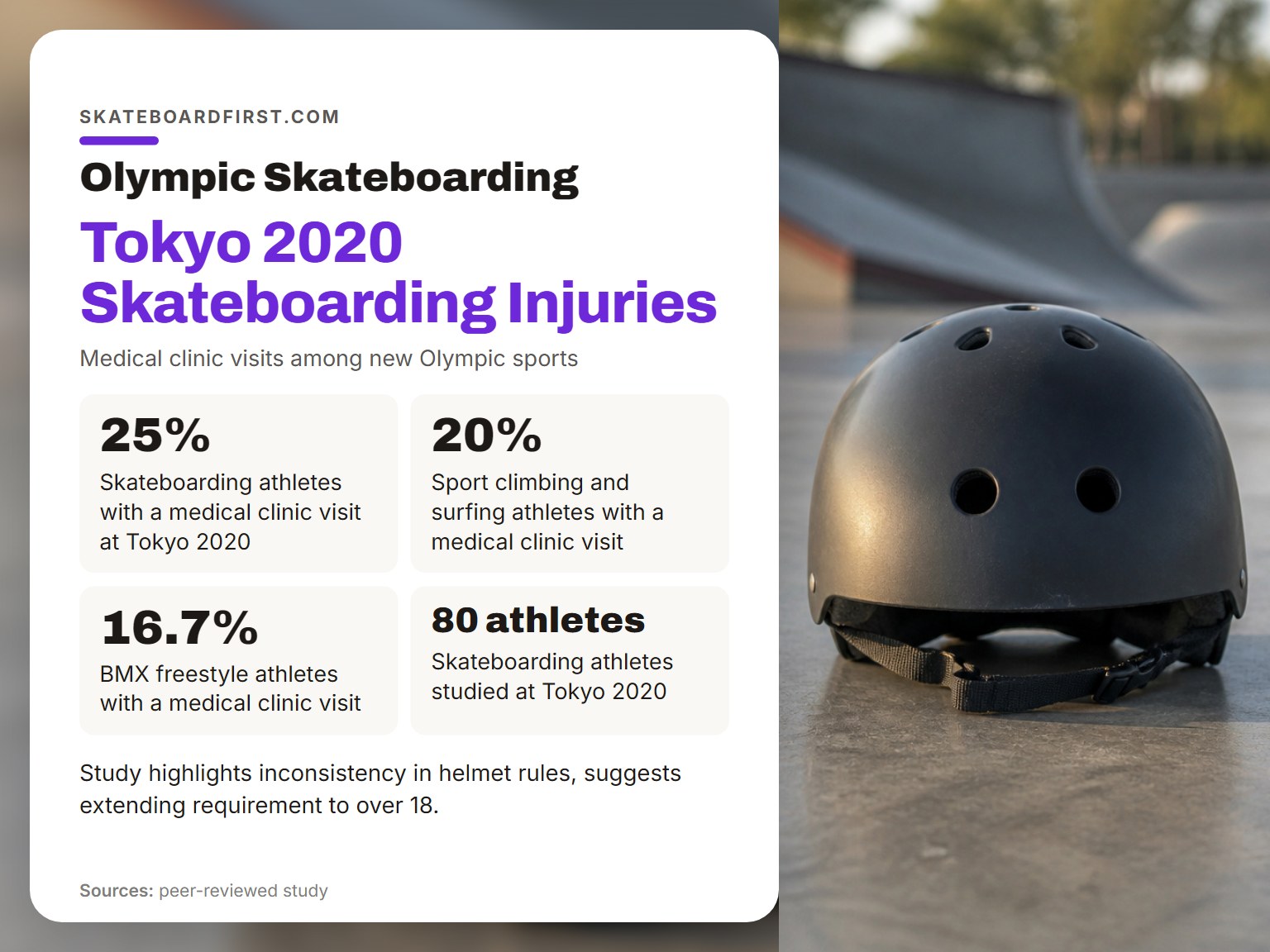
- A peer-reviewed injury study found skateboarding had the highest medical attention rate (25%) among new Olympic sports at Tokyo 2020, fueling an ongoing debate about helmet rules.
- Performance data shows a significant gender gap in peak age: elite female street skaters peak years earlier than their male counterparts.
- The sport’s future in the Games is secure, with confirmed spots at the Paris 2024, Dakar 2026 Youth Olympics, and LA 2028 Summer Games.
How Olympic Skateboarding Works: Park vs. Street
Forget the X Games for a second. Olympic skateboarding is built on a strict binary: Park and Street. They’re as different as a bowl is from a handrail.
Park is about flow and amplitude. The course is a concrete bowl with complex curves, where skaters build speed to launch into aerial tricks. Street mimics an urban plaza with stairs, rails, ledges, and benches. Here, technical difficulty and creative use of the obstacles score points. Both use timed runs, 45 seconds each, but the scoring philosophy diverges.
A Street competitor’s total score equals their single best run score plus the sum of their top two best trick scores from five attempts. This hybrid format tests both consistency and the ability to land a high-difficulty “banger.”
The structure is even more defined for upcoming events like the Dakar 2026 Youth Olympic Games. The Street qualification format is ‘2/3/2’, two runs, three trick attempts. The finals ramp up to ‘3/3/2’, three runs, three trick attempts. This isn’t just a different bracket; it’s a different competitive rhythm. You can’t win on tricks alone if your runs are messy, and a flawless run means nothing without high-scoring tricks.
This formalized structure for skateboarding in the Olympics is a world away from the jam-session vibe of early skate contests. The Olympic scoring system turns a subjective art into a ranked sport.
| Discipline | Course Type | Primary Scoring Focus | Run/Trick Format (Example) |
|---|---|---|---|
| Park | Concrete bowl & transitions | Height, flow, amplitude, aerial variety | 45-second runs only |
| Street | Urban plaza (stairs, rails, ledges) | Technical difficulty, originality, use of course features | Best Run + Top 2 Best Tricks |
The Road to the Olympic Debut: 2018 to 2020
Sources disagree on when skateboarding debuted at the Olympic Games: Olympic.ca states it debuted at Tokyo 2020, while other records note it first appeared at the Youth Olympic Games in Buenos Aires in 2018. That event was a test. Could the sport’s culture fit within the Olympic movement? Could its judging be standardized? The success of the YOG event proved the concept, paving the way for the full debut two years later.
When the Tokyo Games finally opened, they were massive. The official guide lists 33 sports, 50 disciplines, 339 medal events, and 11,090 athletes. Skateboarding was one small piece of that, with 80 athletes across its four events. For context, that’s a tiny fraction of the total, but for skateboarding, it was everything. It meant going from underground circuits to a global broadcast audience.
The cultural shift was immediate. Older fans debated its place, while new audiences got hooked. Reddit threads from the time capture the split: some found the pace slow and the falls constant, while others called the men’s street final “one of the most entertaining things I’ve watched.” That tension, between skateboarding’s DIY roots and the polished spectacle of the Olympics, defined its debut. It wasn’t just a new event; it was a collision of worlds.
This moment was the culmination of a long history of the sport, a journey from sidewalk pastime to global stage.
The Athletes: Who Competes and How They Get There
You don’t just show up. The path to the Olympic park is a global ladder called the Olympic World Skateboarding Ranking (OWSR).
Athletes earn points at sanctioned events like World Championships and the Olympic Qualifier Series. Their world ranking as of a cutoff date, June 24, 2024, for the Paris Games, determines eligibility. World Skate typically invites the top five ranked athletes in each discipline as pre-seeded skaters. The rest of the spots are filled according to a complex quota system designed to ensure global representation.
But here’s the critical edge case: the World Skate rulebook is not the final word. Each country’s National Olympic Committee (NOC) sets its own selection procedures, which supersede the international rules. For example, USA Skateboarding’s policy requires athletes to be U.S. Nationals and “must be eligible to represent the United States… For six months after the conclusion of the Games.” Their team has a maximum size of 12 athletes (three per event).
National bodies also have discretionary picks. USA Skateboarding’s committee may consider athletes who medaled in Tokyo, podiumed at the latest National Championships, or consistently place top-ten in high-level events. This backdoor is vital for athletes who miss key events due to injury.
The process is a gate, but it’s also a catalyst. The promise of Olympic qualification has driven a participation boom, especially for women. A recent performance profile consistency research notes the male-to-female participation ratio in international competitions has dropped from 10.56 to 5.59 over the past eight years. The Olympic dream is changing who gets on the ladder.
For a skater aiming that high, understanding how to enter competitions is the first practical step on that long road.
Scoring and Judging: Beyond “Looking Cool”
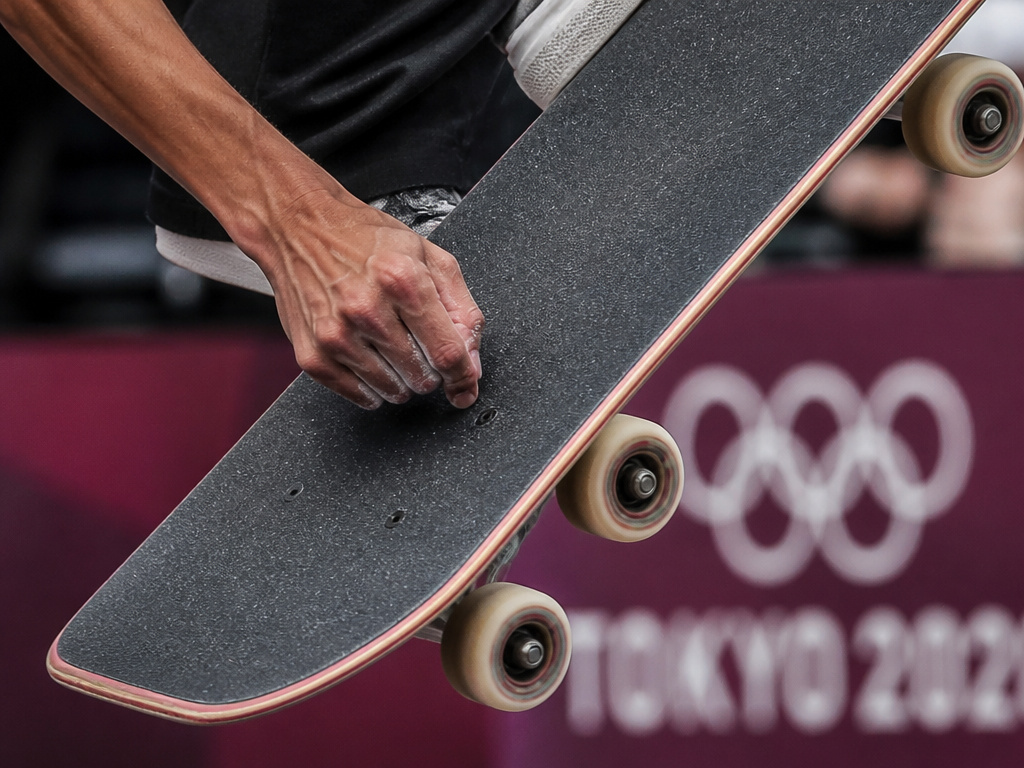
Judging is the most opaque part for new fans. It’s not a popularity contest.
Scores are based on three pillars in Street: difficulty, originality, and execution. In Park, it’s about flow, amplitude, and variety. Judges assess each run or trick against these criteria. The system is designed to be objective, but anyone who’s watched a controversial score knows it’s an imperfect science.
The “best trick” portion of Street is where drama happens. Athletes get five attempts to land their hardest trick. The pressure is visible. A missed attempt isn’t just a zero; it’s wasted energy and a blow to momentum. Reddit users watching Tokyo noted a high frequency of falls in the women’s street final, with one anecdote stating 26 of 40 trick attempts resulted in a fall. When a trick lands, like Yuto Horigome’s gold-clinching nollie 270 noseblunt, the score, a 97, reflects its near-flawless execution against the strict criteria.
Where this goes sideways: Chasing only difficulty. If a skater focuses solely on landing the hardest trick but neglects a clean, high-scoring run, they can miss the podium even with one spectacular moment. The format punishes inconsistency.
This formalized scoring format for skateboarding in the Olympics is a world away from judging a local jam. The data standards for recording these scores are themselves codified in the official Olympic technical documentation PDF.
Risks and Rules: Safety in the Spotlight
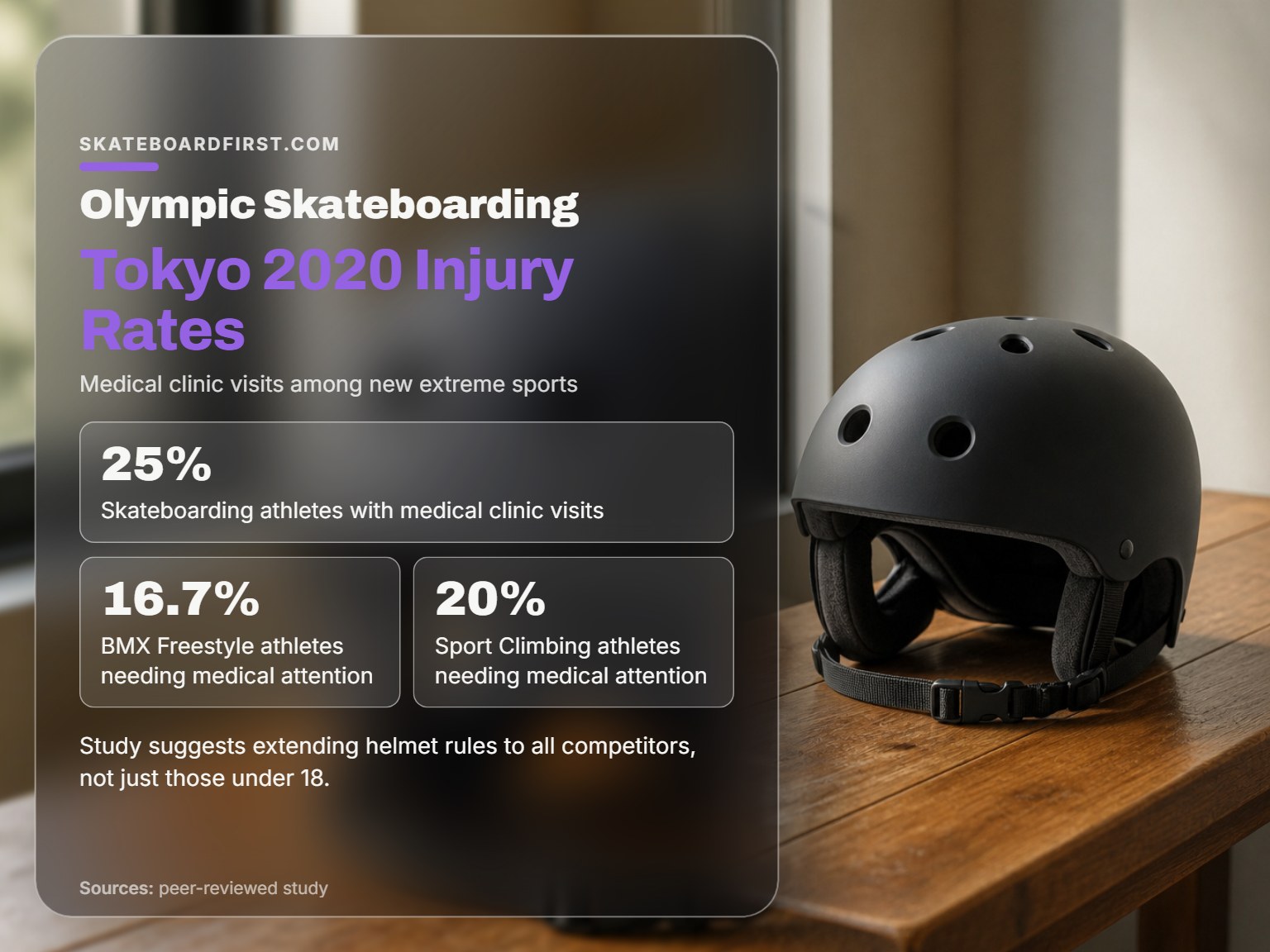
Olympic skateboarding is physically brutal. The data from Tokyo proves it.
A retrospective study published in the Journal of Exercise and Sports Medicine analyzed the four new extreme sports. It found skateboarding had the highest incidence rate of medical clinic visits: 25%. For comparison, BMX freestyle was 16.7%, sport climbing 20%, and surfing 20%. Among the 80 skateboarders, specific injuries included three distal radius fractures and one pelvic contusion.
The study authors highlighted a key inconsistency: the Olympic helmet mandate only applied to athletes under 18. They suggested extending the rule to all competitors, arguing that skill doesn’t negate the risk of a high-velocity impact. This recommendation clashes with other views, such as a Reddit anecdote stating “the athletes are skilled enough at what they are doing to know how to fall properly.”
The debate isn’t academic. It’s a public health line. As the sport’s popularity boom continues, the rules governing its safest form will be scrutinized. This JEMS retrospective injury analysis provides the hard numbers that will inform that conversation for games to come.
The Changing Face of Competition: Age and Gender
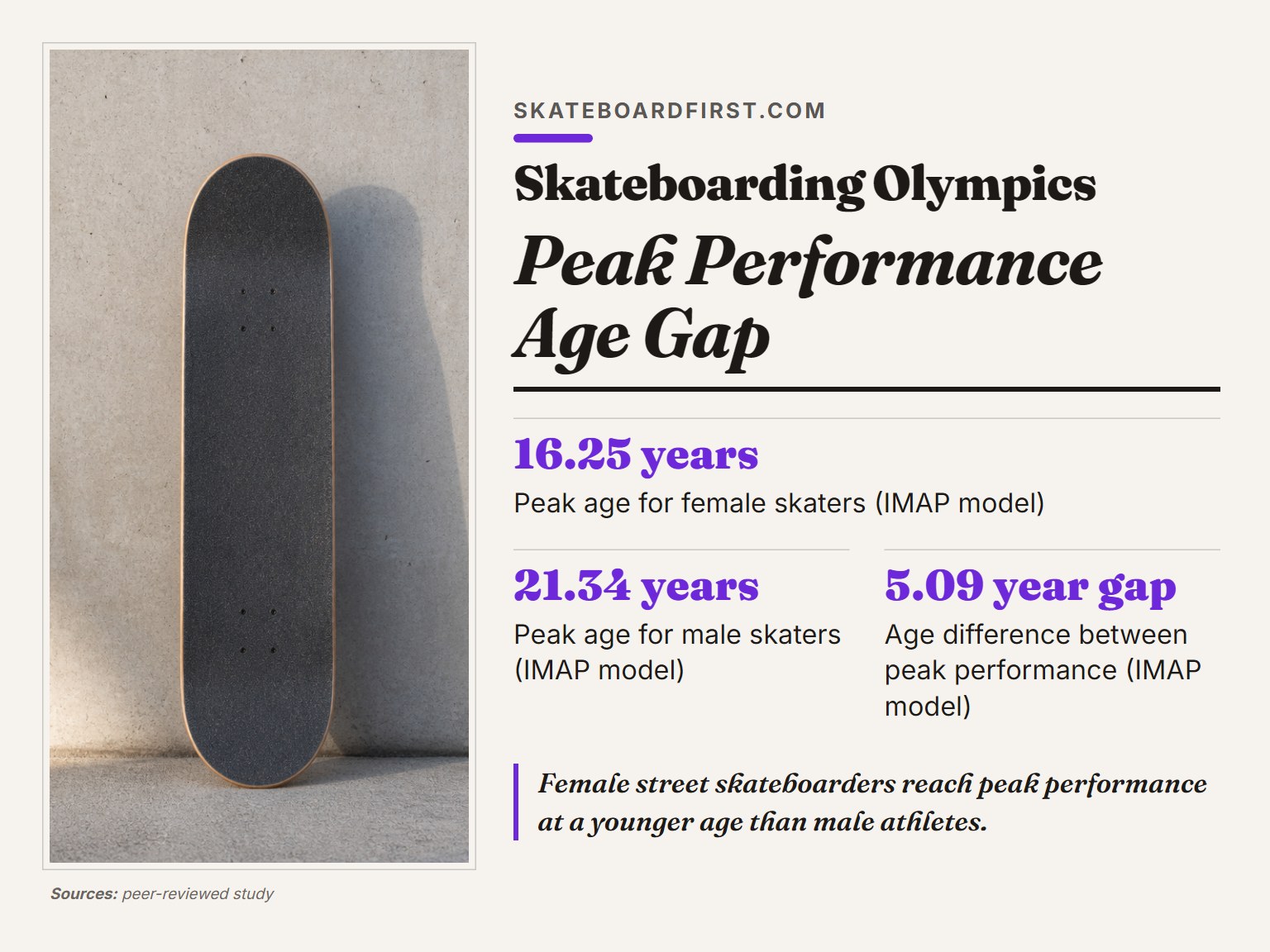
Olympic inclusion didn’t just change the schedule; it changed the athletes.
A striking 2024 analysis in PubMed Central tracked elite street skateboarding performance from 2001 to 2024. It found a dramatic gender gap in peak performance age. Female street skaters reach their peak significantly younger than males. The estimated gap is 5.09 years using one model (IMAP) and 4.39 years using another (Moore).
The numbers are specific. The estimated peak age for female street skaters is 16.25 years (IMAP) or 18.12 years (Moore). For male street skaters, it’s 21.34 years (IMAP) or 22.51 years (Moore). This isn’t just a difference; it’s a fundamental divergence in career trajectory. The study notes that for women, the peak age has “significantly evolved toward younger ages over time,” likely due to increased support and earlier specialization post-Olympic inclusion.
This shift has profound implications for talent development and career planning. It means the peak window for a female Olympic hopeful is during her teens, while a male counterpart may hit his stride in his early twenties. This reality is reshaping the evolution of women’s skateboarding at the professional level.
The Future: Paris 2024, Dakar 2026, and Beyond
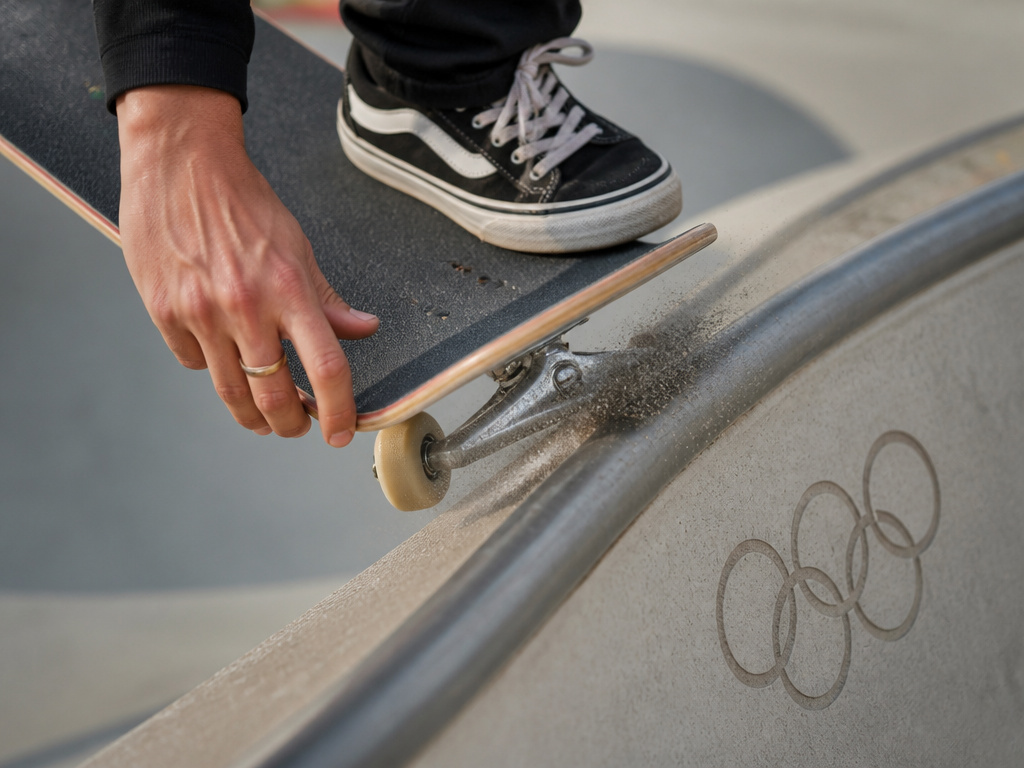
Skateboarding’s Olympic seat is no longer provisional.
The sport is confirmed for the Paris 2024 Summer Games. The qualification cycle is already underway, with athletes battling for OWSR points. Beyond that, it’s on the program for the Dakar 2026 Youth Olympic Games and the Los Angeles 2028 Summer Games. This multi-Game commitment signals the IOC’s belief in its appeal, particularly to younger audiences.
The legacy aim is clear: to leave behind functional skateparks in host cities and to inspire a new generation. The “white elephant” concern of past Games is addressed by building permanent, community-friendly skate plazas and bowls.
The cultural debate will continue. Purists will always see the Olympic framework as antithetical to skateboarding’s core ethos. But for athletes, it represents a viable professional path, unprecedented exposure, and a chance to redefine what their sport means on the world’s biggest stage. The growth of skateboarding as a mainstream sport is now inextricably linked to its Olympic chapter.
Who has won Olympic skateboarding medals?
Skateboarding made its Olympic debut at the Tokyo 2020 Games, where athletes competed in men’s and women’s Park and Street events. The competition featured a mix of seasoned veterans and young phenoms. The path to the podium is determined by a specific scoring system. In Street, a skater’s total score combines their single best run with their two highest-scoring individual trick attempts. For athletes aiming to compete, consistent top-ten finishes at high-level international events are a key factor considered by national federations.
How is Olympic skateboarding governed?
World Skate is the international federation responsible for skateboarding at the Olympic Games. It maintains the Olympic World Skateboarding Ranking (OWSR), a critical list used by many countries to select their athletes. World Skate typically grants automatic Olympic invitations to the top-ranked athletes in each event. However, the final authority on who competes rests with each country’s National Olympic Committee, whose own selection procedures take precedence. The federation also sets the competition formats used at events like the Youth Olympic Games, where Street features specific run and trick attempt structures.
Frequently Asked Questions
Is skateboarding going to be in the 2028 Olympics?
Yes. Skateboarding is confirmed for the Los Angeles 2028 Summer Olympic Games. Its place on the program is now considered stable, following successful debuts at Tokyo 2020 and inclusion in Paris 2024 and the Dakar 2026 Youth Olympics.
What is the rarest Olympic sport?
This changes with each Games edition. At Tokyo 2020, new sports like skateboarding, surfing, and sport climbing were rare in the sense of being first-time Olympic events. “Rarity” can also refer to participant numbers; among the new sports, skateboarding had 80 athletes, which was a relatively small pool compared to mainstream sports.
Why is skateboarding no longer popular?
This premise is flawed. Skateboarding is more popular than ever, measured by global participation and Olympic viewership. Its inclusion in the Games has boosted its profile, commercial opportunities, and youth engagement worldwide. Any perception of declining popularity is likely a misreading of its transition from a niche subculture to a regulated, mainstream competitive sport.
How many skateboarding events are in the Olympics?
There are four medal events: Men’s Street, Women’s Street, Men’s Park, and Women’s Park. Each is contested as a separate final with its own medal ceremony.
Do Olympic skateboarders wear helmets?
The rules are inconsistent. For Tokyo 2020, helmets were only mandatory for competitors under 18 years of age. A subsequent peer-reviewed study of Olympic injuries recommended extending the helmet requirement to all competitors, regardless of age, citing the high injury incidence rate.
How do you qualify for Olympic skateboarding?
Athletes qualify primarily through the Olympic World Skateboarding Ranking (OWSR), earned by competing in sanctioned international events. Final team selection is governed by each country’s National Olympic Committee, which has its own eligibility criteria and can use discretionary picks alongside the world rankings.
Before You Go
The Olympic story isn’t about legitimizing skateboarding. The sport never needed that. It’s about what happens when an organic, rebellious culture gets funneled through the world’s most structured sporting event.
The result is a new hybrid: athletes who grew up with video parts now also train for 45-second runs and a best-trick format. Careers are planned around a four-year cycle. A 16-year-old female phenom has a different timeline than a 22-year-old male veteran. And every slam on the global stage comes with a 25% chance of a trip to the medical clinic, a statistic that will shape safety rules for years.
The takeaway isn’t just a history lesson. It’s a lens. Watch Paris 2024 knowing that every trick attempt is a calculation against a clock, a ranking, and a physical cost. That tension, between pure expression and scored performance, is the new reality of skating at the very top.
