
History of Skateboarding: From Sidewalk Surfing to Today
This post contains affiliate links. As an Amazon Associate, we earn from qualifying purchases.
Skateboarding’s history is a story of adaptation, driven by surf culture, technological breakthroughs, and a rebellious spirit. It evolved from makeshift sidewalk surfers in the 1950s into a global sport, shaped by inventions like the urethane wheel and the kicktail, and cemented by cultural moments like the Z-Boys’ pool riding and its Olympic debut in 2020.
That timeline wasn’t random. It hinged on specific, almost accidental, conditions. The gear you ride today, the width of your deck, the grip of your wheels, the very shape of your trucks, is a direct result of problems solved decades ago by surfers, engineers, and kids looking for the next thrill.
What follows is that story, told through the objects that changed the history of skateboarding. We’ll trace how a wooden crate with roller-skate wheels became a precision instrument, how a drought created a new sport, and how a ban in one country only fueled the culture’s resilience. By the end, you’ll see why your board looks the way it does and how four wheels on wood went from a fad to a fixture.
Key Takeaways
- The first commercial skateboard hit the market in 1959, kicking off a boom where nearly 50 million boards were sold in just three years.
- Two inventions defined modern skating: Larry Stevenson’s kicktail patent in 1969 and Frank Nasworthy’s urethane wheel in 1972, which allowed for control and tricks impossible on clay wheels.
- The 1975–1976 Southern California drought was a direct, environmental trigger for vertical skateboarding, creating empty swimming pools that became the first bowls.
- Skateboarding’s path wasn’t always upward; it faced a nationwide ban in Norway from 1977 to 1989 and a major bust in 1980 due to economic decline.
- The modern deck is a product of evolution, standardized as seven layers of Canadian Maple for the ideal blend of strength and pop.
The 1950s–1960s: Sidewalk Surfing and the First Boom
No single person invented the skateboard. It was a product of necessity, born from surfers in California who wanted something to do when the waves were flat. They’d nail roller-skate wheels to planks from wooden crates, calling it “sidewalk surfing.” The first manufactured skateboards used wheels from the Chicago Roller Skate Company.
The first commercial skateboard was offered in 1959 by Makaha skateboards. This marked the start of the first real boom. The craze was explosive; nearly 50 million skateboards were sold in 3 years. The first skateboard contest was held in Hermosa Beach, California.
Common mistake: Thinking early skateboards were high-performance. They were surfboard-shaped wooden planks with hard clay wheels and primitive trucks, launching riders at the smallest rock or crack.
The boom ended almost as fast as it started. Public opinion shifted over safety concerns tied to the primitive technology. The boards were unstable, the wheels offered no grip or shock absorption, and injuries piled up. The fad died, but a dedicated subculture kept rolling.
The 1970s: Wheels, Pools, and a New Direction
The sport’s second act in the history of skateboarding began not with a new board, but with a new wheel. In 1972, Frank Nasworthy introduced the urethane wheel. This was the single most important hardware innovation in skateboarding history. Urethane gripped the pavement, rolled over debris, and allowed for speeds and control that clay wheels couldn’t touch.
The gear evolution accelerated. Larry Stevenson had already patented the kicktail in 1969, giving riders a way to control the board. In 1973, Ron Bennett debuted the first professional “high performance” trucks, offering more height and maneuverability than the old Chicago designs. That same year, the Zephyr team (the legendary Z-Boys) innovated the “rocker” deck shape.
Then, the environment intervened. A 2023 study in PNAS Nexus pinpointed the 1975–1976 Southern California drought as the trigger for professional vertical skateboarding. A state order to conserve water left countless backyard swimming pools empty. These curved concrete pools became accidental skateparks.
The Z-Boys, a team of 12 including Jay Adams, Tony Alva, and Stacy Peralta, were the pioneers who adapted surf-style carving to these new “bowls.” Their performance at the 1975 Del Mar National Championships, a contest with up to 500 competitors, ushered in this aggressive, low-to-the-ground style. It was the birth of vert.
By 1977, brands like Gordon and Smith were producing dedicated equipment like the “G&S Bowl Rider” deck.
| Discipline | Primary Need | Deck Characteristic |
|---|---|---|
| Downhill | Speed & Stability | Long boards (greater than 36 inches), often no kicktail |
| Slalom | Maneuverability | Shorter, narrow ends to avoid wheelbite |
| Freestyle | Technical Flatground | Often had a kicktail for pivots and manuals |
| Bowl/Vert | Carving & Airs | Wider, longer boards for control in transition |
This era also saw the deep intertwining of skate and shoe culture. Vans became the first sneaker company to endorse a professional skateboarder, Stacy Peralta. The grip of their waffle soles was perfect for griptape.
The 1980s: Bust, Street, and Underground Resilience
The second boom collapsed in 1980 due to the U.S. Economic decline. Skateparks closed. Magazines like Skateboarder folded. Mainstream interest vanished.
But underground, the culture mutated. With vert parks gone, skaters took to the streets. Freestyle skating, led by innovators like Rodney Mullen, evolved into technical street skating. The ollie was perfected, allowing skaters to jump onto curbs, over benches, and onto handrails without ever touching the ramp.
The DIY spirit became paramount. Kids built ramps from plywood and scavenged wood. The board itself changed to suit the new style.
Where this goes sideways: Assuming the 80s were just about neon and Bones Brigade videos. For every sponsored pro, there were thousands of kids skating drained ditches and abandoned lots because the official parks had padlocks on the gates.
This era also provides one of the most extreme examples of institutional pushback. Under its new Product Control Act, the Norwegian government enacted a nationwide ban on skateboarding from 1977 to 1989. The official reason was risk management. The result was a 12-year period where the sport was forced entirely underground, a unique chapter in the global spread of skateboarding culture.
The 1990s–2000s: Mainstream Exposure and the X-Games Effect
The 1990s saw skateboarding’s re-emergence into the mainstream, but on its own terms. The raw, street-focused energy was captured in videos from companies like Blind and World Industries.
It provided a massive, televised platform that wasn’t the Olympics. It legitimized skateboarding as a competitive sport for a wide audience while, crucially, letting it retain its rebellious aesthetic.
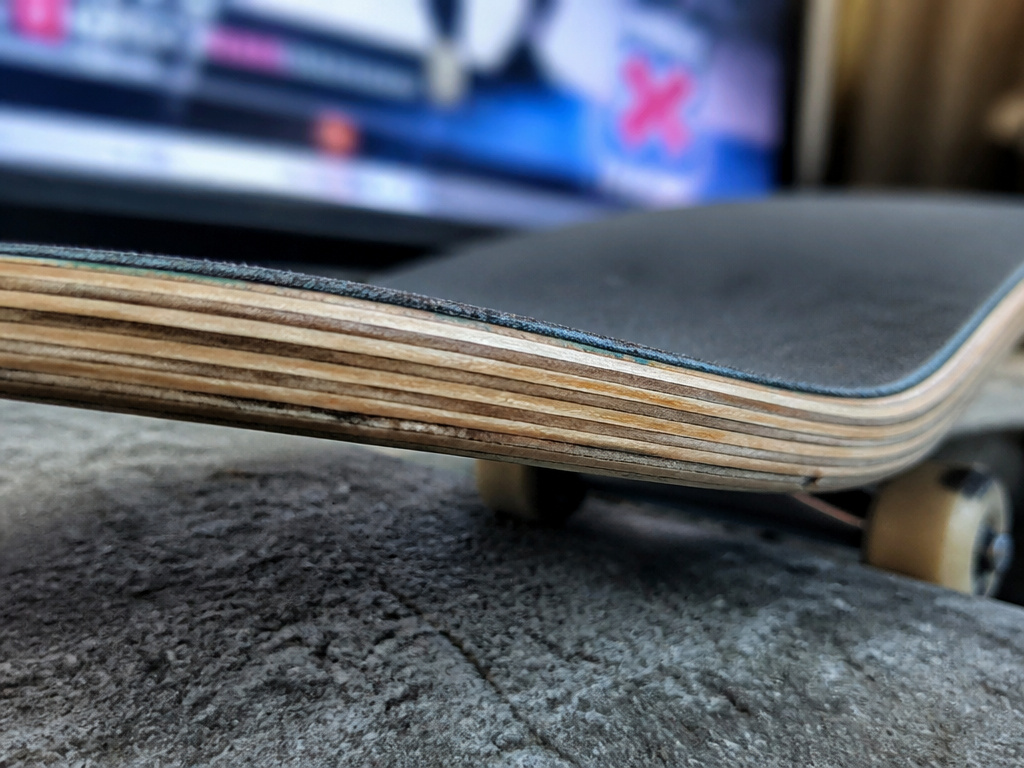
This exposure fueled another commercial boom, but the core of the sport remained rooted in street skating. The standard modern skateboard deck consists of seven layers of Canadian Maple.
Deck Design: From Planks to Pressed Maple

The board under your feet has a precise engineering history. The earliest decks were simple planks. The need for more strength and pop under the dynamic forces of ramp and street skating drove innovation.
The modern deck is a product of lamination. The standard modern skateboard deck consists of seven layers of Canadian Maple.
| Wood Species | Common Name | Why It’s Used |
|---|---|---|
| Acer saccharum | Sugar Maple / Canadian Maple | Ideal balance of strength, stiffness, and weight. The industry standard. |
| Fagus sylvatica | European Beech | Good strength and machinability; sometimes used in blends. |
| Betula pendula | European White Birch | Lightweight with decent flex; used in some composite or beginner decks. |
This shift wasn’t just about strength. As detailed in the historical analysis of skateboard deck design, the pressed laminate allowed for complex concave shapes and consistent flex patterns that solid wood couldn’t achieve.
Skateboarding Goes Global and Olympic
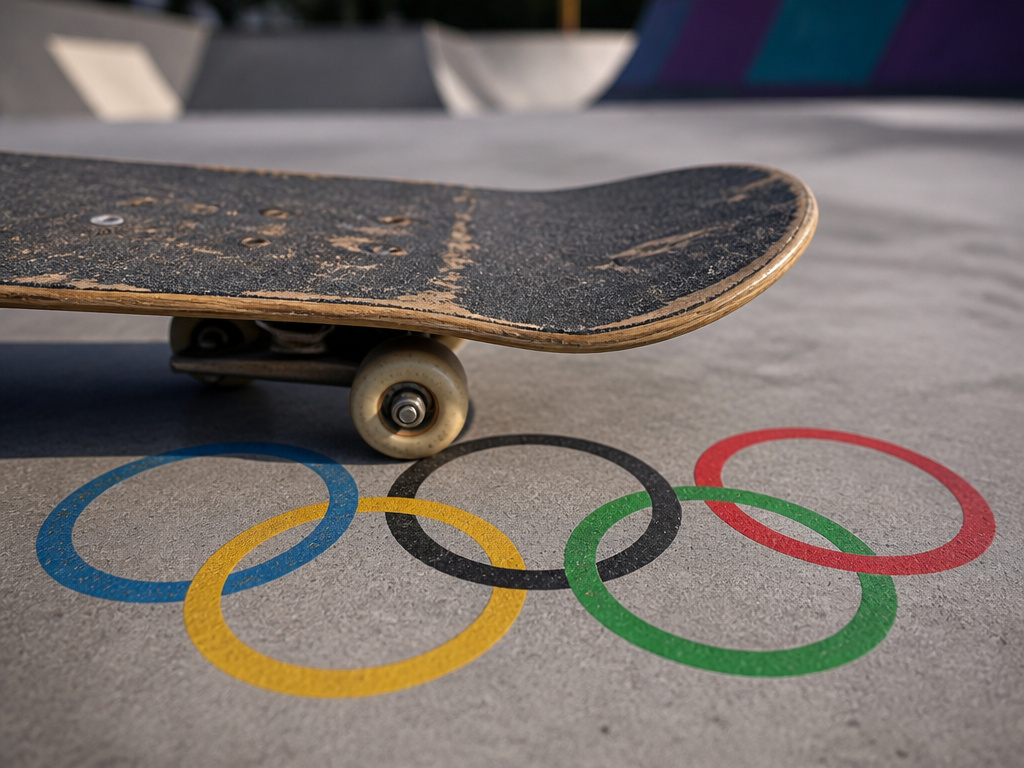
The 21st century solidified skateboarding as a permanent global culture.
The ultimate symbol of institutional acceptance came with its inclusion in the Olympic Games of Tokyo 2020. This was a controversial but landmark moment for the sport’s popularity and trajectory. It represented a full-circle journey from banned activity to celebrated Olympic discipline.
The legacy of the 1970s pool riders and 1980s street pioneers is now visible in every facet of the sport. From the shoes to the deck shapes to the very attitude, the history is remembered and ridden every day.
Skateboarding magazines and media
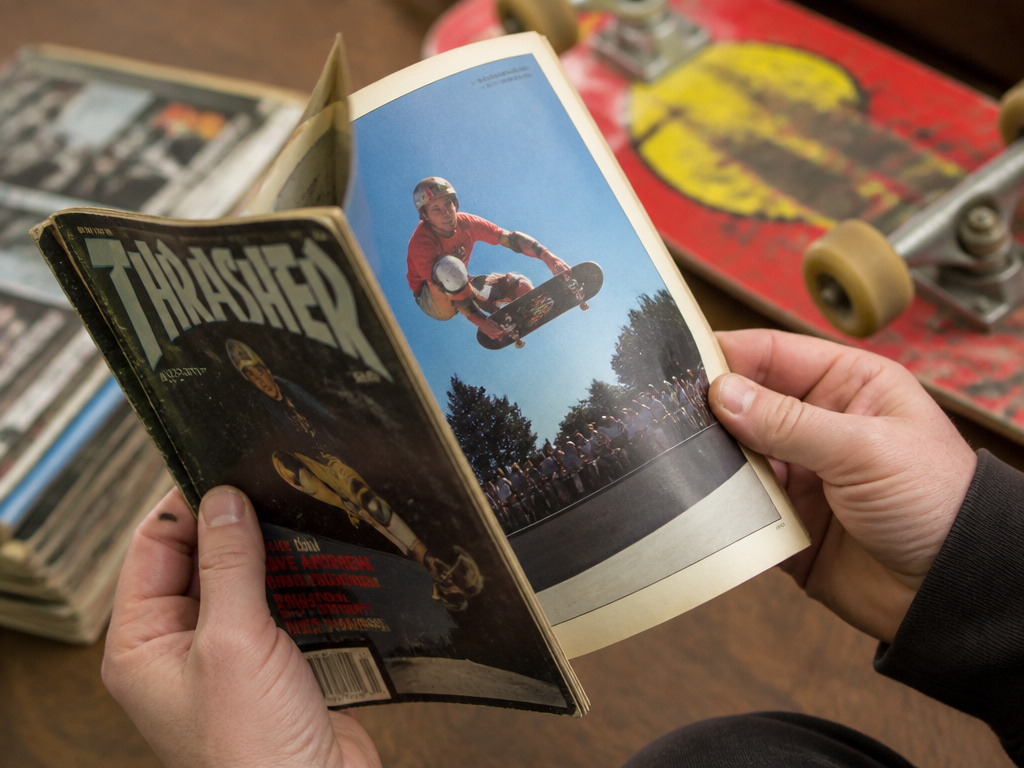
While the fact sheet doesn’t detail specific publications, skateboarding media became the glue that held the culture together.
Frequently Asked Questions
Where did skateboarding originally come from?
Skateboarding originated in California. Surfers, wanting to practice when the waves were flat, attached roller-skate wheels to wooden planks, calling it “sidewalk surfing.” The first commercial board was sold by Makaha in 1959.
What was the most important invention in skateboarding history?
The urethane wheel, invented by Frank Nasworthy in 1972. It provided grip, shock absorption, and the ability to roll over small obstacles, enabling higher speeds, better control, and the development of modern street and vert skating.
Why was skateboarding banned in Norway?
The Norwegian government enacted a nationwide ban from 1977 to 1989 under its new Product Control Act, citing risk management and public safety concerns. It’s the most extensive legal prohibition the sport has ever faced, forcing it entirely underground there for over a decade.
How did empty swimming pools change skateboarding?
The 1975-1976 Southern California drought led to water conservation orders, leaving countless backyard pools empty. Skaters, primarily the Zephyr team (Z-Boys), used these curved concrete pools to develop vertical “bowl” riding. This environment directly triggered the rise of professional vert skateboarding.
When did skateboarding become an Olympic sport?
Skateboarding made its Olympic debut at the Summer Games in Tokyo 2020 (held in 2021). Its inclusion marked a significant milestone in the sport’s journey from a marginalized subculture to a globally recognized athletic discipline.
Before You Go
Look at your board. The width, the concave, the seven-layer maple build, none of that is an accident. It’s the answer to a 70-year-long question: how do you make a piece of wood fly, grind, and survive? The history of skateboarding is a list of names and dates and the reason your setup works.
That history is still being written. Every new trick, every new deck shape, every skater pushing for the first time adds to it. The best way to understand it is by going outside and adding your own line to the timeline. The concrete is the best history book there is.
