
Skateboarding in Your 30s Guide
This post contains affiliate links. As an Amazon Associate, we earn from qualifying purchases.
Skateboarding in your 30s means trading recklessness for smart progression. Start with a complete board from a skate shop (8.0″ or wider), a helmet certified to ASTM F1492-22, and wrist guards. Plan your first month around learning to push, turn, and stop comfortably on smooth pavement. The CPSC states wearing a helmet can mean the difference between life and death, and the AAOS recommends replacing it at least every five years.
That five-year replacement rule is where the adult mindset kicks in. A teenager might ride a cracked helmet until the straps give out. You’re buying gear with a known lifespan and a calendar reminder. Your progress will be measured in parking lot sessions, not park clips.
What follows is the framework that works, as outlined in any good skateboarding in your 30s guide: picking gear that doesn’t fight you, a warm-up that actually prevents sprains, a practice schedule that fits around work, and the one trick you should learn before you even think about an ollie.
Key Takeaways
- Buy a shop-built complete board (Powell-Peralta, Santa Cruz) over a big-box toy; the deck should be 7-ply Canadian Maple.
- Your helmet must meet the ASTM F1492-22 standard; the AAOS says replace it every five years or after any impact.
- Wrist guards are essential for adult beginners; the CPSC calls them “especially important for protection” against the most common fractures.
- Spend your first month mastering pushing, turning, and foot braking on flat ground; board control prevents 90% of early frustration.
- Speed wobble is a high-speed stability failure; the CPSC says longer boards, wider trucks, and proper tightening reduce the risk.
Is 30 Too Old to Start Skateboarding?
It’s a question that stops more people than any trick ever will. The short answer is no, and the long answer is in parking lots everywhere.
I started at 34. My first board was a cheap department-store complete with dead wheels and trucks that loosened themselves. I pushed twice, the board barely rolled, and I decided I had no talent. That conclusion lasted a decade. When I finally walked into a real skate shop and bought a Powell-Peralta complete, the difference wasn’t subtle. The board went where I pointed it. The mistake wasn’t my age; it was the tool.
The industry standard deck is 7 plies of Canadian Maple wood, pressed into a consistent, durable platform. A toy board uses thinner, softer plies that dampen pop and flex under an adult’s weight from the first session.
That structural spec matters. Your weight and coordination are different now. You need a board that responds, not one that absorbs your effort into a spongy mess. Starting in your 30s means you skip the guesswork, a key principle in any skateboarding in your 30s guide, and buy the right thing first.
The Gear That Actually Helps (and What’s Marketing)
This is where a skateboarding in your 30s guide differs from most online advice that lists every piece of equipment ever made. We’ll be specific. You need three things to start: a board that works, a helmet that meets the standard, and wrist guards.
For the board, walk into a local skate shop and ask for a beginner complete. Brands like Powell-Peralta, Santa Cruz, and Element make reliable pre-built setups. Ask for a beginner complete board suitable for an adult. The extra width gives you a more stable platform to stand on, which directly addresses the balance anxiety every new skater feels. The wheels should be in a softer durometer range for a smoother ride over cracks; the softest urethane wheels are around 76a durometer.
Your helmet is a piece of safety equipment with a printed standard, not a fashion item.
Helmets used in skateboarding must comply with ASTM F1492-22. This standard defines impact performance, retention system strength, and field-of-view requirements.
The American Academy of Orthopaedic Surgeons (AAOS) recommends replacement at least every five years, or sooner if it’s been damaged or outgrown. The foam degrades over time, even if it looks fine.
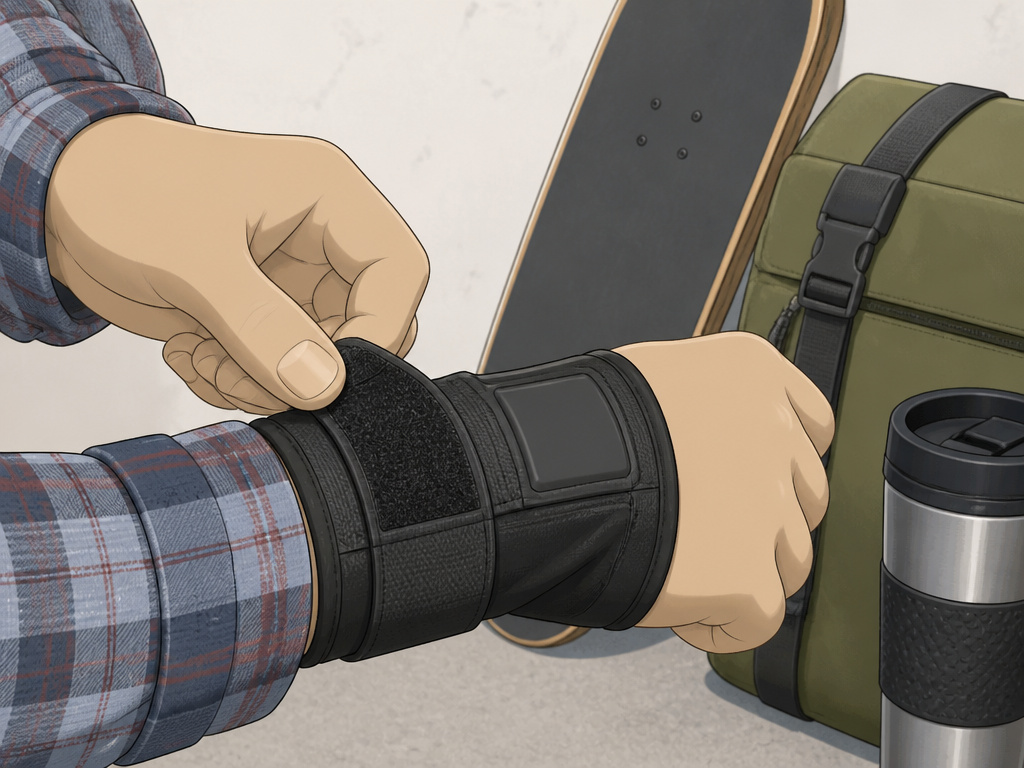
Wrist guards are the most skipped and most important piece for adults. The CPSC fact sheet singles them out as “especially important for protection.” When you fall, and you will, your instinct is to put your hands out. Wrist guards distribute that impact away from the small bones in your wrist and forearm. A fracture there takes weeks to heal and makes typing at a job impossible. I wear them every session. The social hesitation is real, but so is the six-week recovery for a Colles’ fracture.
| Gear Item | What to Look For | Why It Matters for Adults |
|---|---|---|
| Helmet | ASTM F1492-22 label inside | Meets the specific multi-impact standard for skateboarding; AAOS says replace every 5 years. |
| Deck | 7-ply Canadian Maple, 8.0″–8.5″ width | Provides stable, predictable platform; resists breaking under higher weight. |
| Wrist Guards | Hard plastic splint, adjustable straps | CPSC states they are “especially important”; prevents common fracture that sidelines you. |
| Wheels | 78a–85a durometer for cruising | Softer wheels absorb vibration, making rough pavement manageable while learning. |
A Realistic Progression Path (Cruising Before Ollies)
Everyone wants to ollie. It’s the gateway trick. It’s also a fast track to frustration if your board feels like a foreign object.
Start in a flat, smooth parking lot. Your only tasks: stand on the board, push, and roll. Practice shifting your weight from your back foot to your front foot while rolling. Then, practice turning by leaning on your toes or heels. The final, most critical skill for parking lots and paths: foot braking. Drag the sole of your back foot lightly on the ground to slow down. This essential skill is not exciting.
Where this goes sideways: Trying to ollie before you can comfortably turn and stop. Without board control, your pop is weak, your landing is unstable, and you’ll fall in ways that hurt your confidence more than your body. Give it consistent riding practice first.
After a month, you’ll have a feel for your stance and balance. Now you can introduce a very gentle incline, think a driveway into a flat street. Use this to practice controlling speed with your foot brake and carving turns. This is also the time to experiment with truck tightness. Looser trucks turn easier but can feel twitchy; tighter trucks are more stable for pushing in a straight line. The Portland Parks & Recreation guide notes that softer bushings are often recommended for lighter weight riders, a small hardware change that can make the board feel like it was built for you.
Balancing the Mindset: Fear, Fitness, and Fun
The mental game is heavier now. You’re not a kid with endless summer days and rubber bones. You have responsibilities and a body that doesn’t bounce.
The fear is rational. A bad fall has real consequences. This is why the gear and progression plan exist, they systematically reduce real risk. The irrational part is the fear of looking foolish. Showing up to a skatepark at 35 in full pads feels awkward. The Goskate.com anecdote is blunt: some adult skaters would rather not skate than show up wearing wrist guards. That’s a choice between ego and safety. Choose safety. After two sessions, the gear is just part of your routine.
Your fitness level directly affects your skating. A stiff body gets injured.
A 5-Minute Adult Beginner Warm-Up:
- Ankle Circles: 30 seconds per foot. Skateboarding is all ankle mobility.
- Bodyweight Squats: 10 reps. Prepares your legs for the constant knee bend.
- Wrist Flexor/Extensor Stretch: Hold each for 20 seconds. Preps the wrists for falls.
- Light Jog in Place: 60 seconds. Raises your heart rate and core temperature.
This warm-up is mandatory for a body that has been sitting at a desk. A peer-reviewed study on skateboarding demands details the physical toll of the sport; a warm-up is your first layer of defense.
Finding time is the other half. You won’t have four-hour sessions. Schedule consistent, shorter practice sessions. Consistency beats marathon weekends. Use a local bike path or empty lot if the skatepark vibe is intimidating. The goal is to stay consistent, not to impress anyone.
Navigating the Social Side and Finding Your People

Skateparks can feel like high school cafeterias. The key is to go at off-hours, early mornings or weekdays. Your mission isn’t to infiltrate the local crew; it’s to find a patch of concrete to practice your pushes and turns. Most skaters, even the talented teens, are focused on their own practice. They aren’t judging you.
If you want to find skateboarding buddies, look for adult skate meet-ups or beginner clinics in your city. Facebook groups are a goldmine for this. Connecting with other older beginners changes the experience from a solitary grind to a shared project. You can compare notes on how to progress faster or how to return after an injury.
The social media meme of the “old skater” is just noise. The real community is in parking lots and parks, people of all ages working on their own challenges. Your presence there is its own statement.
Safety: Beyond the Helmet Strap
You’ve got the ASTM F1492 helmet and the wrist guards. The CPSC skateboarding safety fact sheet lays out the other essential rules. Read it. It’s a government document that states plainly: “Don’t drink and ride. Alcohol and drugs reduce your ability to control your skateboard.” That should be obvious, but it’s in there because people forget.
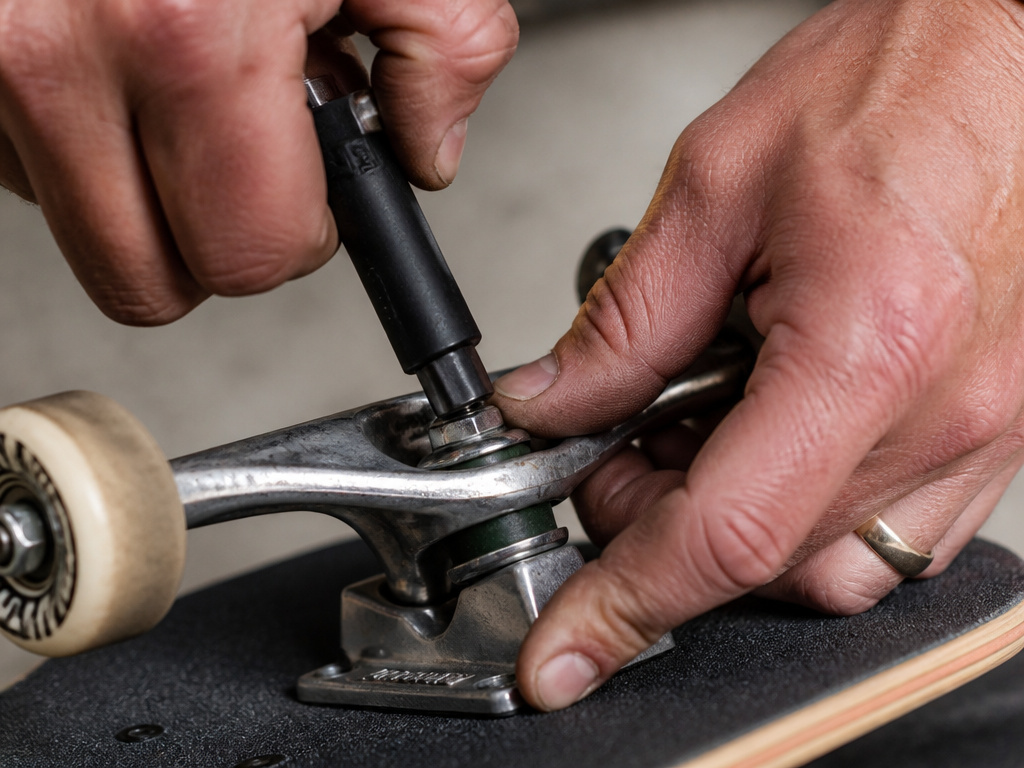
Inspect your board before every session. Check for cracks in the deck, loose kingpins on the trucks, and that the wheels spin freely. The CPSC advises keeping “trucks, wheels, nuts, and mounting screws tightened properly to improve stability at higher speeds.” This is specifically to mitigate speed wobble, that terrifying high-speed shimmy.
Speed wobble happens when the board starts oscillating side-to-side uncontrollably. The CPSC prescribes three fixes: ride forward and crouch, use a longer board for stability, and choose boards with wider hangers (axles). This is a direct, mechanical solution to a known failure mode. If you plan to ride hills, get a longer cruiser board.
Before you start: Concrete is unforgiving. The helmet protects your head, wrist guards protect your arms, but your knees, elbows, and tailbone are exposed. Learn to fall by rolling onto your shoulder or sliding on your knee pads. Never catch your full weight on an outstretched hand, even with wrist guards.
Your first serious fall will teach you more about commitment than any trick. The AAOS skateboarding safety guide exists because orthopedic surgeons see the results of ignored basics. Use it.
Your First “Trick” and What Comes After

Forget the ollie for now. Your first trick is the kick turn. It’s a fundamental maneuver where you lift the front wheels off the ground to pivot the board. It teaches you how to manipulate the board with your feet and weight. Practice it stationary on carpet first.
Once you can kick turn consistently, you’ve gained the ability to navigate tighter spaces and adjust your line. This is a tangible win. From there, you can work on a revert (a 180-degree pivot while rolling) or a manual (riding on the back wheels). These are building blocks with a lower risk profile than jumping.
The progression from pushing to a confident ollie takes consistent practice. That’s a realistic, rewarding arc. Your progression will be unique. The guide for your 40s follows the same patient principles.
| Stage | Focus | Success Looks Like | Common Pitfall |
|---|---|---|---|
| Month 1 | Board Control | Pushing, turning, foot braking without thinking. | Rushing to ollies; frustration with lack of “progress.” |
| Months 2-3 | Foundational Moves | Consistent kick turns, reverts, maybe a short manual. | Comparing yourself to online videos of teenagers. |
| Months 4-6 | The Ollie Project | Stationary ollie over a crack in the pavement. | Not committing to the pop and jump; “rocketing” the board. |
| Beyond | Style & Exploration | Carving bowls, learning shove-its, finding your flow. | Neglecting the basics that got you here. |
Frequently Asked Questions
Is 30 too late to start skateboarding?
No. Physical maturity means you may progress differently than a teenager, but you can learn all the fundamentals and have a rewarding experience. The key is starting with appropriate gear and a patient, safety-focused mindset.
What size skateboard should a 30-year-old beginner get?
There’s a source disagreement here. The AAOS states shorter decks are best for beginners because they are easier to balance and handle. The CPSC advises longer boards increase stability (to reduce speed wobble).
Do I need to wear all the protective gear as an adult?
The official safety guidance is clear. The CPSC and AAOS recommend a helmet, wrist guards, knee pads, and elbow pads. Anecdotal reports from sites like Goskate.com note that some adults skip gear due to self-consciousness. The choice is between official safety recommendations and personal comfort with risk.
How do I deal with feeling awkward at the skatepark?
Go during off-peak hours (mornings, weekdays). Focus on your own practice in a less crowded area. Remember that most skaters are absorbed in their own session. Seeking out other adult beginners through local meet-ups or online groups can also neutralize this feeling.
Can skateboarding help with fitness in your 30s?
Yes. Skateboarding engages your legs, core, and improves balance. Skateboarding engages your legs, core, and improves balance. It’s a functional workout disguised as play.
The Bottom Line
Starting at 30 means you get to skip the painful, ignorant phase. You buy the right board first. You wear the gear from day one. You warm up because you know what a strained muscle costs. Your progression is a conscious project, not an accidental hobby.
The one action to take this week: find your local skate shop. Walk in, tell them you’re a beginner in your 30s, and ask to see their completes. Hold a board that’s 8.0″ or wider. Check a helmet for the ASTM F1492-22 label. That’s the foundation. Everything else, the pushes, the turns, the eventual ollie, builds from there. The process is the point.
