Suede vs Canvas Skate Shoes: Which Should You Buy?
This post contains affiliate links. As an Amazon Associate, we earn from qualifying purchases.
Suede beats canvas for durability in a skate shoe, hands down. It resists abrasion from grip tape far better, especially in the ollie patch and flick zones where shoes wear out first. Canvas wins on breathability, lighter weight, and quicker break-in, making it a solid choice for casual cruising or warm-weather sessions where you aren’t hammering flip tricks.
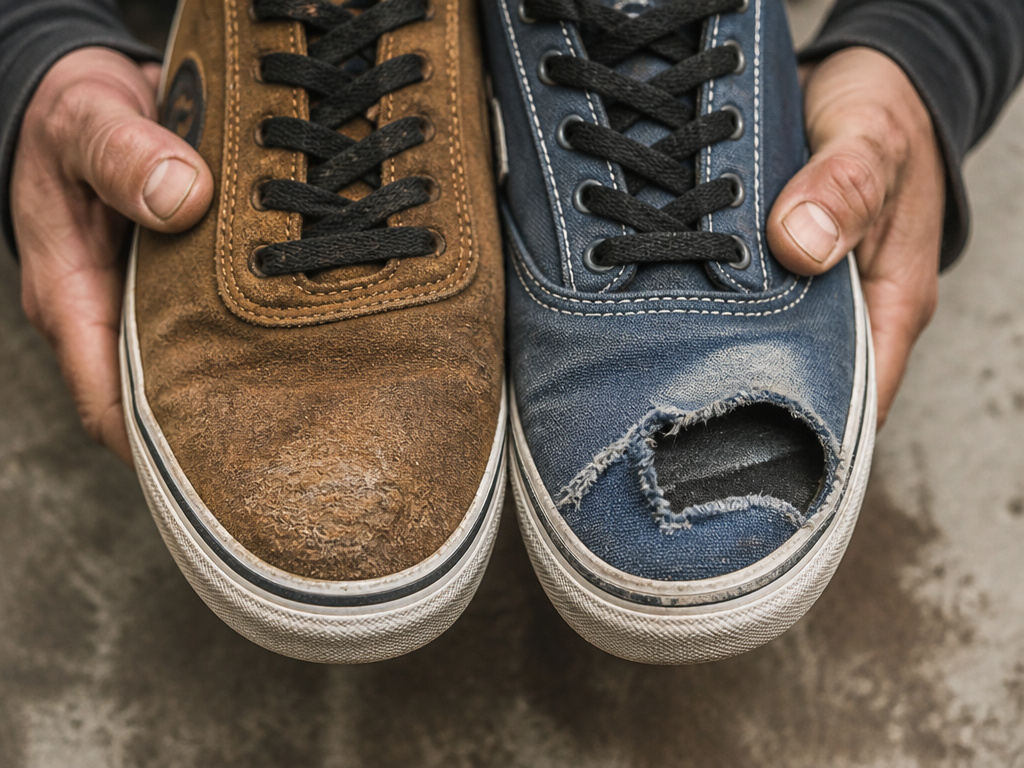
The reason isn’t just about the materials themselves, it’s about how they fail. Suede is protein-based and fibrous, scuffing and thinning over time. Canvas is cellulose-based cotton, lighter but prone to ripping under repeated abrasion. Your skating style decides which trade-off makes sense in the classic debate of suede vs canvas skate shoes.
What follows is a breakdown of where each material shines and fails, a look at how shoe construction changes the game, and a clear match-up of suede and canvas to specific skating styles, from learning to ollie to hitting handrails.
Key Takeaways
- Suede’s fibrous, protein-based structure resists grip tape abrasion, making it the durable choice for technical street skating.
- Canvas is lighter and more breathable, ideal for casual cruising or warm-weather sessions where maximum durability isn’t the priority.
- SewingIsCool.com states most canvas shoes do not last even two skateboarding sessions, while Skatesboard.us notes reinforced canvas can work for durability.
- For most beginners, a suede upper with a vulcanized sole offers the best balance of board feel and durability while learning.
- Shoe Goo and timely patching can extend the life of any skate shoe, but suede generally requires less frequent repair than canvas.
The Core Trade-Off: Durability vs. Breathability
The whole suede vs canvas skate shoes debate comes down to a single, physical trade-off. One material is built to scrape against sandpaper-like grip tape for hours. The other is built to let your foot breathe and move freely. You can’t have both at their maximum in one shoe.
Suede is made from the split underside of animal hide, giving it a fibrous, protein-based structure that frays and scuffs under abrasion rather than tearing clean through. Canvas is woven from cotton fibers, a cellulose-based material that is lighter and more breathable but lacks the internal give to withstand repeated, focused friction.
I learned this the hard way skating in a pair of classic canvas Vans Authentics. They were light, flexible from day one, and perfect for pushing around town. Then I spent an afternoon trying kickflips. The flick zone over the big toe was shredded by session three, a clean tear, not a scuff. The suede Old Skools I switched to took much longer to wear through to the backing layer at the same spot. That’s the difference in practice.
The ollie patch is ground zero. This is the area on the side of your shoe that drags across the grip tape every time you ollie or flip the board. Suede’s fibrous pile absorbs this abuse, wearing down slowly. Single-layer canvas lacks that cushion; the threads snap, and a hole appears. It’s not a question of if, but when.
| Abrasion Resistance | Suede | Canvas |
|---|---|---|
| Against Grip Tape | High – frays and thins slowly | Low – threads snap, leading to rips |
| Failure Point | Wears through backing layer after weeks | Can tear in less than two skate sessions |
| Best For | Flip tricks, street skating, repeated ollies | Casual cruising, warm weather, light use |
Suede vs Canvas: A Head-to-Head Breakdown
We’ll compare suede and canvas skate shoes specifically. Beyond the basic trade-off, each material brings a set of pros and cons that affect your skate, your comfort, and your wallet.
Durability and Lifespan
SewingIsCool.com states suede lasts longer than canvas, and Skatesboard.us notes suede resists abrasion better. The Skate Shoe Durability Guide calls suede the “benchmark” for resisting grip tape damage. The fibrous surface is why. It’s like comparing a rope (suede) to a piece of paper (canvas) being rubbed on sandpaper. The rope frays; the paper tears.
Where this goes sideways: Assuming all canvas shoes are equal. The guide notes canvas “only competes on durability when brands add backing layers, rubberized toe sections, or mixed-material uppers.” A Vans SK8-Hi with a suede toe cap and canvas quarters will outlast a full-canvas Authentic in the same spot.
The disagreement in the sources is telling. One states most canvas shoes “do not last even two skateboarding sessions.” The other says reinforced canvas can work. The difference comes from how the shoe is built, not only the material named on the box.
Breathability and Comfort
Here, canvas takes the lead. The woven cotton allows far more air circulation than dense suede. On a hot day, that difference is tangible, your foot stays cooler. Canvas also breaks in faster, conforming to your foot almost immediately. Suede needs a session or two to soften up and lose its initial stiffness.
This isn’t just about comfort; it’s about performance. Overheating feet lead to fatigue, which leads to sloppy foot placement. For long, mellow sessions or skate-park cruising where you’re not constantly grinding the ollie patch, the breathability of canvas can be a legitimate performance benefit.
Weight and Board Feel
According to SewingIsCool.com and Skatesboard.us, canvas is lighter than suede. That lighter weight, combined with the faster break-in, contributes to a more immediate, “connected” board feel. You feel the texture of the grip tape and the edges of the deck more directly through a thin canvas upper.
However, board feel is more heavily influenced by the sole construction, vulcanized vs cupsole, than the upper material. A thick cupsole with a canvas upper will still feel blocky; a thin vulcanized sole with a suede upper can feel fantastically connected. When choosing skate shoes, the sole type often matters more than the upper for pure feel.
Cost and Maintenance
Canvas shoes are cheaper. Canvas shoes are a lot cheaper than canvas-suede hybrid or 100% suede options. They’re also easier to clean, most canvas uppers can handle a brush and some soapy water. Suede requires specific cleaners and brushes to avoid staining or damaging the nap.
But cheaper upfront cost can be a trap. If a cheap canvas shoe blows out quickly and a more expensive suede shoe lasts much longer, the suede shoe can be the better value. This is why the common budget advice is to “buy one level above your minimum durability need.” Spending a little more now saves a lot later.
Matching Material to Your Skate Style
This is where the rubber meets the road, or rather, where your shoe meets the grip tape. Your daily skating habits should dictate your choice.
For Beginners and Learners
You’re learning foot placement, ollies, and maybe your first shuv-its. Your shoes will see unpredictable, often harsh contact with the board. Go with suede. The extra durability buys you time to make mistakes without destroying your gear in a weekend. A suede upper paired with a forgiving vulcanized sole gives you the board feel to learn while protecting your investment. This matches the skate shoe anatomy needed for foundational skills.
For Technical Street Skating
For kickflips, heel flips, and ledge grinds, you must use suede. The repeated, precise friction on the flick zone will vaporize canvas. Look for models with a one-piece toe cap and minimal stitching in the high-wear zones. Seams are failure points. Look for models with a one-piece toe cap and minimal stitching in the high-wear zones.
For Cruising, Park, and Transition
Casual pushing, carving bowls, and park lines involve less consistent ollie-patch abuse. Here, canvas becomes a viable option. Its breathability and light weight are genuine assets for longer, sweatier sessions. If you do choose canvas for park skating, be ruthless in selecting a reinforced model. Look for rubberized ollie patches or double-layer sections.
For Stairs, Gaps, and High Impact
Big drops and stair sets punish your soles and heels more than your uppers. While suede is still the safer upper choice, your focus should shift to sole construction and impact support. Cupsoles usually provide more structure, support, and impact absorption. Think about pairing a suede upper with a supportive cupsole.
Construction Details That Matter More Than the Label
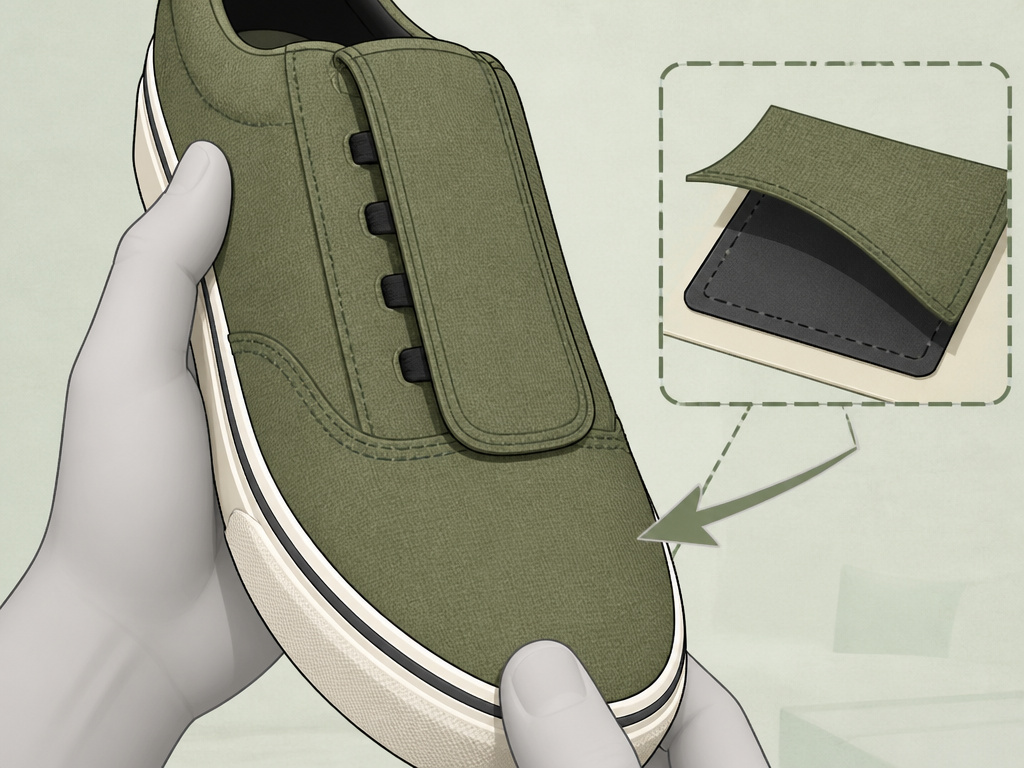
You can buy a “suede” shoe that falls apart quickly if the construction is poor. Conversely, a well-built canvas shoe can surprise you. Here’s what to look for beyond the material tag.
Toe Design: A one-piece toe panel lasts longer than a toe made of multiple stitched pieces. Stitches in the drag zone get chewed through by grip tape. Recessed or hidden stitching is a sign of a durability-focused design.
Ollie Patch Reinforcement: Many shoes add a second layer of material or a rubberized coating under the suede or canvas in the ollie zone. This makes a major difference, particularly for canvas uppers. It’s the difference between a two-session shoe and a two-month shoe.
Lace Protection: Torn laces are a nuisance. Features like hidden ghillie loops or lace saver panels keep your laces away from grip tape and your board’s hardware. It’s a small detail that improves daily usability.
Common mistake: Judging a shoe only by its main material. A canvas shoe with a rubberized toe cap and a suede shoe with exposed stitching in the ollie zone might perform opposite to your expectations.
When your shoes do eventually wear, and they all will, knowing how to fix holes in skate shoes with Shoe Goo or patches can extend their life significantly. It’s a skill as useful as knowing why skate shoes wear out in the first place.
The Verdict: Which Should You Buy?
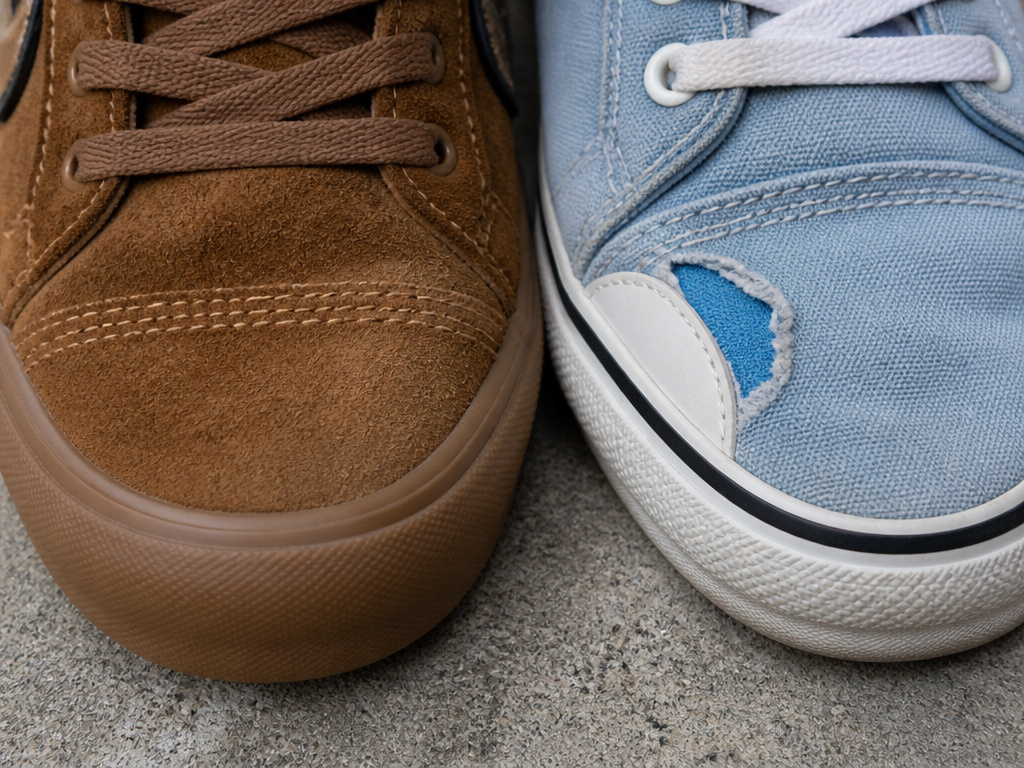
For the vast majority of skaters, especially those learning or skating street, suede is the default, safer choice. The durability advantage is real and translates directly to more skate time per dollar. The standard recommendation is a suede upper with a vulcanized sole for the best mix of board feel and lifespan.
Canvas has its place. If you primarily cruise, skate in hot climates, or want a dedicated park shoe and you’ve found a model with verified reinforcement, canvas can work well. Just go in with eyes open about its limitations against grip tape.
Finally, remember that shoes are a consumable part of skating. Even the toughest suede shoe will eventually meet its match. Rotate pairs if you can, clean them regularly (here’s a guide on cleaning skate shoes), and patch small holes before they become big ones. Your feet, and your wallet, will thank you.
Best Brands for Each Type
Brands don’t make one universally ‘best’ shoe; they make specific models for specific uses. For pure suede performance, look for brands that focus on technical street skating, as their models often feature suede uppers with durable, single-piece toe caps and reinforced ollie areas. For canvas, some brands target casual wear and cruising, with models often lighter and more breathable. However, if you want canvas for actual skating, you must seek out specific models where the brand has added backing layers, rubberized sections, or hybrid constructions to compete on durability. The key is to ignore the brand name alone and scrutinize the construction of the specific shoe model for the features that match your skating style.
Frequently Asked Questions
Are canvas shoes good for skating?
Canvas shoes are good for a specific type of skating: casual cruising, park riding, or warm-weather sessions where you aren’t doing repetitive flip tricks that grind the ollie patch into the grip tape. For technical street skating, they are a short-term option at best.
What is the difference between canvas and suede shoes?
The core difference is origin and structure. Suede comes from animal hide, is protein-based, and has a fibrous surface that resists abrasion by fraying. Canvas is woven cotton, is cellulose-based, and is lighter and more breathable but prone to tearing under focused friction.
What are the downsides of suede shoes?
Suede shoes are generally more expensive, harder to clean (requiring special cleaners), and can be less breathable than canvas. They also take slightly longer to break in and can feel warmer on hot days.
Can reinforced canvas compete with suede?
Yes, but only in the specific models that include features like rubberized toe caps, double-layer ollie patches, or suede/canvas hybrids. Plain, single-layer canvas cannot match the abrasion resistance of even a basic suede upper for skateboarding.
How does sole type (vulc vs cupsole) affect this choice?
Sole construction is a separate but critical decision. Vulcanized soles offer better board feel and flick; cupsoles offer more impact protection and support. You can learn more about this in our guide to vulcanized vs cupsole skate shoes. For durability, a well-built suede upper matters more than the sole type, but the sole dictates comfort and performance feel.
The Bottom Line
If you’re buying your first real skate shoe or skating mainly street, start with suede. It’s the simpler, more forgiving choice. If you’re a dedicated cruiser or park skater who sweats the details, a reinforced canvas model might serve you well, just check the construction first.
One level above your minimum need is almost always the right move. Now go check the ollie patch on your current shoes. That worn spot tells you everything about what to buy next.
