
How to Start Skateboarding as an Adult: Step-by-Step
This post contains affiliate links. As an Amazon Associate, we earn from qualifying purchases.
You start skateboarding as an adult by buying a decent complete board from a local skate shop, wearing a certified helmet and wrist guards, and spending your first week on a forgiving surface like grass or smooth rubber mastering balance, pushing, and stepping off. One-third of skateboarding injuries happen in the first week of learning, so this initial phase is about building confidence, not tricks.
The “decent complete” part matters because a wobbly toy-store board will convince you’re bad at skating. A shop-built complete from a brand like Element or Santa Cruz rolls predictably, so you can focus on your feet instead of the gear. That predictable feel is what turns a scary first push into a repeatable skill, and it’s the core of how to start skateboarding as an adult.
What follows is a walkthrough of the gear, the mindset, and a specific seven-day practice plan built from educator recommendations and government safety sheets for how to start skateboarding as an adult. By the end, you’ll know how to fall safely, where to practice, and what a successful first month actually looks like.
Key Takeaways
- Buy from a local skate shop, not Amazon or a big-box store. A shop-built complete ensures proper hardware tightness and wheel spin, eliminating gear-induced wobbles that scare beginners off.
- Wear a helmet and wrist guards every single session. The Consumer Product Safety Commission states wrist guards are especially important, and a helmet can mean the difference between life and death.
- Your first week is for balance and pushing, not tricks. Spend sessions on grass or a rubber playground surface, mastering getting on, stepping off, and a controlled push as outlined by a USSEA-certified educator.
- One-third of injuries happen in the first week. This statistic from the American Academy of Pediatrics underscores why rushing leads to sprains; slow, deliberate practice prevents them.
- Find your stance (“regular” or “goofy”) before worrying about steering. If pushing with your left foot forward feels natural, you’re “regular”; right foot forward is “goofy”. Don’t overthink it, your body will tell you.
Gear Up: The Non-Negotiable Safety Kit
First, understand the stakes. The Consumer Product Safety Commission guidelines are not suggestions. Their fact sheet states plainly that wearing a helmet can mean the difference between life and death. For adults with jobs and responsibilities, that’s not a vague warning. It’s the core reason you suit up before every session. Your gear isn’t about looking cool; it’s about keeping your brain and bones intact so you can skate again tomorrow.
The CDC’s BAM card recommends wearing a helmet, knee pads, elbow pads, and wrist guards. They add that non-slippery shoes are essential for better control. I’d go further. For your first two months, wrist guards are essential. When you fall, and you will, your instinct is to put your hands out. Wrist guards disperse that impact across a plastic splint instead of letting your small bones absorb it all. The difference is a shaky five-minute break versus a six-week recovery from a fracture.
Before you start: A loose helmet flies off on impact. The CPSC states it should fit snugly with the chin strap fastened and sit level on your head, not tilted back. A skateboarding-specific helmet has a hard shell with a foam interior. The CPSC recommends wearing a helmet designed for skateboarding (hard shell with foam interior).
What does that feel like when it’s right? You should feel a firm, even pressure around your forehead and the back of your skull. If you can tilt the helmet back to see your eyebrows, it’s too loose. The chin strap should be fastened snugly. That snugness feels restrictive for about three minutes, then you forget it’s there, until it does its job.
Choosing Your First Board: The Shop Rule
Here’s where most adult beginners get steered wrong. You’ll see tempting “complete” boards at big-box stores or slick online deals. The industry voice, TransWorld SKATEboarding, explicitly advises against this: “Don’t search for skateboards on Amazon! Hit your local skate shop. Avoid Target and Walmart completes.” This isn’t elitism; it’s mechanics. A cheap complete often has poorly seated bearings, overtightened or loose trucks, and wheels that don’t spin freely. The board will wobble, stall, and feel unpredictable. You’ll blame your balance when the gear was the problem all along.
The CDC states pre-assembled boards are best for beginners, while TransWorld SKATEboarding advises against buying completes from Target, Walmart, or Amazon and recommends a local skate shop. A local shop will sell you a “complete”, a deck, grip tape, two trucks, four wheels, and two bearings per wheel, from a brand like Element, Santa Cruz, or Powell-Peralta. The staff will ensure the trucks are tightened properly and the wheels spin. You’re paying for their assembly skill and curation, not just the parts.
| Buying Source | What You Get | The Risk for Beginners |
|---|---|---|
| Local Skate Shop | Shop-built complete from known brands (Element, Santa Cruz, etc.). Properly tightened trucks, seated bearings. | Higher upfront cost. The only real risk is liking the staff and going back too often. |
| Big-Box Store / Amazon | Inexpensive, mass-produced complete. Often plastic components, poorly lubricated bearings, inconsistent truck tightness. | Unpredictable ride feel convinces you skating is harder than it is. |
| Custom Build (Self) | Hand-picked deck, trucks, wheels, bearings. Perfect for a seasoned skater with preferences. | Overwhelming choice paralysis for a beginner. You don’t yet know what “loose trucks” or “hard wheels” feel like. |
My stubborn curiosity cost me here early on. I bought a shiny online complete to save thirty bucks. It took me a month to realize the constant speed wobbles weren’t my fault, the kingpin nut was cross-threaded, and one truck was permanently sloppy. A shop would have caught that before I ever stood on it. Bottom line: walk into a shop, tell them you’re a beginner, and let them build you a complete. It’s the single fastest way to a predictable, friendly board.
Where to Practice and Skatepark Etiquette
The CDC recommends a smooth, flat surface to start. A USSEA-certified educator cited by Nike.com prescribes a more forgiving progression: start on grass, then move to a rubber playground surface, and finally to concrete or asphalt. This graded approach is genius. Grass stops the board from rolling, letting you practice stepping on and off and shifting your weight without fear. The rubber surface provides a little roll but is more forgiving on falls. This is your training program.
Start on grass, then proceed to a rubber playground surface. After mastering basics on rubber, move to concrete or asphalt.
Once you’re comfortable pushing and turning on pavement, you might eye the local skatepark. This is a major anxiety source. Park etiquette is unwritten but simple. First, watch the flow for a few minutes. See where people are riding and where they’re landing. The fundamental rule is: don’t snake anyone. Don’t drop in or start a line if someone is already riding through that section. If you’re practicing stationary tricks, stick to the flat ground or a less-busy corner. Most skaters are focused on their own run and won’t pay you any mind. If a kid zips past you unpredictably, just step off your board, they’re not being rude; their brain is still wiring object permanence.
The Nike.com guide also points out a legal edge case: some states prohibit skateboarding in certain areas. Check your local laws before heading to a public lot or plaza. A quiet school parking lot on a weekend or a freshly paved bike path are often safe, legal bets.
The 7-Day Beginner Practice Plan
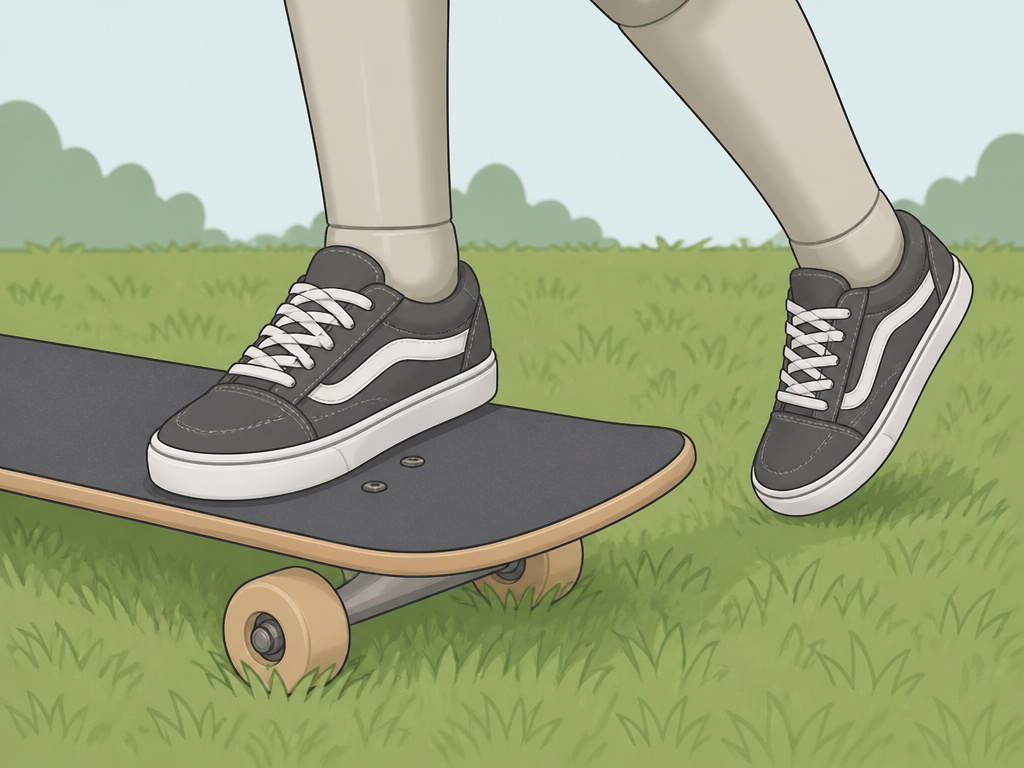
Adults need structure. Without it, you’ll go to a parking lot, push around for five minutes, feel awkward, and go home. This seven-day plan, drawing from educator recommendations and the CDC’s basic skill steps, turns those awkward first sessions into measurable progress. Each day focuses on one skill, with a clear drill. Aim for a short, focused practice each day.
Day 1 & 2: The Grass Drills (No Roll)
Find a patch of grass. Your goal is to make friends with the board while it’s stationary.
- Drill 1: Mount/Dismount. Place the board on grass. Step your front foot onto the deck, covering the two inner bolts near the front truck. Find your balance on that foot, then step your back foot onto the deck near the rear bolts. Hold your balance. Step off in reverse order. Repeat the drill.
- Drill 2: Weight Shift. While standing on the board in the grass, bend your knees slightly. Gently shift your weight to your toes, then to your heels. Feel the board tilt. This is the foundational movement for steering later. Practice this movement.
Day 3 & 4: The Rubber Surface Push
Move to a rubber playground or basketball court.
- Drill 3: The Manual Push. With your front foot on the board (covering the two inner bolts), use your back foot to push against the ground once. Just once. Let the board roll to a stop. Focus on bringing your back foot onto the board after the push. Practice the push. The motion will feel disjointed. That’s fine.
- Drill 4: Finding Your Stance. Try pushing with your left foot forward. Then try with your right foot forward. One will feel more natural. Left-foot-forward is “regular”; right-foot-forward is “goofy”. Don’t overthink the tests, go with what feels stable.
Day 5 & 6: Concrete Fundamentals
Find a smooth, empty parking lot or sidewalk.
- Drill 5: Controlled Push & Step-Off. Now, link 2-3 pushes together. As you roll, practice the emergency stop: step your back foot smoothly onto the ground to slow down and step off. This is your safety brake. Practice a controlled step-off.
- Drill 6: Carve Turning. While rolling slowly, practice the weight shift you learned on grass. Lean gently onto your toes to turn one way, onto your heels to turn the other. Make wide, slow S-curves.
Day 7: Putting It Together
Do a lap of your practice area. Practice: starting from a stop, pushing 4-5 times to gain speed, cruising in a straight line, making a wide turn, and executing a smooth step-off stop. That’s it. If you can do that, you’ve successfully learned to skateboard. Everything else, ollies, kickturns, riding ramps, builds from this foundation.
How to Fall Safely (The Most Important Skill)
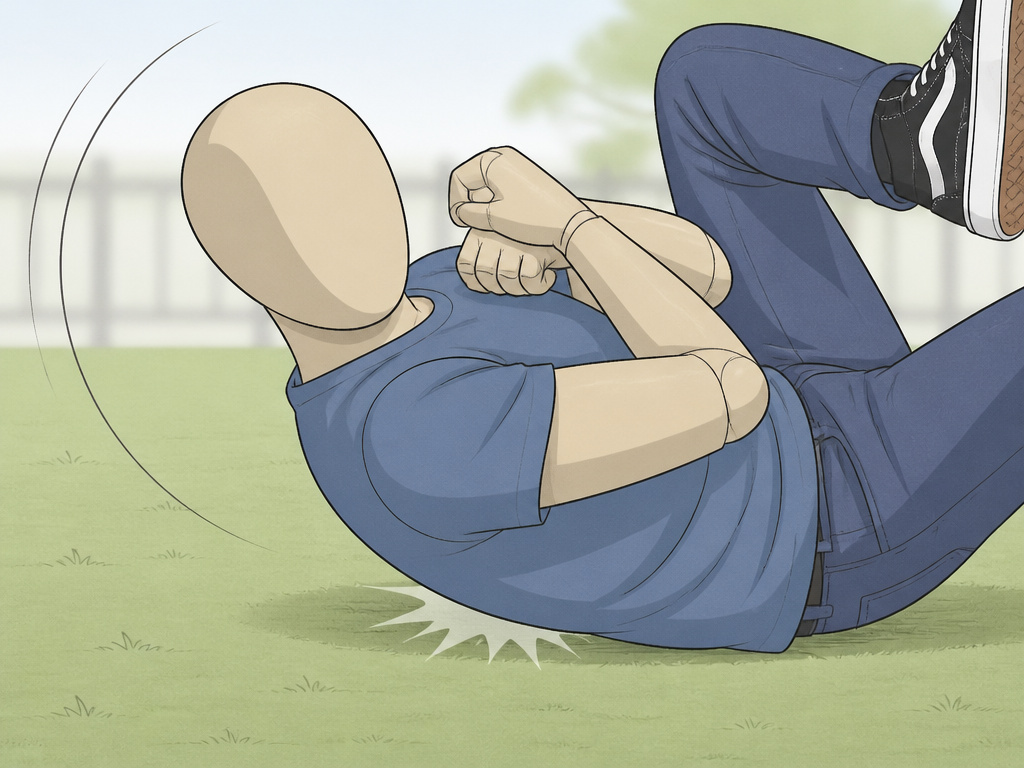
You will fall. The goal isn’t to avoid it; it’s to manage the impact. This is the gap in every “top tips” list about how to start skateboarding as an adult. As an adult, your body doesn’t bounce like it did at 15. Falling correctly protects your wrists, knees, and head.
The technique is a tuck and roll. When you feel yourself losing balance, bend your knees to lower your center of gravity. Try to turn your body so you land on the meaty parts, your shoulder and back, and roll with the momentum. This dissipates the force across a larger area and over time. What you must avoid is sticking your arms out straight to catch yourself. That’s how you get a Colles’ fracture of the wrist, a classic beginner injury that takes weeks to heal. This is why wrist guards are essential; they train you out of that instinct by making a straight-arm landing uncomfortable.
Where this goes sideways: Stiff-arming a fall. The force travels straight up your arm, spraining your wrist or fracturing the small bones in your hand. Wrist guards physically block that hyperextension.
Practice this on grass without your board. Drop to your knees, then tuck your shoulder and roll onto your back. It feels silly. Practice the tuck and roll. That muscle memory might save you from your first real slam on concrete.
Overcoming Mental Barriers and Finding Community
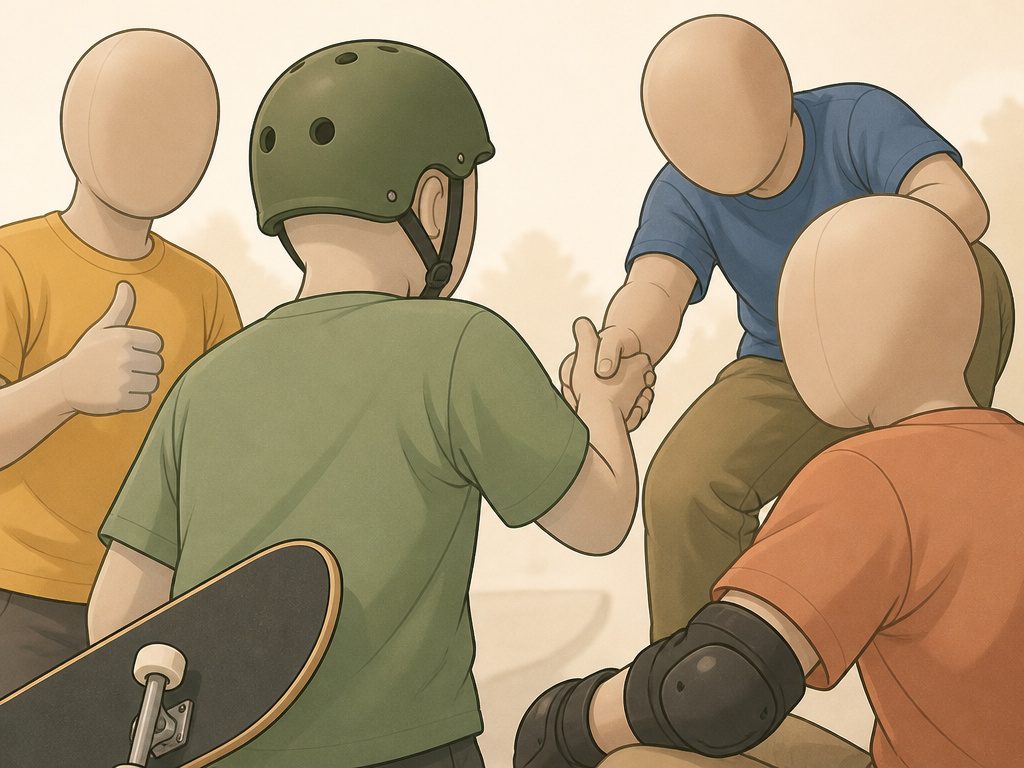
“I’m too old.” “I’ll look stupid.” “Everyone at the park will judge me.” These thoughts are universal. Most people at the skatepark are dealing with their own fear of looking stupid on a new trick. They are not thinking about you. The Reddit community r/oldskaters is a testament to this; it’s full of adults celebrating small victories and sharing wipeout stories.
My own breakthrough came from treating the local shop session as a free classroom. I used to hover by the wall holding my board like a clipboard, hoping someone would teach me. Nobody did. The moment I walked up to an older rider and asked, “What’s the best way to learn kickturns here?” the entire dynamic changed. I got a two-minute tutorial, a couple of attempts, and a “not bad” nod. Asking a specific question breaks the ice in under 30 seconds.
Building a solid practice routine for beginners is easier with a goal. Sign up for a local skateboarding clinic for adults if you can. If not, use online tutorials with a critical eye, focus on coaches who explain the why, not just the what. And if you’re struggling to find other skaters, start by just showing up to the same practice spot at the same time each week. You’ll start recognizing other regulars, and a nod can turn into a conversation.
What Progress Looks Like in Your First Month
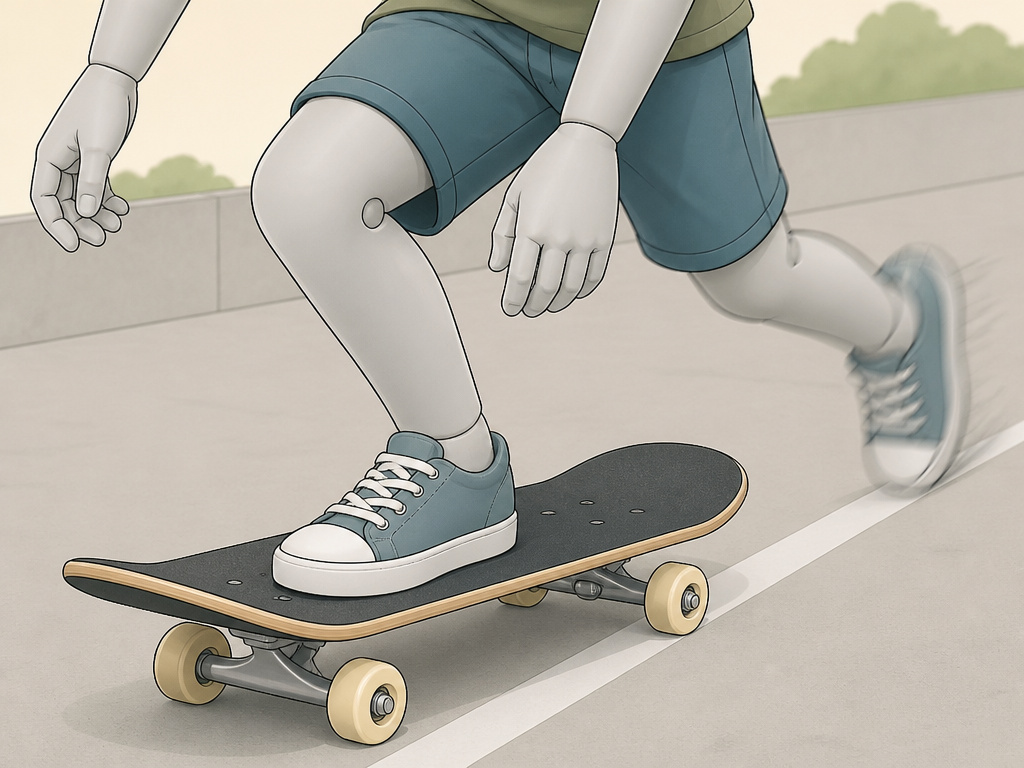
Forget kickflips. Your success metrics for the first month are different. They’re about consistency and comfort, not tricks.
- Week 1: You can stand on the board on grass without wobbling. You can step on and off confidently.
- Week 2: You can push 3-4 times on rubber or smooth concrete and ride in a straight line for 20 feet. You can execute a controlled step-off stop.
- Week 3: You can link pushes to maintain speed. You can make gentle carve turns. You’ve taken your first fall on pads and gotten back up.
- Week 4: You can comfortably ride around an empty parking lot, maneuvering around cracks or small obstacles. You look at your board not as a threat, but as a tool.
If you hit Week 4 and can cruise comfortably, you have successfully learned to skateboard. You’ve built the foundation. Now you get to choose your path: maybe you want to learn to ollie, maybe you want to try a skatepark bowl, or maybe you’re happy just cruising. All of those are valid. The journey of skateboarding in your 30s is longer, but it starts with these stable first steps.
How to get your body ready for skateboarding
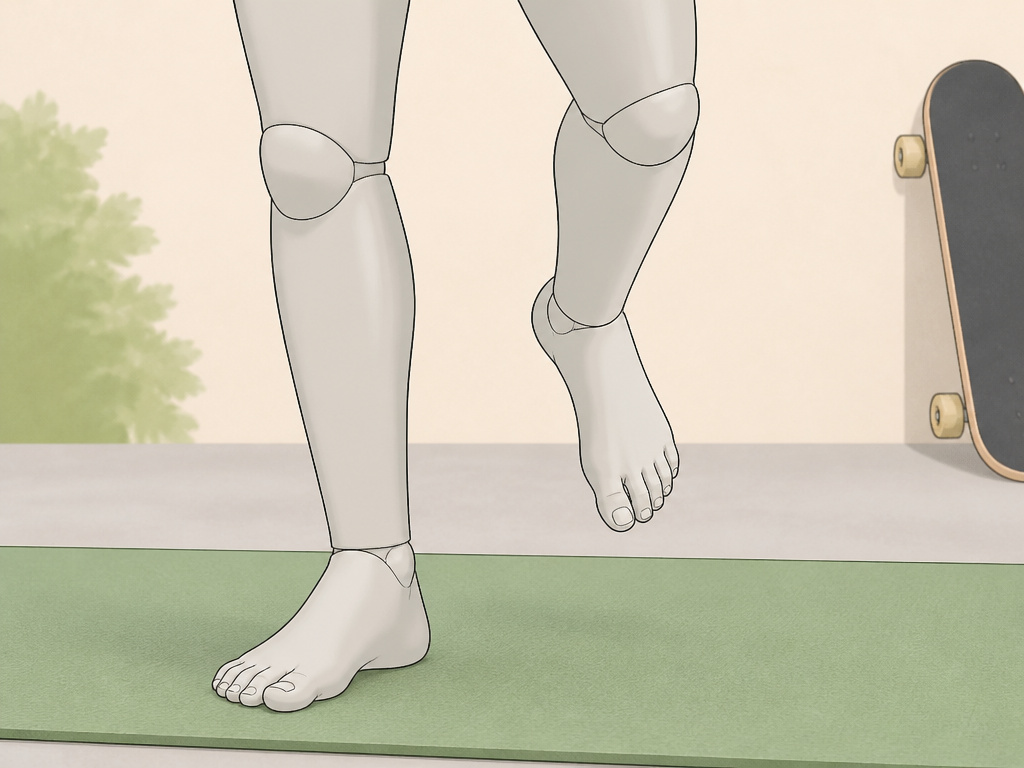
Your body isn’t as forgiving as it used to be, so preparing it is key. Focus on building stability and resilience before you ever step on the board. Simple balance exercises, like standing on one foot, directly translate to staying upright while riding. Strengthen your legs and core to help you push and control the board. Since many injuries happen in the first week of learning, conditioning these supporting muscles can help you handle a fall. Always warm up your joints with dynamic stretches. The goal is to make your body a more stable, responsive platform so you can learn with confidence and reduce your risk of getting hurt.
Frequently Asked Questions
Is skateboarding hard to learn as an adult?
It’s a physical skill with a learning curve, like ice skating or skiing. The challenge is more about overcoming fear and building new muscle memory than innate talent. Adults often progress faster than kids in the early stages because they can follow instructions and practice deliberately. The hard part is committing to looking awkward for a few weeks.
Is 30 too old to get into skateboarding?
No. The American Academy of Pediatrics guide focuses on young children, stating those under 5 should not ride and kids 6-10 need close supervision. For adults, the CPSC’s main advice is universal: wear protective gear, inspect your board, and don’t ride beyond your ability. Age isn’t a barrier; risk management is.
What is the best beginner skateboard for an adult?
The best beginner board is a shop-built complete from a brand like Element or Santa Cruz. This ensures proper assembly and quality components. Avoid the temptation of big-box store boards; their inconsistent performance will frustrate you. For specific models, our guide on the best beginner skateboards breaks down the top picks.
How dangerous is skateboarding?
It carries inherent risk, like any board sport. The CPSC fact sheet notes that vehicle traffic, trick riding, and excessive speed lead to severe collisions and falls. However, the CDC physical activity guide frames skateboarding as healthy exercise when done with proper gear and in safe areas. Your risk is directly within your control through gear, terrain choice, and speed management.
Can I learn to skateboard by myself?
Yes, many adults do. Resources like the CDC BAM card and structured online tutorials provide the basic steps. The key is a disciplined, progressive practice plan. However, taking even one group class for adults can correct fundamental posture errors that might take you months to self-diagnose.
How much should I practice?
Consistency beats marathon sessions. Aim for consistent, short practice sessions. This is far more effective than a single two-hour session on Saturday. Your brain and muscles need time between practices to solidify the new patterns. Even practicing skateboarding alone for 15 minutes in your driveway focusing on balance counts as valuable practice.
Before You Go
Your first purchase is a helmet, not a board. Go to a local shop with that in mind, and let them help you with the rest. Spend your first sessions on grass, mastering the feel of the deck under your feet. The single most useful skill you can learn in week one is how to step off the board smoothly, that’s your eject button, and knowing you have it builds confidence faster than any trick.
Remember the sourced number: one-third of injuries happen in the first week. That’s not to scare you, but to validate a slow start. Rushing leads to panic, and panic leads to falls on outstretched hands. If you take one thing from this guide, let it be the seven-day plan. It works because it removes the “what do I do now?” paralysis and replaces it with a simple, safe task each day.
Now you know how to start. The only thing left is to push.
