
How to Make a Skateboard Faster: Step-by-Step
This post contains affiliate links. As an Amazon Associate, we earn from qualifying purchases.
To make a skateboard faster, you need three things: harder wheels (higher durometer) for smooth ground, clean and properly lubricated bearings, and efficient pushing or pumping technique. A 2021 peer-reviewed study found a composite wheel material increased speed by 6.85% over standard polyurethane, showing material choice matters.
That 6.85% isn’t just a lab number. On a long push down a smooth bike path, it’s the difference between keeping up with your friends and watching them pull away. The real gains come from matching your gear to the ground you actually skate and learning how to move with the board, not just on it, which is a core part of how to make a skateboard faster.
What follows is a breakdown of the upgrades that work, the maintenance most people skip, and the techniques that turn pushing effort into real speed, all central to how to make a skateboard faster. The text explains wheel specs from the Portland Parks & Recreation guide, bearing myths, and the physics of pumping to show you where to spend your time and money.
Key Takeaways
- Match wheel durometer to your surface: harder wheels (e.g., up to 101a) win on smooth skatepark concrete, while softer wheels (e.g., ~76a) maintain speed better on rough asphalt.
- Bearing maintenance beats expensive replacements: A simple clean and lubricate restores roll far more than neglecting maintenance.
- Pumping generates speed without pushing; on transition, your front foot is the gas pedal on a concave ramp and the brake on a convex one.
- A 2025 engineering study showed a topologically optimized truck weighing 280g enabled higher jumps and faster rotations with the same energy input.
- Speed wobble is about you, not your board: A 2015 dynamics analysis concluded wobble “doesn’t strictly depend on skateboard configuration, but the human control characteristics are predominant.”
Wheel Hardness: The 76a to 101a Range That Decides Speed
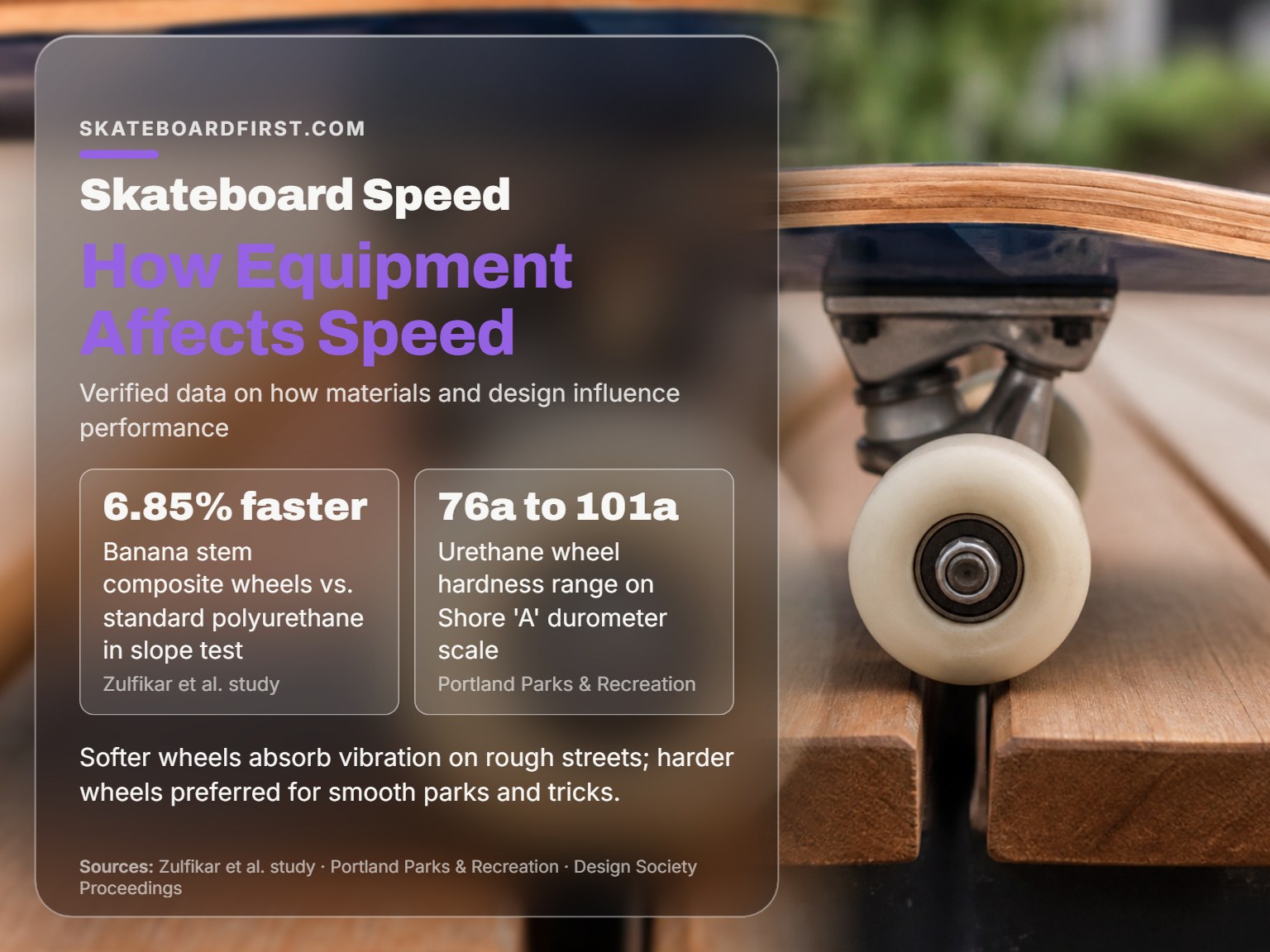
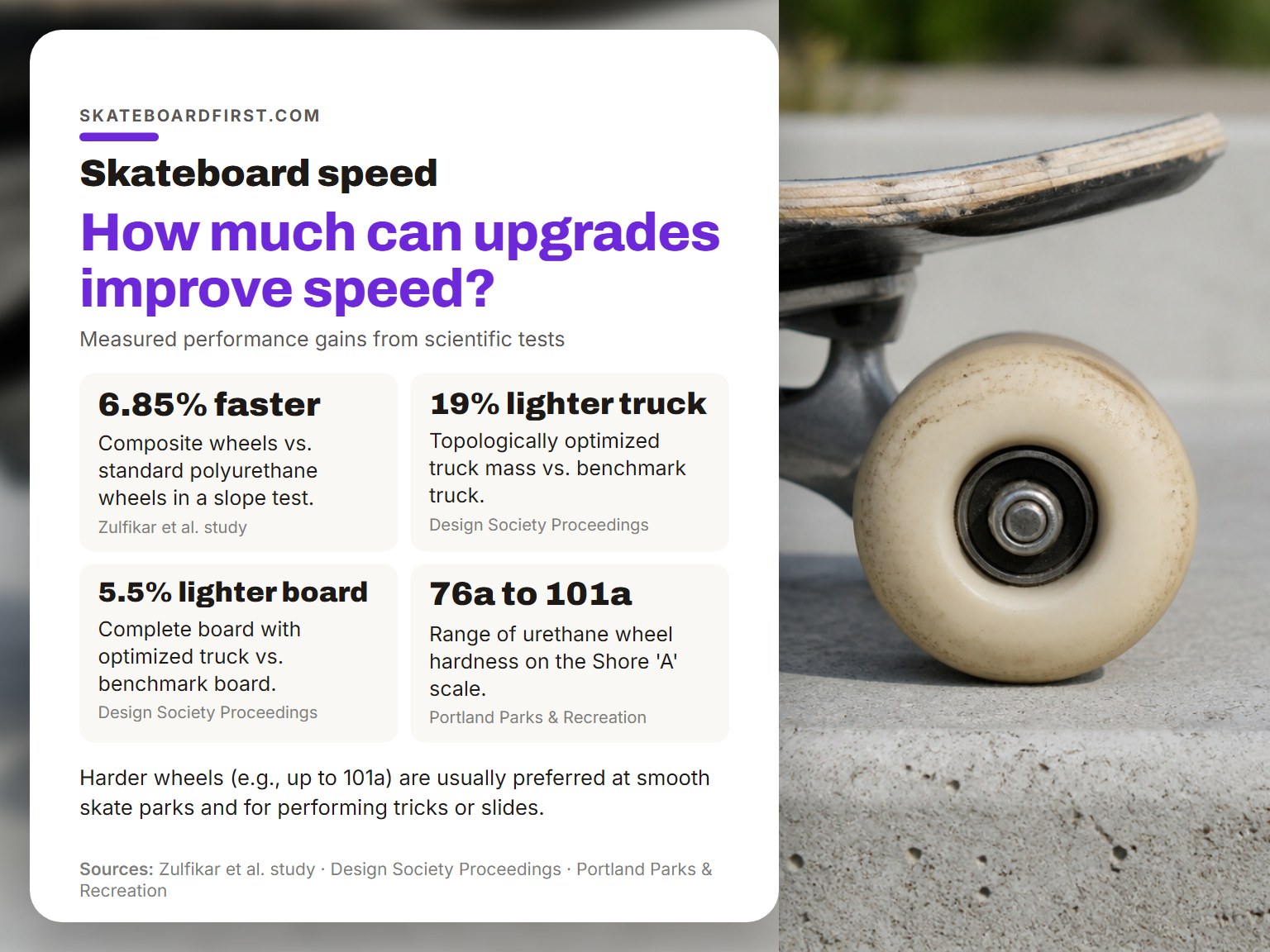
Skateboard wheel hardness is measured on the Shore “A” durometer scale from 0 to 100. According to the Portland Parks & Recreation guide, commercial urethane wheels range from approximately 76a (softest) to 101a (hardest). That number stamped on your wheel isn’t marketing, it’s a direct prediction of how your board will roll.
Common mistake: Choosing wheels based on a pro’s setup without considering your local ground. A 101a wheel that flies in a skatepark will stick and slow on cracked sidewalk, killing your speed.
Soft wheels, around 76a to 87a, absorb vibrations and roll over cracks and pebbles. They grip the ground, which is safer for beginners but creates more friction. On rough asphalt, a soft wheel maintains momentum where a hard wheel would chatter and lose energy. You’ll push less often to keep the same speed.
Hard wheels, from 95a to 101a, have less grip and less deformation. On smooth, finished concrete like a skatepark or a bike lane, they experience minimal rolling resistance. The board feels faster and slides more predictably. This is why most street and park skaters ride wheels in the 99a-101a range.
| Durometer (Shore A) | Best For | Speed on Rough Ground | Speed on Smooth Ground |
|---|---|---|---|
| 76a – 87a (Soft) | Cruising, commuting, rough streets | , | , |
| 95a – 101a (Hard) | Skateparks, smooth concrete, technical tricks | , | , |
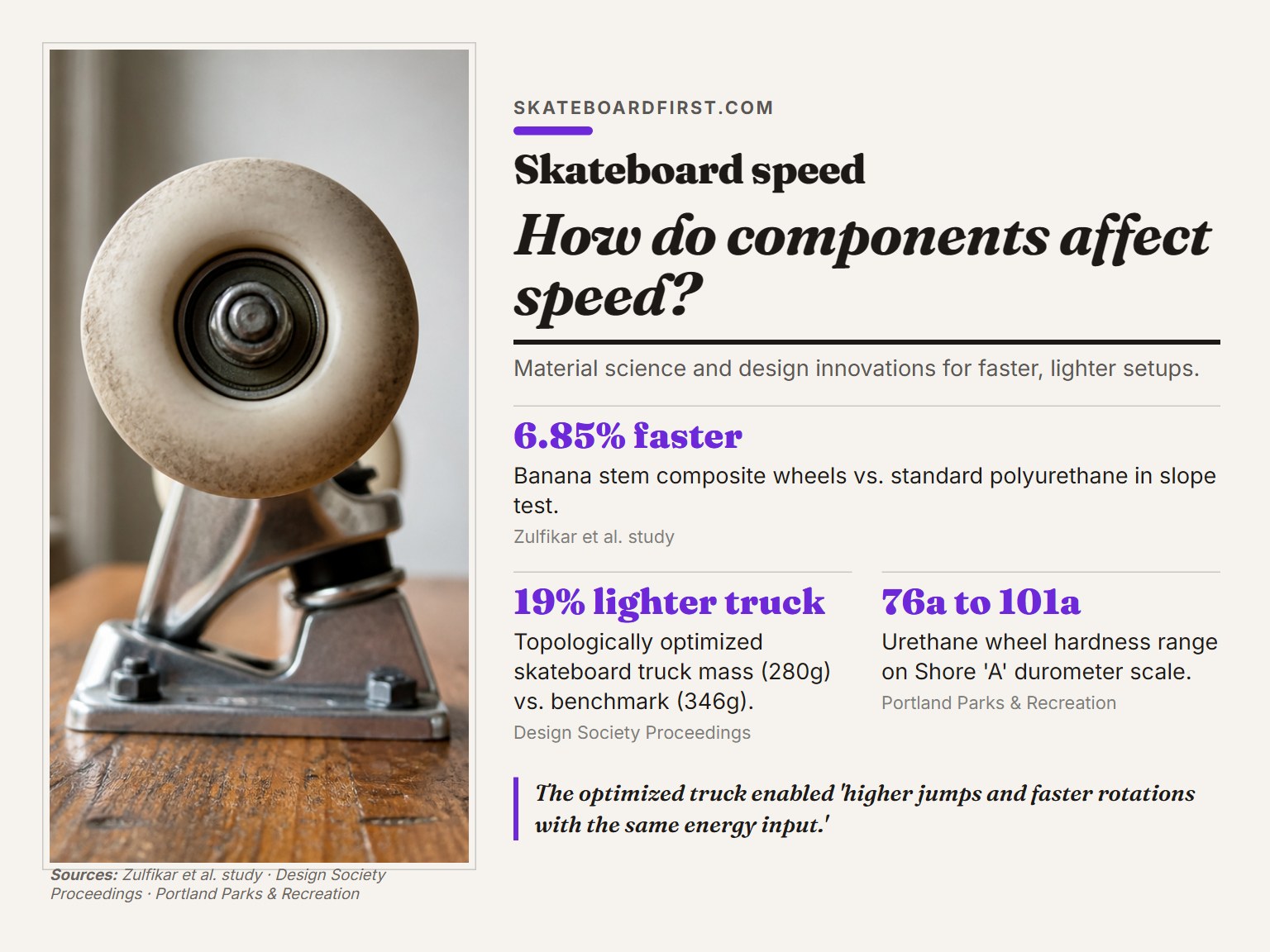
The educational resource from the Exploratorium notes that urethane’s rebound and abrasion resistance are why it became the standard. But a 2021 study in the Jurnal Rekayasa Material, Manufaktur dan Energi by Zulfikar et al. Tested wheels made from a banana stem powder composite. They found these experimental wheels provided a 6.85% speed increase over commercial polyurethane wheels in a slope test. While not mainstream, it shows material science is still pushing what’s possible for roll speed.
Bearing Truths: Cleaning Beats Buying Expensive Upgrades
A bearing spins inside your wheel on a steel axle. When it’s dirty, gummed up with old lubricant, or rusted, it creates drag. That drag is a direct speed tax. The Portland Parks & Recreation guide states plainly: “It is important to keep bearings clean and out of the rain – dirty or rusty bearings won’t roll properly.”
Here’s what most forum threads get wrong. Free spin time, how long a wheel spins freely when you flick it, means almost nothing. A dry, poorly lubricated bearing can spin for a long time off the ground but seize up under your weight. The real test is how the board rolls when you’re on it.
Expert tip: I used to chase ABEC ratings, thinking a higher number meant a faster bearing. After cleaning a set of basic Bones Reds three times over a year and having them roll smoother than a friend’s neglected “ABEC 9” ceramics, I stopped recommending expensive bearings to beginners. The money is better spent on good wheels.
A basic bearing maintenance routine does more for speed than an expensive upgrade:
- Pop the shields with a pin or small blade.
- Soak the bearings in isopropyl alcohol to dissolve old grease and grime.
- Let them dry completely.
- Add one small drop of lightweight speed oil or dedicated skate bearing lubricant to each bearing. Avoid thick grease.
- Reinstall the shields.
Do this every few months if you skate regularly, or immediately if your wheels get wet. For a detailed walkthrough, our guide on how to lubricate skateboard bearings covers the tools and steps. This simple bearing maintenance is the single most effective speed upgrade you can do for under ten dollars when learning how to make a skateboard faster. For a detailed walkthrough, see our guide on how to lubricate skateboard bearings.
Truck Tightness and Weight: Stability and Swing Weight
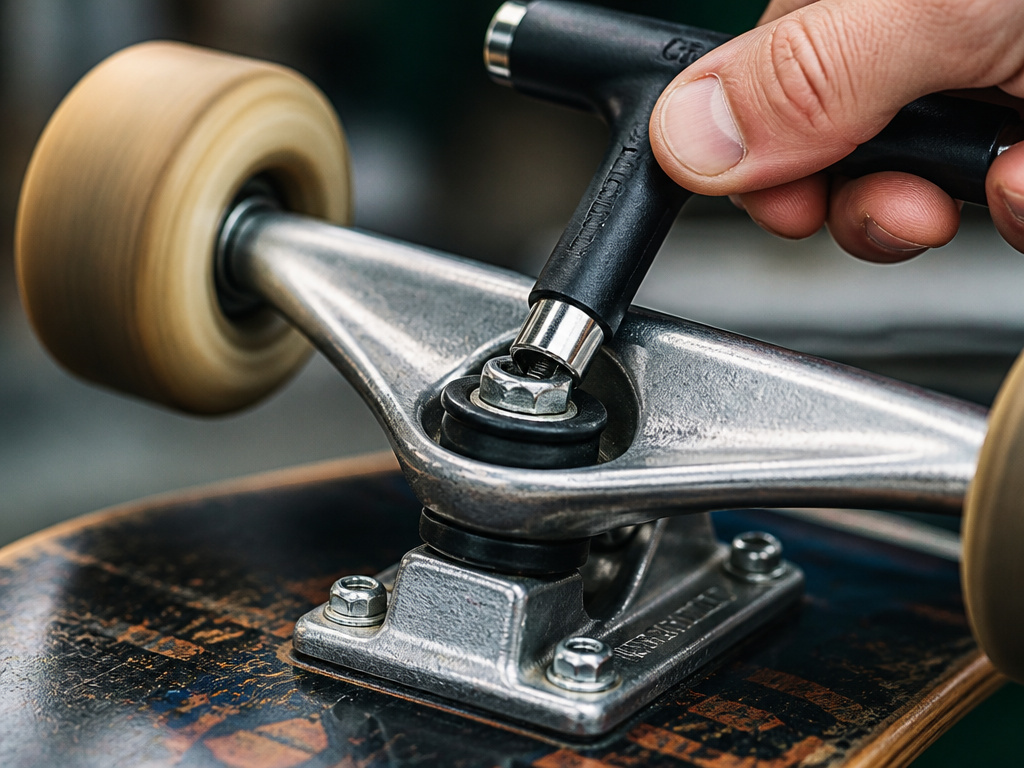
Trucks connect your wheels to the deck. Their tightness controls turn responsiveness and, critically, high-speed stability. Loose trucks can feel twitchy and initiate speed wobble more easily. Tight trucks feel stable in a straight line but make turning harder, forcing you to push more to navigate.
There’s no universal setting. The bushing, the urethane cushion inside, also matters.
Where this goes sideways: Cranking your trucks down super tight to prevent speed wobble on a hill. This makes the board harder to turn for corrections, and if a wobble starts, you have less range to steer out of it. A moderate, balanced tightness gives you control without locking the board straight.
The other factor is weight. A 2025 study published in the Design Society Proceedings set out to optimize a skateboard truck. They used the Independent 139 Stage 11 Hollow (mass 346g) as a benchmark. Through topology optimization, they created a truck weighing 280 grams, a 19% reduction. The complete board with the optimized truck was 134g (5.5%) lighter.
Why does a few hundred grams matter? The study’s authors concluded the lighter truck reduced the board’s moment of inertia, enabling “higher jumps and faster rotations with the same energy input.” For more on this, see our article on how to make a skateboard lighter.
The Skater’s Engine: Pushing, Pumping, and Body Position
Your body is the motor. Inefficient technique wastes energy that could be speed. Good skaters aren’t just stronger; they’re more economical.
Pushing: It’s not about stomping your foot down. A powerful push starts with your whole body. Bend your knees, get low, and push through the ball of your foot in a long, smooth stroke. The more comfortable you are balancing on one foot, the longer and harder you can push. New skaters often take short, choppy pushes because they’re rushing to get both feet back on the board. Practice rolling on your front foot alone.
Pumping: This is how you generate speed without pushing, using the geometry of a ramp or even flat ground. On a concave ramp (like the bottom of a bowl), you push down with your front foot as you go up the transition. This compresses the board and pumps you forward. On a convex ramp (like the top of a quarter pipe), you push down with your back foot. A common description is “front foot = gas, back foot = brakes” depending on the curve. Learning to pump for speed is critical for improving your park and bowl skating. For a specific deep dive, our guide on how to pump a skateboard bowl breaks down the timing.
Body Position: Aerodynamics matter more the faster you go. For downhill or long, flat sprints, getting into a tuck reduces wind resistance dramatically. Crouch low, keep your arms in, and look ahead. A straight back and stiff legs make you a sail.
Discipline-Specific Setups: Park, Street, and Downhill
There is no single “fastest” setup. What works for a downhill racer will be terrible in a skatepark.
Downhill/Speedboarding: This prioritizes stability and roll speed. Stability at 40+ mph is essential. If you’re exploring this, our article on a stable high-speed board outlines the components.
Street/Park: Here, speed is about quick acceleration and maintaining momentum through lines. Trucks are medium-tight for a balance of stability and turnability. The focus is on a smoother ride through efficient pumping and pushing.
Cruising/Transportation: Comfort and efficiency over rough ground are key. Bearings need to be sealed well against street grime.
Budget-Friendly vs. Premium Upgrades
You don’t need to spend a lot. Prioritize fixes that give the most speed per dollar.
Under $20:
- Bearing Cleaner & Lube: The best return on investment.
- Correct Wheel Hardness: Selling your too-soft park wheels and buying a used set of harder wheels can increase your speed.
- Truck Adjustment Tool: Just a skate tool. Dialing in your kingpin nut is free and powerful.
$50-$100:
- Quality Wheels: A new set of wheels matched to your primary skating surface.
- Better Bushings: Upgrading to bushings that match your weight improves turn efficiency and stability.
$100+:
- Lightweight Trucks: Like the optimized design from the study, these reduce swing weight.
- High-Performance Bearings: While cleaning is paramount, a sealed bearing will last longer and maintain performance.
- Custom Deck: A deck with the right concave and width for your feet improves control, letting you push harder with confidence.
The Science Buddies skateboard wheel test is a great resource for understanding the basic trade-offs before you spend.
How tight should my axle nuts be?
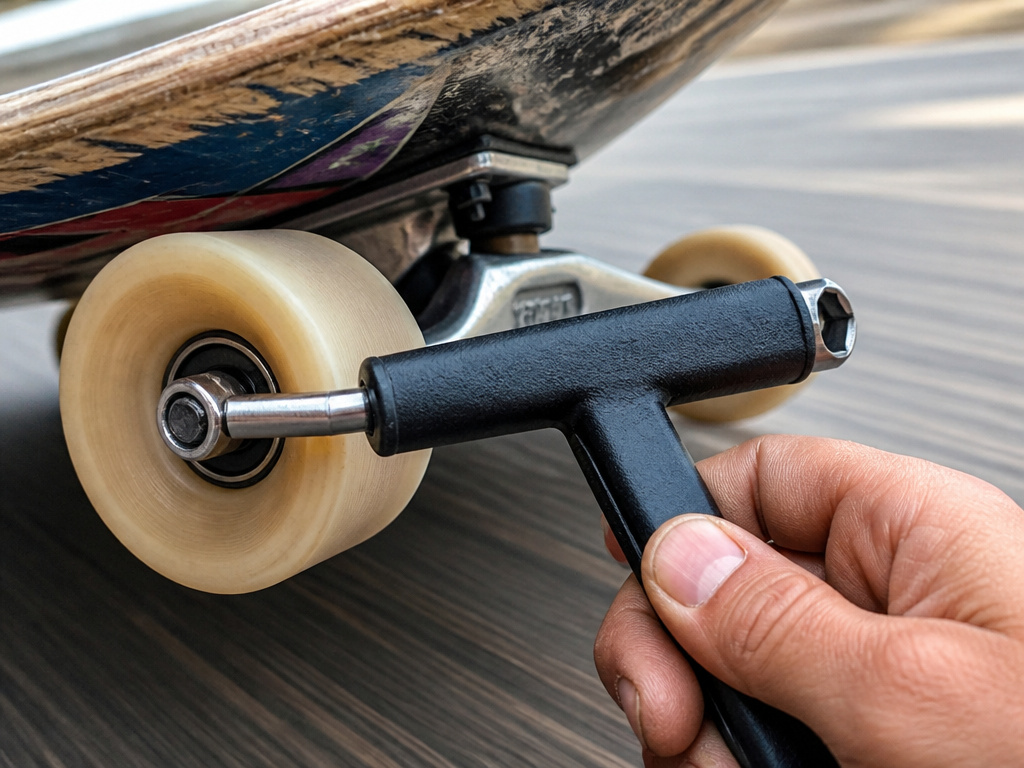
Getting your axle nut tightness right is a simple but critical step for a faster roll. The nut must be tight enough to prevent the wheel from having side-to-side play, which can waste energy and cause instability. However, overtightening the nut will pinch the bearings, creating friction that slows the wheel down dramatically. The goal is to find the sweet spot where the wheel spins freely without any wobble. After adjusting, give the wheel a firm spin with your hand; it should rotate smoothly for several seconds. This is maintenance most people skip, but it directly translates pushing effort into real speed.
Does rotating wheels make a skateboard faster?
Regularly rotating your wheels is a key practice for maintaining consistent speed and extending their life. As you skate, wheels wear down unevenly based on your stance and turning habits, which can create flat spots or a coned shape that hinders smooth rolling. Swapping wheels from one truck to the other, and flipping them to use the inner edge, promotes even wear. This keeps the wheel’s contact patch round and efficient. Combined with keeping your bearings clean, this routine ensures you’re getting the most out of your urethane. It’s a straightforward way to combat the gradual slowdown from everyday use.
Can drafting behind another skater make me faster?
Drafting, or riding closely behind another skater, is a technique that reduces the aerodynamic drag you have to push against. By tucking in behind a lead rider, you let them break the wind, which requires significantly less effort for you to maintain the same speed. This principle is used in cycling and other speed sports, and it works just as well on a skateboard when cruising or traveling longer distances. It turns their pushing effort into your free speed. Mastering this skill involves maintaining a consistent, safe distance and communicating with your fellow skater to maximize the benefit for the whole group.
Frequently Asked Questions
How can I make my skateboard go faster?
Focus on the big three: equip harder wheels for smooth ground, clean and lubricate your bearings, and improve your pushing technique with longer, more powerful strokes. A combination of gear tuning and skill development yields the best results.
Can you go 100 mph on a skateboard?
Theoretically, yes, in a highly specialized downhill racing setup with aerodynamic suits, a full-face helmet, and a closed course. For a standard skateboard, high speeds become extremely dangerous due to speed wobble and the difficulty of braking. Most street skaters rarely exceed 15-20 mph.
How do you gain speed in skate?
You gain speed by pushing effectively, pumping on transitions, and riding slopes. Pumping is key in parks: compress your weight at the bottom of a ramp and extend your legs as you go up the wall to convert body movement into forward momentum.
How to improve faster at skateboarding?
Consistency beats intensity. Skate frequently, even for short sessions. Film yourself to spot technique errors. Practice one skill at a time, like pushing or pumping, until it’s automatic. Cross-train with activities that build leg strength and balance, like running or balance board work.
Does a lighter skateboard go faster?
Lighter skateboard is easier to accelerate with each push, making it feel quicker and more responsive. It also has a lower moment of inertia, making it easier to spin for tricks. However, ultimate top speed on a decline is more affected by wheel choice, bearing quality, and aerodynamics than pure deck weight.
The Bottom Line
Start with a simple bearing clean and a check of your wheel durometer against the concrete you skate most. Those two steps solve most perceived speed issues. Then, invest time in your pushing form, low, long strokes beat frantic stomping every time.
If you’re chasing park speed, learn to pump before you buy new gear. The skill will make any board faster. And if you’re venturing downhill, remember the 2015 ASME study: speed wobble is more about the rider’s control than the board’s setup. Practice controlling speed with a slide to slow down on smaller hills before aiming for steeper ones.
Your next session’s goal: pick one thing from this guide. Clean your bearings, or consciously take five longer pushes on your next cruise. Small, specific changes add real speed.
