How Often Should You Skateboard as a Beginner?
This post contains affiliate links. As an Amazon Associate, we earn from qualifying purchases.
Beginners should aim for a few focused sessions each week, focusing on consistency over marathon days. One-third of skateboard injuries happen in the first week, so a moderate, steady schedule builds skill and reduces risk more effectively than sporadic, intense practice.
That injury stat serves as a scheduling tool. A third of all injuries cluster in the first seven days because new skaters either go too hard too fast or practice so infrequently that their muscles never adapt. A key question is how often should you skateboard as a beginner. The right frequency isn’t about logging hours; it’s about giving your body and brain the right rhythm to learn.
What follows: a schedule that works around a full-time job, the science-backed intensity that makes it effective, and the clear line between muscle soreness you should push through and pain that means stop.
Key Takeaways
- Skate 2-3 days a week for 30-60 minutes, this matches the 3.1 days/week average for adult recreational skaters in a peer-reviewed study and builds skill without burnout.
- Listen to your shins. A dull ache that fades after a warm-up is normal; sharp pain in the ankles or wrists that worsens with pushing is a sign to stop and rest.
- Wear wrist guards. The American Academy of Pediatrics states they reduce injuries by almost 90%, which is more impactful than any practice frequency tweak.
- Start with a 7.75″ to 8.25″ complete board, a proper setup feels predictable, so you spend your sessions learning, not fighting dead wheels.
- Replace your deck every 3 months if you skate 4 hours a week (per the Decathlon manual), a worn board loses pop and becomes unpredictable, sabotaging your progress.
The 3-Day-a-Week Sweet Spot (and Why It Works)
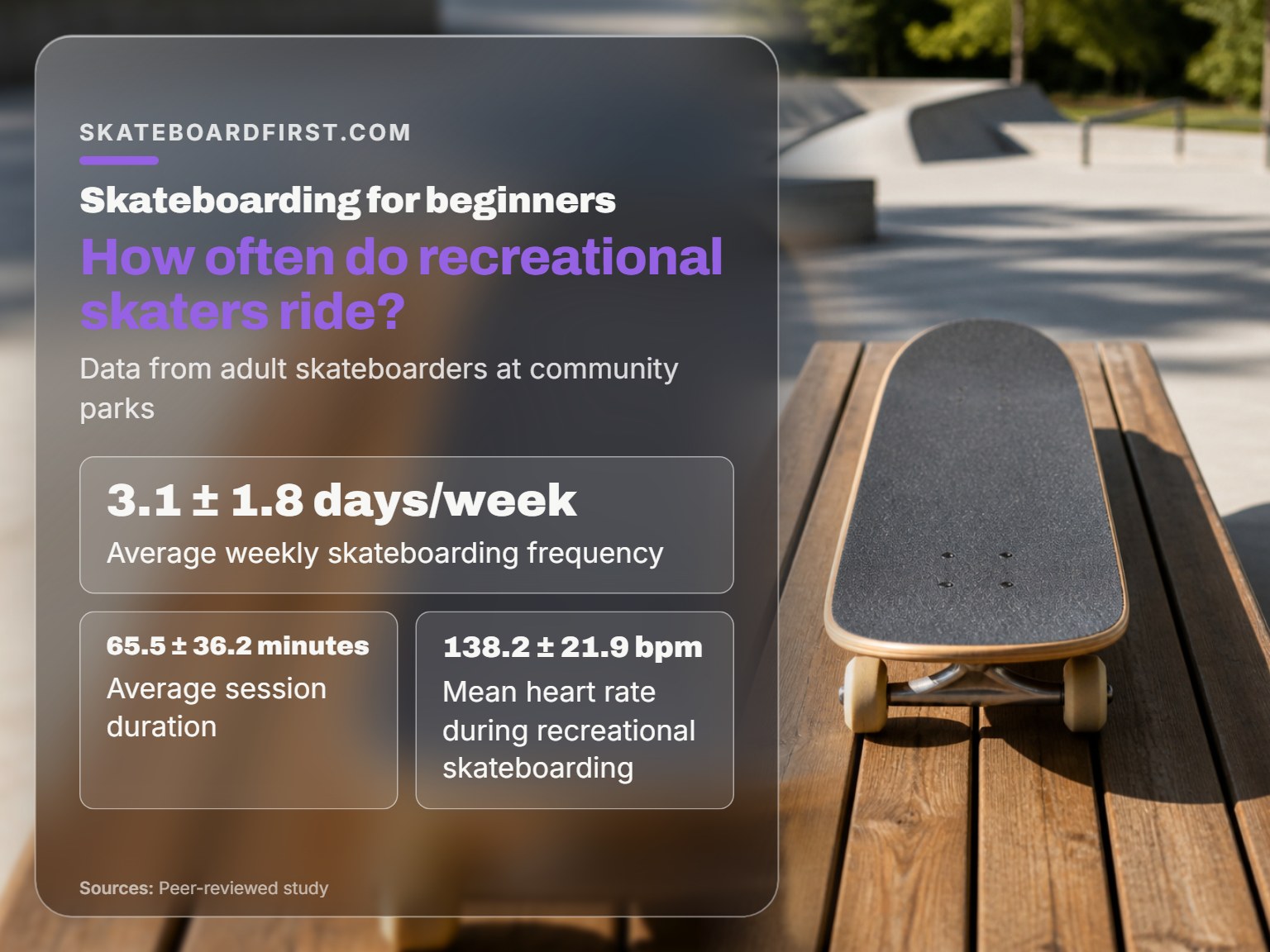
A 2020 study tracking adults at community skateparks found they skated a mean of 3.1 ± 1.8 days per week. That’s not a random number. It’s the natural rhythm that balances enough practice to build muscle memory with enough recovery to let ligaments and tendons adapt.
Adults participating in recreational skateboarding at community skateparks skate for 65.5 ± 36.2 minutes per session and report skating a mean of 3.1 ± 1.8 days/week, spending 70% of that time at moderate-intensity or above.
Your body needs 48 hours to rebuild the micro-tears in muscles that happen when you learn a new physical skill. Skate Monday, and your legs will still be adapting on Tuesday. Skate again Wednesday, and you reinforce the adaptation instead of starting over. Miss a whole week, and you’re essentially relearning the balance from scratch each time, which is why the how often should you skateboard as a beginner advice is so critical to avoiding that one-third of injuries that happen in the first week.
Where this goes sideways: Skating seven days straight as a beginner. Your enthusiasm is great, but your tendons and ligaments don’t adapt as fast as your motivation. By day five, the fatigue masks your form, you start catching edges on simple pushes, and a rolled ankle becomes almost predictable.
I learned this the hard way trying to “make up for lost time” after a busy month. I skated five days in a row, convinced my legs felt fine. On the fifth day, a basic kick-turn I’d nailed weeks before sent a sharp twinge up my outside ankle. I had to take a full week off, exactly the pattern I was trying to avoid. Now I treat rest days as essential parts of the practice routine, not as failures.
How Long Should Each Beginner Session Last?
Aim for 30 to 60 minutes. Less than 30, and you barely get warmed up. More than 60, and mental fatigue sets in, your focus drifts, your pushes get sloppy, and that’s when you catch a wheel on a crack you’d normally see.
The same study that gave us the 3-day frequency also recorded an average session length of 65.5 ± 36.2 minutes. The “± 36.2” is the key: it means for every skater going for a two-hour park session, there’s another calling it quits after a solid 30 minutes of focused driveway drills. Both are valid.
Begin each session with a warm-up, such as pushing back and forth and gentle carves, and end with a cool-down. That leaves 15-45 minutes of actual, focused practice in the middle. That’s your golden window.
If you only have 15 minutes total? Use them. Some adult beginners find value in very short, daily practice sessions to maintain familiarity with the board. One user wrote, “I work full time… I try to do it every day even if it is just 15 minutes… So you can get more comfortable.” That daily touch keeps the neural pathways for balance alive far better than a two-hour weekend binge.
Structuring Your Practice Week for Real Progress
A random “whenever I feel like it” schedule produces random results. A little structure turns your limited time into deliberate practice. Here’s a sample week that balances skill work with essential recovery.
| Day | Focus | Duration | Key Drills |
|---|---|---|---|
| Monday | Foundation & Balance | 40 min | Stationary balance on board, slow pushing, gentle carves, basic tic-tacs. |
| Wednesday | Control & Confidence | 45 min | Pushing with speed control, kick-turns on flat, riding off a low curb, manual practice. |
| Friday | Application & Fun | 50 min | Visit a smooth parking lot or empty tennis court. Practice linking carves, ride over small cracks, try a reverie. |
| Weekend | Active Recovery | 0 min | Walk, stretch, watch skate videos. No board time. Let joints recover. |
This calendar outlines a progression. Monday’s balance work makes Wednesday’s kick-turns possible. Wednesday’s control sets up Friday’s confidence to roll over new terrain. The weekend off lets your subconscious process the skills, and you’ll often come back Monday feeling like you’ve leveled up without touching your board.
The CDC skateboarding activity guide emphasizes starting on smooth, flat surfaces, which is exactly what this schedule builds toward. Rushing to a skatepark on day three is how you get overwhelmed and hurt.
Common mistake: Trying to learn an ollie in your first month. Your brain is still mapping basic balance and foot placement. An ollie requires precise weight transfer you don’t own yet. The board rockets out, you fall backwards, and your confidence takes a two-week hit. Ride comfortably for a month first. Every trick gets easier.
Gear Up Right: How Equipment Affects Your Practice Stamina
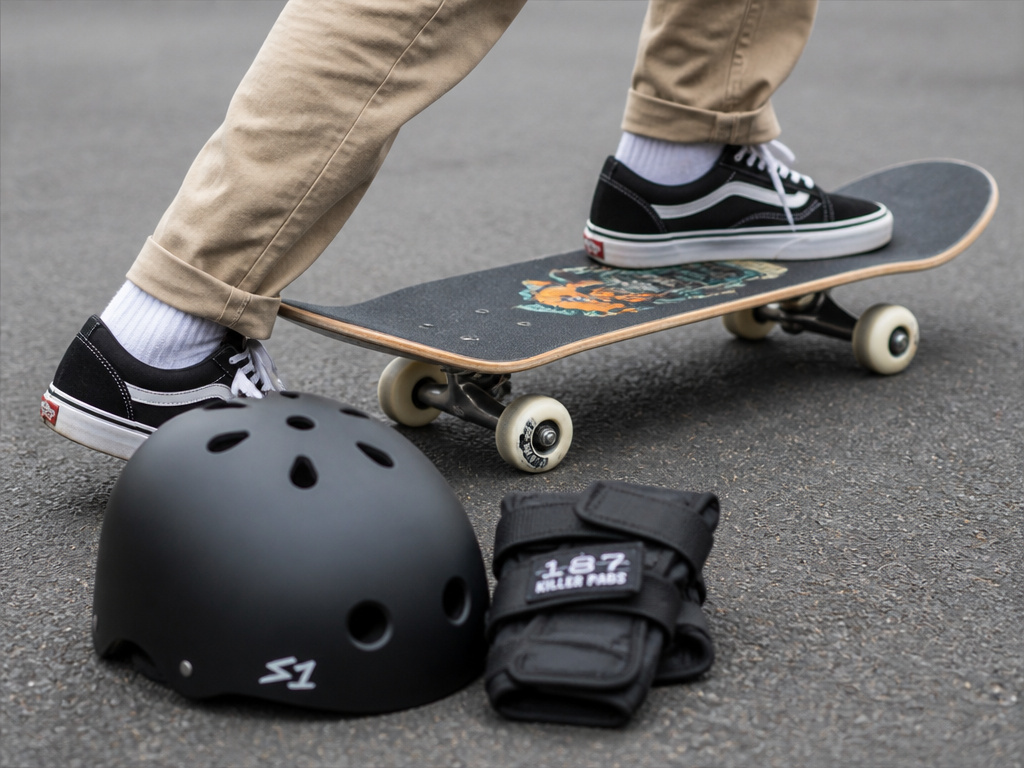
Your board and protective gear directly determine how long and how often you can safely skate. A bad setup cuts every session short with frustration or pain.
A complete skateboard from a real skate brand (I default to Powell-Peralta or Santa Cruz for beginners) has predictable trucks and wheels that roll when you push. A cheap department-store board often has dead, hard wheels and loose, plastic-feeling trucks. You’ll push twice as hard for half the speed, your calves will burn in 10 minutes, and you’ll think you have no talent. That forty-dollar difference is the best investment you can make in your skateboarding practice.
Protection is essential for practicing again tomorrow. The stats from the American Academy of Pediatrics are stark: wrist guards reduce injuries by almost 90%, elbow pads by 80%, knee pads by 30%. A head injury can end your skating altogether. My take? Any certified helmet from a reputable brand is worlds better than none. Get one that fits snugly and wear it every single session.
The Decathlon manual gives us a rare, specific maintenance benchmark: if you skate 4 hours per week, replace your deck every 3 months. A worn deck loses its concave and pop. It becomes mushy and unpredictable, especially when you start attempting ollies. That unpredictability breeds hesitation, and hesitation causes falls. A fresh deck is a confidence machine.
Signs You’re Skating Too Much (or Not Enough)
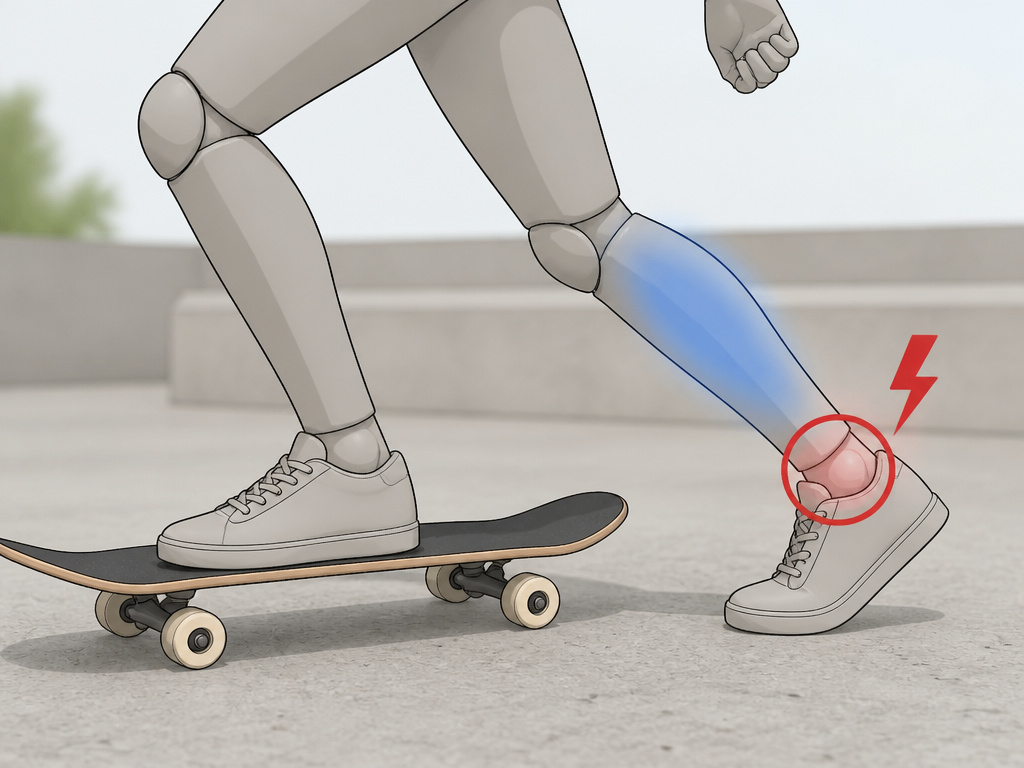
Your body sends clear signals. Learning to read them is the difference between steady progress and a forced two-week break.
Good soreness (keep skating): A dull ache in your calves, thighs, or shoulders that starts 12-24 hours after skating and feels better once you warm up again. This is muscle adaptation. You can skate through it, just maybe dial back the intensity by 20%.
Bad pain (stop and rest): A sharp, pinching pain in your ankles, wrists, or knees that appears during skating and gets worse with each push or attempt. This is often tendon or ligament stress. Take 2-3 full days off. If it returns immediately when you skate again, see a doctor.
Mental burnout (take a break): Dreading your next session, feeling frustrated over simple skills you usually have, or just going through the motions without focus. This means you need a mental rest day. Don’t touch the board for 2 days. Watch skate videos, stretch, or go for a walk. You’ll come back hungry to skate.
The CPSC skateboarding fact sheet warns that “excessive speed can lead to… Falls,” but fatigue is the hidden culprit. When you’re tired, your reaction time slows, your balance corrections are late, and you stop spotting small cracks or debris. That’s how a simple push becomes a sprawl.
Balancing skateboarding with other exercise actually protects your progress. Light cycling or swimming on off days maintains cardio without pounding your skate-specific joints. It’s a cornerstone of a sustainable daily routine.
Adapting Frequency for Adult Beginners with No Time
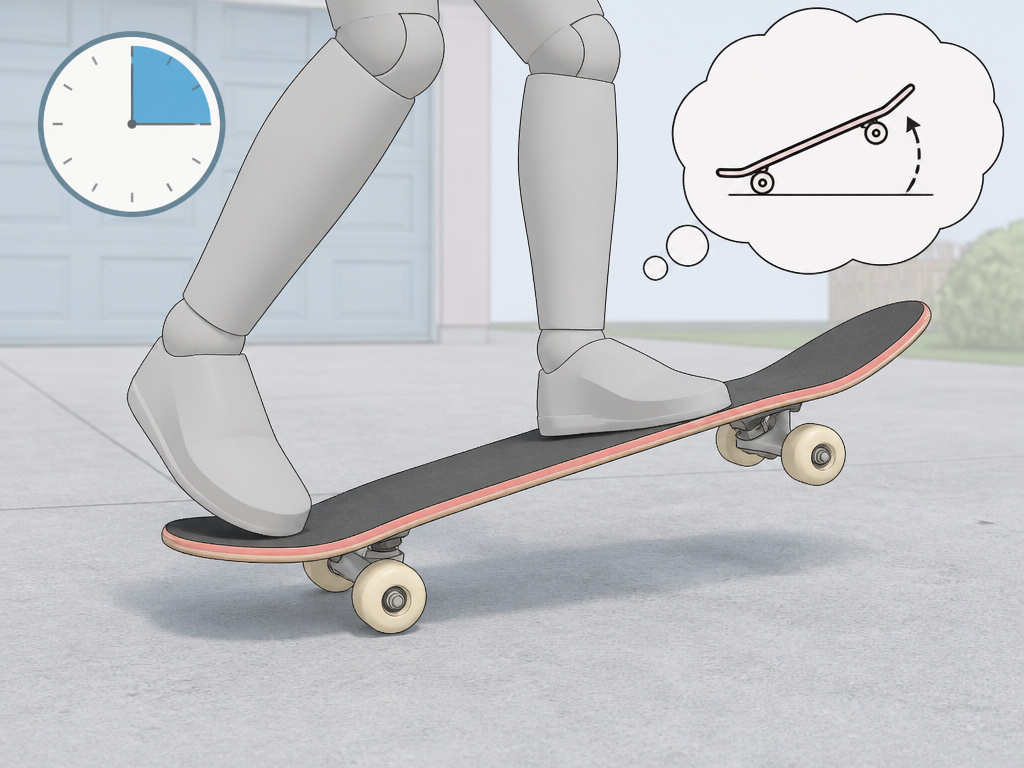
The “ideal” 3-day schedule assumes you have three free afternoons. Most adults don’t. The solution is micro-sessions and ruthless prioritization.
If you have 15 minutes, you don’t have time to “go skate.” You have time for one specific drill. Park in your driveway and practice stationary manuals for 15 minutes. Or do 50 slow, deliberate pushes focusing on foot placement. One skill, deeply rehearsed. This does more for your consistent practice than a vague hour of rolling around once a week.
If you have 30 minutes twice a week, make the first session “foundation” and the second “application.” Tuesday: driveway balance and pushing drills. Thursday: take those skills to a smooth parking lot and link three carves together. This two-step cycle forces you to apply what you learn, which locks it in faster.
The HealthyChildren.org skateboarding guide notes that one-third of injuries happen in the first week. If your time is ultra-limited, consider one 60-minute lesson every two weeks. A coach can spot flaws in your push or stance in five minutes, flaws that might take you six months to self-diagnose. That lesson becomes your focused practice blueprint for the next 14 days.
When to Ramp Up Your Skateboarding Frequency
Don’t add more days or longer sessions just because the calendar flips. Increase your frequency based on concrete milestones, not hope.
Increase your frequency based on your comfort and recovery, not just the calendar.
- You can kick-turn in both directions on flat ground without putting a foot down.
- Your “good soreness” after a session is gone within 24 hours.
Add 15 minutes to your sessions (e.g., 45 to 60 minutes) when:
- You can link three different skills together (e.g., push, carve, kick-turn, stop) without pausing to think.
- You feel mentally sharp at the end of your current session length, not fatigued.
- You’ve gone three weeks without any “bad pain” signals.
This milestone-based approach is the engine for long-term progress faster. It ties progression directly to competence, not calendar pages, moving you past the how often should you skateboard as a beginner phase. Once you’re skating 3 days a week for 60 minutes with no pain, you’ve graduated from “beginner” frequency.
Frequently Asked Questions
Is 25 too late to start skateboarding?
No. The 2020 study on adult skateboarders had a mean participant age of 27.4 years. Your bones are set, but your brain and muscles are fully capable of learning balance and coordination. You might progress slower than a fearless 12-year-old, but you have the patience to practice fundamentals correctly, which pays off later.
How long does it usually take to learn to skateboard?
“Learning” is a spectrum. You can learn to push and ride comfortably in a few weeks of consistent practice. Basic tricks like ollies often take 3-6 months. The full learning timeline is years, which is why focusing on weekly enjoyment beats obsessing over a distant finish line.
Will skateboarding get me in shape?
Yes. The same study found adults averaged a heart rate of 138.2 beats per minute, spending 70% of their session at moderate-intensity or above. That meets CDC cardio guidelines. You’ll build leg strength, core stability, and improve coordination. It’s a full-body workout disguised as play.
Can skateboarding be self-taught?
Absolutely. Most skaters are self-taught. Use online videos, mirror your own stance with a phone camera, and join community forums like r/NewSkaters for feedback. The key is self-correction, if you keep falling the same way, film yourself and compare it to a tutorial to spot the flaw.
Before You Go
One rule most guides skip: if you go more than two weeks without skating as a beginner, drop your expectations back a notch when you return. Your muscles remember, but your fine motor control dulls. Plan a “re-familiarization” session, just pushing and carving, before jumping back into your previous routine.
Your first step is to look at your calendar right now and block out three 45-minute windows over the next seven days. Treat them like doctor’s appointments. That commitment to small, regular practice is what separates those who stick with skating from those who hang the board in the garage after a month.
The gear can wait, the perfect park can wait. Your next session can’t.
