
How Long Does It Take to Learn Skateboarding?
This post contains affiliate links. As an Amazon Associate, we earn from qualifying purchases.
Learning skateboarding takes weeks to months, not days. The American Academy of Pediatrics notes one-third of all skateboard injuries happen in the first week, which is why rushing the timeline is a direct safety risk. A realistic beginner focuses on three core skills, rolling, turning, and stopping, and measures readiness by repeatable control, not elapsed time.
That first-week injury stat serves as a map, not merely a warning label. It tells you where the learning curve is steepest and where your attention should be, not on the clock, but on the physical feedback from the board and your body.
What follows is a breakdown of the phases, the gear that actually helps, and the medical and academic data that reframes the how long does it take to learn skateboarding question into “what next.”
Key Takeaways
- Measure readiness by repeatable control, stable rolling, intentional stopping, predictable turning, not by days practiced.
- One-third of skateboard injuries occur in the first week; gear reduces specific risks by up to 90%.
- Short, frequent sessions build skill faster than infrequent marathons.
- Supervision guidelines conflict: the AAP and Seattle Children’s Hospital say ages 6-10 need close supervision, while a Kmart manual says under 8.
- Electric skateboard confidence takes 8-12 weeks per commercial claims, but peer-reviewed studies show non-linear, individual learning.
Safety Timeline Trumps Learning Timeline
Before you count hours, count risks. The American Academy of Pediatrics skateboarding guide puts a number on the danger zone: one-third of skateboard injuries happen in the first week of learning the sport. That’s not a guess. It’s aggregated emergency room data showing when enthusiasm most often outpaces control.
The gear you wear directly changes that equation. The same AAP sheet states wrist guards reduce injuries by almost 90%, elbow pads by 80%, and knee pads by 30%. A helmet certified to ASTM F1492, the designated skateboard standard cited by Seattle Children’s Hospital, is essential. These percentages represent the difference between a scraped palm and a fractured scaphoid that takes you off the board for months; they are not marketing.
Before you start: A proper helmet must be ASTM F1492 certified. Wrist guards are not optional; a forward fall onto an outstretched hand is a common cause of a serious beginner injury. Knee and elbow pads prevent road rash that can make practicing the next day too painful to continue.
Age adds another layer. Sources disagree on the exact cutoff, but the direction is clear. The AAP and Seattle Children’s Hospital both state children aged 6 to 10 years need close adult supervision. A generic Kmart manual says under 8. The takeaway is that if your skater is under 10, your eyes should be on them, not your phone, not to split the difference at age 9. For children under 5, every source agrees: they should not ride skateboards at all.
The 3-Phase Beginner Timeline (and What “Ready” Actually Means)
Forget “a week like a bike.” Skateboarding is a balance platform that moves independently under your feet. A 2016 single-subject study in the Journal of Autism and Developmental Disorders used Behavioral Skills Training to teach a beginner five discrete skills. The participant required 2-9 training sessions (20-90 minutes total) to master four of them. One skill didn’t reach mastery. This is a controlled, best-case scenario with direct instruction, and it still took multiple sessions per skill.
| Phase | Primary Focus | Realistic Timeframe | Readiness Signal |
|---|---|---|---|
| Acclimation | Standing, stepping on/off, gentle pushing. | Multiple sessions | You can step on the moving board without immediately jumping off. |
| Basic Control | Consistent pushing, gliding in a straight line, foot-braking to a stop. | Weeks of regular practice | You can roll across a parking lot and stop deliberately before the curb. |
| Confident Cruising | Carving turns, managing small cracks/pebbles, controlling speed on mild slopes. | Months of practice | You can navigate a smooth bike path or neighborhood street without panic. |
This table functions as a framework, not a promise. The “readiness signal” column is what matters. If you can’t stop reliably, you’re not ready for Phase 3, no matter how many calendar weeks have passed.
The sensory shift from Phase 1 to Phase 2 is specific. In Phase 1, your brain is yelling “FALLING!” every second. By Phase 2, that alarm quiets. You’ll feel the board’s momentum in your ankles instead of your panicking thoughts. The sound changes too, from the frantic scraping of a dragging back foot to the rhythmic, quiet thump-thump-thump of a confident push.
I framed my first month as three jobs: roll, turn, stop. It took multiple short sessions in an empty parking lot before I stopped bailing on every little crack. The sessions were boring. They were also the only thing that worked.
What Accelerates Progress (And What Stalls It)
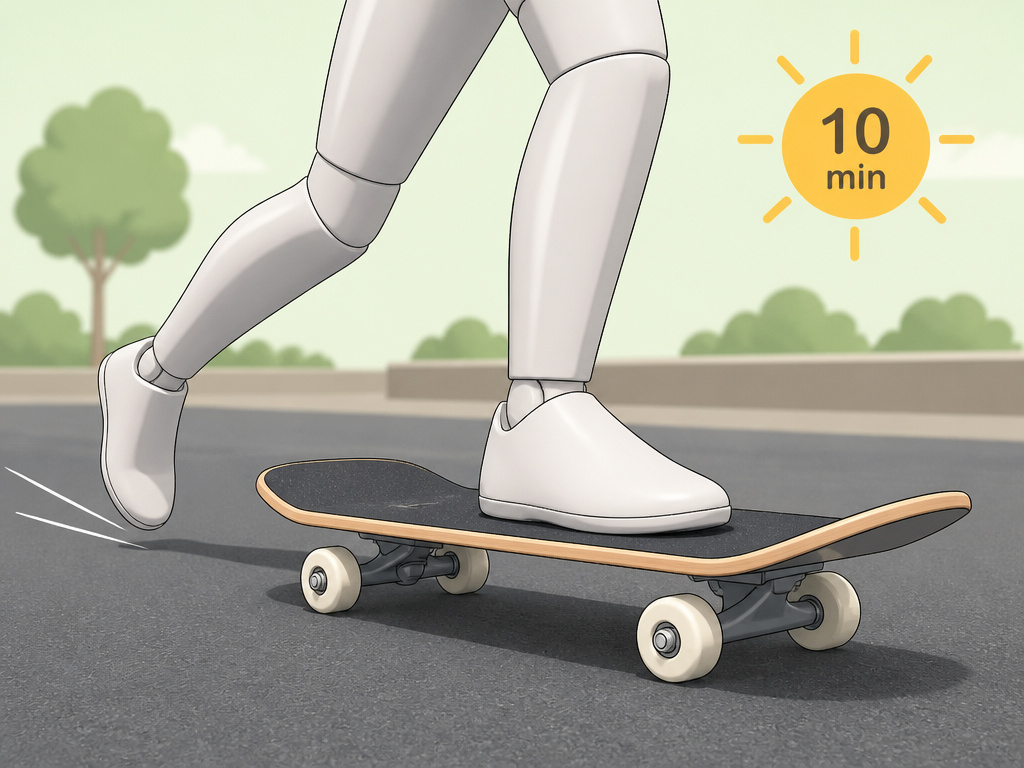
Your practice frequency matters more than your practice duration. Muscle memory and confidence build with consistent, manageable exposure. One long, frustrating session can teach your body to fear the board. Multiple shorter, consistent sessions teach recovery.
The equipment you start on is the single biggest variable nobody talks about. A big-box-store complete with plastic trucks, hard bushings, and rock-hard, small wheels is a trap. The board will feel twitchy and unresponsive, the wheels will vibrate painfully over every pebble, and you’ll assume you’re bad at skating. You’re not. The board is bad at rolling. Invest in a complete from a real skate shop. Investing in a complete from a real skate shop gives you a stable, predictable platform. It’s the difference between learning to chop vegetables with a dull butter knife and a sharp chef’s knife.
Where this goes sideways: Watching tutorial videos instead of skating. I watched about 30 videos before really getting on a board. I could explain an ollie perfectly while being unable to coast across a driveway. Ten minutes of actual pushing taught me more than all of it. Now I tell people to watch one video on stance and pushing, then go outside and be bad at it on purpose.
Here is what a productive early session looks like, in order:
- Gear up. Helmet, wrist guards, knee pads.
- Find a smooth, flat, empty parking lot or tennis court.
- Spend 5 minutes just standing on the board, rocking side to side, stepping on and off.
- Do 10 minutes of pushing: one good push, then put your back foot on the board and glide until you stop.
- Spend 5 minutes practicing a simple foot-brake stop.
- Stop. The goal is to leave wanting more, not exhausted and sore.
This structured practice approach builds the neural pathways without flooding them. It’s how you progress faster.
Electric Skateboards and Longboards: Different Timelines
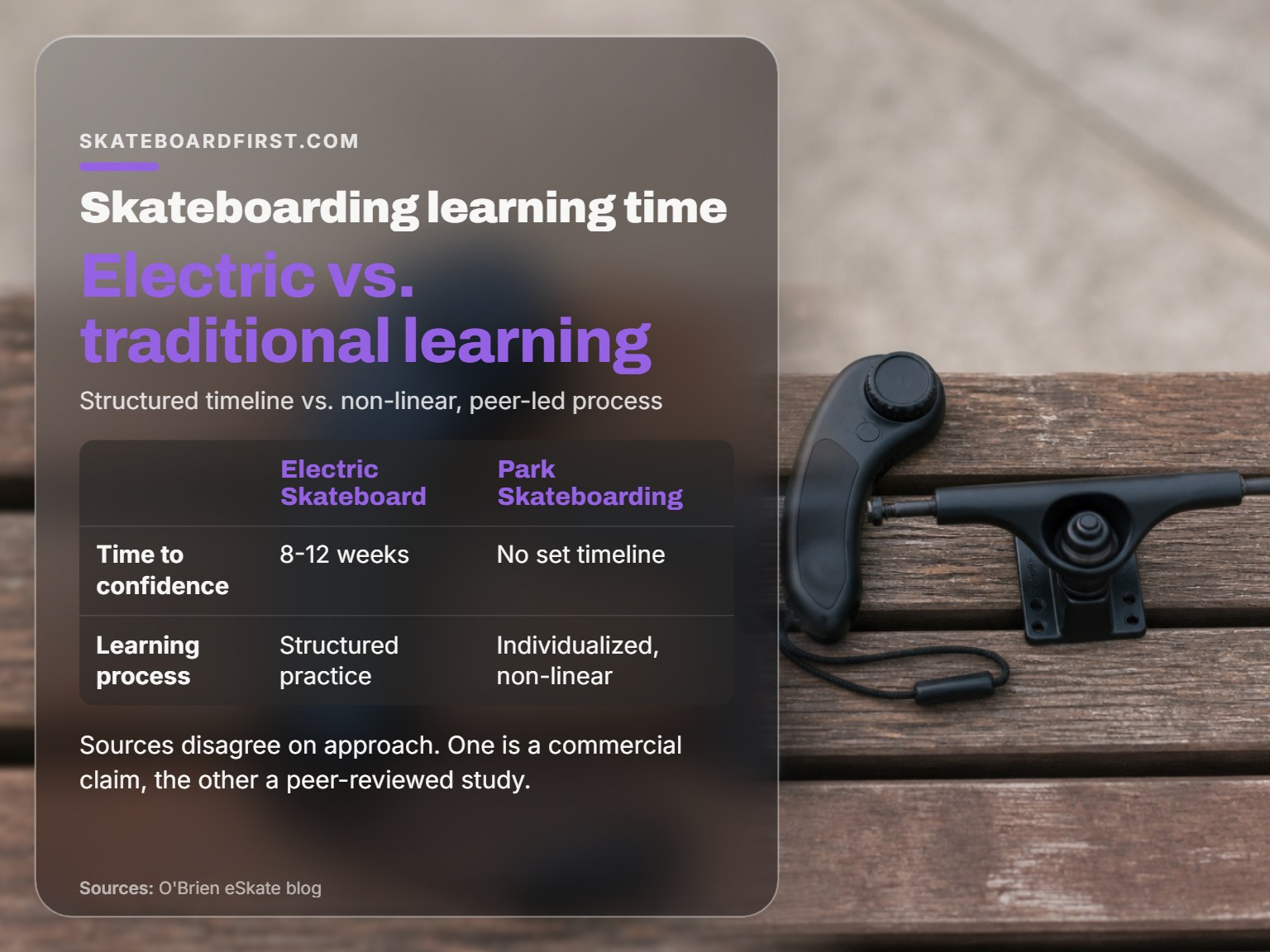
A traditional skateboard and an electric skateboard share wheels and trucks. The learning process is not the same. A commercial blog from O’Brien eSkate claims “true confidence” on an electric board takes 8-12 weeks of structured practice. Meanwhile, a 2022 German qualitative study on park skating in Forum Kinder- und Jugendsport documented a highly individualized, non-linear learning process with no set timeline.
The conflict is the point. The electric skateboard timeline is often front-loaded with fear, the motor adds speed you didn’t create, which can feel like the board is driving you. The 8-12 week claim likely includes the time needed to rewire your brain to trust the remote and manage that borrowed momentum. The peer-reviewed SpringerLink study on park skateboarding learning observed learners relying on immediate trial-and-error and peer feedback, not staged lessons. One isn’t wrong; they’re different sports with different psychological hurdles.
Longboards and cruisers swap the trick-oriented setup for stability and distance. This doesn’t mean you’ve “learned skateboarding” faster. It means you’ve learned that specific tool faster. Switching back to a popsicle deck will feel foreign again.
| Board Type | Primary Learning Hurdle | Time to Basic Comfort | Key Skill Differentiator |
|---|---|---|---|
| Traditional Skateboard | Managing the loose, trick-oriented setup while pushing. | Weeks | Learning to generate your own speed and momentum consistently. |
| Cruiser/Longboard | Adjusting to a longer wheelbase and higher ride height. | Weeks | Building endurance for distance and mastering foot-braking at higher speeds. |
| Electric Skateboard | Trusting the remote control and managing motor torque. | Weeks | Speed management and emergency dismounting without a push-off. |
How to Know You’re No Longer a Beginner
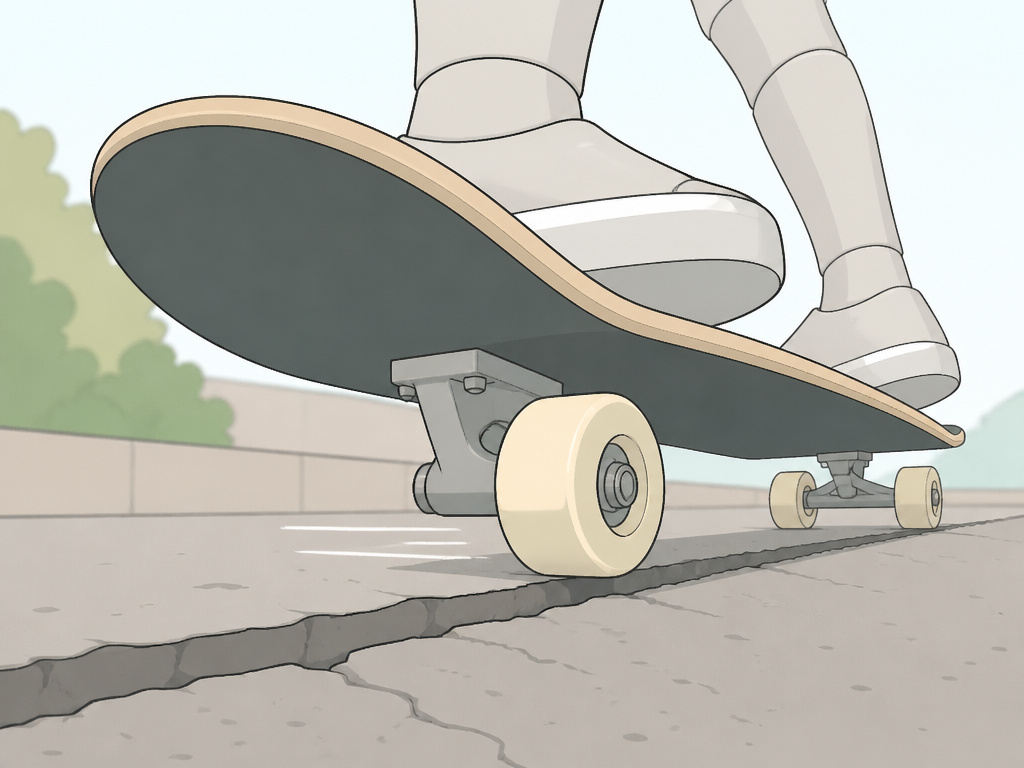
You won’t get a certificate. You’ll get a feeling, a quiet confidence where there used to be noise. It’s less about doing something new and more about not thinking about the old things.
These are the tangible signs you’ve moved out of the beginner phase:
- You step on your board without a three-second mental preparation ritual.
- You spot a crack or pebble ahead and automatically shift your weight or give a light push to glide over it.
- You can ride down a gentle slope without foot-braking the entire way.
- Falling becomes a rare, surprising event instead of a frequent certainty.
- You start to notice the quality of the pavement you’re riding on.
This transition is where tracking your progress shifts from motivating to essential. A note in your phone reading “March 15: rolled the entire length of the school parking lot without putting a foot down” is objective proof. It counters the feeling on a bad day that you’ve learned nothing.
This is also the point where the role of falling in learning changes. Falls become less about balance failure and more about pushing limits, caught on a rail you thought you could slide, or a ramp transition you misjudged. The frequency drops, but the purpose evolves.
Frequently Asked Questions
Can I learn skateboarding in a week?
You can learn to stand on the board and take a few wobbly pushes in a week. Safe, controlled riding that won’t send you to the emergency room takes weeks to months. The AAP’s first-week injury stat exists because people try to cram this timeline.
How long does it take to learn to ollie?
Forget the ollie for your first month, maybe two. It’s an advanced maneuver that requires precise pop, slide, and leveling motions. Most beginners who attempt it day one are just practicing jumping off their board. Master rolling, turning, and stopping first. Your future ollie will be better for it.
Is 30 too old to start skateboarding?
No. Your bones might heal slower and your fear of looking foolish might be higher, but the learning process is the same. The key is embracing a beginner’s guide mentality and committing to short, consistent practice. Many adult beginners find skateboarding later in life.
What’s the best way to teach myself?
The best way to teach yourself is to marry a little knowledge with a lot of repetition. Watch one reputable video on pushing stance. Go to a smooth, empty lot. Practice just that one thing for 20 minutes. Repeat the next day. Your body learns by doing, not watching.
How do I set realistic goals?
You set realistic goals by breaking the huge concept of “learning skateboarding” into tiny, achievable actions. “This week, I will step on my moving board 20 times without falling off.” Next week: “I will push and glide 10 feet without stepping off.” Goals measure action, not time.
The Bottom Line
The question “how long does it take to learn skateboarding” is a trap. It pushes you to watch the clock instead of feeling the board. The real timeline is measured in sessions, not seconds, and is written in the confidence of your push, the reliability of your stop, and the growing silence of your fear.
Start with a board that doesn’t fight you. Wear the gear that keeps you coming back tomorrow. Give yourself permission to be bad at it for a month. The only deadline that matters is the one your own curiosity sets. Now go roll around the block.
