
Types of Skateboards Explained: How to Choose Your First
This post contains affiliate links. As an Amazon Associate, we earn from qualifying purchases.
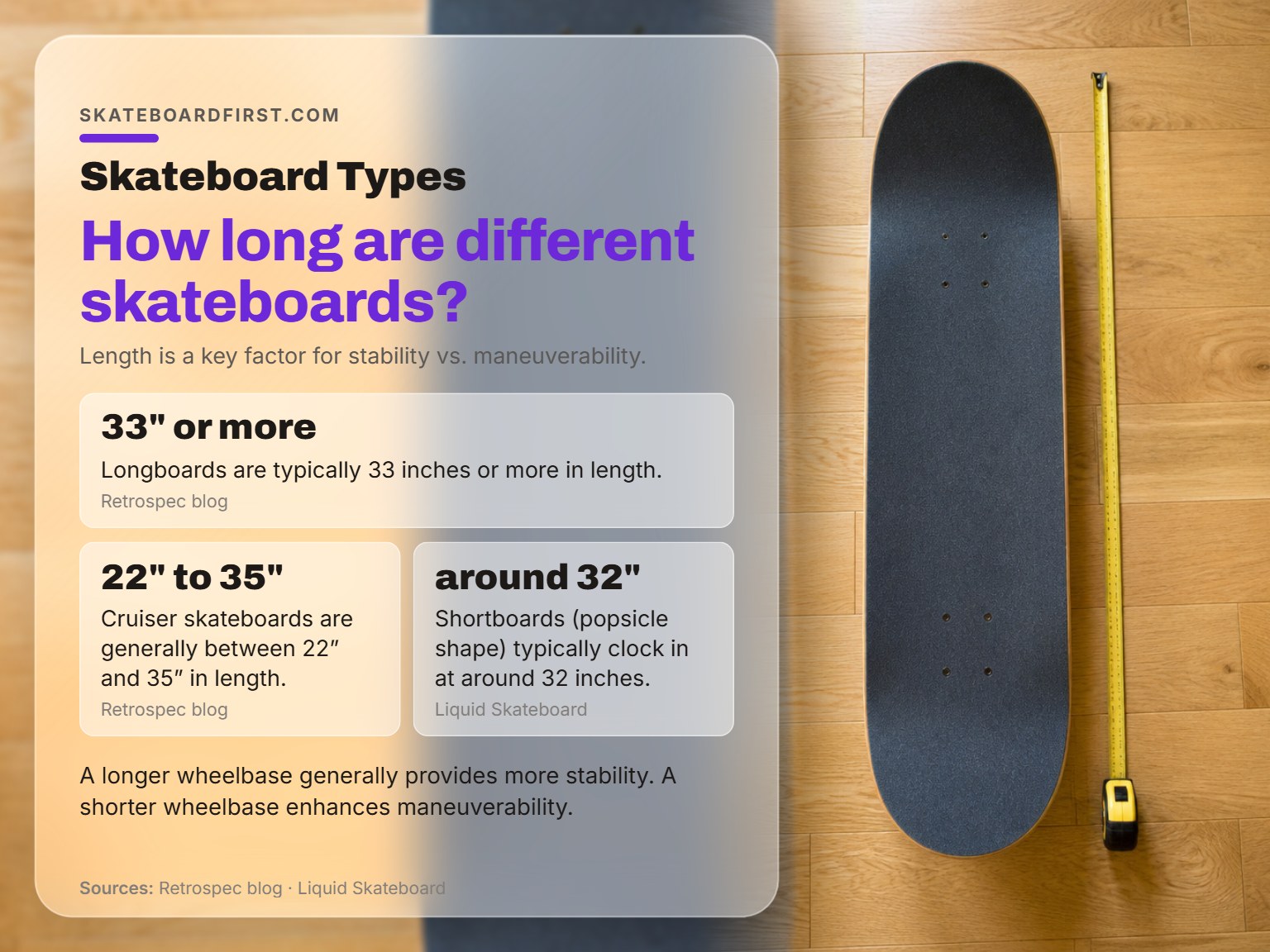
A skateboard is defined by its deck shape and component setup, which dictates its use. The main types are shortboards (popsicle shape) for tricks, cruisers (22-35 inches) for commuting, and longboards (33+ inches) for stability and speed. Old school shapes, surf skates, and penny boards are specialized variants. The right choice depends on whether you prioritize tricks, transportation, or carving.
That answer is the starting point. The real question isn’t just “what are the types?” It’s “what happens when you pick the wrong one?” A board built for smooth park concrete will rattle your fillings out on rough asphalt. A deck sized for flip tricks will feel like a boat if you just want to cruise to class. To understand this, you need the different types of skateboards explained. The differences aren’t marketing, they’re physics.
What follows is a breakdown of each board type, grounded in official specs from municipal parks departments and safety commissions, with the types of skateboards explained. This section explains the 7-ply maple standard, the 76a to 101a wheel hardness scale, and the stability trade-offs that decide whether a board feels planted or twitchy. By the end, you’ll know which board matches the riding you actually plan to do.
Key Takeaways
- The industry standard deck is 7 plies of Canadian Maple wood; toy store boards with inferior materials warp, delaminate, and hinder skill development.
- Urethane wheel hardness spans from 76a (soft, for rough streets) to 101a (hard, for park tricks); softer wheels absorb vibrations, harder wheels slide more easily.
- Cruiser skateboards bridge the gap between transportation and play, but the term is inconsistently applied: Liquid Skateboard defines them as a distinct type with a wider deck and double-kick design, while the Retrospec blog categorizes them between 22” and 35” in length and also as a subtype of longboard.
- For absolute beginners, a complete board from a local skate shop beats a cheap big-box toy every time; the extra forty dollars buys a board that doesn’t make you hate the sport.
- Protective gear is essential; a CPSC-certified helmet can mean the difference between life and death, and wrist guards drastically reduce the risk of fractures.
The 7-Ply Maple Standard
Forget the graphic on the bottom for a second. The first thing to check is what the board is actually made of. According to Portland Parks & Recreation, the industry standard for a deck is 7 plies of Canadian Maple wood. That’s seven thin layers of wood glued and pressed together. A deck should not flex too much when you stand on it, a slight give is fine, but a noticeable sag is a red flag.
Common mistake: Buying a toy skateboard from a big-box store. Portland Parks explicitly states these are made with “materials of inferior quality” and have “weak components that may slow skill development and increase risk of injury.” They recommend participants in their programs do not use them.
I learned this the hard way. My first board was a department store complete. The deck felt dead and soggy, the trucks were made of a chalky, weak metal, and the plastic wheels barely rolled. I thought I just lacked talent. Switching to a basic shop deck made of proper 7-ply maple was like swapping sneakers for ice skates, the board suddenly responded to my weight and movements. The difference wasn’t me; it was the materials.
This construction is why brands like Baker Skateboards tout their “durable 7-ply maple construction.” It’s not a special feature; it’s the baseline for a board that will pop, last, and not snap under a committed adult’s weight. High-performance variants exist, like Girl Skateboards’ Pop Secret construction with carbon-fiber reinforcement or Creature Skateboards’ VX Everslick tech for enhanced durability and slide. But they all start with that 7-ply maple core.
Wheel Hardness: The 76a to 101a Scale
Wheels are the board’s contact point with the world, and their composition is everything. The Portland Parks guide is clear: wheels should be made of urethane, not plastic. Urethane wheels are graded on a durometer scale, which measures hardness. They range from approximately 76a (softest) to 101a (hardest).
| Durometer (Hardness) | Best For | Feel & Consequence |
|---|---|---|
| 76a – 87a (Soft) | Rough streets, cruising, commuting | Absorbs vibrations, rolls over cracks easily, grips the ground. Quieter ride. Slower acceleration in parks. |
| 88a – 97a (Medium) | All-around street, smooth concrete, beginner park | Balanced grip and slide. Versatile for learning pushes, carves, and basic tricks. |
| 98a – 101a (Hard) | Skate parks, technical street tricks, sliding | Fast acceleration, easy to slide and power slide. Feels “slippery” on rough ground. Transmits every bump. |
Softer wheels absorb vibrations. This is the why-layer: urethane compresses over imperfections. A 78a wheel will deform around a pebble or crack, maintaining contact and roll. A 101a wheel is like a hockey puck, it bounces and chatters, transferring all that energy up your legs. That’s why the Portland guide notes softer wheels are easier to skate on rougher streets.
Harder wheels are preferred for smooth skate parks and tricks. They slide predictably during grinds and power slides, and their reduced friction allows you to build speed faster on smooth concrete. There’s a distinct sound difference, too. Soft wheels on pavement make a low hum; hard wheels on smooth concrete have a sharp, fast-clicking sound.
Shortboards (The Popsicle)
This is the default image in most people’s minds. The popsicle shape, named for its symmetrical, rounded ends, is the modern standard for street and park skating. As Liquid Skateboard notes, these classic shortboards typically clock in at around 32 inches, seldom stretching beyond 36 inches. They feature a double kick design with both the nose and tail tilted upward.
The wheelbase of a skateboard is the distance between the trucks. A shorter wheelbase enhances maneuverability, allowing for quick turns and precise control for street skating.
That shorter wheelbase is the key to their trick potential. It reduces the rotational inertia, making the board easier to flick and spin for ollies, kickflips, and shove-its. The stiff deck and harder wheels are built to withstand the impact of landing tricks. If your goal is to learn tricks at a skatepark or street spot, this is your board. Brands like Element and Santa Cruz offer countless popsicle completes.
Where this goes sideways: Buying a popsicle deck because it’s “the real skateboard” when you only want to cruise on bike paths. You’ll be constantly fighting its twitchiness and feeling every bump through those hard wheels. It’s the wrong tool for a relaxed commute.
Longboards: Stability at 33+ Inches
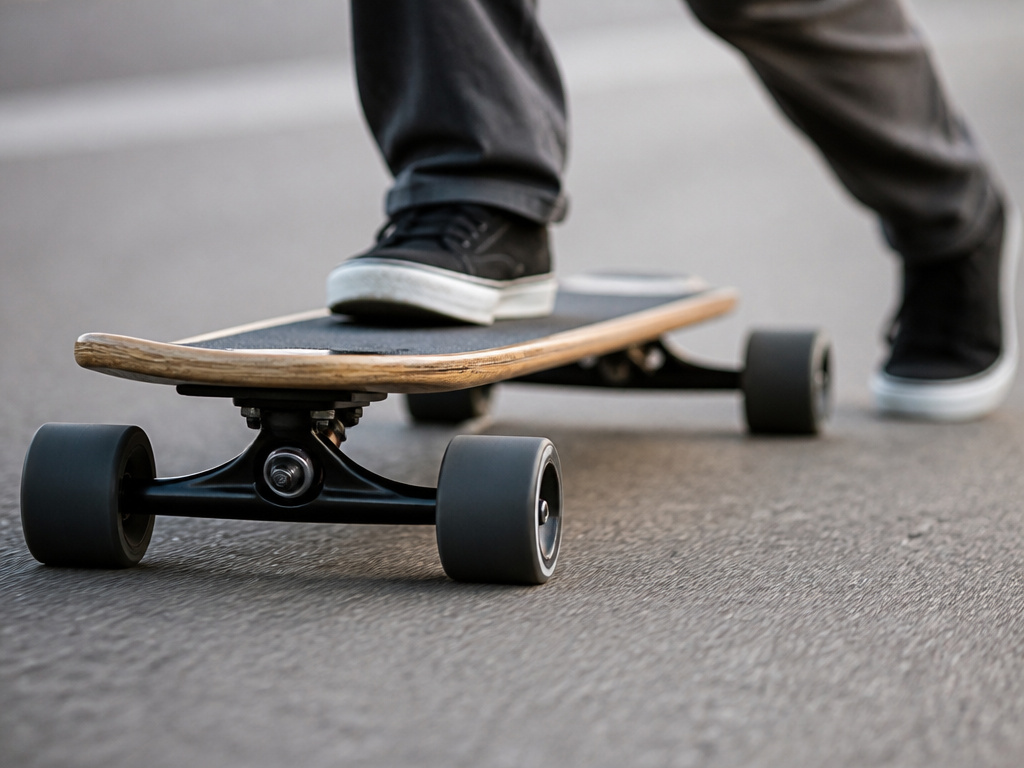
By definition, a longboard is typically 33 inches or more in length. They are the stability specialists.
Their primary advantage is a longer wheelbase. According to Skatewarehouse, a longer wheelbase generally provides more stability. This makes them feel planted at higher speeds and more comfortable for long pushes. The CPSC skateboarding safety fact sheet specifically calls out longer boards as a way to increase stability and reduce the risk of speed wobble.
Longboards are a vast category, with sub-types tailored for downhill racing, dancing, or distance pushing. For a detailed look at those varieties, check out our guide on longboard types. The core takeaway: if you want to go far, go fast, or just feel supremely confident while rolling, you start with a longboard.
The Confusing World of Cruisers
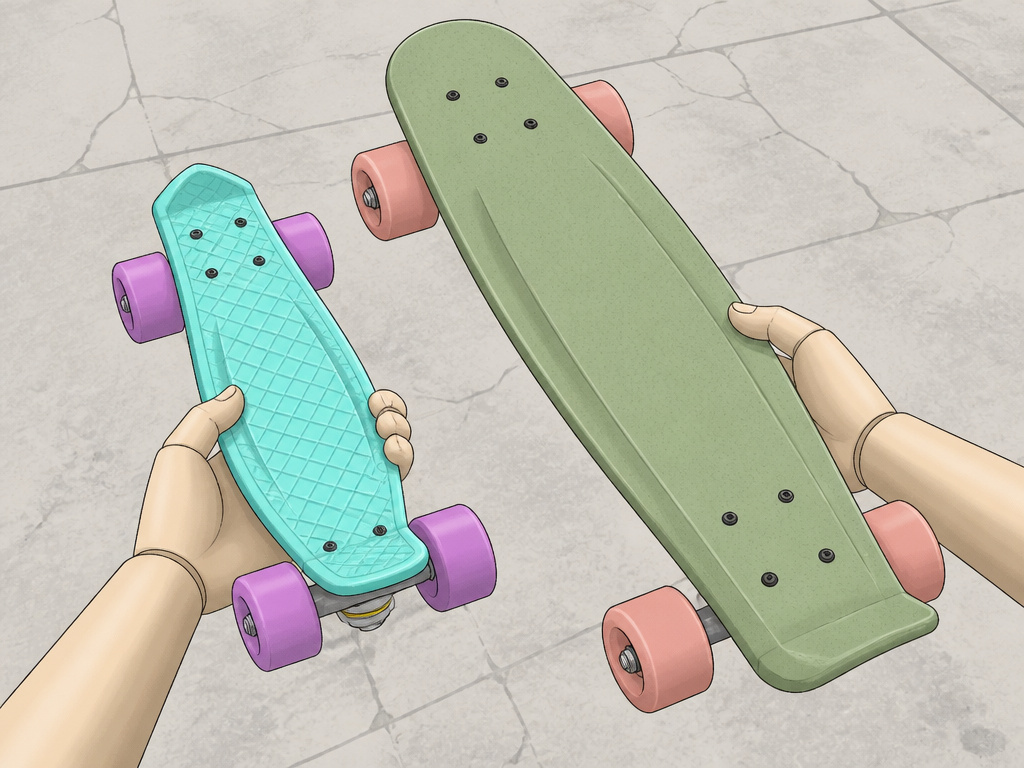
Here’s where the definitions get messy. The term “cruiser” is applied to two distinct board families, and sources disagree.
One source, like Liquid Skateboard, defines a cruiser as a distinct type with a “wider deck, big and soft wheels, and a double-kick design.” Another, like the Retrospec blog, categorizes “Cruiser Longboards” as a subtype of longboard and also lists “Cruiser” and “Mini Cruiser” as separate, smaller categories. This lack of a standardized taxonomy confuses new buyers.
For practical purposes, think of cruisers as transportation-first boards. They prioritize comfort and practicality over technical trick performance. Most share these traits:
- Length: Generally between 22 and 35 inches. This covers a huge range, from a tiny mini-cruiser (22-27″) to a cruiser longboard (33-35″).
- Wheels: Almost always soft urethane wheels (78a-87a) for absorbing road vibrations.
- Kicktail: Most have at least one kicktail to lift the front wheels over obstacles like curbs.
- Deck Shape: Often wider and sometimes with a more squared-off “old school” tail.
They’re big enough to be stable, small enough to be portable, and soft-wheeled enough to handle cracked sidewalks, which is a key point when the types of skateboards explained. For specific model recommendations, our best cruiser board recommendations list is a concrete next step. The difference between skateboard and longboard often comes down to this middle ground.
Old School Decks & Surf Skates
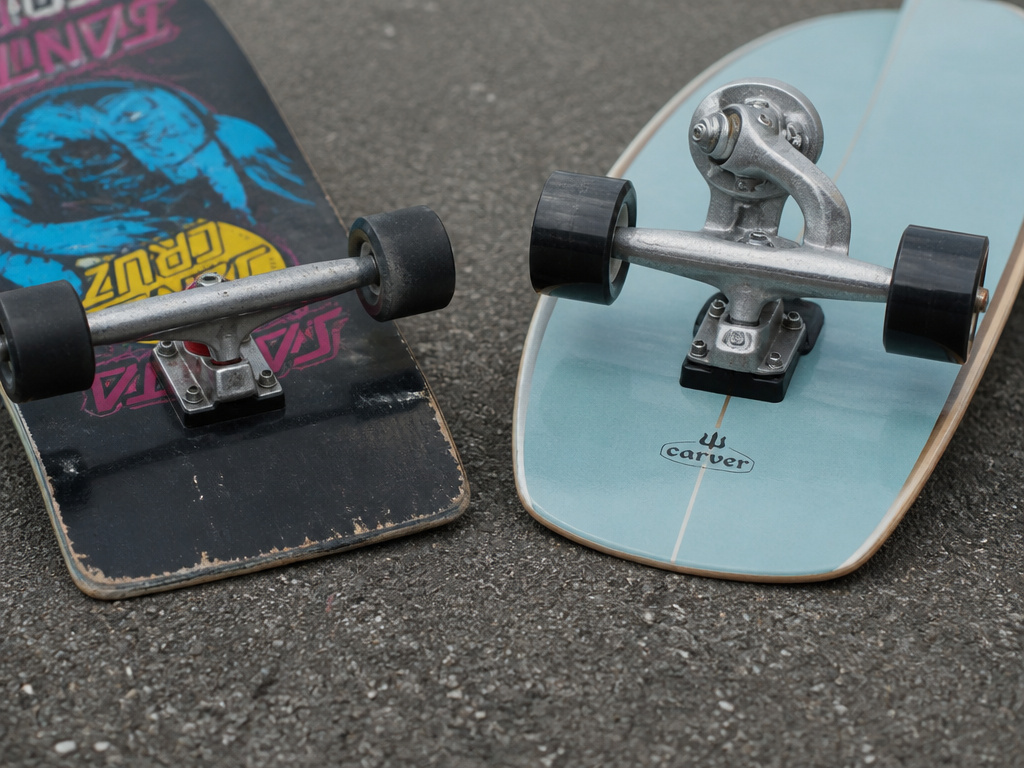
These two types break the standard molds and serve niche, passionate riders.
Old School Decks are a callback to 1980s shapes. Sources describe old school skateboards differently: Skatewarehouse states they feature more squared tails and a smaller nose, while Liquid Skateboard states they are typically wider and feature a more curved and concave design. This shape is popular for cruising and transition (bowl/ramp) skating. You can set them up with hard wheels for park use or soft wheels for comfortable cruising. Their charm is in their unique feel and throwback style. For a direct comparison, see our article on old school vs popsicle deck shapes.
Surf Skates are a relatively new, specialized tool. They are designed to mimic the fluid motion of surfing on pavement. As Liquid Skateboard notes, they often feature a longer wheelbase and wider trucks and a deck that is typically shorter and wider than a traditional skateboard. The magic is in the special front truck, which is extremely loose and high, allowing for deep, pumping carves that generate speed without pushing. They are designed for surf training or expressive street carving. The surfskate vs skateboard comparison is crucial if this unique motion interests you.
Penny Boards & Mini-Cruisers
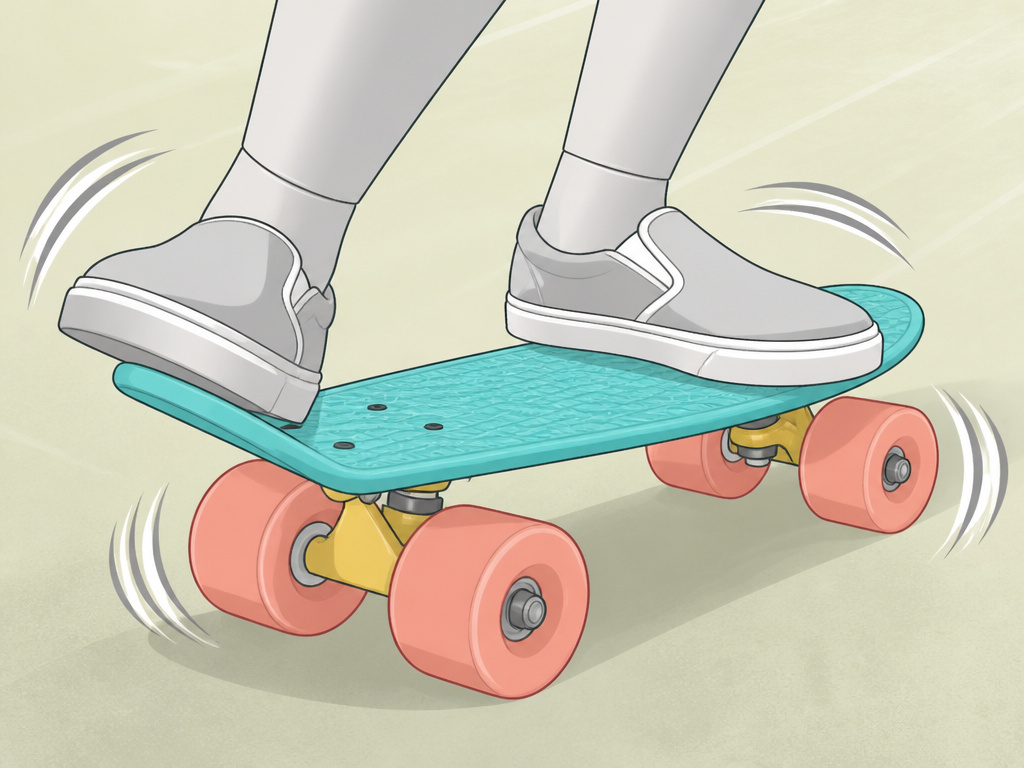
They come with big, soft wheels. Their tiny size makes them incredibly portable, easy to stash under a seat or in a backpack.
Easy to miss: The extremely short wheelbase of a penny board. While the soft wheels suggest stability, the tiny distance between trucks makes them turn incredibly quickly. This can lead to a phenomenon called “speed wobble” at surprisingly low speeds, where the board shimmies uncontrollably. The CPSC warns this can throw a rider in seconds.
They’re great for last-mile transportation on smooth paths if you’re a lighter rider. However, their twitchiness and lack of a functional kicktail make them less versatile than a wooden mini-cruiser. For a detailed breakdown of this trade-off, our penny board vs skateboard guide covers it. Similarly, the mini cruiser vs skateboard comparison will help you decide between plastic and wood for a small commuter.
How to Choose Your First Skateboard
This is where intent matters more than anything else. Ask yourself one question: What do I want to do with this board most of the time in the first three months?
- “I want to learn ollies, kickflips, and skate at the park.” → Get a Popsicle Complete with harder wheels. Look at our picks for beginner skateboards.
- “I need to get around campus or the neighborhood comfortably.” → Get a Mid-Size Cruiser with soft wheels and a wider deck for stability.
- “I want to cruise for miles, maybe go down gentle hills.” → Get a Longboard with soft wheels.
- “I want to practice surf-style carving on flat ground.” → Research Surf Skates (understand they are a specialty tool, not a general-purpose board).
Once you’ve picked a type, buy a complete setup from a skate brand or, even better, a local skate shop. The Portland Parks skateboard specifications document is a perfect benchmark: metal trucks with a name brand, urethane bushings (not hard plastic), and urethane wheels. This ensures every component is purpose-built and will work together. Mixing a cruiser deck with hard park trucks defeats the whole point.
Safety & Setup Are Part of the Type
The board type influences your safety setup. A longboard meant for speed demands a snug, certified helmet more than a penny board puttering to a cafe. But the CPSC guidelines are universal: wear protective gear when riding, especially a helmet. Wearing a helmet can mean the difference between life and death.
Beyond the helmet, the board itself needs a pre-ride check, especially as you move between types. The CPSC advises: Inspect/adjust your board before you ride. Check for excessive play (looseness) and any broken or cracked parts. This is critical for longboards where speed wobble is a risk. Keep trucks, wheels, nuts, and mounting screws tightened properly to improve stability at higher speeds.
A final, often-overlooked tip from Portland Parks: Skateboards are made of wood and can warp or delaminate when exposed to drastic changes in temperature or climate. Don’t leave your board in a hot car or a damp garage. That 7-ply maple needs a little care.
Frequently Asked Questions
What are the three main types of skateboards?
The three core categories are Shortboards (popsicle shape, for tricks), Cruisers (for commuting and casual riding), and Longboards (33″+ for stability, speed, and distance). Specialty types like Old School, Surf Skates, and Penny Boards fit within or between these categories.
What is the difference between a cruiser and a longboard?
The line is blurry, but generally, a longboard is defined by length (33″+), while a cruiser is defined by purpose (transportation).
Is a penny board a good first skateboard?
For most beginners, no. While portable and fun, their very short wheelbase and tiny platform make them twitchy and unstable, especially as speed increases. A slightly larger wooden mini-cruiser offers much more stability and control for a first-time rider.
What type of skateboard is best for beginners?
It depends on their goal. If they want to do tricks, a popsicle complete from a brand is best. If they want to ride around for fun and transportation, a cruiser deck with soft wheels is more forgiving and comfortable. Avoid toy-store boards.
Can you do tricks on a longboard?
Traditional longboard shapes (pintail, drop-through) are not designed for ollies or flip tricks due to their lack of kicktails, length, and flex. However, some “freestyle” or “dancing” longboards have kicktails and are used for a different set of technical maneuvers like shove-its, cross-steps, and manuals.
What does “old school” mean in skateboards?
“Old school” refers to deck shapes popular in the 1970s and 1980s, characterized by wider widths, more squared-off tails, and often a more pronounced, single-kick shape (one raised tail). They are often used for cruising, bowl skating, or for their retro aesthetic.
Before You Go
Ignore the hype and the graphics. Your first board decision comes down to matching a tool to a task. If you only take away one thing, let it be this: walk into a local skate shop and tell them what you want to do. A shop will point you to a complete setup that fits, often for the same price as a generic online order, and they’ll ensure the trucks aren’t cranked down to concrete and the wheels spin.
The board you actually ride is infinitely better than the “perfect” one you overthink. Start small, then build. Trust the process, one session at a time. And for the love of your tailbone, wear the helmet.
