
What to Keep in a Skate Tool Kit: The Pro-Packed Checklist
This post contains affiliate links. As an Amazon Associate, we earn from qualifying purchases.
A complete skate tool kit needs three layers: a core multi-tool (T/Y-tool), a set of spare parts (bearings, bushings, hardware), and a few non-tool essentials like water and first-aid. The goal isn’t to carry a hardware store; it’s to have what you need to fix a loose truck, swap a blown bearing, or tighten a bolt before your session ends.
That core tool is your first line of defense. Everything else in the kit supports it or covers what it can’t fix. A kit that’s too heavy gets left in the car; one that’s too light means walking home early. A key decision is what to keep in a skate tool kit.
What follows is the pro-packed checklist for the what to keep in a skate tool kit question, broken into what you must have, what’s smart to have, and what you can safely leave behind. It covers everything from standard skateboards to electric boards with unique hardware.
Key Takeaways
- Your core skate tool is essential, a T/Y-tool with sockets for axle and kingpin nuts, plus a screwdriver. The Rollerblade Bladetool is a 97mm long 4mm hex key made of zinc-coated steel.
- Always carry spare bearings and hardware, one blown bearing or lost bolt can end a session. Reddit users consistently list these as bag essentials.
- For roller derby or aggressive skating, add a larger wrench for toe stops; skate tools often lack the torque to tighten them securely, per r/rollerderby discussions.
- Organize by scenario, a pocket kit for the park differs from a car kit for all-day travel. Electric skateboards need specialized tools most standard kits ignore.
- Lube bearings only after a full clean, squeezing speed cream into dirty bearings concentrates grime and can make things worse, a point stressed in skate maintenance forums.
The Core Skate Tool (T/Y-Tool)
This isn’t just a wrench. It’s the one thing that keeps your board rideable. A dedicated T or Y-shaped tool combines the sockets you need, usually 3/8″, 5/16″, and 10/32″, with a Phillips or Allen head screwdriver in a single, pocketable chunk of metal. The convenience is the whole point.
A T-tool or Y-tool is the go-to multi-tool for most skateboarders, designed to handle axle nuts, kingpin nuts, and mounting hardware. Substitutes like individual wrenches and screwdrivers work but are far less convenient to carry.
The Decathlon support page is explicit: use your T-Tool to loosen the axle nut to free a wheel, but only slightly, just enough for the wheel to spin without coming off the truck. That specific instruction matters. It’s the difference between a quick adjustment and a lost wheel bouncing down the street.
If you don’t own a dedicated tool, you can substitute with a Phillips Head Screwdriver #2 or 1/8″ Allen head, plus 3/8″, 5/16″, and 10/32″ sockets or wrenches. But carrying that loose collection is a hassle. You’ll lose pieces. A proper skate tool consolidates everything.
Pick one good multi-tool and stick with it. SkateboardersHQ notes that the Ace AF1 Skate Tool includes a hidden axle re-threader, while other tools like the Prime8 and Silver lack a re-threader, and the Zeato is the cheapest but feels flimsy. It includes a hidden axle re-threader. The Unit Skate Tool is a 5-in-1 tool with a removable slide-out screwdriver.
Spare Parts You’ll Actually Use
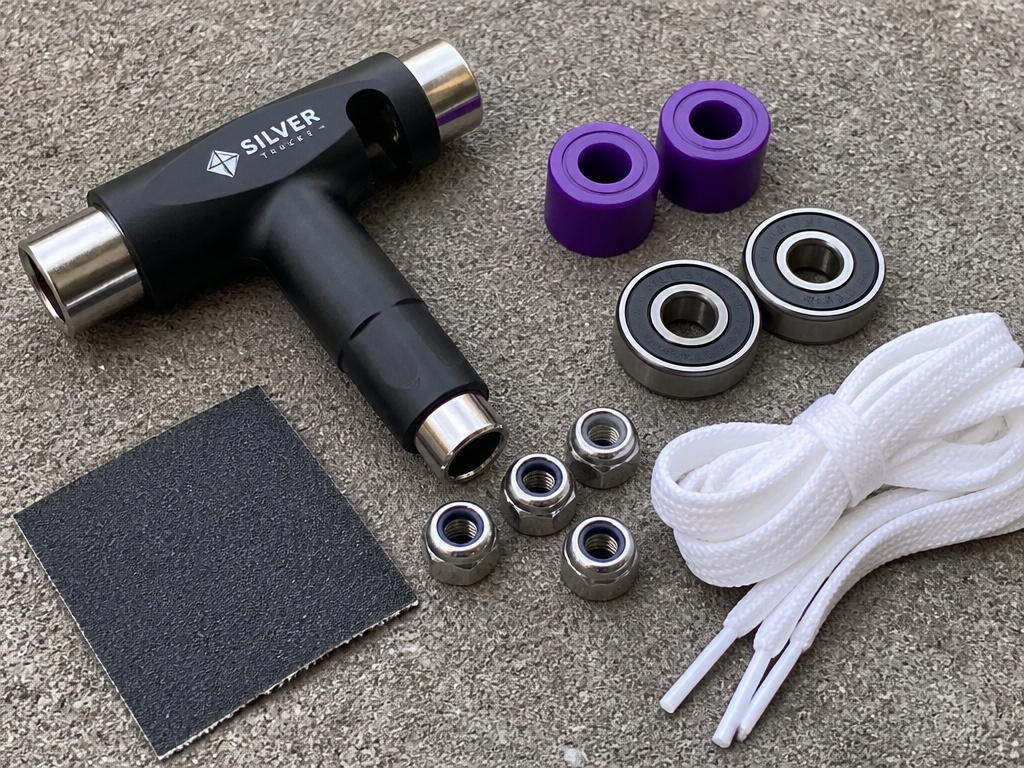
Your tool can tighten and loosen, but it can’t replace what’s broken or lost. This is where most pre-packaged kits fall short. They give you the wrench but not the consumables you’ll burn through.
| Spare Part | Why It’s Essential | How Many to Carry |
|---|---|---|
| Skateboard Bearings | A single seized bearing kills a wheel. Swapping it out takes two minutes with your tool. | Enough for one wheel |
| Axle Nuts & Hardware Bolts | These rattle loose and get lost. | A full set |
| Bushings | Worn or split bushings change how your board turns. Having a spare pair lets you tune on the fly. | A spare pair |
| Shoe Laces | Concrete eats laces. A snapped lace stops your session cold. | A spare pair |
| Grip Tape | Not for full application, but a small sheet for patching razor-sharp tears or holes. | A small sheet |
Reddit threads on skate bags unanimously list these items when discussing what to keep in a skate tool kit. Reddit users commonly list skate tool, wax, spare parts (bolts, bearings, bushings), water, and first aid items as bag essentials. That’s the voice of experience. They aren’t carrying a bearing press or a heat gun, just the small, light things that fail regularly.
Where this goes sideways: Adding lube to dirty bearings. As noted in a roller derby tech discussion, bearing lube should only be used after tearing down and properly cleaning bearings. Forcing lube into a grimy bearing just creates a abrasive paste that accelerates wear.
You’re not looking for performance here; you’re looking for a wheel that rolls so you can skate home. The same logic applies to hardware, it just needs to be the right thread and length.
Hex Keys & Specialty Wrenches
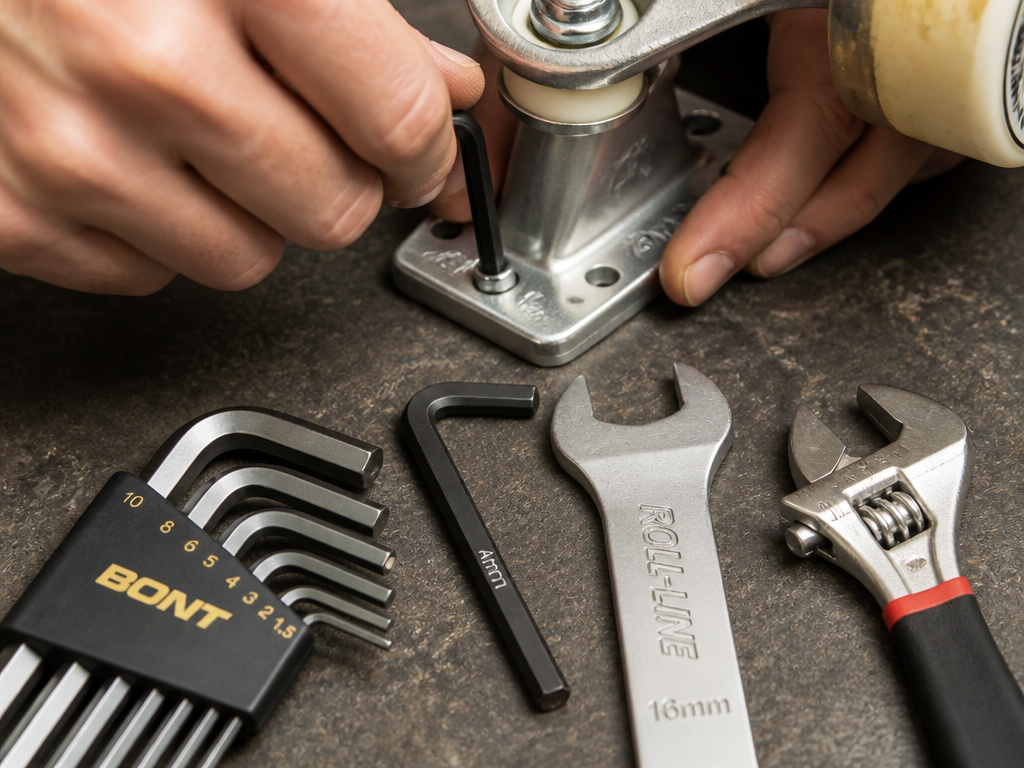
The kingpin nut on your trucks might be a standard socket size, but the locking screws, toe stop bolts, and frame plates often aren’t. That’s where hex keys come in, and you need both standard and metric sets. Plates vary.
Rollerblade makes this point directly with their Bladetool. It’s a single-purpose, 97mm long 4mm hex key made of zinc-coated steel, designed specifically for their axle bolts and frame hardware. For Roll-Line skate owners, the need is even more model-specific. Their Super Pro 6 Wrench Tool Kit includes a 16mm king pin removal wrench., and the Super Pro 4 kit includes a 4mm Allen L wrench for king pin locking screws on Giotto, Spin, Ring, and Raffaello models.
| Tool Type | Common Sizes | Used For |
|---|---|---|
| Allen/Hex Keys (Metric) | 4mm, 5mm, 6mm | Kingpin locking screws, toe stop bolts, frame plates (common on inline/derby skates) |
| Allen/Hex Keys (Standard) | 1/8″ | Some truck mounting hardware, older skate components |
| Specialty Wrenches | 13mm, 16mm | Kingpin removal (Roll-Line), toe stop nuts |
| Tube/Box Wrenches | 11-17mm | Tight spaces where a standard wrench won’t fit |
If you skate roller derby or use adjustable toe stops, listen to the r/rollerderby advice: carry a bigger wrench. Skate tools often can’t generate enough force to really crank a toe stop tight. A separate crescent wrench or a dedicated size solves that.
This is also the category where electric skateboards diverge. As SkateboardersHQ notes, e-boards “sometimes have unique hardware that can’t be adjusted with a skate tool.” Their motors, mounts, and battery enclosures might need Torx drivers, specific Allen sizes, or even a soldering iron for wiring repairs. Your standard kit won’t cover that.
Grip Tape & Deck Maintenance
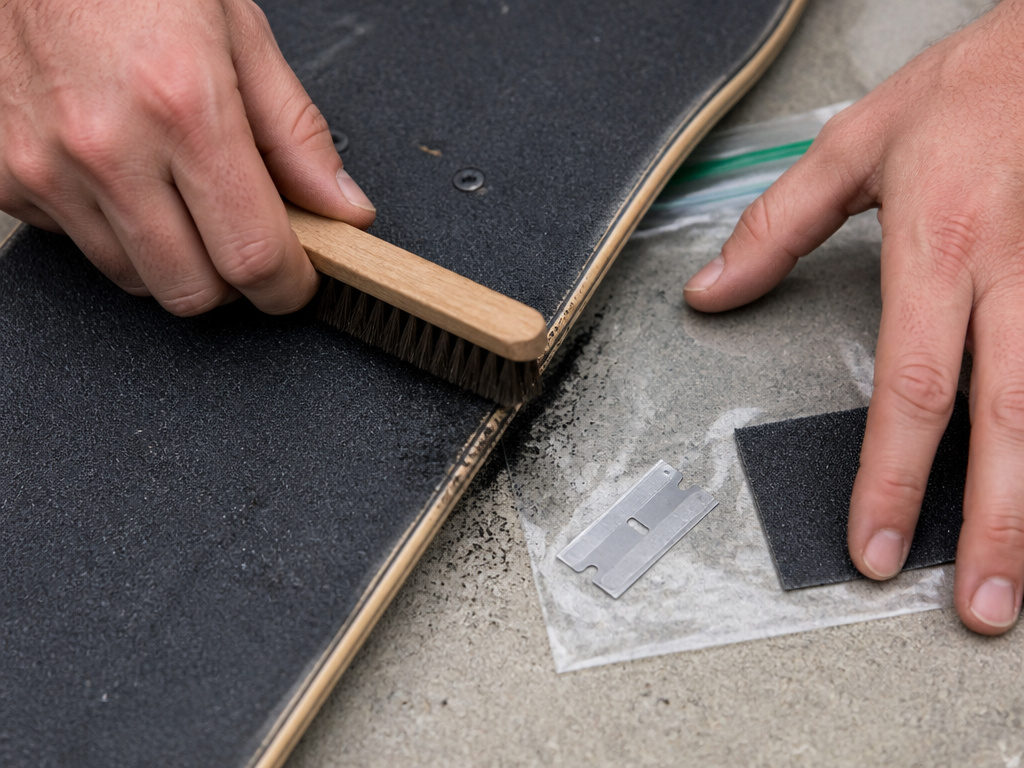
A skateboard deck is a consumable. Decathlon’s support page gives a clear timeline: if you skate 4 hours per week, replace your deck every 3 months. You won’t carry a spare deck in your kit, but you can carry the tools to keep your current one functional and safe.
The essentials here are a grip tape cleaner (a stiff-bristle brush or a specific rubber block), a razor blade or knife, and a small piece of spare grip. The cleaner removes dirt and mud that kills traction. The razor is for trimming loose, frayed edges that catch your shoes or for cutting out a patch if a chunk of grip gets torn out.
A file is useful but not essential. Some multi-tools, like the Prime8, include a grip-tape file. Its job is to roughen up worn, slick spots on your grip, bringing back some bite. It’s a nice-to-have for a park session, but you can manage without it.
The mess factor is real. Grit and adhesive residue get everywhere. Keep your grip tools in a separate small pouch or ziplock bag inside your kit. It keeps the black dust off your bearings and your hands relatively clean.
The Non-Tool Essentials
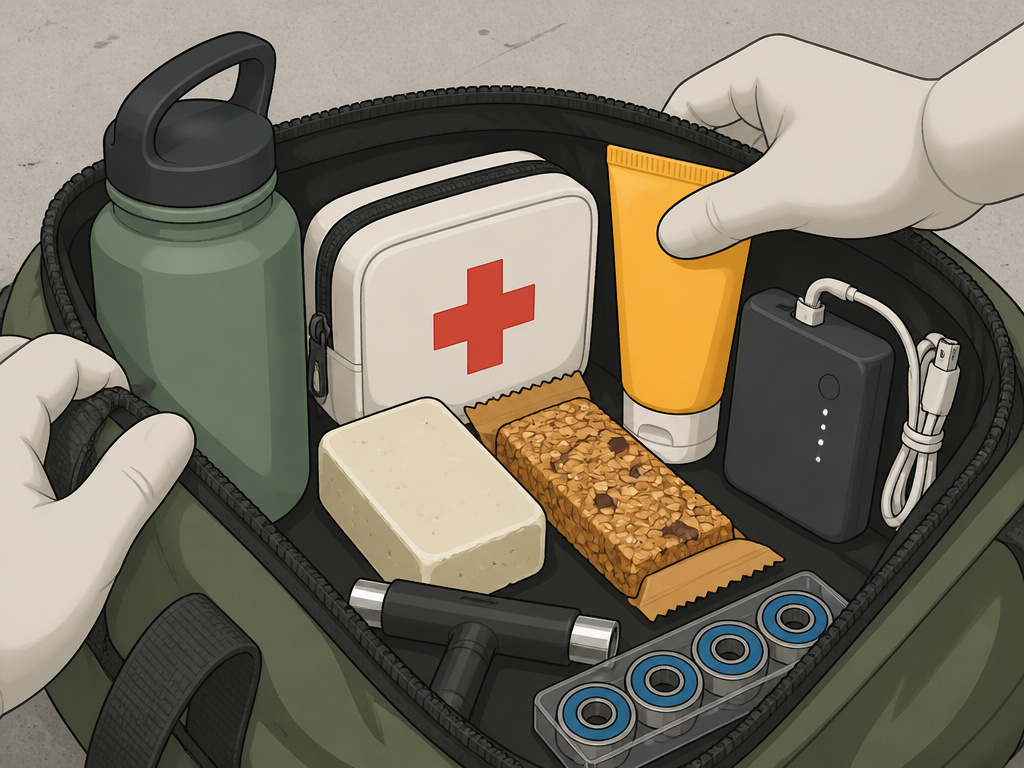
Your kit fixes your board. These items fix you, or at least keep you going. They transform a bag of tools into a session-sustaining system.
- Water: This is the most-mentioned item in every skate bag thread. Dehydration leads to fatigue and sloppy skating. A reusable bottle is best.
- First-Aid Kit: Keep it small. Band-aids, antiseptic wipes, and butterfly closures for scrapes and cuts. Some skaters add a compression knee sleeve or wrist guards here.
- Wax: For ledges and curbs. A small chunk of skate wax doesn’t take up space.
- Sunscreen & Bug Spray: For long outdoor sessions. Spray versions are easiest.
- Snacks: A granola bar or some trail mix. Low blood sugar makes learning new tricks impossible.
- Portable Phone Charger: For music, filming clips, or calling for a ride if something breaks irreparably.
Reddit users commonly list skate tool, wax, spare parts (bolts, bearings, bushings), water, and first aid items as bag essentials. That’s the level of detail that keeps a skater self-sufficient.
Notice what’s not on the list? A full set of shop tools. You don’t need a bench vise, a bearing press, or a torque wrench at the park. The goal is portability and solving immediate problems.
Electric Skateboard Considerations
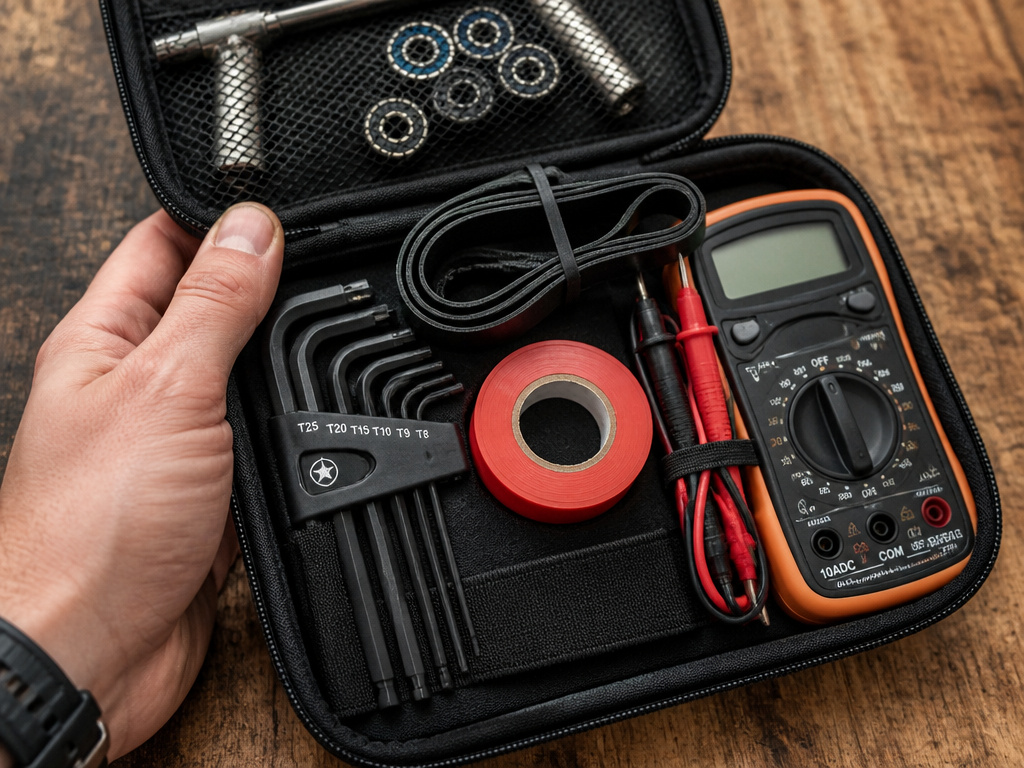
The standard toolkit assumptions break down here. An electric skateboard isn’t just a deck with trucks; it’s an electromechanical system with a battery, motor, controller, and often proprietary fasteners.
Your maintenance concerns shift from bearing noise to battery health and motor mount integrity.
You’ll likely need:
- Specialized Hex/Torx Keys: For motor mounts and enclosure screws.
- Electrical Tape & Heat Shrink: For minor wire insulation repairs.
- Multi-meter (for advanced users): To diagnose battery or connection issues.
- Spare Belts (for belt-driven boards): These wear out and can snap.
Your standard skate tool won’t touch these jobs. Building a kit for an e-board means consulting your specific board’s manual and adding the tools it calls out. It’s a separate, more technical layer on top of the standard skate toolkit.
How to Organize Your Kit
A jumble of parts in the bottom of a backpack is not a kit. It’s a frustration. Organization turns a collection into a system you’ll actually use.
For a Pocket/Park Kit: This is minimalism. A single multi-tool, 2 spare bearings, 4 axle nuts, and a pair of laces. It all fits in a small cloth pouch or even your pocket. The Ace AF1 tool is good for this, it’s compact and has that re-threader.
For a Car/Full-Day Kit: This is your preparedness bag. Use a small tool roll or a dedicated compartment in your skate backpack. Group items by type:
- Tools: Multi-tool, hex key set, larger wrench in a separate sleeve.
- Spares: Use small plastic bags or pill organizers for bearings, bolts, and bushings.
- Consumables: Wax, grip cleaner, lube in another bag.
- Essentials: Water bottle, first-aid, snacks in the main compartment.
The mesh bag suggestion from Reddit is smart for pads and helmets, as it lets everything air out and dry, preventing mildew. Apply the same logic to your tool pouch; don’t seal sweaty tools in plastic.
The best skate tools are ones you’ll actually carry. A giant, heavy kit left in your closet helps nobody. Start with the pocket kit and expand only if you find yourself constantly needing more.
Grip Tape Maintenance
A grip file or a simple piece of griptape can refresh the surface of your board. For a deeper clean, a rubberized grip tape cleaner can pull up dirt. A razor blade is handy for trimming excess grip tape after a fresh application or for cutting out small, damaged sections. Keeping your grip in good condition ensures your feet stay planted, which is a basic safety requirement. These items take up almost no space in a bag but can make a big difference in how your board feels underfoot.
Lubricant/Bearing Lube
A small bottle of bearing lubricant is a smart addition for anyone who maintains their own gear. It should only be used after tearing down and properly cleaning bearings. Applying lube to dirty bearings will just trap grit inside and cause more damage. A drop or two on each bearing after cleaning will keep them rolling smoothly and quietly. This extends the life of your bearings and can save you money on replacements over time.
Super Glue
Super glue is a classic quick-fix item for any skate bag. It’s perfect for repairing small cracks in shoe soles, reattaching a loose piece of rubber, or securing a separated layer of your board’s nose or tail. It can also temporarily hold a loose bolt thread or a small piece of hardware in place until you can get a new bolt or piece of hardware. While it won’t fix major structural damage, it can get you through a session without a catastrophic failure.
Frequently Asked Questions
What is the one tool I must have?
T-tool or Y-tool. It combines the wrench sizes for your axle nuts and kingpin nut with a screwdriver for your hardware. Only this tool allows you to make every critical adjustment on the spot. The how to use a T-tool guide walks through each function.
How often should I check my hardware?
Before every session. Give each axle nut and kingpin nut a quick check with your tool. A 30-second ritual prevents the “loose truck wobble” that ruins control and can lead to a nasty fall. This is the core habit.
Are expensive bearings worth it for a spare set?
No. For a spare set you carry in your bag, a cheap, serviceable bearing is perfect.
What do I do if I don’t have a skate tool?
You can use a combination of common tools: a Phillips #2 screwdriver, a 1/8″ Allen key, and 3/8″, 5/16″, and 10/32″ sockets or wrenches. It’s inconvenient, but it works in a pinch. For a deeper look at options, see our article on skate tool alternatives.
Should I carry bearing lube?
Only if you also carry bearing cleaner and are prepared to fully remove, clean, and re-lube bearings on the go. Squirt-ing lube into a dirty bearing, as forum users warn, does more harm than good. For most, it’s better to just carry a spare set of bearings and do a full clean and lube at home.
The Bottom Line
Build your kit around the failures you’ve actually had. Started a session with a loose kingpin? Your tool fixes that. Had a bearing seize mid-skate? Your spares fix that. Lost a bolt? Your hardware fixes that.
Keep it light enough to always bring, and organized enough to find what you need in 10 seconds. That’s the difference between a five-minute fix and a cancelled day.
For everything else, the full teardowns, the precision bearing presses, the deck swaps, that’s home workshop territory. Your on-the-go kit is about keeping the ride alive. So pack the essentials, double-check your skateboard hardware installation steps, and go push.
