How to Dress for Cold Weather Skateboarding: Step-by-Step
This post contains affiliate links. As an Amazon Associate, we earn from qualifying purchases.
Dress for cold weather skateboarding by using a three-layer system: a moisture-wicking base layer, an insulating mid-layer, and a wind/water-resistant outer shell. Match your total insulation (measured in clo values) to the temperature and your activity level, you need about 5 clo at rest in 20°F (-7°C), but only about 2 clo when skating at 4 METs in the same cold. The critical move is managing sweat; you must be able to shed layers before you overheat.
That gap between the insulation you need at rest and what you need while moving is where most cold-weather sessions fail. You start bundled, begin pushing, and within five minutes you’re sweating into your mid-layer. That trapped moisture then chills you during your next break. The clothing isn’t just about warmth; it’s a heat and moisture management system. This is the core principle of how to dress for cold weather skateboarding.
This guide covers the exact clo values from sports medicine, the debate on wearing an outer shell while exercising, where frostbite risks your fingers, and the specific gear, from budget workwear to technical shells, that allows adjustment during cold weather skateboarding.
Key Takeaways
- Start slightly cold. If you’re perfectly warm standing still, you’ll overheat within minutes of skating. The National Athletic Trainers’ Association position statement quantifies this: you need ~2 clo while active in 20°F cold, versus ~5 clo at rest.
- Your outer layer is for breaks, not skating. The ACSM consensus states the outer shell should typically come off during exercise unless it’s very windy or raining, which aligns with anecdotal reports from skaters who warm up quickly. Stash it in a backpack.
- Frostbite risk has a number. Increased safety surveillance is warranted when the Wind Chill Temperature (WCT) falls below -17°F (-27°C), where exposed skin can freeze in 30 minutes or less.
- Change wet socks and gloves immediately. In cold-wet conditions, moisture next to the skin drastically increases heat loss and injury risk. Pack a spare pair.
- Tight shoes are a cold injury. Restrictive footwear reduces blood flow, accelerating foot cooling. Your skate shoes must have room for warm socks without constriction.
The 3-Layer System (and When to Break It)
Every guide says “layer up.” Few tell you why, or when to strip down. The system works because each layer has a specific job, and you can add or subtract them to match your changing body heat.
The base layer manages moisture. It sits against your skin and must move sweat outward to the next layer. Cotton fails here, it absorbs sweat, holds it against you, and turns clammy. A synthetic polyester blend or merino wool base layer is the default pick. For most skaters, a simple 32 Degree Cool shirt or a Uniqlo Heattech long sleeve does the job without a big investment.
The three-layer system for cold weather consists of a moisture-wicking base layer (synthetic or wool), an insulating mid-layer (fleece or lightweight puffy), and a protective outer shell (wind/water-resistant). Its effectiveness hinges on the wearer’s ability to add or remove layers in response to changes in metabolic heat production and environmental conditions.
The mid-layer provides insulation. This is your warmth, trapped in air pockets within the fabric. A grid fleece jacket or a lightweight synthetic puffy like the Patagonia Nano Puff works. I prefer a quarter-zip fleece; the zipper allows you to vent without removing the whole layer.
The outer layer blocks wind and water. This is a lightweight, packable shell like the Columbia Watertight II or a similar windbreaker. Its job is to stop the wind from stealing your warmth and to shed light rain or snow.
Here is where the sources disagree, and it’s a crucial pivot. The ACSM expert consensus is explicit: “The outer layer should typically not be worn during exercise (unless it is raining or very windy) but should be donned during subsequent rest periods.” Many skaters on forums report the same thing, warming up enough to remove a jacket within five minutes in 40°F weather.
So your shell lives in your backpack until you stop moving. Stash it. If you start with it on, you’ll sweat through your base layer before your first successful trick.
Matching Insulation to Activity: The Clo Number
Sports science uses “clo” values to quantify insulation. One clo is the insulation needed to rest comfortably at 70°F (21°C). The NATA statement provides a key data point: at 20°F (-7°C) and rest (1 MET), you need clothing with a clo value of about 5. But when you’re active at 4 METs (a moderate skate session), you only need about 2 clo in that same cold.
| Activity Level | Example | Required Clo at 20°F (-7°C) |
|---|---|---|
| Rest (1 MET) | Standing, sitting at the park | ~5 clo |
| Moderate Activity (4 METs) | Active street skating, park lines | ~2 clo |
This is why starting cold is essential. Your layered outfit should feel slightly chilly when you step outside. Once you start pushing, your body will generate the missing 3 clo of warmth.
Common mistake: Wearing your full rest insulation while skating. You’ll sweat, soak your layers, and get dangerously cold the moment you stop. Pack the outer shell and maybe the mid-layer too.
What Weather Is Too Cold for Skateboarding?
This is the question the “People also ask” box begs for, and most skate guides dodge it, especially the core question of how to dress for cold weather skateboarding. The answer isn’t just about comfort; it’s about frostbite and hypothermia risk.
The ACSM consensus draws a clear line: “Increased safety surveillance is warranted when the Wind Chill Temperature (WCT) index falls below −27°C (−17°F), when frostbite can occur in 30 min or less.” That’s the official threshold where exposed skin becomes medically at risk.
But exposed fingers will freeze at a warmer WCT than your cheek. Your hands are the weak point. Since exposed fingers will freeze at a warmer Wind Chill Temperature than the cheek, serious hand protection is needed well before the -17°F (-27°C) frostbite threshold.
Beyond the medical risk, there’s a practical limit. One user said they don’t skate below 40°F because “the ground won’t dry properly.” Another considers 20-30°F weather as requiring pads over pants. Ice, wet leaves, and salted pavement are bigger hazards than the air temperature itself.
Many skaters set a personal limit; some report being comfortable into the 40s (°F) with the right gear, provided the ground is dry. Below that, or if surfaces are wet/icy, the risk-to-reward ratio tilts. The session becomes more about surviving the cold than enjoying the skate.
Hands, Feet, and Head: The Weak Links
Your core might be warm, but cold injuries happen at the extremities. Blood flow reduces to your fingers, toes, and ears to preserve core temperature. Your gear here needs to be smarter.
Hands are the hardest. You need dexterity for board control, but warmth for safety. The solution is a two-layer system: thin, touchscreen-compatible liners (like the G-Tek gloves) under your regular skateboarding gloves or wrist guards. The 187 Pro elbow pad user noted they wear “slim gloves and ennui wrist guard over them.” In deeper cold, swap to a lightly insulated, flexible glove like the Carhartt Insulated Gripper.
Feet suffer from restrictive shoes. The ACSM statement warns that “restrictive footwear reduces blood flow and increases foot cooling rates and should be avoided.” Your skate shoes must have enough volume for a warm sock without tightening the laces to a tourniquet. Wool socks are the gold standard, they insulate even when damp. Change them immediately after your session if they’re sweaty.
Head and Ears lose heat fast. A thin thermal beanie that fits under your helmet is perfect. The Reddit user who recommended a thermal hat designed to fit under a helmet had the right idea. A balaclava can also protect your neck and face from windburn.
Cold-Wet Conditions: When Your Gear Turns Against You
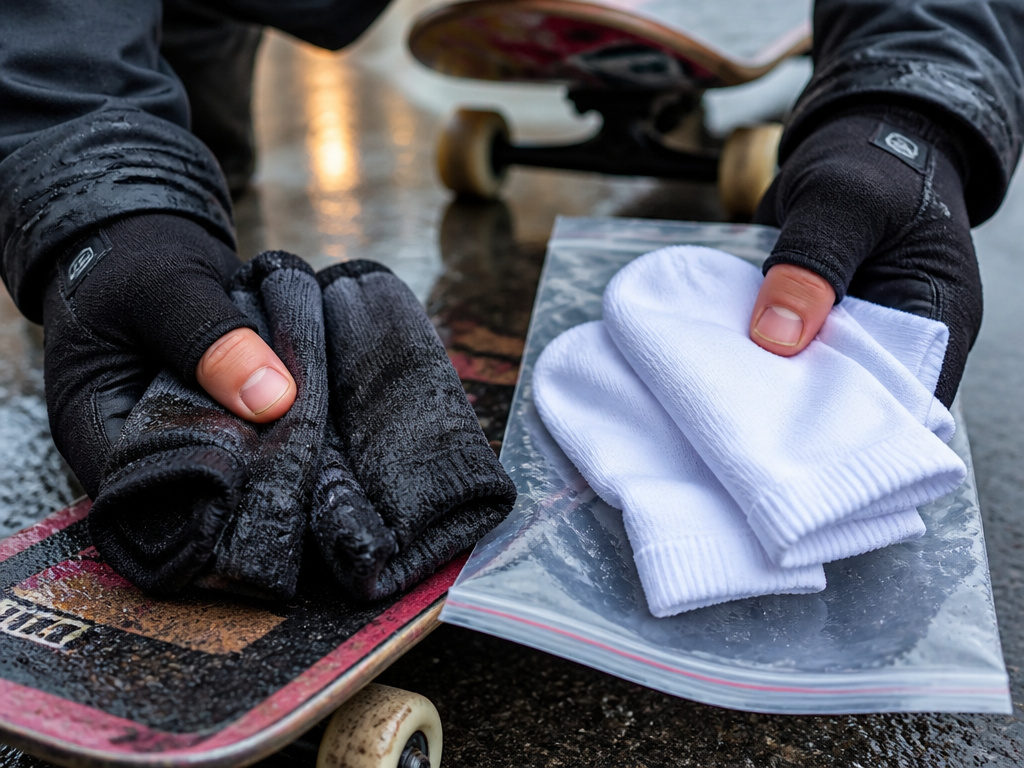
Rain or wet snow changes everything. The three-layer system still applies, but the priorities shift from warmth to dryness. A waterproof/breathable outer shell becomes mandatory, not optional.
But there’s a trap. The ACSM highlights that these membranes are insufficient if your sweat output exceeds the vapor transfer rate. You can get just as wet from the inside. The statement’s directive is blunt: in “cold-wet conditions, socks and gloves should be changed frequently to ensure the feet and hands stay dry.”
This means carrying a dry backup pair in a sealed plastic bag. Your skateboarding rain gear is for getting to the spot, not necessarily for skating in. Once you’re active, you might still need to shed the shell to avoid internal condensation.
If the ground is wet, your cold weather skateboarding session has an extra hazard: reduced grip. Wheels slide more, bearings can suck in moisture, and metal hardware can ice over. The clothing is only half the battle.
Gear Deep Dive: What to Actually Buy
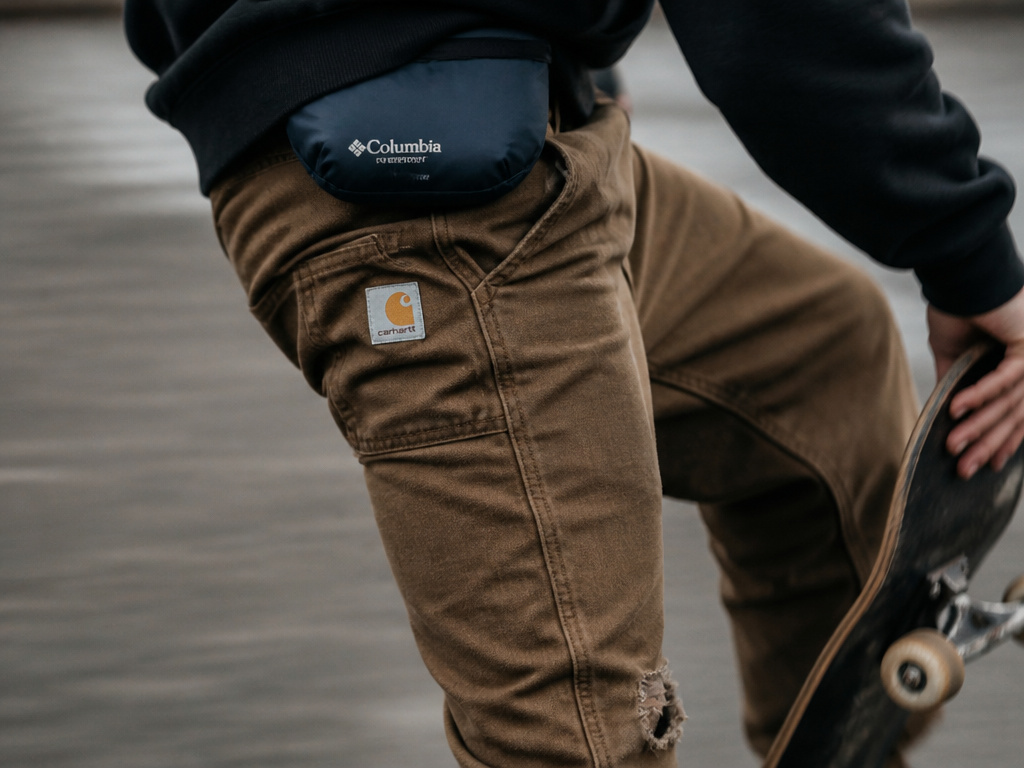
You can follow all the science and still freeze because you bought the wrong jacket. Here are specific recommendations. I lean toward durable, functional brands that skate well, not just look the part.
Base Layer: Go synthetic for budget, merino wool for performance. The 32 Degrees brand is affordable and works. For a step up, Uniqlo’s Heattech Extra Warm line adds decent insulation without bulk.
Mid-Layer: A classic fleece is all you need. The Patagonia Better Sweater or a simple Champion reverse-weave hoodie. The key is a full-length zipper for ventilation.
Outer Shell: This should be light and packable. The Columbia Watertight II jacket rolls into its own pocket. For a more skate-specific fit that accommodates pads, look at the Volcom Rain Jacket.
Pants: This is where my stance on workwear comes in. Dickies 874 work pants or Carhartt WIP duck canvas pants outlast any fashion skate pant. The fabric is tough, the cut allows movement, and they take a knee slide without disintegrating. They are the underrated champions of a functional skateboarding outfit.
The Budget vs. Premium Trade-Off
You don’t need a $300 shell. A budget-friendly windbreaker and fleece over a synthetic base layer can provide adequate insulation for many cold conditions. The premium buys you better breathability, more durable water repellency (DWR), and lighter weight. If you skate in the cold often, invest in a premium shell. If it’s occasional, budget is fine.
The Pre- and Post-Session Routine
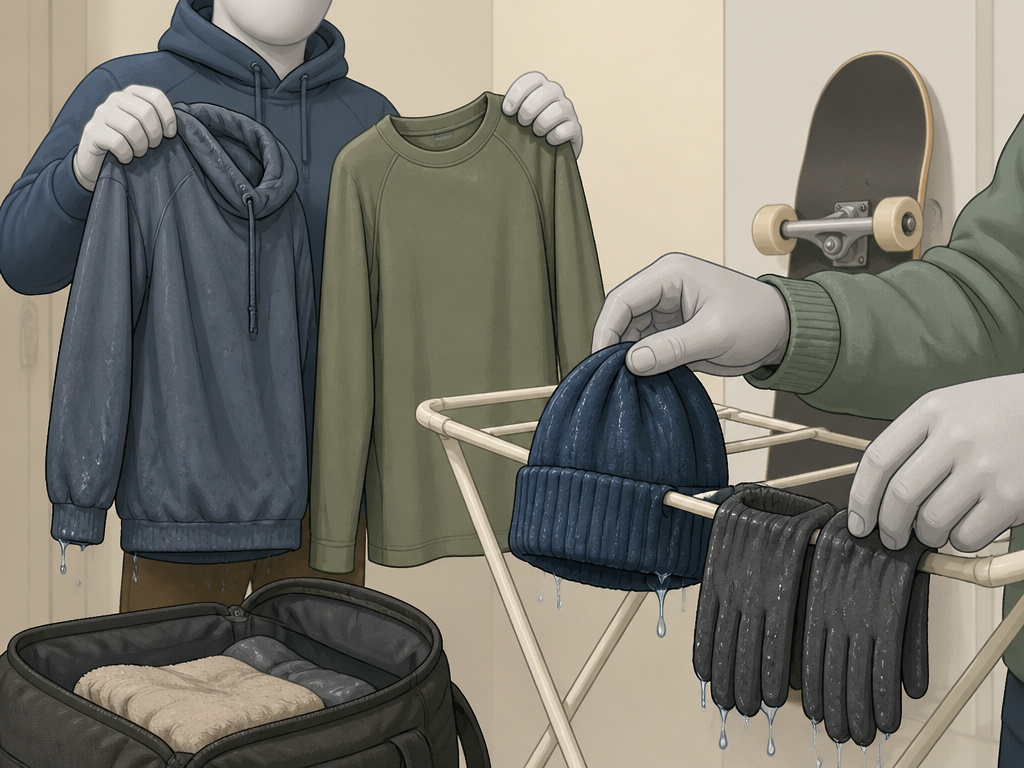
What you do before and after skating matters as much as what you wear during.
Before: A dynamic warm-up is critical. Cold muscles are stiff and prone to injury. Do leg swings, torso twists, and ankle circles in a dynamic warm-up before you step on the board. I learned this the hard way one cold morning. I skipped my warm-up, rolled my ankle on a small crack, and was off the board for a week.
During: Listen to your body. If you start to shiver, put a layer on. If you feel damp, consider ending the session. It’s better to cut it short than to push into hypothermia.
After: Get dry immediately. Change out of all your sweaty layers as soon as you get indoors. Hang your gear to dry completely before stuffing it in a bag. Damp skate clothing materials left balled up will mildew, and the smell never fully comes out.
How Cold Affects Your Skateboard Gear
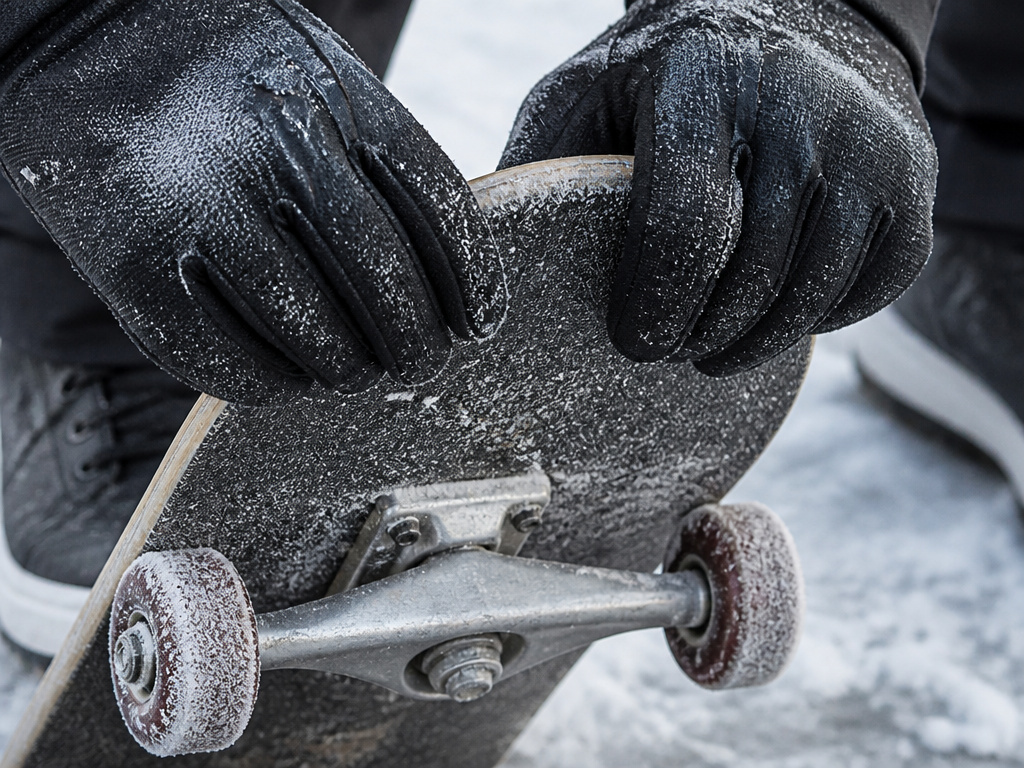
Cold temperatures change how your skateboard performs. This makes the board feel less responsive overall. Many skaters find this altered feel to be a major reason to avoid very cold sessions, as it increases the physical effort needed to control the board and can throw off your timing.
Frequently Asked Questions
What do skaters wear in winter?
Skaters wear a three-layer system: a moisture-wicking base layer (synthetic or wool), an insulating mid-layer (fleece or light puffy), and a wind/water-resistant outer shell. Pads are worn over the base or mid-layer for mobility. Durable pants like Dickies and warm socks are essential, along with a beanie under the helmet and gloves.
What weather is too cold for skateboarding?
When the Wind Chill Temperature (WCT) falls below -17°F (-27°C), frostbite can occur on exposed skin in 30 minutes or less, warranting extreme caution. Practically, many skaters set a personal limit around 40°F due to ground conditions (ice, wetness) and reduced board feel. Always check the wind chill, not just the air temperature.
Is it better to ice skate in jeans or leggings?
This question comes from a related search, but the principle transfers: for any skating, flexibility and moisture management are key. Tight jeans restrict movement and trap sweat. Leggings or thermal base layers under loose, durable pants (like snowboarding pants or softshell trousers) provide far better mobility and warmth for cold-weather skateboarding.
How to warm up before skateboarding?
Dynamic warm-up is essential in the cold. Spend 5-10 minutes doing movements like high knees, butt kicks, leg swings, torso twists, and ankle circles. The goal is to increase blood flow to the muscles and joints, not to stretch statically.
The Bottom Line
Cold-weather skating isn’t about brute-force insulation. It’s a balancing act between the heat you generate and the cold the environment steals. The science gives you the numbers: ~2 clo when active in 20°F cold, not 5. The gear gives you the control: layers you can shed the moment you start pushing.
The one threshold to memorize: if the wind chill hits -17°F (-27°C), the session is over. That’s not a style choice; it’s the line where frostbite risk becomes documented and acute. Everything above that is a matter of layering wisely and managing sweat.
Start slightly cold. Pack your shell. Change your socks. And remember, the goal is to keep skating, not just to survive the walk to the spot.
