
Skateboarding in the 1990s: How Street Skating Took Over
This post contains affiliate links. As an Amazon Associate, we earn from qualifying purchases.
Skateboarding in the 1990s saw street skating eclipse vert ramps as the dominant style, fueled by a rebellious, DIY culture, baggy fashion, and skater-owned companies that reshaped the industry’s business model. The era’s most lasting legacy wasn’t just a new set of tricks; it was a complete cultural takeover that turned skateboarding from a niche sport into a global phenomenon.
That shift from aerial vert skating to grounded street tech changed everything from the gear under your feet to the clothes on your back. It also happened against a backdrop of real, documented safety concerns that most retrospectives gloss over. The numbers from the time tell a story of risk, response, and how the culture absorbed both. What follows is a look at the objects, the data, and the business moves that defined the decade, not just the legends.
Key Takeaways
- The 1990s pivot from vert to street skating made boards narrower (7.25″–8″) and tricks more technical, focusing on urban obstacles like curbs and stairs.
- Skater-owned brands like World Industries changed the business completely, proving skaters could control their own image and profits, moving away from corporate sponsorships.
- A 1994 JAMA study found wrist fractures were the most common injury across skating sports, leading to clear recommendations for wrist protection and helmets.
- The era’s baggy fashion and punk/hip-hop soundtrack weren’t just style, they were a deliberate rejection of the spandex-clad, stadium-ready 80s vert aesthetic.
- The 1999 release of Tony Hawk’s Pro Skater did more than any contest to mainstream 90s skate culture, teaching a generation of kids the sport’s ethos and tricks from their living rooms.
From Vert Ramps to City Streets: The Great Pivot
The story of skateboarding in the 1990s became dominated by street skateboarding. If the 1980s were about big air and half-pipes, the 90s were about the crack in the sidewalk, the schoolyard handrail, the granite ledge outside the bank. This wasn’t just a change of scenery. It was a democratization of the sport. Not everyone had access to a massive wooden vert ramp, but everyone had a curb. The equipment changed to match. Most boards are about 7 1/4 to 8 inches (180 to 200 mm) wide, down from the wider, more shovel-nosed shapes of the previous decade. The wheels got smaller and harder, better for sliding and catching on tech tricks.
This shift had a sound and a feel. The hollow clack of a board smacking down a five-stair replaced the whoosh of a ramp carve. The physical sensation shifted from the floating weightlessness of a vert air to the gritty, sudden impact of landing a flip trick on asphalt. You felt every pebble. The culture’s center of gravity moved from sponsored contests to the filmed “street part,” where a skater’s section in a video like Blind’s “Video Days” or Toy Machine’s “Welcome to Hell” could make a career overnight. It was a meritocracy of style, filmed on borrowed camcorders.
Common mistake: Thinking street skating was safer than vert. The 1994 JAMA study by Schieber et al. Found that for every in-line skating injury, approximately 1.2 skateboarding injuries occurred. The ground is less forgiving than a smooth ramp transition.
The 90s Skateboarding Injury Data Nobody Mentions
Consider the concrete. The romantic, DIY spirit of skateboarding in the 1990s happened alongside some sobering statistics that rarely make the highlight reels. Skateboarding’s numbers were proportionally higher. The median age of those injured while skateboarding was 13 years.
The study’s breakdown is specific. The conclusion was clear: “Because wrist fractures were the most common type of injury in all three sports, wrist protection is needed. Head protection by helmets is recommended.”
| Injury Type | Percentage of Injured In-Line Skaters | Common Outcome |
|---|---|---|
| Any Musculoskeletal Injury | 63% | Sprains, strains, fractures |
| Wrist Injury | 37% | Two-thirds were fractures/dislocations |
| Head Injury | 5% | Concussions, traumatic brain injury |
| Hospitalization Required | 3.5% | Serious cases needing extended care |
This data created a tension. The culture prized a raw, unprotected aesthetic, baggy jeans, graphic tees, and for most, no pads in sight. Yet, the official advice from the medical establishment, as seen in the JAMA Pediatrics skateboarding danger study, pointed toward more gear. The American Academy of Pediatrics, in a 1995 policy statement, was more cautious, noting data on the protective value of elbow pads, knee pads, and wrist guards was “inconclusive,” while the 1994 JAMA study by Schieber et al. Recommended wrist protection and helmets. This disagreement meant there was no unified safety message, leaving it to individual skaters and parents to navigate the risk.
The legacy of this era is the ASTM F1492 helmet standard. Developed later, it codified the specific needs of skateboarders, requiring helmets to be tested against flat and hazard anvils that mimic curbs and rail edges, a direct response to the street-skating injury patterns of the 90s. You can read the full ASTM F1492 helmet standard for the technical details.
Fashion as a Rejection: Baggy Everything
The uniform was a strict requirement. JNCO jeans, oversized tees (often from the skater’s own brand), and puffy skate shoes from Vans or éS. This wasn’t about looking cool in a mainstream sense; it was about looking different from the 80s. The spandex and neon of vert’s heyday were seen as corporate, Olympic-adjacent. Baggy clothes were utilitarian, they allowed for movement, hid knee pads if you wore them, and took the abrasion of countless knee slides. They also served as a billboard for the new, insular skate culture that was forming.
The fashion was inextricably linked to the music. Punk rock and early hip-hop provided the soundtrack to videos and the attitude in interviews. Bands like The Offspring and Green Day had a skate-punk aesthetic, while hip-hop’s baggy style directly crossed over. This fusion created a distinct, gritty identity that separated the street skater from the mainstream athlete. It was a visual and auditory declaration of independence, a key part of how skateboarding shaped fashion for decades to come.
The Business Was the Rebellion
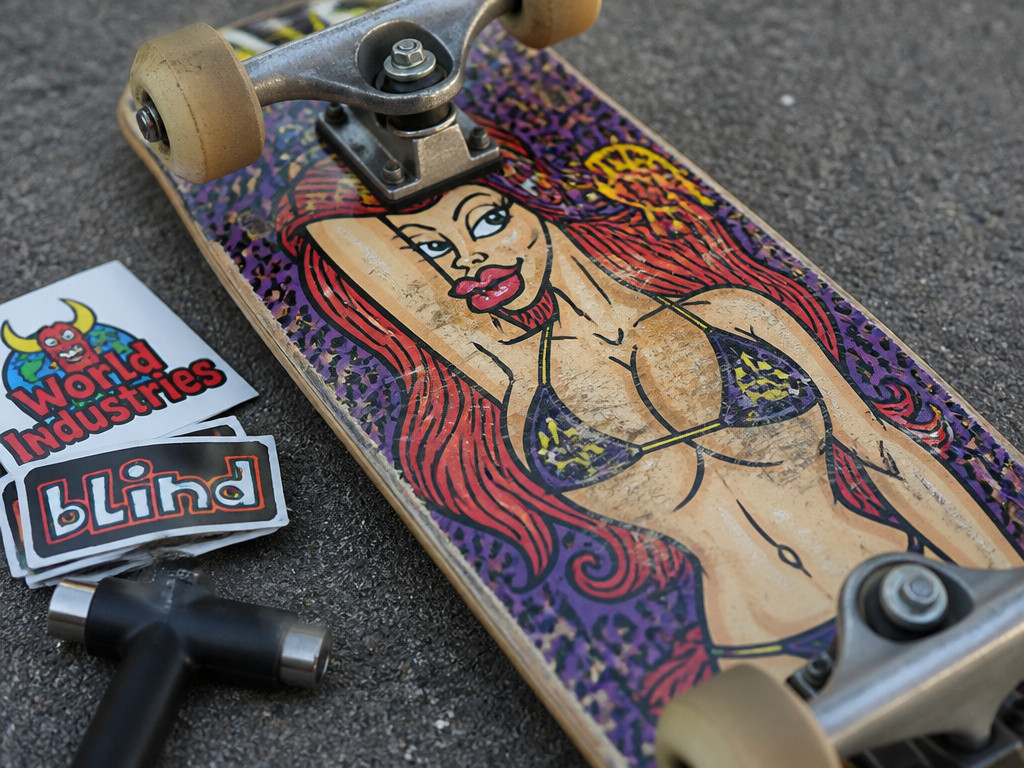
The most radical shift of the 1990s might have happened off the board. Before the 90s, big sporting goods companies and a few established brands controlled the industry. Then came the revolution led by skaters like Steve Rocco and his company, World Industries. Rocco’s genius was in understanding that the image, the graphics on the bottom of the deck, was as important as the wood itself. He hired artists like Marc McKee to create provocative, cartoonish graphics that appealed directly to kids and horrified parents.
This was more than marketing. It was a business model. World Industries and imitators like Blind and 101 proved that skaters could own the means of production, control their teams, and keep the profits. They sold a lifestyle, not just a tool. This democratization of the business meant a pro skater could now start a brand from a garage, changing the entire history of the sport from a commercial perspective. The board became a canvas for rebellion, and the sale of that canvas funded the next generation of skaters. It was a closed, self-sustaining ecosystem that deliberately excluded traditional corporate sponsors.
Icons, Videos, and the Video Game That Sealed the Deal
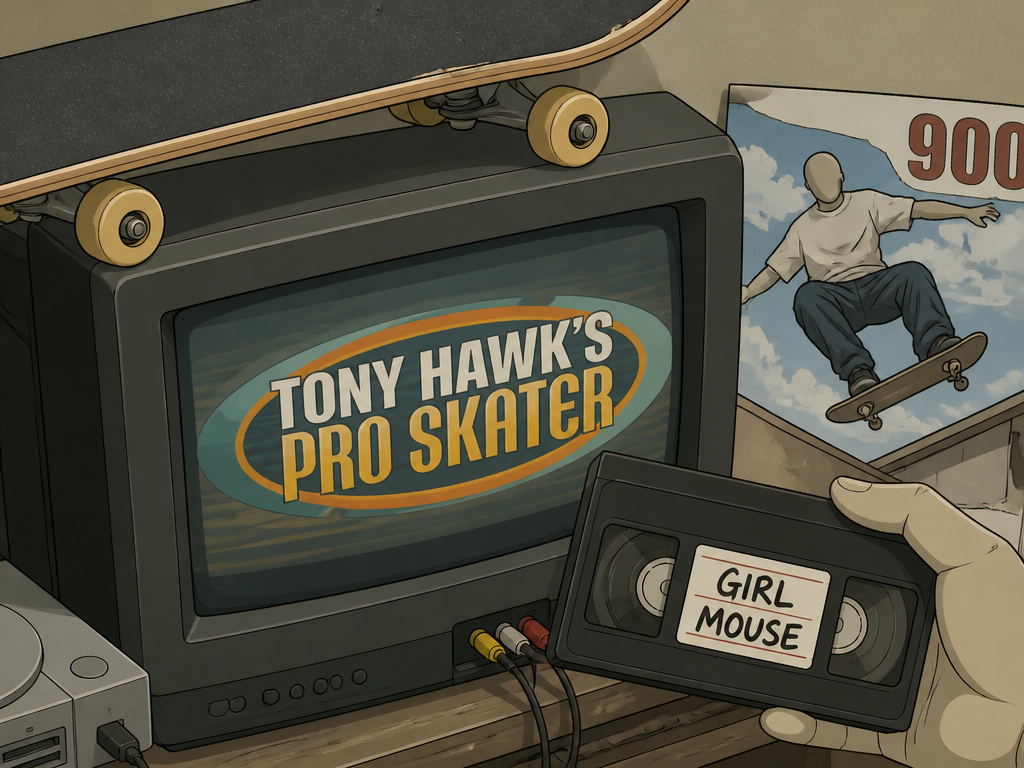
You can’t talk 90s skateboarding without Tony Hawk. But his significance evolved. In the early 90s, he was a vert legend struggling to adapt to the street era. By the decade’s end, he became the face of skateboarding to the world. His 900 at the 1999 X Games was a vert trick, but it landed in the mainstream media like a bomb, perfectly timed. Other pros like Rodney Mullen, the godfather of street tech, provided the technical blueprint for modern flatground skating. Mullen’s influence is in every kickflip and 360 flip done today.
The medium that captured this was the skate video. Companies poured resources into filming, producing cinematic pieces that were less about contests and more about artistic expression. Videos like Plan B’s “Questionable“ and Girl’s “Mouse“ weren’t just promos; they were cultural artifacts. They distributed the style and the tricks globally, creating a shared visual language for skaters everywhere.
Then came the pivotal moment, literally. Tony Hawk’s Pro Skater, released in 1999, did more for skateboarding’s popularity than any contest ever could. It allowed kids in suburbs and towns without skate shops to learn the names of pros, the brands, and the tricks. It embedded the history of skateboarding video games into the living room, making the culture playable. The game’s success created a feedback loop, driving more kids to skateboards and cementing the 90s aesthetic as the definitive look of skate culture for a new millennium.
The Legacy in Your Setup Today
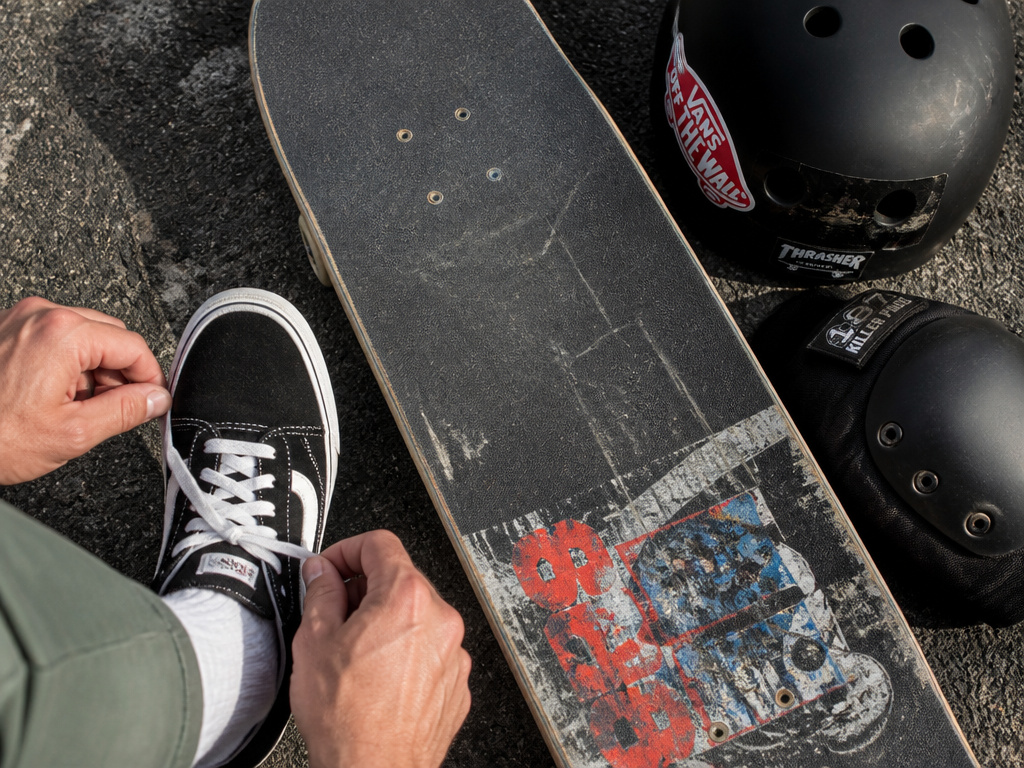
So what does a beginner today inherit from the 1990s? Almost everything underfoot. The standard deck width settled into the 8.0″ to 8.25″ range, a direct evolution from the 90s experiment. The double-kick, symmetrical shape that allows for easy switch-stance skating? A 90s innovation. The prevalence of street skating as the default mode? A 90s victory. The very idea that skateboarding is as much about individual style and video parts as it is about competition? That’s pure 1990s.
The era also left a cautionary tale about safety. The push for helmet and pad use grew directly out of the injury data from that decade. While the culture of the 90s often rejected protection, the standards born from its risks, like ASTM F1492, now help keep skaters safer. It’s a tension that still exists: the desire for freedom and style versus the practical need to protect yourself from the hard urban landscape the 90s glorified.
When you look at the evolution of skateboard decks, the arc from the 80s to the 2000s passes directly through the 90s workshop. The decade took the raw energy of the 1980s era and refined it into a sustainable, marketable, and globally influential culture that would define the following era. It wasn’t just a golden age; it was a forge.
Skateboarding Magazines & Zines
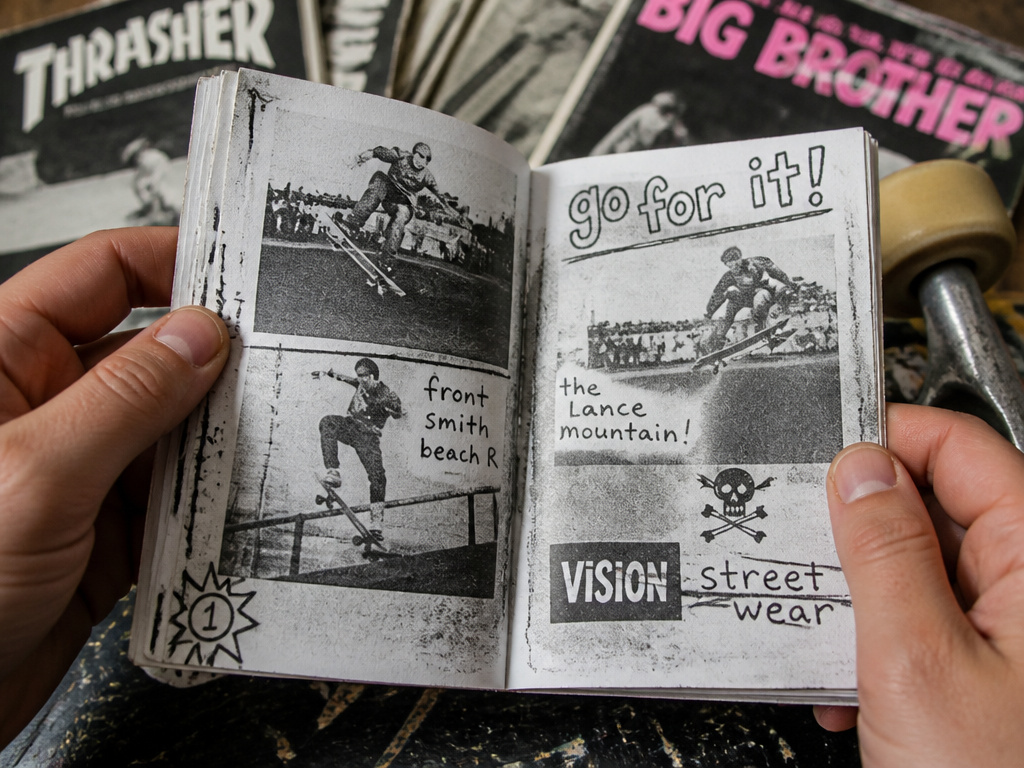
In the 1990s, skateboarding magazines and photocopied zines were the lifeblood of the culture, connecting street skaters everywhere. They were the primary source for trick tips, board graphics, and the latest video releases long before widespread internet access. These publications documented the raw, unfiltered progression of street skating, highlighting local crews and DIY spots that mainstream media ignored. For a skater, getting a photo or an interview in a mag was a major achievement. Zines, often traded by hand or through mail order, created a grassroots network that celebrated the pure, uncommercial side of skating, directly fueling the era’s independent spirit.
DIY Spots & Skate Parks

The 1990s street skating revolution was built on DIY spots. With few official parks available, skaters took matters into their own hands. Empty swimming pools, drainage ditches, and forgotten corners of urban infrastructure were transformed. Crews would scavenge materials to build their own ramps, ledges, and quarter-pipes in abandoned lots or backyards. This hands-on approach wasn’t just about creating a place to skate; it was a declaration of independence. Building a spot required teamwork, concrete mixing, and constant repair. These self-made arenas became the testing grounds for the era’s most influential street tricks, fostering a tight-knit, resourceful community defined by its own creations.
Frequently Asked Questions
Was skateboarding popular in the 90s?
Yes, but its popularity shifted. It moved from a boom-and-bust cycle driven by mainstream media in the 80s to a sustained, underground growth in the 90s. Fueled by skater-owned companies, the spread of skate videos, and the eventual explosion of the X Games and Tony Hawk’s Pro Skater, it built a durable subculture that ensured its survival and growth into the 2000s.
Why did skateboarding switch from vert to street?
Access and authenticity. Building and maintaining vert ramps was expensive and required lots of space. Street skating was free and everywhere. The shift also represented a cultural move away from what was seen as a corporate, contest-focused vert scene toward a more raw, DIY, and creative expression grounded in the urban environment.
What kind of injuries were common in 90s skateboarding?
Data from a 1994 JAMA study shows wrist fractures were the most common serious injury. The study, which you can find in the American Academy of Pediatrics research from the era, noted that fractures and dislocations made up two-thirds of wrist injuries among skaters. In the 1994 JAMA study, head injuries accounted for 5% of cases among injured in-line skaters.
What made 90s skateboard graphics so iconic?
They were designed by skaters and artists within the culture, for the culture. Brands like World Industries employed artists like Marc McKee to create humorous, subversive, and often offensive cartoons that acted as a secret handshake. They rejected the slick, professional sports logos of the past, making the bottom of the deck a statement of identity.
How did the Tony Hawk video game impact skateboarding?
Tony Hawk’s Pro Skater (1999) was a watershed. It introduced the sport’s terminology, tricks, pros, and brands to millions who had never set foot on a board. It made skate culture accessible, codified the trick lexicon, and created a new generation of enthusiasts who would become the skaters, filmmakers, and brand owners of the 2000s.
The Bottom Line
The 1990s didn’t just change how skateboarding looked; it changed how it worked. It moved the sport from ramps to streets, from corporations to skater-owned startups, from network TV to grainy VHS tapes. The decade’s legacy is a board that’s a tool for urban exploration, a business model that values creative control, and a culture that still wears its rebellion on its sleeve, and on the soles of its shoes. Every ollie over a crack today is a trick invented in that decade’s crucible.
Start small. Find a curb.
