
Skate Documentaries Guide: Where to Watch and What to See
This post contains affiliate links. As an Amazon Associate, we earn from qualifying purchases.
A skate documentaries guide points you to the films that capture the sport’s soul, not just its tricks. Start with the classics like Dogtown and Z-Boys for the origin story, then explore raw personal tales like All This Mayhem and community-focused stories like Minding the Gap. Your streaming options are wider than you think.
The best docs do more than chronicle history. They show why people risk everything for four wheels and plywood. You’ll find films about legendary teams, tragic falls, and how skating builds identity in unexpected places.
What follows is a tour through the essential films, broken down by what they reveal in this skate documentaries guide. This guide tells you where to watch them, how to tell a documentary from a video part, and where to look when you’ve seen all the famous titles.
Key Takeaways
- Watch Dogtown and Z-Boys first for the definitive origin story of modern street skating.
- Use free streaming platforms like Tubi, YouTube, and library services like Kanopy to access many films legally.
- Understand that The Search for Animal Chin is a skate video, not a documentary, it’s a fictional narrative built around incredible skating.
- Seek out Minding the Gap and Skate Kitchen for powerful stories about community, identity, and women in skating.
- Look for documentaries by skaters, for skaters like Rising Son or Stoked for an insider’s view of the culture’s highs and lows.
Classic Skate Documentaries You Should Watch First
These films form the canon. They’re the stories everyone references, and they set the template for how skating talks about itself.
Dogtown and Z-Boys (2001) is the foundational text. Directed by Stacy Peralta, it chronicles the 1970s Zephyr team from Venice, California, who revolutionized skating by treating empty pools as concrete waves. It’s less about tricks and more about a rebellious attitude that defined a generation.
You can stream it on platforms like Amazon Prime Video, as noted in the skate documentaries guide. It mixes archival footage with modern interviews, creating a clear through-line from the past to the skating you see today. Other early-era docs, like those covering the 1970s skate scene, often use this film as a blueprint.
The style is direct and narrated, leaning on Peralta’s firsthand perspective. This differs sharply from a film like All This Mayhem, which uses its subjects’ own words to build a darker, more personal narrative.
Documentaries About Rise, Fall, and Redemption
Skating’s history is full of meteoric rises and hard crashes. These documentaries explore the personal cost of life in the spotlight.
All This Mayhem (2014) follows Tas and Ben Pappas, Australian skaters who challenged the establishment in the 1990s. The film’s central controversy, whether the industry blocked Tas from landing the 900 before Tony Hawk, is debated fiercely online. Reddit threads are full of viewers dissecting the evidence, with some calling the narrative “highly inaccurate” and others defending the film’s perspective on the era’s politics. It’s a raw, unflinching look at talent, addiction, and the myth of the poster child.
Stoked: The Rise and Fall of Gator (2002) is another brutal cautionary tale. It tracks Mark “Gator” Rogowski’s transformation from 1980s vert superstar to convicted murderer. The film doesn’t shy away from the dark side of fame and the culture of skateboarding in the 90s.
Rising Son: The Legend of Skateboarder Christian Hosoi (2006) charts a different arc. It details Hosoi’s incredible rise, his fall during the drug era, and his subsequent redemption. This style of documentary, the rise, fall, and comeback, is a staple of the genre because it mirrors the sport’s own rhythmic bails and recoveries.
Documentaries About Women and Community
The story of skating isn’t just about famous men. A newer wave of documentaries focuses on identity, inclusion, and skating as a lifeline.
Minding the Gap (2018) is a masterpiece. Director Bing Liu films his childhood friends in Rockford, Illinois, using their skateboarding as a lens to examine cycles of violence, masculinity, and economic struggle. It won a Special Jury Prize at Sundance. You can often find it on Hulu.
Skate Kitchen (2018) is a hybrid. While technically a narrative feature, it’s based on the real-life New York collective of the same name and stars the actual skaters. It authentically captures the dynamics of a female-led crew navigating the city and their relationships. Its spirit is deeply documentary.
For a pure documentary look at women’s street skating, seek out The Motivation (2013). It follows a group of top female street skaters, including Lacey Baker and Marisa Dal Santo, as they prepare for contests, dealing with the distinct pressures they face in a male-dominated industry.
These films highlight a shift in skateboarding culture, moving from pure idol worship to examining who gets to participate and why.
How to Find and Watch Skate Documentaries
You don’t need five streaming subscriptions to see these films. A little digging opens up a lot of free, legal options.
| Platform | Best For | A Film Example |
|---|---|---|
| Tubi | Free, ad-supported streaming | Dogtown and Z-Boys, Lords of Dogtown (dramatization) |
| Kanopy | Free with a library card or university login | Minding the Gap, All This Mayhem |
| YouTube | Official uploads, rentals, and rare footage | Many full-length older docs and official shorts |
| Amazon Prime Video | Rentals and included titles | Wide selection, but often pay-to-rent |
Start with your local library’s digital service. Kanopy and Hoopla have surprising depth. If a film isn’t there, check Tubi’s massive free catalog before you rent anything.
Where this goes sideways: Assuming every film about skating is a documentary. The Search for Animal Chin is the classic trap. It’s a Bones Brigade skate video from 1987, a scripted quest narrative starring skaters, not a documentary. Mixing up skate video parts and documentaries means you’ll miss the context of each.
YouTube is also a goldmine for shorter documentary pieces and episodes from TV series like Vice’s Skateboarding. The key is searching for the film’s full title plus “full documentary” to find official uploads.
Skate Video vs. Documentary: What’s the Difference?
This trips up a lot of new fans. The line can seem blurry, but the intent is different.
A skate video (or video part) is primarily a showcase of skating. The goal is to display skill, style, and a team’s identity. There’s often a loose theme or soundtrack, but the narrative is secondary to the tricks. The entire process of making skate videos is about capturing the best possible skating, not telling a historical truth.
A documentary seeks to document reality. It uses interviews, archival footage, and narration to explore a true story, person, or era. It follows journalistic or filmmaking conventions to argue a point or reveal a hidden history.
Here’s a quick comparison:
| Element | Skate Video | Documentary |
|---|---|---|
| Primary Goal | Showcase skating talent, promote a team | Tell a true story, explore a theme |
| Structure | Music-driven montage, often no narration | Interview-driven, with a narrative arc |
| Examples | The Search for Animal Chin, Sorry, Fully Flared | Dogtown and Z-Boys, All This Mayhem, Minding the Gap |
Why does this matter? If you watch Animal Chin expecting a history lesson, you’ll be confused. If you watch All This Mayhem expecting non-stop trick montages, you’ll miss its deeper point. Knowing what you’re about to watch frames the experience.
Exploring by Era and Subgenre
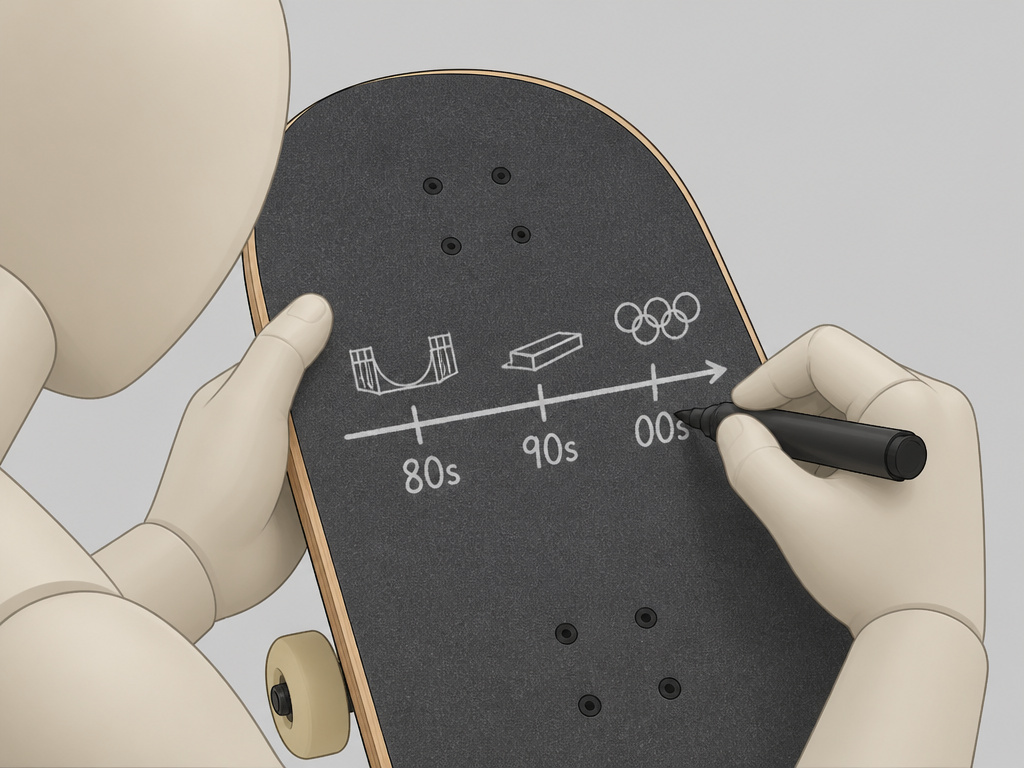
Once you’ve seen the classics, you can dive deeper. Look for documentaries focused on specific decades or skating styles.
For the history of skateboarding in the 1980s, Bones Brigade: An Autobiography (2012) is essential. It’s Stacy Peralta’s follow-up, detailing the iconic team that included Tony Hawk, Rodney Mullen, and Steve Caballero. It’s a brighter, more celebratory counterpart to the grittier 90s stories.
The 2000s saw a rise in DIY and street-focused docs. Streets on Fire (2009) captures the raw, independent spirit of the East Coast scene during that time. It’s less polished than a big-budget documentary, which adds to its authentic feel.
I used to believe the most famous documentary was always the best one. After watching a smaller film like *I realized the hyper-local stories often hit closer to home. They’re less about global icons and more about why skating matters in a specific parking lot.
You can also search by subgenre. Look for documentaries about vert skating’s peak, the evolution of street contests, or the current Olympic movement. Each angle offers a new piece of the puzzle.
Documentaries about skateboarding in specific countries/regions
Looking for skate films that capture a local scene? Start by searching for the country or city name alongside terms like ‘skate documentary’ or ‘skate scene’. Many regions have their own defining crews and styles, documented in films that often focus on a particular era or cultural moment. These documentaries are great for understanding how geography and local culture shape skating. You can find them on streaming platforms, video-sharing sites, or through specialty distributors that focus on action sports cinema.
Frequently Asked Questions
What are some of the best skate documentaries?
Start with Dogtown and Z-Boys for origins, All This Mayhem for a dark personal saga, and Minding the Gap for a modern, socially-conscious masterpiece. Stoked: The Rise and Fall of Gator and Rising Son are also canonical for understanding the sport’s complex history.
Is The Search for Animal Chin a documentary?
No. It is a seminal skate video produced by the Bones Brigade. It features a fictional plot where skaters search for a mythical figure, Animal Chin, as a vehicle to showcase groundbreaking tricks. It’s a must-watch for any fan, but it belongs in the category of skate video production, not documentary filmmaking.
Where can I watch skate documentaries for free?
Use free, ad-supported streaming services like Tubi, which has a strong collection. Check if your public library offers Kanopy or Hoopla. Also, search YouTube thoroughly; many filmmakers and distributors upload full-length documentaries legally.
Are there documentaries about women in skateboarding?
Yes. Minding the Gap features female skaters within its broader narrative, and Skate Kitchen is a narrative film based on a real female skate collective. For a direct documentary, seek out The Motivation (2013), which focuses on top female street skaters. The landscape is growing, reflecting the increasing prominence of women in the sport.
What’s a good documentary about skateboarding culture?
Dogtown and Z-Boys is the definitive cultural origin story. For a modern, academic look, Minding the Gap examines culture through the lenses of race, class, and masculinity. To understand the culture of skateboarding from an insider battling its commercial side, Rising Son is a powerful choice.
Before You Go
Your next step is simple. Pick one film from the classic era and one from the modern community-focused era. Watch them back-to-back. The gap between Dogtown‘s pool rebels and Minding the Gap‘s Rust Belt friends shows how the same tool, a skateboard, can tell vastly different human stories.
Don’t get stuck on finding the “perfect” film. The documentary that resonates might be a rough-cut short on YouTube about a local park, like Still Pushing, not the Oscar-nominated title. The real history of skating lives in both.
Finally, remember the difference between a video part and a documentary. It changes how you watch. One is for inspiration, the other for understanding. You need both to see the full picture. Now go find something that makes you want to go skate, or at least think about it differently.
