
How to Make Friends Skateboarding: The 4-Step Formula
This post contains affiliate links. As an Amazon Associate, we earn from qualifying purchases.
To make friends skateboarding, you need to show up consistently, learn the park’s social rules, and use skateboarding itself as the bridge for conversation. Academic research confirms that shared passion forces people to see each other as community members, and structured approaches, like asking for tips on a trick, can be effective ways to start a connection.
That connection isn’t just about having people to skate with. Studies from the USC Pullias Center and James Cook University show that the friendships formed at the park expand your social horizons, build a sense of belonging, and provide a support network that goes beyond the board. The process works because you’re not just making small talk; you’re engaging with someone’s dedicated practice, which is a key part of how to make friends skateboarding.
What follows is a breakdown of the mechanics behind skatepark socializing and how to make friends skateboarding, drawn from peer-reviewed research and community wisdom. This section explains the unspoken rules, a proven conversation starter, how to find your people (especially if you’re an adult beginner), and how to turn park-side chats into real friendships.
Key Takeaways
- Show up to the same local skatepark consistently, familiarity builds comfort for you and signals you’re part of the scene to others.
- Use the “Compliment, Question, Listen, Follow-Up” formula to start conversations naturally around tricks and gear, not forced small talk.
- For adult beginners, especially those who feel marginalized, seek out dedicated beginner sessions or women/nonbinary skate events; research shows organizers create these exclusive spaces to promote a more secure sense of belonging for marginalized participants first.
- Embrace failure and asking for help as social tools; research shows sharing the learning process is a powerful community builder.
- Move the friendship beyond the park by organizing a casual session or joining a local skate crew to solidify the bond.
Why Skateboarding Is Uniquely Good for Building Friendships
Skateboarding isn’t a solo sport by nature. While you might practice alone, the culture is built in shared spaces. A 2023 report from the USC Pullias Center skateboarding report found that “a common love of the activity often forces people to see everyone as a community member.” You already have the biggest thing in common before you say a word.
The social benefits are well-documented. A James Cook University study outlined four key benefits: establishing new friendships, bonding to a group, gaining peer respect, and increased opportunities to interact. The researchers identified benefits like establishing new friendships and bonding to a group, and a separate finding notes that skateboarding expands social horizons by providing increased opportunities to gain community recognition and acceptance. In plain terms, just by being at the park, you’re in the right place to meet people. The trick is moving from passive presence to active participant, which is the core of how to make friends skateboarding.
The Park as a Social Engine
Think about the layout. Unlike a gym where everyone faces a mirror, a skatepark is circular. You watch others, they watch you. A run that lands a trick gets a cheer. A slam gets a collective “oof!” and a check-in. This isn’t politeness; it’s the built-in feedback loop of the sport. Your progress, and your failures, are public. That vulnerability, when met with support, is the raw material of friendship. A skater quoted in the USC study put it perfectly: “In skateboarding, you have to learn how to fail… The amount of time and effort that they put into learning that trick on the skateboard. Same thing can be applied back over… In schoolwork, and then we work with it.” You’re bonding over the struggle, not just the success.
Skatepark Etiquette: The Unspoken Rules You Need to Know
You can’t make friends if you’re the person everyone is side-eyeing. Good skatepark etiquette isn’t about a list of don’ts; it’s about respecting the flow and the space. It’s the fastest way to show you’re considerate, not just consuming the park.
First, watch the flow. Don’t snake someone’s line, cutting in front of them while they’re setting up or mid-run. It’s dangerous and disrespectful. If you’re unsure, wait at the edge of the obstacle and make eye contact. A nod usually means “go ahead.” Second, don’t camp on a feature. Practice your trick, then clear out so others can session it. This is especially crucial on popular ramps or ledges. Third, if your board gets away from you, yell “BOARD!” It’s a safety thing, and it shows you’re aware of others.
Here’s a quick reference for the major do’s and don’ts:
| Do This | Avoid This | Why It Matters |
|---|---|---|
| Wait your turn at a feature | Snaking (cutting in) | Prevents collisions and shows respect for others’ session. |
| Yell “BOARD!” if it gets away | Letting it roll through others’ lines | Safety first. Everyone appreciates the warning. |
| Give a nod or “go ahead” signal | Assuming it’s your turn | Establishes clear communication and avoids awkwardness. |
| Keep your gear and yourself out of the main bowl/ramp paths | Setting up bags in a landing zone | Keeps the park safe and usable for everyone. |
Following these rules does more than keep the peace. It marks you as someone who gets it. You’re not a tourist; you’re a potential member of the community. People are more likely to strike up a conversation with someone who respects the shared space.
The 4-Step Conversation Formula That Actually Works
“Just be friendly” is terrible advice. It’s vague and puts the pressure on your personality, not the situation. Instead, use skateboarding as the script. Here is a reliable, research-backed formula: Compliment, Question, Listen, Follow-Up.
Step 1: Compliment something specific. Not “you’re good,” but “that frontside boardslide was so clean,” or “I love the graphic on your deck.” Specificity shows genuine attention. Step 2: Ask a question rooted in the compliment. “How long have you been working on that?” or “Where’d you find that deck?” This invites them to share their experience. Step 3: Listen and relate. If they mention a shop, say you’ve been meaning to check it out. If they talk about practicing a trick, mention you’re struggling with something similar. Step 4: Follow up next time you see them. A simple “Hey, how’s that kickflip coming?” builds continuity.
I learned this the hard way. I spent months skating in the corner of my local park, too shy to say anything. I finally mumbled a compliment on someone’s heel flip. They lit up, showed me their foot placement, and we ended up trading tips for an hour. That single exchange broke the ice for every interaction after. The lesson wasn’t to be less shy; it was to use the skateboard as the conversation starter.
Why does this work? The James Cook University friendship networks study identifies “bonding to a friendship group” and “gaining peer respect” as core social benefits of skateboarding. This formula taps directly into that. You’re offering respect (the compliment) and seeking a bond (the shared interest). It’s structured, low-pressure, and almost always welcome.
For Adult Beginners: It’s Never Too Late
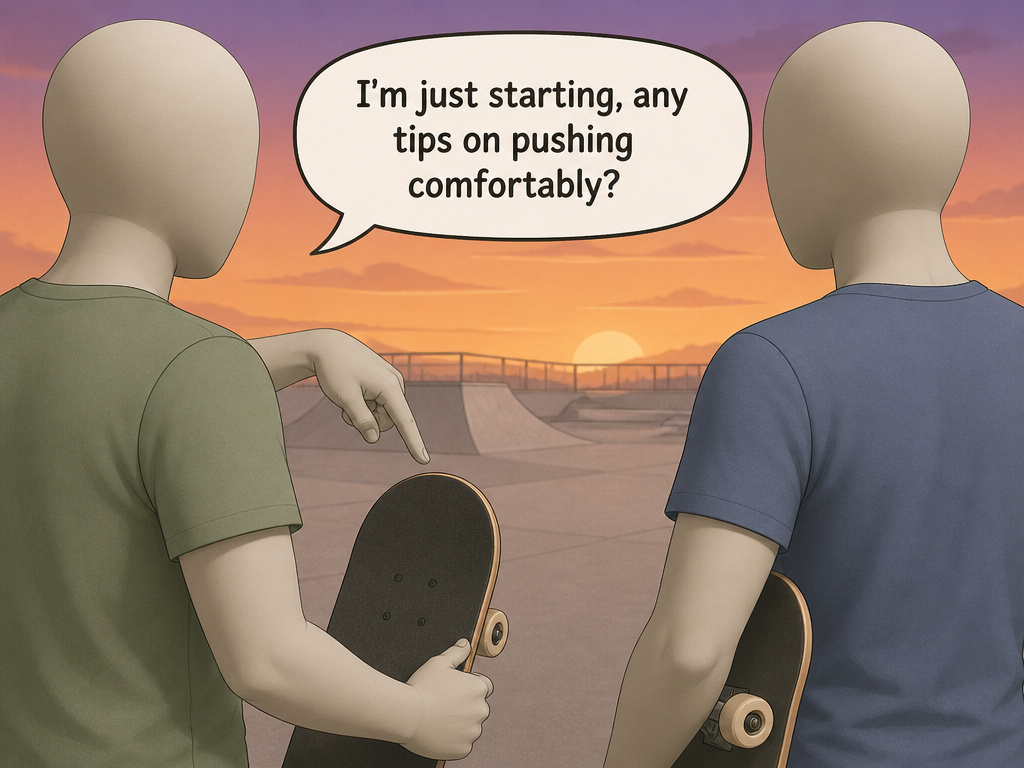
If you’re starting in your 20s, 30s, or beyond, the dynamic feels different. The park can seem like a high school cafeteria. Here’s the reality: your age is an advantage in making connections, not a barrier. You have life experience, you’re likely more financially stable to plan a session, and you’re there for the right reasons.
First, shift your schedule. Go in the early morning or later evening. You’ll find more adults, fewer crowds, and a chiller vibe. Second, own your beginner status. Saying “I’m just starting, any tips on pushing comfortably?” is a fantastic icebreaker. It’s honest, non-threatening, and gives a skilled skater a chance to share knowledge, something most love to do. Third, seek out structured inclusive spaces. Organizations like Skate Like a Girl or Anyone Can Skate run women’s, LGBTQ+, and beginner sessions.
Research from an NCBI pedagogical practices study explains why these “exclusive” spaces are so powerful for adults. Organizers create them so marginalized participants (which can include older beginners who feel out of place) can “show up as they are” without feeling invisible. Finding one of these sessions can be the fastest way to find skate buddies who are on a similar journey.
From “Park Friend” to Real Friend
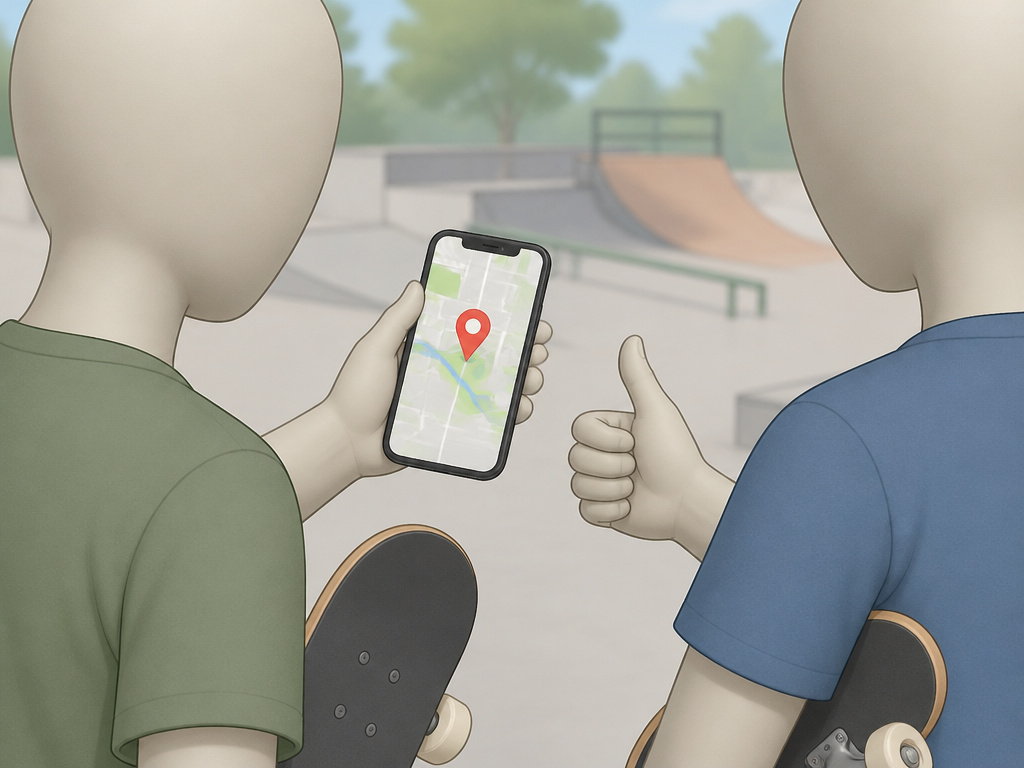
Making an acquaintance is one thing. Turning them into someone you’d call to hang out off the board is another. This transition requires a deliberate, but simple, next step.
The easiest move is to suggest a concrete, low-stakes activity. After a few conversations, try: “A few of us are going to check out the new park downtown on Saturday morning if you’re around,” or “I’m going to hit the shop after this, want to come?” The key is to frame it around skateboarding initially. Another powerful method is to challenge them to a game of S.K.A.T.E. or another skate game. The playful competition builds camaraderie quickly.
If you click with someone, propose collaborating. “I’d love to teach a friend the basics sometime, it helps me learn too,” or “Have you ever thought about helping start a skate club for beginners here?” Working on a shared micro-project, even just filming each other’s lines, deepens the connection beyond casual park chat.
Navigating Cliques and Feeling Like an Outsider
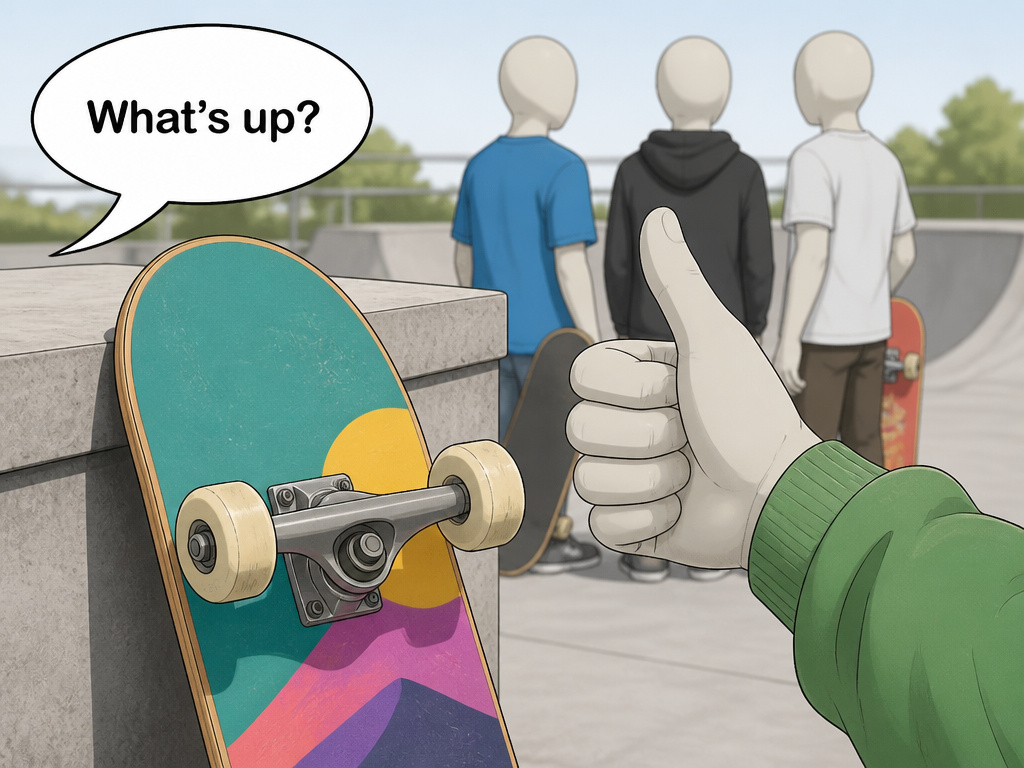
Sometimes the park has a clearly established group. They skate together, leave together, and seem impenetrable. Your goal is to become a familiar, respectful face rather than breaking into the inner circle overnight.
Start by acknowledging them. A head nod or “what’s up” as you pass shows you see them as part of the community. Respect their session, don’t interrupt their line-up. If they’re all working on a specific ledge, wait until there’s a break and ask if you can try a quick one. This shows you value their time and space. Often, these groups aren’t closed off; they’re just focused. Once they recognize you as a regular who follows the rules, conversations become easier.
The USC Pullias Center Report notes that skaters from marginalized identities employ community building and compartmentalization as strategies. You can borrow this. Build your sense of belonging through the consistent, positive interactions you can have, and compartmentalize the feeling of being an outsider. It usually fades as your face becomes familiar. Remember, every tight-knit crew was once a few strangers who started skating at the same time.
How to find skateboarding group rides and meetups
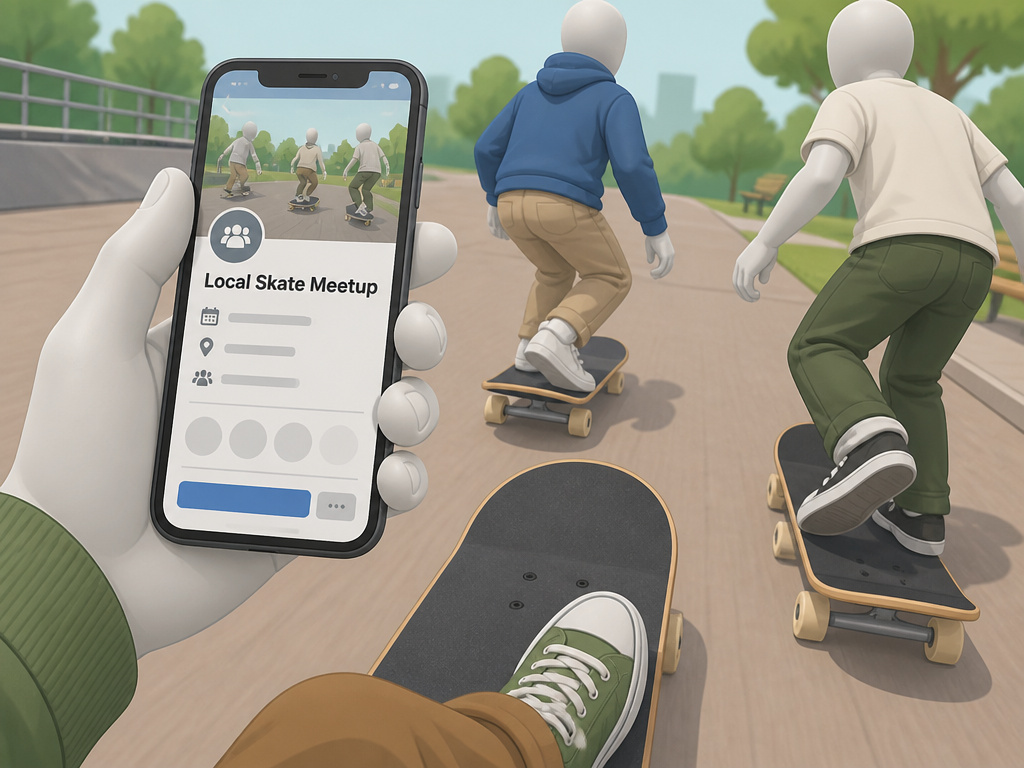
Group rides, meetups, and organized events are some of the fastest ways to connect. Research from James Cook University shows skateboarding increases opportunities to interact with people and helps in bonding to a friendship group. Look for local skate shops, community boards, or social media groups that announce gatherings. A common love of skateboarding can create a sense of community from the start. Be aware that some organizations create specific spaces, like meetups for women or non-English speakers, to promote a more secure sense of belonging. These events are designed as a precursor to broader inclusion and can be great places to start. Simply showing up is the first step to expanding your social horizons and gaining community recognition.
Frequently Asked Questions
I’m really shy. Can I still make friends without talking a lot?
Absolutely. Consistency is your superpower. Show up, skate, follow the etiquette, and smile. Over time, your presence becomes familiar. You can also communicate non-verbally: a thumbs-up for a landed trick, helping grab a runaway board, or simply making eye contact and nodding. Many friendships start with a shared silent session before a single word is exchanged.
What if I’m not good enough to talk to better skaters?
This is a common fear, and it’s backwards. Most skilled skaters remember being a beginner and enjoy helping. Asking for advice is a huge compliment, it means you respect their ability. Use the conversation formula: “Hey, your ollies are so high. Any tip for getting my back foot to snap like that?” You’re not highlighting your lack of skill; you’re highlighting their expertise.
Are there apps to find skate friends?
While there’s no universal “skate Tinder,” social media is a great tool. Look for local skatepark groups on Facebook or Instagram. Search for your city name plus “skateboarding” or “skatepark.” Reddit’s r/NewSkaters and r/skateboarding can have local threads. Posting a message like “Looking for casual skate buddies at [Your Park]” often gets responses from people in the same boat.
How do I handle rejection or someone being rude?
It happens rarely, but it can. The key is not to take it personally. Someone might be in a bad mood, focused on a difficult trick, or just having an off day. Simply say “no worries” and move on. Don’t let one negative interaction define the entire park for you. The vast majority of skaters are welcoming, especially if you’re respectful of the space and the culture.
Is it okay to make friends with much younger skaters?
This requires clear boundaries. Friendly, encouraging interactions at the park are fine, cheering for a kid’s first kickflip, giving a general safety tip. However, moving the friendship into private communications or off-park hangouts is generally inappropriate. Keep the relationship public, park-focused, and centered on skateboarding. For adult friendships, focus on connecting with peers.
The Bottom Line
Making friends through skateboarding works because the board does half the work for you. It provides a shared passion, a common language of tricks and slams, and a dedicated place to meet. The research is clear: the social capital you build at the park is real and extends your world.
Start with the formula. Compliment, question, listen, follow up. Show up to the same park enough that your face becomes part of the scenery. If you’re an adult beginner, seek out the sessions designed for you, they exist because the community knows you need them. And remember, the goal is to find one or two people who make showing up to the park even more rewarding, not to collect a dozen contacts. That’s how a skate buddy becomes a real friend.
