
Goofy vs Regular Stance Skateboarding: How to Find Yours
This post contains affiliate links. As an Amazon Associate, we earn from qualifying purchases.
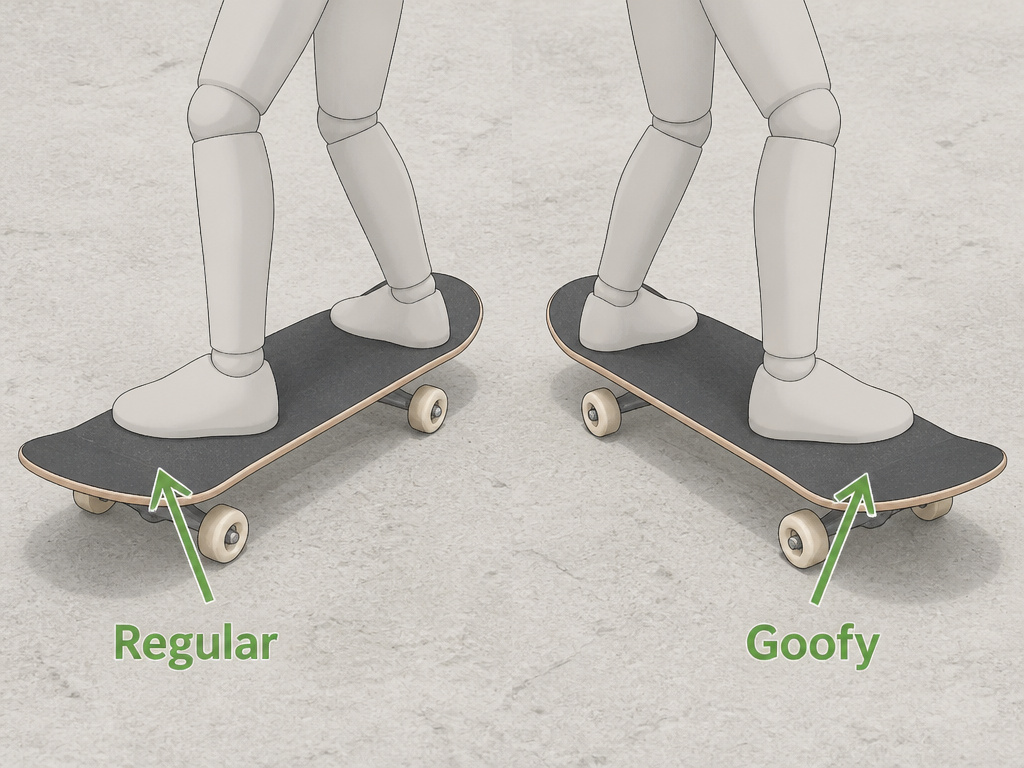
Goofy vs regular stance is about which foot you put forward on the skateboard. Regular stance means riding with your left foot forward and your right foot back, while goofy stance means riding with your right foot forward and left foot back. The choice is a personal preference based on your natural balance, not your handedness, and there is no performance advantage to either one.
That split between left foot forward and right foot forward is the single biggest variable in how you’ll stand on the board. It changes where your weight goes, which foot you’ll pop tricks with, and even how you might fall. But it’s not a choice you make with your head; it’s a choice your body already knows. This is the fundamental difference in goofy vs regular stance skateboarding.
What follows: the exact tests to find your stance, the science and myths behind the split, and the real-world impact on your first month of learning. By the end, you’ll know whether you’re regular or goofy, and why that’s the only answer that matters.
Key Takeaways
- Your natural stance is the one that feels stable instantly, find it with a simple push or slide test, not an online quiz.
- Stance is not correlated with handedness, a Journal of Sports Sciences study found no link, so being right-handed doesn’t mean you’ll be regular.
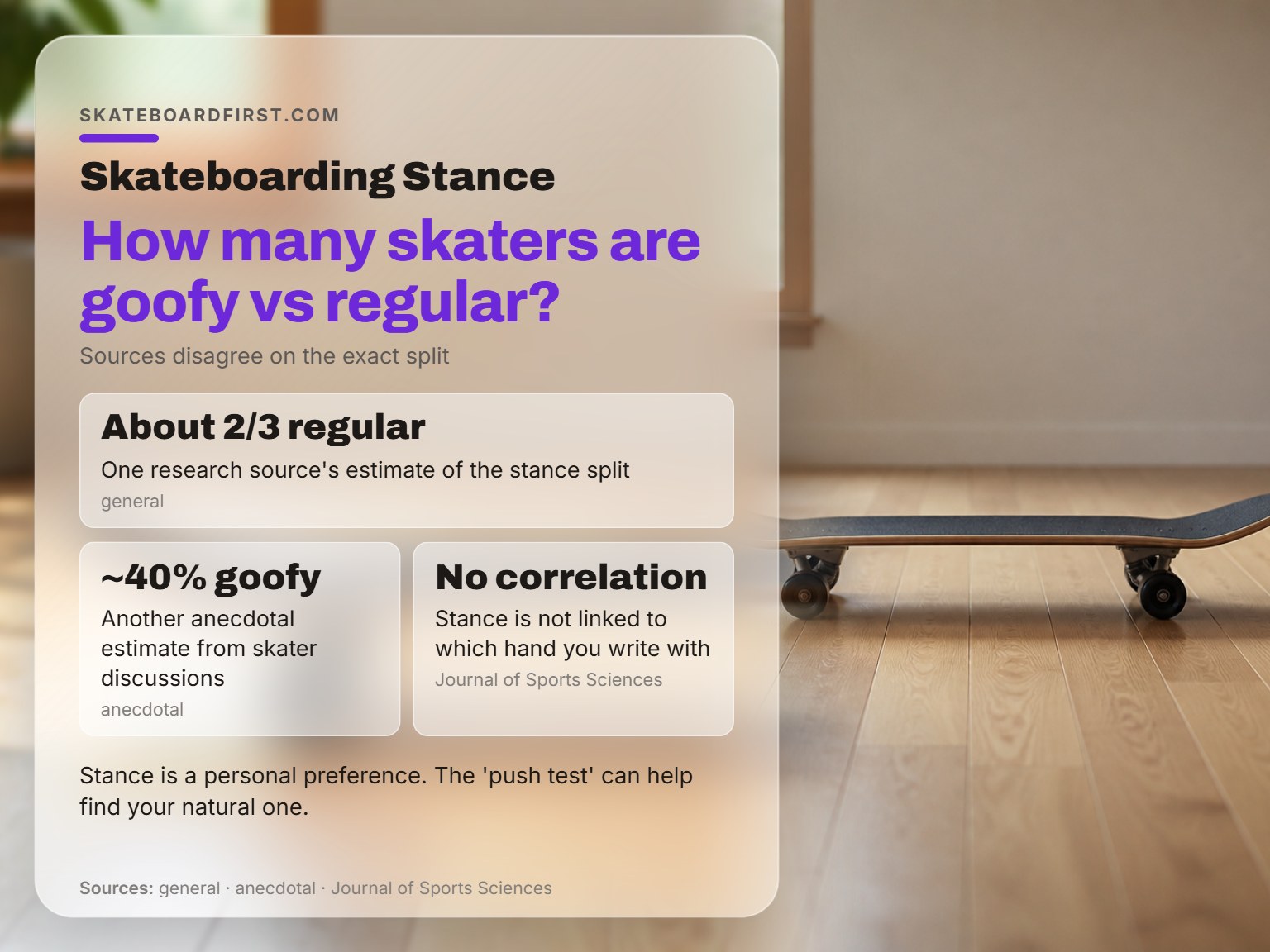
- About two-thirds of skaters ride regular, but contest data shows the split can be nearly 50/50, neither is rare or “wrong.”
- Forcing a different stance because a friend uses it will add weeks of wobble and frustration to your learning curve, according to professional skateboarding instruction, though sports science suggests lateral preferences can be trained.
- Learning to ride switch (your opposite stance) is a valuable skill, but master your natural stance first.
What Is Goofy vs Regular Stance?
Goofy and regular are just names for which foot you put at the front of your skateboard when you ride forward. If you stand with your left foot near the nose and your right foot on the tail, you’re riding regular. If your right foot is forward and your left foot is back, you’re riding goofy. That’s the whole difference.
The names come from surfing. In the 1930s, a Disney cartoon showed Goofy surfing with his right foot forward. When surfers translated the idea to skateboards, “regular” became the default term for left-foot-forward, and “goofy” stuck for the right-foot-forward riders. There’s no value judgment in the names. They’re just labels.
A 2003 study in the Journal of Sports Sciences analyzed lateral preferences in athletes and found stance is an independent motor pattern. It is not correlated with handedness, meaning your dominant hand doesn’t predict your skateboard stance.
The International Association of Skateboard Companies (IASC) has long framed stance as a simple personal preference with no performance implication. Your job isn’t to pick the “right” one. It’s to find the one your body defaults to when it needs balance.
How to Find Your Natural Stance
You don’t need to overthink this. Your body has a built-in preference for which leg it wants to lead with for stability. Three quick tests will show you.
First, the push test. Stand with your feet together on a flat, smooth surface like a driveway or a quiet parking lot. Have a friend stand behind you and give you a very gentle, unexpected nudge forward. The foot you step out with to catch your balance is likely your front foot for skating. If you step with your left, you’re probably regular. Right foot, probably goofy.
Second, the slide test. In socks on a smooth, uncarpeted floor, take a running start and slide like you’re on ice. Which foot leads? That’s your front foot. I did this multiple times in my hallway. My left foot led every single time, confirming my regular stance.
Third, the board test. Place a skateboard on grass or carpet so it won’t roll. Step onto it normally several times. Which foot do you naturally put on the front of the board first? That’s a strong clue. Then, take it to a flat, smooth surface and try rolling a few feet each way. One will feel distinctly more stable and less like a fight. That’s your stance.
These are the same simple tests for goofy or regular I recommend to every new skater. They beat any online quiz.
The Science and Myths Behind Stance Choice
The biggest myth to clear up is that your stance is not determined by whether you are right-handed or left-handed. The Journal of Sports Sciences study is clear on the lack of correlation. In the real world, this plays out in confusing ways. I’m right-handed, I kick a ball with my right foot, and I skate regular. A friend is also right-handed, kicks with his right, and skates goofy. Our handedness is the same; our stances are opposite.
So what does determine it? The current thinking points to neurophysiological lateralization, a fancy term for how your brain is wired for balance and coordination. It might be linked to eye dominance or which leg your brain defaults to for fine motor control under stress. The research is thin, but the takeaway is practical: your stance is a deeply ingrained motor pattern.
Where this goes sideways: Thinking foot dominance decides your stance. About 80-90% of people are right-foot dominant, but only about two-thirds of skaters are regular. If foot dominance were the rule, almost everyone would be regular. They aren’t.
The numbers themselves are fuzzy. But Reddit polls and anecdotal reports from events like goofy vs regular contests show a split much closer to 50/50, sometimes with a slight edge to goofy, illustrating the disagreement over the exact percentage. The actual number is likely between those extremes, and it doesn’t matter. You aren’t a statistic.
Does Your Stance Make Certain Tricks Harder?
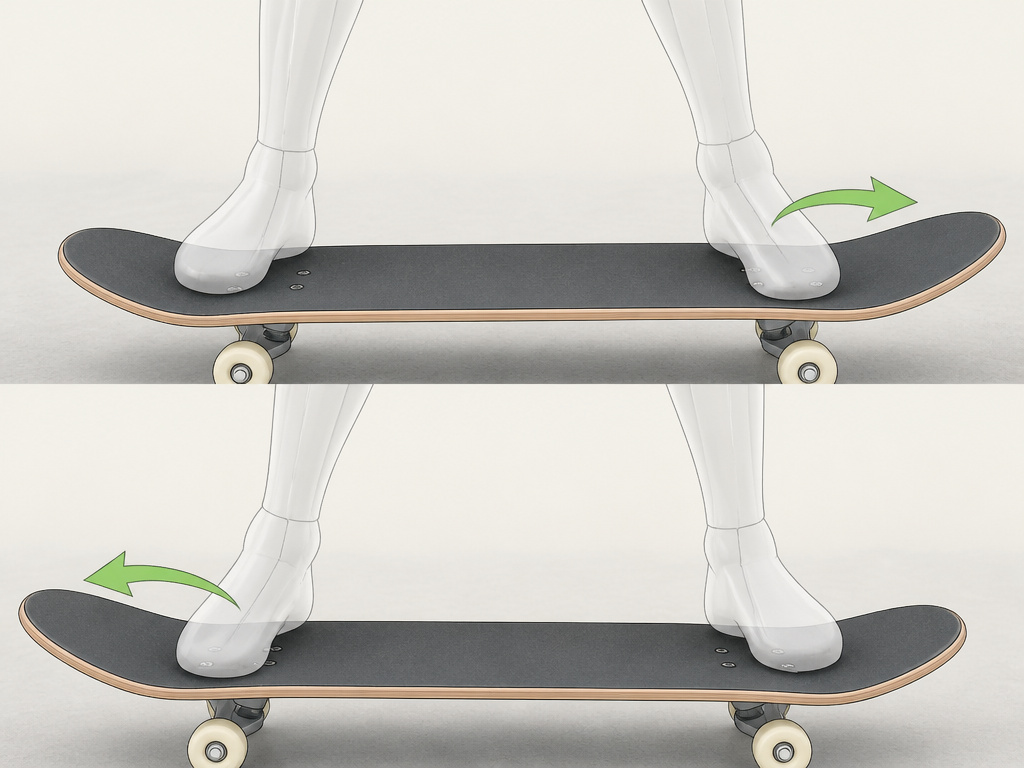
Yes, but not in the way you might think. According to the International Association of Skateboard Companies (IASC), your natural stance in goofy vs regular stance skateboarding doesn’t make you inherently worse at kickflips or heelflips, though some research suggests stance can affect the learning curve for specific tricks. The difficulty comes from the mechanics of the trick and your own coordination.
For example, a regular-footed skater doing a kickflip flicks with their right (back) foot. A goofy skater does the same motion with their left foot. The trick is mechanically identical, just mirrored. Your brain learns the pattern in your natural stance. The balance and muscle memory you build are stance-specific.
Where stance might create a subtle learning curve is in trick direction. Some skaters feel more natural spinning frontside in their regular stance, while others find backside easier. This isn’t a rule, just a common observation. The real impact is on switch skating, riding in your opposite stance. A regular skater learning to ride goofy is starting from zero. That’s why professional skateboarding instruction advises learning your natural stance first, though sports science holds that stance can be changed with training. Get comfortable rolling, turning, and stopping. Then, much later, you can tackle how to ride switch.
| Trick Type | Regular Stance (Left Foot Forward) | Goofy Stance (Right Foot Forward) | Impact of Stance |
|---|---|---|---|
| Ollie | Pop with right foot, slide left foot. | Pop with left foot, slide right foot. | Mechanically mirrored. No advantage. |
| Kickflip | Flick with right (back) foot. | Flick with left (back) foot. | Learning curve is identical; muscle memory is stance-specific. |
| Frontside 180 | Rotate shoulders clockwise. | Rotate shoulders counter-clockwise. | Some find one rotation direction more intuitive, but it’s personal. |
| Switch Ollie | Pop with left foot, slide right foot. | Pop with right foot, slide left foot. | Feels completely foreign. Requires relearning balance and timing. |
The Common Mistakes When You Force a Stance
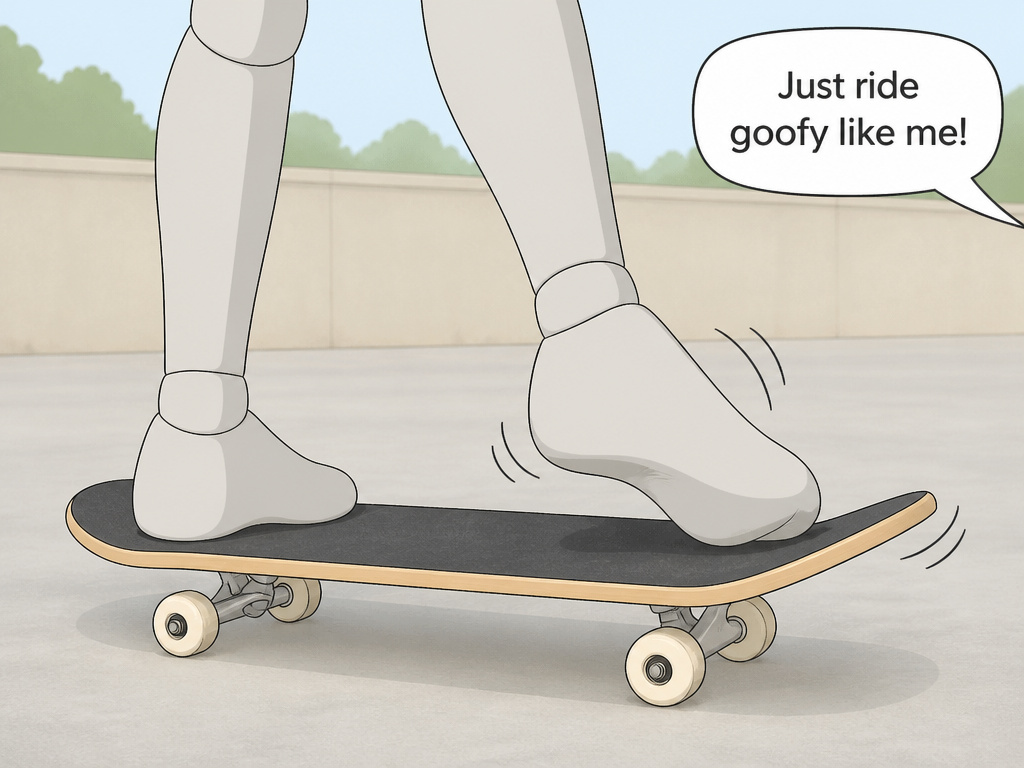
This is where new skaters waste the most time and confidence. You see a friend who’s good, they ride goofy, and you think you should too. Or an online quiz tells you’re regular, but putting your left foot forward feels like standing on a wobble board.
I copied my friend’s goofy stance when I started. For three weeks, I felt perpetually wobbly on a flat driveway. I assumed I was just terrible at skating. When I finally tried regular, the board settled under my feet in minutes. That wobble wasn’t lack of talent; it was a mismatched stance.
Common mistake: Letting someone else tell you your stance. Your friend’s stance, a quiz result, or even a famous pro’s preference is irrelevant. Your body’s feedback is the only data point that counts.
Another pitfall is confusing mongo pushing with stance. Mongo means pushing with your front foot, which is a pushing technique issue. Your stance is about which foot is stationary on the front of the board while you roll. You can be regular stance and push mongo, or goofy stance and push normal. They are separate choices. Mixing them up, like I did for a month, just adds a layer of unnecessary confusion to your pushing technique.
The consequence of forcing the wrong stance is a tangible delay. You’ll spend extra weeks fighting for basic stability that should come naturally. Your progress on tricks will stall because your foundation, your foot placement and balance, is built on sand.
Can You Change Your Skateboarding Stance?
This is where credible sources disagree, and it’s important to present both sides.
The Skateboarding Hall of Fame and professional instruction community strongly advises skating in your natural stance. Their position is that trying to switch is counterproductive and will hinder your progression. They argue that the time spent relearning basic balance in a new stance is time not spent learning actual tricks in your natural one.
On the other side, sports science and biomechanics literature suggests lateral preferences can be trained. The National Academy of Sports Medicine (NASM) states that motor patterns are learnable and modifiable with practice. The theory is that stance is a learned skill, not an immutable trait.
So who’s right? Both, in context.
If you’re a beginner, the pro advice is correct. Your natural stance is the fastest path to competence. Changing it now is a distraction.
If you’re an intermediate skater looking to master switch stance for versatility, the sports science view is your guide. With dedicated, deliberate practice, you can train your body to be competent in the opposite stance. But this is about adding a skill, not replacing your core.
My take is practical. Don’t try to change your natural stance. Invest that effort into getting rock-solid in it first. Later, you can explore other stances like fakie, nollie, and switch as expansions of your toolkit, not corrections to your foundation.
Stance in Other Board Sports
A common question from crossover athletes: does my skateboarding stance translate directly to snowboarding or surfing?
Most of the time, yes. The concept is the same: your front foot is your lead foot for balance and direction. If you skate regular, you’ll likely snowboard regular (left foot forward) and surf regular. Your body’s lateral preference for stability tends to carry over.
But there are caveats. Snowboard bindings lock both feet in place, which can feel different from the free-footed push of skateboarding. Some riders find they prefer a slightly different stance width or angle on a snowboard. Surfing adds the variable of wave direction and pop-up technique, which can influence foot placement.
The best approach is to use your skate stance as a starting point. When you try snowboarding or surfing, default to your skate stance and see how it feels. Adjust from there based on comfort, not because someone tells you to. The core principle remains: your natural stance is your most stable platform, regardless of the board under your feet.
Your skateboarding stance in goofy vs regular stance skateboarding is a personal preference, not determined by which hand you write with. Research shows no correlation between handedness and being regular or goofy. Many people have a naturally dominant foot, which can be the foot you instinctively step forward with. This is the basis for the simple ‘push test’ to find your stance. While sports science notes that lateral preferences can be trained, professional skateboarding instruction strongly advises skating in your natural stance for the best progression. Your underlying neurophysiological lateralization influences this preference and can affect how quickly you learn certain movements on the board.
Frequently Asked Questions
Which stance is better for skating, goofy or regular?
Neither is better. There is no performance advantage to being regular or goofy. Your natural stance is the only ‘better’ one, as it allows faster progress by feeling stable from the start.
Do any pro skaters ride goofy?
Absolutely. Many legendary pros ride goofy, including Tony Alva, Rodney Mullen, and Nyjah Huston. The idea that goofy is less common or inferior is a myth debunked by any pro contest lineup.
Is Tony Hawk goofy or regular?
Tony Hawk rides regular stance (left foot forward). His stance hasn’t limited his trick selection or competitive success in any way.
Do more skaters skate regular or goofy?
The best available data suggests more skaters are regular, but the margin isn’t huge. General research points to about a two-thirds majority for regular, while community counts and contest data often show a split closer to 50/50. The exact number doesn’t matter for your choice.
Should I learn to ride switch?
Yes, but not yet. First, become completely comfortable riding, turning, and doing basic tricks in your natural stance. Once that feels automatic, learning to ride switch will make you a more versatile and well-rounded skater. It’s an advanced skill, not a starting point.
I push mongo. Does that mean I have the wrong stance?
No. Mongo pushing (pushing with your front foot) is a technique habit, not a stance. You can be solidly regular or goofy and still push mongo. While most skaters recommend learning to push with your back foot for better board control, it’s a separate issue from your fundamental stance choice.
The Bottom Line
Here’s the one rule that simplifies everything: if standing on the board feels like a fight, you’re probably on the wrong stance. Your natural stance should feel stable within your first few sessions, even if you’re wobbly from lack of practice. If it doesn’t, run the push test again.
Don’t get hung up on the percentages or the labels. The goal is to get you rolling confidently so you can focus on the fun part, actually skating. Your pushing foot placement and balance will follow naturally from a stance that fits.
So grab your board, find a flat patch of ground, and try rolling both ways. One will click. That’s your answer. Now go skate.
