
How to Get Over Fear of Skateboarding: Step-by-Step
This post contains affiliate links. As an Amazon Associate, we earn from qualifying purchases.
To get over fear of skateboarding, build a three-part safety net: wear gear like wrist guards that reduce injuries by almost 90%, break every trick into tiny, manageable chunks you can prove to yourself, and learn to separate the rational fear of a new trick from the irrational fear that just holds you back. The data shows wrist guards reduce injuries by almost 90% and one-third of all injuries happen in a skater’s first week, which means your fear isn’t a weakness, it’s a predictable, solvable problem.
That gap between predictable risk and irrational panic is where most skaters get stuck. The stats tell you what’s likely to happen, but your brain fills in the rest with worst-case scenarios. The fear isn’t about the board; it’s about the story you tell yourself before you even push off. A key part of how to get over fear of skateboarding is changing that internal story.
What follows is the system to rewrite that story. This section explains the gear that turns a slam into a slide, the progression method that proves you can do the trick before you try the whole thing, and the mental shifts that turn fear from a stop sign into a caution light.
Key Takeaways
- Wrist guards cut injury risk by almost 90%, according to the American Academy of Pediatrics, gear isn’t optional, it’s your statistical edge.
- Break any trick into the smallest possible chunk you feel comfortable trying first; proving you can do that piece makes the next step possible.
- One-third of skateboarding injuries happen in the first week, so your early fear is normal, the goal isn’t to erase it, but to manage it with proven habits.
- If you’re recovering from a bad slam, your first session back should focus solely on re-learning how to fall safely to rebuild the trust you lost.
- Skateboarding progress moves in waves, not a straight line; a heavy slam can set you back, but using the same progression method will pull you forward again.
The 3-Step Safety Net That Actually Works
Fear on a skateboard isn’t a character flaw. It’s a mechanical problem with a mechanical solution. You need a system that addresses the physical risk, the mental block, and the proven path forward, all at once.
The American Academy of Pediatrics states that one-third of skateboard injuries happen in the first week of learning. This isn’t a reason to quit; it’s a reason to start with the right habits from day one.
The first week is when you’re most vulnerable and most likely to form a lasting fear, making it the critical period for learning how to get over fear of skateboarding. You don’t know how to fall yet. You don’t trust your equipment. Every wobble feels like a prelude to a hospital visit. This is normal. Treating it as a temporary, solvable phase is the first mental shift.
I got this wrong for a year. I’d see a trick, feel the fear, and assume that feeling meant “not yet.” It didn’t. It just meant I hadn’t built the safety net. The net has three layers: gear that works, a progression method that proves competence, and a mental model for how to get over fear of skateboarding by separating useful fear from useless panic.
Layer 1: The Gear That Cuts Injury Rates by 90%
We should talk numbers, not opinions. The American Academy of Pediatrics cites specific, verified injury reduction rates from protective gear. This is the difference between a scare and a trip to urgent care.
| Protective Gear | Reported Injury Reduction (AAP) | What Happens If You Skip It |
|---|---|---|
| Wrist Guards | Almost 90% | A forward fall sends all impact into your palms, spraining or fracturing wrists within your first few slams. |
| Elbow Pads | 80% | A sideways slam grinds skin off bone and can cause bursitis that sidelines you for weeks. |
| Knee Pads | 30% | A simple kneel-down to stop a fall becomes a painful abrasion; repeated impacts lead to chronic soreness. |
| Skate-Specific Helmet | Critical (no % given) | A backward fall without a helmet can cause a concussion from the direct impact; with a helmet, the force is dispersed across the shell. |
These aren’t suggestions. They’re statistical facts. Wrist guards are the single most impactful piece of gear you can wear. A forward fall is the most common bail for beginners, and your instinct is to put your hands out. Without guards, that force travels straight into the small bones of your wrist. With them, the plastic slider takes the friction and the splint distributes the impact. The difference is the sound of a slide versus the sound of a crack.
The helmet rule is mandatory. The CPSC fact sheet states it should fit snugly with the chin strap fastened and sit level on your head, not tilted back. A loose helmet can come off on impact. A skate-specific helmet has a hard shell and foam interior designed for multiple impacts, unlike a bike helmet. This is one area where the government skateboard injury data is unequivocal.
The sensory reality is simple. With pads, a fall has a muffled, plastic-on-concrete sound and you get up with a shrug. Without them, you hear the grit grind into your skin and feel the hot sting immediately. One ends your session. The other is a brief pause.
Layer 2: The Progression Method (Break It Into Chunks)
This is where you dismantle fear piece by piece. The Progression Method, detailed by The Daily Push, isn’t about courage. It’s about familiarity. You break the trick you’re scared of into the smallest possible chunk you feel comfortable trying.
Don’t try a full ollie over a crack. Ask: what’s one piece I’m comfortable with? Maybe it’s just popping the tail while stationary on grass. Do that twenty times until it’s boring. Then do it rolling at walking speed. Then find a painted line on the ground and try to pop over the line, not the crack. Each step is a piece of evidence you collect to prove to yourself, “I can do this.”
The study in Safety Science backs this psychological approach. It found that a skater’s risk perception and experience level are key variables in risk-taking. By controlling your experience, making each step boringly easy, you directly manipulate your risk perception. You’re not “facing your fear.” You’re systematically making the unknown known.
Where this goes sideways: Jumping straight to the full trick because a tutorial video made it look easy. You haven’t collected any proof you can do the component parts, so your brain has every reason to panic. The board shoots out, you fall, and the fear gets stronger.
I use this method every time I’m stuck. For a boardslide, the first chunk was just ollieing onto the box and stepping off immediately. The next chunk was letting the board slide an inch before bailing. The final chunk was committing to the slide. It took a week. I never felt that gut-churning terror, because I never asked my body to do something it hadn’t already proven it could do.
Layer 3: The Mental Model (Rational vs. Irrational Fear)
Your fear is a signal. The trick is learning what it’s signaling. Rational fear is your body saying, “You haven’t practiced the lead-up enough for this.” Irrational fear is your body saying, “This feels scary, even though you can do all the parts.”
Here’s how to tell the difference. Can you do the trick on grass or carpet? Can you do every single step leading up to the trick perfectly, three times in a row? If the answer is no, your fear is rational. Go back a step. If the answer is yes, your fear is irrational. It’s just noise.
The peer-reviewed risk-taking research points to “sensation seeking” as a major factor in a skater’s risk perception. Some people are wired to enjoy the adrenaline of the unknown. Most beginners aren’t. For you, the goal is to replace the unknown with the known. That’s the entire point of the progression method.
A concrete trick for in-the-moment fear: breathe out. When you’re about to attempt the trick, your body will tense up and you’ll hold your breath. That tension kills your balance and commitment. Make your last action before you go a long, forceful exhale. It forces your shoulders to relax and your weight to settle over the board. It’s a physical interrupt button for the panic loop.
How to Fall Safely (And Why It Rebuilds Confidence)
Falling is a skill. If you don’t practice it, you’ll do it wrong. A bad fall reinforces fear. A practiced, controlled fall teaches your body that it can handle impact.
The CPSC guide doesn’t mince words: never lie down on a moving board and avoid “skitching” (hitching rides on vehicles). Those are high-impact disaster scenarios. The falls you can practice are low-speed, low-stakes bails.
Practice this sequence: Ride slowly onto a patch of grass. Let the front wheels catch and gently step/jump off, landing on your feet with your knees bent. Next, practice a roll. From a crouched position on the ground (not moving), practice tucking your chin and rolling over your shoulder, distributing the impact across your back. The goal is to avoid taking the full force on any one joint.
I once let a bad slam, where I landed flat on my back, keep me off the board for a month. The fear wasn’t of the trick; it was of that specific, shocking impact again. Coming back, I spent a whole session just practicing that roll on flat ground. It felt silly. It also rewired the memory from “pain” to “a thing I know how to handle.”
This is critical for recovering from a fall. Your body remembers the last fall. If the last fall was traumatic and unpracticed, your confidence shatters. If the last fall was a controlled practice bail, your confidence barely dips. After any significant slam, your next session should be 100% dedicated to re-learning the fall that got you.
Building a Supportive Community (You Shouldn’t Skate Alone)
The CPSC fact sheet includes a direct command: never ride alone. This is for safety, but it’s also for psychology. The ScienceDirect journal article on fear hints at the social components of risk-taking. A group changes your perception.
Skating with others does three things. First, it provides direct visual feedback, you see someone else do the trick, which makes it seem more possible. Second, it creates positive peer pressure, a gentle nudge to try when you might otherwise back down. Third, and most importantly, it normalizes falling. When you see everyone else slam and get back up laughing, it reframes a bail from a failure into a shared experience.
If you don’t have skater friends, go to a local skatepark early on a weekday morning. The crowd is usually smaller and more relaxed. Say you’re new and working on basics. Most skaters will offer a tip or just a word of encouragement. That external validation is fuel for your own confidence.
For parents, this principle is how you help young skaters build confidence. Your role isn’t to coach the trick. It’s to be the supportive presence that makes the skatepark feel safe. Celebrate the attempts, not just the lands.
The Special Case: Fear After Injury or On Electric Boards
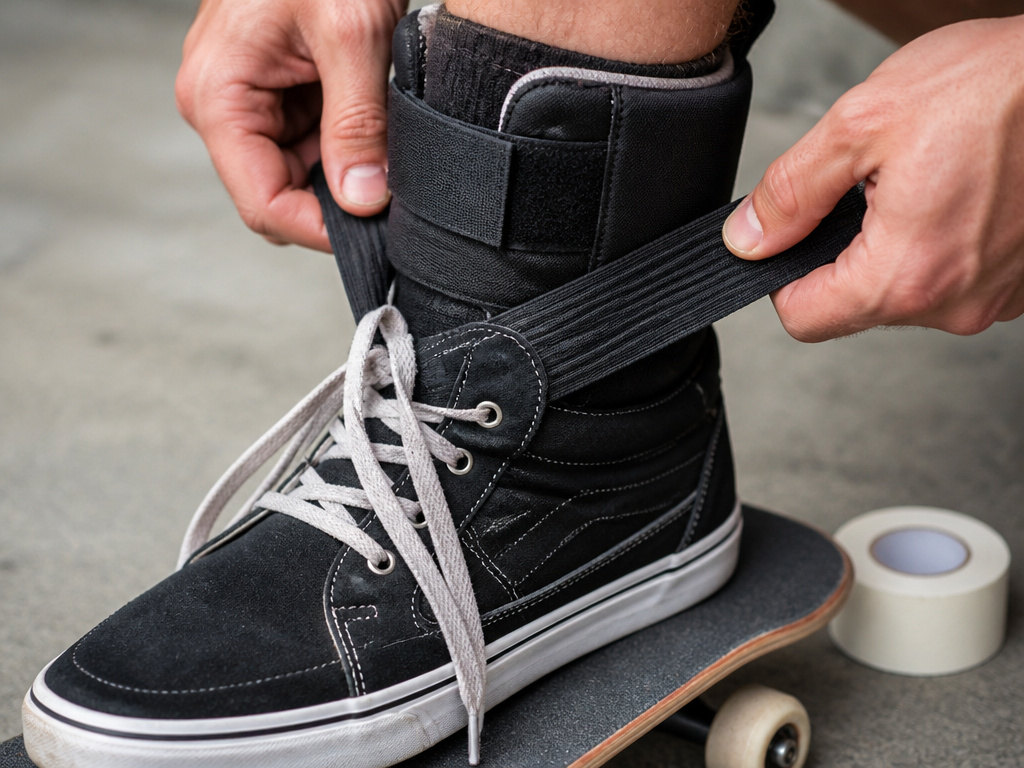
Some fears have a very real, very specific origin. A broken wrist from a past fall, or the known hazards of an electric skateboard, aren’t irrational. They require specific strategies.
After a Specific Injury: The fear is tied to a body part. The solution is to over-protect that part while you rebuild trust. Sprained your ankle? Wear a high-top skate shoe and an ankle brace for your first five sessions back. The physical support also provides a psychological cue that it’s safer now. The AAP notes that regular icing (20 minutes) helps with sprain recovery, but the tape or brace is what allows you to get back on the board without flinching.
Electric Skateboards (Onewheel): This is a distinct category with documented dangers. In September 2023, the U.S. CPSC recalled all Onewheel models after four reported deaths and numerous injuries. The defect: the board can stop balancing the rider if its limits are exceeded. Newer models need a firmware update via the Onewheel app. The original Onewheel and Onewheel+ models cannot be updated and, in the CPSC’s words, “should not be used.”
If you’re on an electric board, your fear isn’t just about falling, it’s about system failure. The safety net here is strictly mechanical: ensure your board is updated, never push past its beep warnings, and treat it with the respect you would a motorized vehicle, not a skateboard. The mindset of “pushing through” is how you exceed the board’s limits.
Physical Conditioning to Prevent Fear
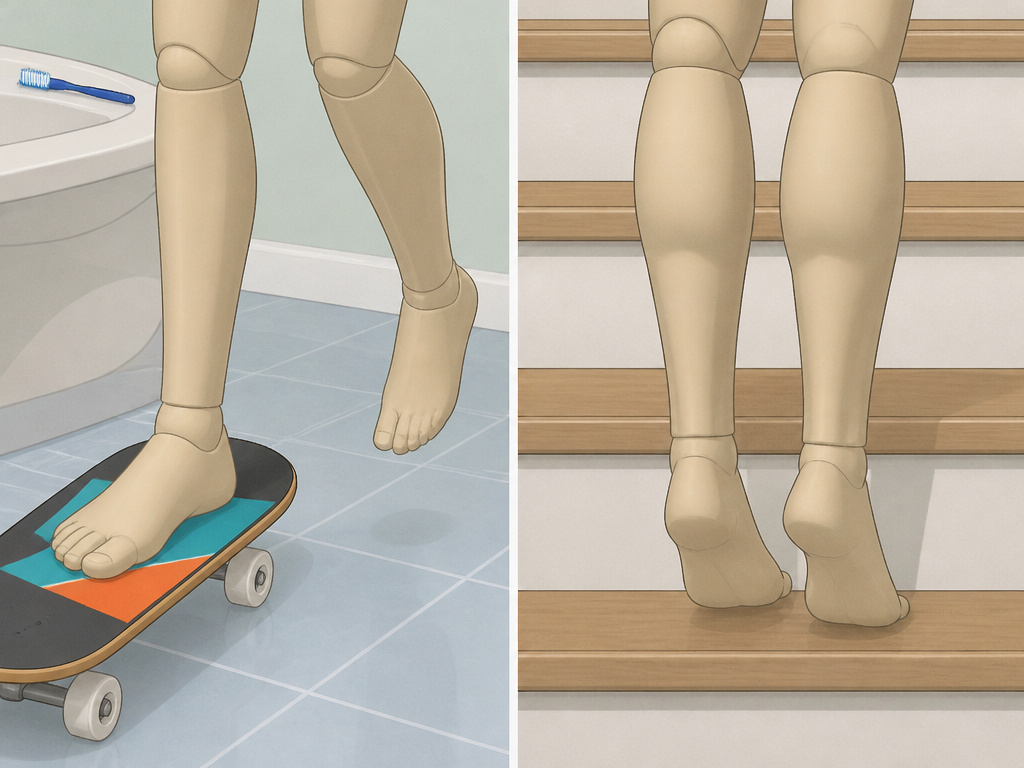
Fear often lives in weak muscles. If your legs are shaky after five minutes, your brain reads that shakiness as “I am not in control.” Strengthening the supporting muscles turns that signal off.
You don’t need a gym routine. Two exercises done consistently will change your board feel:
- Single-Leg Balances: Stand on your front foot (the foot you keep on the board) for 30 seconds, then a minute. Do this while brushing your teeth. This directly strengthens the stabilizers that keep you upright.
- Calf Raises: Do them on a stair edge, letting your heel drop below the step. Skateboarding is a constant calf exercise; pre-conditioning them prevents the burning fatigue that makes you want to quit.
Stronger muscles mean more precise control. More control means fewer unexpected wobbles. Fewer wobbles means less fear. It’s a direct chain. For adults starting skateboarding, this is especially crucial, your body needs to relearn balance it hasn’t used in years.
Frequently Asked Questions
How do you stop being scared of skateboarding?
You don’t stop the scare. You manage it with a system. Wear gear that statistically reduces injury (wrist guards, helmet), break every trick into a progression of tiny, proven steps, and separate rational fear (you’re not ready) from irrational fear (you are ready but scared). The feeling never fully goes away, but it stops being the boss.
What is the fatality rate for skateboarders?
Fatalities are rare compared to common injuries like sprains and fractures. The real danger comes from specific, high-risk behaviors like skating in traffic or “skitching.” The CPSC and AAP emphasize that the vast majority of serious injuries and fatalities involve collisions with vehicles. This is why their primary rules are to stay clear of traffic and never skate alone.
Why does skateboarding feel so hard?
It feels hard because it is hard. You’re asking your body to master balance, coordination, and precise timing on an unstable platform, all while overcoming the natural fear of falling. The study on skateboarder risk assessment links the challenge to risk perception. It’s supposed to feel difficult at first. The difficulty is what makes the eventual progress so rewarding.
Do most skaters ride goofy or regular?
There’s no majority. It’s roughly 50/50. Your stance (regular: left foot forward, goofy: right foot forward) is natural; you’ll know it the first time you step on a board and feel which way is more stable. Don’t overthink it or try to switch because a friend says one is “correct.”
Before You Go
One rule most guides skip: if you’ve taken a slam that’s shaken your confidence, your next session has only one goal. Don’t try to reclaim the trick you fell on. Go back and re-practice the fall itself, in a controlled way, until it feels mundane. You’re not rebuilding the trick; you’re rebuilding the trust between your brain and the pavement. Everything else flows from that.
The data gives you the blueprint. The wrist guard study, the first-week injury stat, the progression method, these aren’t motivational quotes. They are levers. Pull them in order: gear up, break the trick down, then decide if the fear left is a useful warning or just noise. Your job isn’t to be fearless. It’s to be too prepared for the fear to matter.
Start small, then build. Tighten your helmet, lace your guards, and go prove to yourself you can do the first, smallest chunk. That’s the only step that ever counts.
