
How to Build Confidence in Young Skateboarders
This post contains affiliate links. As an Amazon Associate, we earn from qualifying purchases.
To build confidence in a young skateboarder, start with the right protective gear, wrist guards cut injury risk by 90%, and prioritize foundational skills like pushing and stopping over tricks. One-third of all skateboarding injuries happen in the first week, so a slow, supervised start on a smooth, flat surface is essential.
Confidence comes directly from a kid feeling safe, capable, and in control on their board. That feeling comes from a specific sequence: gear that works, skills that stick, and an environment that doesn’t overwhelm them before they’ve found their balance. A key part of this is understanding how to build confidence in young skateboarders.
What follows is a breakdown of the methods that work, pulled from pediatric safety guidelines and coaching toolkits. The guide details the gear stats that matter, the three-step falling drill every beginner needs, and how to spot the difference between healthy challenge and pushing too fast.
Key Takeaways
- Wrist guards reduce injuries by almost 90%, according to the AAP, this single piece of gear is the biggest confidence-builder for a nervous beginner’s hands and wrists.
- Spend the initial sessions just rolling. Master pushing, turning, and stopping on flat ground before any incline or trick enters the conversation.
- Use the “crouch, relax, roll” fall technique taught by Seattle Children’s Hospital, practicing how to fall safely removes the biggest mental block for new skaters.
- Celebrate the attempt, not just the landing. Praise the courage to try a new curb or a longer push; outcome-based praise can stall progress after a failure.
- Keep early sessions short and positive. A short, positive experience beats a long, frustrating one that ends in tears and a board left in the garage.
The Gear That Actually Reduces Fear (And Injury)
Talk to any young skater who’s hesitant, and the first thing they mention is the fear of falling. It’s a smart fear. The American Academy of Pediatrics notes that one-third of all skateboarding injuries happen in the first week. So the goal isn’t to eliminate falls, that’s impossible, but to make them less scary and less damaging.
Before you start: A head impact can happen from a standing-height fall. A helmet must meet the ASTM F1492 skateboarding standard (not just a bike standard) and fit level on the head with the chin strap snug. Loose helmets come off on impact.
This is where gear stops being optional decoration and starts being a confidence engine. The numbers from the AAP are too clear to ignore:
- Wrist guards reduce injuries by almost 90%.
- Elbow pads reduce injuries by 80%.
- Knee pads reduce injuries by 30%.
Put those on a kid, and you’ve addressed the three most common impact points. The physical sensation changes. A slide on kneepads doesn’t sting. A wrist catch on guards doesn’t jam. That safety net allows them to focus on their feet and the board, not the concrete.
| Gear Piece | What It Does | The Confidence Boost |
|---|---|---|
| ASTM F1492 Helmet | Protects against skull fracture and concussion from backward falls. | Eliminates the “what if I hit my head” fear, the biggest mental barrier. |
| Wrist Guards | Prevents sprains, fractures, and scrapes on palms. | Lets them put hands down to catch a fall without flinching, making balance recovery instinctive. |
| Knee & Elbow Pads | Absorb impact and prevent road rash. | Turns a scary, painful slam into a manageable slide, encouraging them to try again. |
For a deep dive on fitting and choosing essential skateboard safety gear for kids, we have a full guide. The short version: skip the flimsy toy-store sets. Go for protective gear designed for actual impact. A helmet should fit snugly with the chin strap fastened. You shouldn’t be able to pull it off over the forehead once the strap is clipped.
The CDC BAM physical activity card puts it simply: “Always wear all of your protective gear.” It’s the first step in any real confidence building plan.
Start Here: The Non-Negotiable Foundation
Where should a brand-new skater’s first push happen? Not on a hill. Not in a driveway with a slope. The CDC, Seattle Children’s Hospital, and every seasoned coach say the same thing: a smooth, flat, empty parking lot or basketball court.
The goal of the first 5-10 sessions is to build what skateboard instructors call “board feel.” That means getting so comfortable with the basics that the kid isn’t thinking about their feet anymore. Their brain needs to automate the following sequence:
- Stance: Which foot feels natural in front (regular or goofy)?
- Pushing: Can they push 4-5 times smoothly and get both feet on the board?
- Rolling: Can they ride in a straight line for 50 feet without wobbling off?
- Turning: Can they make a wide, controlled carve left and right by leaning?
- Stopping: Can they safely step off, or drag the tail to slow down?
Sources disagree on the best board type for beginners: the U.S. Consumer Product Safety Commission advises that longer boards increase stability, while Seattle Children’s Hospital recommends short decks and wide wheels. Here’s how to reconcile that for a child: focus on wheel width and truck tightness first. Wider, softer wheels roll smoothly over cracks and pebbles, which is more important than a few inches of deck length. Adjust the trucks to make turning easier, it makes turning easier and less tippy.
If you’re unsure where to begin with selecting that first setup, our guide on how to choose a skateboard for a child walks through deck width, wheel hardness, and truck adjustment specifically for young beginners.
The 5-Minute Pre-Session Warm-Up That Works
Before any real skating happens, run a five-minute physical and mental warm-up. This ritual does two things: it prepares the body to move, and it signals to the brain that it’s time to focus on fun, not fear.
The Physical Part (3 minutes):
- Ankle Rolls: 10 circles each direction, each foot. Skateboarding is all about ankle flexibility and strength.
- Knee Bends: 10 shallow squats. This wakes up the legs’ major muscles for pushing and balancing.
- Wrist Circles: 10 circles forward and back. Prepares the joints for potential catches.
- Balance Check: Stand on one foot, then switch. Do this on the grass first, then on the stationary board.
The Mental Part (2 minutes):
- Today’s Goal: Pick ONE simple goal. “Push to the blue line and back three times.” Or “Practice stepping off without falling.” Keep it absurdly achievable.
- The “What If” Plan: Ask, “What’s the plan if you start to fall?” The answer should be the Seattle Children’s Hospital method: “Crouch down, relax, roll.” Just saying it out loud builds a neural pathway.
This warm-up is a core part of any good program for teaching kids to skate. It turns a chaotic, scary new activity into a predictable routine. Kids thrive on routine.
How to Talk So a Young Skater Listens (And Tries Again)
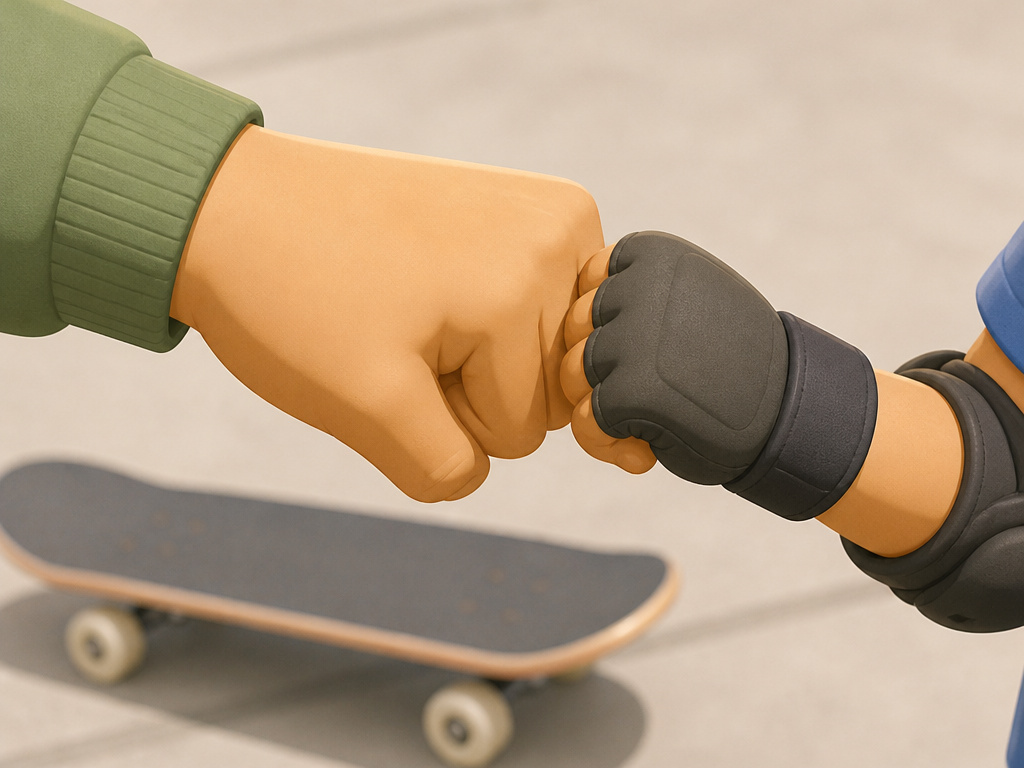
The language you use around a young skater is as important as the helmet on their head. Generic praise like “Great job!” falls flat after a fall. Specific, process-focused feedback builds resilience.
Where this goes sideways: Praising only successful landings. After a few fails, the kid learns that failure earns silence or correction, and their motivation to try anything hard plummets.
The Skate Like A Girl coaching toolkit emphasizes a “Tell It, Label It, Celebrate It” model. It works like this:
- Tell It: Narrate what they did well. “You kept your eyes up the whole time you were pushing.”
- Label It: Name the character trait that action showed. “That took serious focus.”
- Celebrate It: A high-five, a fist bump. Keep it simple.
This approach separates the skill from the child’s identity. “You fell” is not “you’re a bad skater.” It’s “the board slipped. Let’s see if bending your knees more keeps it under you next time.”
The federal Consumer Product Safety Commission guidelines strongly advise that children under 8 be closely supervised. Your role in that supervision is to be a calm, observant spotter who narrates progress and normalizes mistakes. If they get frustrated and want to quit, let them. Ending on a voluntary “I’m done” is better than ending on tears. You can always say, “Okay, we’ll put it up for today. We’ll try again after lunch/whenever.”
This calm coaching style is crucial when you compare a how to build confidence in young skateboarders plan, as it helps them overcome fear of falling, which is often the root of frustration.
Turning Practice Into Play: Drills That Don’t Feel Like Drills
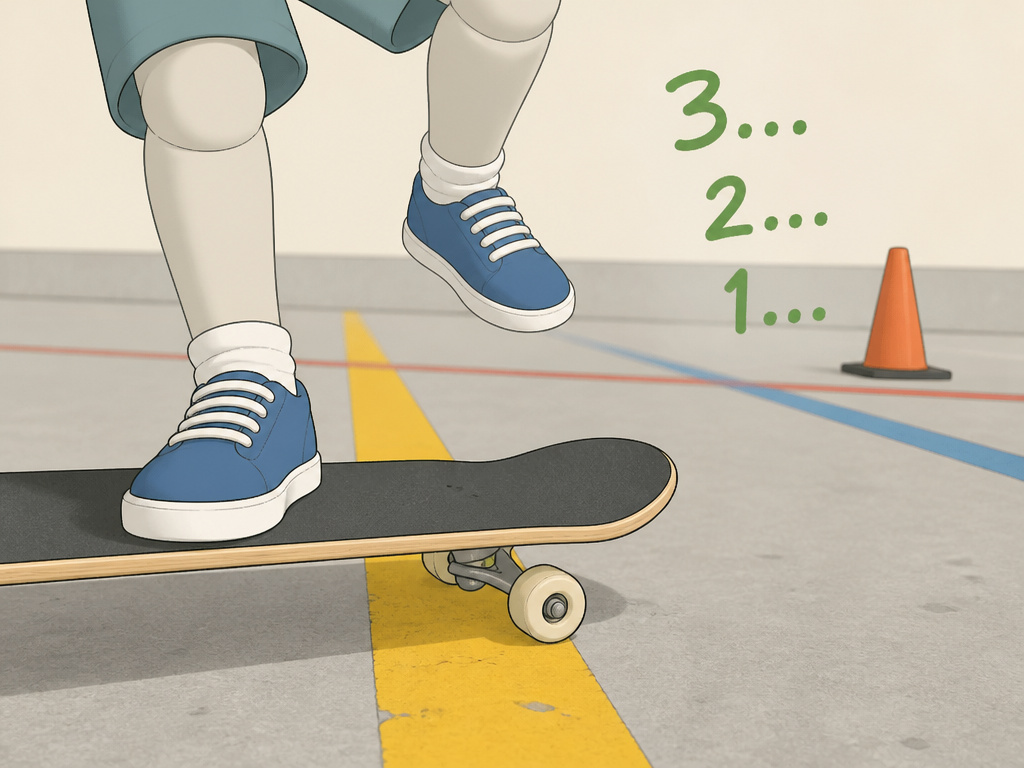
Young kids don’t want to drill. They want to play. The trick is to disguise fundamental skill-building as a game. Here are three that work without them even knowing they’re practicing.
1. The Color Line Game:
Find a parking lot with different colored lines or cracks. The goal: can you push and roll from one line to another without stepping off? Then from the yellow to the next crack? This game builds pushing stamina and straight-line balance in tiny, rewarding increments.
2. Cone Slalom (Walk Version):
Set up two markers a short distance apart. The challenge is to walk the board through them, using only gentle kicks of the tail to steer. This teaches steering control without the pressure of speed. Once that’s easy, they can try a slow roll.
3. The “Statue” Balance Challenge:
Have them get on the board in a stable stance, then lift one foot an inch off the deck. How long can they hold it? Count together. Then try the other foot. This builds the tiny ankle adjustments needed for real balance, and turning it into a “how long can you last” game makes it fun.
These games address the common “skateboarding for kids” question, which is part of the broader how to build confidence in young skateboarders challenge, of how to maintain interest while building essential skills. They create natural, positive repetition.
When, and How, to Introduce the First “Trick”

Trick is a loaded word. For a true beginner, a “trick” is anything that feels like a progression from simple rolling. The first real skill milestone after pushing and stopping is the hippy jump (jumping straight up and landing back on the board while it’s stationary), followed by a kickturn (lifting the front wheels to pivot).
Don’t move to a new obstacle or a harder trick until they can land the current skill consistently on flat, stable ground. This rule keeps confidence honest and prevents the discouragement of constant failure on terrain that’s too advanced.
I learned this after watching a young skater try to drop off a curb before he could reliably kickturn on flat ground. He fell five times in a row, got mad, and didn’t want to skate for a week. The curb didn’t teach him anything; it just proved he wasn’t ready.
When they are ready for curated, age-appropriate moves, a list of easy skateboard tricks for kids can provide the next set of goals. The key is to let the child’s consistent success, not your timeline, dictate the pace.
Navigating Setbacks and Building Resilience

A bad fall, a frustrating plateau, or seeing a friend land something they can’t, these are confidence killers if not handled well. Research indicates helmet use is lower in children older than age 12 years compared to children age 12 or younger.
After a Bad Fall:
- Check for injury first. Be calm.
- Normalize it. “Everyone falls. That’s how you know you’re trying something.”
- Quick Analysis: “What happened? Did the board shoot out? “What happened? Did the board shoot out? Okay, try putting more weight over it next time.” Then get right back on the board for one easy success, just a push and roll, to end the cycle on a win.
During a Plateau:
Go back two steps. If they’re stuck on kickturns, go back to just carving. Mastery builds confidence, and sometimes mastery means revisiting an “easy” skill with a new focus, like carving in a tighter circle. This is a core strategy for long-term confidence in skateboarding.
The research review by Feletti & Brymer highlights that those under adult supervision were 6 times more likely to use helmets. Your steady presence isn’t about control; it’s about providing the safety net, both physical and emotional, that allows risk-taking and resilience to grow. This support is fundamental when teaching them how to commit to tricks later on.
How to use skateboarding for creativity, not competition
Skateboarding is a personal canvas for movement and expression. Encourage young riders to focus on their own progress, not comparing themselves to others. The goal is to find their own style, whether that’s mastering a smooth carve, learning a simple trick, or just enjoying the feeling of rolling. This mindset reduces pressure and builds a different kind of confidence, one rooted in self-expression and the simple joy of figuring something out for themselves. Let them explore flat surfaces first to build comfort, and celebrate the small, creative wins.
Getting past the fear of looking silly while skateboarding
Everyone feels self-conscious when learning. The key is to frame the experience as a shared journey, not a performance. Remind them that every skater, even the most advanced, started by wobbling and falling. One practical step is to ensure they are wearing all their protective gear, as this can reduce the physical fear of injury and, in turn, the social fear of looking bad after a fall. Suggest practicing in a less crowded area or with a supportive friend initially. The focus should be on the personal challenge and the fun of learning, not on an imaginary audience. Confidence grows when the activity becomes about the skateboarder and the board, not the people around them.
Frequently Asked Questions
What are the best first skateboarding skills for a young beginner?
The absolute first skills are pushing, rolling in a straight line, and stopping safely by stepping off. Before any turning or tricks, a child needs to be able to get on the board, move it forward, and get off without falling. Seattle Children’s Hospital emphasizes starting slow on flat surfaces to master this control.
How can I help my child overcome the fear of falling?
Practice falling on purpose. On grass, have them kneel on their kneepads and gently tip over to slide. Teach the “crouch, relax, roll” technique endorsed by Seattle Children’s Hospital: if you’re losing balance, crouch low to reduce the fall distance, relax your muscles, and try to roll onto fleshy parts like your shoulder or thigh. Knowing how to fall makes the prospect of falling less terrifying.
My child gets frustrated and wants to quit. What should I do?
Let them quit for the moment. Forcing practice builds resentment. Instead, validate the frustration, “It’s really hard, I see that”, and then pivot to a fun, no-pressure alternative. Suggest putting the board away and doing a different activity. Often, the desire to skate returns after a short break. The key is to keep the association with skateboarding positive, not punishing.
Are skateboarding classes or camps worth it for young kids?
They can be, if the focus is on fun and foundational skills. A camp run by organizations like Skate Like A Girl provides a supportive peer group and professional coaching that emphasizes the “play” aspect. For a very hesitant child, a few private lessons to get past the initial fear barrier can be a great investment. Always check that the instructors are background-checked and the program emphasizes safety gear.
How do I know if my child is ready to try a skatepark?
They are ready when they have full control on flat ground: they can push, turn, stop, and kickturn without thinking about it. Their first park visit should be during off-hours (weekday mornings are often quiet). Go with them and just watch at first. Then, let them practice on the flat bottom area before even looking at any ramps. The official AAP skateboarding safety guide advises following all skatepark rules and cautions that many injuries happen in ramp areas.
The Bottom Line
Building a young skateboarder’s confidence is a concrete process, not a mystery. It starts with the physical safety net of ASTM F1492 helmets and wrist guards, gear that turns a scary slam into a manageable slide. It grows through the slow, patient mastery of pushing and stopping on flat ground, where short, positive sessions beat marathon drills every time.
Your role is to be the calm narrator of their progress, using the “Tell It, Label It, Celebrate It” model to praise effort, not just outcomes. When frustration hits, step back two skills to rebuild mastery. Remember the 3-for-5 Rule before any progression.
The goal is to foster a relationship with the board built on joy, not fear. That foundation of safety and celebrated effort is what turns a wobbly beginner into a skater for life. Now go find a smooth parking lot and push.
