
Off Board Training for Skateboarders: Sample Weekly Plan
This post contains affiliate links. As an Amazon Associate, we earn from qualifying purchases.
Off-board training for skateboarders builds explosive leg power, bulletproofs your joints against high-impact landings, and sharpens the balance and coordination you need for technical tricks. The Swiss Federal Office of Sport (BASPO) guide implies specific physical qualities are performance-critical, while a 2024 NIH scoping review concludes that ‘what constitutes and distinguishes competitive skateboarding is unexplored’ and finds no research directly linking physical qualities to competitive success.
The forces involved are not theoretical. Landing an ollie off a platform can hit 4.52 times your body weight, and bailing from an 8-stair handrail grind can spike to 12.09 times your body weight. Your training needs to prepare your tendons and ligaments for that reality, not just make your muscles look bigger. This includes specific off board training for skateboarders. This guide moves past generic gym advice to a plan built for the unique demands of pushing, popping, and landing.
What follows: the three physical pillars every skater should train, the exact exercises that translate to the board, a sample weekly schedule that works with your skate sessions, and the recovery work most people skip until they’re already hurt.
Key Takeaways
- Train for explosive power and high-impact resilience; landing forces can exceed 12 times your body weight, so generic strength isn’t enough.
- Ankle stability and proprioception are essential; a 2021 study found professional skaters had significantly less inversion-dominant ankle range of motion than amateurs, indicating trained stability.
- Pair compound lifts (squats, deadlifts) with plyometrics (box jumps, lateral bounds) 2-3 times per week, leaving at least one full day between heavy leg days and intense skate sessions.
- Recovery and mobility work, especially for hips, ankles, and calves, directly prevents overuse injuries like plantar fasciitis and keeps you skating consistently.
- A structured weekly plan blending 2-3 gym sessions with 3-4 skate sessions, plus daily mobility, beats random workouts and leads to faster, safer progress.
The 3 Pillars of Off-Board Training
Forget just getting stronger. What happens on a board is a specific blend of power, balance, and impact. Your off board training for skateboarders should mirror that blend.
The BASPO guide, created for using skateboarding as off-snow training for snowsport athletes, stresses the need for good safety equipment and the right gear to forgive mistakes. That principle transfers directly: your training should build a body that forgives the mistakes inherent in learning new tricks.
A 2021 study in the Journal of Sport Rehabilitation compared professional and amateur skateboarders. It found the pros had significantly less inversion-dominant ankle range of motion. That’s not a lack of flexibility; it’s a sign of highly trained stability. Their ankles were tighter in the risky direction because the supporting muscles were doing their job.
1. Explosive Power & Impact Readiness
Skating isn’t about slow, grinded-out strength. It’s about generating force fast and absorbing even more force faster.
Why it matters: The pop of an ollie comes from a rapid, forceful extension of the back leg. A 2012 study of beginner skaters found a link between countermovement jump power and maximum ollie height. The higher you can jump off the ground, the higher you can pop your board. But you also have to stick the landing. Research shows peak landing forces for an ollie off a platform average 4.52 times body weight, and that’s for a controlled landing. A bail from height multiplies that force dramatically.
The exercises that translate:
- Box Jumps: Train explosive hip extension. Start with a height you can land on softly, knees bent, and step down, don’t jump down. Progress to higher boxes.
- Single-Leg Romanian Deadlifts: Build stability and strength in the hamstrings and glutes of your pushing leg, which takes a beating. Hold a kettlebell or dumbbell in the opposite hand.
- Plyometric Exercises like Lateral Bounds: Skateboarding is rarely straight up and down. Lateral power helps with board control during shuv-its and carves. Jump sideways from one foot to the other, focusing on a soft, stable landing.
Common mistake: Only training slow, heavy squats. While back squats build a great base, if you never move the weight fast, you’re not training the rate of force development you need for pop. Add speed. Do lighter squats for speed, or add a jump at the top of a bodyweight squat.
2. Ankle Stability & Proprioception
Your ankles are your primary suspension system. Every uneven landing, every tweaked trick, tests them.
Why it matters: Proprioception is your body’s sense of where its parts are in space. When you land slightly off-center, your ankle needs to sense the tilt and fire the right muscles to correct it before ligaments get strained. The study mentioned above shows pros have honed this system. For beginners, weak ankles mean rolled ankles. For experienced skaters, it means sketchy landings that should be clean.
The exercises that translate:
- Single-Leg Balance Drills: Stand on one foot on the floor. Close your eyes. Try it on a folded towel or a balance board. Hold for a duration that challenges your balance. The wobbling is your stabilizers working.
- Ankle Alphabets: Sit with your leg extended. Using only your ankle, trace the letters A-Z in the air. It seems silly, but it engages the full range of motion and strengthens the smaller supporting muscles.
- Calf Raises on an Unstable Surface: Stand on the edge of a step or a balance pad. Do calf raises slowly, focusing on control at the top and bottom. This directly strengthens the Achilles and calf complex for pushing power and landing stability.
Integrating specific balance exercises into your warm-up is a low-effort, high-reward habit.
3. Core & Rotational Strength
Your core isn’t just about six-pack abs. It’s the link between your powerful legs and your controlled upper body. It’s what allows you to twist for a backside 180 or keep your shoulders aligned during a kickflip.
Why it matters: A weak or disengaged core forces your legs and arms to compensate, killing efficiency and making tricks feel awkward. When you ollie, your front foot pulls the board up while your back foot pops. That opposing motion requires torso stability. When you carve a bowl, your core keeps you centered over your trucks.
The exercises that translate:
- Dead Bugs: Lie on your back, arms extended toward the ceiling, knees bent at 90 degrees. Slowly lower your right arm and left leg toward the floor without letting your lower back arch. Return and switch sides. This teaches anti-rotation and pelvic stability.
- Plank Variations: Standard planks are a start. Add shoulder taps, leg lifts, or perform them on a stability ball to increase the challenge.
- Pallof Press: Using a cable machine or resistance band anchored at chest height, stand sideways and press the handle straight out from your chest. Resist the band’s pull to rotate your torso. This builds the anti-rotational strength crucial for keeping your shoulders square during tricks.
A strong core supports all your leg exercises and plyometric drills by providing a stable platform to push from.
Where the Experts Disagree
The fitness world loves a single, simple answer. Skateboarding, thankfully, doesn’t play along. Two legitimate camps exist, and where you land depends on your goals.
The Weight Room Debate
On one side, you have the argument made by many in the Reddit community: “Most competitive pros hit the gym. Look at p rod, wayne desarmo. To name a few. Having a gym routine… will help with everything from increased stamina, injury prevention, increased pop…” This camp points to the measurable benefits of strengthening your legs and core through progressive overload, adding weight or reps over time. The logic is solid: stronger muscles, tendons, and bones handle impact better.
On the other side, another Reddit user counters: “Favorite pro skaters never stepped foot in a gym.” This perspective champions skate-specific skill as the only true path to improvement, viewing gym time as a distraction from actual board time. There’s truth here, too, no amount of squatting teaches you timing.
The Structural Foundation Debate
Official frameworks like the RTK Skateboarding Long-Term Athlete Development (LTAD) model prescribe a broad “Off-Board” phase. This focuses on general movement skills, locomotion, object control, balance, before any sport-specific training. It’s a slow, foundational approach. Meanwhile, commercial programs like Skate IQ’s Core 90-Day Program promise a rapid, linear path to specific tricks like ollies and kickflips. It’s a fast, goal-oriented approach.
| Training Philosophy | Primary Focus | Best For | Potential Drawback |
|---|---|---|---|
| Foundational (LTAD Model) | General movement skills, broad athleticism | Young beginners, long-term development | Can feel slow, lacks immediate trick progress |
| Skill-Accelerated (Commercial Programs) | Rapid mastery of specific tricks | Motivated learners wanting quick wins | May skip foundational strength, increasing injury risk |
The reality for most skaters is a blend. If you’re 35 and getting back into it, you likely need the injury-prevention base the gym provides and the skill focus of board time. If you’re a grommet, a focus on general athleticism pays huge dividends later. The takeaway isn’t to pick one side, but to understand why each exists.
A Sample Weekly Plan
The biggest question from forums about off board training for skateboarders isn’t “what exercises?” It’s “how do I fit this into my week?” Here’s a balanced, sustainable template for a skater aiming to skate 3-4 days a week.
This plan assumes you’ll do a short, dynamic warm-up (leg swings, high knees, ankle circles) before every session, and a cool-down stretch after. It prioritizes leaving at least one full day between heavy leg training and your most intense skate days.
Weekly Schedule:
- Monday: Gym Session (Lower Body Focus) – Heavy squats, single-leg deadlifts, calf raises.
- Tuesday: Skate Session (Skill Practice) – Drills, line practice, low-impact tech.
- Wednesday: Active Recovery / Mobility – Yoga, foam rolling, ankle mobility drills.
- Thursday: Gym Session (Full Body / Power) – Box jumps, pull-ups, core work like Pallof presses.
- Friday: Skate Session (Park Day) – Higher intensity, trying new tricks.
- Saturday: Skate Session (Longer Session) – Endurance, cruising, social skating.
- Sunday: Complete Rest.
The “Why” Behind the Rest Days: A 2020 study tracking adult recreational skaters found the average skate session lasted 65 minutes, with skaters covering 4.58 km and spending 62% of that time moving. That’s legitimate cardio and muscular fatigue. Your injury prevention exercises are useless if you’re too exhausted to land safely. Wednesday’s mobility day and Sunday’s full rest are what make Thursday through Saturday possible.
Progressive Overload: This is the secret to improvement most skaters miss. Don’t just do the same box jump height forever. Write it down. This week, you did a certain number of box jumps at a given height. Next week, aim to increase the height, reps, or sets. Small, measurable increases weekly lead to massive gains over a season.
Essential Gear & Home Alternatives
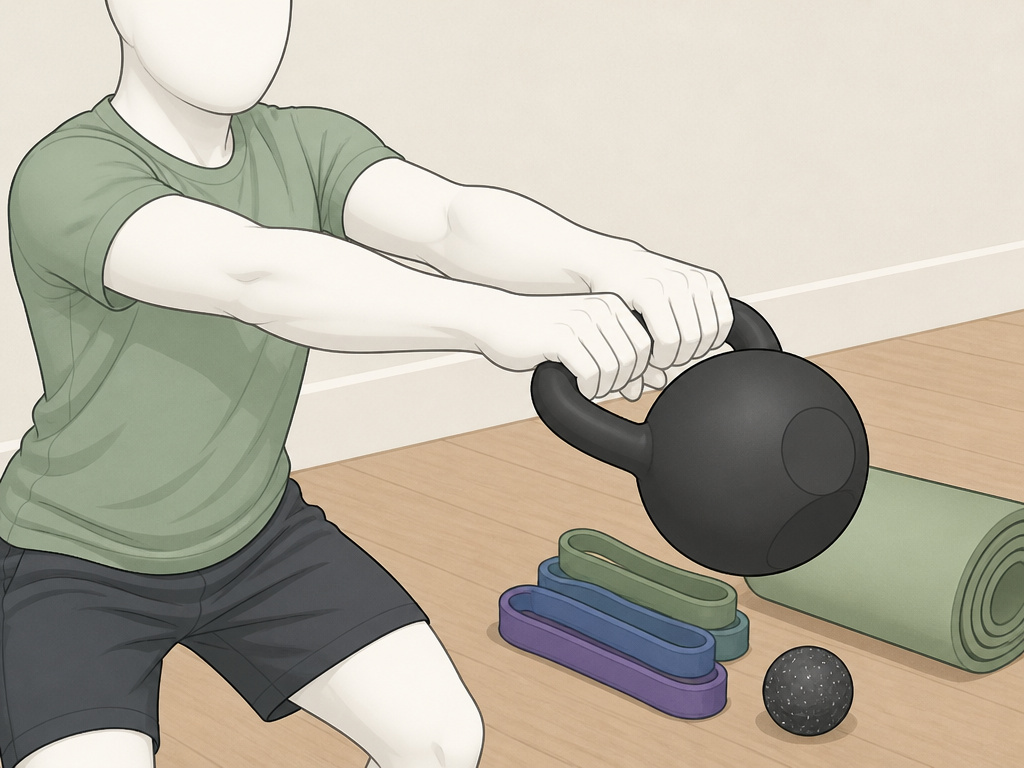
You don’t need a fancy gym membership. With a few key pieces, you can build an effective training setup in a garage or bedroom.
The Minimalist Home Gym:
- Set of Resistance Bands: Incredibly versatile for warming up shoulders, adding resistance to squats and lunges, and doing rotator cuff work. A medium and heavy band cover most needs.
- Kettlebell (or a single Dumbbell): A kettlebell of appropriate weight is useful for swings, goblet squats, and Turkish get-ups, all fantastic for building functional, skate-relevant strength.
- Yoga Mat: For core work, stretching, and yoga. A durable, affordable yoga mat is a useful piece of equipment.
- Lacrosse Ball: For self-myofascial release. Rolling out your plantar fascia (bottom of the foot) and calves can stave off common skater ailments. Self-myofascial release can help manage tightness in areas like the plantar fascia and calves.
The Gym Advantage:
If you have access to a gym, you unlock two key tools:
- Barbell & Plates: For progressive overload on foundational leg workouts like squats and deadlifts. There’s no substitute for safely adding weight over time.
- Plyo Boxes: For safe, measured explosive power training. Wooden or soft foam boxes in graduated heights let you track jump progress precisely.
What to Skip: Complicated machines that isolate single muscles. Your time is better spent on compound movements that train coordination and stability alongside strength.
Recovery Is Not Optional
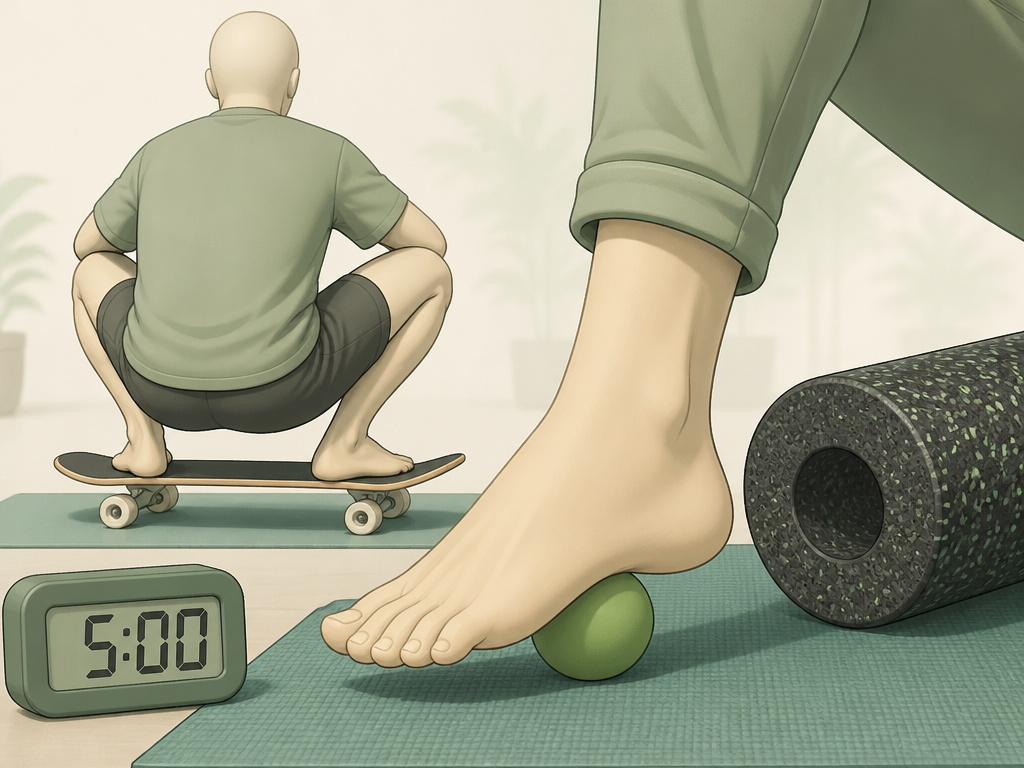
Skating is high-impact and often one-sided (think about your pushing leg). Recovery work is what allows you to skate again tomorrow without breaking down.
Mobility: This isn’t just static stretching. It’s actively taking your joints through their full range of motion. The “Asian squat” (deep, heels-down squat) is legendary in skate forums for improving ollie height and grab tricks because it opens up the hips and ankles. Spend 5 minutes a day working toward holding that position comfortably.
Myofascial Release: Foam rolling your quads, IT bands, and back, and using that lacrosse ball on your feet and calves, releases tightness that leads to poor movement patterns and injury. It should feel like “good pain,” not sharp pain.
Nutrition & Sleep: You can’t out-train a bad diet or chronic sleep deprivation. Muscle repair and nervous system recovery happen when you’re asleep. Skimp here, and your progress plateaus while your injury risk soars.
Safety guides emphasize protective gear, but the same principle applies to your body: prevention is infinitely better than treatment. Consistent mobility work is the helmet and pads for your muscles and joints.
How to warm up before skating
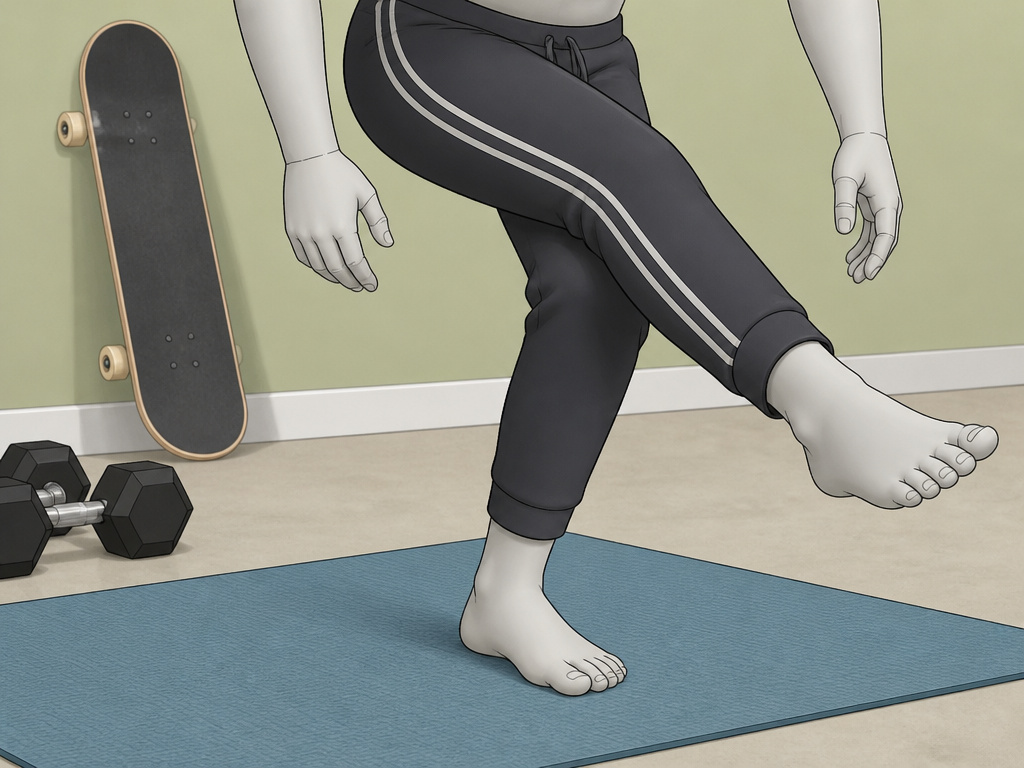
A proper warm-up prepares your body for the high-impact forces of skateboarding. Studies show landing forces from tricks like ollies can reach several times your body weight. A dynamic routine that increases your heart rate and moves your joints through their full range of motion is key. Focus on movements that mimic the actions of skating, such as leg swings, torso twists, and controlled jumps. This process increases blood flow to muscles and primes your nervous system, which can help reduce the risk of injury when you start your session.
Frequently Asked Questions
What are the best off-board exercises for increasing ollie height?
The best exercises directly improve your explosive vertical power. Box jumps are the top choice because they mimic the rapid hip and knee extension of the pop. Weighted squat jumps (holding a light kettlebell) build power under load. Crucially, single-leg pistol squat progressions strengthen each leg independently, addressing imbalances that kill pop. A 2012 study linked countermovement jump power as the strongest predictor of ollie height in beginners.
Do I need to lift heavy weights to skate better?
Not necessarily “heavy” in a powerlifting sense, but you need progressive resistance. Bodyweight exercises can plateau. Adding external weight, via dumbbells, kettlebells, or barbells, forces your muscles, tendons, and bones to adapt and get stronger. This build the resilience needed to handle the 7-12 times body weight landing forces documented in studies. The goal isn’t max strength; it’s robust, injury-resistant strength that supports your skating.
How can off-board training prevent skateboarding injuries?
It addresses the root causes. Ankle stability drills improve proprioception, helping you catch minor tweaks before they become sprains. Strengthening your legs and core provides better shock absorption for high-impact landings. Correcting muscle imbalances (like a stronger pushing leg) ensures your body moves evenly. A 2021 study on functional ankle stability in skaters shows pros have significantly better control, which is a trainable skill, not just luck.
Is yoga good for skateboarders?
Yes, emphatically. Yoga improves flexibility, balance, and body awareness, three things that directly translate to board control and injury prevention. Tight hamstrings and hips limit your range of motion for tricks and make falls more awkward. A Reddit user in r/OldSkaters noted, “Ima throw yoga in there… It doesn’t really matter how hard you pop the board if you can’t physically get your body out of the way.” Many online resources offer yoga routines suitable for athletes.
Can I do off-board training on the same day I skate?
It depends on the intensity. Light mobility work or a dynamic warm-up is excellent before skating. However, doing a heavy leg workout followed by an intense skate session is a recipe for fatigue-induced injury. Your form breaks down, and you can’t land safely. The best approach is to schedule them on separate days, or if same-day is unavoidable, separate them by several hours. Listen to your body; soreness is fine, but sharp pain or instability means you need rest.
The Bottom Line
Off-board training isn’t about becoming a different athlete. It’s about becoming a more durable, powerful, and consistent version of the skater you already are. The research shows the demands: high impacts, explosive pops, and a need for ironclad stability.
Start with one thing. Maybe it’s adding a 10-minute daily mobility routine focused on your ankles and hips. Maybe it’s committing to two weekly gym sessions built around box jumps and split squats. The goal is not to live in the gym, but to build a body that lets you live on your board longer, with fewer trips to the doctor.
Track one metric. Tracking your progress in exercises like box jumps or balance holds can show improvement. In a month, measure again. That concrete proof of progress, seeing your explosive power training pay off in higher ollies or more solid landings, is what turns a chore into a part of your skate life. Now go build that foundation. Your board will thank you.
