
Do You Need a Helmet for Skateboarding? The Short Answer
This post contains affiliate links. As an Amazon Associate, we earn from qualifying purchases.
Yes, you need a helmet for skateboarding. The U.S. Consumer Product Safety Commission (CPSC) and Centers for Disease Control and Prevention (CDC) state you must wear a helmet designed for skateboarding, specifically one certified to the ASTM F1492 standard. This hard-shell helmet is engineered to withstand multiple moderate impacts from the flat and angled surfaces you encounter skating, unlike a standard bike helmet.
That certification is a tested guarantee that the helmet has been smashed against flat, cylindrical, and triangular anvils, the exact shapes of curbs, railings, and coping, at speeds that mimic a real fall. A bike helmet certified to CPSC 1203 isn’t built for those same impacts. This is precisely why you must ask, do you need a helmet for skateboarding?
What follows is a breakdown of why that standard matters, when the advice changes for different types of skating, and how to handle the social pressure that makes people ask this question in the first place. By the end, you’ll know exactly which helmet to look for and how to wear it so it actually works.
Key Takeaways
- The CPSC and CDC state that the applicable helmet standard for skateboarding in the U.S. Is ASTM F1492; a standard bike helmet (CPSC 1203) does not meet this spec.
- A proper fit is essential: the front rim must align with your eyebrows, and the chin strap should allow no more than two fingers underneath.
- Replace the helmet after any serious impact or if it’s visibly damaged; time-based replacement (e.g., every 5 years) is a recommendation from some medical groups, not the standard itself.
- Wrist guards are especially important according to the CPSC, as wrist injuries are the most common skateboarding injury.
- For adults, the risk calculation shifts: healing is slower and the consequences of a head injury are more severe, making a helmet a smarter, not softer, choice.
The Short Answer: Yes, You Do
The question is really about risk management. Skateboarding is an activity where loss of control is built into the learning process. The CPSC flatly states to “wear a helmet designed for skateboarding (hard shell with foam interior).” The CDC is equally direct: for skateboarding, a multi-use helmet must have a label certifying compliance with ASTM F1492.
A skateboarding helmet certified to ASTM F1492 is tested on three anvil types: a flat surface, a cylindrical hazard, and a triangular hazard. This simulates impacts with the ground, railings, and skatepark coping. The standard is designed for the multiple moderate impacts common in skateboarding, unlike the single severe impact focus of some bike helmets.
This is the technical core of the do you need a helmet for skateboarding question. When you see that ASTM F1492 label inside a helmet from brands like Triple Eight or Pro-Tec, you’re buying a piece of equipment engineered for the specific physics of falling off a skateboard. Choosing to skate without one is choosing to accept a level of brain injury risk that public health agencies call unnecessary.
I used to think helmets were for kids or vert skaters. Then I watched a friend catch a pebble while cruising, pitch forward, and smack his temple on the pavement. He was dazed for ten minutes. The sound, a hollow thunk, was nothing like in videos. It was the sound of a head hitting concrete without a layer of engineered foam in between. We weren’t even trying tricks.
Why a Skate-Specific Helmet? It’s in the Specs
The confusion between skate and bike helmets is central to the do you need a helmet for skateboarding debate, and even official sources disagree. The American Academy of Orthopaedic Surgeons (AAOS) recommends a ‘bicycle or multi-sport helmet’ for skateboarding, while the CPSC and CDC specify that a helmet for skateboarding must be certified to ASTM F1492. Yet the CPSC’s own guide lists ASTM F1492 as the applicable standard, not the CPSC bicycle standard (16 CFR 1203).
They’re talking about different things. The AAOS is giving general injury prevention advice. The CPSC and ASTM are defining legal performance requirements. If a helmet is marketed for skateboarding in the U.S., it must meet ASTM F1492.
| Helmet Type | Primary Standard | Designed For | Key Difference |
|---|---|---|---|
| Skateboard Helmet | ASTM F1492 | Multiple moderate impacts (flat, angled surfaces) | Hard outer shell, extended rear coverage for back-of-head protection. |
| Bicycle Helmet | CPSC 16 CFR 1203 | Single severe impact (angled pavement) | Often more ventilated, smoother shell; may not be tested for multi-impact. |
| Multi-Sport Helmet | Must list ASTM F1492 specifically | Both activities | Will have dual certification labels inside. |
The takeaway? You can use a bike helmet for skating only if it also carries the ASTM F1492 certification. Many “multi-sport” helmets do. If it only has a CPSC bike sticker, it’s not certified for the job. In Australia and New Zealand, the standard is different again: AS/NZS 2063:2020 covers skateboards there.
This is verification. The ASTM F1492 helmet standard defines the tests, and manufacturers pay to have their helmets certified. That label is your guarantee.
How to Pick the Right Helmet (And Wear It Right)
Choosing a helmet is the first step. Wearing it correctly is the step most people mess up. A helmet tilted back on your head, exposing your forehead, is as good as a hat.
The CDC’s fitting guidelines are precise. Let’s break them down into a checklist you can use in the store:
- Eyebrow Alignment: The front rim must sit level with your eyebrows. Not an inch above. This protects the frontal lobe.
- The Snug Test: The helmet should fit snugly all around with no spaces between the padding and your head. It should not slide when you shake your head.
- The V-Shape: Side straps should form a “V” shape under, and slightly in front of, your ears.
- The Chin Strap Rule: Center the strap under your chin. Buckle it snugly, you should fit no more than one or two fingers between the strap and your chin.
- The Yawn Test: Open your mouth wide in a big yawn. The helmet should pull down on the top of your head. If it doesn’t, tighten the chin strap.
Common mistake: Wearing the helmet too far back. If you can see your entire forehead in a mirror, it’s wrong. The rim should be one finger’s width above your eyebrows.
A helmet that is too tight can cause headaches, says the CDC. So “snug” doesn’t mean “vice.” And try it on with the hairstyle you’ll skate in. A bun or thick braids change the fit.
For a deeper dive on this process, our guide on how to choose a skateboard helmet walks through sizing, brands, and models.
When Do You Really Need It? Scenarios and Stigma
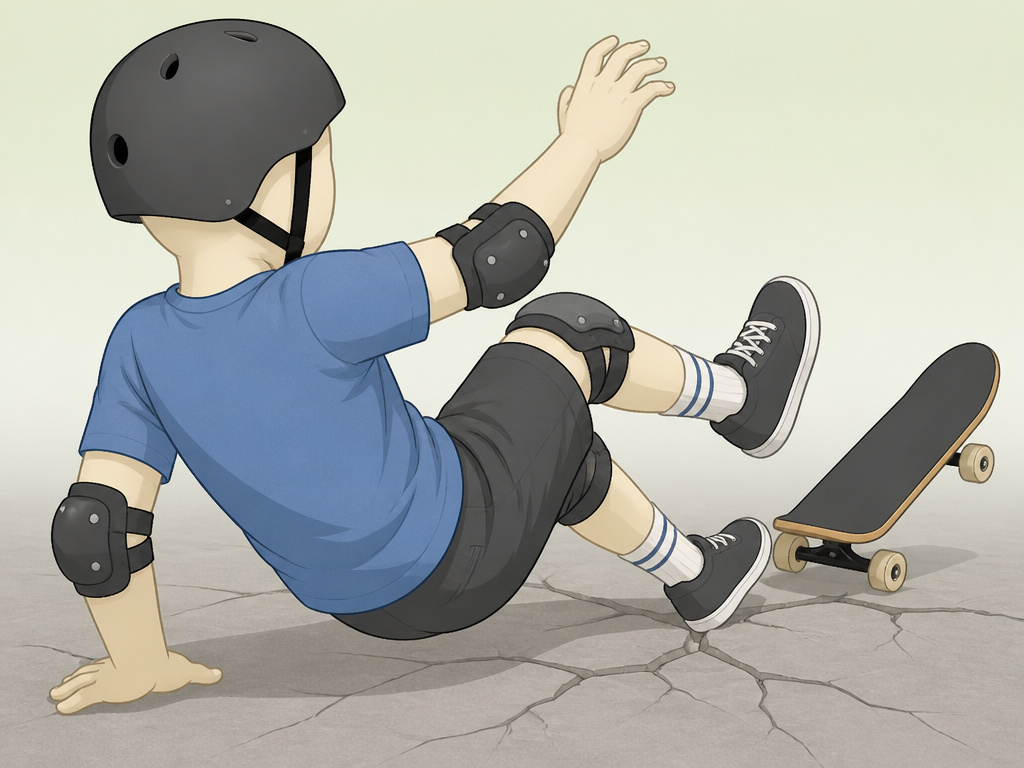
People ask this question because they’re weighing risk against social comfort. Here is a practical approach.
For beginners: The answer is every single session. Most injuries happen when you’re learning basics like pushing and stopping. Your balance isn’t automatic, and falls are unpredictable. The CPSC emphasizes that children under 8 years old should be supervised closely, and that supervision includes enforcing helmet use.
For cruisers: If you’re just riding for transportation on smooth paths, the impact energy is lower. But “just cruising” is how most unexpected falls happen, a crack, a wet leaf, a distracted moment. Speed wobble can occur at any pace.
For park skaters: This is where the helmet’s design pays off. Every reputable park skater wears one during practice. The social pressure here actually flips, you look out of place without one.
The stigma question: It’s real, especially for teenagers. But the culture is shifting. Most skaters now respect the choice to protect yourself. As one Reddit user put it: “I’m 26, not feeling so invincible anymore. I took a good slam and nearly cracked my skull open. Wear a helmet, please.”
Your helmet also serves as a signal to newer skaters that safety is normal. It’s what you do if you plan to skate for years, not just a summer.
The Other Gear You Can’t Ignore
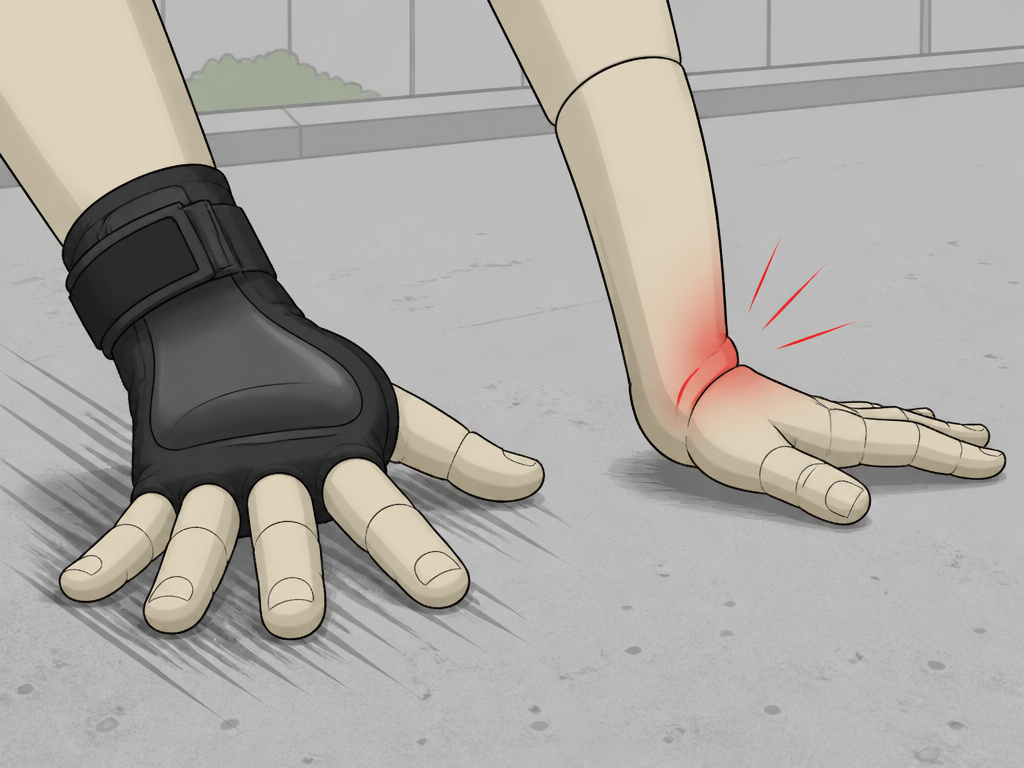
A helmet protects your head. Your wrists, elbows, and knees need a plan too. The CPSC notes that wrist guards are especially important for skateboarding.
Why? When you fall, your instinct is to put your hands out. Wrist fractures and sprains are common skateboarding injuries. Sliding on palm pads is far safer than absorbing all that force through hyper-extended joints.
A full set of pads feels bulky at first. I speak from experience. I’ve sprained a wrist on a flat-ground fall I’ve done a thousand times, just because I was tired and lazy. The popping sound it made still makes me cringe. That injury took me off the board for an extended period.
Legal Requirements and Replacement Rules
Laws vary wildly. Some cities and states have mandatory helmet laws for skateboarders under 18. Many don’t. Some skateparks post rules requiring helmets, but enforcement is spotty. You should look up your local helmet laws because ignorance isn’t a defense if you get ticketed.
More important than the law is the replacement rule. Here’s where sources disagree, and you need to know both sides.
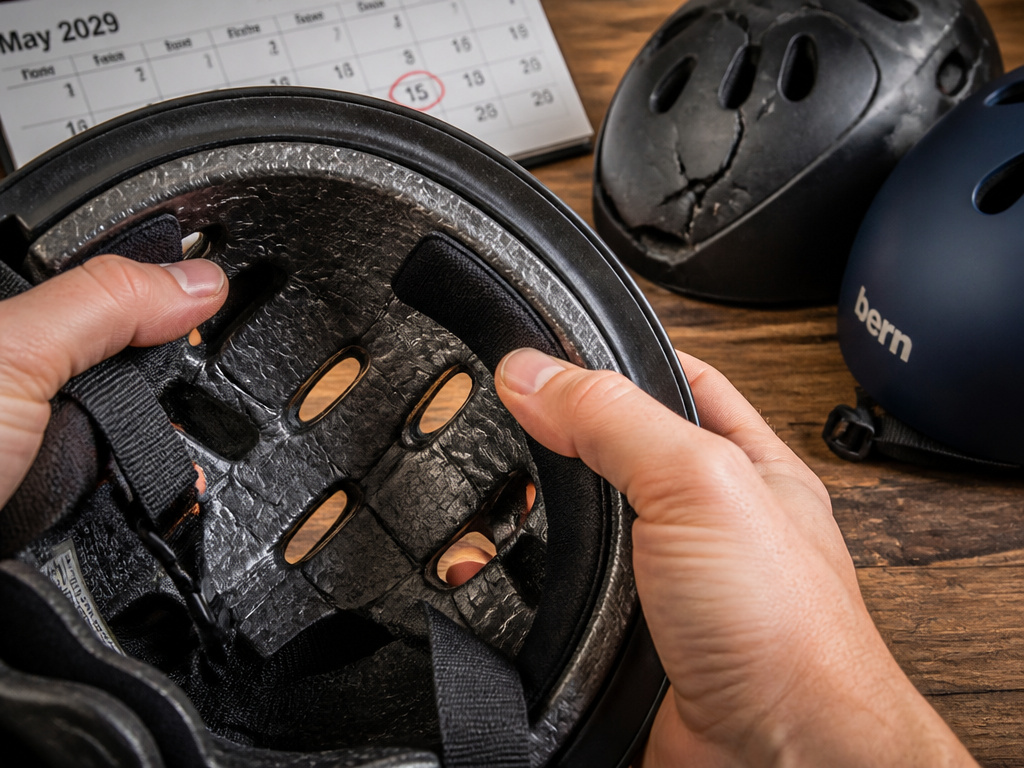
The CPSC and ASTM position is clear: replace your helmet after any serious impact or if it’s visibly damaged (cracked shell, crushed liner). They do not specify a time-based replacement. However, the CPSC adds that without manufacturer guidance, “it may be prudent to replace your helmet within 5–10 years of purchase” due to material degradation from sun, sweat, and storage.
The AAOS position statement is more strict: replace a helmet “at least every 5 years.”
What should you do? Follow the stricter guideline if you skate frequently. The CPSC states that, in the absence of manufacturer guidance, it may be prudent to replace your helmet within 5–10 years of purchase. The foam liner is the key. For a detailed look at this, see our article on how often to replace a skateboard helmet.
Frequently Asked Questions
Is it illegal to ride a skateboard without a helmet?
It depends entirely on your location. Many municipalities have laws requiring helmets for minors (under 16 or 18) on skateboards. Always check your local ordinances.
Do helmets prevent concussions?
No helmet is concussion-proof. Their job is to reduce the severity of head injuries, including skull fractures and traumatic brain injuries. A well-fitted, certified helmet absorbs and disperses impact energy that would otherwise be transmitted directly to your brain. Our page on concussion protection covers the science in detail.
Can I use my bike helmet for skateboarding?
Only if the bike helmet is also certified to the ASTM F1492 standard for skateboarding. Look for a label inside the helmet that says “ASTM F1492” specifically. If it only says “CPSC 1203” or “CE EN1078,” it is not certified for skateboarding impacts. The shell design and impact management differ. For a full comparison, read our breakdown of the skateboard vs bike helmet differences.
How tight should a skateboard helmet be?
It should be snug enough that it doesn’t slide side-to-side or front-to-back when you move your head, but not so tight it causes pressure points or headaches. The CDC’s rule is definitive: with the chin strap fastened, you should be able to fit no more than one or two fingers between the strap and your chin. The helmet should pull down on your head when you open your mouth wide.
Why do some skaters not wear helmets?
Reasons range from perceived stigma and comfort to a (misguided) sense of invincibility. However, most seasoned skaters, especially those riding transition or vert, always wear helmets.
Before You Go
The data from the CDC skateboard helmet fact sheet and the CPSC skateboarding safety fact sheet is compiled from emergency room visits and injury reports.
So here’s your next step, and it’s simple: Grab your current helmet. Put it on and look in a mirror. Does the front rim sit above your eyebrows? Can you fit more than two fingers under the chin strap? If you answered yes to either, you’re not protected. Adjust it now, or start looking for a new one that fits.
A helmet certified to ASTM F1492, along with wrist guards, is what protects that freedom from ending in an ambulance.
