
How to Choose Skateboard Knee Pads: A 5-Step Method
This post contains affiliate links. As an Amazon Associate, we earn from qualifying purchases.
Choosing skateboard knee pads comes down to five things: the right size, a secure strap system, a hard cap for sliding, a certification to EN 14120 Level 1, and a fit that lets you bend your knee fully. A pad that slides out of place on impact is worse than no pad at all.
The EN 14120 Level 1 certification is your baseline. It means the pad is tested for “normal roller sports,” which covers most street and park skating. Level 2 is for acrobatic stunts, and most pads you’ll see aren’t rated for that. A key part of how to choose skateboard knee pads is understanding that the certification is a promise of tested impact absorption, not a marketing term.
What follows: a five-step method to measure for any brand’s size chart, a breakdown of hard shells versus soft caps for different styles of skating, and the specific maintenance steps that keep pads working for years, all central to the how to choose skateboard knee pads process. By the end, you’ll know how to read a product page and spot the one detail that tells you if a pad is built for your kind of skating.
Key Takeaways
- Measure your leg at the point the pad will sit, not just around the knee — sizing charts from different brands use different reference points, and using the wrong one guarantees a bad fit.
- Look for a hard plastic or reinforced cap if you plan to knee-slide on transition; soft caps are for incidental falls only and will shred on concrete.
- Check for the EN 14120:2003+A1:2007 certification and ensure it’s Level 1; this is the European standard for roller sports protection and confirms the pad meets a tested performance threshold.
- Test the range of motion before you buy; a fit that lets you squat and bend without the straps digging in or the cap shifting is proper.
- Inspect pads before each session and plan to replace them every 3-5 years; foam compresses and straps wear out, turning safety gear into decoration.
The 5-Step Measurement Method That Actually Works
You can’t trust a generic “medium” or “large.” Sizing is the single biggest point of failure, and manufacturers don’t agree on where you should measure. The Warehouse Skateboards guide says to measure around the center of your knee, or at the top or bottom where the pad will rest. That’s a conflict, and ignoring it is how you end up with pads that slip.
Here is what actually worked for me. Grab a soft tape measure and follow this order.
- Identify the pad’s coverage. Look at the product photos. Does the pad have a long sleeve that goes up your thigh, or is it a cap held by two straps? This tells you where it’s designed to grip.
- Measure for a sleeve-style pad. If it’s a sleeve, wrap the tape around your thigh where the top of the sleeve will grip. Record the circumference. Then, measure your calf where the bottom of the sleeve will grip. You need both numbers.
- Measure for a strap-style pad. If it’s a cap with straps, wrap the tape around your leg where the straps will sit, typically above and below the knee. The pad will sit between these points.
- Cross-reference with the brand’s chart. Never assume your “medium” in one brand translates. Find the official size chart for the exact model you want. Match your measurements to their specific circumference ranges for top and bottom.
- The final test is physical. If possible, try the pads on. Perform a deep squat. Do they pinch behind the knee? Does the cap stay centered over your kneecap? If not, try the next size.
Common mistake: Measuring only around the knee cap for a sleeve-style pad. The sleeve grips your thigh and calf; a knee-cap measurement alone leaves the sleeve loose, and the pad will spin on your leg during a fall.
This process turns a vague guess into a repeatable system for how to choose skateboard knee pads. For more detail on interpreting those brand charts, our guide on knee pad sizing walks through real examples.
Hard Shell vs. Soft Cap: Which Wins for Your Style?
This isn’t about comfort. It’s about how you fall. If you skate transition, bowls, or vert, you will bail onto your knees intentionally to slide out of a trick. That demands a hard, smooth cap. If you’re a street skater dealing with unexpected falls on flat ground, a lower-profile soft cap might be the better daily choice.
Hard-shell pads, like the 187 Pro or Pro-Tec Street, have a rigid plastic outer cup. When you drop onto them, they slide across concrete, dispersing the energy and saving your skin and kneecap. The Reddit community is clear on this: “The big square pads are for knee slides; the other pads are for incidental falls.” A hard shell is a tool for a specific technique.
Soft-cap or low-profile pads, like the 187 Fly or some Triple Eight models, use dense foam with a fabric or rubberized coating. They’re lighter and less bulky, which is great for street skating where you’re not planning to knee-slide. They absorb a direct impact, but they will grab the concrete and tear if you try to slide on them. The trade-off is mobility for protection level.
| Pad Type | Best For | Protection Focus | Mobility Trade-off |
|---|---|---|---|
| Hard Shell | Transition, vert, park skating | High-impact slides, repeated knee drops | Bulkier, can feel restrictive for street tricks |
| Soft Cap | Street skating, casual cruising, beginners | Direct impact absorption, low-profile comfort | Will not slide; can tear on concrete |
| Hybrid | All-around park and street | Versatility with a reinforced but flexible cap | May not excel at either sliding or extreme impact |
Your skating style chooses for you. Trying to skate a bowl in soft caps is like trying to stop a bike with your shoes—it might work once, painfully. Our review of the best knee pads for skatepark riding dives deeper into models built for that hard-shell life.
Decoding the Safety Standards: What EN 14120 Level 1 Really Means

A pad can feel sturdy and still be untested. The EN 14120:2003+A1:2007 standard is the European benchmark for wrist, palm, knee, and elbow protectors for roller sports. When a pad is CE marked under the Personal Protective Equipment Regulation (EU) 2016/425 to this standard, it has passed laboratory tests for impact absorption. TSG states its protectors conform to Level 1 of this standard.
EN 14120 defines Level 1 protectors as suitable for normal roller sports and Level 2 protectors as suitable for acrobatic roller sports. TSG explicitly notes its Level 1 pads “are not suitable for acrobatic or high-speed skateboarding.”
Here is the critical part most product pages gloss over: the standard’s performance requirements are based on the wearer’s body mass. The tests use three ranges: Range A (up to 25 kg), Range B (25–50 kg), and Range C (above 50 kg). A pad certified for Range C (>50 kg) is engineered to manage the force a heavier skater generates in a fall. This is why a pad for Range A (≤25 kg) is not just a smaller version—it’s tested for less force.
The U.S. Consumer Product Safety Commission (CPSC) also emphasizes protection, recommending knee and elbow pads in its official skateboarding safety fact sheet. While they don’t cite EN 14120, the intent is identical: reducing injury risk. This government guidance underscores that the question isn’t whether you need knee pads, but which certified ones you should get.
Straps, Caps, and Why Your Knees Hate Bad Velcro

The best pad in the world is useless if it moves on impact. The security comes from the strap system. Look for wide, adjustable straps with robust Velcro. Thin, elastic straps will stretch and fail over time, letting the pad shift and exposing your knee.
The cap attachment matters too. Beginner pads often have the hard cap riveted directly to the fabric. This is cost-effective but means the whole pad is trash if the cap cracks. Advanced pads, like the 187 Pro, feature a replaceable cap system. You unscrew a damaged cap and snap on a new one. It’s a higher upfront cost that pays off over years of use.
When you wear knee pads, the goal is a snug, second-skin feel without cutting off circulation. The cap should sit centered on your kneecap when your leg is straight and remain centered when you bend. If it migrates to the side, the straps are either too loose or the pad is the wrong size. That migration is what turns a protective fall into a knee-to-concrete disaster.
Where this goes sideways: Using pads with worn-out Velcro. The hook side gets clogged with fabric lint and loses its grip. After a hard fall, a loose pad spins, and the cap misses the impact point entirely. You’ll get a bruise in a spot the pad was supposed to cover.
Listen to your body during a session. A hot spot or chafing behind the knee isn’t normal “breaking in.” It’s a sign the fit is wrong. Adjust the straps. If that doesn’t fix it, the pad’s design might not match your leg shape. This is where trying before buying, or buying from a retailer with a return policy, saves your skin.
Maintenance and Lifespan: When to Retire Your Pads
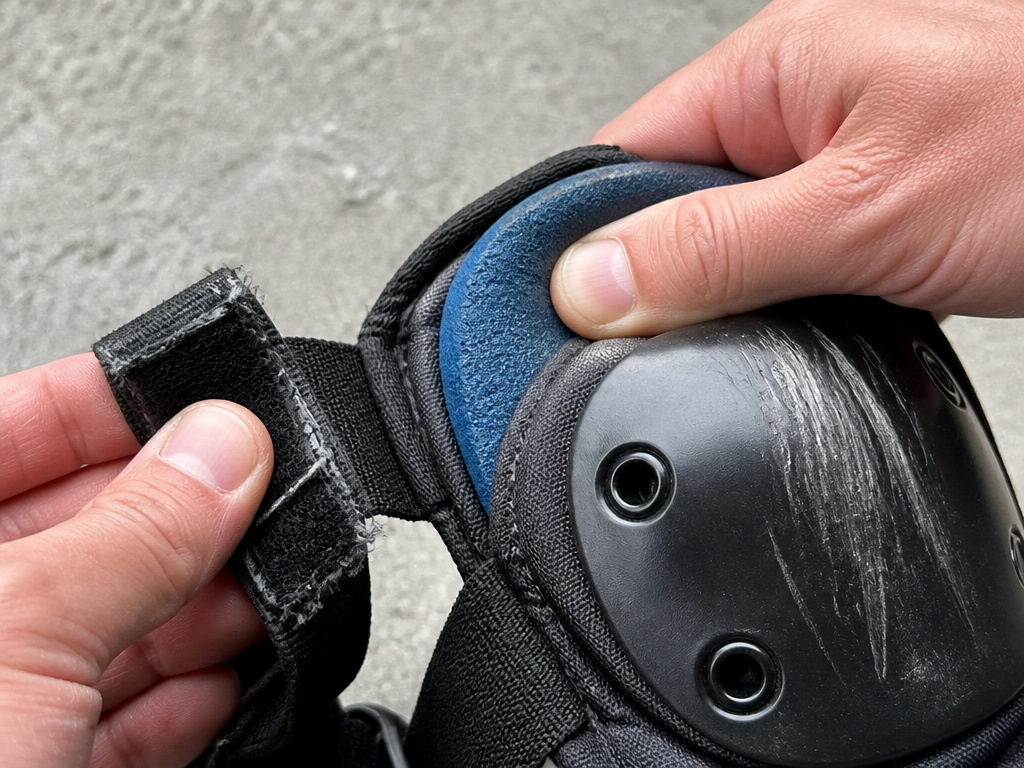
Pads don’t last forever. The foam inside compresses with each impact, slowly losing its ability to absorb energy. The Velcro wears out. The plastic cap can get gouged or cracked. TSG’s manual recommends replacement every 3-5 years under normal use conditions. Leatt Corporation recommends replacement every three years for its knee guards.
Inspect your pads before each session. Look for:
- Compressed or cracked foam: Press on the padding. If it feels flat and doesn’t spring back, it’s done.
- Frayed or torn straps: Any compromise to the strap integrity means it could fail.
- Damaged cap: Deep scratches, cracks, or a loose, rattling cap means replace it immediately.
- Deteriorated Velcro: If the hooks are flattened or the loop side is shiny and smooth, it won’t hold.
Cleaning is simple but specific. Use a damp cloth and tap water only. Never use detergents, solvents, or throw them in a washing machine, as Leatt warns never to use cleaners or detergents, as this can damage the materials. Air dry them away from direct heat or sunlight.
Storing them right extends their life. Keep them in a dry, well-ventilated place away from extreme temperatures. The TSG manual warns that temperature changes could reduce performance, while Leatt states protection should not be affected by non-extreme conditions. To be safe, avoid storing them in extreme temperatures like a freezing car trunk or a hot garage. Proper care is part of knee pad care, and it directly affects how well they protect you.
Choosing knee pads for kids, teens, and adults

Safety standards are based on body mass, not just age. This means a small adult and a larger teen might need the same size pad. For kids, focus on pads designed for their weight range to ensure the protective materials perform correctly. As skaters grow, their pads must be refitted; a pad that is too large can slip and fail during a fall. For teens and adults, the main consideration shifts to the type of skating. Lighter pads might suit casual cruising, while bulkier, square-capped pads are built for repeated knee slides in park or transition skating.
How to spot poor quality or the wrong type of knee pads
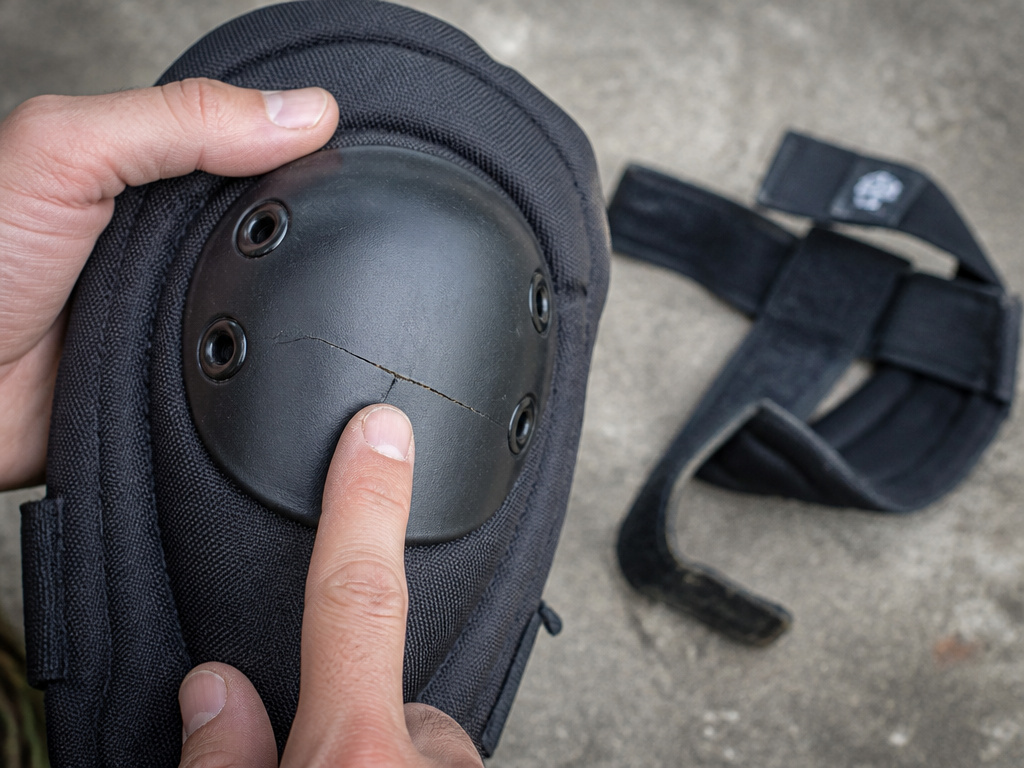
A Reddit user states that pads with a square, flat cap are designed for knee slides in skateboarding. A Reddit user advises avoiding strap-only pads that lack a hard cap, stating they are often meant for inline skating and won’t protect your knees during a slide. Inspect pads before each use. Stop using them if you see any damage, cracks, or if the inside padding has worn down. Leatt warns not to drill holes, paint, cut, heat, bend, apply decals or stickers, or make any other modifications to its knee guards.
Frequently Asked Questions
What are the best knee pads for skateboarding?
For most skaters, the best pad is the one that fits perfectly and matches their skating style. For park and transition, the 187 Pro is a community favorite for its replaceable cap. For street skating, models like the 187 Slim or Pro-Tec Street are commonly used. The “best” is always the one you’ll wear consistently.
How do I know what size knee pads I need?
You must measure your leg and consult the specific brand’s size chart. Measure the circumference of your thigh and calf at the points the pad will grip (see the 5-step method above). Do not rely on T-shirt sizing (S, M, L) alone, as these vary wildly between brands like TSG, 187, and Triple Eight.
What’s better, gel or foam knee pads?
For skateboarding, high-density foam is the standard. Gel inserts are more common in volleyball or wrestling pads for comfort during kneeling. Skate pads need to absorb a high-energy impact quickly, which is what engineered foam does. Focus on the foam’s density and the presence of a hard cap over the material inside.
When should I replace my skateboard knee pads?
Replace them immediately if you see cracks, torn straps, or severely compressed foam. Under normal use, plan to replace them every 3 to 5 years, as recommended by manufacturers like TSG and Leatt. If you take a hard impact, inspect the pads closely afterward—internal damage isn’t always visible. For a full breakdown, see our article on knee pad lifespan.
Before You Go
The single most effective thing you can do for your knees isn’t buying the most expensive pad. It’s buying the one that fits so well you forget you’re wearing it. A pad that’s left in your backpack because it’s uncomfortable provides zero protection.
Measure twice, buy once. Take those thigh and calf numbers, find the official chart for the 187 Killer Pads Pro or the Pro-Tec model you like, and match the numbers, not the letter. That step alone puts you ahead of 90% of beginners. Then, make a habit of the pre-session inspection. Look at the straps, press the foam, and secure them properly. It takes thirty seconds and it’s the difference between gear that works and gear that just looks the part. Your first real knee slide will thank you.
