How to Stay Motivated to Skateboard: The 78-Minute Session
This post contains affiliate links. As an Amazon Associate, we earn from qualifying purchases.
Staying motivated to skateboard means anchoring your practice to the core reasons people skate, pleasure, health, and community, while using structured goals and consistent, manageable sessions to build momentum. Research shows skateboarders return even after injury because these benefits outweigh the risks.
That finding comes from a study of 26 injured adolescents. The researchers found the primary reason they returned was that the benefits significantly outweighed the costs. A key part of this is understanding how to stay motivated to skateboard. The researchers identified a clear theme: the unique benefits of skateboarding, mental health, identity, friendship, and pure fun, significantly outweighed the fear of getting hurt again.
This guide walks through the five pillars that keep skaters rolling: understanding your deep “why,” setting a realistic practice cadence, measuring progress without comparison, balancing social and solo sessions, and learning how to learn from your falls. Each is backed by data from skateboarders themselves.
Key Takeaways
- The biggest motivator for skateboarders is pleasure, followed by maintaining good health and releasing stress, according to a survey of 103 skaters in Brazil.
- Build a sustainable habit by aiming for 3.1 park visits per week with sessions around 78 minutes, the average found in a study of 91 skaters.
- After an injury, skaters return because the benefits outweigh the costs; focusing on the interpersonal and mental health rewards can rebuild motivation.
- Use cognitive tools like imagery and analogy to learn tricks, methods deployed by skaters in the study to enhance movement storage.
- Track small wins and compare your present to your past, not to an ideal future version of yourself, to maintain a sense of progress.
Why Skateboarders Keep Coming Back
You don’t need a complex theory to explain why people skate. The research is straightforward. A survey of 103 skateboarders in Brazil published in the Fiep Bulletin asked them directly. The biggest motivational factor was pleasure for practicing the sport. Other top reasons were maintaining good health, releasing daily tensions, and social conviviality.
The technical snippet: A study surveyed 103 skateboarders aged 12 to 36 from Paraná and Rio Grande do Sul. Using a motivational factors questionnaire, it found the primary driver for continued practice was pleasure (hedonic motivation), followed by health maintenance, stress relief, and social connection.
This isn’t just about fun. It’s about what that fun does. The International Journal of Sport Culture and Science case study of 17 skaters listed reasons like friendships, lifestyle, adrenaline, and location. The pleasure is the engine; the health and social benefits are the fuel that keeps it running. When motivation dips, you’re likely disconnected from one of these core inputs.
The 78-Minute Session: Building Consistency
How much should you actually skate? A study in Frontiers in Psychology of 91 skateboarders in the UK and New Zealand gives us a benchmark. Each session lasted a mean of 78 minutes. In that study, the mean years of training for the surveyed skateboarders was 4.2 years.
Those numbers are a target, not a rule. The point is regularity and a contained duration. A 78-minute session is long enough to get into a flow state but short enough to be sustainable before fatigue or frustration sets in. It’s the difference between a marathon and a daily commute.
Where this goes sideways: Skipping sessions because you can’t commit to a two-hour park trip. A 20-minute street skate or 30 minutes of flat-ground counts. Inconsistent, long sessions lead to burnout faster than short, frequent ones.
To build consistency, schedule your sessions like appointments. Mark three days on your calendar. The goal isn’t to land a new trick each time; it’s to show up and move on your board. This regularity builds the muscle memory and board feel that all tricks are built on. For a deeper dive on forming this habit, explore our guide on how to stay consistent with skateboarding.
Measure Progress, Not Perfection
Progress in skating is non-linear and brutally easy to miss if you’re only looking for landed tricks. A 2025 Reddit thread for new skaters was filled with this frustration: “after months and months it feels like I still can’t do anything with the board that I want to.”
The fix is a shift in what you measure.
| What to Track | Why It Works | Example |
|---|---|---|
| Comfort Metrics | Confidence and control precede complexity. | “Pushed 5 blocks without putting a foot down.” |
| Consistency Rates | Reliability beats one-time luck. | “Landed 6/10 stationary ollies today, up from 3/10 last week.” |
| Failed Attempts | Effort and repetition matter more than success. | “Tried 50 kickflips today. My foot placement is more consistent.” |
| Session Goals | Focuses the mind on process, not outcome. | “Today’s goal: ollie over every sidewalk crack on my route.” |
This approach directly counters the “ideal future self” comparison that steals joy. Learning to track progress objectively shows you’re moving, even when a trick isn’t sticking. Keep a simple log, a note on your phone works. Seeing a list of small wins, like rolling faster or carving a tighter turn, is a powerful answer for how to stay motivated to skateboard on days you feel stuck.
The Social vs. Solo Balance
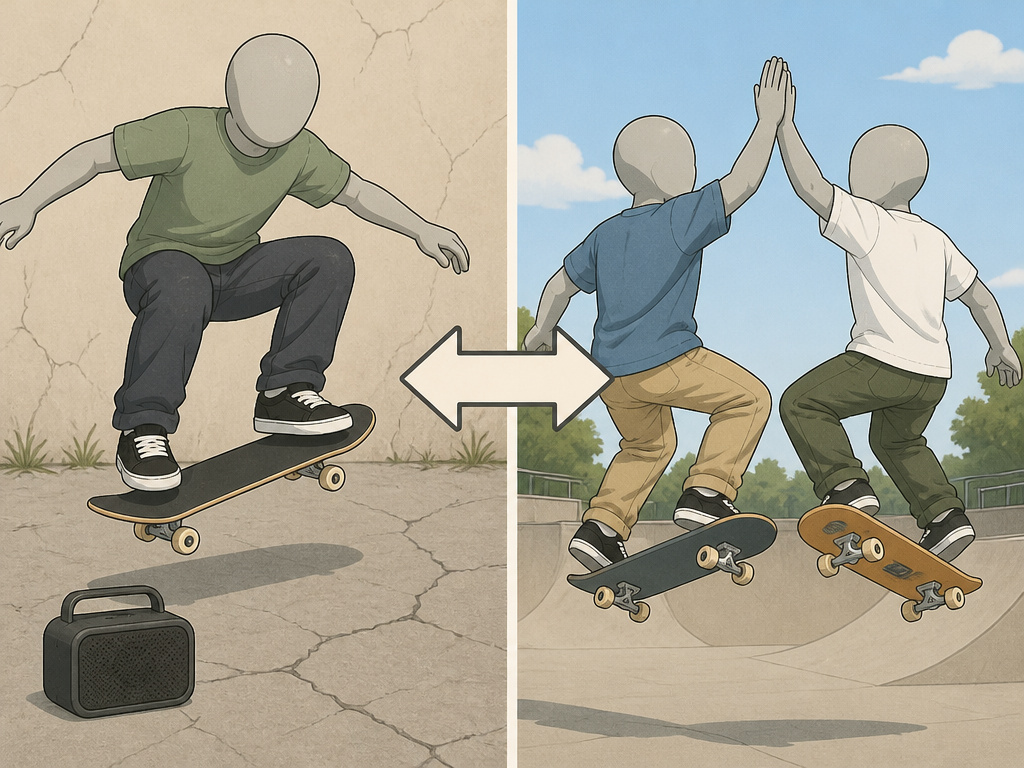
Skating is deeply social, but your motivation can’t live entirely in the group session. The research shows both sides are essential. The Brazilian study highlighted “social conviviality” as a key motivator. The Reddit community echoes this: “having someone to celebrate your wins and understand your losses is huge.”
But the same skaters also find profound value in solo skating. One user described it as escapism: “I get my board and speaker then just leave the house with no specific objective in mind… Allows me to escape my thoughts.” Another stated simply, “skating is the most fun I can have by myself.”
Expert tip: I schedule one solo “exploration” skate for every two social sessions. Alone, I work on the uncomfortable, repetitive drills I’d be embarrassed to do in front of others. That solo work makes the social skates more fun and productive because I have a new move to try with friends.
The balance prevents dependency. If your only motivation is your crew, you’ll stop when they do. Use solo sessions to build your foundational skills and social sessions to make friends, share energy, and get inspired. This balance creates a self-reinforcing cycle where each type of session fuels the other.
How Skateboarders Actually Learn (And What To Steal)
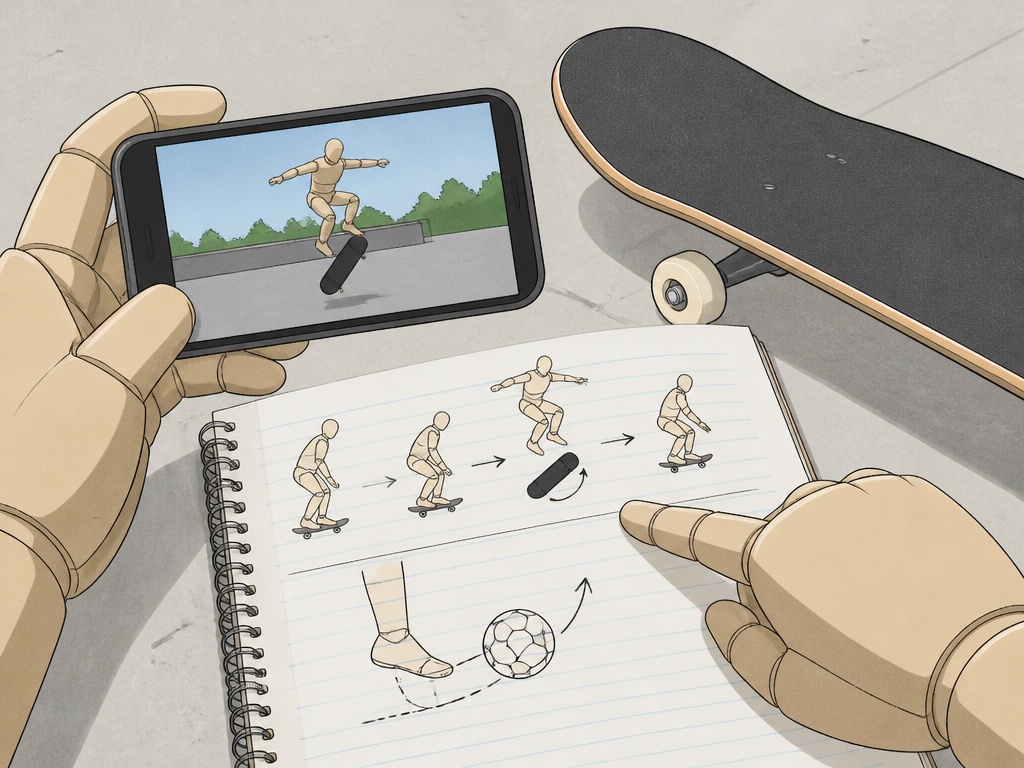
In the absence of formal coaches, skateboarders have developed a highly effective self-directed learning system. The Frontiers in Psychology study analyzed this. Skateboarders reported using learning tools aligned with a traditional, cognitive view of coaching: demonstration, drills, and error usage. They also deployed cognitive skills like imagery, analogy, and understanding to enhance storage of a movement as an internal representation.
This is your toolkit. It means watching a clip of a trick (demonstration), breaking it into parts (drills), and accepting that slamming is part of the process (error usage). Then, you mentally rehearse the motion (imagery), compare it to something you already know (“flick like you’re kicking a soccer ball”) (analogy), and think through the mechanics (understanding).
Common mistake: Mindlessly attempting a trick without this mental framework. You’ll burn through motivation because each try feels random and unproductive. The study participants deployed these cognitive skills to enhance storage of a movement as an internal representation.
When you hit a wall, this framework gives you a way to break a plateau. Instead of just “trying harder,” you return to demonstration. Watch the trick from a different angle. Break it into smaller drills. Create a new analogy. This structured approach turns a frustrating stall into a solvable puzzle, a key part of how to stay motivated to skateboard.
After the Slam: Returning from Injury
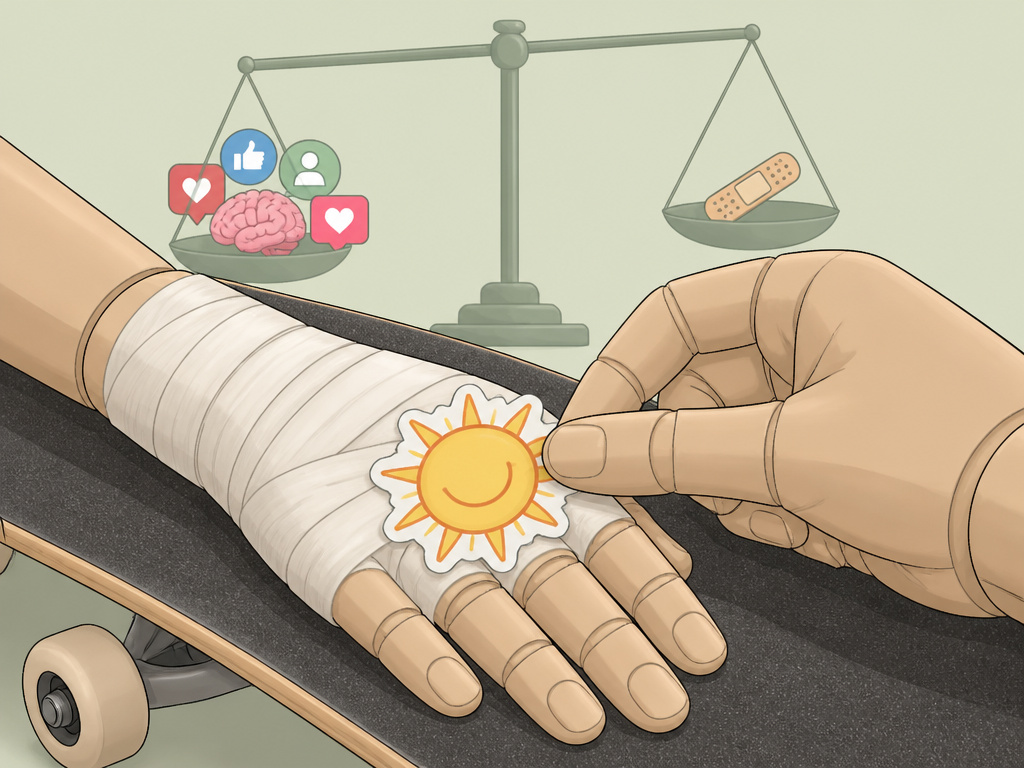
Injury is the ultimate motivation killer. It’s also a near-universal experience. A qualitative study in PubMed interviewed 26 Canadian adolescent skateboarders, aged 14-17, who had sustained medically attended injuries. Every one of them returned to the sport.
The researchers asked why. The primary theme was that the benefits of skateboarding significantly outweighed the costs associated with potential re-injury. Participants listed the drawbacks: pain, physical limitations, loss of social contacts, and challenges to their identity. But the benefits, interpersonal connections, mental and physical health, pleasure, personal growth, were simply worth more.
This is a powerful mental model for recovery. Your motivation isn’t about denying the risk; it’s about honestly weighing the scale. The social and psychological rewards are real and documented. Focusing on regaining the mental health benefits, the stress relief, the sense of belonging, can be a stronger pull than just wanting to land the trick again.
Frequently Asked Questions
What is the number one reason people keep skateboarding?
According to a survey of 103 skateboarders published in the Fiep Bulletin, the single biggest motivational factor is pleasure for practicing the sport. Other major reasons are maintaining good health, releasing daily tensions (stress), and socializing with friends.
How often should I skate to stay motivated?
Study of 91 skateboarders in Frontiers in Psychology found the average skater visited the park about 3 times per week, with each session lasting around 78 minutes. Consistency with shorter, frequent sessions is more effective for long-term motivation than sporadic, marathon sessions.
How do I stay motivated as a beginner when progress is slow?
Shift your measure of progress from landed tricks to comfort and control. Track metrics like pushing distance, balance, and consistency rates. Celebrate simply riding the board well. Comparing your present self to your past self, rather than an ideal future version, is crucial for maintaining motivation through the slow early phase.
Is it better to skate alone or with friends?
You need both. Social skating provides energy, inspiration, and camaraderie, which are key motivators. Solo skating allows for focused practice, repetition, and personal escapism. A balance ensures your motivation isn’t dependent on others and that you have time to work on fundamentals.
How do skateboarders learn new tricks without a coach?
Research shows skaters in informal environments use a cognitive toolkit: they watch demonstrations, break tricks into drills, learn from errors, and use mental skills like imagery and analogy. This self-directed method is highly effective and allows skaters to practice effectively on their own terms.
The Bottom Line
Your motivation is a renewable resource, not a finite one. It’s fed by pleasure, health, friendship, and the tangible feeling of getting better. The research proves it.
Taking an extended break from skating can make the comeback feel much harder. Aim for a session duration similar to the study average of 78 minutes, with one simple goal, like ollieing over ten cracks, and do it soon. That’s how you build the rhythm that lasts.
The skateboard is a tool for joy. Your job is to remember that, especially when it feels like work.
