
Skateboarding in the 1970s: Wheels, Pools, and a Near-Ban
This post contains affiliate links. As an Amazon Associate, we earn from qualifying purchases.
Skateboarding in the 1970s was defined by three things: the sticky grip of Frank Nasworthy’s urethane wheels, the concrete bowls of drought-emptied swimming pools, and a national injury spike so severe the U.S. Government nearly banned the sport. The era transformed a sidewalk fad into a technical, vertical discipline, creating the subculture we know today.
That near-ban is the part most histories glance over. In 1977, an estimated 140,000 skateboard-related injuries flooded emergency rooms, prompting a petition to outlaw skateboards entirely. The government’s 1979 decision not to ban them hinged on a surprising 38% drop in injuries, and the rise of supervised skateparks. This wasn’t just a cultural boom; skateboarding in the 1970s was a public safety crisis that reshaped where and how people skated.
What follows is a breakdown of the gear, the terrain, and the stats. We’ll look at how a wheel changed everything, why a drought was the best thing that ever happened to skateboarding, and how wide boards and new tricks emerged from the chaos. You’ll see the exact numbers that almost ended it all and the specific designs that kept it rolling.
Key Takeaways
- The introduction of urethane wheels by Frank Nasworthy’s Cadillac brand provided critical grip and a smoother ride, while the 1976-77 California drought provided the terrain, together enabling skateboarding’s second boom.
- An estimated 140,000 skateboard injuries in 1977 led to a federal petition to ban skateboards, denied in 1979 after injuries fell 38% partly due to skateparks.
- The 1976-77 California drought emptied thousands of backyard swimming pools, creating the perfect concrete terrain for the birth of vertical skateboarding.
- Deck shapes evolved rapidly from narrow freestyle boards to wide “pig” decks over 10 inches by 1978, designed for stability in pools and bowls.
- Skateparks, with mandatory helmet and pad rules, became crucial safety valves that helped legitimize the sport and reduce injury rates.
The Urethane Wheel: A Sticky Revolution
Before urethane, skateboarding was a rough, unpredictable ride. Wheels before urethane offered less grip and a rougher ride. Hit a pebble and the board stopped dead, sending the rider flying. The difference wasn’t subtle, it was the difference between a hobby and a sport.
Frank Nasworthy discovered urethane wheels at a factory in Purcellville, Virginia; sources differ on the exact year of invention or introduction, with some citing 1972 and others 1973. He saw polyurethane wheels and immediately bought 1,000 units. Back in California, he started selling them under the brand name Cadillac Wheels by 1972. The new material gripped pavement like nothing before, allowing smoother rides, higher speeds, and control on sloped surfaces. This single innovation reinvigorated a dying pastime.
The grip change was physical. You could lean into a turn and feel the wheel deform slightly, holding the line instead of sliding out. It turned asphalt into a viable skating surface. This mechanical trust is what let skaters even consider riding the vertical walls of empty pools. Without that sticky, predictable roll, the aerial tricks that defined 1970s vert skating simply wouldn’t have been possible. For a deeper look at this pivotal gear shift, our article on the history of skateboard wheels breaks down the materials and milestones.
Empty Pools and a Historic Drought
Urethane wheels gave skaters the how, but Southern California’s geography gave them the where. The region’s signature backyard swimming pools, especially the kidney-shaped designs built in the 1960s, became skateboarding’s accidental laboratory. There was just one problem: they were full of water.
The 1976-77 California drought changed that. As water restrictions tightened, thousands of pools were drained, leaving behind smooth concrete bowls. This wasn’t a minor convenience; a peer-reviewed skateboarding history analysis identifies this drought as a direct environmental trigger for the rise of professional vertical skateboarding. The timing was perfect. The pools existed, the wheels could grip their curved walls, and a generation of surf-influenced kids from places like Santa Monica’s Dogtown area saw them not as abandoned landscaping, but as terrain.
Where this goes sideways: Treating the pool-skating revolution as purely about wheels misses the point. The drought-provided terrain was the necessary catalyst. No drought, no empty pools. No empty pools, no vertical skateboarding as we know it.
The sensory shift was profound. The hollow clack of a board hitting pool coping replaced the sound of wheels on flat ground. The feeling of pumping through a transition, of weightlessness at the apex, was entirely new. This wasn’t sidewalk surfing anymore; it was something else, born from a specific collision of technology, culture, and climate. This new discipline demanded new equipment, which fed directly into the era’s vert skateboarding scene.
Deck Design Gets Radical
As skating moved from flat ground to drainage ditches and pool walls, board shapes fractured. You couldn’t use the same plank for downhill speed runs, slalom turns, and pool carving. Manufacturers and skaters responded with a burst of experimentation that defined the 1970s aesthetic.
The changes were systematic. Board widths evolved significantly during the 1970s. By 1977, companies like Gordon & Smith (G&S) released the G&S Bowl Rider, a wider, longer board built for stability in transition. Then, in 1978, skaters like Tony Alva from Santa Monica pushed things further with the first “pig” decks, boards over 10 inches wide. The goal was maximum foot real estate and hold on vert walls.
| Deck Type | Primary Use | Key Feature | Era |
|---|---|---|---|
| Freestyle | Flat-ground tricks | Narrow, often with double kicktails | Early-Mid 70s |
| Downhill | Speed runs | Longer than 36″, no kicktail | Mid 70s |
| Bowl/Pool Rider | Vertical terrain | Wider (up to 8″ initially), rocker shape | Late 70s |
| “Pig” Deck | Pool & vert stability | Extra wide (10″+), concave | 1978 onward |
The “rocker” shape (a downward curve from nose to tail) was pioneered by the Zephyr and Z-Flex teams in 1973. Combined with the kicktail, originally associated with Larry Stevenson and Makaha, became a key feature., this design let skaters lock into carves and launch off walls. Maple laminate construction, pioneered by Canadian skater “Wee” Willie Winkels, made these complex shapes lighter and stronger. You can trace this rapid evolution in our guide to deck shapes.
Aerial Tricks and the Push for Protection
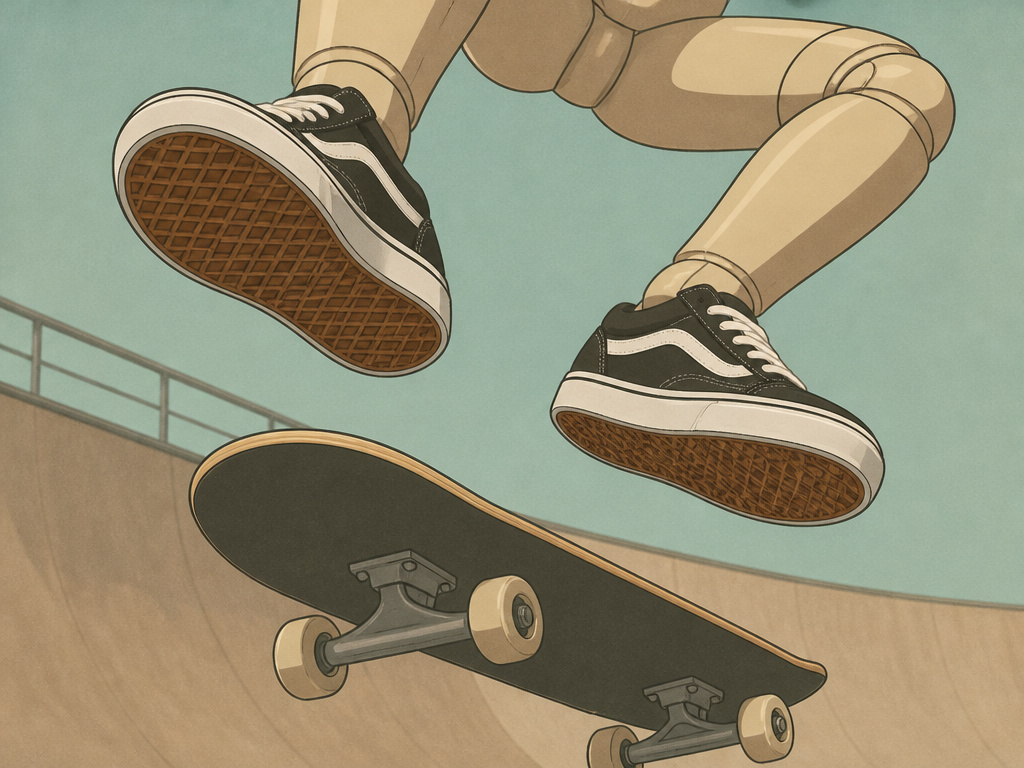
With the right gear and terrain, skateboarding’s vocabulary exploded. In 1976, Alan “Ollie” Gelfand invented the no-hands aerial (the ollie) in Florida. Around the same time in California, George Orton and Tony Alva developed the grabbed aerial. These moves made the air above the ramp accessible, changing skating from a ground-based carve to a three-dimensional sport.
This increased athleticism came with risk. Early skaters often rode barefoot, leading to obvious foot injuries. The need for specialized gear became clear. Vans sneakers, with their sticky waffle soles, became cultural icons, popularized further by Sean Penn’s character in 1982’s Fast Times at Ridgemont High. More critically, the sport’s danger was drawing national attention.
The injury numbers were staggering. The U.S. Consumer Product Safety Commission (CPSC) estimated 140,000 skateboard-related injuries treated in emergency rooms in 1977. This crisis prompted a petition to the CPSC for an outright ban on skateboard manufacture and sale.
The Government Almost Banned Skateboarding

In June 1979, the CPSC faced a decision: ban skateboards or find another path. They chose the latter, denying the petition in a ruling you can read in the 1979 Consumer Product Safety Commission ruling. Their reasoning provides a snapshot of the era.
First, injuries had already dropped 38% in 1978 to an estimated 87,000. The CPSC attributed this decrease to three factors: decreased popularity of skateboarding, increased use of skateboard parks, and preventive actions by skateboard safety groups. These parks weren’t just fun zones; they were safety interventions. They often required helmets, knee pads, and elbow pads, featured equipment checks, and had trained safety patrols.
The Commission noted the perverse risk that a ban would encourage backyard production of even more hazardous homemade boards from component parts. Regulation, not prohibition, was the answer.
The CPSC shifted to education, developing a slide/tape presentation for schools and publishing safety pamphlets like “Wheels.” They also pledged to monitor the development of a voluntary safety standard. With approximately 20 million skateboards in American homes in 1979, the decision cemented skateboarding’s place as a permanent, if risky, recreational activity. This regulatory history is a crucial, often-overlooked chapter in the full history of skateboarding.
The Legacy: From Subculture to Standard
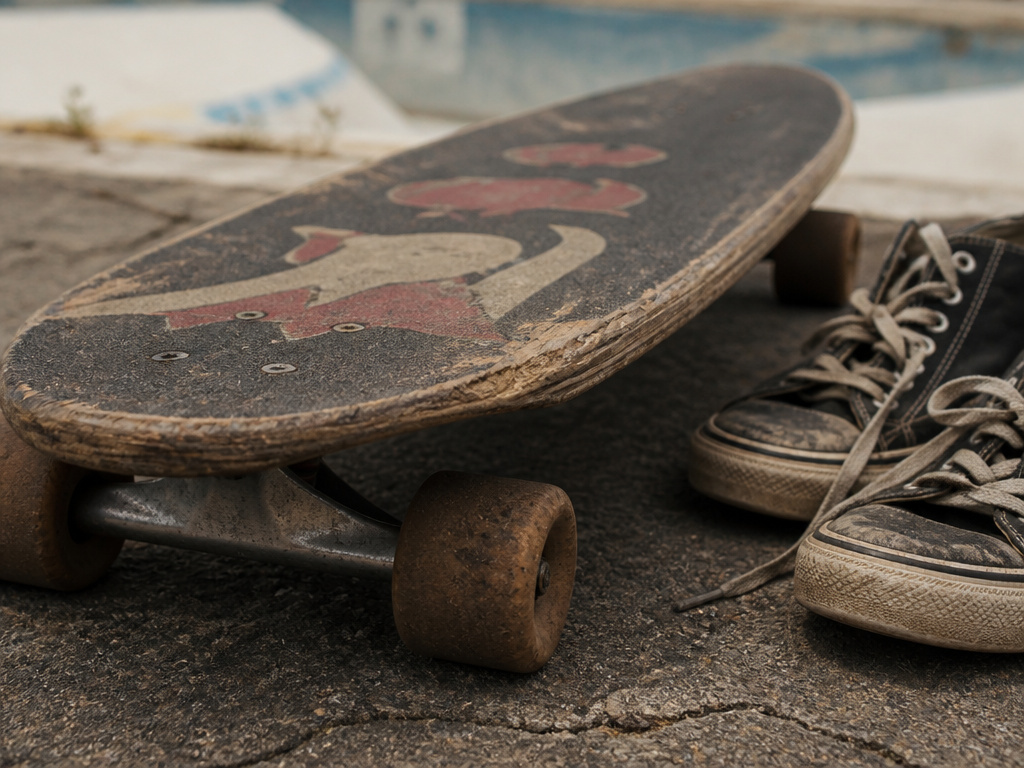
The 1970s didn’t just give skateboarding new tricks; it established its foundational conflicts and culture. The tension between street skating and controlled environments like parks began here. The DIY ethos of finding terrain in the urban landscape was born in drained pools and dried-out ditches. The look, wide boards, low-top sneakers, knee pads, was codified.
The era also set the stage for the 1980s ramp-sking boom and the eventual street-skating revolution. The technological leaps in wheel and deck design were essential prerequisites. When you look at a modern skatepark, you’re seeing the direct descendant of those first supervised 1970s parks that required a helmet at the gate. For a direct comparison of the gear from this pivotal decade, check out our breakdown of old school vs popsicle decks.
Frequently Asked Questions
Was skateboarding a thing in the 1970s?
Absolutely. The 1970s were the decade skateboarding evolved from a 1960s fad into a serious sport and subculture. Key developments included urethane wheels, the discovery of pool skating, the invention of aerial tricks like the ollie, and the first professional skateparks. It was also a period of intense growth, with an estimated 20 million skateboards in U.S. Homes by 1979.
Who were some of the most famous skateboarders in the 70s?
Key figures included Tony Alva, a pioneer of vertical pool skating and wide “pig” decks; Alan “Ollie” Gelfand, who invented the no-hands aerial; and Stacy Peralta, a top professional and later filmmaker. The Z-Boys (the Zephyr team) from Dogtown, Santa Monica, became legendary for their aggressive, surf-inspired style and are extensively covered in resources like the Dogtown and Z-Boys era article.
What triggered the rise of vertical skateboarding?
While urethane wheels were the essential enabling technology, historians point to the 1976-77 California drought as the direct environmental trigger. The drought emptied thousands of backyard swimming pools, providing the perfect concrete terrain. This unique combination of technology and available terrain allowed vertical skating to develop rapidly in Southern California.
How dangerous was skateboarding in the 1970s?
It was significantly more dangerous than today, largely due to less protective gear and unpredictable terrain. The peak year was 1977, with an estimated 140,000 injuries requiring emergency room treatment. The push for safety equipment like helmets and pads, and the growth of supervised skateparks, were direct responses to this injury crisis.
What did a typical 1970s skateboard look like?
Early 70s boards were often narrow (7-8 inches wide) with a kicktail. By the late 70s, designs diversified. Pool riders used wider boards (8-10+ inches) with rocker shapes and concave. Freestyle boards were smaller with sometimes double kicktails. Wheels were uniformly urethane. A great example is the artifact recorded in the Smithsonian Institution physical artifact collection.
Before You Go
The 1970s skateboarding story is a classic case of unintended consequences. A drought meant for water conservation created a sport. A wheel designed for roller skates spawned a global culture. A wave of injuries nearly triggered a ban, but instead spurred the creation of safer skateparks. It’s a reminder that progress in skateboarding has rarely been a straight line, it’s a series of collisions between invention, environment, and sheer stubbornness.
If you take one thing from this era, let it be the importance of the right terrain and the right gear. The pioneers didn’t just get good; they found places to practice getting good, and they built the tools to do it. That’s a lesson that still applies, whether you’re in a skatepark or just pushing down the block.
