
How to Make a Skateboard More Stable: Step-by-Step
This post contains affiliate links. As an Amazon Associate, we earn from qualifying purchases.
To make a skateboard more stable, you adjust three things in order: truck tightness, bushing hardness, and wheel size/durometer. Sources offer different advice on truck adjustment for stability: CPSC advises keeping trucks tightened properly, Skate Labs notes tightening the kingpin nut increases stability but makes turning harder, and Meow Skateboards states tighter trucks provide more stability while looser trucks allow easier turning. This process trades some turning ease for a rock-solid feel at speed, which is essential for beginners and downhill riders.
The kingpin nut is the primary control. Turning it changes how much the urethane bushings inside the truck compress. More compression means the truck resists leaning, which directly fights the side-to-side shimmy that defines speed wobble. You can achieve a similar effect by installing harder bushings before you even touch the wrench, which is one method for how to make a skateboard more stable.
What follows is a step-by-step tuning guide for how to make a skateboard more stable. It starts with the easiest, cheapest adjustment (the kingpin nut) and moves to part swaps (bushings, wheels) and riding technique. By the end, you’ll know exactly which setting to change and how much to change it.
Key Takeaways
- Adjust truck tightness a quarter turn at a time and ride between changes; overtightening makes the board un-turnable.
- Cracked or flattened bushings cannot hold a setting, replace them with a harder durometer (e.g., 90A+) for instant stability.
- For cruising and downhill, choose larger, harder wheels; smaller, softer wheels can amplify vibration and instability.
- Stand forward and crouch if wobble starts; this lowers your center of gravity and shifts weight over the front truck, per CPSC guidelines.
- Check all mounting hardware before every session; a loose bolt or nut is a fast track to unpredictable handling.
The Truck Tightness Sweet Spot
Truck adjustment is stability tuning 101 for how to make a skateboard more stable. The kingpin nut compresses the bushings, the urethane rings that act as a suspension spring. More compression means more resistance to your lean, which translates directly to less wobble.
Tighten the kingpin nut and the board gets more stable and harder to turn. Loosen it and carving gets easier, but the board can wobble at speed. Adjust truck tightness a quarter turn at a time and ride between changes.
Early on, I cranked my trucks as loose as they would go because I thought it would make me turn like the pros. At a moderate cruising speed the board wobbled so badly that I bailed. I learned to tighten them until the board felt stable first and loosen them slowly from there. That’s the sequence: stable first, then carve.
Here’s the step-by-step method, using the 9/16″ wrench specified by Meow Skateboards for the kingpin nut:
- Start with both trucks equally tight, as recommended by Skate Labs.
- Take a test push. Ride in a straight line on smooth, flat ground. Feel for any initial twitchiness.
- Tighten a quarter turn. Use your wrench to turn the kingpin nut clockwise about 90 degrees on both trucks.
- Ride and assess. Push again. Does the board feel more planted? Does it still turn with manageable effort? The goal is the firmest setting that still allows comfortable, wide carves.
- Repeat until wobble disappears.
Where this goes sideways: Overtightening. If you crank the nut until the bushing is completely squashed, you eliminate the truck’s ability to rebound. The board won’t turn, and you risk cracking the bushing or stripping the kingpin threads. The nut should always be fully threaded onto the kingpin, never so loose it’s barely hanging on.
Bushings: The Hidden Stability Lever
Bushings are the shock absorbers inside your trucks. Their durometer (hardness rating) determines how much force is required to make the truck pivot. While tightening the kingpin nut squeezes a soft bushing, starting with a harder bushing gives you inherent stability without excessive tightening.
The CPSC, Skate Labs, and Meow Skateboards all note that proper bushing condition is key. If they’re cracked, flattened, or won’t hold a setting, swap in a new pair. For stability, you generally want a harder bushing. A common beginner mistake is conflating tight trucks with the need for hard bushings. They achieve similar goals differently.
Tight Trucks vs. Hard Bushings:
- Tight Kingpin Nut: Compresses the existing bushing. Increases stability but also increases wear on the bushing and requires more muscle to turn.
- Hard Bushings: Made of stiffer urethane. Provide inherent resistance to leaning, allowing you to keep the kingpin nut at a more moderate tightness for a better balance of stability and turnability.
If you’re a heavier rider or just want a rock-solid feel, changing bushings for a higher durometer is your most effective upgrade. It’s a one-time fix that lasts for months.
Wheels: Size and Hardness Matter
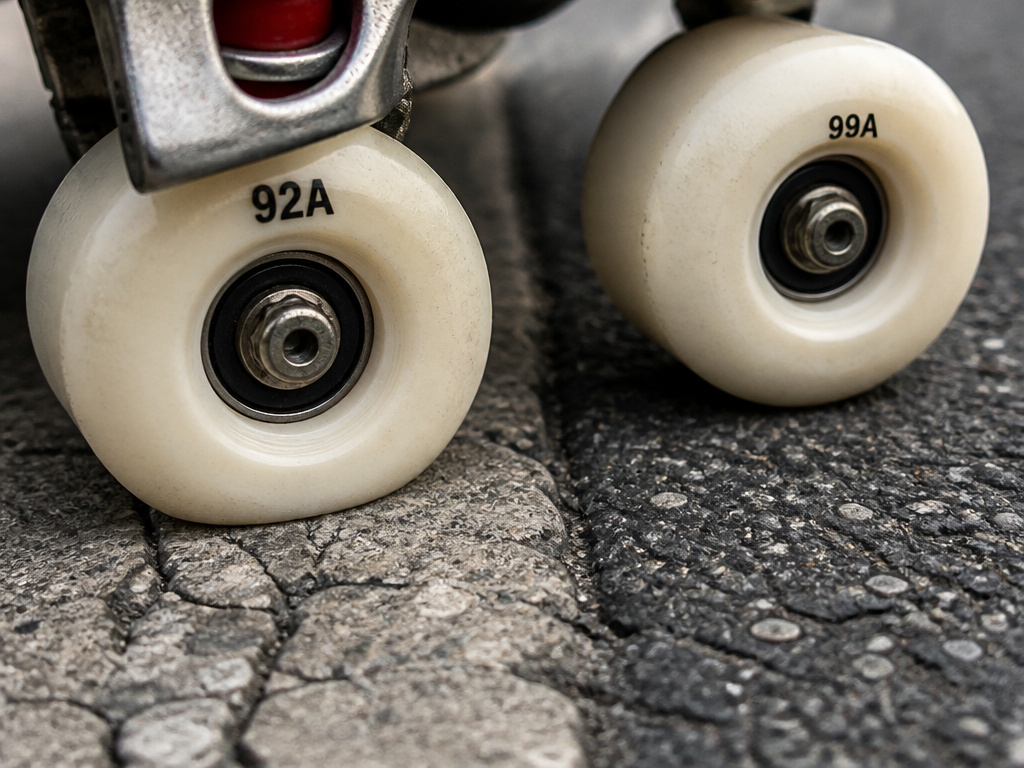
Wheel choice isn’t just about speed; it’s a direct stability control. The ASME paper on skateboard dynamics notes the commercial hardness range is 75A to 97A. Softer wheels (78A-87A) absorb rough pavement but deform under pressure, creating a vague, sluggish feel. Harder wheels (90A+) provide a precise, predictable platform.
Size and Stability: Larger wheels (54mm and up) roll over cracks and pebbles without getting deflected. Smaller wheels get kicked around more easily, which can initiate a wobble. For cruising and downhill stability, larger wheels are often recommended.
Hardness and Stability: A hard wheel (95A+) can provide a precise, predictable platform, which contributes to stability. But that harder contact patch vibrates less and transmits road feedback more directly to your feet, letting you make micro-corrections before a wobble builds. A soft wheel masks feedback until it’s too late.
If your board feels unstable and you’ve already dialed your trucks, look at your wheels. Worn-down, conically shaped wheels or super-soft cruiser wheels are likely culprits. Rotating them can help, but for a stability-focused smoother ride, a harder, larger wheel is the better long-term fix.
Your Stance and Riding Position
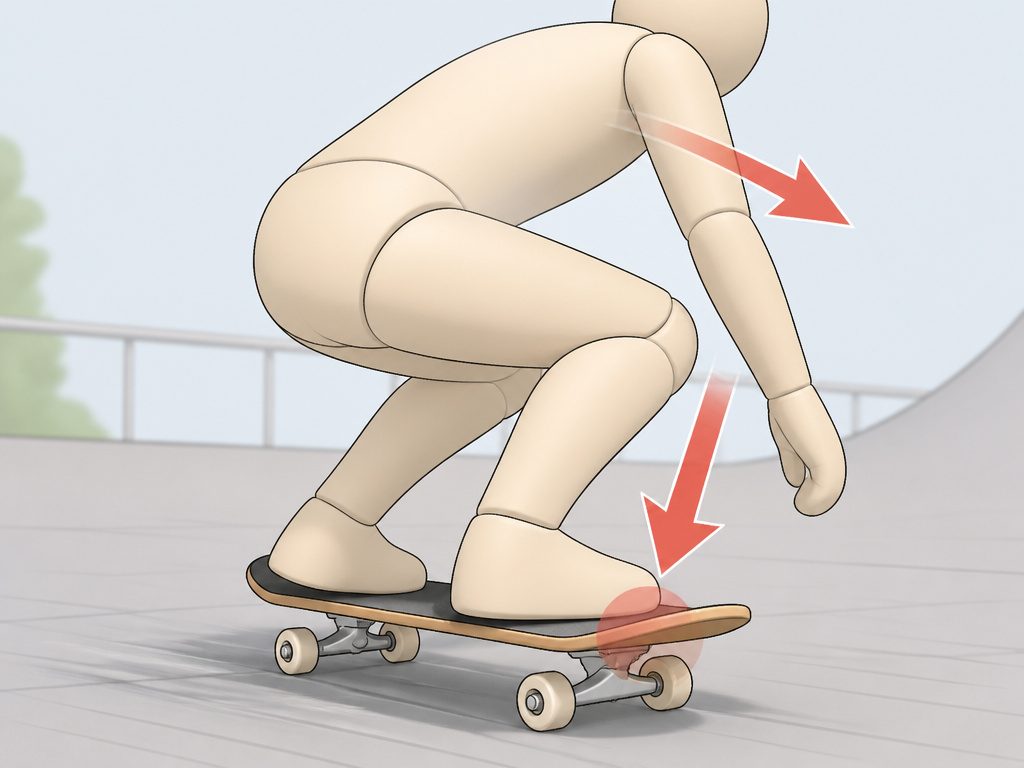
You are part of the suspension system. The 2016 Royal Society Interface study on wobble stabilization found that standing ahead of the board’s center allows for larger reflex delays to be tolerated. In plain terms, leaning forward over your front truck gives you more time to react and correct a wobble.
The CPSC advice is simpler: ride forward and crouch. When you feel the first shiver of a wobble, bend your knees and shift your weight slightly forward. This lowers your center of gravity and puts more pressure on the front truck, which naturally dampens the oscillating motion. It’s a physical override switch.
This is where balance fundamentals pay off. If your basic stance is stiff and upright, you have no recovery range. Practicing balance exercises that strengthen your ankles and core gives you the muscle memory to automatically crouch and shift weight when the board starts to shimmy. Stability isn’t just in the hardware; it’s in your posture.
Pre-Ride Hardware Check
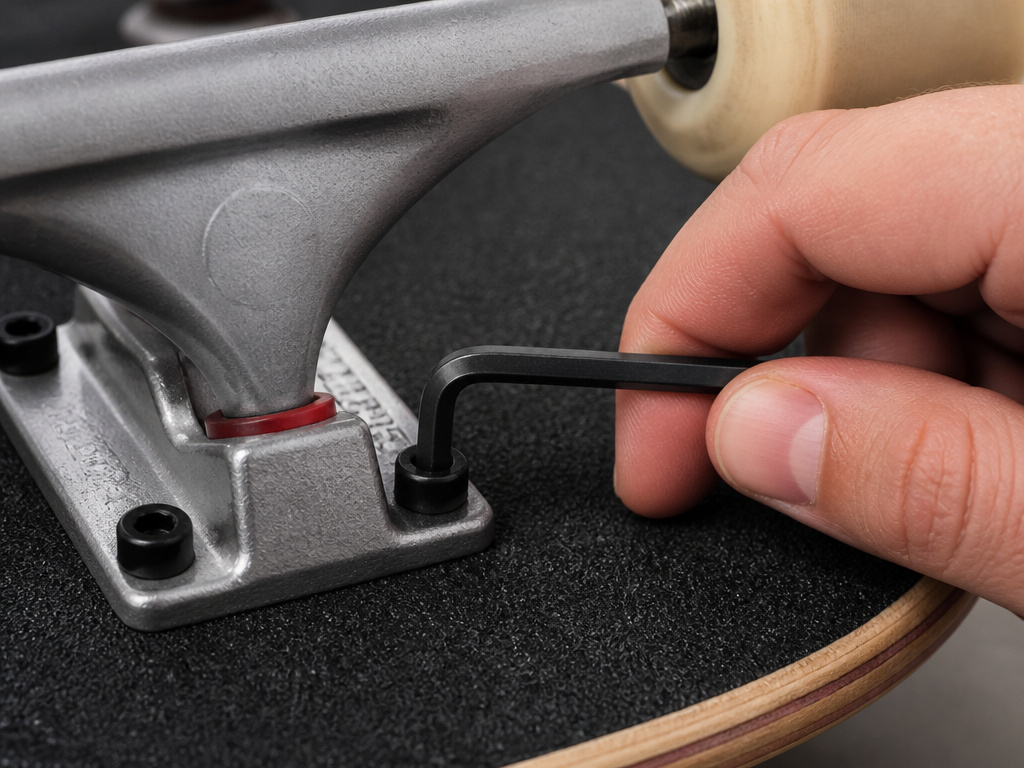
A loose component is a guaranteed instability. The CPSC fact sheet and every manufacturer guide stress this: always check for excessive play and any broken or cracked parts before riding.
Your checklist, in order of importance:
- Truck Mounting Nuts: Use a Phillips screwdriver or 1/8″ Allen key (per Meow Skateboards) to check the eight bolts holding the trucks to the deck. They should be snug, not straining the wood.
- Axle Nuts: Use a 1/2″ wrench to ensure the wheel axle nuts are tight enough to prevent side-to-side wheel movement, but loose enough to let the wheels spin freely.
- Kingpin Nuts: Confirm your setting is still held. A loose kingpin nut will back off over time, especially on new bushings as they break in.
- General Inspection: Look for cracks in the deck, especially around the truck mounts. Feel for any grinding or crunching in the wheel bearings.
This quick check is an essential pre-ride habit. Skipping it is how a fun cruise turns into a walk home. For heavy riders, this check is even more critical, as more weight exerts more force on every connection point.
Stability for Different Styles
Not all stability is the same. A park skater needs a stable platform for pop and landing, while a downhill rider needs anti-wobble at 30+ mph. Your tuning should match your primary discipline.
If you only do one thing, match your wheels to your terrain. Hard, large wheels for smooth pavement; slightly softer, large wheels for cracked sidewalks. Truck and bushing tuning fine-tunes that base.
When to Replace Parts
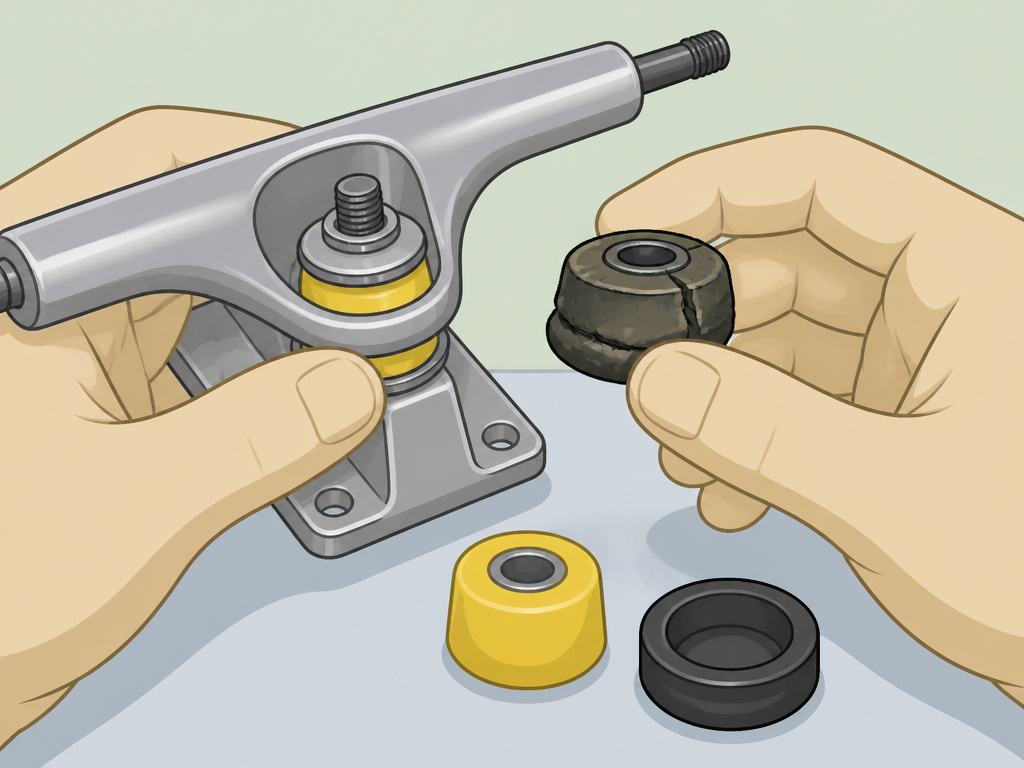
Components wear out, and worn parts cause instability. Here’s how to know when to swap them:
- Bushings: Replace if cracked, permanently flattened, or if they ooze out the sides of the truck hanger. They lose their rebound and won’t hold a setting.
- Pivot Cups: The plastic cup in the truck baseplate. If your trucks squeak loudly (caused by friction here, per Meow Skateboards) or develop a “dead spot” in the turn, the cup is worn. Lubricate it first; replace if the play remains.
- Wheels: Replace when they become severely coned or develop flat spots. Uneven wear makes the board pull to one side, creating a constant correction battle.
- Decks: A cracked deck, especially around the truck mounts, flexes unpredictably. Press down on the tail and nose over concrete, any cracking sound means the deck’s integrity is gone.
Replacing these consumables is cheaper than a hospital visit. It’s basic maintenance, not an upgrade.
How Skateboard Truck Parts Affect Stability
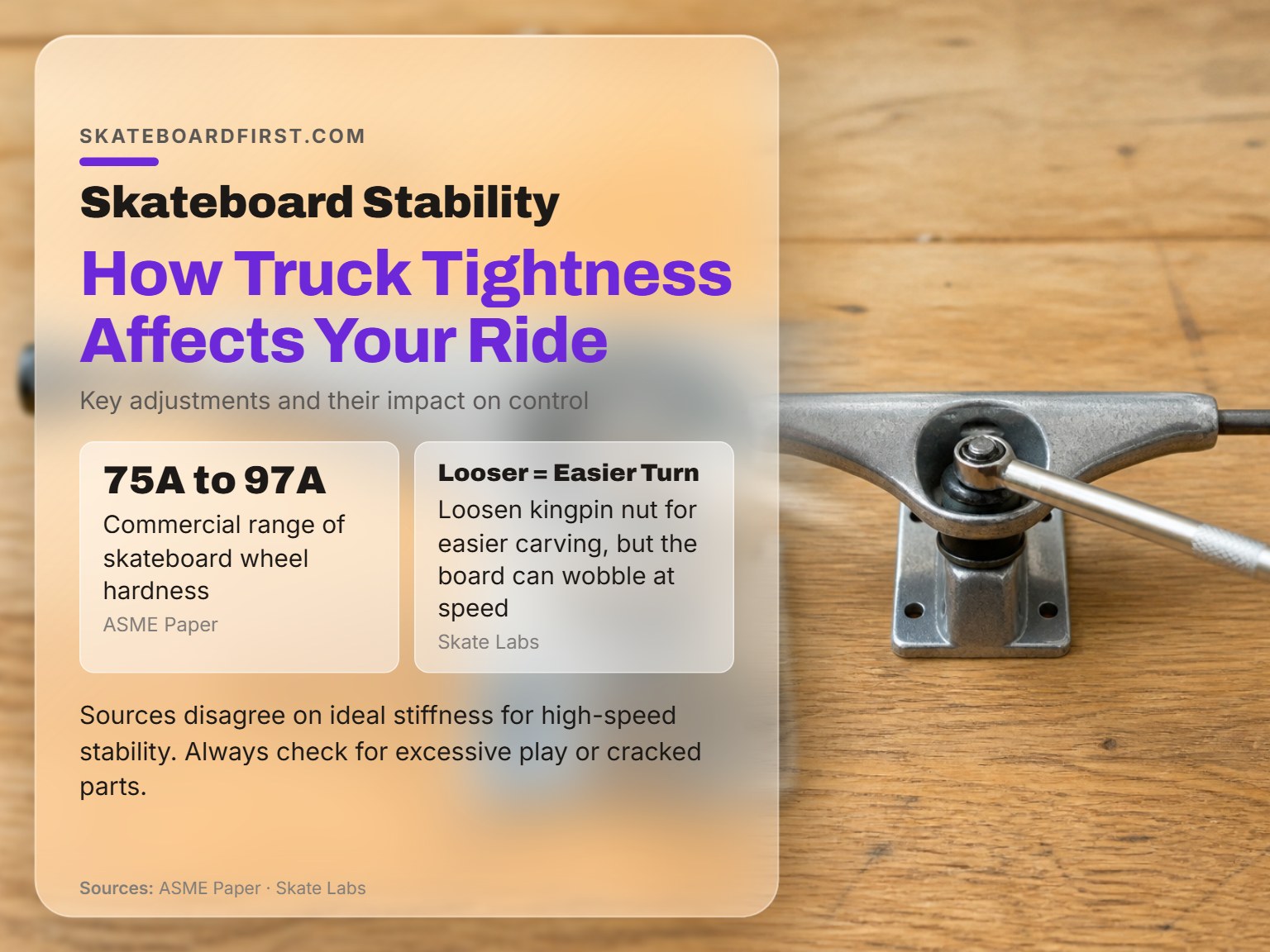
Your skateboard’s stability is controlled by its trucks. The central part is the kingpin, a long bolt that holds everything together. Tightening the kingpin nut compresses the bushings, the urethane rings that act as springs. This creates more resistance when you lean, making the board more stable and harder to turn. Sources disagree on the relationship between truck stiffness and high-speed stability: the ASME Paper states stability calls for more stiffness, while a Royal Society Study notes a low-stiffness system can lead to instability if the skater reacts with small delay. Always check for excessive play or cracked parts before you ride, and make adjustments a quarter turn at a time, testing between changes.
Frequently Asked Questions
Why does my skateboard feel so wobbly?
The most common causes are loose trucks, worn-out or too-soft bushings, or wheels that are too small and soft for your speed. Check your kingpin nut tightness first, then inspect your bushings for cracks.
Is 99A too hard for street?
Hardness is a matter of preference and terrain; the commercial range is 75A to 97A. It provides a fast, precise feel and predictable slide. For cruising on rough pavement, it will feel very rough and chattery. Match the hardness to your primary surface.
What causes skateboard speed wobble?
Speed wobble is a self-reinforcing oscillation that starts when the board’s rear truck begins to shimmy side-to-side faster than the rider can dampen it. It’s triggered by a combination of high speed, insufficient truck/bushing stiffness, and a rider’s delayed reflex response, as analyzed in the Royal Society Interface study on wobble dynamics.
How do I stop speed wobble when it starts?
Crouch low, bend your knees, and shift your weight forward over the front truck. Do not panic and lean back. The forward stance increases stability, as noted in the CPSC skateboarding safety fact sheet. Then, safely reduce your speed by carving or foot-braking.
Can I make a cheap skateboard stable?
Yes, to a point. You can tighten the trucks and maybe swap for harder bushings. However, very cheap boards often have poorly cast trucks that won’t hold settings and ultra-soft bushings that crack quickly. Stability starts with decent hardware.
Before You Go
Stability is a tuning exercise, not a mystery. Start with the kingpin nut, tighten a quarter turn, ride, repeat. If you run out of thread before the wobble stops, you need harder bushings. If the board still feels nervous, move up to larger, harder wheels.
One rule most guides skip: if you’ve made these adjustments and still feel unstable, the problem might be your basic balance on the board. No tuning can fix a stiff, unbalanced stance. Spend a session just pushing and carving, focusing on a relaxed, bent-knee posture. Sometimes the final adjustment isn’t in the hardware; it’s in your feet.
