
Skateboard Helmet for Kids Guide: How to Get the Right Fit
This post contains affiliate links. As an Amazon Associate, we earn from qualifying purchases.
A skateboard helmet for kids must meet the ASTM F1492 safety standard, fit snugly with the front rim two fingers’ width above the eyebrows, and be replaced after any significant impact or within 5–10 years. The chin strap should be tight enough that only one or two fingers fit underneath. This specific combination of certification, fit, and maintenance is what actually reduces head injury risk.
That certification is the essential starting point. An ASTM F1492 label means the helmet was built and tested for the kind of multi-directional, often repeated slams that happen in skateboarding, not just the single, linear impact a bike helmet is designed for. Missing that label, even on a “multi-sport” helmet, leaves a critical gap in protection. Our skateboard helmet for kids guide explains this key detail.
What follows is a breakdown of the standards that matter, the exact fit check known as the 2-2-2 rule, and a clear timeline for when to retire a helmet, as outlined in this skateboard helmet for kids guide. We’ll also touch on the MIPS debate for skateboarding and simple tricks to make a helmet something your kid wants to put on.
Key Takeaways
- Look for the ASTM F1492 certification on the label; it’s the U.S. Standard specifically for skateboarding and trick roller skating.
- Use the 2-2-2 fit rule: two fingers’ width above the eyebrows, side straps forming a ‘V’ under the ears, and two fingers max under the chin strap.
- Replace the helmet after any crash where the head is hit, as the internal foam may be compromised even without visible damage.
- In the absence of a crash, a 5–10 year replacement window is prudent, as plastics degrade with sun and temperature extremes.
- A proper fit changes with hairstyle; re-check the fit after a haircut or if your child wears their hair differently.
Safety Standards Decoded: ASTM F1492 Is the One That Matters
You’ll see a few acronyms on helmet labels. For skateboarding, one matters more than the rest: ASTM F1492. This is the U.S. Performance standard developed specifically for helmets used in skateboarding and trick roller skating. The CPSC lists it alongside Snell N-94 as an applicable standard. The difference is specificity. ASTM F1492 tests for the types of impacts common in our sport.
A common point of confusion is the multi-use helmet. The CDC is clear: a helmet marketed for both biking and skateboarding must have an ASTM label certifying it for skateboarding to be used for that activity. Don’t assume a “multi-sport” tag covers you. This is a critical point many general guides miss. For a full explanation of what all those stickers mean, our article on skateboard helmet certifications breaks it down.
A helmet that complies with ASTM F1492 is designed to withstand more than one moderate impact, but protection is provided for only a limited number of impacts. Replace if visibly damaged. . CPSC “Which Helmet” Brochure
This gets to a core difference between skate and bike helmets. Organizations like Parachute note that bike helmets are single-impact devices, after a hit, the foam is compressed and protection is gone. Skateboard helmets, built to ASTM F1492, are designed for more than one impact, but they aren’t indestructible. “Limited number” is the key phrase. Think of it as a shield that can block several blows before it must be retired.
How to Fit a Helmet: The 2-2-2 Rule
A certified helmet only works if it’s on correctly. The most common mistake I see at the park is the helmet pushed back, leaving the forehead exposed. The fit system is simple enough for a kid to remember: the 2-2-2 rule.
- Two Fingers Above the Brows: The front rim of the helmet should sit level on the head, about two fingers’ width above the eyebrows. This is straight from Parachute’s fit guidelines. If it tips back, tighten the rear adjuster or add the included fit pads.
- Two Fingers Under the Strap: Buckle the chin strap. It should be snug enough that no more than one or two fingers fit between the chin and the strap. Have your child yawn wide, the helmet should pull down slightly on their head. If not, tighten it.
- Two Straps Make a ‘V’: The side straps should be adjusted so the helmet fits snugly all around. This keeps the helmet from shifting side-to-side.
Shake your head side to side and front to back. The helmet should move with your head, not slide over it. A loose helmet can come off on impact. For a visual step-by-step, our guide on how to fit a helmet walks you through it.
Where this goes sideways: Trying on a helmet with the wrong hairstyle. The CDC explicitly states that helmet fit can change if your child’s hairstyle changes. A kid with long hair who gets a short cut will need to re-tighten the fit system, or the helmet will wobble. Do the fit check with their hair how they’ll skate.
When to Replace a Child’s Skateboard Helmet
This isn’t about a schedule. It’s about impact and degradation. The guidance differs slightly between sources, so we will lay out the decision tree clearly.
| Trigger | Action | Reason & Source |
|---|---|---|
| Any crash where the head is hit | Replace immediately. | The foam liner compresses, even if the shell looks fine. Parachute states bike helmets are single-impact devices. |
| Visible damage (cracked shell, crushed liner) | Replace immediately. | CPSC says to replace if visibly damaged. This is non-negotiable. |
| No crash, but 5+ years old | Strongly consider replacement. | Plastics and foam degrade. |
| Extreme storage (left in car, sun) | Inspect closely; likely replace sooner. | Heat and UV radiation break down materials. The CDC warns against storing a helmet in a car or direct sunlight. |
The CPSC provides the broadest, most cautious timeline: in the absence of manufacturer guidance, it may be prudent to replace your helmet within 5–10 years of purchase. Your decision can factor in use, care, and storage, as detailed in a detailed skateboard helmet for kids guide. A helmet used twice a week for park skating and stored indoors will last longer than one baking in a garage. For more on navigating this, see our article on how often to replace a skateboard helmet.
Skateboard Helmet vs. Bike Helmet: A Clear Comparison
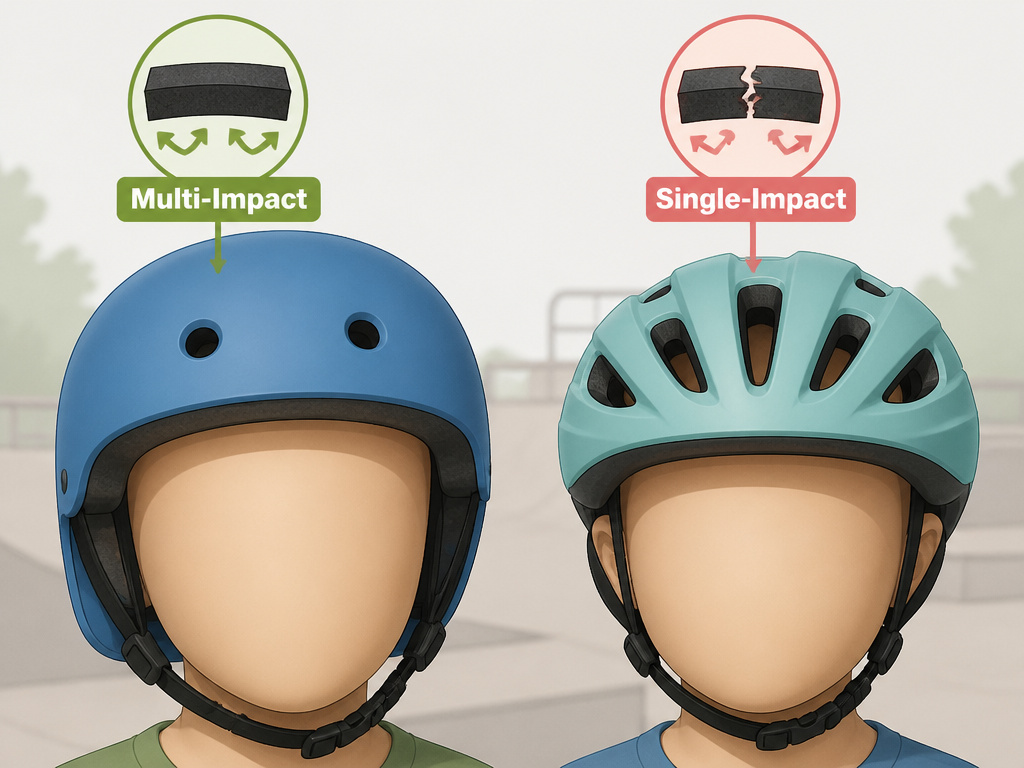
It’s easy to grab whatever helmet is in the garage. Don’t. The design priorities are different, as shown in this direct comparison.
| Feature | Skateboard Helmet (ASTM F1492) | Bike Helmet (CPSC 1203 / ASTM F1447) |
|---|---|---|
| Impact Design | Multi-impact (limited number). | Single-impact. |
| Coverage | Typically covers more of the back of the head and sides. | More rounded, focused on forward/downward impacts. |
| Shell | Hard, durable shell designed for slides and scrapes. | Often lighter, more ventilated shell. |
| Best For | Skateboarding, trick roller skating, skatepark use. | Bicycling, low-speed scooter riding. |
The hard shell on a skate helmet provides durable protection. If your child does both activities frequently, invest in two certified helmets. Our full skateboard helmet versus bike helmet comparison has more details.
Getting a Kid to Actually Wear the Helmet
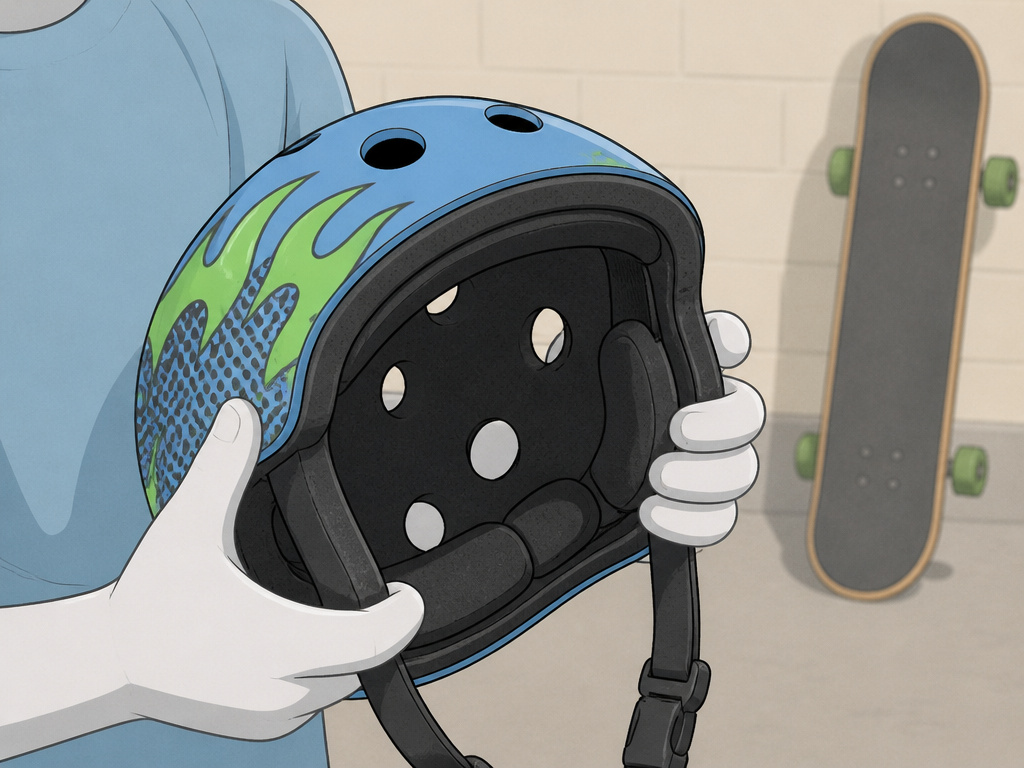
The best helmet is the one they’ll wear without a fight. Comfort and style are your allies here.
Start with ventilation. A sweaty, hot helmet gets taken off. Look for models with ample airflow. Next, involve them in the choice. Many brands offer a wide range of colors and graphics. That sense of ownership matters. Finally, make it routine. The helmet goes on before the board comes out, every single time. No exceptions.
I’ve watched kids fight a helmet for weeks, then stop complaining once it’s just part of the “getting ready” ritual. Their brains adapt. Your consistency is the key.
The Bottom Line
Here is what actually worked for me. Pick one thing and get it right: the fit. A mid-priced, certified helmet that passes the 2-2-2 rule beats the most expensive one worn incorrectly. Check that front rim position every session. It takes 30 seconds.
If you’re starting from zero, use our guide to choosing a skateboard helmet to narrow the field, then focus on fit. Pair it with other essential safety gear for young skaters, like properly fitted knee and elbow pads. Small steps add up to safer skating.
What are the best skateboard helmet brands?
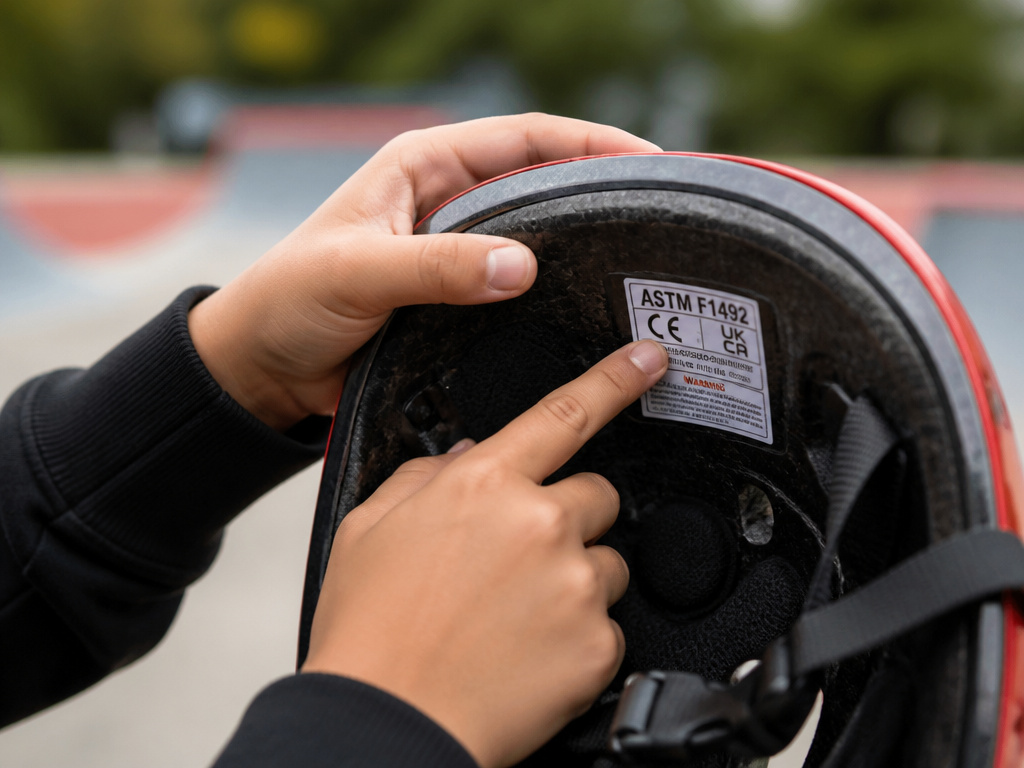
When looking for a helmet, a specific brand or model is less important than the safety standard it meets. The key is to check the label inside the helmet for a certification. For skateboarding, the primary standard to look for is ASTM F1492. Some helmets may also list Snell N-94. These standards mean the helmet has been tested for the types of multiple, moderate impacts common in skateboarding. A true skateboard helmet will have a hard shell with a foam interior and is designed to cover more of the back of the head. Always try the helmet on your child to ensure a snug fit all around, with the front resting about two fingers’ width above the eyebrows.
Frequently Asked Questions
What is the 2-2-2 rule for helmets?
The 2-2-2 rule is a simple fit check: two fingers’ width between the eyebrows and the helmet rim, the side straps forming a ‘V’ under the ears, and a maximum of two fingers fitting under the buckled chin strap. It ensures the helmet is level, snug, and secure.
What is the best helmet for a child who is skateboarding?
The best helmet is one that carries the ASTM F1492 certification and fits your child’s head correctly using the 2-2-2 rule. Many brands make certified youth models. The specific “best” model depends on your child’s head shape and preference for ventilation and style.
How can I find the right size child’s helmet for my child?
Use a soft tape measure to measure the circumference of their head, just above the eyebrows and ears. Match that measurement to the brand’s specific sizing chart, sizes vary between manufacturers. Always have the child try it on before finalizing a purchase.
What size helmet would my 7-year-old need?
There is no universal size for a 7-year-old. You must measure your child’s head and consult the sizing chart for the specific helmet brand you are considering. You must measure your child’s head and consult the sizing chart for the specific helmet brand you are considering. Most brands offer a Small or Youth size that covers this range.
