
Electric Skateboard Helmet Guide: Full-Face vs. Half-Shell
This post contains affiliate links. As an Amazon Associate, we earn from qualifying purchases.
An electric skateboard helmet must be certified for skateboarding (ASTM F1492 or Snell N-94), fit snugly with the front rim aligned with your eyebrows, and be replaced after any serious crash. For high-speed or off-road riding, a full-face helmet is the safer choice.
That last part is the decision rule most riders miss. A certified helmet is the baseline, but the type you pick depends directly on how you ride. For a full view of the options, consult an electric skateboard helmet guide. A commuter cruising bike lanes at 15 mph needs different headgear than someone carving downhill at 30.
This electric skateboard helmet guide walks the choice between half-shell and full-face helmets, the certifications that actually matter, and the fit adjustment that stops a helmet from flying off on impact. By the end, you’ll know which helmet matches your board’s speed and your local laws.
Key Takeaways
- Check for a label inside the helmet certifying it to ASTM F1492 or Snell N-94.
- Use the 2-2-2 rule for fit: the front rim aligned with the eyebrows, two straps making a V under and in front of the ears, no more than one or two fingers under the chin strap.
- A full-face helmet is essential for high-speed electric skateboarding (over 20 mph) or any off-road riding where a face-plant is a real risk.
- The CPSC and CDC disagree on how many impacts a helmet can take: the CPSC states ASTM F1492 helmets are designed to withstand more than one moderate impact, while the CDC states helmets are designed to withstand more than one very minor hit. Both agree a helmet must be replaced after a serious crash, and the CPSC suggests considering replacement within 5–10 years even without a hit.
- At least three of the fatal Onewheel incidents involved riders not wearing a helmet, according to the official recall notice.
The Standards That Actually Matter: ASTM F1492 and Snell N-94
A skateboard helmet isn’t just a bike helmet with a different sticker. The testing is different. The U.S. Consumer Product Safety Commission (CPSC) states helmets for skateboarding should comply with ASTM F1492 or Snell N-94 standards.
A helmet that complies with ASTM F1492 is designed to withstand more than one moderate impact, but protection is provided for only a limited number of impacts. Replace if visibly damaged (e.g., a cracked shell or crushed liner).
That blockquote comes straight from the CPSC’s own guide. The standard exists because skateboard falls often involve multiple hits, a tumble down a ramp, a scrape along pavement. ASTM F1492 specifies testing with three anvil types: a flat surface, a cylindrical hazard, and a triangular hazard anvil. A bike helmet standard, like CPSC 16 CFR 1203, tests only on a flat anvil.
Here is how the major standards for wheeled sports break down:
| Standard | Primary Use | Key Difference for Esk8 |
|---|---|---|
| ASTM F1492 | Skateboarding, Trick Roller Skating | Tests on multiple anvil shapes for curb-like impacts. |
| Snell N-94 | Skateboarding, Non-Motorized Sports | A voluntary, often stricter certification sought by premium brands. |
| CPSC 16 CFR 1203 | Bicycling | Flat-anvil only; not designed for multi-impact skateboard falls. |
| AS/NZS 2063 | Cycling, Skateboarding, Wheeled Recreation | Common in Australia/NZ; lightweight design for multiple activities. |
| EN 1078 | Cycling, Skateboarding (Europe) | Uses a flat and a kerbstone anvil; the base mass must be at least 500 kg. |
If you are shopping, the label inside the helmet is your proof. Look for “ASTM F1492” or “Snell N-94.” Many brands build models to these specs. Don’t assume a bike helmet is good enough. The testing apparatus and impact philosophy are not the same.
Helmet Types: Full-Face vs. Half-Shell
Your riding style decides this, not your personal comfort. The common split is between the open-face “half-shell” and the full-coverage “full-face,” each with a clear job.
Half-shell helmets are the classic skateboard look. They protect the top, back, and sides of your head. They are lighter, better ventilated, and less obtrusive. For a beginner on a hub-motor board sticking to smooth bike paths at lower speeds, a well-fitted half-shell meeting ASTM F1492 is the correct, legal minimum. Our guide to choosing a skateboard helmet dives deeper into fit and features for this style.
Full-face helmets encase the entire head, including a chin bar and a visor. They are essential for two scenarios: high speed and rough terrain. If your electric skateboard reaches high speeds, a fall turns your face into a slider. A full-face helmet is also mandatory for any mountain-board or off-road esk8 riding where rocks, roots, and unpredictable throws are part of the ride.
Where this goes sideways: Choosing a half-shell for high-speed commuting because a full-face feels bulky. The first chin-first slide on asphalt at high speed changes that calculation permanently.
The difference isn’t just about breaking your jaw. A full-face helmet stabilizes your head better in a crash, reducing rotational forces that can cause concussions. Some models are designed specifically for downhill longboarding and electric skateboarding, offering features suited to the activity. For a detailed breakdown, see our comparison of full face vs open face helmet types.
The 2-2-2 Rule for Helmet Fit
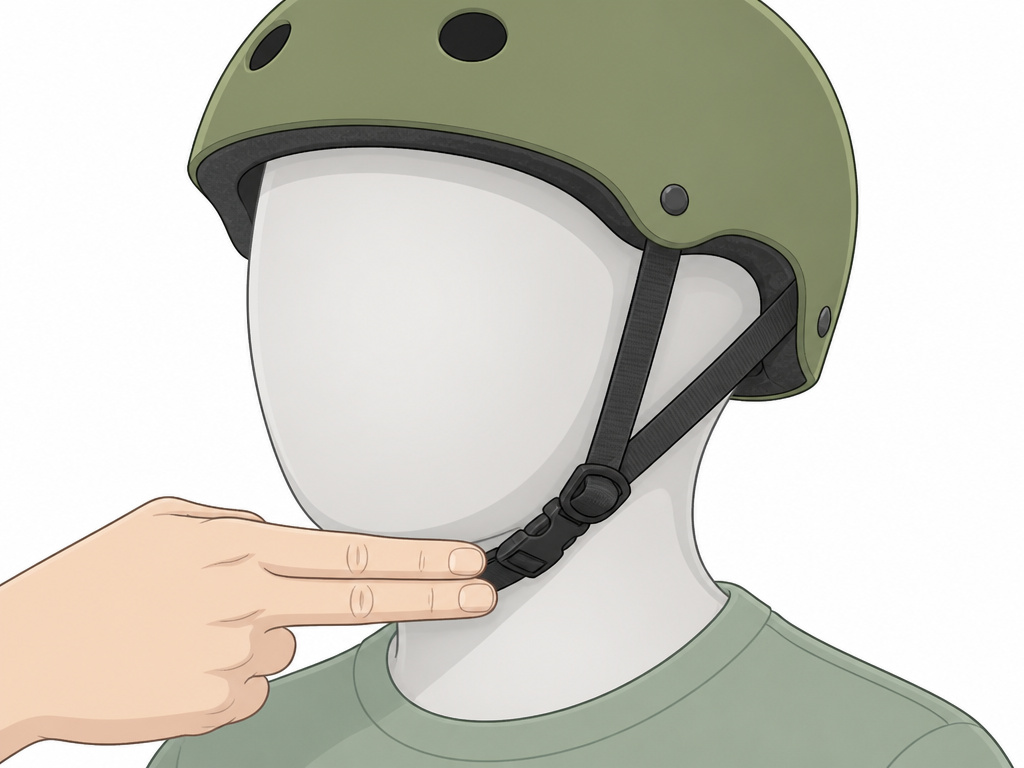
A perfect helmet that doesn’t fit is a zero. The CDC’s skateboard helmet fact sheet provides the gold-standard fitting procedure, which boils down to a simple “2-2-2” rule you can do in a minute.
- Two Fingers Above the Eyebrow. The front rim should align with your eyebrows. If the helmet sits back on your head, your forehead is exposed.
- Two Straps Forming a V. The side straps should make a “V” shape under, and slightly in front of, your ears. If they sit directly under your ears, the helmet can rock forward.
- Two Fingers Under the Chin Strap. Buckle the strap. You should be able to fit no more than one or two fingers between the strap and your chin. Then do the “big yawn” test: open your mouth wide. The helmet should pull down on the top of your head. If it doesn’t, tighten the strap.
This fit does three things. It keeps the helmet level during a crash. It stops the helmet from pivoting and exposing your skull. And it makes the helmet uncomfortable to wear incorrectly, which is the point. A loose helmet is a decoration. For a step-by-step walkthrough, our electric skateboard helmet guide to fitting a skateboard helmet has photos for each step.
Why Electric Skateboarding Demands More Protection
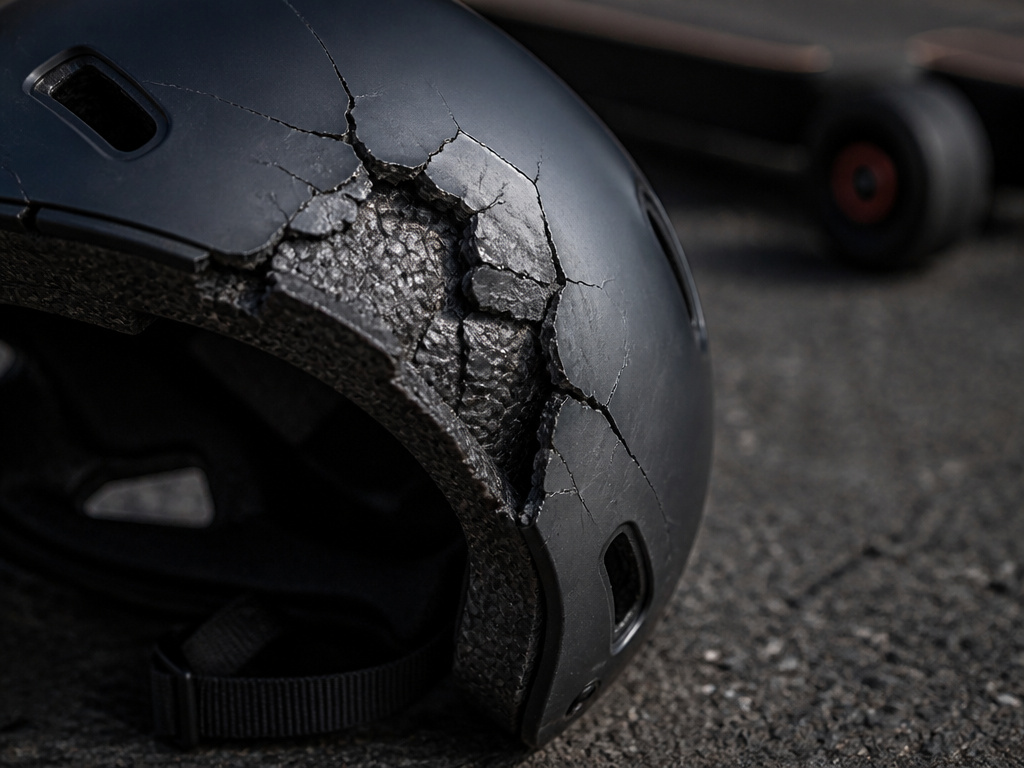
The force equation changes with a motor. A traditional skateboard crash happens at lower speeds. An electric skateboard crash can happen at significantly higher speeds. The 2023 Future Motion Onewheel recall highlights the specific dangers.
The CPSC recall notice states the boards “can stop balancing the rider if the boards’ limits are exceeded.” This is a unique ejection hazard. The rider isn’t just losing balance; they are being thrown from a self-balancing platform. The notice reports four deaths between 2019 and 2021, with injuries including traumatic brain injury, concussion, paralysis, and fractures. In at least three of the fatal incidents, the rider was not wearing a helmet.
The official Onewheel electric skateboard recall is a primary source every rider should read. It’s not scare talk. It is the documented outcome of a specific failure mode that doesn’t exist on a regular skateboard.
This is why general guides on electric skateboard safety stress a full kit: helmet, wrist guards, knee and elbow pads. The speed and weight of an electric board turn a simple fall into a high-energy impact.
When to Replace Your Helmet
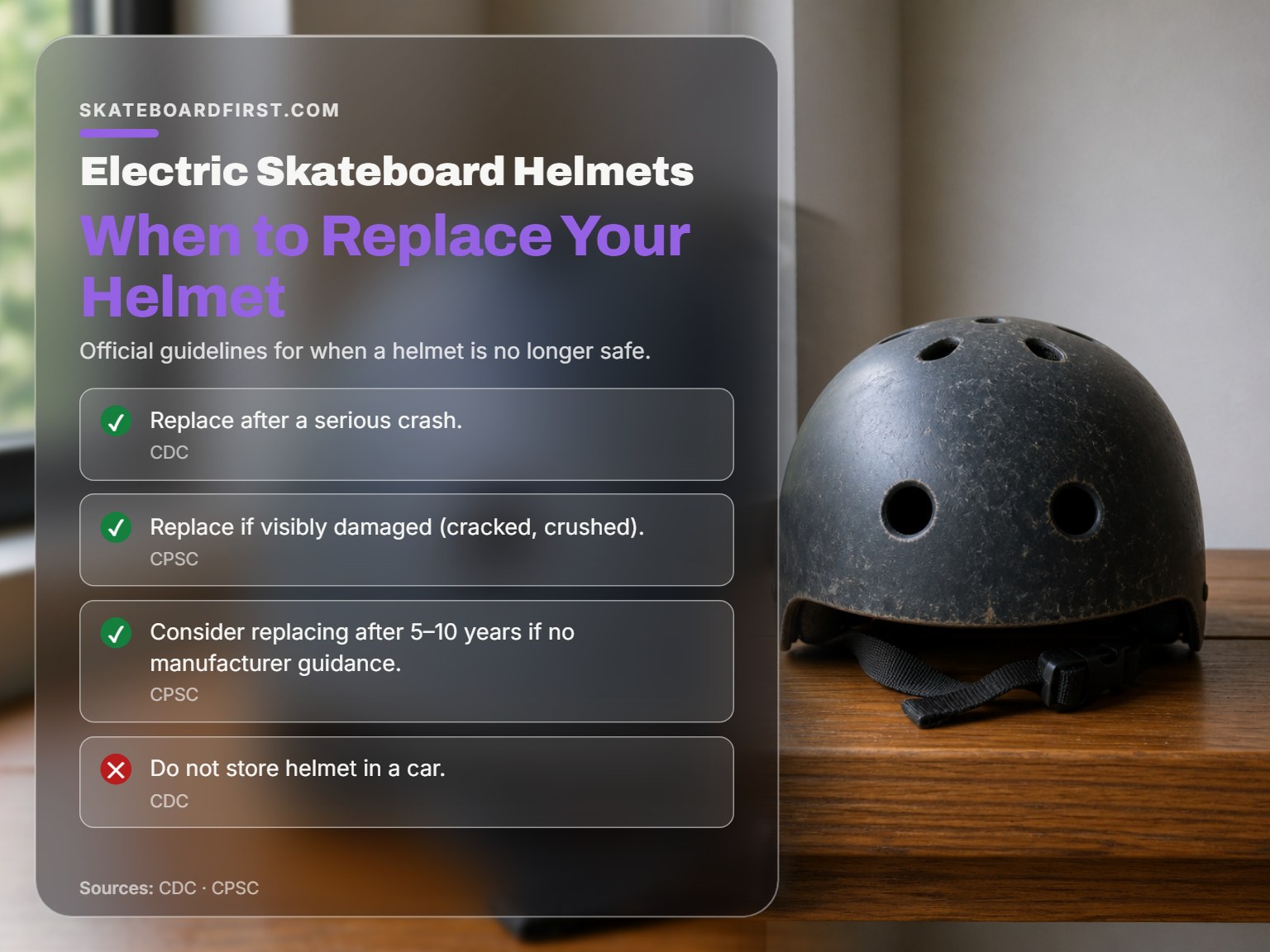
The official advice has a grey area, and it’s important to show both sides. The CPSC and CDC agree a helmet must be replaced after a serious crash. They disagree on what happens before that point.
The CPSC brochure says ASTM F1492 helmets “are designed to withstand more than one moderate impact.” The CDC fact sheet says they “are designed to withstand more than one very minor hit.” The disagreement lies in the definition of “moderate” versus “very minor.”
Common mistake: Keeping a helmet after a decent spill because there’s no visible crack. The foam liner compresses on impact, and that compression is permanent. It may not show on the outside.
Here is a clear replacement decision table:
| Situation | Replace? | Why |
|---|---|---|
| Serious Crash (any impact to the helmet) | Yes, immediately. | The foam liner is compromised, even if the shell looks fine. |
| Visible Damage (crack, crush, deep scratch) | Yes, immediately. | The structural integrity is broken. |
| Dropped from Height onto Hard Surface | Probably. | If you’re unsure, err on the side of replacement. |
| 5–10 Years Old (with regular use) | Consider it. | Materials degrade from UV exposure, sweat, and temperature cycles. |
| Newer, but straps are frayed or pads are gone | Yes. | A helmet that can’t stay on is useless. |
The CPSC adds that in the absence of manufacturer guidance, “it may be prudent to replace a helmet within 5–10 years of purchase.” Storage matters, too. The CDC explicitly advises against storing a skateboard helmet in a car. Temperature extremes break down the foam and adhesives over time. For a full timeline, check our guide to helmet replacement.
What helmet brands should I look for?
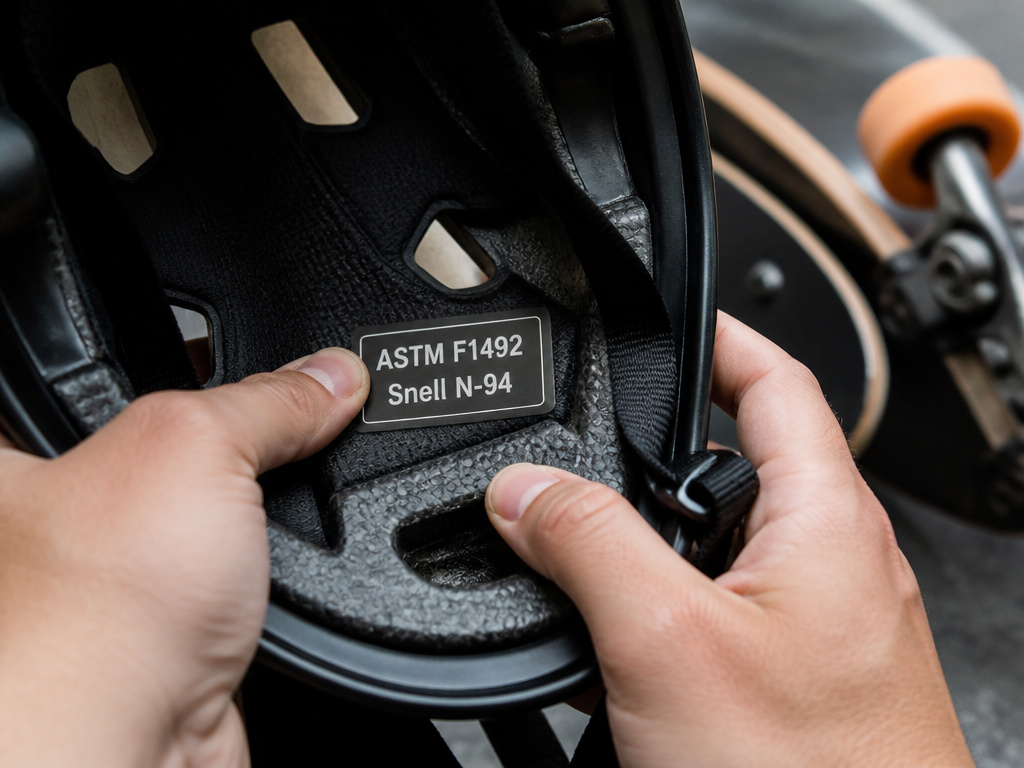
Instead of seeking a specific brand, focus on finding a helmet that meets the right safety standards. For electric skateboarding, you need a hard-shell helmet with a foam interior designed for skateboarding. Check for a certification label inside the helmet showing it complies with ASTM F1492 or Snell N-94 standards. These are the benchmarks set for skateboarding and trick roller skating. A helmet meeting these standards is engineered to handle the types of impacts common in these activities. Ensure it fits snugly, sits level on your head, and has a securely fastened chin strap. This approach is more reliable than chasing a brand name.
Frequently Asked Questions
What is the 2-2-2 rule for helmets?
It’s a quick fit-check method: two fingers’ width between the helmet rim and your eyebrows, two side straps forming a V under and in front of your ears, and no more than two fingers’ space under the buckled chin strap. If any of these are off, adjust the helmet’s fit system.
What is the best helmet for electric skateboarding?
The “best” helmet is the one that fits you perfectly and matches your riding. For most riders on powerful boards, a full-face helmet certified to ASTM F1492 or Snell N-94 is the safest choice. Several brands make models designed for this use. Our list of the best skateboard helmets reviews specific options.
Should I wear a full-face helmet on an ebike?
The logic is similar to esk8: speed and risk profile decide. If you’re riding an electric bike at high speeds (20+ mph), in traffic, or on technical trails, a full-face mountain bike helmet is a wise choice. For casual, low-speed commuting on bike paths, a standard bike helmet may suffice. The key is to use a helmet certified for the activity.
Is it illegal to ride an electric skateboard without a helmet?
Laws vary by city, state, and country. Many jurisdictions classify electric skateboards similarly to electric scooters or bicycles, which often have helmet mandates, especially for riders under a certain age. Even where it’s legal, it’s a severe risk. Understanding your local electric skateboard laws is a critical part of riding responsibly.
The Bottom Line
Start with a certified helmet. ASTM F1492 or Snell N-94, that fits you today, not the head you think you’ll grow into. Use the 2-2-2 rule to check it.
Then, match the helmet to your board’s capability. If your top speed is over 20 mph, or you ride anywhere a face-plant is possible, the answer is a full-face helmet. It’s not an accessory; it’s part of the powertrain.
Finally, replace it the moment you have a real doubt. The foam liner doesn’t heal. A five-year-old helmet that’s been through a few seasons of sweat and sun is a helmet that’s done its job. Buy a new one. Your first crash should be the one you walk away from, not the one that teaches you what a helmet is for.
