
Skateboard Pads for Kids Guide: Fit, Standards, and Safety
This post contains affiliate links. As an Amazon Associate, we earn from qualifying purchases.
Skateboard pads for kids are a helmet, wrist guards, knee pads, and elbow pads that fit snugly and meet safety standards like EN 14120 or CPSC guidelines. The right size is more important than the brand, and a proper fit means the pads stay in place during a fall without shifting or sliding.
That fit is the difference between a scraped knee and a broken wrist. A pad that slides out of position on impact offers reduced protection. The gear only works if it stays where it’s supposed to be. Our skateboard pads for kids guide explains this critical principle.
What follows is a breakdown of the safety labels you’ll see, a step-by-step sizing method that beats age charts, and the maintenance routine that keeps pads protective. By the end, you’ll know how to read a product page, spot a worn-out pad, and get your kid geared up without the daily argument.
Key Takeaways
- Measure limbs, not age. Brands disagree on age ranges; a tape measure is the only reliable way to find the correct size for knee pads, elbow pads, and wrist guards.
- Snug fit beats loose coverage. A pad that is too big slides out of position on impact. The TSG manual explicitly warns that an oversized protector creates a dangerous riding condition.
- Certified pads have speed limits. Pads certified to EN 14120 are not designed for serious falls at speeds over 13 km/h (8 mph) and offer only limited protection against stationary surfaces.
- Wrist guards are essential. The CPSC highlights wrist guards as especially important for reducing fracture risk, a common injury from outstretched-arm falls.
- Clean pads last longer. Sweat and grit degrade foam and straps. A simple wash routine prevents the Velcro from failing and the padding from compacting.
The Gear You Actually Need (And What the Labels Mean)
Forget the all-in-one superhero costume sets. You need four pieces: a helmet, wrist guards, knee pads, and elbow pads. The CPSC is clear on this, their safety publications list a helmet, elbow pads, knee pads, and wrist guards as the baseline. Wrist guards get the first call because when kids fall, they instinctively put their hands out. Wrist injuries are common from outstretched-arm falls. Guards with a splint that limits wrist hinge can redirect that force.
Knee pads come next. A skinned knee heals fast, but a hard impact on the kneecap doesn’t. The CPSC advises using knee and elbow pads. Elbow pads are part of the recommended protective gear. The order is helmet, wrists, knees, then elbows.
A helmet, elbow pads, knee pads, wrist guards and gloves should always be worn. . CPSC Publication 5014
This official stance is why you’ll see three-packs (knees, elbows, wrists) sold everywhere. They’re responding to the guideline. But a pack is only useful if every piece fits. I’d rather see a kid in a perfect-fitting helmet and wrist guards than in a full set of loose, sliding pads they hate.
What most people get wrong: Assuming “certified” means “total protection.” It doesn’t. The TSG manual for its CE-marked pads states they are “not intended to provide protection in the event of a serious fall when travelling at speeds more than 13km/h.” That’s about 8 mph, a casual cruising speed for many kids. The certification (EN 14120) means the pad passed impact tests at a lab, not that it makes your child invincible.
What Do the Safety Standards Actually Mean?
You’ll see “CE marking” and codes like EN 14120:2003+A1:2007 on European brands like TSG. In the U.S., look for CPSC compliance for helmets, but pads often reference ASTM or just general conformance. These are verification that the product was tested to a specific, repeatable standard.
CE marking under the EU’s Personal Protective Equipment Regulation means the protector has been type-examined by a notified body. For skate pads, the relevant standard is usually EN 14120, which covers protectors for roller sports. Another, EN13688, covers general requirements for protective clothing like seam strength and strap durability. If a European brand lists these, they’re showing you the paperwork.
The TSG manual breaks down a key detail: performance requirements are based on the user’s body mass. The standards define three ranges:
- Range A: Up to 25 kg (55 lbs)
- Range B: 25 kg to 50 kg (55-110 lbs)
- Range C: Above 50 kg (110 lbs)
A pad certified for Range C is engineered for the impact energy of a heavier body. Matching the certified body mass range to your child’s weight is important. Matching the certified body mass range to your child’s weight is important. This is why matching the certified range to your child’s weight matters as much as the limb measurements.
| Standard / Marking | What It Means | Why It Matters for Kids |
|---|---|---|
| CE Marking (EU 2016/425) | Product meets essential health and safety requirements for PPE. | Legally required for sale in Europe; indicates formal testing. |
| EN 14120:2003+A1:2007 | Specific standard for wrist, palm, knee, and elbow protectors for roller sports. | Defines impact absorption performance and coverage area. |
| EN13688:2013 | General requirements for protective clothing (straps, seams, sizing). | Ensures straps won’t snap and seams won’t burst on a fall. |
| CPSC Compliance (USA) | U.S. Consumer Product Safety Commission guidelines for safety gear. | The federal government’s baseline safety advice for skateboarding. |
The takeaway? A pad with a CE mark and EN 14120 certification has been through a more rigorous, defined testing process than an unbranded pad with no listed standards. For a skateboard helmet for kids guide, the CPSC standard is the absolute minimum, so check for the CPSC sticker inside the helmet. For other pads, these European standards are the most specific benchmarks covered in our skateboard pads for kids guide.
How to Choose the Correct Size and Fit for Kids
Throw out the age chart first. I mean it. The SFR ‘Youth Ramp’ pad set says its Small size fits ages 4-7. The K2 Junior Pad Set X-Small is defined by a knee measurement of 9”-10.5”. A child’s measurements may place them in a different size than their age would suggest. Age is a guess; a measuring tape is a fact.
Here is the only method that works every time:
- Use a soft measuring tape. Measure the circumference of the limb where the pad will sit.
- For knee pads: Measure around the thigh where the pad will sit. This is the “thigh” measurement brands list.
- For elbow pads: Measure around the lower bicep where the pad will sit.
- For wrist guards: Measure around the palm where the guard will sit.
Now, compare your numbers to the brand’s size chart in centimeters or inches. Do not convert in your head. Compare your measurement to the brand’s size chart as detailed in our skateboard pads for kids guide. If it’s 28 cm, you need the next size up. This is how you size knee pads correctly.
Where this goes sideways: Choosing a protector that is too big creates a dangerous riding condition. . TSG Skate Protective Gear Owner’s Manual
A pad that’s too large will slide. A knee pad will slump down the shin. An elbow pad will rotate around the arm. On impact, the hard plastic cap won’t be over the knee or elbow, and the padding will be elsewhere. The gear is useless. A proper fit is snug but not cutting off circulation. Straps should be snug but not uncomfortably tight. The pad should stay in place during movement.
Three signs of a bad fit:
- The plastic cap should stay centered over the kneecap when the knee is bent.
- The wrist guard should not interfere with gripping the skateboard.
- The elbow pad should not rotate easily on the arm.
If you see any of these, try a different size or brand. The best skateboard pads are the ones that fit your specific child, not the ones with the best marketing.
Hard-Shell vs. Soft-Shell Pads: Which Is Better for Your Kid?
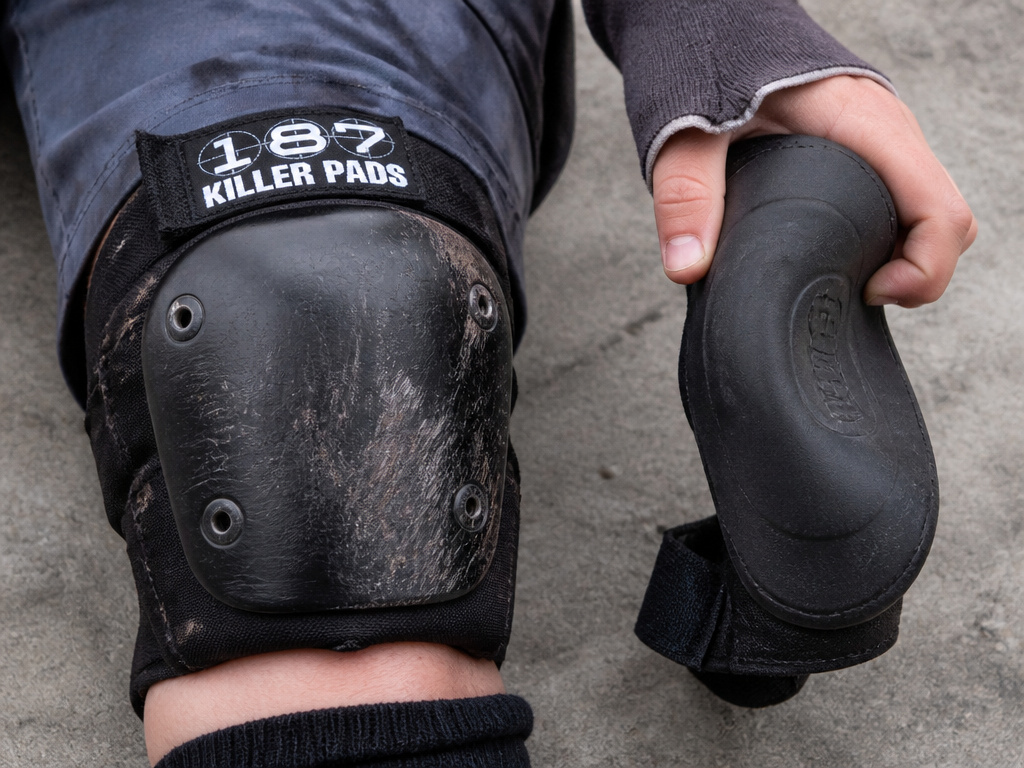
The shell is the outer layer that slides on the ground. Hard-shell pads use a rigid plastic cap (often polycarbonate) over dense foam. Soft-shell pads use a tough, flexible plastic or rubberized material over softer foam. The difference relates to the type of skating.
Hard-shell pads are for slides and repeated impact. If your kid is trying board slides on a curb, riding transition at a skatepark, or falling often, the hard plastic slides across concrete instead of grabbing and twisting the knee. They’re bulkier, hotter, and less flexible. Brands like 187 Killer Pads and Pro-Tec specialize here.
Soft-shell pads are for cruising, casual riding, and comfort. They’re lighter, more breathable, and fit under loose pants more easily. They protect against scrapes and light impacts but can grab the ground during a slide, potentially twisting the joint. Many junior sets, like the K2 Junior Pad Set, use a “durable plastic cap” that’s often a thinner, semi-flexible hard shell.
My stance? For a beginner just learning to push and turn, soft-shell is a common choice. For more aggressive skating involving obstacles or ramps, many skaters prefer hard-shell pads. The protective gear needs to match the activity.
The Step-by-Step Guide to Putting On and Adjusting Pads
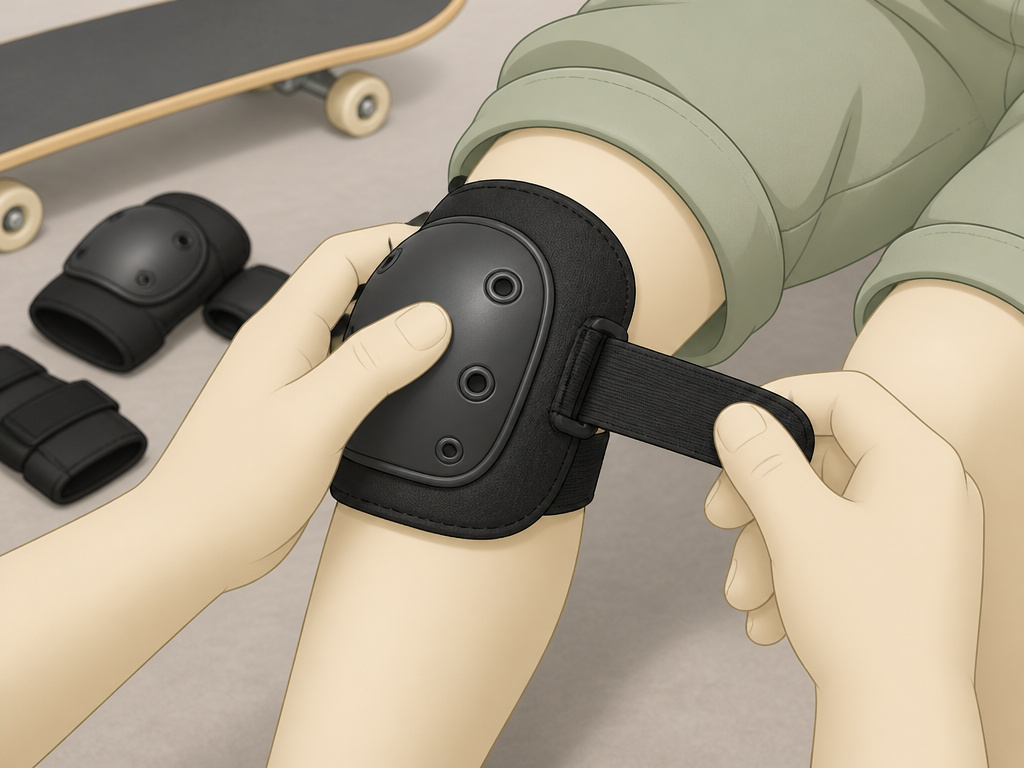
This is where safety is won or lost. A pad worn wrong is a pad that won’t work. Follow this sequence every time.
- Start with the knee pads. Have your child stand straight. Place the pad so the center of the plastic cap sits directly over the kneecap. Wrap the straps snug, top strap first. The pad should stay in place when the knee is bent. Check that.
- Next, the elbow pads. Bend their arm 90 degrees. Center the cap on the point of the elbow. Tighten the straps. Make a fist and bend the arm fully, the pad shouldn’t pinch or pop off.
- Finally, the wrist guards. This is the trickiest. The plastic splint should lie along the inside of the forearm, stabilizing the wrist. The guard should not limit the ability to make a tight fist and grip the board. Once secured, have them grip an imaginary board to test.
After everything is on, do a movement check. Have them squat, crawl, and swing their arms. Nothing should shift significantly. If it does, tighten the straps. This process is how you ensure they wear pads effectively. It takes two minutes and prevents the number one cause of pad failure: poor placement.
The part nobody mentions: Dress matters. Pads go over socks and under pant legs for knee pads, but over tight sleeves for elbow pads. Baggy clothing can catch straps and pull pads out of position. Ensure clothing does not interfere with the pads staying in place. It makes the whole system more reliable.
Maintenance, Cleaning, and Knowing When to Replace Pads
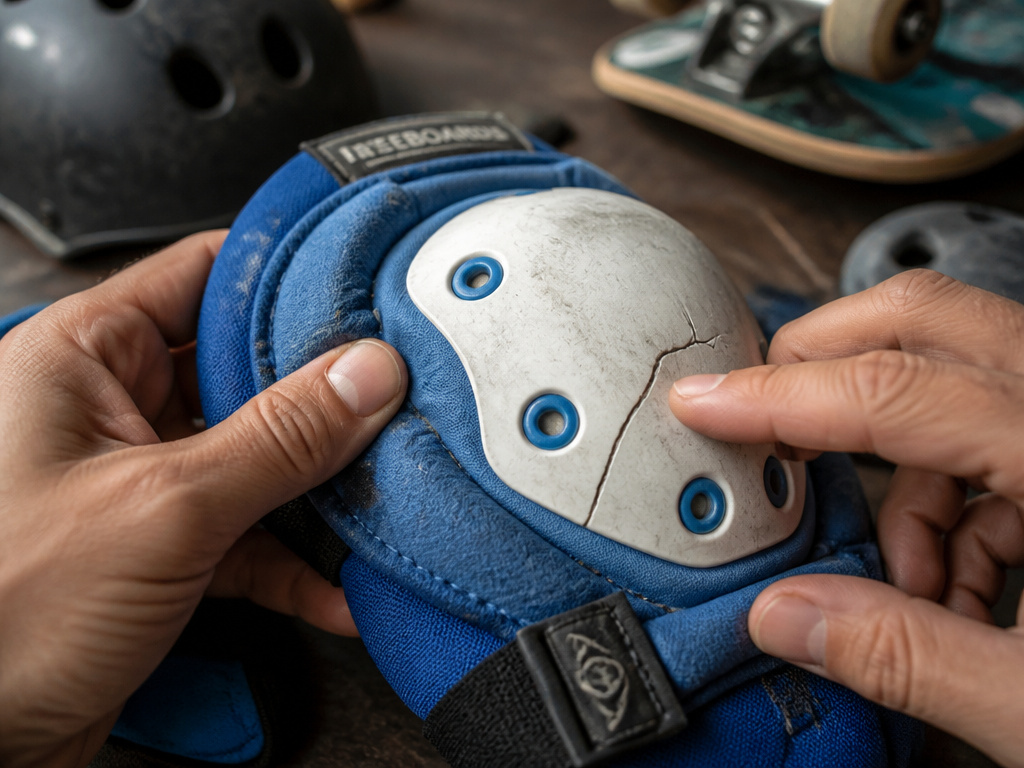
Pads are not install-and-forget. Sweat, dirt, and impacts degrade them. A stinky, crusty pad is a pad your child will fight to not wear. Here’s the simple upkeep routine.
Cleaning: After every few sessions, wipe down the plastic shells and straps with a damp cloth. For a deeper clean, check the manufacturer’s label. Most pads with fabric covers can be hand-washed in cool water with mild soap. Never machine wash or dry, the agitation destroys foam cells and the heat can melt plastic components. Air dry completely before storing. Learning how to clean pads extends their life by years.
Storage: Don’t leave pads in a hot car or a freezing garage. The TSG manual warns against leaving pads outside or exposed to low temperatures before use, as extreme temperatures can make plastics brittle or adhesives fail. A mesh bag in a closet is perfect.
When to replace: Pads don’t last forever. Inspect them monthly for these signs:
- Cracked or deformed plastic shell. A cracked cap won’t slide and can shatter on impact.
- Compressed or crumbling foam. Press the foam, if it doesn’t spring back, it’s lost its cushioning.
- Frayed or failing straps/Velcro. If the Velcro no longer holds securely, the pad will come loose.
- Permanent, foul odor that survives washing. This indicates bacterial growth deep in the foam.
If you see any of these, retire the pad. This isn’t about getting your money’s worth; it’s about the foam’s ability to absorb energy. Worn-out foam is just a spacer. The official stance on whether pads expire is vague, but the physical evidence isn’t. When in doubt, swap them out.
Encouraging Reluctant Kids to Wear Protective Gear
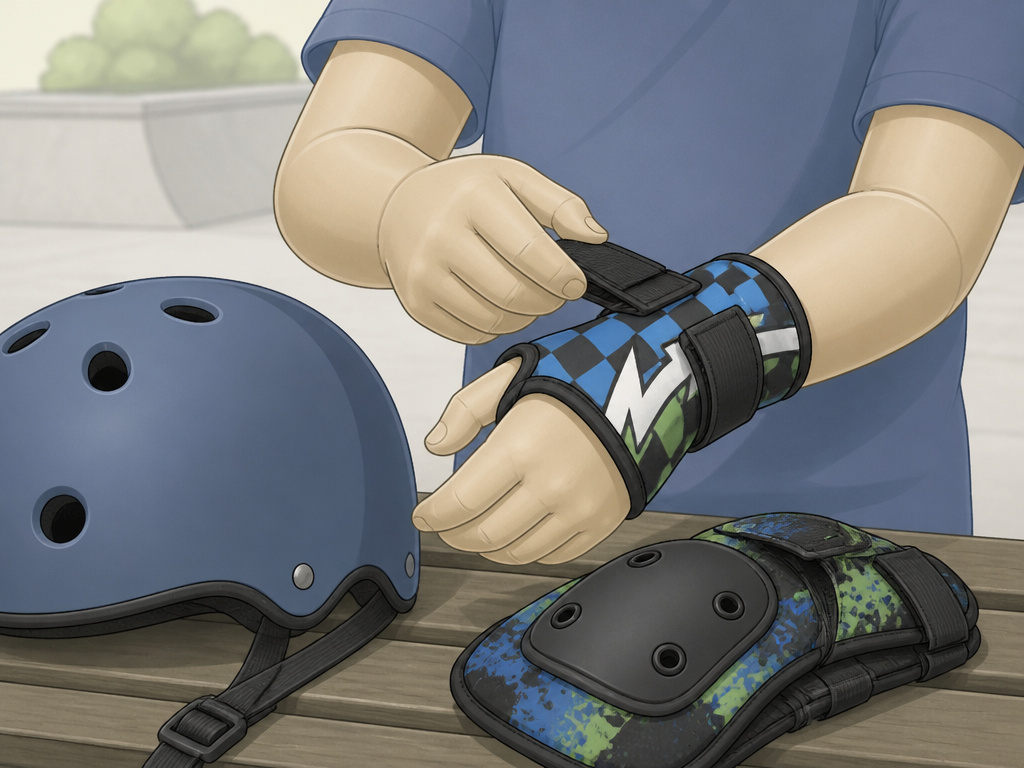
The battle is real. Pads can feel hot, bulky, and uncool. Forcing them creates resentment. The goal is to make gear the default, not the debate. Here are a few tactics that actually work.
Involve them in the choice. Let them pick the color or a brand with a cool graphic. Ownership builds commitment. A pad they chose is a pad they’re more likely to wear. Normalize it. Wear your own helmet when you bike together. Make safety gear the family rule for wheeled activities. Focus on comfort. Ensure the fit is genuinely comfortable. Itchiness, pinching, and overheating are legitimate complaints. Address them. Connect gear to goals. Explain that pads let them try harder tricks with less fear. “Want to try dropping in on that ramp? “We’ll get your knees covered first.” Start with the minimum. If full gear is a fight, start with the non-negotiables: helmet and wrist guards. Add knee pads once they’re consistent, then elbows. Getting some protection on is better than none.
The CPSC reminds us that children under 8 need close supervision. Part of that supervision is calmly, consistently enforcing the gear rule. It’s not a negotiation; it’s a condition of skating, like wearing shoes. The confidence that comes from knowing they’re protected often outweighs the initial annoyance. For a full breakdown of essential safety gear for kids, the principles are the same: consistency and clarity win.
What are some good brands for kids’ skate pads?
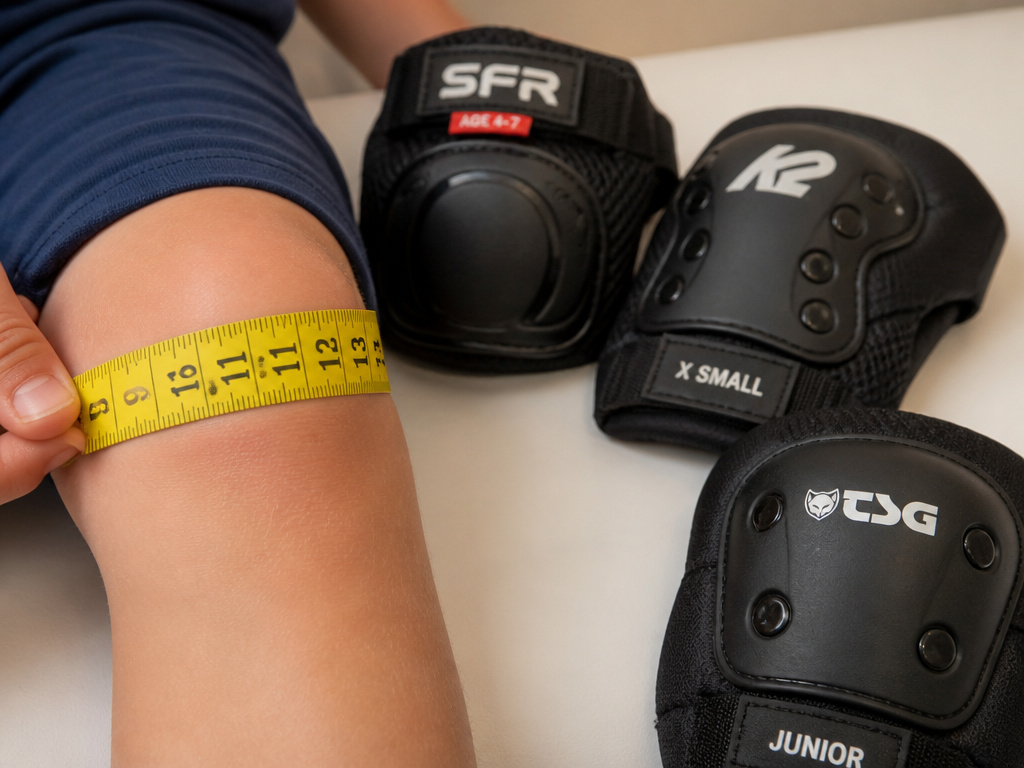
Looking at specific brands, you’ll find they offer different sizing systems. Some, like SFR, size their pads by age ranges, with a Small set for ages 4-7. Others, like K2 and TSG, size strictly by body measurements. A K2 X-Small set, for example, is defined by specific knee, elbow, and wrist circumferences in inches and centimeters. TSG also provides detailed limb measurements for their Junior-set. This shows that a child’s age is only a rough guide; the key is to match the pad’s size chart to your child’s actual body measurements for a safe, secure fit.
Can my child use the same pads for skateboarding, biking, and skating?
Pads designed for roller sports, which include skateboarding and inline skating, are generally suitable for these activities. They are tested to standards like EN 14120. However, there are important limits. These pads are intended only for impacts below a certain speed and offer limited crash protection. They are unsuitable for use on motorcycles. For typical kids’ biking, skate park skating, or roller skating on smooth surfaces, a single set of well-fitted, certified pads is appropriate. Always check that the pads fit snugly, as gear that is too big creates a dangerous condition.
Frequently Asked Questions
How do you know what size skate pads you need?
You know by measuring. Use a soft tape to measure the circumference of your child’s thigh (for knee pads), lower bicep (for elbow pads), and palm across the knuckles (for wrist guards). Compare these numbers in centimeters or inches to the brand’s specific size chart. Ignore age recommendations, they are unreliable guides.
What size elbow pads for a 12 year old?
The size for a 12-year-old depends entirely on their arm measurement, not their age. According to the K2 size chart, a Small elbow pad fits a lower bicep of 8.5″-10″ (22-25 cm). A Medium in another brand might fit 10″-12″. Measure their arm and consult the chart for the specific brand you’re buying. This is the only way to choose elbow pads that will stay put.
At what age is it appropriate for a child to start skateboarding?
There’s a conflict here. The American Academy of Orthopaedic Surgeons states they “do not recommend in-line skating or skateboarding for children younger than age 5.” Yet manufacturers like SFR sell protective pads sized for children as young as 4 years old. My take: readiness matters more than a birthday. A coordinated, cautious 5-year-old on a soft-cruiser board in a driveway is different from a 4-year-old at a skatepark. Supervise closely, start on flat ground, and let their ability and interest guide you.
What are the best knee pads for skating for kids?
The best knee pads are the ones that fit your child’s measurements and the type of skating they do. For beginners and cruising, a junior set like the K2 Junior Pad Set or Triple Eight Little Tricky offers good value. For park or ramp skating, a hard-shell pad like the 187 Killer Pads Pro or TSG Force series provides better slide and impact protection. Always prioritize fit over brand name when you select knee pads.
Before You Go
One rule cuts through all the brand noise and sizing charts: if a pad moves when your child moves, it’s the wrong size. Safety standards like EN 14120 set a baseline, but a loose pad fails regardless of its certification. The CPSC guidelines are your blueprint, helmet, wrists, knees, elbows, but the execution is in the daily ritual of tightening straps and checking placement.
So grab a tape measure. Write down the numbers. Match them to a chart. And when you find that set where every piece stays put through a squat and a crawl, you’ve done it. The rest, the cleaning, the encouragement, the replacement, flows from that first, correct fit. Now go watch them push down the block, a little safer today than they were yesterday.
