Hub Motor vs Belt Drive Electric Skateboard: How to Choose
This post contains affiliate links. As an Amazon Associate, we earn from qualifying purchases.
Hub motor electric skateboards integrate the motor inside the wheel for a quiet, low-maintenance ride, while belt drive systems use an external motor connected by a toothed belt for superior torque, hill climbing, and wheel customization. For flat urban commuting where silence and simplicity matter, hub motors win. For hills, rough terrain, or riders who want to swap wheels, belt drives are the better choice.
That thin urethane sleeve cushions your ride but also traps motor heat, which changes how the board performs under sustained load.
What follows: a breakdown of the physics behind each system, the real-world numbers on maintenance and heat, and a straight answer on which one fits a commuter versus a weekend rider. By the end, you’ll know whether your next board should be a clean-looking hub model or a tunable belt-driven machine.
Key Takeaways
- Hub motors run at 70–80 KV and deliver power at a 1:1 ratio, limiting torque and hill-climbing ability compared to belt drives.
- Belt drives use a gear ratio and motors like the 6374 that run at 155–170+ KV, multiplying torque for harder acceleration and steeper climbs.
- Maxfind states belts need replacement every 5–6 months; Ride and Reason focuses on pulley material and tooth profile as the primary factors affecting belt longevity.
- Hub motors heat up faster and cool slower under load because the urethane sleeve insulates the motor, leading to earlier power throttling.
- For quiet, simple commuting on smooth roads, choose a hub motor board. For hills, rough pavement, or customization, a belt drive is worth the extra upkeep.
The Core Difference: How Hub Motors and Belt Drives Work
A hub motor is the wheel. The motor stator, magnets, and coils are packed inside a metal casing, and a replaceable urethane sleeve, typically 10–15mm thick, wraps around the outside. Power transfers directly from the stator to the wheel shell at a 1:1 ratio. There’s no external drivetrain, which is why a hub motor board looks almost like a regular skateboard from the side.
A belt drive system separates the motor from the wheel. An external motor, common models include the 5255, 6368, and 6374, mounts to the truck. A toothed belt connects a small pulley on the motor to a larger pulley on the wheel. The difference in pulley sizes creates a gear reduction, which mechanically multiplies the motor’s torque before it reaches the wheel. That’s the fundamental power advantage.
The first two digits of a motor model (e.g., 6374) indicate the motor shell diameter in millimeters. The last two digits indicate the motor body length. This standardization allows for comparisons and replacements across different belt-drive boards.
The hub motor vs belt drive electric skateboard choice isn’t just about looks. It’s a trade-off between a sealed, simple system and an open, adjustable one. One forces a specific wheel size; the other allows for experimentation.
The Torque & Performance Gap You Actually Feel
You feel this difference halfway up a hill. A hub motor board will pull strong at the base, then its speed slowly bleeds off as the incline continues. A belt drive board maintains its pace. The reason isn’t magic, it’s KV ratings and gear ratios.
Hub motors typically run at 70–80 KV (RPM per volt). Belt drive motors run at 155–170 KV and higher. The higher KV means the belt motor spins faster for a given voltage. Then, the pulley system takes that high-speed rotation and trades it for force. A gear reduction ratio turns multiple motor spins into fewer wheel revolutions, dramatically increasing torque.
| Performance Factor | Hub Motor | Belt Drive |
|---|---|---|
| Typical KV Rating | 70–80 | 155–170+ |
| Drive Ratio | 1:1 | Gear-reduced (e.g., 3:1) |
| Hill Climbing | Good for mild hills | Excellent |
| Acceleration | Moderate, linear | Hard, immediate |
| Top Speed Potential | Moderate | High |
Where this goes sideways: Ignoring thermal limits on a hub motor. On a long, hot summer ride with repeated hard starts, the hub motor’s urethane sleeve acts like a blanket. The motor heat has nowhere to go, so the electronic speed controller (ESC) reduces power to prevent damage. Your board suddenly feels sluggish. A belt drive’s externally mounted motor cools by airflow, so it sustains peak power longer under identical conditions.
The numbers from a specific model tell the story. The MAXFIND CYBER ULTRA belt-drive version has a top speed of 37 mph. That gap comes from the belt system’s ability to harness a higher-KV motor and a torque-multiplying gear ratio.
Noise, Weight, and Daily Portability
Your commute might be through quiet neighborhoods or a busy campus. Noise matters.
Hub motors are wrapped in urethane and sealed inside the wheel, so there’s almost nothing for the motor to vibrate against. The result is a smooth, low hum that blends into background road noise. It’s discreet. Belt drives are noticeably louder. The high-speed whine of the motor pulley and the belt slapping over the teeth is part of the experience, a trade-off for performance.
Then there’s the walk. If you carry your board into an office, up subway stairs, or onto a bus, weight adds up. Hub motor boards are generally lighter. The motor and wheel are one unit, eliminating separate mounts and pulleys. Belt drive boards are slightly heavier due to the external motor and metal pulley hardware.
For the rider whose route ends with a half-mile walk and an elevator ride, a hub motor’s lighter weight and silent roll are tangible benefits. For the rider who drives to a trailhead, the extra pound is irrelevant.
Maintenance Reality: Belts vs. Urethane Sleeves
All boards need care, but the type of care differs wildly.
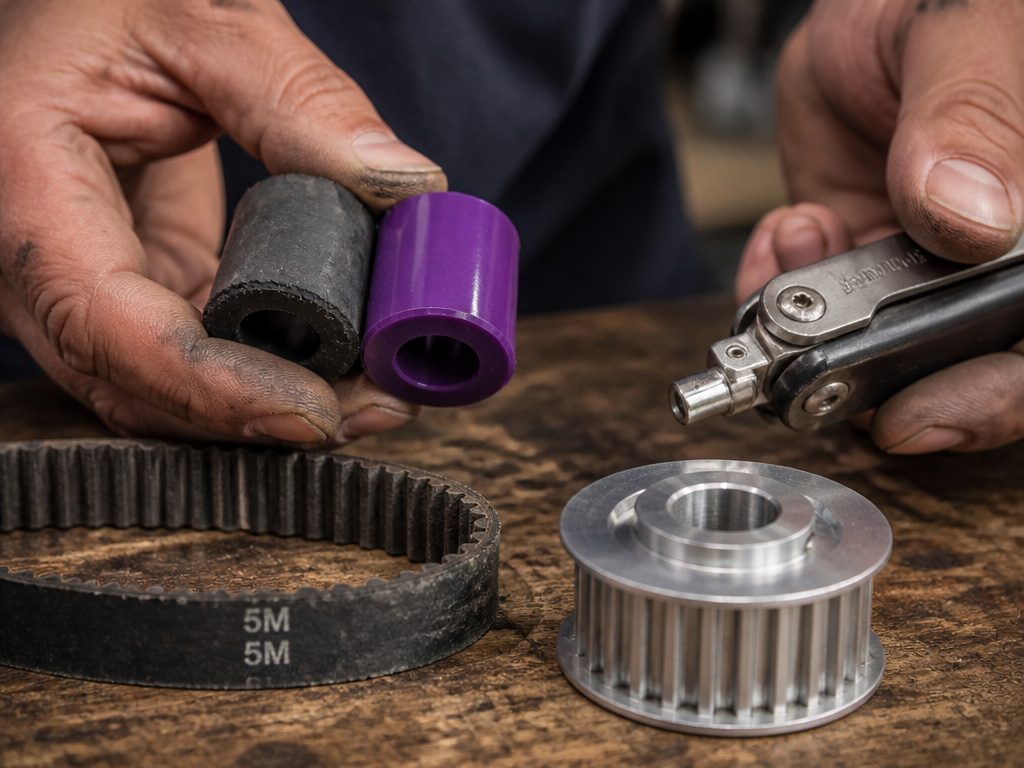
Hub Motor Maintenance: The primary wear item is the urethane sleeve. After significant wear, the tread wears thin and the sleeve must be replaced, you’ll need a skate tool to pop the wheel off. There’s no belt to tension, no pulley to align. It’s a simple, infrequent job.
Belt Drive Maintenance: Belts and pulleys are consumables. Maxfind states belt replacement is needed every 5–6 months under normal riding. You’ll also need to check belt tension, clean out grit, and inspect pulleys for wear. The current industry standard for high-performance belts is the 5M belt profile (5mm tooth pitch), which is more durable than the older 3M style. Recommended motor pulleys are steel with a minimum of 14-15 teeth to reduce wear.
Common mistake: Overtightening belts to reduce noise. This puts excessive lateral force on the motor shaft, which can bend the motor pulley rod over time. A slight whine is better than a broken motor.
Sources disagree on maintenance burden. Maxfind states hub motors have minimal maintenance while belt drives require regular belt replacement. Some riders argue that snapping a belt and replacing it quickly is easier than dealing with a hub motor’s internal failure.
Wheel Options and Ride Comfort on Rough Roads
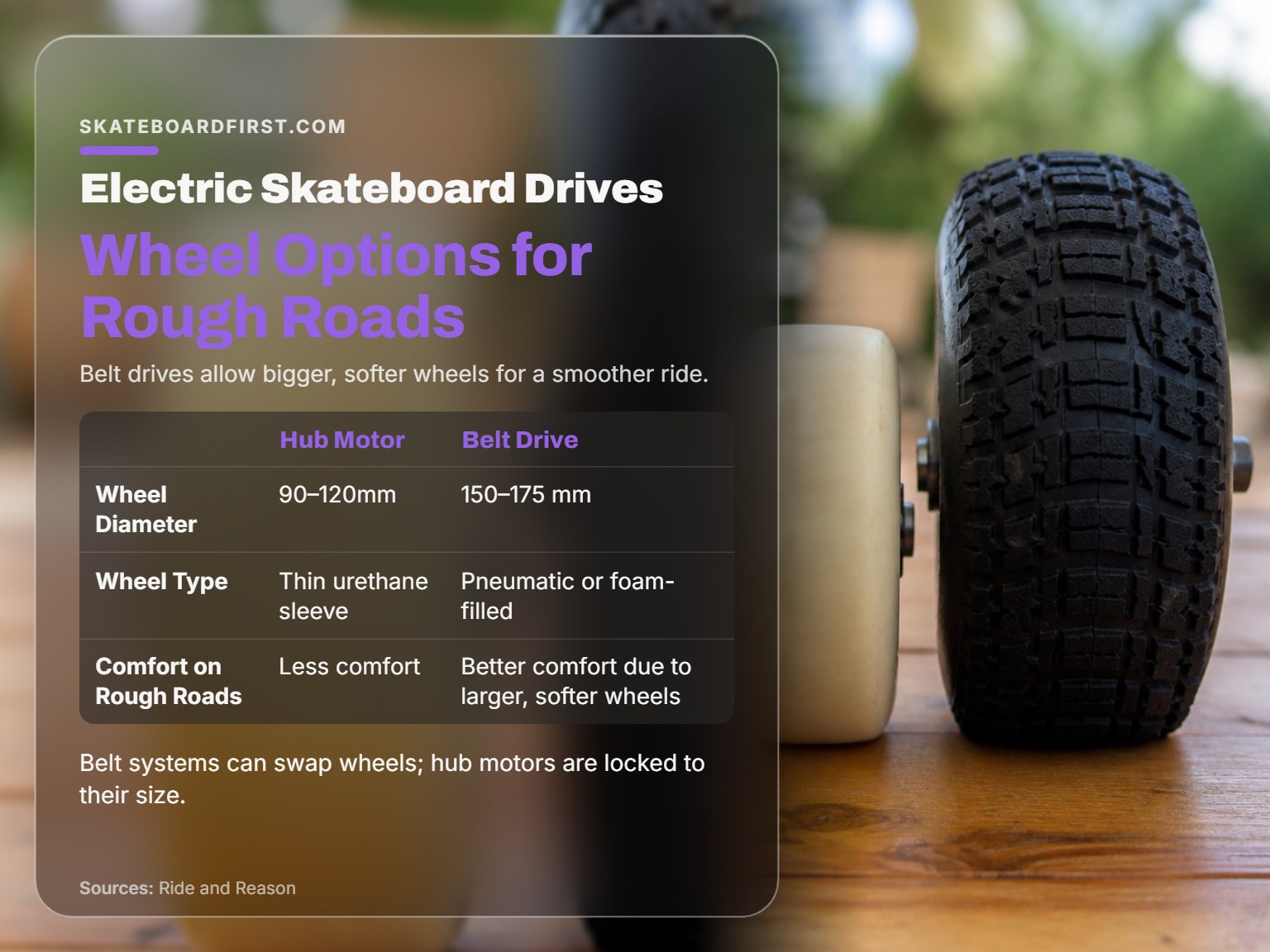
This is where the belt drive’s flexibility pays its biggest dividend. On a belt system, the wheels and motor are separate. You can swap your 107mm street wheels for 175mm pneumatic all-terrain tires in minutes. The motor doesn’t care.
Hub motor boards are locked into their wheel diameter, typically 90–120mm. You can replace the urethane sleeve, but you can’t significantly change the wheel size or type. That thin sleeve is your only cushion against cracks and pebbles.
Hub motors provide less comfort on rough roads due to their thin urethane sleeves. Belt drive systems can run 150–175 mm pneumatic or foam-filled wheels, which absorb impact far more effectively.
If your city streets are cracked and patched, the ride comfort difference is not subtle. A belt drive board with large, soft wheels glides over imperfections. A hub motor board transmits every small bump directly to your feet and ankles. For a commuter seeking a smooth ride, the belt drive’s wheel compatibility is a major point in its favor.
Price, Value, and Which One to Buy
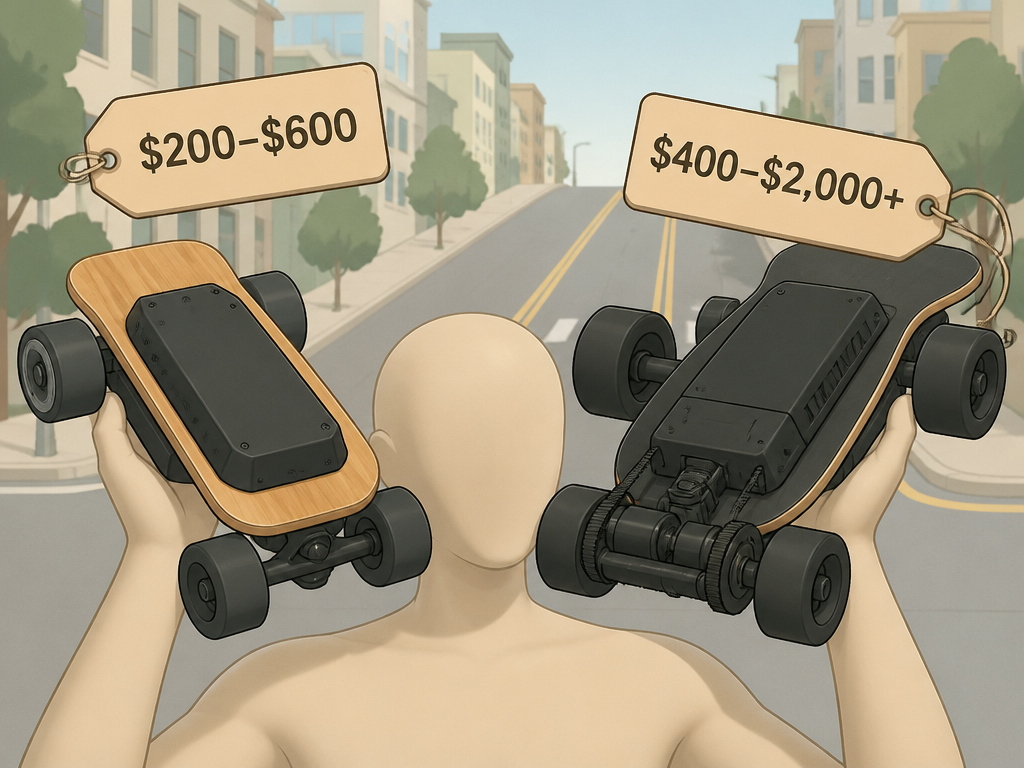
You pay for complexity. Hub motor boards have a simpler design with fewer parts, which places them in a more affordable price range of $200–$600. They’re a strong pick for a first electric board. Belt drive boards, with their higher-performance motors and hardware, sit in the $400–$2,000+ range.
Think about resale, too. Maxfind states belt drives hold value slightly better with enthusiasts because parts are easier to replace individually, while some users argue hub motors depreciate faster but sell quickly to entry-level buyers.
So, which one should you buy?
For most new riders commuting on relatively flat, smooth pavement, the hub motor vs belt drive electric skateboard decision favors a hub motor board as the right start. It’s quieter, lighter, cheaper, and allows you to focus on riding instead of maintenance. Many entry-level hub motor boards offer this experience well.
If your route has hills, rough roads, or you know you’ll want to try different wheels, the hub motor vs belt drive electric skateboard comparison points to investing in a belt drive system. The performance ceiling and customization are worth the extra cost and upkeep. The MAXFIND CYBER ULTRA Belt Motor 2-in-1 is a compelling example, built around instant swaps between 175mm all-terrain tires and 107mm street wheels.
Frequently Asked Questions
Which is more reliable, hub motor or belt drive?
Both are reliable when maintained. Hub motors have fewer moving parts to fail, but a burnt-out internal motor requires a full wheel replacement. Belt drives have belts that can snap, but replacing a belt is a quick, cheap fix. Long-term, many riders find belt drives easier to repair yourself.
Can I convert my hub motor board to a belt drive?
No. The designs are fundamentally different. A hub motor truck has no motor mounts, and the deck lacks the space for an external motor and battery configuration needed for a belt drive’s higher power demands. You buy one system or the other.
Are belt drives bad for water resistance?
Not inherently. While the belt and pulleys are exposed, many boards have sealed motor cans and protected electronics. A hub motor’s enclosed design has an advantage, but water can still ingress through bearings or seals. Neither is fully waterproof; for wet conditions, check the board’s IP rating and practice proper waterproofing techniques.
How long do hub motor urethane sleeves last?
It depends on riding style and road texture, but a urethane sleeve will eventually wear smooth or develop chunks. Replacing them is a core part of routine electric skateboard maintenance.
Is a belt drive worth the extra noise?
For performance riders, yes. The whine is the sound of power transfer. For stealthy commuters, the hub motor’s near-silence is a feature, not a bug. You can’t have maximum torque and total quiet, pick one.
The Bottom Line
Your local hills decide this. If your daily ride is flat, a hub motor’s simplicity wins. If you see an incline, a belt drive’s torque multiplication is essential.
One rule most guides skip: if you plan to ride for extended distances, especially in warm weather, the belt drive’s cooling advantage will keep the board from slowing down on you. That’s a real-world difference you can’t tune around.
Everything above assumes you’re choosing between two good systems. Whichever you pick, factor in the ongoing battery care routines and belt maintenance to make it last. Then go push up that hill.
