
Skateboarding and Mental Health
This post contains affiliate links. As an Amazon Associate, we earn from qualifying purchases.
Skateboarding improves mental health by combining physical activity, community connection, and the intense focus required to land a trick, which together reduce stress, build confidence, and foster a powerful sense of belonging. Clinical research shows it significantly reduces symptoms of ADHD in children, and studies also show it provides a unique space for young women to cultivate body self-compassion and social support.
The benefits aren’t just about feeling good after a session. They’re wired into the activity’s demands, the need to be present, the acceptance of failure, and the shared language of trying again. This turns a skatepark into more than a concrete playground; it becomes a space for mental recovery, illustrating the profound connection between skateboarding and mental health.
What follows is a breakdown of the science behind skateboarding and mental health, from university studies on ADHD and anxiety to the real-world stories from skaters who use their board as a tool for resilience. We’ll look at the specific benefits, the communities built around mental well-being, and how you can tap into this powerful combination of sport and therapy.
Key Takeaways
- A four-month skateboarding workshop led to significant reductions in attention deficit and hyperactivity symptoms in children with ADHD, according to a peer-reviewed clinical trial.
- The Beyond the Board survey found that 95% of skaters are passionate about the activity and skate an average of 4.2 days a week, highlighting its powerful role in daily life.
- For young women, skateboarding provides a unique space for body self-compassion and community, offering an escape from performative pressure and a chance to be in the present moment.
- Skateboarding’s inherent risk is consistently outweighed by its benefits, with injured adolescents returning to the sport because the interpersonal and mental health gains surpass the fear of re-injury.
- Initiatives like The Skate Mind Project are training skaters in psychological first aid, creating a direct pipeline for mental health support within the skate community itself.
The Core Benefits: More Than Just Fun
Ask any skater why they do it, and the first answer is usually “because it’s fun.” But dig into the research, and that fun is doing serious work under the hood. It’s not just a mood boost; it’s a complex cocktail of psychological rewards.
The most immediate benefit in the skateboarding and mental health dynamic is what researchers call a flow state. That’s the feeling of being completely absorbed in an activity, where time seems to slow down and self-consciousness fades. When you’re rolling toward a ledge, calculating speed, foot placement, and commitment, there’s no mental bandwidth left for yesterday’s worries or tomorrow’s anxieties. Your brain is fully online, right here, right now.
The concentration and immersion needed for skateboarding gives a sense of wellbeing and calm and allows being in the present moment without intrusive thoughts – giving an escape from difficult life events.
This focus has a physical signature. Your heart rate might be up from exertion, but your mind is settled. It’s a moving meditation. For young women in the Nottingham Trent University study, this was a conscious refuge. Some spoke about deliberately stepping away from the constant pressure to improve and progress, using skateboarding as a space to just be without judgment.
The social layer is just as critical. Skating is often a solo pursuit, but it happens in a shared arena. You don’t need to speak the same language to recognize the shared struggle of learning a trick. This creates a low-pressure, high-empathy environment. As Zoë Corwin of USC Rossier noted, skaters can connect non-verbally anywhere in the world through shared aesthetic and practice. That sense of belonging, of mattering to a group, is a bedrock of mental wellness.
Finally, there’s the tangible payoff of personal achievement. Landing a trick you’ve slammed on for weeks delivers a hit of dopamine that’s earned, not given. It builds a specific kind of confidence that comes from overcoming frustration and physical fear. This teaches resilience that translates off the board. You learn that failure isn’t an end point; it’s data. And that’s a mindset that can reshape how you approach everything from work challenges to personal relationships. If you’re struggling with the frustration that comes with slow progress, our guide on staying motivated offers practical strategies to keep pushing.
How Does Skateboarding Help Specific Mental Health Conditions?
The general benefits are clear, but modern research is digging into how skateboarding interacts with specific, diagnosed conditions. The results are turning concrete parks into potential therapeutic spaces.
The strongest clinical evidence comes from a study on Attention-Deficit/Hyperactivity Disorder (ADHD). Researchers worked with children aged 8 to 13, the majority male, splitting them into groups: a main intervention group of 34 children with ADHD, a control group of 14 children with ADHD, and a control group of 10 healthy children. One group of 34 children with ADHD participated in a four-month, weekly skateboarding workshop. Two control groups, one with ADHD kids who didn’t skate, and one with neurotypical kids who did, provided comparison.
The findings, published in a peer-reviewed skateboarding trial for ADHD, were striking. The ADHD kids in the skateboarding program showed significantly lower signs of both attention deficit and hyperactivity after the four months. The researchers concluded that the structured, engaging, and sensorily rich nature of skateboarding provided a uniquely effective movement intervention. It demanded focus, offered immediate feedback, and rewarded persistence, all things that align with therapeutic goals for managing ADHD symptoms.
For anxiety and depression, the mechanism is different but equally potent. Skateboarding creates what psychologists call behavioral activation. When you’re feeling low or anxious, the last thing you want to do is go be social or physically active. But skateboarding bundles those needs into one compelling activity. The desire to skate gets you out the door, moving your body and around people, which in turn disrupts the negative cycles that fuel mood disorders.
A study of Canadian adolescents who had all sustained skateboarding injuries offered a powerful insight into this calculus. Despite the pain and recovery, every one of the 26 participants returned to skating. The researchers, publishing in an NCBI risk-benefit analysis publication, found the primary theme was that the benefits of skateboarding significantly outweighed the costs of potential re-injury. The mental health and identity benefits were so profound that even a serious crash couldn’t keep them away. This speaks directly to the sport’s power as a coping mechanism and a core part of self-identity. Returning after a fall, especially a scary one, requires confronting fear head-on, a process detailed in our resource on overcoming fear of falling.
| Condition | How Skateboarding Helps | Key Research Insight |
|---|---|---|
| ADHD | Demands sustained focus, provides immediate sensory feedback, rewards motor planning. | Four-month workshop significantly reduced attention deficit and hyperactivity symptoms. |
| Anxiety/Depression | Forces behavioral activation (exercise + social), creates flow state, builds mastery confidence. | Skaters report using it to “skate out” anxiety; benefits consistently outweigh injury risks. |
| Body Image Issues | Shifts focus from appearance to capability, fosters body self-compassion through shared experience. | Young women report it as a unique space free from performative pressure. |
Community as Care: You’re Not Rolling Alone
The board is the vehicle, but the community is the engine. Mental health struggles are isolating. Skateboarding culture, at its best, fights that isolation by building radically inclusive spaces. This isn’t just about having people to skate with; it’s about creating networks of mutual support that function as informal care systems.
The data backs this up. In the extensive USC Pullias Center research report, 88% of skaters surveyed agreed they had people in their lives they could turn to for advice. When you’re at the park regularly, you’re not just exchanging tips on kickflips. You’re building relationships. You notice if someone’s energy is off. You celebrate their progress. This daily, low-stakes contact is a powerful buffer against loneliness.
For marginalized groups, this inclusive aspect is even more critical. The USC research highlighted how women and queer skaters in Los Angeles are actively building their own sessions and meet-ups in response to gatekeeping and toxic masculinity at some parks. These intentional spaces provide safety, which is the foundation for any mental health benefit. You can’t find flow or connection if you’re worried about being harassed or judged.
This community care is now being formalized. Enter The Skate Mind Project. This initiative trains skaters in psychological first aid, basic skills to recognize when someone is struggling and how to offer initial support. It’s a recognition that skaters are often on the front lines with their peers. As reported by NPR, the project’s goal is to “increase access to care through the training of non-mental health specialists,” meeting people where they already are: at the park.
Where this goes sideways: Skipping the community and only skating alone. Solo sessions have their place, but without the encouragement, shared frustration, and simple camaraderie of a group, progress often stalls and the mental health benefits shrink. Motivation flickers out faster.
Finding your crew might feel like the hardest trick of all. Start small. Go to the same park at the same time each week. Say hello. Ask for a tip. Most skaters remember being the new person and will pay that patience forward. The effort to start making friends skateboarding is worth it, building a local support system that extends far beyond the pavement.
Practical Steps: Using Skateboarding for Your Mental Health
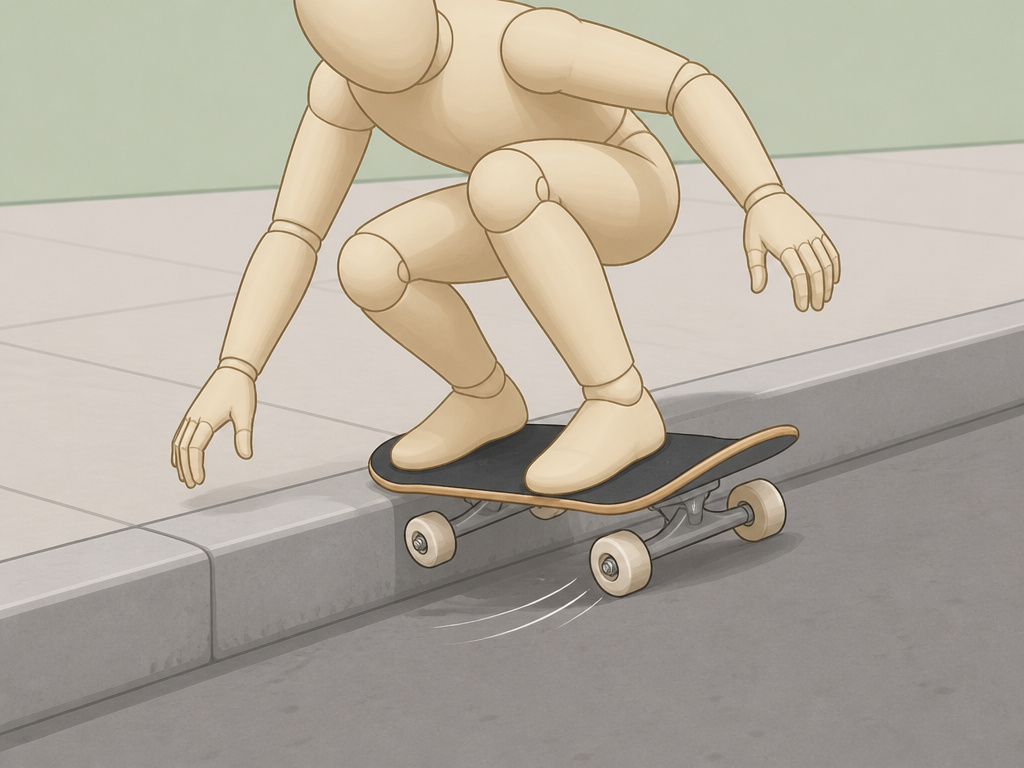
Knowing the benefits is one thing. Channeling them is another. You don’t need to be sponsored or even particularly good. You just need to start, and start with intention.
First, reframe what success looks like. If you go out thinking you need to learn a kickflip to have a “good session,” you’re setting yourself up for frustration. Instead, define success as showing up. Then as pushing for 30 minutes. Then as rolling off a curb. The Nottingham Trent University research news emphasized that young women benefited most when they released the pressure to constantly improve. Let your early goal be familiarity, not mastery.
Second, prioritize consistency over intensity. The skaters in the Beyond the Board survey averaged 4.2 sessions a week. That regularity is key. It’s not about marathon weekend sessions that leave you bruised and exhausted. It’s about making skateboarding a reliable part of your routine, a touchstone you can return to whether you have 20 minutes or two hours. This builds the skateboarding consistency that turns a hobby into a habit, and a habit into a cornerstone of your mental well-being.
Here’s a simple framework to begin:
- Week 1: Find a smooth, flat, low-traffic area. Just stand on the board. Step on and off. Get comfortable being unstable.
- Week 2: Practice pushing and rolling in a straight line. Focus on the feeling of momentum, not on turning or stopping yet.
- Week 3: Introduce gentle turns. Practice stopping by dragging your push foot. Celebrate moving under your own control.
- Week 4: Visit a local skatepark during a quiet time. Just roll around on the flat ground. Watch how others move. Soak in the environment.
Third, embrace the stack. You will fall. It’s a guarantee. The trick is to learn how to fall safely (tuck and roll, wear pads when learning) and then to reframe the fall. It’s not failure; it’s feedback. Each slam teaches you a little more about balance, commitment, and the limits of your current ability. This direct, physical problem-solving is what builds mental resilience. The process of getting back up after a bail is the same muscle used to rebound from life’s other setbacks. If a bad fall shakes your confidence, our guide on building confidence can help you rebuild it.
How Skateboarding Benefits Different Groups
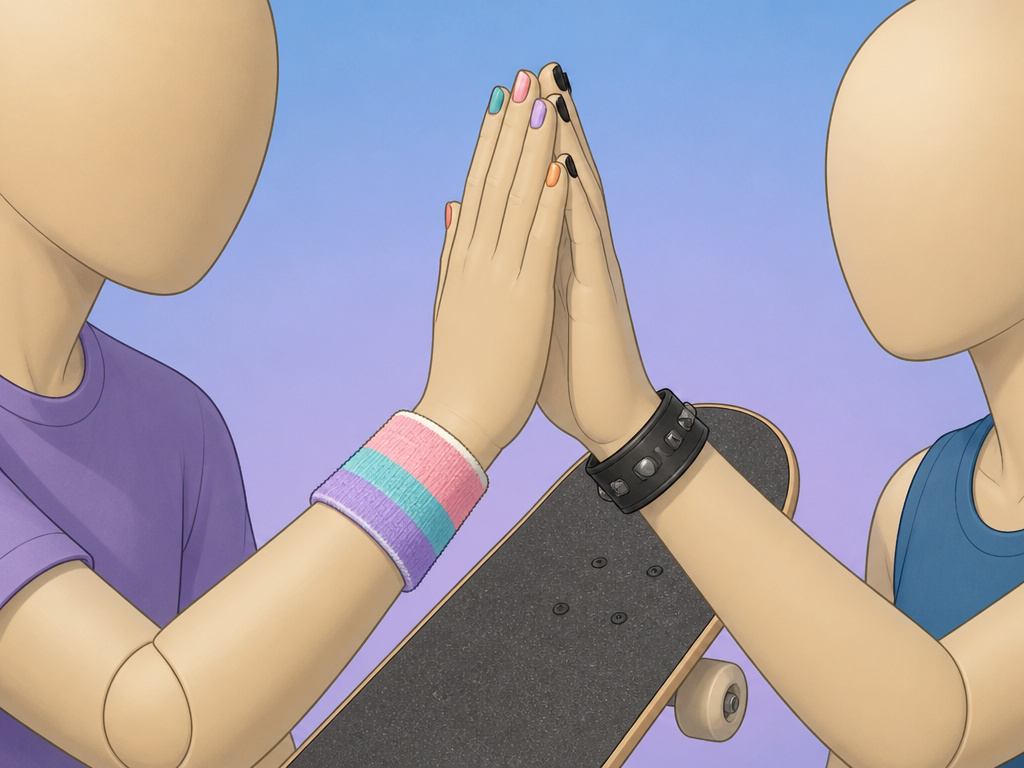
Skateboarding offers distinct mental health benefits across diverse groups. For young women, research shows the intense focus required creates a sense of calm and present-moment awareness, helping to quiet intrusive thoughts. It also provides a unique space to cultivate body self-compassion and find community. In response to historical gatekeeping, women and queer skaters are actively building radically inclusive spaces within the broader scene. The Beyond the Board report observes that when young people feel disenfranchised, skateboarding and skateparks provide a shared space to connect with others. The profound benefits are clear even to those who have been injured, with skaters consistently reporting that the mental rewards far outweigh the physical risks.
Frequently Asked Questions
Why is skateboarding so good for mental health?
It combines three powerful elements: intense focus that creates a flow state (drowning out anxiety), physical exercise that releases endorphins, and a built-in community that fights isolation. Your brain gets a workout in concentration, your body gets movement, and your social self gets connection, all at once.
Is there real science behind this, or is it just skaters’ opinions?
There’s robust, peer-reviewed science. A clinical trial published by the NIH showed a four-month skateboarding workshop significantly reduced ADHD symptoms in children. Universities like USC and Nottingham Trent continue to publish qualitative and survey-based research supporting the mental health links.
I have anxiety. Won’t skateboarding just make it worse because it’s scary?
It can actually help manage anxiety through a process called exposure therapy. You confront a manageable fear (like rolling down a gentle slope) in a controlled way, and your brain learns that it can handle the sensation. The key is to start so small it feels almost boring, no jumps, no tricks. Just getting comfortable on the board can teach your nervous system to calm down. For many, learning to manage the small fears on a board builds a toolkit for managing fear in general.
I’m not a teenager. Am I too old to get these benefits?
Absolutely not. The research includes adults, and the online communities are full of people who started or returned to skating in their 30s, 40s, and beyond. The benefits of focus, community, and achievement are ageless. In fact, having the life perspective to not tie your self-worth to landing every trick can make the experience less stressful and more purely enjoyable.
What if I don’t have a skatepark or a community near me?
Start with what you have. A smooth parking lot, a bike path, an empty tennis court. The physical and focus benefits are yours alone. For community, look beyond geography. Online forums and social media groups are full of supportive skaters of all ages and skill levels. Share your progress, ask questions, and you’ll find your tribe digitally while you search for a local one.
The Bottom Line
Skateboarding’s value for mental health is no longer just anecdotal. It’s documented in PDFs from research centers, in the methods sections of clinical trials, and in the lived experience of thousands of skaters. The mechanism is elegant: it forces you into the present, rewards perseverance, and wraps you in a community that speaks the language of trying again.
The most compelling data point might be the simplest. In a world where one in six young people experiences a mental health disorder each year, the Beyond the Board survey found the number one reason people skate is that “skateboarding is fun.” In the context of a mental health crisis, finding a reliable, accessible, and socially rich source of fun isn’t trivial. It’s a lifeline.
Your first step doesn’t have to be a leap. Buy a complete board from a skate shop, not a department store. Find ten minutes on a smooth surface. Step on. The goal isn’t to become a pro. The goal is to give your brain a new tool, one with four wheels, a community behind it, and a proven track record of turning concrete into catharsis. When you hit that inevitable plateau, remember that pushing through is part of the process, both for your skills and for your mind.
