
How to Choose a Skateboard Deck Width: Step-by-Step Guide
This post contains affiliate links. As an Amazon Associate, we earn from qualifying purchases.
To choose a skateboard deck width, start with your shoe size for a baseline, then adjust for your skating style: narrower decks (7.5″–8.25″) flip easier for street, while wider decks (8.5″+) offer stability for transition and cruising. The final choice is personal comfort, and your trucks must match within a quarter inch.
That width number stamped on the deck isn’t just marketing. It changes the board’s weight, how it pops, and where your feet land. Understanding how to choose a skateboard deck width is key because a mismatch feels wrong from the first push.
What follows is a breakdown of the charts you’ll see, the real-world disagreements between them, and how to land on your size without buying five decks. Shoe size is a place to start. We’ll also explain why truck matching is so important, and how to test what feels right before you buy.
Key Takeaways
- Start with a deck width close to your shoe size as a practical baseline, but treat charts as suggestions, not rules.
- For technical street tricks, lean toward narrower decks (7.5″–8.25″); for ramps, bowls, or cruising, choose wider decks (8.5″+).
- Your truck axle width must be within 0.25 inches of your deck width, mismatched trucks ruin the ride.
- The difference between an 8.25″ and 8.5″ deck is a landing platform trade-off; try both if you can.
- Personal preference overrides every chart. Your comfort on the board is the final metric.
The Shoe Size Starting Point (And Why It’s a Guide, Not a Law)
Every major retailer publishes a chart linking shoe size to deck width. They exist because they work as a starting filter. If you walk into a shop with no idea, the employee will ask your shoe size first.
They provide a height-based chart, but note the how to choose a skateboard deck width question also uses shoe size as a key factor. CCS offers a more direct shoe size and deck width guide, with specific ranges like 8.00″–8.25″ for men’s sizes 7.0–8.5.
Common mistake: Treating shoe-size charts as absolute law. Multiple Reddit threads are filled with skaters saying, “I have size 11 feet and love an 8.0 deck,” which breaks every chart. The charts get you in the ballpark; your feet decide the game.
Here’s where the sources disagree, which is a useful reality check.
The mechanic behind the shoe-size idea is simple: you want the ball of your back foot and your toes near the edges of the tail for control. If the deck is drastically narrower than your foot, you’ll feel perched and unstable. If it’s drastically wider, the board feels sluggish and harder to flick. But “drastically” is subjective, which is why the charts conflict.
| US Men’s Shoe Size (CCS) | US Women’s Shoe Size (CCS) | Recommended Deck Width (CCS) | Typical Use (Generalized) |
|---|---|---|---|
| 4.5 or smaller | 6 or smaller | 7.00″ – 7.38″ | Mini boards, youth |
| 5.0 – 6.5 | 6.5 – 8 | 7.50″ – 8.00″ | Light street, technical |
| 7.0 – 8.5 | 8.5 – 10.0 | 8.00″ – 8.25″ | All-around street |
| 9.0 – 10.5 | 10.5 – 12.0 | 8.25″ – 8.50″ | Street/park hybrid |
| 11.0+ | 12.5+ | 8.50″+ | Park, transition, cruising |
My advice? Use the chart to pick two widths to test, your “chart size” and one a quarter inch up or down. Your actual preference lives in that gap.
Street vs. Transition: The Width Trade-Off
Your skating style dictates width more cleanly than any body measurement when you compare a how to choose a skateboard deck width guide. The trade-off is straightforward: flick speed versus landing stability.
Street skating (ledges, flatground, stairs) rewards a quicker, lighter board. As Skate Warehouse notes, narrower decks are lighter, lift easier, and offer more control for technical tricks. Their guide states street decks are generally narrower, with common widths from 7.5 inches to 8.25 inches, and calls 8.25 inches the most popular.
What most people get wrong: Assuming a wider deck is always more stable. For street tricks, a deck that’s too wide can feel like you’re trying to flip a dinner plate. The extra stability helps your feet land, but it hurts your ability to get the board into the air cleanly in the first place.
CCS explicitly says 8.50″ & above are good for vert riding and cruising because they are more stable.
It’s a primary source worth reading directly.
| Deck Width Range (Opera) | Best For |
|---|---|
| 7.375″ – 7.75″ | Kids, flip-trick-heavy street |
| 8.0″ – 8.25″ | All-round street: ledges, flip tricks, technical |
| 8.375″ – 8.6″ | Street and park hybrid; extra landing room |
| 8.625″ – 9.125″ | Park, bowl, faster street; stability at speed |
| 9.5″ – 10″ | Transition, pools, vert; locked-in feel |
| 11″ – 12″ | Cruising, carving, max-stability transition |
If you mostly flip the board, go narrower. If you mostly pump, carve, or grind coping, go wider. That’s the Opera rule of thumb, and it’s dead on.
The 8.25 vs. 8.5 Debate: A Real-World Comparison
This is the most common “people also ask” for a reason. Both are popular all-around widths, but that quarter-inch changes the feel.
An 8.25-inch deck sits at the top end of what Skate Warehouse calls the common street range. It’s the most popular width for a reason: it offers a noticeable landing platform over an 8.0″ but keeps enough of the flick speed that technical tricks are still manageable. For a skater moving up from an 8.0″, it can feel like a revelation, more confidence on landings without a huge sacrifice.
CCS recommends a deck width of 8.25″–8.50″ for US Men’s shoe size 9.0-10.5. The extra surface area is tangible. It feels more secure underfoot at speed in a park or on a mellow ramp. The trade-off is weight and flick resistance; a kickflip requires a more deliberate scoop.
I skated an 8.25″ for years as my street deck. When I tried an 8.5″ for a park session, the difference wasn’t in the push or the turn, it was in the air. The wider deck hung under my feet just a fraction longer, which made late shuvs and 180s feel more controllable. Switch flip attempts, however, felt like I was moving through glue. That’s the sensory reality: a quarter inch changes the board’s rotation speed in your hand.
I replace my deck when the pop feels dead, not when it looks worn. After riding a tired deck for too long, I learned that feel matters more than appearance. A new deck, even at the same width, can resurrect tricks you’d given up on.
Matching Your Trucks is Non-Negotiable

You cannot choose a deck width in a vacuum. Your truck axle width must follow, and the tolerance is tight. Tactics states you want to match your skate truck width as close as you can to your deck width, usually within a .25″ range for standard decks.
Why? Trucks that are too narrow make the board feel tippy, like balancing on a narrow beam. Trucks that are too wide reduce turning performance and make the board heavier. The goal is for the axle ends to be flush with the deck’s edges, or just barely inside them.
The Tactics truck size chart is the gold standard for precise matching. It’s a primary source you should consult.
| Deck Width (in) | Suggested Truck Axle Width (in) – Tactics |
|---|---|
| 7.25 – 7.625 | 7.4 |
| 7.75 – 8.25 | 8.0 |
| 8.5 – 9.25 | 8.75 |
Most truck brands, like Independent, size their models (e.g., 149s) to match a range of deck widths. An Independent 149 has an 8.5″ axle, fitting decks from 8.25″ to 8.75″. This is where your truck width guide becomes critical reading. Buying a deck without a plan for trucks is like buying shoes without checking the size.
How to Test Widths Without Buying Five Decks

This is the biggest practical hurdle for beginners. Committing to a size is scary when decks aren’t cheap. Here’s how to get real feedback.
- Visit a Local Skate Shop. This is the best way. Ask to stand on different decks. Feel how your feet sit. Does the tail width match your back foot? A shop will let you try a few.
- Ask to Borrow a Friend’s Board. Even a 10-minute push around a parking lot tells you more than any chart. Notice the effort to turn and the board’s response under your feet.
- Look for “Deck Demo” Events. Some shops or brands host demo days where you can ride different setups.
- Start with a Complete. A complete from a shop often comes in a middle-ground width like 8.0″ or 8.25″. Use it to learn board control. Your next deck choice will be informed by what you like or dislike about this one.
Where this goes sideways: Buying a deck based solely on a pro skater’s setup. They’re skating at a level where minute adjustments matter. Your first deck should be about comfort and control, not replica specs.
Remember, your first board establishes your baseline. Everything after that is an adjustment. Starting at 8.25″ and moving to 8.5″ later is a normal progression.
Decoding Deck Length and Wheelbase
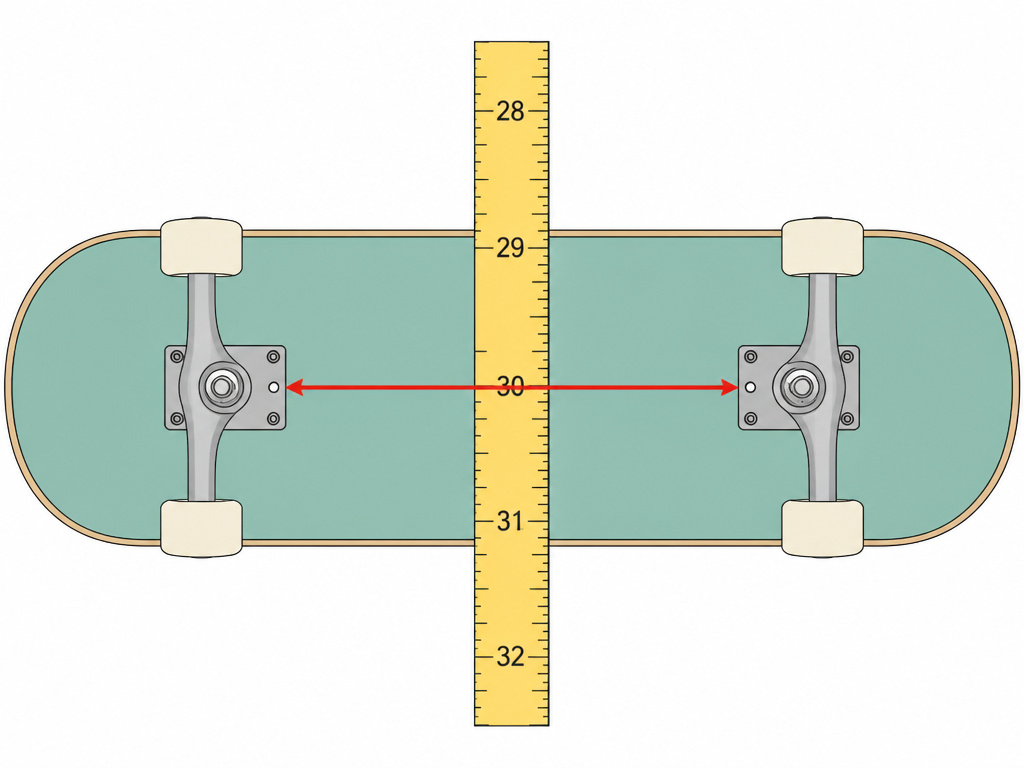
Width gets the spotlight, but length and wheelbase matter, especially for taller skaters or certain styles. Skate Warehouse states standard deck lengths range between 28 and 32 inches.
Length correlates with width. Wider decks tend to be longer. A longer deck (over 32″) provides more foot-placement room and can feel more stable at speed, but it’s heavier and less nimble for quick street tricks. A shorter deck (under 29″) feels snappier for flip tricks but can feel cramped if you have a wide stance.
The wheelbase, the distance between the inner truck mounting holes, affects how the board turns. A shorter wheelbase makes the board feel more responsive and quicker to turn. A longer wheelbase feels more stable at speed, ideal for transition skating. Most skaters don’t need to overthink this initially; choose a standard popsicle shape, and the wheelbase will be appropriate for the deck’s length.
For a deep dive on this, our deck length guide covers the nuances.
How does my height or weight affect deck width?
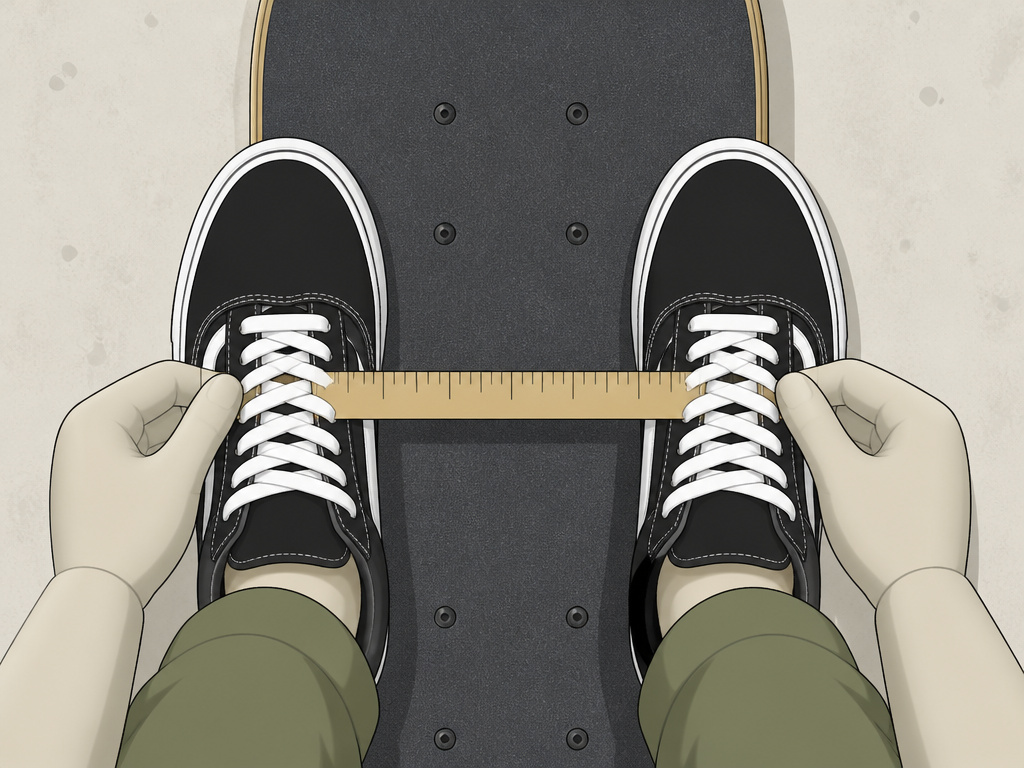
Your physical size is a common starting point for choosing a deck width. Many guides correlate height with a recommended width range. For example, Skate Warehouse suggests a width of 8.0 to 8.25 inches for skaters between 5’8″ and 6’0″ tall, though other sources and skaters emphasize personal preference over strict height charts. Shoe size is also frequently used as a practical guide, with the idea being to choose a deck width that covers the majority of your foot, letting your toes and heels hang just slightly off the edges. While these charts provide a useful baseline, personal preference and your skating style ultimately play a larger role in the final decision.
What are the standard skateboard deck width size charts?

Most skate shops and guides provide sizing charts that use either height or shoe size to recommend a deck width. These charts offer specific inch ranges to help narrow your choices. Another uses height, recommending 8.0 to 8.25 inches for someone between 5’8″ and 6’0″ tall. These ranges are intended as a starting point, giving you a solid foundation to begin your selection before considering how you plan to skate.
What deck width should a beginner choose?
For your first deck, a middle-of-the-road width is often the most forgiving. Skate Warehouse states that 8.25 inches is the most popular deck width, which falls within a common range that works well for all-around street skating. This popular size provides a balanced feel, offering enough stability to build confidence while remaining responsive enough to learn basic tricks. It’s wide enough to make keeping your feet on the board easier, yet not so wide that it becomes overly heavy or difficult to control. Starting here allows you to develop your skills before deciding if you need something narrower for technical flips or wider for stability at higher speeds.
Frequently Asked Questions
What is the best deck width for skateboarding?
There isn’t one best width. The best width is the one that feels comfortable for your shoe size and suits your primary skating style. For most adult beginners, starting between 8.0″ and 8.25″ is a safe, popular choice that allows exploration of both street and park skating.
Is an 8.25 deck good for street?
Yes, an 8.25″ deck is excellent for street skating. It offers a great balance of flick speed for tricks and enough surface area for confident landings.
Should I get an 8.25 or 8.5 deck?
Choose 8.25″ if your focus is technical street tricks like flip tricks and ledges. Choose 8.5″ if you plan to skate transition (ramps, bowls) more often, or want a stable, all-around board that can handle a bit of everything. If possible, try standing on both before deciding.
Is the 8.25 board too wide for size 8 shoes?
Not necessarily. While a size chart might suggest a slightly narrower deck, personal preference rules. Many skaters with size 8 shoes ride 8.25″ decks comfortably. The only way to know is to test it, stand on the board and see if your foot positioning feels natural and controlled.
The Bottom Line
Ignore the noise about perfect proportions. Your deck width is a tool, not an identity. Start with the chart that matches your shoe size, then let your skating style nudge you a quarter inch wider for park or narrower for street.
The one non-negotiable is matching your truck width. A mismatched setup will fight you every time you push.
If you’re still paralyzed by choice, walk into a shop and ask to stand on an 8.0″, an 8.25″, and an 8.5″. Buy the one that makes you want to skate right out the door. Everything else you can adjust later.
