
How to Feeble Grind on a Skateboard: Step-by-Step
This post contains affiliate links. As an Amazon Associate, we earn from qualifying purchases.
To feeble grind on a skateboard, you lock your back truck onto a ledge or rail while your front truck hangs over the far side. Approach at a shallow angle, ollie, and commit your weight over the back truck to slide. The trick hinges on that front truck hanging over the far side.
Most guides tell you to keep your weight back. They’re right, but they skip the part where your front foot feels useless. That foot isn’t just along for the ride, it’s your balance counterweight. If you let it go numb, the board tilts and you slide off. This is a key detail for how to feeble grind on a skateboard. The front truck hangs, but your front foot stays active.
What follows is the breakdown of that lock-in. This includes the exact foot position, how to spot the difference between a feeble and a smith grind (a mix-up that kills the trick in video games and on concrete), and the one practice step that cuts the learning curve in half.
Key Takeaways
- The front truck must hang over the far side of the ledge; if it lands on top, you’re in a 50-50 grind.
- Sources disagree on weight distribution: LandTheTrick.com and Skateboards.com advise keeping most weight over the back foot, while RedBull.com advises even distribution.
- A shallow approach angle gives you space to get the front truck over and the back truck on target.
- Learn the difference between a feeble and a smith grind, the front truck position relative to your pop side decides it.
- Practice first on a low, waxed curb; the consequence of hesitation is a sudden stop and a slam.
The Feeble Grind Explained
A feeble grind is a skateboard trick where the back truck grinds along a ledge or rail while the front truck hangs down over the far side of the obstacle. The board sits at an angle across the obstacle, creating a pinched, locked-in feeling distinct from grinds where both trucks make contact.
Josh Nelson invented this grind in 1986 at the Del Mar Skate Ranch in California. It looks confusing until you see it as a hybrid. Think of it as a 5-0 grind where you let the nose drop over the far side, or a boardslide where only one truck is grinding. That hybrid nature is why it’s a gateway trick, master the feeble, and grinds like the smith and the crooked start to make more sense.
Your goal when learning how to feeble grind on a skateboard is to get the back truck grinding on the obstacle while the front truck hangs over the far side. That’s the visual cue that separates a feeble from everything else.
Prerequisites: What You Need First
You can’t build the roof before the foundation. Before you eye up that ledge, lock down these two skills.
Comfortable Ollies. You don’t need pop-shuvit height, but you need enough air to get your back truck up and onto the obstacle. If you can’t ollie onto a curb consistently, the feeble grind is still theoretical. Spend a session just ollying onto low, waxed curbs and riding off. That’s the muscle memory for the first half of the trick.
Basic Grind Awareness. Having a 50-50 grind or a boardslide in your bag helps immensely. The 50-50 teaches you how to land on an obstacle. The boardslide teaches you how to get your body over the obstacle while the board is across it. If you’ve spent time on either, you’ve already done half the work for a feeble.
If you’re starting from zero, our guide on learning grinds walks through that foundational curb work before tackling the specifics of how to feeble grind on a skateboard.
Step-by-Step: Locking the Feeble
This is where the sources give you slightly different recipes. I’ve sorted them into a sequence that works on low concrete.
1. Approach and Ollie. Sources offer different advice: LandTheTrick.com says to approach at a shallow angle, while Skateboarding.com advises riding parallel to the obstacle. A shallow angle can give your front truck room to clear the top. Pop your ollie and aim your back truck at the edge. Think “jump over the rail,” not “jump onto the rail.” Your back truck should land on the edge, not short.
2. Land and Lock. As you land, let the front of your board dip down. Your front truck should be over the far side, hanging in the air. This is the moment. If your front truck touches the top, you’ve landed a 50-50. If it’s on the same side you jumped from, you’re in a smith grind. Let it hang.
3. Weight Distribution and Grind. Here’s the debate. LandTheTrick.com says keep most weight over the back truck. Skateboarding.com agrees, saying keep your weight on your back foot over the truck. RedBull.com suggests distributing weight evenly. For your first tries, commit to the back foot. It feels wrong to trust one truck, but that’s the trick. Lean slightly over the ledge with your shoulders.
4. Exit Clean. Don’t just ride off the end. As you reach the end, pop a small ollie out or let the board twist into a 180 turn out. This prevents the tail from catching and sends you away rolling.
| Step | Key Action | What Happens If You Skip It |
|---|---|---|
| Approach Angle | Shallow angle (30°) | Front truck can’t clear the ledge, causing a 50-50 or a stop. |
| Front Truck Position | Let it hang over far side | Trick becomes a 50-50 (on top) or a smith grind (same side). |
| Weight Focus | Commit weight to back foot | Board levels out, you lose the pinch, and you slide off. |
| Exit Pop | Small ollie or 180 out | Tail catches at the end, throwing you forward. |
Feeble Grind vs. Smith Grind
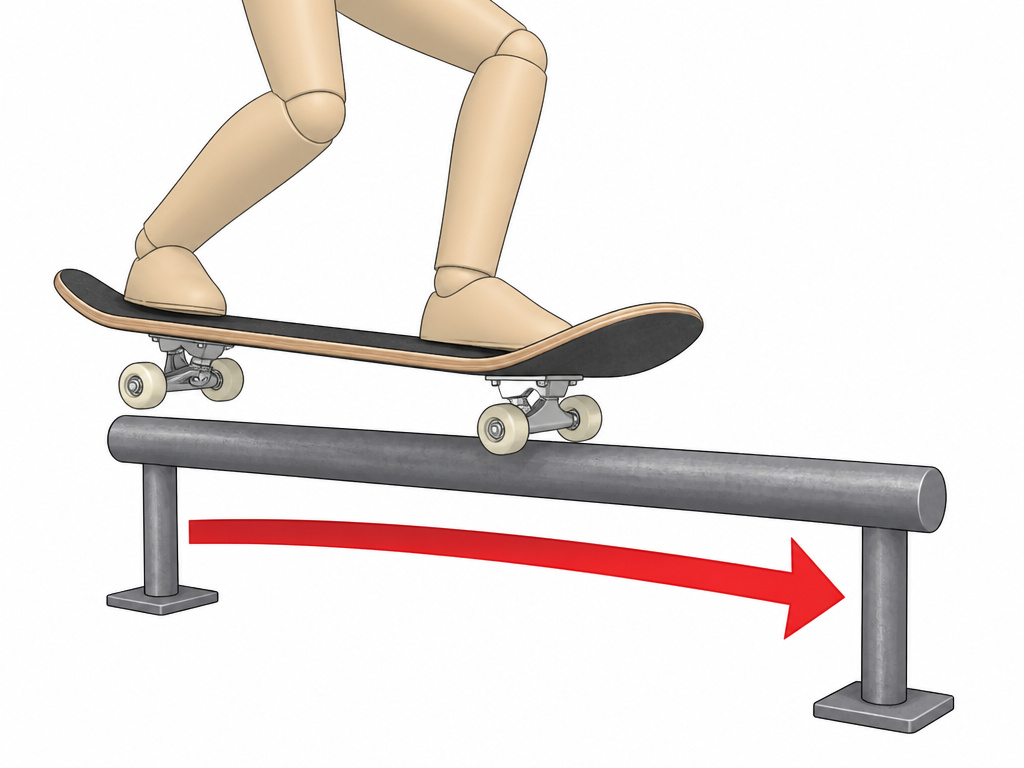
This confusion trips up everyone, especially in skateboarding video games. The difference is absolute, not relative.
A feeble grind happens when your front truck is on the opposite side of the obstacle from where you popped. You jump from the left, your front truck ends up hanging on the right.
A smith grind happens when your front truck stays on the same side of the obstacle you jumped from. You jump from the left, your front truck grinds or hangs on the left.
It’s not about frontside or backside. You can do a frontside feeble or a frontside smith. The deciding factor is which side of the rail your front truck calls home after the ollie. If you’re mixing these up, studying a smith grind tutorial will highlight the contrast.
Frontside vs. Backside Feeble Grinds

The steps are identical, but the feeling isn’t. Your comfort with turning your body dictates which you try first.
Backside Feeble. Your back is to the obstacle as you approach. If you have backside boardslides dialed, this will feel more natural. The lock-in is often more secure because you can see your truck meeting the ledge. Many skaters find this the easier version to learn first.
Frontside Feeble. You face the obstacle. This requires more commitment because you’re leaning over the ledge into the blind spot. It helps if you’re comfortable with frontside 5-0 grinds, as the weight distribution is similar. It looks more intimidating, but the balance point is just as stable once you trust it.
Pick one to drill. Don’t bounce between them in the same session.
Gear That Helps (But Isn’t Magic)
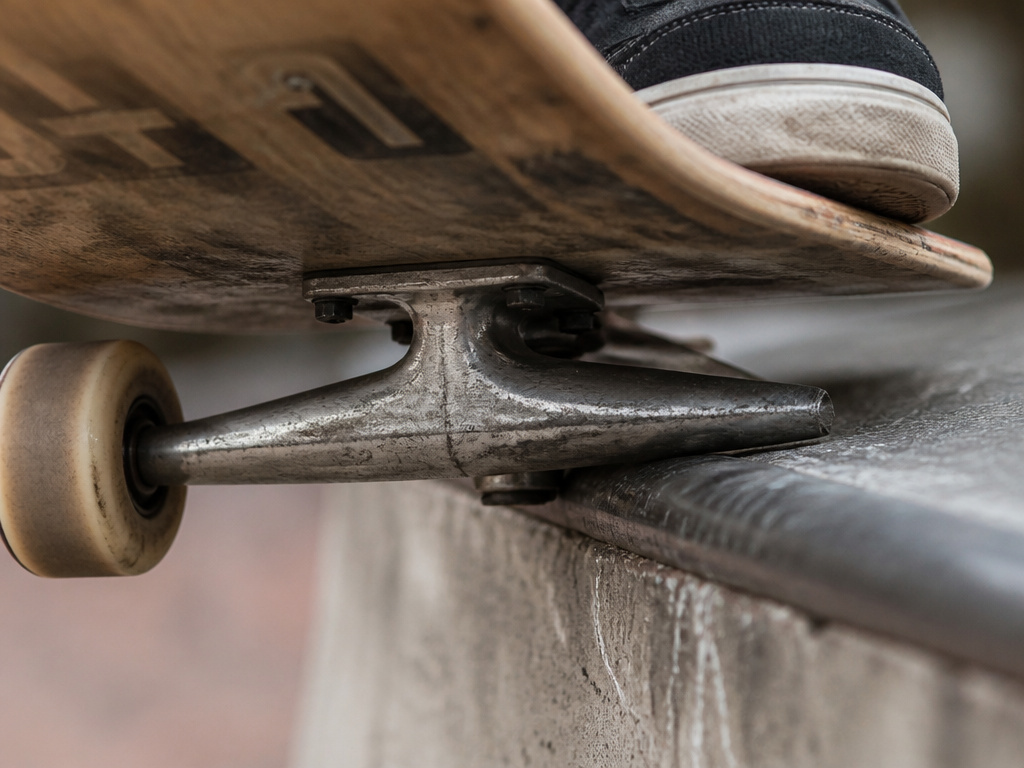
You can feeble on any setup. But some gear lowers the friction, literally.
Trucks. Lighter trucks, often labeled as “hollow” or “light,” or those with forged baseplates, reduce swing weight. That makes the ollie and lock-in feel snappier. You don’t need them, but they help.
Wheels. Harder wheels (ones with a hardness level at or over 99a) slide easier on concrete and ledges. Conical shapes offer more surface contact for stability on the approach. Slick, hard wheels mean less grab when you’re learning.
Wax. A well-waxed ledge is essential for learning. A dry curb will grab your truck and stop you dead, which is a sure way to fall. Wax reduces that friction to a slide.
Shoes. Vulcanized shoes give you better board feel. You need that sensitivity to know if your front foot is pressing down too hard.
This gear removes variables. It doesn’t replace practice.
Troubleshooting Common Feeble Grind Fails

Common mistake: Letting the front truck land on top of the ledge. You’ll feel a solid clunk instead of a slide, and you’ll stop moving. This is a 50-50, not a feeble.
Here’s how to diagnose and fix the usual suspects.
Problem: You land in a 50-50.
Cause: Your approach angle is too steep, or you’re not letting the nose drop. Fix: Widen your approach. Consciously think “jump over” and let the front truck dangle. Don’t try to land both trucks.
Problem: The board slips out instantly.
Cause: Your weight is centered or on your front foot. The back truck isn’t pinching. Fix: Force your weight over the back foot. It will feel like you’re going to fall backwards. You won’t. The truck will grip.
Problem: You can’t lock the back truck on.
Cause: You’re landing short. Your ollie isn’t high enough or you’re aiming the truck at the face of the ledge, not the edge. Fix: Ollie higher. Aim the back truck to land on the edge, not against it. Practice ollying onto the curb first.
Problem: You slide off the side immediately.
Cause: You’re not leaning your body over the obstacle. Your shoulders are still square with the board. Fix: As you lock in, turn your shoulders slightly over the ledge. This shifts your center of gravity over the grinding truck.
Sometimes the obstacle is the issue. A rail grind requires more precision than a ledge grind. Start with a wide, forgiving parking block.
Where and How to Practice

The park’s shiny ledge is for later. Your training ground is the real world.
Find a low concrete curb or a wide parking block. The ideal starter spot is low, long, and smooth. Wax it well. The goal isn’t a long grind; it’s a clean lock and a one-foot slide. Roll at it with that shallow angle and commit.
If you have access to a mini-ramp with coping, you can practice feebles on the transition. The curved surface helps guide the lock-in. Don’t be afraid to try it there.
My own practice shifted when I stopped aiming for length and started aiming for sound. A feeble makes a consistent, gritty shhhhh from the back truck. A bad one is silent or ends in a clack. Listen for the slide.
Frequently Asked Questions
What is the hardest grind to do on a skateboard?
Difficulty is subjective, but many skaters rank the crooked grind, nosegrind, and laser flip as among the most technically challenging. The feeble grind is considered intermediate. Its difficulty comes from the precise weight shift and commitment required to stay locked on one truck while the other hangs free.
What is the easiest grind trick on a skateboard?
The 50-50 grind is universally the easiest to learn. Both trucks sit on top of the obstacle, distributing your weight evenly and providing a stable, familiar feeling. It’s the logical first grind after you master ollies onto curbs. Mastering the 5-0 grind is the next logical step for single-truck control.
How do I do a feeble grind in Skate the video game?
The input mirrors the real trick. Approach the rail at an angle. As you ollie, use the right stick to push the nose of your board down and over the far side of the rail while your back truck lands on it. The game is particular about the front truck position, if it’s on the same side you popped from, it’ll register as a smith grind.
Why does my feeble always turn into a smith?
You’re not getting the front truck to the opposite side. This usually means your ollie isn’t carrying you over the rail enough. Focus on jumping over it, not just onto it. In the game Session, this mix-up is the most common complaint on the subreddit. The physical principle is the same: clear the obstacle with your front truck.
Before You Go
The feeble grind isn’t a trick you brute force. It’s a trick you finesse. The lock-in is a feeling, a specific balance of weight, angle, and commitment. When it clicks, it feels incredibly secure, more like a boardslide than a precarious grind.
One rule most guides skip: if you haven’t landed a clean, sliding feeble after many tries on a curb, stop. Go back and ollie onto that curb many times. The problem is almost always in the approach and the pop, not in the grind itself. Everything above assumes you can get to the obstacle. A truly shaky approach is faster to rebuild than to patch.
Your next session, find a parking block, a can of wax, and just listen. The sound of that back truck sliding is your target. Once you hear it, you’ve got it.
