
How to Kickflip While Moving: A Step-by-Step Guide
This post contains affiliate links. As an Amazon Associate, we earn from qualifying purchases.
To kickflip while moving, you need a solid rolling ollie, a front foot placed about an inch below the bolts at a 45-degree angle, and a flick that goes up and out through the nose’s pocket. Jump upward more than forward, catch the board at the height of your pop, and land with knees bent over the bolts. Speed requires a harder flick and a stronger commitment to stay over the board.
That 45-degree angle on your front foot is the whole game. It turns a straight slide into a controlled flick. Get that wrong, and the board spins wrong or rockets away from you. The key is learning how to kickflip while moving.
What follows is a breakdown of each piece: where to put your feet when you’re rolling, how to generate the flip without losing the board, and the one commitment mistake that stops most people learning how to kickflip while moving. We’ll also look at what the top tutorials disagree on, so you can find your own sweet spot.
Key Takeaways
- A solid, rolling ollie is the essential foundation, practice it until it’s second nature.
- Sources describe the flick differently: Dominick Walker (Skateboarding.com) says to slide at a 45-degree angle up through the nose, the Red Bull Editorial Team advises to flick outward and forward, while anecdotal Reddit users suggest flicking up and out or upwards and out.
- Sources disagree on the jump direction: the Red Bull Editorial Team says you should be jumping upward more than forward, while an anecdotal Reddit user advises to jump forward and keep the board underneath you.
- Sources offer different advice for catching the board: Dominick Walker (Skateboarding.com) says to catch the tail with your back foot, OnFlatTricks.com says you can catch with your back foot or both feet, and an anecdotal Reddit user suggests catching at the height of the pop.
- Commitment is a physical act, not a mental one; your body must follow through even when the board isn’t perfect.
The Prerequisite: A Rolling Ollie You Can Trust
You cannot build a house on sand, and you cannot build a moving kickflip on a shaky ollie. The Red Bull guide states it plainly: master the ollie first. This isn’t gatekeeping; it’s mechanics. The kickflip is an ollie with a flick added. If your ollie is low, crooked, or inconsistent while rolling, the flick has nothing stable to work from.
The feel is different when you’re moving, which is central to learning how to kickflip while moving. A stationary ollie allows you to adjust your balance. A rolling ollie forces you to stay centered with momentum. If you can’t ollie over a crack or a stick while rolling at a comfortable speed, go back and drill that. Spend a session doing nothing but rolling ollies. Your kickflip progress will be faster for it.
Foot Placement: The 45-Degree Starting Point
Where you put your feet decides everything. The sources don’t fully agree on the perfect spot, which is actually helpful, it means there’s a range that works.
Common mistake: Placing your front foot in a pure ollie position (straight across the board). This gives you no angle to flick from, so you end up kicking down or sideways, losing the board.
Dominick Walker’s tutorial on Skateboarding.com says to put your front foot an inch below the bolts with a 45-degree angle, heel slightly off the board. The Red Bull guide is less specific, suggesting the ball of your front foot should be behind the front trucks, angled slightly. An OnFlatTricks.com tutorial says right under the bolts. A Reddit user advises an inch behind the bolts with the heel hanging off.
Here’s the synthesis that works for most:
- Front Foot: Start with Dominick Walker’s rule: an inch below the front bolts, angled at 45 degrees. The ball of your foot should be on the board, heel slightly off. This gives you a clear path to slide and flick.
- Back Foot: Place the ball of your back foot on the centerline of the tail. Don’t hang your toes or heel off the back, this gives you a clean, centered pop. A Reddit tip from the NewSkaters forum specifically warns against hanging your back foot off the edge.
Your back foot is for power. Your front foot is for direction. Set them and get comfortable in that stance while rolling slowly.
| Foot | Primary Source Position | Why It Works |
|---|---|---|
| Front Foot | 1 inch below bolts, 45° angle (Skateboarding.com) | Creates a clear, angled path for the flick up the nose. |
| Front Foot (Alternative) | Ball behind front trucks, angled (Red Bull) | May work for skaters with a more vertical flick style. |
| Back Foot | Ball on centerline of tail (Multiple Sources) | Ensures a straight, powerful pop without board turning. |
The 45-Degree Flick Rule
The “flick” is not a kick. It’s a swift, upward scrape of your front foot off the nose of the board. The direction is fixed: up and out.
The board should flip from your ankle flicking upwards and outwards through the pocket of the nose, not from your whole leg kicking downwards.
Here’s the breakdown, grounded in the sources:
- Pop: Kick down on the tail with your back foot to get the board in the air, just like an ollie. The Red Bull guide emphasizes a pop with enough force to make a sound.
- Slide & Flick: As you jump, slide your front foot up the board at that 45-degree angle. As your toe reaches the “sweet spot”, the pocket where the nose starts to curve upward in front of the bolts, flick your ankle outward and forward. Dominick Walker describes flicking through that spot. A Reddit user simply says “flick up and out.”
- The Why-Layer: A downward flick (a common error) makes the board flip late and underneath you, which is uncontrollable at speed. An upward flick uses the nose’s curvature to initiate the flip earlier in the jump, giving you more time to spot the catch. This is the difference between a sketchy flip and a clean one.
The height of your kickflip depends on how high you get the nose to level off before you kick out, as noted in the Red Bull guide. A higher ollie means more time and space for a complete, controlled rotation.
The Jump, Catch, and Landing Trio
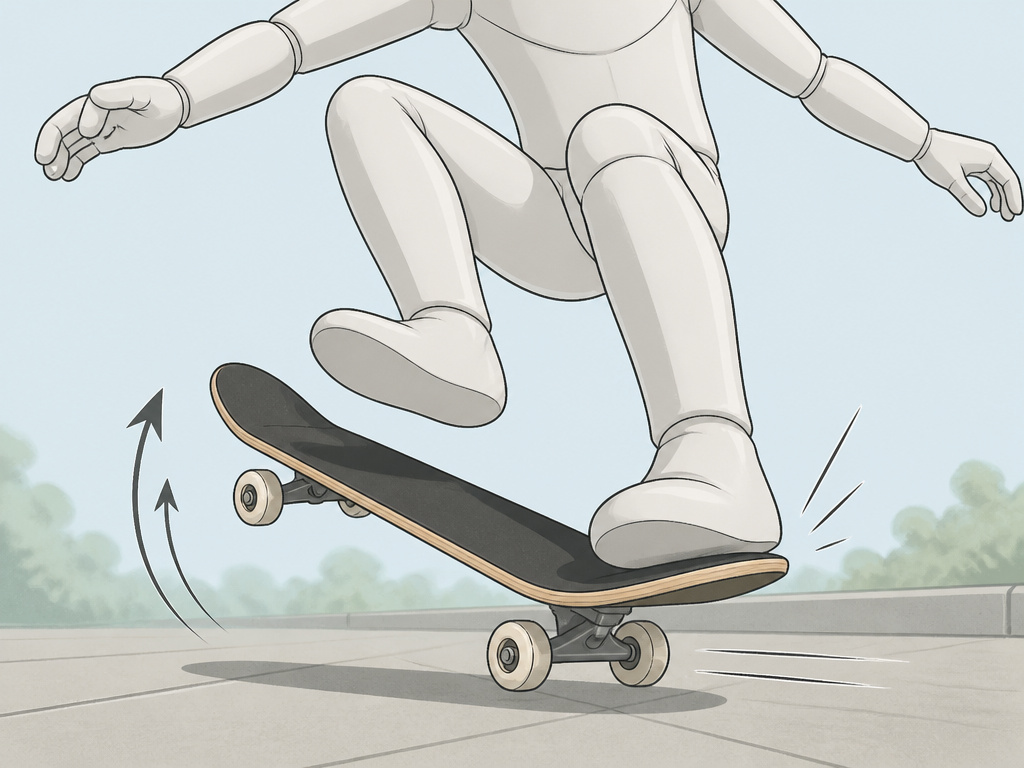
This is where the “moving” part changes the calculus. When stationary, you can drift a little. While rolling, you must move with the board.
- The Jump: You should be jumping upward more than forward, per the Red Bull guide. Your torso goes up; the board flips underneath it. If you jump forward, the board flips behind you. Leaning back is a sure way to land with the board shooting ahead.
- The Catch: How do you stop the flip? You have two proven methods. Dominick Walker advises to catch the tail with your back foot. OnFlatTricks.com says you can catch with your back foot or with both feet. A Reddit user says to catch at the height of the pop. Experiment. Catching with the back foot first gives you decisive control. Catching with both feels more secure for some. The goal is to stop the rotation with your feet, not let the board flip onto the ground.
- The Landing: Land centered on your board, feet over the bolts, bending with your knees to absorb the impact. All four wheels should touch down simultaneously. Bend your knees. A stiff-legged landing on concrete is a one-way ticket to ankle town.
Common Moving Kickflip Mistakes and Fixes
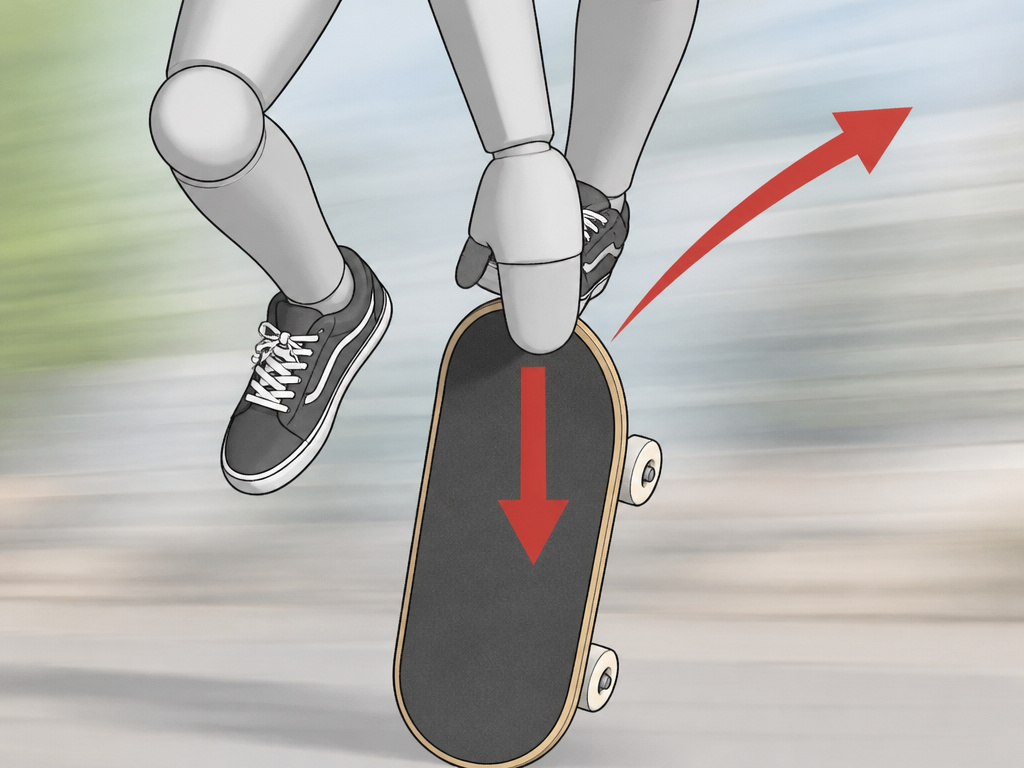
When you add speed, small errors get amplified. Here are the big ones.
Where this goes sideways: Flicking down instead of out at speed. The board completes the rotation late and low, slapping into your back foot or shins. The fix is to consciously practice the upward flick, even if it means over-flipping at first.
| Mistake | What Happens | The Fix |
|---|---|---|
| Board Flips 180° Only | Incomplete rotation at higher speed. | You’re not committing or flicking hard enough. A Reddit tip is direct: “kick a bit harder if the flip doesn’t complete when going faster.” |
| Board Rockets Away | The board flips vertically (a “rocket flip”) and shoots forward. | Your front foot is flicking straight up the middle, not off the side. Re-focus on the 45-degree angle and flicking through the nose pocket. |
| You Land, Board Doesn’t | You jump off the board completely. | You’re not jumping upward or trying to catch it. Your eyes and chest should stay over the board. Practice the jump without the flick. |
| Late Flip | The board flips after the peak of your ollie. | You’re flicking too late. As one Reddit user advised, “work on flipping the board earlier, on the pull up, and catching it at the apex.” |
How to Practice: A Drills-Based Progression
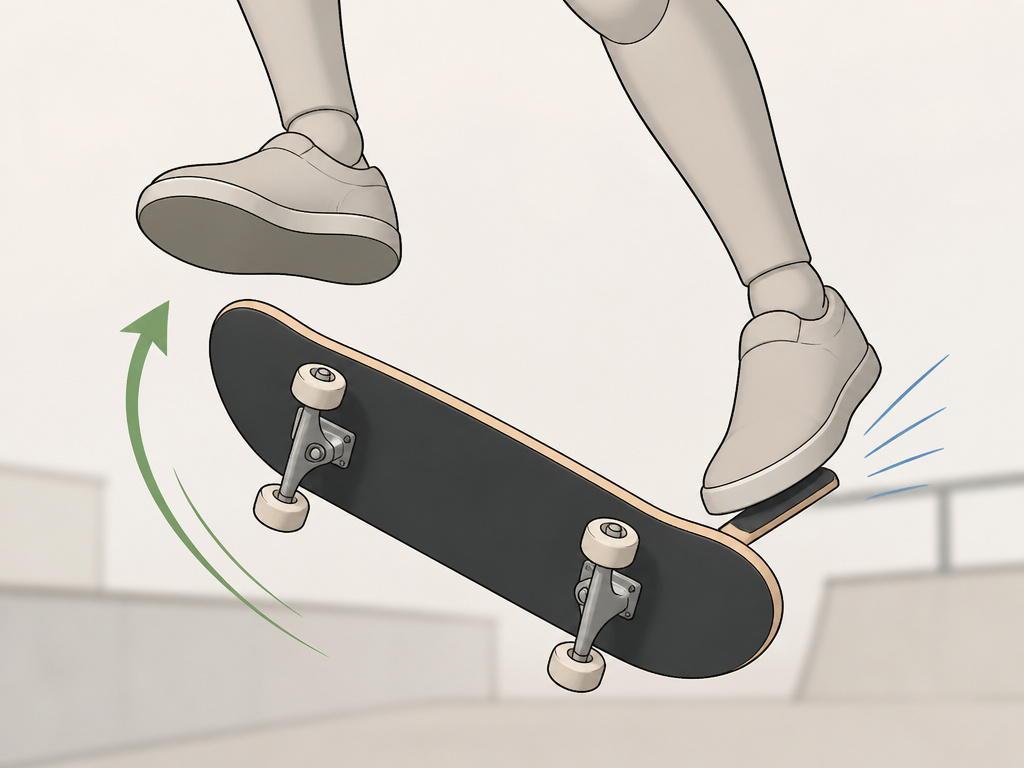
Don’t just throw yourself at rolling kickflips for an hour. Break it down.
- Ollie Refresh: Do five solid, rolling ollies in a row. This resets your muscle memory to a solid pop. A Reddit user in the NewSkaters forum specifically recommended “5 quickfire ollies in a row then try kickflip.”
- Flick Practice: While rolling slowly, do ollies and focus only on dragging your front foot up and trying to flick, even if you don’t get the full rotation. Listen for the scrape of your griptape. The goal is to feel the motion.
- The Commitment Jump: At a slow roll, pop and flick, but focus entirely on jumping high and keeping your shoulders over the board. Don’t worry about landing. Get used to the feeling of the board flipping beneath you while you stay in the air.
- Catch Drill: At a slow roll, pop, flick, and try to catch the board with your back foot only, then step off. Don’t try to land. This teaches board control.
- Put It Together: Now, with all those pieces in mind, try the full trick. Start at a walking pace. Speed will come later.
Frequently Asked Questions
Should I learn kickflips stationary or moving first?
Learn them moving, even if it’s just a slow crawl. A tiny bit of forward momentum stabilizes the board and makes the physics of the trick more natural. Almost every source and experienced skater will tell you this. Stationary kickflips are a different, often harder, balance challenge.
Why does my board keep shooting out in front of me?
This is the classic “board rocket” problem. It means your front foot is flicking straight up the center of the board, not off the side at an angle. You’re doing a vertical ollie with a flip, not a kickflip. Go back to the 45-degree foot placement and concentrate on flicking outwards through the nose pocket.
How high does my ollie need to be before I can kickflip?
Master the ollie before attempting a kickflip. If your ollie is barely off the ground, you have no time to add a flick and catch. You don’t need a foot of air, but you need a stable, leveled-out ollie at a reasonable height.
What’s the best way to overcome the fear of committing?
Commitment isn’t a mental trick. It’s a physical one. Your brain will always hesitate. Your job is to drill the motion so deeply that your body does it even when your brain says “no.” Practice commitment by repeatedly doing the jump-and-catch drill without worrying about the landing. For more on this, see our guide on commitment to skateboard tricks. You must prove to your body that it’s safe to stay over the flipping board.
How do I fix a “rocket” kickflip?
Rocket kickflip means the board flips vertically. This almost always traces back to foot placement. Your front foot is too centered and your flick is straight up. Move your front foot so your toes are closer to the edge of the board, re-establish that 45-degree angle, and focus on flicking outwards, not upwards. We have a whole guide on how to fix a rocket kickflip with more detailed drills.
The Bottom Line
The moving kickflip is a test of fundamentals. It asks if your ollie while moving is automatic, if your footwork is precise, and if you can trust your body to follow through. Start with the 45-degree rule for your front foot. Drill the upward, outward flick until it feels sharp. Most importantly, jump high and let the board work under you. The first clean one you roll away from will make every slammed attempt worth it. After that, the world of flip tricks, from kickflip down stairs to heelflips and beyond, starts to open up. Keep your sessions short, focused, and always wear a helmet. The concrete doesn’t care how cool you look.
