
How to Commit to Skateboard Tricks: Step-by-Step
This post contains affiliate links. As an Amazon Associate, we earn from qualifying purchases.
Committing to a skateboard trick means your brain has accepted the landing before your feet leave the board. It’s the difference between a clean pop shove-it and a sketchy bail where you stick a foot out. The physical move is simple; overriding the instinct to save yourself is the real skill.
That gap between knowing the motion and trusting it is where most new skaters stall. You can have the ollie mechanics down in a stationary drill, but the moment the board rolls, a different part of your mind takes over. It’s not a lack of courage. Learning how to commit to skateboard tricks is a predictable conflict between what you’ve practiced and what your survival wiring expects to happen next.
What follows breaks down that conflict into five manageable parts: the gear that makes falling a non-issue, the one drill that builds landing confidence from the ground up, the mental reset after a slam, how commitment changes per trick type, and the game-day tactics that force you to follow through. By the end, you’ll have a checklist for your next session, not just a pep talk.
Key Takeaways
- Wear a helmet, wrist guards, and knee pads every session, pads turn a scary fall into a simple slide, which directly removes the brain’s biggest reason to bail.
- Master hippie jumps before complex tricks, jumping on and off a rolling board builds the fundamental trust that your feet will find the deck.
- After a hard fall, get up and land one easy trick immediately, letting the fear settle turns a single slam into a multi-session block.
- Commitment is mechanical, not mystical, for flip tricks, commit to the flick; for grinds, commit to the lock-in; for drops, commit to leaning forward.
- Use the pressure of a Game of SKATE or a filmed line to force full attempts, a “redo” on your final letter is worthless if your first try is half-hearted.
The Gear That Lets You Commit
Your brain is excellent at risk assessment. If it calculates that a failed trick means road rash, a sprained wrist, or a head knock, it will veto the attempt. You might call this “chickening out.” Neuroscience calls it a rational response. The single fastest way to change that calculation is to put on the gear that makes the consequence trivial.
Skate Labs is blunt: wear a helmet every time you skate, even on flat ground. They add that wrist guards are critical while learning because your hands go down first, and that knee and elbow pads let you fall without fear so you try harder. This isn’t a safety lecture. It’s a performance hack for the how to commit to skateboard tricks question. When you know a fall on a ramp means you can drop to your knees and slide down on your knee pads, the mental barrier to dropping in shrinks. The fear of pain is what causes the hesitation that leads to the worst falls, like leaning back on a drop-in. The board shoots out, and you land on your back.
I skated for a year without wrist guards, convinced they looked lame. Then I took a fall that sprained my wrist and sidelined me for a month. The next session with guards felt different. I wasn’t thinking about saving my hands. I was thinking about the trick. That shift is the whole point. If you want to commit to harder tricks, you first have to commit to the gear that makes committing possible. It’s the foundation for every other strategy here.
Common mistake: Skating in worn-out shoes or running shoes. Skate Labs specifies flat, grippy sole skate shoes because running shoes slip off the board. A lost foot during a flip trick feels like a commitment issue, but it’s often a gear failure.
The Physical Drill: Hippie Jumps
If you can’t jump off and back onto your board with confidence, you’ll never commit to a trick that takes you off it. The most direct and essential practice for commitment is the hippie jump. It has one job: prove to your body that you can leave the board and return to it reliably.
No pop, no flip, no spin. The goal is to build the muscle memory that says “feet leave, feet return.” Reddit threads on commitment are full of this advice because it works linearly. Every increment builds the same neural pathway: my board is a safe place to land.
This drill addresses the core fear Reddit users identify in the how to commit to skateboard tricks process: the board shooting out or being slightly off when you come down. A hippie jump failure is just a stepped-off bail. A kickflip bail where you don’t commit is a potential ankle twist. By isolating the landing confidence, you take one major variable off the table. When you add the ollie or shove-it motion later, your brain already trusts the landing phase. This is how you build confidence, one proven drill at a time, as described in the guide to building confidence in skateboarding.
| Hippie Jump Progression | Goal | How It Builds Commitment |
|---|---|---|
| Rolling slowly on smooth ground | Land consistently without stepping off | Teaches your feet to find the deck from a neutral jump. |
How to Recover From a Bad Fall
You will fall. Falling is an inevitable part of skateboarding. A hard slam where you hit your head or jam a wrist isn’t just a physical reset; it’s a mental checkpoint. Your brain’s risk-assessment algorithm just got new, vivid data. The trick to recovery isn’t resting until you forget, it’s overwriting that data before the fear sets in.
The protocol is immediate and strict. First, if you hit your head, stop for the day and get checked by a doctor. For any other hard fall, once you’ve checked for serious injury, get back on your board. Don’t pack up. Don’t sit on the curb and replay it. Roll around for a minute. Then, land the easiest trick you own, a simple shove-it, a stationary ollie, a short manual. The goal is to re-establish the feeling of success before the feeling of failure becomes the dominant memory.
This is also where your gear pays off again. If you’re padded up, a fall that looks bad often just means standing up, brushing off your pads, and trying again. That quick rebound is critical for staying consistent with skateboarding. A fall without pads can mean a week off for scrapes to heal, which is a week for hesitation to build. Protect your body to protect your momentum.
Commitment Looks Different Per Trick

“Commit” is a single word for three different physical actions. Applying the same vague mental effort to a drop-in, a kickflip, and a 50-50 grind will leave you frustrated. You need to know what part of your body to commit, and when.
For flip tricks like the kickflip or heelflip, you commit to the flick. The most common bail is pulling your flicking foot away, which kills the rotation and leaves the board sideways. Your brain does this because it’s trying to get your foot down to the ground faster for stability. The fix is to practice the flick motion with the intention of catching the board with that same foot. Trick Dojo’s philosophy applies here: “Every trick in skateboarding is built on the one before it.” Nail the foundational pop and slide first.
For grinds and slides like a 50-50 or boardslide, you commit to the lock-in. This means shifting your weight over the obstacle and staying there. Red Bull notes that for a boardslide, you use an ollie to hop onto the rail so the middle of your board sits on it. The commitment is in the shoulder and hip turn that keeps you centered over the rail. Skate wax can help, but it doesn’t replace leaning in.
For ramp tricks like dropping in, you commit to leaning forward. Skate Labs details the move: set the tail with the back wheels over the coping, place your front foot over the bolts, then shift your weight onto that front foot and push the nose down. “Leaning back is the classic mistake. The board shoots out and you land on your back.” This is the purest example of commitment overriding a survival instinct. Your brain sees the precipice and says pull back. You must train it to push forward. This is why they advise starting on the smallest ramp around.
Understanding these mechanical differences turns a vague goal into a specific, correctable action. It’s the difference between “I need to commit more” and “I need to keep my shoulders over the rail.” This specificity is the core of practicing skateboarding effectively.
Using Game Pressure to Force Follow-Through
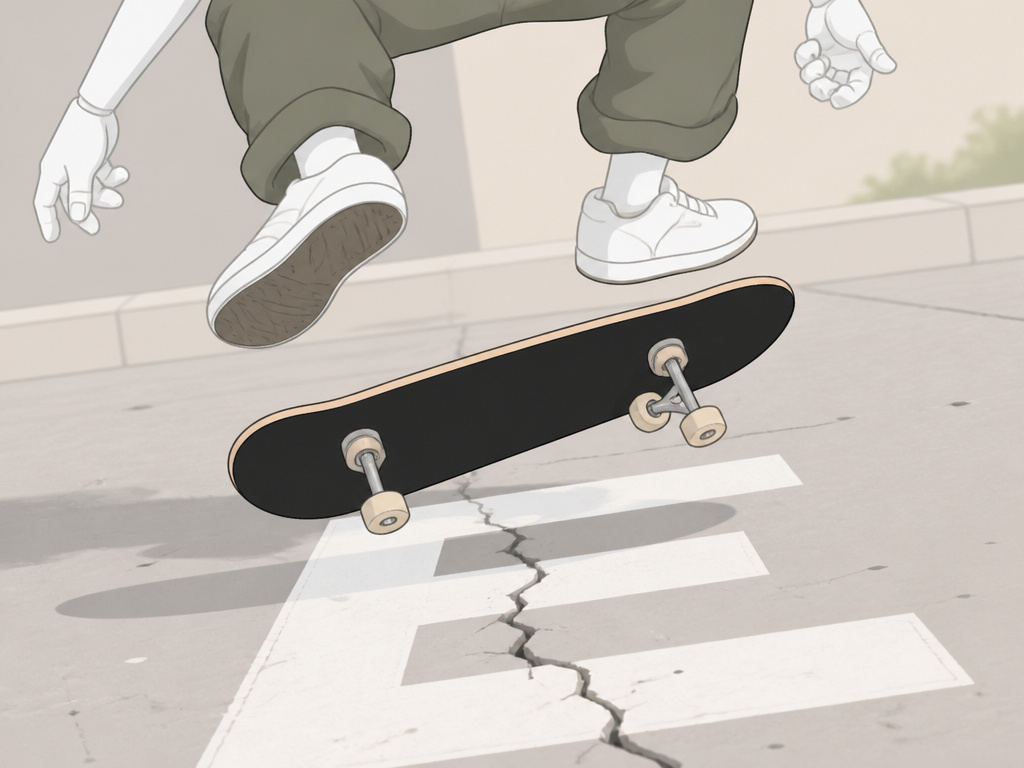
Practice session commitment is one thing. Needing to land a trick because someone is watching, waiting, or you’re on your last letter in a game, that’s a different kind of pressure. This is where formal games like SKATE are invaluable training tools. They manufacture the “now or never” moment you might avoid in solo practice.
The Skate Labs Game of SKATE Playbook has specific tactics for this. When you’re the matcher, slow down and take a breath before you try. Watch the setter’s attempt closely to copy their setup. Then, commit fully. “Most missed matches are half-committed tries. If you’ going to try it, commit fully. A full-commit miss teaches you something. A bail halfway teaches you nothing and still costs a letter.” This reframes the attempt. The goal isn’t to avoid looking bad; it’s to gather data, even from a failure.
The playbook also highlights a critical edge case: the last-letter redo. If your house rules give you a redo on the final letter, don’t waste the first try being scared. Treat the first try like a real attempt. This psychological shift is powerful. It turns a safety net into a strategy for a stronger first attempt. Applying this kind of structured pressure is a proven method to break a skateboarding plateau that’s built on hesitation.
You don’t need a friend to use this principle. Film yourself attempting a line. Give yourself three tries to land it cleanly on camera. The act of recording creates a deadline and an audience of one, which can trigger the same focused commitment. Use this to track your skateboarding progress, not just for celebration, but for forcing honest, full-effort attempts.
Why half-committing is more dangerous than fully committing
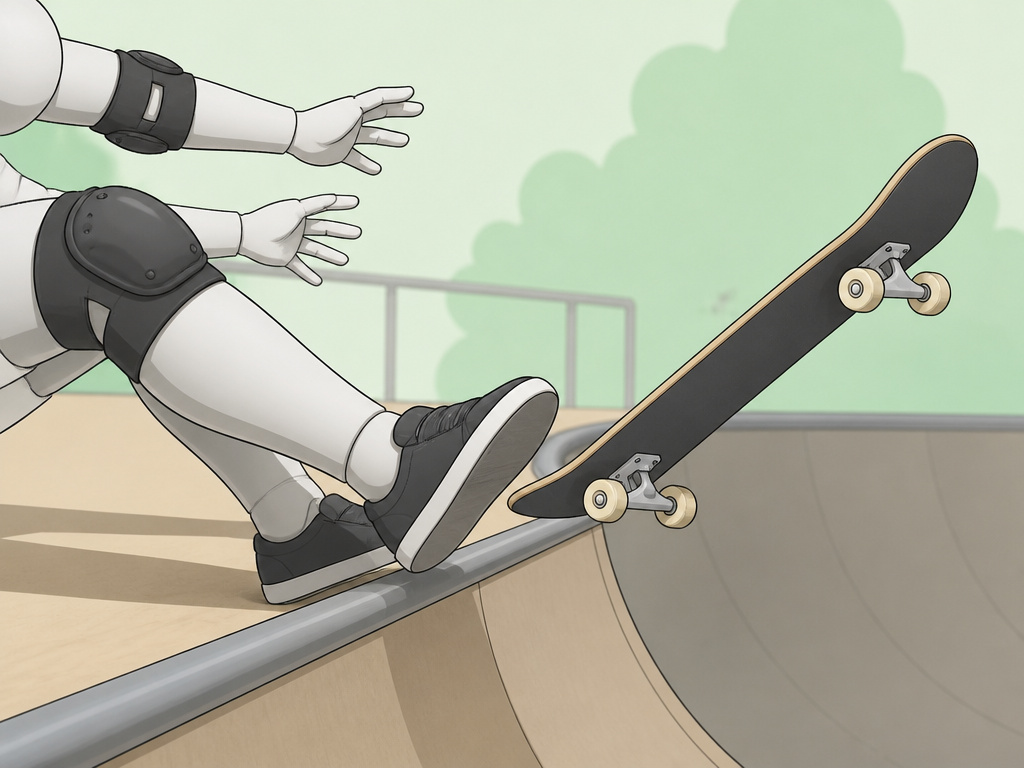
In a Game of SKATE, Skate Labs notes that most missed matches are half-committed tries. When you hesitate, your weight stays in the wrong place. This is especially clear when dropping in, where leaning back is the classic mistake that causes the board to shoot out and you land on your back. Your brain knows the risk. The way past it is to wear protective gear; Skate Labs states that knee and elbow pads let you fall without fear, so you try harder. Then, when you decide to go for a trick, commit fully. Shift your weight forward, push the nose down, and let the roll happen. A half-commitment often leads to a worse fall than a full attempt that doesn’t stick.
How to break the kick-out loop of frustration
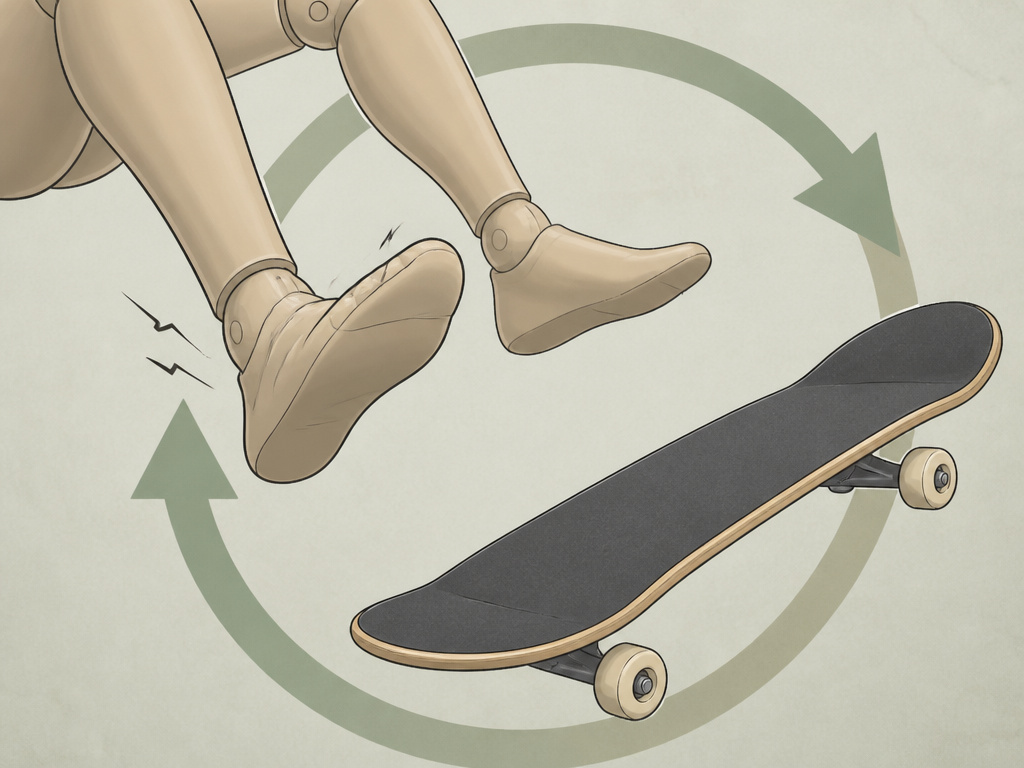
When a trick keeps kicking out, you’re stuck in a loop. Your frustration builds, your muscles tense, and you repeat the same mistake. The first step out is a physical reset. Stop skating. Take a breath. Walk around. This breaks the cycle of tension. Next, check your fundamentals. Are you on smooth flat ground? In a Game of SKATE, Skate Labs advises using the speed you land the trick at, not the speed the setter used. Every trick builds on the one before it. If you skipped a step, the next one will not come. Go back to a simpler version, like practicing the ollie rolling slowly, to rebuild confidence before tackling the trick that’s causing the loop.
Frequently Asked Questions
Is it bad to learn tricks stationary on carpet first?
Sources disagree. Skate Labs explicitly advises learning the ollie “standing still on grass or carpet first, where the board can’t roll away. Once it feels natural, try it rolling slowly.” Other guides, like one from CCS, emphasize getting comfortable landing on a moving board from the start. The stationary method is safer and builds initial muscle memory without the variable of motion, which can boost confidence for some. However, the final skill must be performed rolling, so the transition is a necessary second step.
How do I stop sticking my back foot out on ollies?
This classic “chicken foot” bail is almost always a trust issue with the board’s position. Your foot is seeking the ground for stability because your brain doesn’t believe the board will be there. Go back to hippie jumps. Then, practice ollies over a small, flat object like a stick. Having a visual target for your front wheels to cross forces your mind to commit to the full arc of the trick. It also proves the board will be under you if you complete the motion.
Can protective gear really make me commit better?
Absolutely, and it’s not just psychological. The Skate Labs logic is practical: knee and elbow pads let you fall without fear, so you try harder. If you know falling on a ramp means you’ll slide on your pads, the perceived cost of failure plummets. This directly changes the risk-reward calculation your subconscious makes mid-trick. It’s easier to lean forward on a drop-in when you know the consequence of leaning back is a slide, not a spine-cracking impact.
What’s the one thing I should do in my next session to commit better?
Put on all your gear, helmet, wrist guards, knee pads. Then, spend the first 10 minutes doing hippie jump progressions. Start stationary, then rolling, then try to jump over your board. Don’t move on to your trick list until you’ve stuck five clean landings in a row. This warms up your body and, more importantly, pre-sets your brain to trust the landing. Everything you try after that will have a higher baseline of commitment.
Before You Go
Commitment isn’t a character trait. It’s a trained reflex built on a simple trade: you replace the fear of falling with the proven mechanics of safe falling, and you replace vague encouragement with specific, progressive drills. The hippie jump is your first tool. Your pads are your second. A clear understanding of what “commit” means for your specific trick is the third.
One rule most guides skip: if you’re still hesitating after a few focused sessions, the problem might be earlier in the chain. Trick Dojo states the core principle: “Every trick in skateboarding is built on the one before it. Skip a step and the next one will not come.” Your commitment issue with a kickflip might actually be an ollie that’s not yet automatic. Step back, solidify the foundation, and then the leap forward will feel less like a leap and more like the next logical step. That’s the process. Now go roll.
