
How to Varial Kickflip on a Skateboard: Step-by-Step Guide
This post contains affiliate links. As an Amazon Associate, we earn from qualifying purchases.
To do a varial kickflip on a skateboard, combine a kickflip flick with a backside pop shuvit scoop. Your front foot goes below the front bolts at a 45-degree angle, flicking toward the nose. Sources disagree on the back foot motion: Braille Skateboarding recommends popping straight down and pushing back slightly, while OnFlatTricks.com recommends a slight scoop. According to Skate Labs, the board flips and spins 180 degrees at the same time.
Two major instructional sources disagree on whether you scoop the tail or push it straight back: OnFlatTricks.com advocates a scoop, while Braille Skateboarding advocates a pop and push. This is a key point of debate when learning how to varial kickflip on a skateboard.
What follows: the two competing techniques laid side-by-side, the five-step sequence that works off concrete, and the specific drills that stop the board from over-rotating into a 360 flip.
Key Takeaways
- According to Wikipedia and Skate Labs, a varial kickflip is a kickflip combined with a backside pop shuvit.
- Sources disagree on back-foot technique: scoop (OnFlatTricks.com) vs. Push (Braille Skateboarding), try both to see which gives you control.
- Isolate the shuvit from the flip by practicing the motion stationary, landing with just your front foot first.
- A common error is over-rotating the shuvit, making the board spin like a 360 flip; correct it by reducing your back-foot power.
- Practicing on grass first builds confidence but removes the crucial scoop feeling, so transition to concrete quickly.
What Is a Varial Kickflip?
A varial kickflip is a hybrid trick. According to Skate Labs, it’s a kickflip combined with a backside pop shuvit. The board flips and spins 180 degrees at the same time. According to OnFlatTricks.com, your back foot scoops the shuvit while your front foot flicks the kickflip in one blended motion. Braille Skateboarding, however, describes popping straight down and pushing back.
It sits in an odd cultural spot. Many skaters learn it after a solid pop shuvit and kickflip, but before attempting a 360 flip. Some in the community historically dismissed it as a “forbidden trick”, less stylish than a tre flip, easier to mess up. That stigma is mostly old news now. The real challenge isn’t opinion; it’s merging two distinct rotations into a single, controlled pop.
The varial kickflip rotates on two axes simultaneously: a vertical flip from the front-foot flick and a horizontal 180-degree spin from the back-foot shuvit action. Catching it requires spotting the griptape’s return amid the spin.
Prerequisites: What You Need to Know First
Don’t jump to varials. Your foundation matters. Both OnFlatTricks.com and Braille Skateboarding list prerequisites, but they don’t fully agree. OnFlatTricks.com says you need a solid backside shuvit and a consistent kickflip. Braille Skateboarding adds an ollie, frontside and backside 180s, and a pop shove-it to that list.
The common thread is board control. If you can’t kickflip while moving with some reliability, the varial will be a frustrating guess. The shuvit portion demands you understand how to spin the board 180 degrees under your feet without losing it. Trying this trick without those fundamentals is like building a house on sand, it might stand for a second, but the first real attempt collapses.
Here’s a quick checklist to gauge readiness:
- Ollie: Can you ollie over a crack or a stick consistently?
- Moving Kickflip: Can you land a kickflip while rolling at a slow pace, even if it’s sketchy?
- Pop Shuvit: Can you land a backside pop shuvit and catch it with at least one foot?
If you checked all three, you’re in the right place. If not, spend a session or two locking those in. It saves weeks of frustration.
The Great Back-Foot Debate: Scoop vs. Push
This is where most tutorials give you one answer. Two legitimate techniques exist, each backed by a major instructional source. Your success hinges on picking the one that matches your existing muscle memory.
| Source | Back Foot Position | Back Foot Motion | Best For |
|---|---|---|---|
| OnFlatTricks.com | Outer pocket, toes can hang off slightly. | A slight scoop, like a backside shuvit with less power. | Skaters comfortable with a pronounced shuvit scoop. |
| Braille Skateboarding | Middle of the tail near the edge, toes should not hang off. | Pop straight down, then quickly push back (not a scoop). | Skaters with a controlled, pop-heavy ollie who want to minimize accidental over-rotation. |
The scoop method (OnFlatTricks) can feel more natural if your shuvits are strong. The board gets more height and a predictable spin. The downside: it’s easier to over-scoop, sending the board into a 360 flip rotation.
The push method (Braille) offers more control. By popping straight down first, you keep the board directly under you. The push-back after the pop creates the spin. This reduces the chance of a “helicopter blade” board, but it can feel less powerful and might lead to under-rotation.
Try both. Start with the push method if your shuvits tend to fly away. Start with the scoop if your shuvits are tight and controlled. Your body will tell you which one works within a dozen attempts.
The 5-Step Varial Kickflip Breakdown
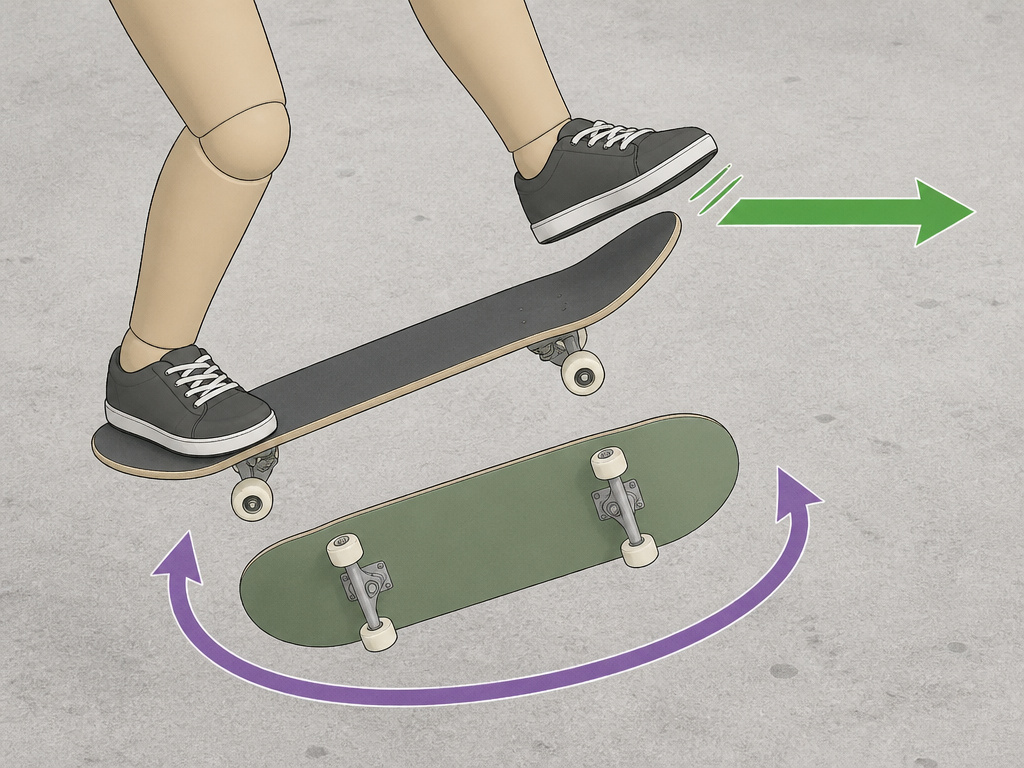
This sequence blends the most reliable elements from both sources, optimized for learning on concrete. It assumes a regular stance (left foot forward is goofy).
1. Set Your Feet
Place your front foot just below the front bolts, angled at about 45 degrees toward the nose, identical to your standard kickflip position. Sources disagree on back foot position: OnFlatTricks.com suggests the outer pocket with toes hanging off slightly, while Braille Skateboarding suggests the middle of the tail with toes not hanging off.
2. Pop and Initiate the Spin
Bend your knees. Pop straight down with your back foot. As your tail hits the ground, immediately initiate the spin. Braille Skateboarding recommends pushing your back foot straight back (not in a scooping arc), while OnFlatTricks.com recommends a slight scoop. It generates the 180 shuvit spin. Your shoulders should stay square with the board; don’t turn your upper body.
3. Flick the Flip
As the board rises from the pop, flick your front foot off the side of the nose. The key here is to flick toward the nose, not out to the side like a regular kickflip. Why? Because the board is already spinning away from you. A straight-ahead flick compensates and keeps the flip centered.
4. Catch and Guide
Tuck your knees up. Watch the board complete its single flip. Your front foot should catch the board on the bolts as it finishes flipping. Your back foot stays high, ready to meet the board.
5. Land and Roll Away
Stomp both feet onto the bolts as the board levels out. Aim to land with your weight centered, not leaning forward or back. Bend your knees to absorb the impact and roll away.
Where this goes sideways: Flicking sideways like a normal kickflip. The board is spinning, so your flick target moves. Aim straight forward off the nose, and the flip will stay under you.
Drills to Isolate the Shuvit from the Flip
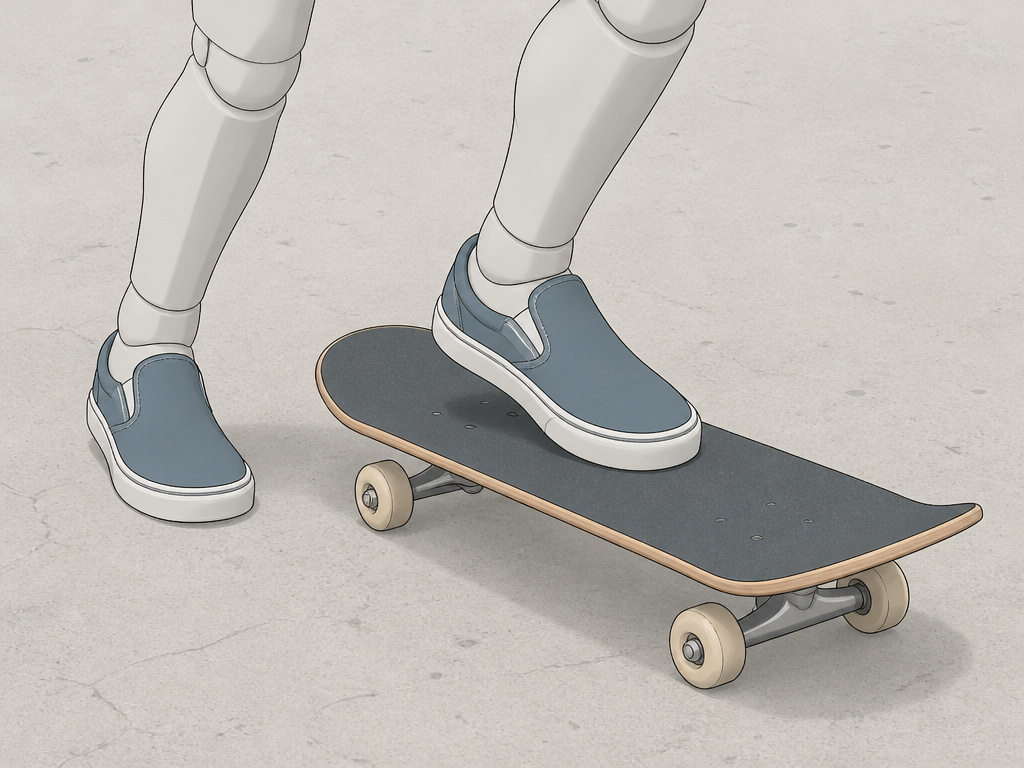
The hardest part is coordinating two separate motions. These drills break it down.
Stationary One-Foot Landings
Do the trick stationary. Pop, push, flick, but focus on landing only your front foot on the board. Let your back foot touch the ground. This drill, recommended by Braille Skateboarding, teaches you the timing without the commitment of a full landing. Do it until you can catch the board with your front foot consistently.
Grass Practice (With a Caveat)
OnFlatTricks.com suggests trying the varial kickflip on grass to overcome fear. It works. The board won’t shoot out, and you can focus on the motion. But know this: the feeling is not quite the same as the real trick because you will miss the scoop. The grass kills the pop and the board doesn’t slide for the shuvit. Use it for a few attempts to build confidence, then immediately switch to concrete.
The “Throw Away” Drill
This sounds counterintuitive. Practice the varial kickflip by intentionally throwing the board away, don’t even try to land with one foot on it. The goal is to get used to both scooping and flicking a trick simultaneously without the pressure of landing. It builds the muscle memory for the combined motion.
Common Varial Kickflip Mistakes and Fixes
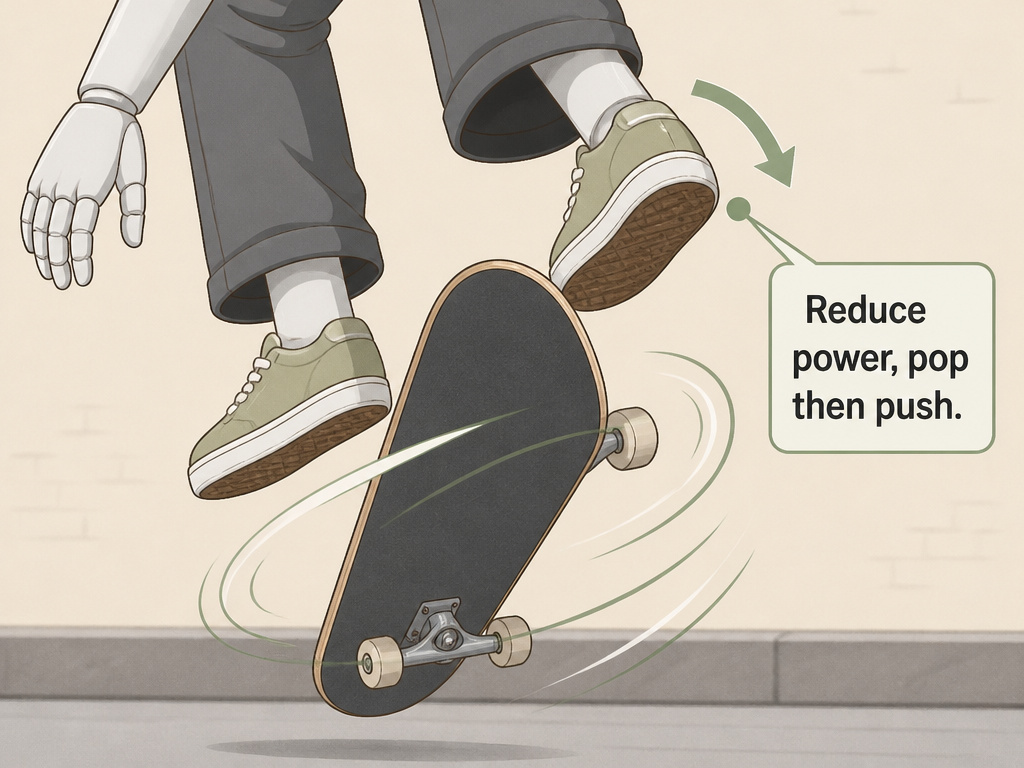
Your board will misbehave. Here’s what it’s doing and how to correct it.
| What You See | Likely Cause | The Fix |
|---|---|---|
| Board spins like a 360 flip (over-rotation). | Back foot is scooping too hard or too much like a tre flip. | Reduce power. Focus on the “pop then push” motion, not a scoop. Think of it as a shuvit with a flick, not a tre flip without the full rotation. |
| Board flips but doesn’t spin (under-rotation). | Not enough back-foot action after the pop. You’re just doing a rocket kickflip with a hop. | After the pop, consciously push your back foot back a bit more. Make sure your front-foot flick is straight toward the nose, not out to the side. |
| Board spins but doesn’t flip. | All your focus is on the shuvit; the front foot is just sliding up, not flicking. | Isolate the flick. Practice kickflips alone, focusing on a sharp, concise flick off the nose. Then add the shuvit pop back in. |
| Landing primo (board lands on side, wheels facing you). | The flip is incomplete (under-flipped) or over-flipped, and the spin is off-axis. | This is a timing issue. Go back to the stationary one-foot drill. Watch the board rotate and practice catching it with your front foot only when it’s fully flipped. |
| Feet land too close together, causing a slip-out. | You’re not spreading your legs in the air to track the board’s motion. | As you jump, consciously think “spread.” Your front foot goes forward to catch, your back foot stays back to meet the tail. |
Varial Kickflip vs. 360 Flip: The Progression Trap
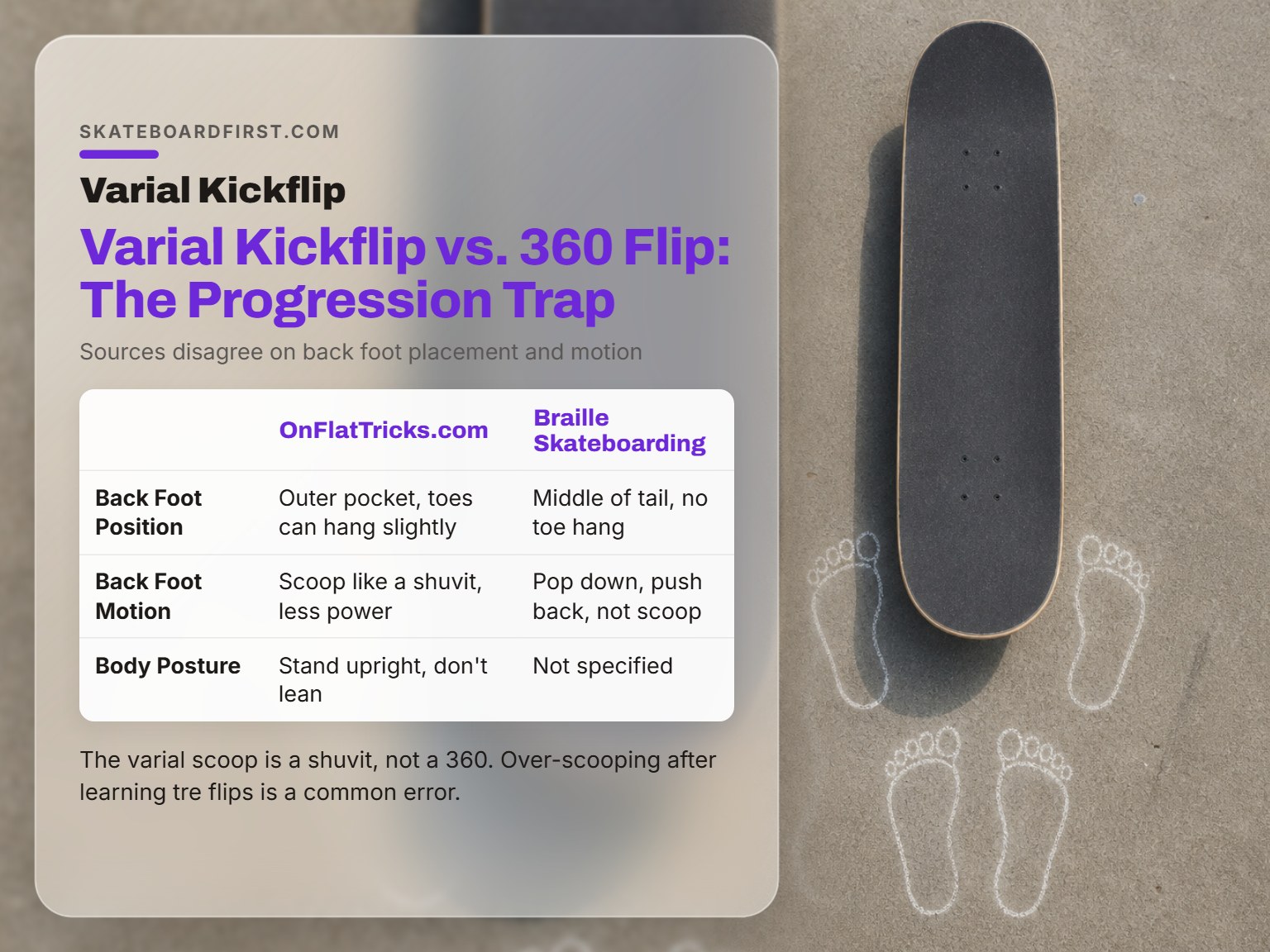
This is a real phenomenon noted by OnFlatTricks.com: some skaters forget how to varial kickflip once they learn 360 flips. The scoop for a tre flip is deeper and more powerful. When you revert to varials, you accidentally over-scoop from tre flip habit.
If you’re learning tre flips later, view the varial as a distinct trick with a different muscle memory. The varial scoop is a shuvit. The tre flip scoop is a 360. They are cousins, not twins. If you find yourself constantly over-rotating varials after learning tres, dedicate a session to re-drill the stationary one-foot landing, focusing on minimal back-foot movement.
Varial Kickflip vs Kickflip
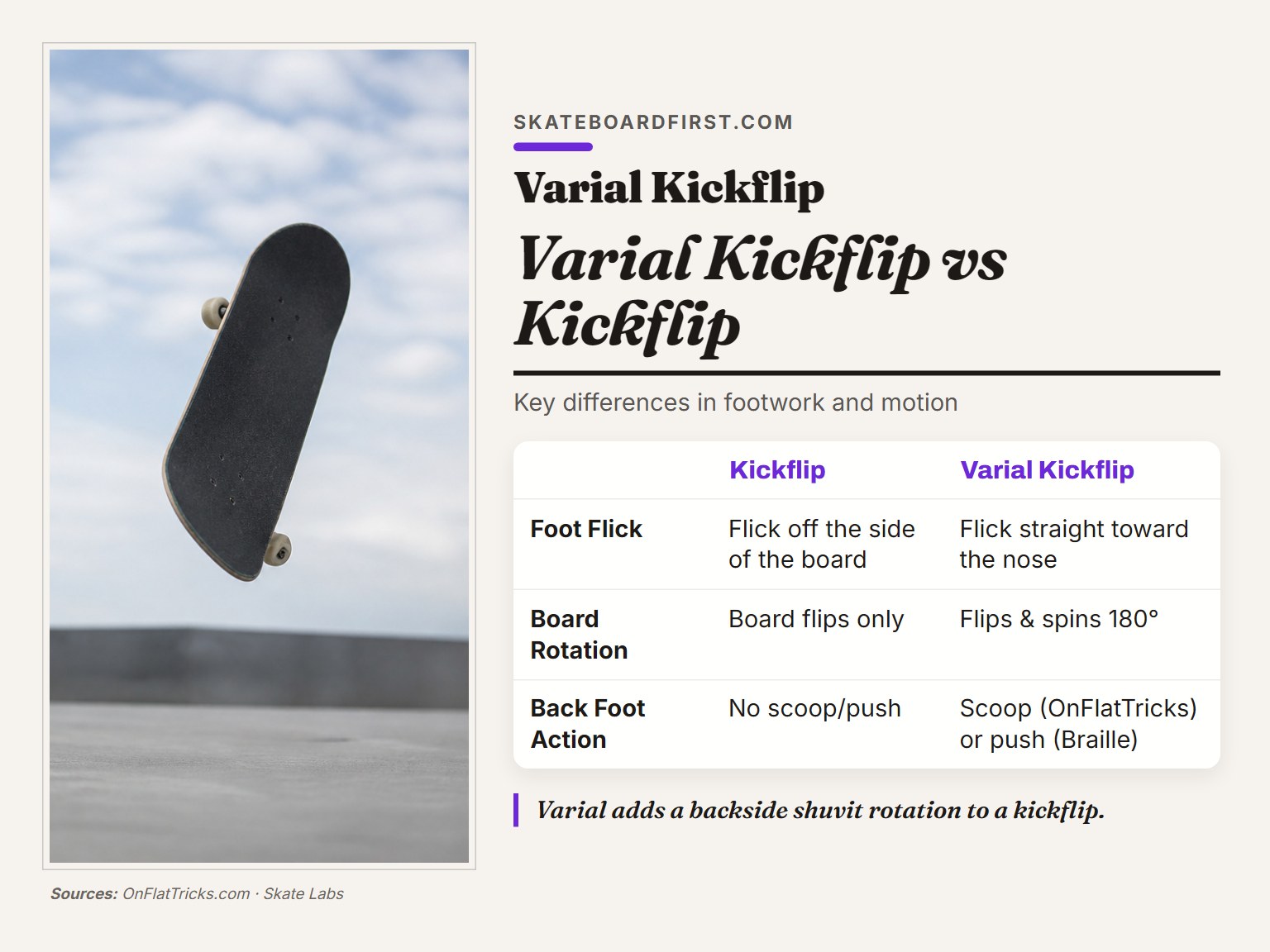
The varial kickflip builds directly on the kickflip, answering the core how to varial kickflip on a skateboard question. It uses the same front foot placement and flicking motion, but with a key difference. For a standard kickflip, your front foot flicks off the side of the board. For a varial, you flick straight towards the nose. This keeps the board under you as it spins. The trick adds a backside shuvit rotation from your back foot, making the board flip and spin 180 degrees simultaneously. While a kickflip only flips, the varial kickflip requires you to blend that flip with a scoop or push to create the combined spin. Mastering a consistent kickflip is a fundamental prerequisite for controlling this more complex trick.
Frequently Asked Questions
How long does it take to learn a varial kickflip?
It depends entirely on your foundation and practice. If those prerequisites are shaky, it could take weeks. The isolation drills are the fastest path.
Are varial flips easier than kickflips?
For some people, yes. The combined motion can feel more natural than the pure vertical flip of a kickflip. The board spins away from you, which can make it easier to track and catch. But it requires coordinating two motions, which is its own challenge.
What is the hardest part of a varial kickflip?
Commitment. Leaning back as the board spins away is a natural fear. The second hardest part is the flick direction, remembering to flick toward the nose instead of out to the side.
What flip trick should I learn after varial kickflip?
Your trick progression opens up here. Many skaters move to 360 flips or heelflip variations. The varial heelflip is a logical next step, swapping the kickflip flick for a heelflip motion.
Why does my varial flip look bad?
The old stigma exists because a sloppy varial can look awkward, a low, wobbly spin with a half-flip. A varial kickflip has pop, a clean single flip, and a crisp 180 spin. Focus on height and completing both rotations fully.
The Bottom Line
The varial kickflip isn’t a mystery. It’s a mechanical sum of its parts. Lock down your kickflip and pop shuvit first. Then, experiment with the back-foot debate, try the scoop, try the push, and see which one gives you a controlled, single spin.
Start your next session with the stationary one-foot drill. Get that front-foot catch down ten times. Then add the back foot. If you over-rotate, cut your back-foot power in half. If the board won’t spin, add a conscious push after the pop.
One clean varial flip is better than twenty sketchy ones. Go for that one.
