
How to Extend the Life of a Skateboard: The 5-Step Plan
This post contains affiliate links. As an Amazon Associate, we earn from qualifying purchases.
To extend the life of a skateboard, you must control moisture, clean bearings with the right solvent, tune trucks with a quarter-turn method, store it in a temperate place, and consider replacing the deck after roughly three months if you skate four hours a week, as Decathlon UK suggests. The deck and bearings are the main wear parts, but water is the primary enemy.
That three-month figure from Decathlon UK is specific. It gives you a real timeline to work with, not a vague “it depends.” The rest of the process is about defending against the things that shorten that span, water, dirt, and incorrect tension, which is essentially how to extend the life of a skateboard.
What follows is a five-part plan built from manufacturer manuals and community-tested fixes. You’ll see where the official advice from brands like Bones Bearings contradicts a common skater habit, why your garage is a bad storage spot, and the one truck-tuning mistake that can break a new deck on its first hard landing.
Key Takeaways
- Store your board indoors at room temperature; the trunk of a car or a damp garage invites warping and rust.
- Clean bearings with a solvent that cuts grease, such as isopropyl alcohol, and keep them lubricated.
- Adjust truck tightness in quarter-turn increments and skate between changes; cranking a new board too tight can crack the deck.
- Replace the deck after about three months if you skate four hours weekly; a soft, “dead” deck loses pop long before it visibly breaks.
- Use a skate tool for all adjustments; it fits the 10, 13, and 14mm nuts and keeps hardware properly torqued.
The 5-Step Prolonged Life Plan
A skateboard isn’t a single object. It’s a system of wood, metal, urethane, and rubber. Attacking one part and ignoring the others is how you end up with a fast board that can’t turn, or a lively deck that dies in six weeks. This plan for how to extend the life of a skateboard treats the system as a whole.
Start with the part that fails fastest.
1. Manage Moisture Like It’s an Enemy
Decathlon DE states it plainly: “The worst enemy of your skateboard is water.” The deck and the bearings don’t like it at all. Maple plies swell and delaminate. Steel bearings rust. Even plastic-composite boards, like those from Ookkie, can degrade with prolonged exposure.
The fix isn’t complicated, but it is essential. If you ride through a puddle or in damp conditions, take thirty seconds post-session. Tap the board on the ground to shake off droplets, then wipe it down with a dry cloth. Pay attention to where the trucks meet the deck and the wheel axles. Leaving a board by a leaky window overnight is how I learned about swollen noses the hard way.
Where this goes sideways: Storing a board in a car trunk or an unheated garage. Temperature swings and ambient humidity work slowly. The deck warps, the grip adhesive weakens, and the bearings develop a faint, gritty rumble you feel before you hear it.
For systematic water damage prevention, our guide on how to waterproof a skateboard details sealants and tapes. The immediate step is simpler: get it dry and keep it inside.
2. Clean and Lubricate Bearings Correctly
A slow board often has seized bearings. Grit and water get inside the shield. This contradicts a common street habit of removing lube for a perceived faster spin, the manual calls that “superficial.”
Here’s the correct sequence, sourced from the manufacturer:
- Pop the bearings from the wheels.
- Soak them in a solvent that cuts grease. Citrus cleaners can leave residue.
- Spin them dry. A can of compressed air works.
- Lubricate immediately. Let it sit, then wipe the excess.
Clean bearings roll faster and last months longer. For a full walkthrough, see our article on how to lubricate skateboard bearings.
3. Tune Trucks for Longevity (Not Just Feel)
Truck tuning is about balance, not preference alone. The Skate Labs guide says tighten the kingpin nut and the board gets more stable but harder to turn. Loosen it and carving gets easier, but the board can wobble at speed. The trick is to adjust without stressing the deck.
The Decathlon DE guide adds a critical warning: “If you screw too tight, the board can break on a too hard landing. Do some skate sessions before you tighten more, so the wood gets a little ‘softer’ and gives a little.” New decks are stiff. Cranking the trucks down on day one can crack the ply around the mounting holes.
| Adjustment | Effect on Board | Effect on Deck Lifespan |
|---|---|---|
| Too Tight | Stable, hard to turn | Concentrates impact stress on mounting holes; risks cracking. |
| Too Loose | Easy to carve, wobbly at speed | Increases deck flex and tail scraping, wearing the tail faster. |
| Quarter-Turn Increments (Skate Labs method) | Gradual change, find your sweet spot | Allows deck to break in naturally; prevents shock damage. |
The safe method is the Skate Labs rule: go a quarter turn at a time and ride between changes. Use a skate tool. Set both trucks the same to start. And never loosen the kingpin nut so far that it barely hangs on, keep the nut fully threaded, or it can work its way off while you ride.
4. Implement Smart Storage
Storage is what you do when you’re not skating. It has the biggest long-term impact. The goal for how to extend the life of a skateboard is a dry, temperate place without large fluctuations. Your bedroom corner beats your garage, according to Decathlon DE, which advises against garage storage, while Ookkie simply recommends storing ‘out of the elements.’
Ookkie recommends storing their board “out of the elements.” Decathlon DE is more specific: avoid the trunk of your car or a garage. Heat, cold, and moisture make your board vulnerable. A board left in a hot car all summer will be vulnerable to damage from heat and moisture.
A simple wall mount or a stand that keeps it off a damp floor does the job. This isn’t just about keeping it pretty. It’s about preserving the deck and the smooth spin in the bearings. For a full system, our guide on proper storage covers racks and climate control.
5. Replace Parts on a Schedule (Not When They Break)
Components wear at different rates. Riding them until they fail risks injury and damages other parts.
- Deck: Decathlon UK provides the only hard number: if you skate 4 hours per week, replace your board about every 3 months. Decathlon DE notes some skaters break a board weekly, others keep one for months. You can tell by how it feels. A deck loses its pop, that snappy rebound, long before it snaps. Razor tail, where the tail layers peel, is your visual cue to start looking.
- Wheels: Ookkie says replace after visible wear & tear. Decathlon DE estimates two sets per year if you’re not constantly doing powerslides. Uneven wear is common. Our article on how to rotate skateboard wheels explains how to even it out.
- Trucks: Decathlon DE says a regular skater will keep trucks for at least a year. They are the longest-lasting major part.
- Bearings & Hardware: These are consumables. Replace them when cleaning no longer restores a smooth spin, or when hardware rusts. We have a guide on how to remove rust from skateboard hardware.
The Tools You Actually Need
You can do 95% of maintenance with one tool. The Skate Labs guide calls it the T-shaped tool with sockets and a screwdriver tip. It does nearly everything. Decathlon DE specifies it fits wrench sizes for nuts with 10, 13, and 14mm, plus it has a hex key and a Phillips screwdriver.
That’s it. You don’t need a workshop. This one tool lets you:
- Tighten or loosen truck kingpins.
- Remove and tighten wheel nuts.
- Mount or remove trucks from the deck.
- Adjust or replace bushings.
A sharp utility knife for grip tape and a file for smoothing edges are useful for deck changes, but the skate tool is the daily driver. Keep it in your backpack.
Tuning Trucks for Longevity
We touched on this in the plan, but the bushing, the urethane ring around the kingpin, deserves its own spotlight. The Skate Labs guide says how hard they are matters as much as the nut. If they crack, squash flat, or won’t hold a setting, swap in a new pair.
Bushings are a five-dollar part that completely changes your ride. Bushings of different hardness affect stability and turning ease. Softer bushings make turning easier. Breaking in a new board includes breaking in the bushings. Cranking a kingpin nut down too tight can stress the deck.
Easy to miss: One broken bushing. If one bushing cracks and the other doesn’t, your truck will lean unevenly. This feels like a mysterious “wonkiness” in your turns and puts uneven pressure on one side of the deck, accelerating wear.
The process is simple:
- Loosen the kingpin nut until the washer is just above the bushing.
- Place the new bushing on the kingpin.
- Hand-tighten the nut, then give it a quarter-turn with the tool.
- Skate for ten minutes. The bushing will warm and mold.
- Adjust a quarter-turn tighter if needed, and repeat.
This patience prevents the deck from breaking on a hard landing, as Decathlon DE warns.
When to Replace vs. Repair
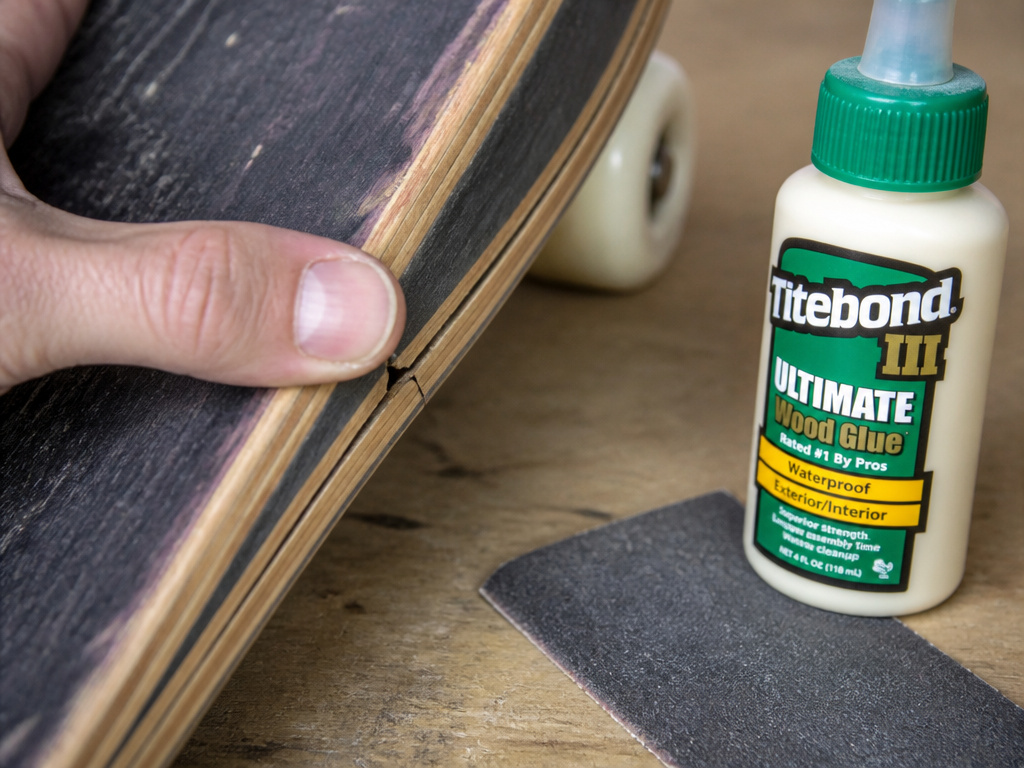
This is the final judgment call. Some damage is cosmetic; some is structural.
- Repair: A small chip on the deck’s edge can be sanded smooth and sealed with wood glue. Worn grip tape can be replaced. Rusty hardware should be replaced. Our guide on how to repair a chipped skateboard deck walks through the wood glue method.
- Replace: A deck with a visible crack running between the plies is done. Wheels that are conically worn or have deep gashes won’t roll smoothly. Bearings that grind even after cleaning and lubrication are shot. Bushings that are deformed or cracked must be swapped.
Ookkie’s maintenance page puts it clearly: “Inspect your deck regularly for chips or cracks. If any are found, discontinue use and replace.” Safety isn’t just about performance. A cracked deck can snap under load. Knowing how to tell when a skateboard is worn out is a core skill.
Frequently Asked Questions
How often should I clean my skateboard bearings?
Clean them when they become noisy or feel gritty. Clean them when they become noisy or feel gritty. The Bones Bearings manual says clean bearings are fast bearings; dirt causes them to become stiff or block. Don’t wait for them to seize.
Can I just replace parts as they break?
You can, but it’s a more expensive and less safe strategy. A worn deck loses pop, making tricks harder and increasing the chance of a bad landing. Worn wheels grip less. Seized bearings create drag. Proactive replacement based on feel and visual inspection, like checking for razor tail, is cheaper than a hospital visit.
Is it worth buying expensive bearings to make my board last longer?
For a beginner, no. The consensus from multiple guides is that the deck and wheels matter more for longevity and feel. Spend the money on a quality deck and keep standard bearings clean and lubricated.
How do I know if my trucks are too loose?
Two tests. First, stand on the board stationary and rock side-to-side. If the board feels unstable or wobbles at speed, the trucks may be too loose. Second, ride at a moderate speed and carve. If the board feels unstable, like it wants to wobble or “speed wobble,” tighten them a quarter-turn. The Skate Labs method of riding between adjustments is key.
What’s the biggest mistake people make trying to extend board life?
Over-tightening a brand-new deck. The urge to make a fresh board ultra-stable is strong. But as Decathlon DE notes, that can cause it to break on a hard landing before the wood has softened. Let the deck break in over a few sessions before you dial in your perfect tightness.
The Bottom Line
Extending your skateboard’s life comes down to a short list of defended points: keep it dry, keep it clean, adjust it slowly, and store it inside. The three-month deck guideline is a starting point, not a prison sentence. Your board will tell you when it’s tired.
The one action to take this week: after your next session, wipe down your board and trucks with a dry cloth. Then, store it in your room, not the garage. That single habit adds more life than any fancy component ever will. Everything else is fine-tuning a system you’ve already decided to protect.
