
Common Skateboarding Injuries: How to Fall Safely
This post contains affiliate links. As an Amazon Associate, we earn from qualifying purchases.
Common skateboarding injuries include fractures of the wrist and hand, ankle sprains, and head trauma like concussions. Upper limb injuries account for 55–63% of all skateboarding injuries, with fractures being a common injury type. Lower limb injuries make up 17–26% of cases, with ankle injuries accounting for 45% of those. While severe head injuries are less frequent (3.5–13.1% of all injuries), their potential consequences make helmet use mandatory.
The numbers come from large-scale studies, not guesswork. A 10-year review of over 5,000 injuries at Australian hospitals found 44% were fractures, with the wrist and hand involved in over half of those. A separate analysis of U.S. Emergency room data showed fractures and dislocations were the top diagnosis at 32.1%. This isn’t about scare tactics; it’s about knowing exactly where the risks are for common skateboarding injuries so you can pad up and skate smarter.
What follows is a breakdown of those injury stats, who gets hurt most, and the simple, proven steps that cut your risk. This section explains how your first week skating is the most dangerous, why learning to fall is your most important skill, and the specific gear that data shows actually works.
Key Takeaways
- Upper limb fractures, especially in the wrist and hand, are the single most common skateboarding injury, making wrist guards a critical piece of gear.
- 33% of those injured on skateboards are injured within the first week of skateboarding, highlighting the danger of progressing too fast before mastering balance and pushing.
- While only 3.5–13.1% of injuries are head trauma, their severity is high; a National Trauma Databank study found traumatic brain injury incidence rose to 45.5% in skaters over 16.
- Ankle injuries account for 45% of all lower limb trauma, which is why strengthening exercises and proper shoe support matter as much as pads.
- One large U.S. Study found 96.9% of injured skateboarders were not hospitalized, while an Australian study found definitive orthopaedic care was required in at least 48% of cases.
The Most Common Skateboarding Injuries: A Data Breakdown
Forget vague lists. The real picture comes from hospital admissions and emergency room datasets. The injury profile isn’t random; it’s a direct map of how people fall.
A 10-year review of 5,026 skateboarding injuries at Gold Coast public hospitals found fractures were the most common injury type (44%). Of those, 56% were in the upper limb, with injuries to the wrist and hand alone accounting for 57% of all upper limb trauma. This data, from a peer-reviewed epidemiology of skateboarding study, shows exactly where the force goes when you catch a fall.
Your instinct when falling is to put your hands out. On a skateboard, that translates to a hyperextended wrist taking the full impact of your body weight plus momentum. The result is often a fracture, not just a sprain. This is why the Consumer Product Safety Commission guide specifically calls out wrist guards as “especially important for skateboarders.” They’re not a fashion statement; they’re a mechanical brace designed to transfer that impact energy away from your small wrist bones.
Lower limbs come in second. The same Australian study noted ankle injuries made up 45% of lower limb trauma. A rolled ankle on a skateboard isn’t like tripping on a curb; you’re often moving sideways or backwards when it happens, loading the joint in ways it isn’t built for. That’s why a simple sprain can sideline you for weeks.
| Injury Type | Approximate Frequency | Most Common Location | Typical Cause |
|---|---|---|---|
| Fracture | 32–44% of all injuries | Wrist, Hand, Ankle | Falling onto an outstretched arm or rolling the ankle on an awkward landing. |
| Sprain/Strain | ~25% of all injuries | Ankle, Wrist | Sudden twisting or overextension of a joint during a fall or failed trick. |
| Head Injury | 3.5–13.1% of all injuries | Concussion, Traumatic Brain Injury (TBI) | Direct impact of the head against the ground or an object. |
Where this goes sideways: Assuming a “stinger” in your wrist is just a tweak. That sharp pain that fades after a minute is often a hairline fracture warning. If wrist pain persists for more than a couple of days, stop skating and get it checked. A small fracture ignored can become a complicated break that needs a cast for months.
The Beginner’s Week: Why So Many Get Hurt Early
A 1996 Sports Medicine review noted that 33% of those injured on skateboards are injured within the first week of skateboarding. It’s not bad luck. It’s a predictable combination of unstable balance, untrained muscles, and the very human urge to try something cool before nailing the basics.
Your body doesn’t know how to fall yet. Your board control is shaky. This is when you’re most likely to step off wrong and roll an ankle, or topple sideways and slam a hip onto concrete. The falls are often smaller and slower than an experienced skater’s high-speed bail, but your reaction is unrefined and injuries happen.
The locale data backs this up. A large U.S. Study found the most common locale of injury was home (37.3%) or in the street and/or highway (29.3%). Beginners often start on driveways, sidewalks, and quiet streets, exactly where cracks, pebbles, and slight slopes become major hazards when you’re just learning to push. This is also where the skateboarding injury statistics show a high rate of fractures for younger skaters.
What most people get wrong: Thinking protective gear is only for the skatepark. Your first sessions on flat ground are the most important time to wear your helmet, wrist guards, and knee pads. A slammed knee on your driveway hurts just as much as one at the park, and a surprise crack in the sidewalk can send you flying backwards onto your head. Gear up from push one.
Head Injuries: Less Common, More Severe
Head trauma accounts for an estimated 3.5–13.1% of all skateboarding injuries, according to a detailed skateboarding injury data review. While that’s a smaller percentage than fractures, the stakes are different. A National Trauma Databank analysis found the incidence of traumatic brain injury varied by age: 24.1% in kids under 10, 32.6% in ages 10-16, and 45.5% in skaters over 16.
The reason is simple physics. Older, heavier skaters fall from greater heights (off ramps, stairs) and with more speed. The ground doesn’t get softer. The National Trauma Databank analysis confirmed that helmets and use of a skateboard park were significant factors protecting against head injury. The park environment is designed with smoother surfaces and fewer fixed obstacles like curbs and signposts.
Common mistake: Wearing a loose helmet tilted back on your head. The CPSC states a helmet should fit snugly with the chin strap fastened and sit level on your head, not tilted back. A helmet that shifts on impact is barely better than no helmet at all.
The data on outcomes is sobering but important. In the Australian cohort, 86% of head injuries were managed in the emergency department, but 11% required specialist neurosurgical care. This is why knowing the signs of a concussion is crucial. Dizziness, nausea, confusion, or a headache after a head impact means you’re done for the day, and you need to get checked out.
How to Fall (and Why It’s a Skill)
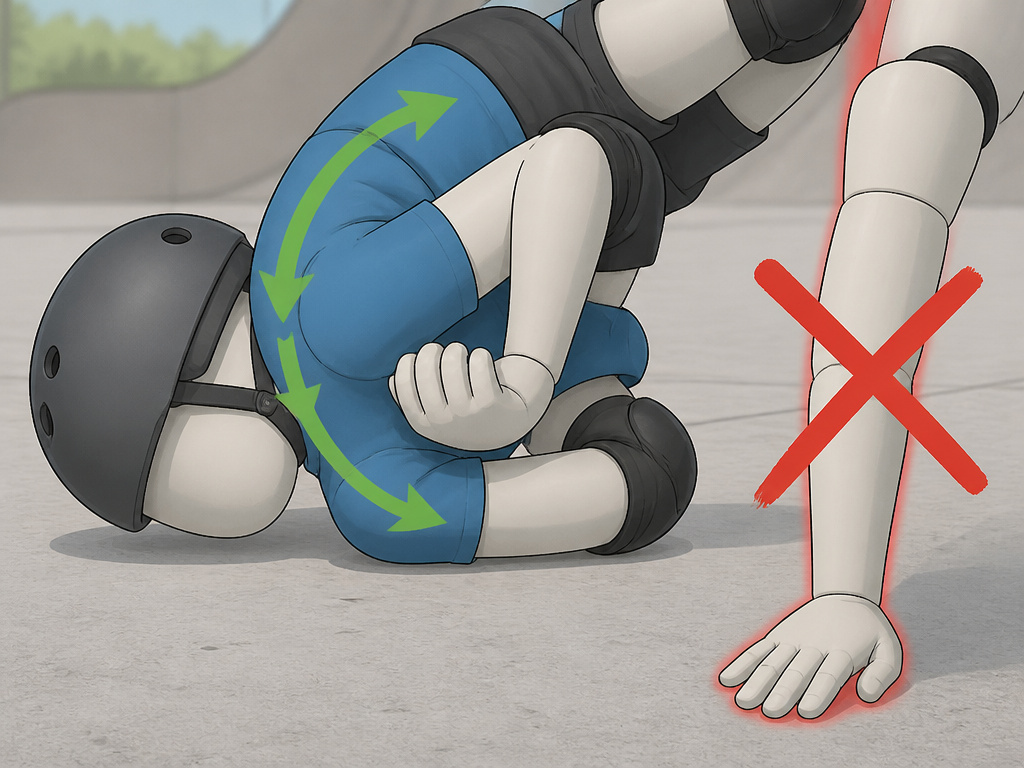
Falling is inevitable. Falling well is a technique you can practice. It reduces your chance of serious injury more than any other single factor besides wearing a helmet.
The goal is to avoid absorbing the full force with one joint. Instead of sticking a straight arm out, you want to tuck and roll, distributing the impact across the meatier parts of your body, your shoulder, back, and thigh. For forward falls, practice tucking your chin to your chest, making a rounded back, and letting the momentum carry you into a roll. It feels counterintuitive at first, but it works.
Three falling rules to drill into your muscle memory:
- Go limp. Tense muscles break more easily. Try to relax as you fall.
- Tuck your limbs. Bring your arms and legs in close to avoid awkward, joint-locking extensions.
- Roll with the momentum. Let the energy dissipate across a larger area of your body instead of stopping it dead on a wrist or knee.
This skill is the foundation of all safe falling techniques. Start practicing on grass. Seriously. Find a soft patch, put on your gear, and practice stepping off your board and rolling. It feels silly until the day it saves you from a broken collarbone.
Protective Gear: What the Data Says Works
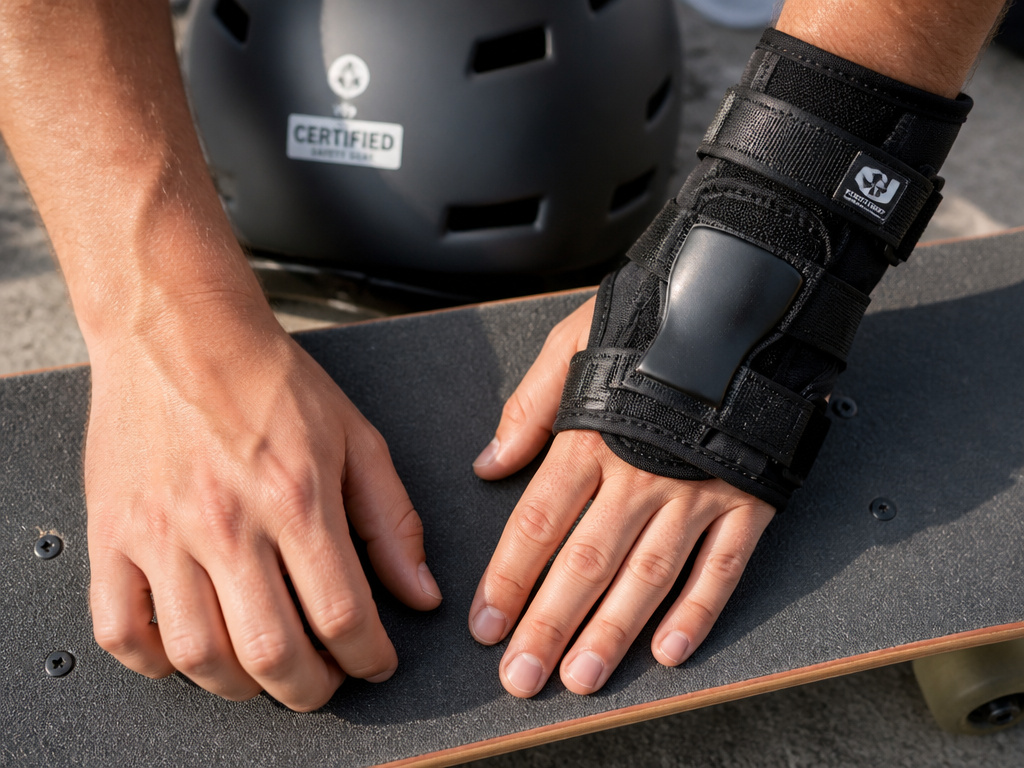
The research is unambiguous: gear reduces injury severity. The debate isn’t about “if,” but “what” and “how” to wear it properly.
- Helmets: Must be certified for skateboarding (look for CPSC or ASTM F1492 labels). A bike helmet isn’t designed for the multi-impact falls of skateboarding. A skate helmet certified for skateboarding has a hard outer shell and dense foam liner to handle repeated knocks.
- Wrist Guards: These are your first line of defense against the most common serious injury. A wrist guard has a rigid splint on the palm side to prevent hyperextension. Brands like Pro-Tec and Triple Eight make models that balance protection with enough flexibility to still grip your board.
- Knee & Elbow Pads: The key here is fit and coverage. They shouldn’t slide around. For knee pads, a sleeve-style design with a hard cap stays in place better than strap-only models when you slide out.
The best protective gear isn’t the most expensive; it’s the gear you’ll actually wear every session. If your pads are uncomfortable or a hassle to put on, you’ll skip them. Find a set that fits well and becomes part of your routine, like putting on your shoes.
Recovery and Returning to Skating
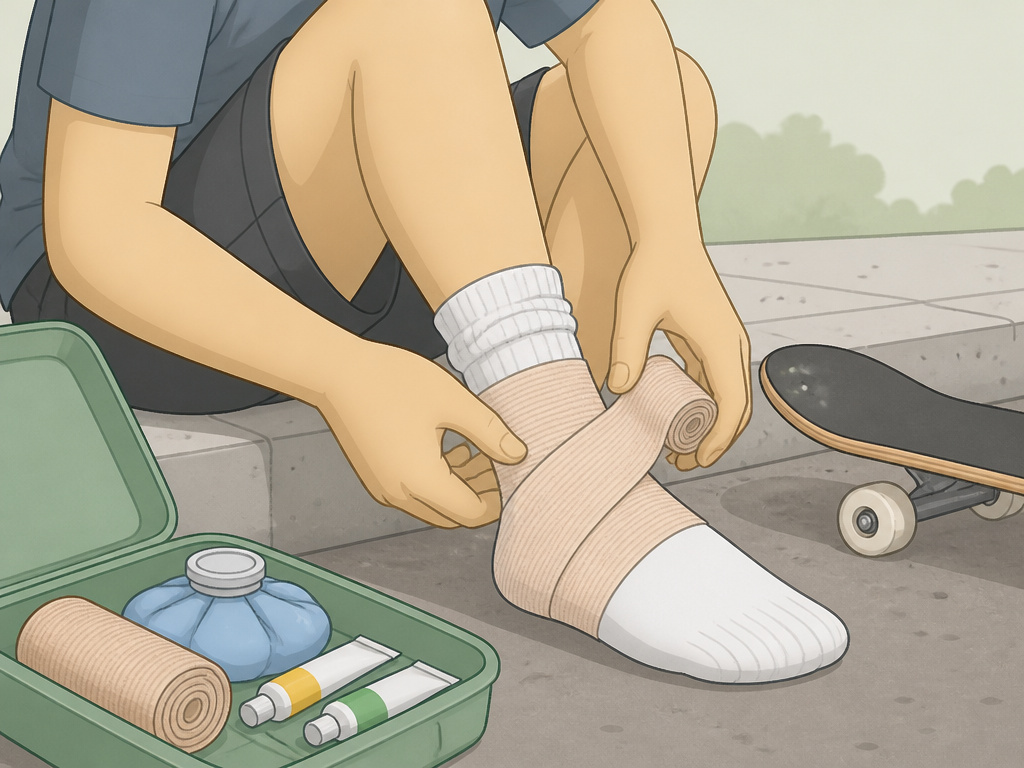
Here’s the part most guides skip: what to do after you’re hurt. Ignoring a minor injury is how you create a major, chronic one.
For sprains (ankle, wrist): Follow RICE. Rest, Ice, Compression, Elevation, for the first 48-72 hours. The compression part is key; an elastic bandage helps limit swelling, which speeds healing. Start gentle mobility exercises as pain allows. If you can’t put weight on a sprained ankle after three days, see a doctor.
For fractures: This is mandatory. You need a professional diagnosis and a cast or splint. Follow your doctor’s or physiotherapist’s wrist fracture recovery plan to the letter. Returning too early can re-break the bone or cause permanent stiffness.
For road rash and abrasions: The priority is preventing infection. Clean the wound thoroughly, apply an antibiotic ointment, and cover it with a non-stick bandage. Our guide on how to treat road rash walks through the steps to avoid scarring and speed healing.
The timeline for return varies wildly. A minor sprain might mean a week off. A wrist fracture could bench you for two months. The rule is: don’t skate until you have full, pain-free range of motion and strength in the injured joint. Coming back weak is asking for a re-injury.
Can you break your teeth skateboarding?
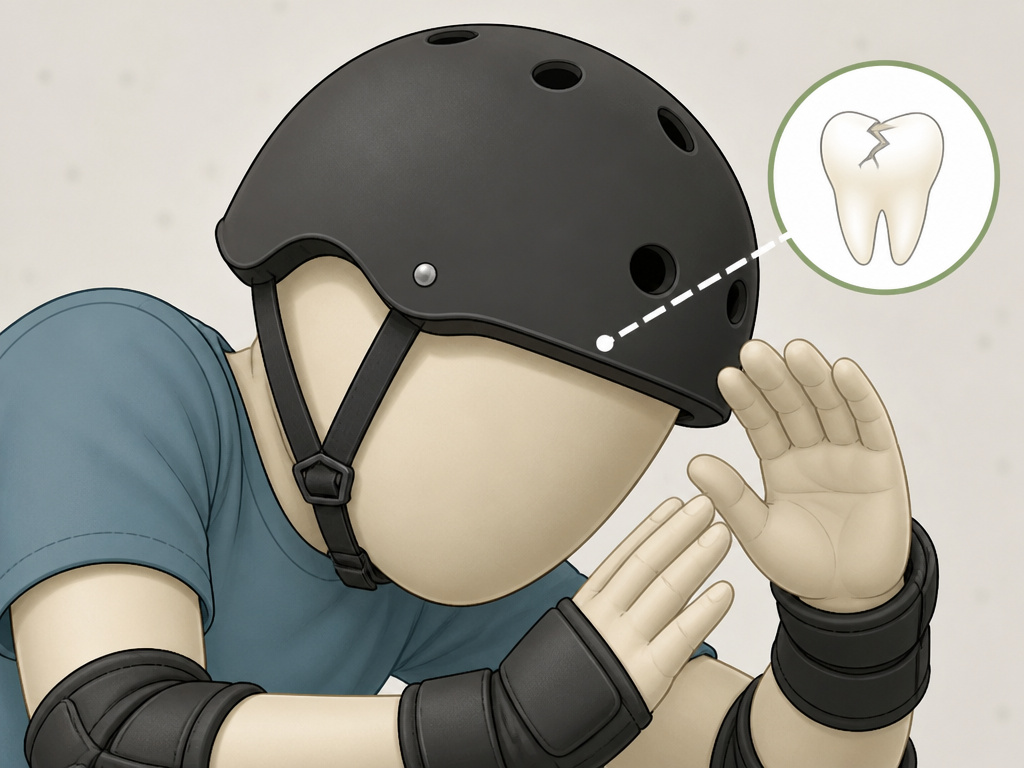
While head injuries account for a smaller percentage of overall trauma, a fall that impacts your face can easily damage teeth. The force from hitting pavement or a skateboard deck can chip, crack, or knock out teeth entirely. Wearing a properly fitted skateboarding helmet is the primary defense, as it covers the skull and can help absorb facial impacts. Beyond a helmet, being mindful of your posture during a fall can help. Try to tuck your chin and avoid leading with your face. If a dental injury does occur, seek immediate care from a dentist or emergency room.
Frequently Asked Questions
What is the most common injury in skateboarding?
Fractures, particularly of the wrist and hand, are the single most common skateboarding injury. Multiple large studies place fractures at the top of the list, accounting for 32% to 44% of all injuries treated in emergency departments. The mechanism is almost always a fall onto an outstretched hand.
What percentage of skaters break a bone?
Percentages vary by study; a decade-long review of over 5,000 injuries found 44% were fractures. A separate U.S. Analysis of 1.2 million emergency visits found fractures and dislocations accounted for 32.1% of diagnoses. While not every skater will break a bone, the data shows it’s a frequent outcome of falls.
How can I prevent skateboarding injuries?
The most effective prevention is a combination of proper protective gear, skill development, and environmental awareness. Always wear a certified helmet and wrist guards. Learn fundamental riding and falling skills before attempting tricks. Skate in smooth, designated areas like parks, and avoid traffic and rough terrain. Incorporating injury prevention exercises to strengthen wrists, ankles, and core stability also significantly reduces risk.
When should I see a doctor for a skateboarding injury?
Seek medical attention immediately for any head impact followed by dizziness, nausea, or confusion; for an injury that causes visible deformity or an inability to move a limb; or for a deep laceration that won’t stop bleeding. For less severe injuries, see a doctor if pain and swelling do not start to improve within 2-3 days, or if you cannot bear weight on a sprained joint after 72 hours.
Are beginners or advanced skaters more likely to get hurt?
They get hurt differently. Beginners have a very high rate of injury in their first week (about one-third of all injuries) due to poor balance and unfamiliarity with falling. Their injuries are often fractures and sprains from low-speed falls. Advanced skaters face fewer frequent injuries, but when they occur, they tend to be more severe, high-energy impacts from bigger tricks leading to concussions, complex fractures, or major ligament tears.
What should I keep in a skateboarding first aid kit?
Basic kit should address the most common injuries: antiseptic wipes and antibiotic ointment for treating road rash, elastic bandages for compression of sprains, instant cold packs, sterile gauze pads, medical tape, and blister pads. Having these essential first aid supplies on hand allows you to manage minor issues immediately and prevent complications.
The Bottom Line
Skateboarding injuries follow a predictable pattern because falls follow physics. Your wrists, ankles, and head take the hit. The data gives us a clear playbook: pad those specific points, learn to fall correctly, and respect the learning curve.
If you take away one thing, let it be this: end your session when your form gets sloppy. Most injuries happen when you’re tired, frustrated, and trying “one more try” on a trick that’s already beating you. Fatigue is a bigger risk factor than any crack in the pavement.
Keep a simple skateboarding first aid kit in your car or bag. Know the basic recovery steps for sprains and road rash. And finally, understand that recovering from a fall is part of the process, sometimes the board wins. Getting back on it safely, with healed-up joints and a clear head, is what keeps you rolling for years.
