
How to Treat Road Rash From Skateboarding: Step-by-Step
This post contains affiliate links. As an Amazon Associate, we earn from qualifying purchases.
To treat road rash from skateboarding, you need to clean the wound with mild soap and water, apply a thin layer of antibiotic ointment like Bacitracin, and cover it with a non-stick bandage. Change the dressing daily, manage pain with over-the-counter medication, and watch for signs of infection. Most road rash heals within two weeks with proper care.
That’s the medical consensus. But if you’ve ever sat at the edge of a skatepark with stinging knees, you know the real questions are messier. Do you pick out that tiny piece of gravel, or leave it? Should you use soap or just rinse it? A key part of how to treat road rash from skateboarding is proper wound cleaning. And how do you keep skating when your elbow is wrapped up like a mummy?
This guide walks through the step-by-step process backed by hospital protocols, tackles the debates skaters actually have about how to treat road rash from skateboarding, and shows you how to manage healing while staying on your board.
Key Takeaways
- Clean wounds gently, using mild soap and water or just water, as sources recommend different approaches. Aggressive scrubbing reopens the wound and delays healing.
- Apply a thin layer of ointment to keep the wound moist and prevent infection; protocols often recommend Bacitracin, while petroleum jelly is an acceptable alternative.
- Cover the wound with a non-stick bandage like Cuticerin or Xeroform gauze to protect it, changing it at least once a day.
- Seek medical help for large or deep wounds, especially if they contain a lot of debris, show signs of infection, or, as the Cleveland Clinic advises, if they cover an area larger than your hand.
- Manage stiffness and itching with moisturizer like Aquaphor or Eucerin once the wound has closed over.
Understanding Road Rash Severity
Not all scrapes are created equal. Road rash is a friction burn, and hospitals classify it by depth just like other burns. That classification decides everything from your pain level to your healing timeline.
A superficial abrasion affects only the top layer of skin (epidermis). A partial-thickness abrasion goes into the second layer (dermis), and a full-thickness abrasion damages the fat layer underneath. The deeper it goes, the longer it takes to heal and the higher the risk of scarring.
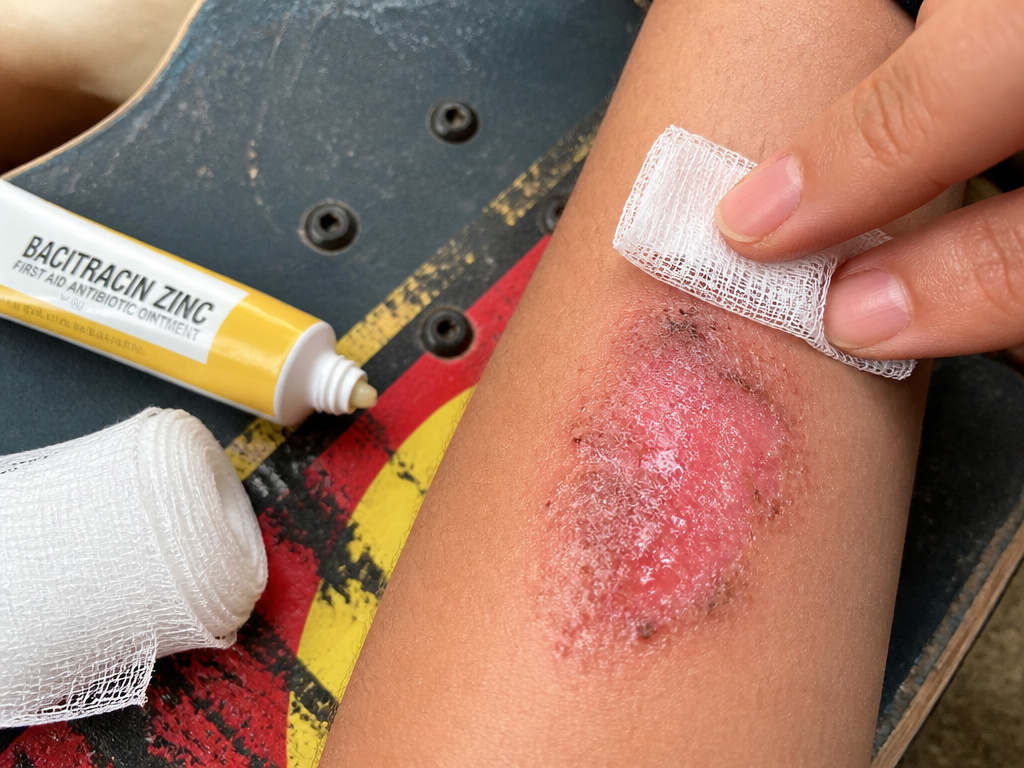
A quick visual check tells you a lot. Superficial road rash is red, painful, and might ooze a little clear fluid. Partial-thickness wounds often look raw, dark red, and might form small blisters. If you see yellowish fat or tissue that looks leathery and pale, that’s a full-thickness injury. That last one always needs a doctor.
Here’s a simple rule from the Cleveland Clinic: if the abrasion is larger than the area you can cover with your hand, it needs professional medical attention. For skaters, that means most knee and elbow scrapes are probably okay to treat at home, but a long scrape down your thigh or forearm might warrant a trip to urgent care.
The Step-by-Step Wound Care Process
Follow this sequence exactly. Skipping steps or changing the order is how small scrapes turn into big problems.
Step 1: Stop the Bleeding and Assess
First, get to a clean area and look at the wound. Most road rash oozes rather than pours blood. Apply gentle pressure with a clean cloth or gauze for a few minutes. This is also your moment to decide: can you handle this, or do you need a doctor? If the wound is deep, gaping, or has debris you can’t easily remove, pack up and head to a clinic.
Step 2: Initial Cleaning – The Soap vs. Water Debate
This is where medical sources disagree, and your choice matters.
Common mistake: Using hydrogen peroxide or rubbing alcohol. These damage healthy skin cells and can actually slow down healing. Stick to mild soap and water or just water.
My take? For typical skate park grit, lukewarm water and a gentle rinse is fine. If the wound is visibly dirty, think pavement sludge and grass, a drop of Dial soap on your clean hands is the move. The key is gentle. You’re rinsing, not scouring.
Step 3: Debris Removal: To Pick or Not to Pick?
You see a black speck of asphalt in your skin. Your instinct is to pick it out.
The Cleveland Clinic gives clear, two-part guidance: “Use tweezers to remove any visible debris like pebbles.” But it follows with a crucial warning: “If your wound contains a lot of debris like multiple or large pieces of gravel or glass, visit the emergency room and don’t try to remove the debris on your own.”
| Situation | Action | Why |
|---|---|---|
| A few small, surface-level grit pieces | Clean tweezers, gentle removal | Prevents “traumatic tattooing” (permanent staining under the skin). |
| Many embedded pieces or large debris | Leave it, go to ER/Urgent Care | DIY removal can push debris deeper, cause more damage, and increase infection risk. |
Sterilize your tweezers with rubbing alcohol first. If a piece doesn’t come out with a light tug, leave it. A doctor can numb the area and remove it cleanly.
Step 4: Apply Antibiotic Ointment
This step keeps the wound moist, which is critical for faster healing with less scarring. A dry wound forms a thick scab, which cracks and reopens every time you bend your knee or elbow.
The go-to product in clinical protocols is Bacitracin. UW Health and Vanderbilt both specify it. Apply a thin layer, you’re sealing the surface, not frosting a cake. If you’re sensitive to antibiotic ointments, a thin layer of petroleum jelly (like Vaseline) works as a moisture barrier, as noted by the Mayo Clinic.
Step 5: Dress the Wound
Covering the wound protects it from bacteria and your environment (like your jeans rubbing against it). The type of dressing depends on the wound.
- For most road rash: Use a non-stick gauze like Cuticerin (UW Health) or Xeroform (Vanderbilt). These won’t stick to the wound when you change them.
- For deeper wounds with a cavity: Vanderbilt’s protocol specifies a “wet-to-dry dressing” using saline-soaked Kerlix gauze covered by an ABD pad. This is advanced care; if your wound is this deep, you should already be under a doctor’s guidance.
Secure the dressing with medical tape or a wrap. Don’t make it so tight that it cuts off circulation.
Daily Dressing Change and Pain Management
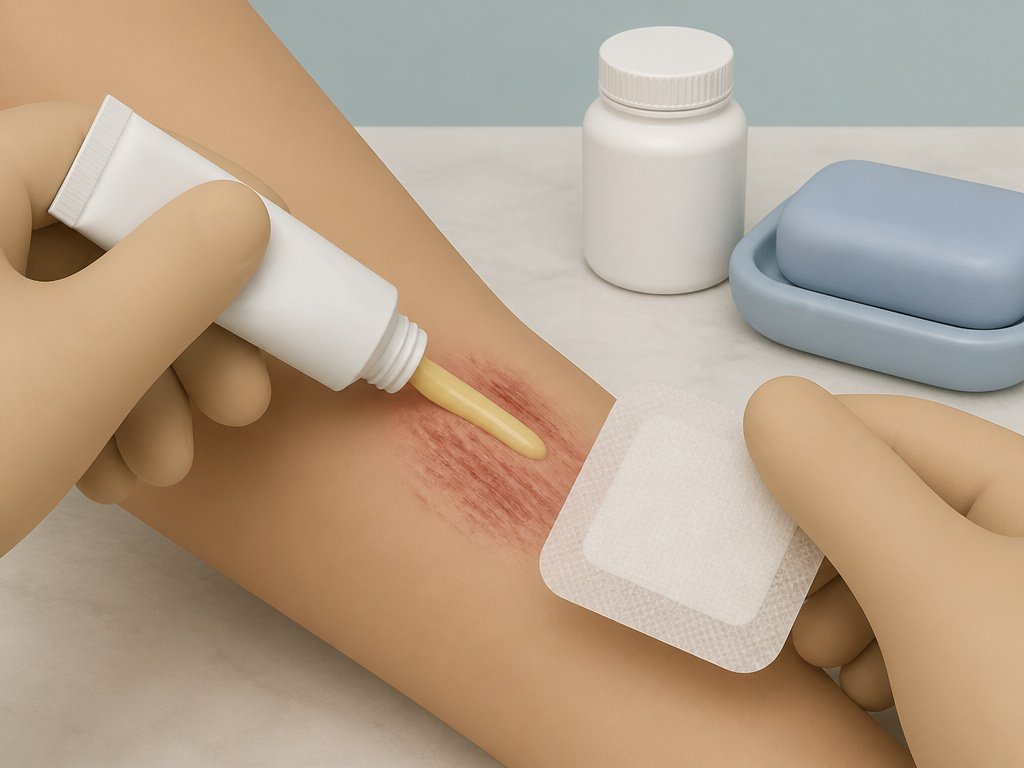
Your job isn’t done after the first bandage goes on. Daily care is what separates a two-week heal from a two-month hassle.
The Daily Routine
- Wash your hands.
- Remove the old bandage. If it’s stuck, don’t rip it. Soak it off in the shower or use a saltwater solution (1 teaspoon of salt per gallon of water) to loosen it.
- Gently wash the wound once a day with Dial soap and water, as per UW Health’s instructions. Rinse thoroughly.
- Pat dry the surrounding skin.
- Reapply a thin layer of Bacitracin and a fresh non-stick bandage.
Where this goes sideways: Skipping daily changes. A damp, unchanged bandage becomes a breeding ground for bacteria. Infection can set in quickly, turning a simple scrape into a doctor’s visit.
Managing Pain and Discomfort
Road rash hurts. It’s a raw nerve ending exposed to air.
Over-the-counter pain relievers can help manage discomfort. UW Health suggests acetaminophen (Tylenol) or ibuprofen (Advil). Important note: UW Health advises not to take ibuprofen if you have any broken bones or are having surgery soon. If you took a hard fall and suspect a fracture, stick with acetaminophen.
Take pain medicine about an hour before you clean the wound. That takes the edge off the sting of soap and water.
As it heals, the sharp pain turns into stiffness and itching. That’s normal. Resist the urge to scratch. Once the skin has closed over, moisturize the area with a cream like Aquaphor, Eucerin, or Nivea to relieve the tight, itchy feeling.
When to See a Doctor
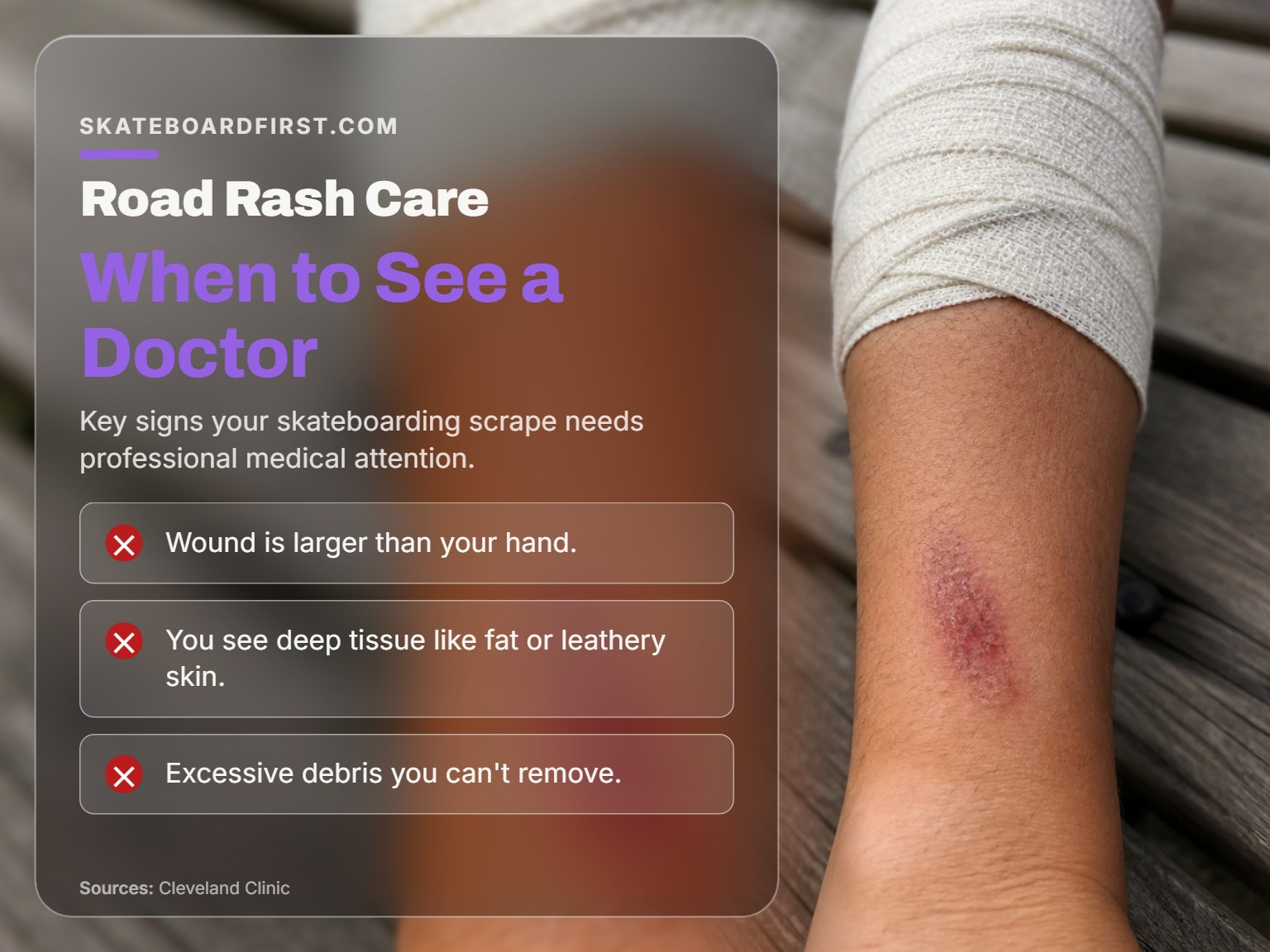
Knowing when to handle it yourself and when to get help is a crucial skill. Here are the hard lines from medical sources.
| Sign | What it means | Action |
|---|---|---|
| Size > Your Hand | Larger wounds lose more fluid, heal slower, scar more. | Seek care at an urgent care or ER. |
| Deep Tissue Visible | You see yellowish fat or leathery, pale skin (full-thickness burn). | Go to the ER. These always need professional care. |
| Excessive Debris | Many pieces of gravel/glass, or debris you can’t remove. | Go to the ER. Don’t try to remove it yourself. |
| No Healing in 2 Days | The wound isn’t starting to close up or looks worse. | Contact your doctor or go to urgent care. |
| Signs of Infection | Increased pain, redness spreading, warmth, pus, fever. | See a doctor immediately. You may need antibiotics. |
The healing timeline for how to treat road rash from skateboarding is a major point of disagreement among sources. The Cleveland Clinic states superficial burns heal in “a couple of days” and that most small abrasions (under 2 inches) heal within a week, while UW Health says most road rash heals “within 2 weeks.”
Trust your eyes. If your scrape isn’t making obvious progress toward closing up after several days, get a professional opinion. It’s better to have a doctor tell you it’s fine than to let an infection spread.
Managing Road Rash While Still Skating
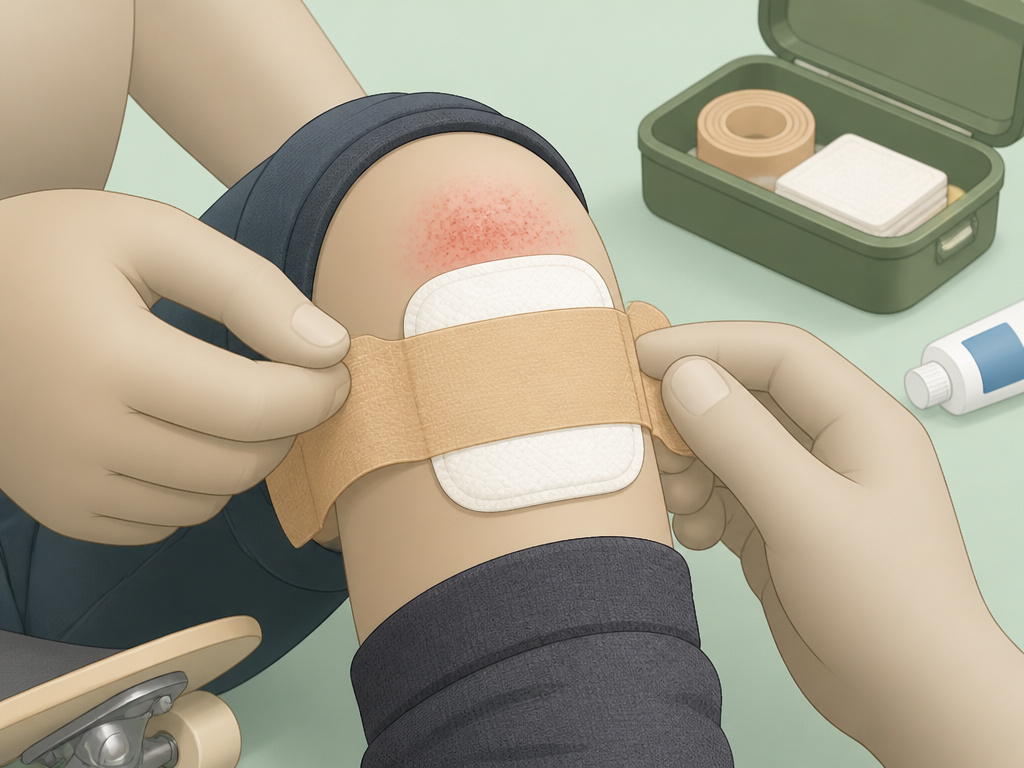
You’re not going to stop skating for two weeks because of a scraped knee. Here’s how to protect healing wounds during sessions.
First, make sure you have a stocked first aid kit. Before you skate, put on a fresh bandage. For areas like knees and elbows, consider using a padded sleeve or a larger bandage secured with a sweat-resistant adhesive tape. The goal is to absorb impact and prevent the bandage from sliding off.
If a scab does form, protect it. A hard, dry scab will crack open if you fall on it again. Keeping the wound moist with ointment and covered is actually the best protection for active skaters. It maintains flexibility in the new skin.
Listen to your body. If a particular trick or movement is pulling painfully at the healing skin, give it a rest. Sometimes the best fall recovery is a day off the board to let the skin knit back together.
Preventing Scarring and Long-Term Care
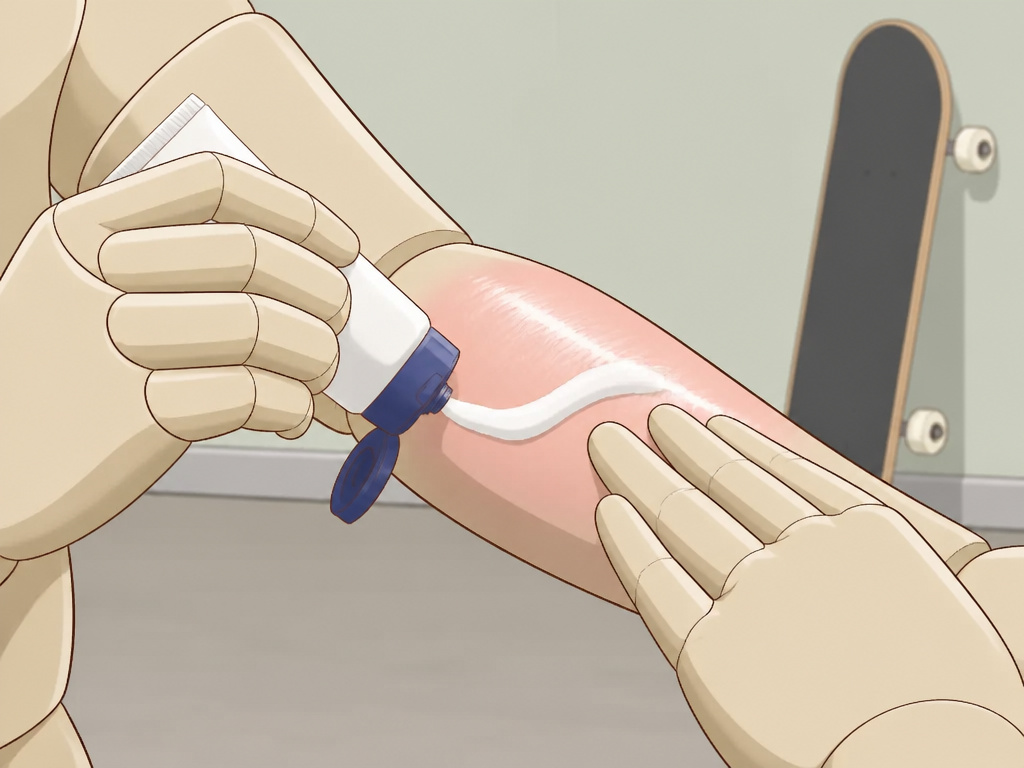
The final phase of road rash healing is dealing with the new skin. This pink, shiny skin is fragile and prone to scarring if not cared for.
Once the wound is fully closed (no open areas or scabs), your job shifts from preventing infection to preventing scars.
- Moisturize aggressively. Apply a thick cream like Aquaphor or Eucerin multiple times a day. This keeps the skin supple and reduces the tight, shiny appearance of scars.
- Protect from the sun. New skin burns easily, and UV exposure can darken scars permanently. Keep it covered or use a strong sunscreen.
- Massage gently. Once it’s not tender, gentle massage can improve blood flow and break down scar tissue.
Most skateboarding common injuries leave a mark, but a faint one is the goal. The techniques above, keeping the wound moist from day one, protecting it from reinjury, and moisturizing after, give you the best shot at a minimal scar.
How Long Does Road Rash Take to Heal?
Healing time depends entirely on how deep your scrape is. Most typical cases of road rash should heal within two weeks with good care. If a wound is larger or deeper, it could take two weeks or more. Sources disagree on when to seek care based on healing time: the Cleveland Clinic advises seeking care if a burn doesn’t seem to be healing after a couple of days of self-care, while UW Health suggests a wound that takes longer than two weeks to heal should be looked at by a provider.
Should I Let Road Rash Dry Out or Keep It Moist?
You should keep it moist. Letting a wound dry and scab slows healing and increases scarring. After gently cleaning the area, apply a thin layer of antibiotic ointment or petroleum jelly. Then cover it with a non-stick gauze pad. This keeps the wound bed protected and creates a better environment for new skin to grow. Change the bandage at least once a day, or whenever it gets wet or dirty. For deeper wounds with tissue loss, a specific wet-to-dry dressing technique might be recommended.
Frequently Asked Questions
What is the fastest way to heal a road rash?
The fastest healing comes from keeping the wound clean, moist, and protected. Follow the step-by-step cleaning process, apply Bacitracin ointment to prevent scabbing, and cover it with a non-stick bandage. Changing the dressing daily prevents infection, which is the biggest delay. Avoiding activities that re-open the wound is also key.
Should you keep road rash covered or let it dry out?
Keep it covered. Letting it dry out creates a thick scab, which cracks every time you move, reopening the wound and delaying healing. Medical protocols from UW Health and Vanderbilt consistently recommend covering wounds with ointment and a bandage. A moist environment allows skin cells to migrate and close the wound faster.
Do I put Neosporin on road rash?
You can, but Bacitracin is the ointment specifically named in hospital protocols for abrasions. Neosporin contains neomycin, which a small percentage of people are allergic to, causing contact dermatitis. For a simple road rash, plain Bacitracin or even petroleum jelly is often sufficient and carries less risk of a reaction.
How can I tell if my road rash is infected?
Watch for these signs: increasing pain after the first day, redness that spreads out from the wound edges, warmth to the touch, yellow or green pus, or a fever. If you see any of these, it’s time to see a doctor. Infection won’t heal on its own and requires medical treatment.
Can I skate with road rash?
Yes, but you need to protect it. Apply a fresh, secure bandage before your session. Consider extra padding over the wound. Be mindful that falling on the same spot will set your healing back by days or even weeks. If the wound is deep or painful to move, take a break. Learning how to bail safely can help you avoid landing on existing injuries.
Before You Go
Treating road rash isn’t about magic potions. It’s about consistent, simple care backed by evidence. Clean it gently, keep it moist with Bacitracin, cover it with a non-stick bandage, and change that bandage every single day. Watch for the warning signs that mean you need a pro, and don’t be a hero about pulling out deeply embedded gravel.
The real trick is accepting that falls are part of the deal. How you handle the aftermath, with a well-stocked first aid kit and a calm routine, determines how fast you get back to rolling. Keep a tube of ointment in your bag, and don’t forget to protect your head every time. The board will be there tomorrow.
