
Vert Skateboarding History: From Pools to Pro Ramps
This post contains affiliate links. As an Amazon Associate, we earn from qualifying purchases.
Vert skateboarding is the discipline of riding on near-vertical surfaces to perform aerial tricks, born from empty California swimming pools in the mid-1970s and propelled by a historic drought, polyurethane wheels, and the invention of the no-hands aerial (ollie). Its history is a story of geography, technology, and rule-breaking athleticism, evolving from backyard pools to engineered competition ramps and a distinct, non-Olympic competitive scene.
That specificity matters because it means vert wasn’t an inevitable sport. It was a perfect cultural storm that could only have happened in one place at one time. A drought left thousands of curved pools empty. New wheels made them skateable. A surf culture saw them as a new frontier. This unique sequence defines early vert skateboarding history. Miss any one of those pieces, and vert doesn’t exist.
What follows: the environmental trigger that created the playground, the engineering failures that built the first real ramp, the trick that changed everything, and how today’s competitions are reinventing the format after forty years of stagnation.
Key Takeaways
- Vert skating was born in empty 1970s California pools because a historic drought and a state water-reduction order left them dry and available.
- The ollie, invented in 1976, was the foundational trick that allowed skaters to leave the ramp surface and perform aerial maneuvers, defining modern vert.
- Modern pro contests use a 3/5/3 finals format (3 runs + 5 trick attempts) designed by skaters to reward both consistency and high-stakes innovation.
What Is Vert Skateboarding?
Vert, short for vertical, is skateboarding on a ramp or wall that transitions to a completely vertical section. The goal is to use the speed gained from dropping in and pumping across the flat bottom to launch into the air above the coping (the metal pipe at the top), perform tricks, and land back on the transition to continue the run.
The official World Skate vert competition rules state one non-negotiable equipment rule: “The skateboard cannot be attached to a skater’s feet by any physical means.” Every trick, from a simple air to a 900, relies solely on grip tape, foot placement, and physics.
This separates it from street skating, which uses urban obstacles like stairs and rails, and from park skating, which combines bowls and ramps but rarely features true vertical walls. The sensory experience is distinct: the roar of urethane wheels accelerating down the transition, the hollow thump of the deck hitting the coping on a grind, and the sudden silence of a skater hanging in the air at the peak of a trick. It’s loud, physical, and demands a specific kind of courage, the kind where a mistake means falling from height onto a hard surface.
The Perfect Storm: 1970s Southern California
Vert didn’t invent itself. It needed a specific set of conditions, all of which converged in Southern California in the mid-1970s. You needed a massive inventory of skateable terrain, the right technology to ride it, and a community willing to break into backyards.
First, the terrain. Post-war suburban expansion in California included a lot of swimming pools. Not just any pools, kidney-shaped pools with curved walls. Then came the drought. A historic drought in the mid-1970s left many pools empty. A state water-reduction order contributed to pools being left dry. The result was a landscape dotted with empty, smooth-walled concrete bowls.
Second, the tech. Skateboards in the early 70s were crude. That changed in 1972 with Frank Nasworthy’s introduction of the urethane wheel, which provided grip and speed clay wheels couldn’t match. In 1973, Ron Bennett debuted the first professional “high performance” trucks, offering better maneuverability. Suddenly, skaters had the control needed to carve the steep walls of a pool.
Third, the culture. The surf community in Los Angeles was already adept at carving waves. When they saw empty pools, they saw a new kind of wave, a stationary, concrete one. Teams like the Z-Boys (the Zephyr skate team) from Santa Monica began seeking out and skating these pools, bringing an aggressive, surf-inspired style to the concrete. This pioneering pool riding era was the raw, foundational act of vert.
The Z-Boys and the Birth of an Attitude
While many were skating pools, the Z-Boys defined the attitude that would become synonymous with vert’s early days. This team, including Stacy Peralta, Tony Alva, and Jay Adams, didn’t just ride pools; they attacked them with a low, aggressive style borrowed from top surfers.
Their moment on the wider stage was the 1975 Del Mar National Championships, a contest that drew up to 500 competitors. While the main event was won by freestyle skater Russ Howell, the Z-Boys’ radical approach, slashing the pool walls with speed and power, stole the show. Photojournalist Craig Stecyk documented them for Skateboarder Magazine, and his “Dogtown” articles immortalized the team. They weren’t just skating; they were rebelling against the upright, gymnastic style of freestyle that dominated contests. This shift in focus, from flat ground to vertical walls, is the pivot point in our overall skateboarding history.
Where this goes sideways: Treating this era as just a list of names. The Z-Boys mattered because they proved that the most exciting thing happening on a skateboard wasn’t a planned routine on flat ground, it was the spontaneous, dangerous, and stylish act of riding a vertical wall. That ethos still defines vert today.
The Trick That Changed Everything: The Ollie
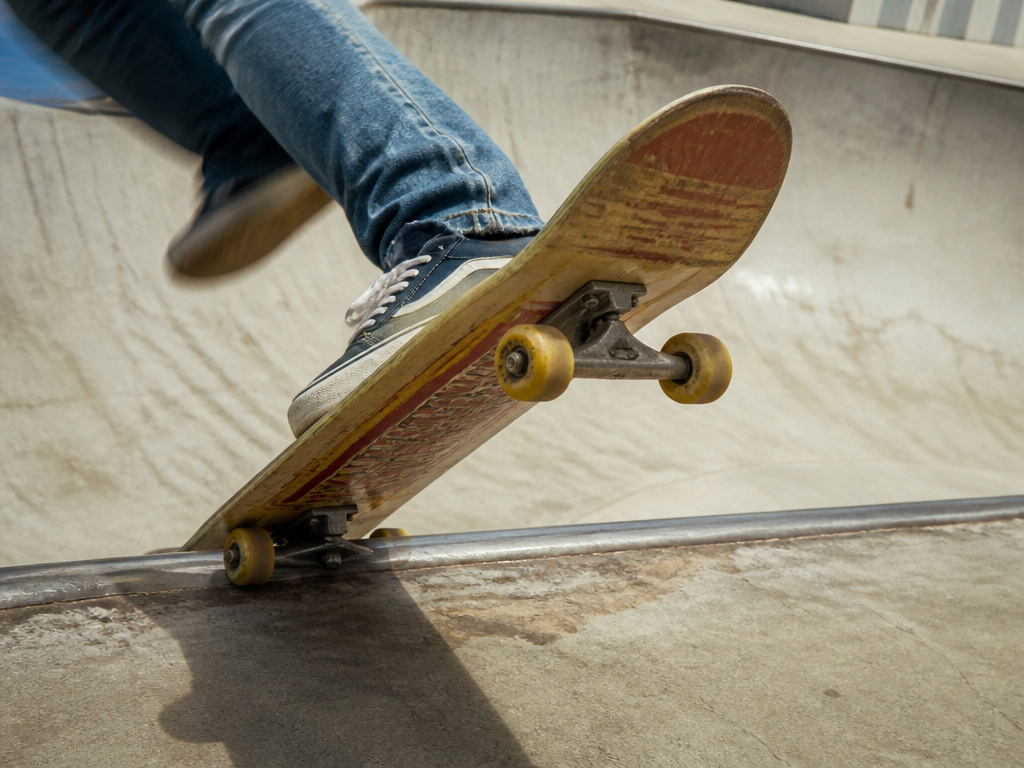
You could have pools, wheels, and attitude, but to truly “get vertical,” you needed a way to leave the wall entirely. That arrived in 1976, courtesy of Alan “Ollie” Gelfand in Florida. While skating a bank, he figured out how to slap the tail of his board down and jump, making the board pop into the air with him without using his hands.
This no-hands aerial, named the ollie, was the final piece of the technical puzzle. It migrated to California and was adapted to vert ramps. Skaters like George Orton and Tony Alva were doing grabbed aerials around the same time, but the ollie’s purity, board and body moving as one unit, opened the door to every flip, spin, and variation that followed. It turned vert from a contest of who could carve the highest to a contest of who could do the most insane thing in the air.
The progression was public, documented, and fast.
The First Functional Vert Ramp (1979)
Empty pools were great, but they were scattered, illegal to access, and variable in shape. To practice consistently and push progression, skaters needed a dedicated structure. The half-pipe was developed as a dedicated structure for vertical skating.
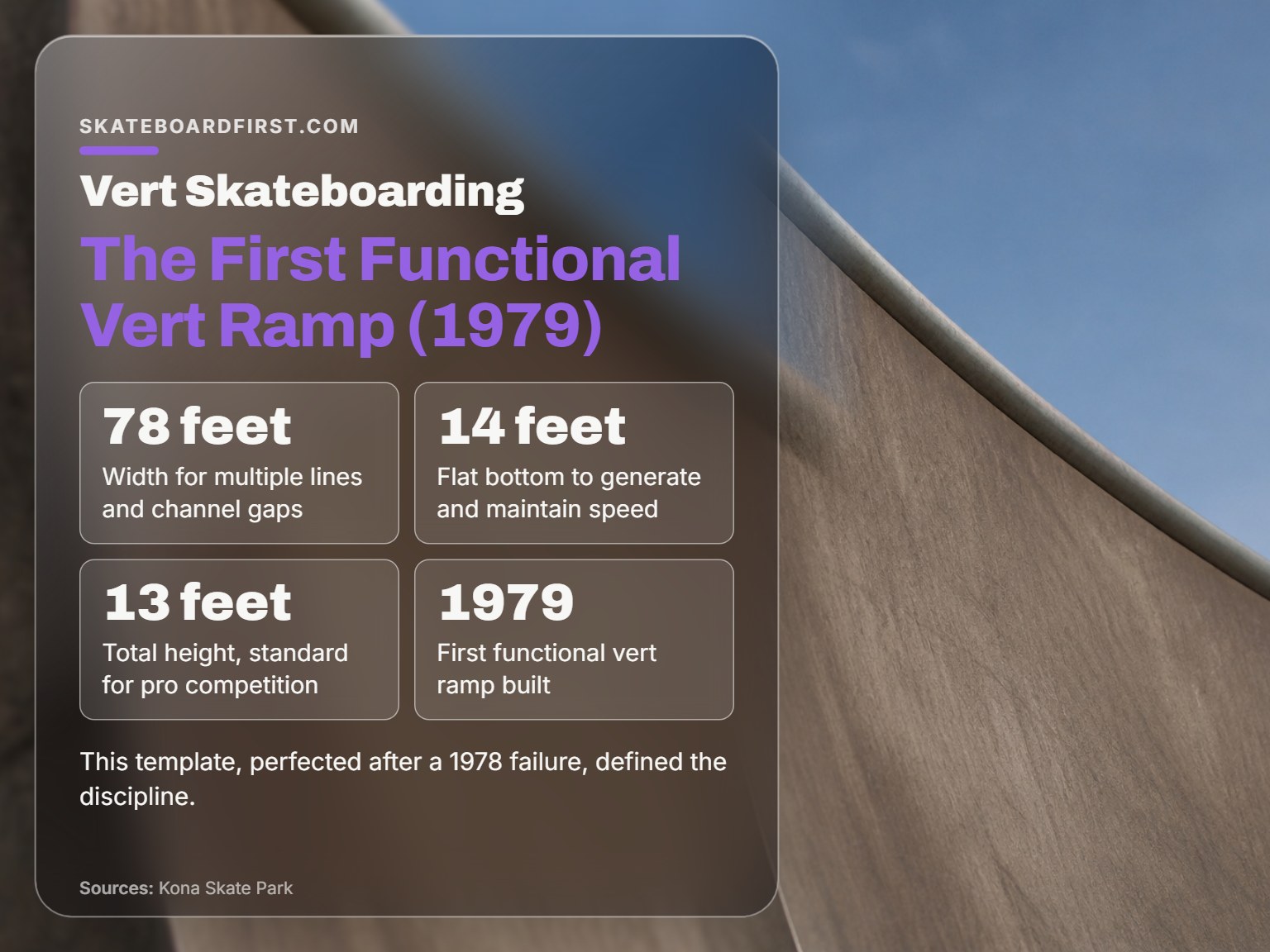
The vert skateboarding history of this engineering challenge is perfectly documented by Kona Skate Park. That failure was the necessary lesson. The flat bottom allowed for more speed and more time between tricks.
| Kona Vert Ramp Spec (2001 Iteration) | Measurement | Purpose |
|---|---|---|
| Width | 78 feet | Allows multiple lines and channel gaps |
| Flat Bottom | 14 feet | Generates and maintains speed |
| Radius with Vert | 11′ radius + 2′ vert | Creates the classic transition shape |
| Total Height | 13 feet | Standard pro competition height |
| Channel | 6 feet | Adds a gap element for technical tricks |
| Roll-in Heights | 4′ and 6′ | Allows for different skill-level entries |
This template, wide, with a substantial flat bottom and a specific transition curve, became the blueprint for professional vert ramps worldwide. The evolution from pool to purpose-built ramp marks the moment vert became a formal discipline, not just an act of suburban trespassing.
Vert’s Golden Age and the Rise of the Legends (1980s)
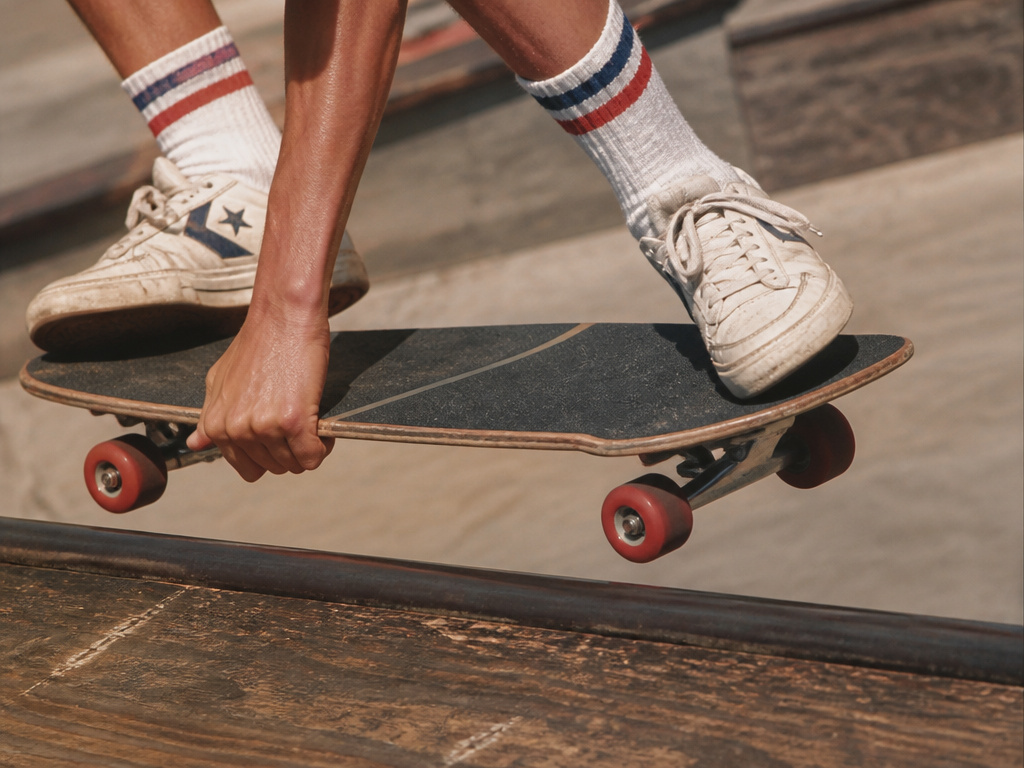
With a reliable ramp design, vert skating entered its golden age in the 1980s. This was the era of the Bones Brigade (sponsored by Powell Peralta), video parts, and the rise of skaters who would become household names. Competitions like the NSA Championships and the X Games (which debuted in 1995) provided a platform.
The icons of this era pushed what was possible:
- Tony Hawk: The most famous vert skater, known for technical consistency and a huge trick vocabulary. His career spans from the 80s boom to the present.
- Steve Caballero: A powerhouse known for immense airs and the Caballerial (a fakie 360).
- Christian Hosoi: Known for flawless style and huge, floated airs.
- Mike McGill: Invented the 540 McTwist, upping the rotational ante.
This period, a key chapter in vert skateboarding history, was defined by both competition and video parts, which spread the culture globally. Skateparks with vert ramps sprung up, though their high liability costs would later force many closures. The vert skater became the archetype of skateboarding in the public eye, a daredevil flying high above a ramp.
The 900 and the Peak of Public Awareness
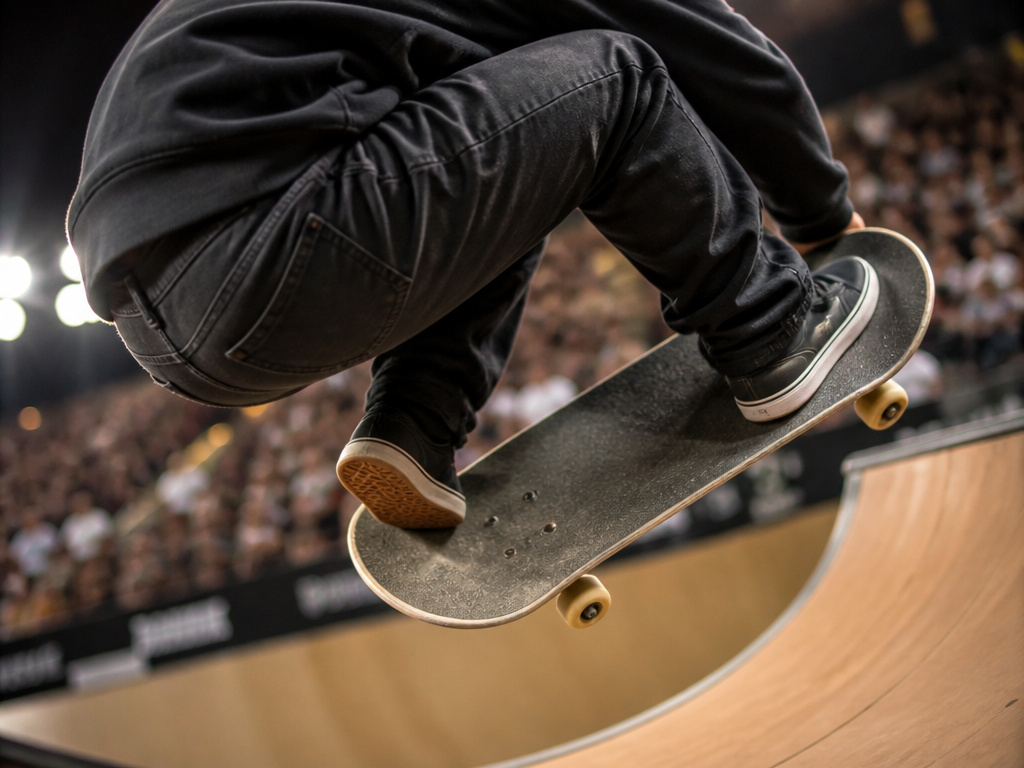
No single trick represents vert’s combination of difficulty, commitment, and spectacle like the 900, two and a half full rotations in the air. Tony Hawk spent a decade trying to land one. The moment finally came at the 1999 X Games.
The crowd knew the history. The other skaters stopped their runs. Hawk himself later said he was willing to get taken to the hospital if it meant sticking the landing. On his twelfth attempt of the finals, he landed it. The roar from the crowd wasn’t just for a trick; it was for the culmination of years of very public effort. The 900 was a vert-specific milestone. It required the height and precise transition of a vert ramp, and it captured mainstream attention in a way no street trick could. It was vert’s peak moment of cultural penetration.
Vert vs. Street: The Difficulty Question
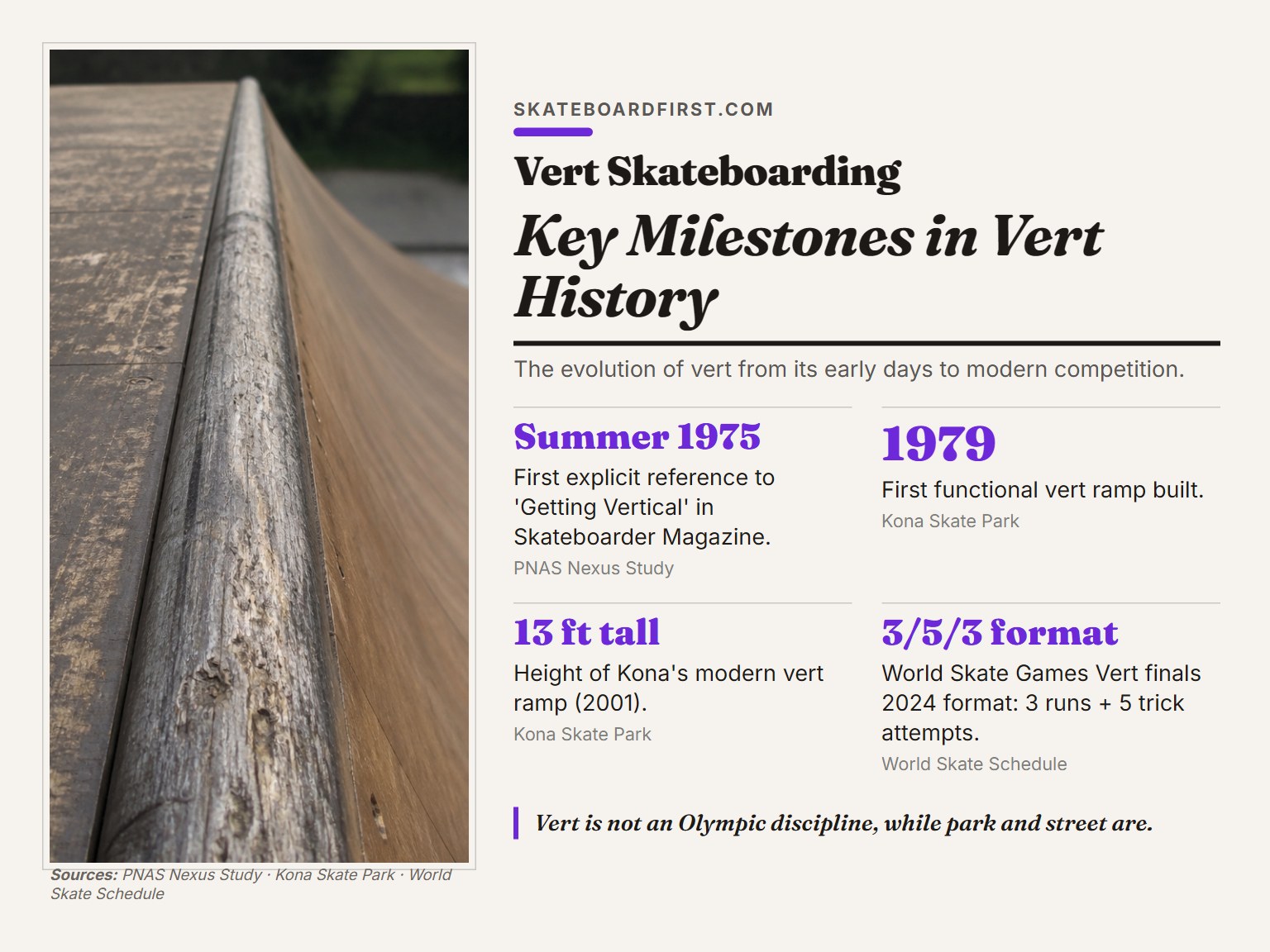
Common mistake: Assuming street skating is “easier” because the obstacles are smaller. The challenges are different, not lesser.
This is the most common comparison newcomers make. A “People also ask” question directly poses it. The answer isn’t a ranking; it’s a breakdown of distinct skill sets.
Vert demands:
- Commitment to height: Falling from the apex of a vert air means a significant drop onto a hard surface. Fear management is a primary skill.
- Ramp literacy: Reading the transition, timing pumps for speed, and understanding where you are in the air relative to the coping is a learned instinct.
- Specialized access: You need a vert ramp, which are rare and often require travel and membership fees.
Street demands:
- Creativity in constraint: Spotting skateable lines in mundane urban landscapes is a skill in itself.
- Impact management: While falls are from lower heights, they are often onto concrete, stairs, or rails, leading to different impact injuries.
- Ubiquitous terrain: You can practice basics anywhere there’s pavement.
A great street skater might struggle to drop in on vert. A pro vert skater might struggle with the flick precision of a street kickflip. It’s not harder or easier; it’s a different sport with a different risk profile and learning curve. The best modern skaters, however, often blur these lines.
The Modern Competitive Landscape
For decades, vert competitions used a simple, stagnant format: timed runs, best run counts. Skaters would play it safe, stacking reliable tricks for a high score. In October 2022, World Skate announced a new format developed by its Vert Working Group, a panel of top pros like Lincoln Ueda and Jimmy Wilkins.
The modern World Skate vert competition rules now use a 3/5/3 finals format for major events like the World Skate Games:
- Qualifiers: 3 runs of 30 seconds (time stops on a fall), best run counts.
- Finals: 3 runs of 30 seconds plus 5 individual trick attempts.
- Scoring: Best run score + two best trick scores = final score.
This format, used in the 2024 World Skate Games, aims to reward both the consistency of a full run and the high-stakes innovation of a single, massive trick attempt. It’s a direct response to skater feedback that the old format was stifling progression. Practice sessions are also structured, with 45-minute blocks for qualifier heats and 60-minute blocks for final contingency formats.
| Competition Phase | Format | Goal |
|---|---|---|
| Qualifiers | 3 runs x 30 sec (stop on fall), best run counts | Show consistent mastery of the ramp under pressure. |
| Finals | 3 runs x 30 sec + 5 individual trick attempts | Combine run consistency with high-difficulty, single-move innovation. |
| Scoring | Best run score + 2 best trick scores = TOTAL | Rewards all-around prowess, not just one perfect run. |
This shift is crucial for vert’s future. It makes contests more exciting for viewers and gives skaters a reason to try the next big trick, not just perfect the last one.
Is Vert Skating Dead?
The “vert is dead” narrative started in the early 1990s. Liability costs shuttered many skateparks. Street skating’s rise, fueled by videos and the accessibility of sidewalks, dominated the industry’s focus. By the 1990s skateboarding era, vert had receded from the mainstream spotlight.
But “dead” is the wrong word. “Niched” is more accurate. Vert never went away; it became a dedicated pursuit. The community became tighter. Skaters like Bob Burnquist, Bucky Lasek, and later, Mitchie Brusco and Gui Khury, kept pushing progression on mega-ramps and in competitions.
The real structural shift is Olympic inclusion. When skateboarding entered the Olympics, it was park and street that were chosen as disciplines. Vert was left out. This has a tangible effect: Olympic funding and national team support flow to park and street, not vert. A young skater today with Olympic dreams is steered toward park, not vert.
So, vert isn’t dead. It’s operating on a different, parallel track. It has its own governing body (World Skate), its own competition circuit, and its own legends. It’s less visible to the casual fan but more focused and innovative than ever within its community. To learn how to skate vert today, the passion and resources are absolutely there.
Frequently Asked Questions
Who is the best vert skater ever?
This debate fuels endless forum threads. Tony Hawk is the most famous and influential, with the longest career of top-level competition. Bob Burnquist is often cited for his technical innovation and switch-stance mastery. For pure competitive dominance in the modern era, skaters like Gui Khury (landing the first 1080 in competition) are rewriting the record books. There’s no single “best,” but Hawk’s impact on the sport’s popularity is unmatched.
Was Tony Hawk a vert skater?
Yes, primarily. While Tony Hawk could skate anything, his competitive success and iconic tricks (like the 900) were all performed on vert ramps. He is the defining figure of vert skateboarding’s golden age and its most recognizable ambassador.
Is vert skating harder than street skating?
They present different challenges. Vert requires conquering the fear of falling from significant height and mastering the physics of a ramp. Street requires precision flicking and flipping and dealing with unpredictable surfaces. Most skaters find one discipline more intuitive than the other; very few truly master both at the world-class level.
Why isn’t vert in the Olympics?
The International Olympic Committee selected park and street for their debut, likely due to factors like global accessibility (vert ramps are rare and expensive) and viewer appeal (park’s flow and street’s urban familiarity). This decision has major implications for funding and development, as detailed in our look at skateboarding in the Olympics.
The Bottom Line
Vert skateboarding’s history is a chain of cause and effect: drought created the terrain, urethane wheels made it skateable, the ollie made the air accessible, and relentless skaters built the stages to perform on. Today, it survives not as a mainstream spectacle but as a refined, athlete-driven discipline with its own rules and community.
If you watch a modern vert contest, you’re not watching a relic. You’re watching the result of fifty years of problem-solving, how to go higher, spin faster, and make the impossible routine. The format changes, the tricks get bigger, but the core remains: a skater, a ramp, and the air above it. That equation hasn’t changed since the first Z-Boy carved an empty pool.
